Showing posts with label Turkey. Show all posts

Saturday, August 8, 2026

Will the Mecca Pact Deter Attacks Against Pakistan, Saudi Arabia and Turkey?

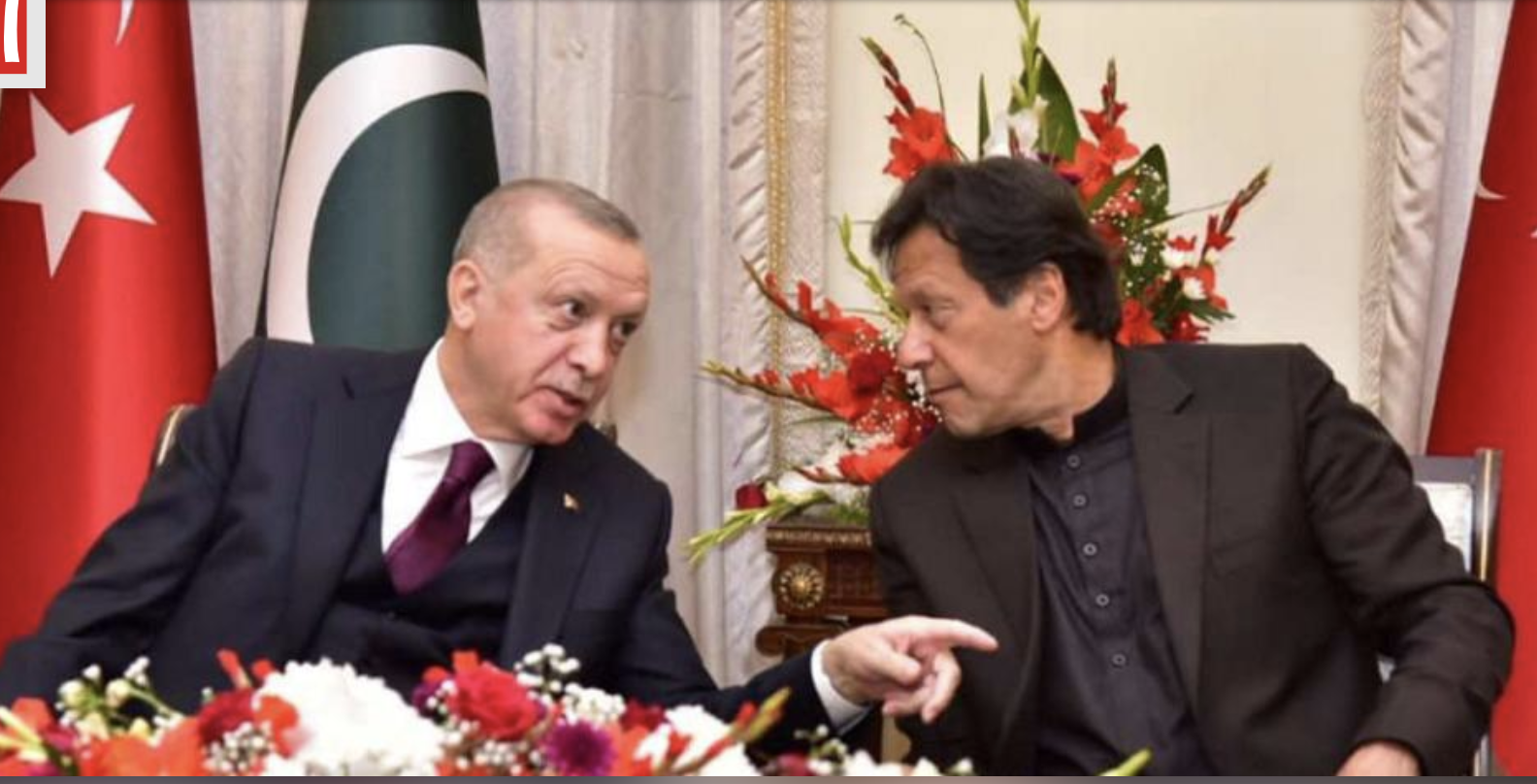
Pakistan has historically enjoyed close friendly ties with Saudi Arabia and Turkey. So why did the three nations feel the need to formalize these ties with a mutual defense agreement in Mecca this week? Many answers to this question can all be traced to a fundamental change in the security environment in the Middle East. Foremost among these changes is the extremely reckless behavior of the state of Israel which has had full political, military, economic and diplomatic backing of the West. This unqualified western support began with the Gaza genocide and culminated in the launch of joint US-Israeli assault on Iran in February this year.  


The entire Middle East region and the Islamic world has helplessly witnessed as the Israeli military butchered innocent civilians in Palestine and Lebanon and threatened to expand the war to the entire region. Some Israeli politicians issued warnings to Turkey and Pakistan. During this period, the West not only failed to restrain Israel but actively supported it with funds and weapons. The United States and Britain also suppressed domestic criticism of Israel by arresting or deporting people. They went after the chief prosector and the judges of the International Criminal Court (ICC) after it issued war crimes indictments of Israeli officials for their conduct in Gaza. 

The joint Israeli-American aggression against Iran has spiraled into Iranian attacks against the US bases in the Persian Gulf region. Iran has closed the Strait of Hormuz, strangling the flow of oil and gas to the rest of the world. It has caused high oil prices, negatively impacting the global economy, Pakistan has stepped in to broker a ceasefire and mediate between the United States and Iran. 

While there are many explanations and interpretations of the rationale for the Mecca Pact, there is no question that signing such a mutual defense agreement has been accelerated by the security situation created by Israeli aggression in the Middle East which was fully backed by the United States and other major western nations. It seems that the United States and its western allies have legitimized the principle of "might is right" in the Middle East. Essentially, the law of the jungle has replaced the "rules-based" world order. Hard power now matters more than ever. 

In recent years, Pakistan has emerged as a credible military power in terms of both conventional and nuclear capabilities. The Pakistani military's strong performance was recognized in May this year as it responded to what India called its "Operation Sindoor".  The country has developed a range of short and medium-range missiles capable of carrying both conventional and nuclear warheads. Its longest range missile Shaheen 3 can hit deep inside India and Israel. In 2024, the Biden administration imposed sanctions against Pakistan after accusing it of developing intercontinental ballistic missiles (ICBMs) capable of reaching the US mainland. 

Combining the Turkish military-industrial capacity with Saudi economic resources and Pakistan's large military and nuclear umbrella creates a formidable deterrent to any adventurism by Israel or any other hostile power against any of these three countries. That is the fundamental value of the Mecca Pact. 

On the global stage, Pakistan has long sought to balance its foreign policy between China and the United States through a pragmatic hedging strategy, gaining economic, military, and diplomatic benefits from both superpowers while maintaining strategic autonomy. But the relationship between Pakistan and China is not the same as the one between Pakistan and the United States. Pakistan's ties with China are strategic while those with the United States remain tactical and transactional. What has changed recently is that Pakistan is no longer waging war to help the United States as it did during the "Cold War" and the "War on Terror". Instead, Pakistan has emerged as a peacemaker between the US and Iran. 

Related Links:

Haq's Musings

South Asia Investor Review

Pakistan Downs India's French Rafale Jets in a Major Aerial Battle

Has Modi Succeeded Diplomatically or Militarily Against Pakistan After Pahalgam?

Pakistan-Saudi Defense Pact

Pakistan's Key Role in US-Iran Ceasefire

Has Modi Succeeded Militarily or Diplomatically in Isolating Pakistan After "Operation Sindoor"?

China, Pakistan to "Further Deepen and Expand" Ties

Geopolitics: Changing Dynamics of Pakistan's Ties to China and the US

Pahalgam Attack: Why is the Indian Media Not Asking Hard Questions?

Ukraine's Lesson For Pakistan: Never Give Up Nukes!

Pakistan Economy Nears Trillion Dollars

Pakistan's Sea-Based Second Strike Capability

Riaz Haq Youtube Channel

VPOS Youtube Channel


Saturday, July 5, 2025

Indian Military Begins to Accept Its Losses in "Operation Sindoor" Against Pakistan

The Indian military leadership is finally beginning to slowly accept its losses in its unprovoked attack on Pakistan that it called "Operation Sindoor". It began with the May 31 Bloomberg interview of the Indian Chief of Defense Staff General Anil Chauhan in Singapore where he admitted losing Indian fighter aircraft to Pakistan in an aerial battle on May 7, 2025.  General Chauhan further revealed that the Indian Air Force was grounded for two days after this loss. 


General Chauhan was followed by Navy Captain Shiv Kumar, the Indian Defense Attache in Jakarta, Indonesia, who explained last month that the Indian Air Force losses occurred due to "constraint by (the Indian) political leadership" imposed on the Indian Air Force. He said the Indian forces had been directed not to target Pakistan’s military infrastructure or air defenses. “Only because of the constraint given by the political leadership to not attack the military establishment or their air defenses,” he said, explaining why the IAF suffered the loss of fighter jets. 

Yesterday, Lieutenant General Rahul Singh, India's Deputy Chief of the Army, blamed the losses on Chinese help for Pakistan. He said India faced three enemies: Pakistan, China and Turkey based on the equipment used by Pakistan in the latest round. By this logic, Pakistan faced four or more enemies: India and its arms suppliers France, Israel and Russia whose equipment was used by the Indian military in Operation Sindoor against Pakistan. 

General Singh said the Pakistanis were closely watching the Indian military's moves in real time. “When the DGMO-level talks were going on, Pakistan actually was mentioning that ‘we know that your such and such important vector is primed and ready for action. I would request you to perhaps pull it back’. So he was getting live inputs … from China,” he added. 

Using a homegrown datalink (Link-17) communication system, Pakistan has integrated its ground radars and satellite links with a variety of fighter jets and airborne early warning aircraft (Swedish Erieye AWACS) to achieve high level of  situational awareness in the battlefield, according to experts familiar with the technology developed and deployed by the Pakistan Air Force. This integration allows quick execution of a "kill chain" to target and destroy enemy assets, according to experts. This capability was demonstrated recently in the India-Pakistan aerial battle of May 7-8 that resulted in the downing of several Indian fighter jets, including the French-made Rafale.  

In an earlier statement, Indian Foreign Minister Subrahmanyam Jaishankar told Newsweek:  “I was in the room when the US vice president spoke to Prime Minister Modi on the night of May 9, warning that the Pakistanis would launch a very massive assault on India if we did not accept certain things". “That night, Pakistan did launch a large-scale attack,” Jaishankar said. India sought and accepted the ceasefire immediately after the "large-scale attack" launched by Pakistan. 

These statements by the Indian military brass lead to only one conclusion: Not only is there an implicit admission of India's failed "Operation Sindoor", but also a litany of lame excuses for the losses incurred by the Indian military. The fact is that the Indian leadership clearly underestimated Pakistan's capacity for a strong military and diplomatic response to the Indian provocation labeled "Operation Sindoor".  New Delhi was caught unprepared for it. 

Related Links:

Haq's Musings

South Asia Investor Review

Pakistan Downs India's French Rafale Jets in a Major Aerial Battle

Has Modi Succeeded Diplomatically or Militarily Against Pakistan After Pahalgam?

Has Pakistan Destroyed India's S-400 ADS?

US Seeks Pakistan's Help For Durable Peace in MidEast

Pakistan Navy Modernization

West's Technological Edge in Geopolitical Competition

Modi's India: A Paper Elephant?

Pahalgam Attack: Why is the Indian Media Not Asking Hard Questions?

Ukraine's Lesson For Pakistan: Never Give Up Nukes!

Pakistan Economy Nears Trillion Dollars

Pakistan's Sea-Based Second Strike Capability

Riaz Haq Youtube Channel

VPOS Youtube Channel

Wednesday, May 14, 2025

Has Modi Succeeded Diplomatically or Militarily Against Pakistan After Pahalgam?

Indian Prime Minister Narendra Modi launched Operation Sindoor to "punish" Pakistan after blaming it for the Pahalgam militant attack without offering any evidence. He then quickly proceeded to seek and accept a US-brokered ceasefire within 100 hours of launching military strikes on Pakistan. Now he claims that India has succeeded in its objectives for Operation Sindoor. 

Let's examine Mr. Modi's claim of victory after seeking and accepting a ceasefire so soon after launching a large military operation. In terms of diplomacy, India clearly failed to prove its allegations against Pakistan to gain the support of the international community. Many of India's closest friends, including the US and Israel, condemned the Pahalgam attack but none held Pakistan responsible for it. At the same time, Pakistan's closest friends China and Turkey stood solidly with Pakistan. 

Militarily, India incurred heavy losses, including the loss of its most advanced Rafale fighter jets in a major aerial battle with the Pakistan Air Force. In fact, Mr. Modi was stunned by the robustness of Pakistan's retaliatory precision strikes with high-speed missiles and drone swarms.  He said: "Instead of supporting India's strike against terrorism, Pakistan started attacking India itself". He clearly wasn't expecting it when he ordered missile strikes against Pakistan. 

As to Mr. Modi's other claims about India's Operation Sindoor's "successes" against Pakistan, here's a good summation of their reality as seen by a veteran Indian diplomat MK Bhadrakumar:

"The bottom line is, Pakistan has demonstrated its nuclear deterrent capability. It is as simple as that. If Operation Sindoor were to be repeated every now and then, it would only have the same results and be halted unceremoniously within 100 hours. Eventually, it will not only lose all novelty to our ecstatic TV audience, but a troubled nation may eventually start blaming an inept leadership. Pakistan is a major military power. Creating potholes in an odd runway or rendering a radar dysfunctional temporarily will not intimidate that country. Succinctly put, it must be far better for India to take help from Trump, who harbors no animus against us, to solve the problem and move on with life". 

Related Links:

Haq's Musings

South Asia Investor Review

Pakistan Downs India's French Rafale Jets in a Major Aerial Battle

Pakistan's Cyber Attack and Defense Capability

IDEAS2024: Pakistan Defense Industry Expo

Pakistan's Aircraft Exports

Pakistan Navy Modernization

West's Technological Edge in Geopolitical Competition

Modi's India: A Paper Elephant?

Pahalgam Attack: Why is the Indian Media Not Asking Hard Questions?

Ukraine's Lesson For Pakistan: Never Give Up Nukes!

Pakistan Economy Nears Trillion Dollars

Pakistan's Sea-Based Second Strike Capability

Riaz Haq Youtube Channel

VPOS Youtube Channel

Wednesday, May 24, 2023

G20 Kashmir Meeting: Modi's PR Ploy Backfires!

Prime Minister Narendra Modi's campaign to show normalcy in the Indian occupied territory of Jammu and Kashmir has backfired.  Three member countries of the G20 boycotted the tourism event in Srinagar. The rest of them sent local embassy staff to attend. The event also drew negative worldwide media coverage of the brutality of India's "settler colonialism" in the disputed territory. It elicited strong condemnation from the United Nations. Prior to the event, India’s tourism secretary, Arvind Singh had promised that the meeting will not only “showcase (Kashmir’s) potential for tourism” but also “signal globally the restoration of stability and normalcy in the region.” The Modi government failed to achieve both of these objectives.

G20 Meeting in Indian Military Occupied Kashmir 


Meeting Boycott:

China, Saudi Arabia and Turkey did not attend the G20 event in Srinagar. Rest of the G20 members sent diplomats posted in New Delhi to attend it.  It's not unusual for foreign diplomats to visit disputed territories such as Jammu and Kashmir. Last year, Donald Blome, US Ambassador to Pakistan, visited what he called "Azad Jammu and Kashmir".  The G20 Tourism Working Group meeting in Kashmir drew condemnation from China and the United Nations. 

“China firmly opposes holding any form of G20 meetings on disputed territory. We will not attend such meetings,” said Chinese Foreign Ministry spokesperson  Wang Wenbin at a press briefing on May 19 in Beijing.  

Fernand de Varennes, U.N. special rapporteur on minority issues, criticized the meeting, saying that by hosting the session in Kashmir, “India is seeking to normalize what some have described as a military occupation by instrumentalizing a G20 meeting and portray an international 'seal of approval’.” 

The UN representative warned the G20 of “unwittingly providing a veneer of support to a facade of normalcy at a time when massive human rights violations, illegal and arbitrary arrests, political persecutions, restrictions and even suppression of free media and human rights defenders continue to escalate.”

Heavy Indian Security Presence at Dal Lake For G20 in Kashmir. Source: Washington Post 


International Media Coverage:

The global media coverage of the G20 meeting in Kashmir has largely been negative. It has highlighted the brutal occupation of the region by the Indian military. 

A piece in The Conversation accused India of "using the G20 summit to further its settler-colonial ambitions in Kashmir".  It pointed out that the "route to Gulmarg (G20 event location)  is lined with barbed wire. Armed soldiers keep watch from fortified bunkers".   The Conversation piece offers the following advice to anyone visiting Indian Occupied Kashmir:

"Those visiting  (Indian Occupied) Kashmir must first learn about the decolonial history of the region, one that honors Kashmiri calls for self-determination and sovereignty. They must follow the principle of do no harm by not visiting tourist sites or using tour operators run by Indian authorities. They should support local Kashmiri-run businesses as much as possible. There is no simple resolution for tourism on occupied lands. Tourism amid settler-colonialism manifests in exploitation, dispossession, commodification and other injustices and inequities. The goal of ethical travel is not immediate perfection or self-exoneration. It is an invitation to think about our own actions and complicity". 

A story in "The Guardian" noted that the G20 Kashmir meeting "required a large show of security at Srinagar international airport". It added: "India’s presidency of the G20 group of leading nations has become mired in controversy after China and Saudi Arabia boycotted a meeting staged in Kashmir, the first such gathering since India unilaterally brought Kashmir under direct control in August 2019". 

Voice of America reported that the "security moved into the background to give a sense of normalcy amid reports of mass detentions" as the event drew closer. 

Modi's Blunders:

Prime Minister Modi's PR campaign has clearly backfired. His government's actions have failed to project any sense of normalcy in the disputed region. In fact, Mr. Modi's blunders have helped internationalize the issue of Kashmir on the world stage. They have drawn China further into the Kashmir dispute, particularly in the Ladakh region where the Chinese troops have taken large chunks of what India claims as its territory. 

In an Op Ed for the Deccan Herald, Indian Journalist Bharat Bhushan has accused Modi government of "overplaying its hand in organizing a G20 event in Srinagar". He has summed up the fallout from the G20 Kashmir Meeting failure as follows:

"Prime Minister Narendra Modi’s upcoming State visit to the United States makes this rebuff on J&K by the international community, especially significant. What might have been ignored by India and perhaps down-played, at least publicly by the US, in the build-up to the Modi-Biden summit, will now become an additional irritant in the bilateral relationship. Did the Modi government bait fate by overplaying its hand in organizing a G20 event in Srinagar?"

Here's India's JNU Professor speaking about illegal Indian occupation of Kashmir, Manipur and Nagaland:

https://youtu.be/KWp1E8xrY5E


Related Links:

Haq's Musings

South Asia Investor Review

Pakistan's Bilawal Bhutto Lashes Out at India's Jaishankar

India: A Paper Elephant?

India-Pakistan Nuclear Arms Race

Kashmir: 700,000 Indian Soldiers vs 7 Million Kashmiris

Israeli Settler Colonialism

India Promotes Half Truths About UNSC Kashmir Resolutions

Pakistan-China-Russia Vs India-Japan-US

Total, Extended Lockdown in Indian Occupied Kashmir

What is India Hiding From UN Human Rights Team?

Indian JNU Professor on Illegal Indian Occupation of Kashmir, Manipur, Nagaland

Riaz Haq Youtube Channel

VPOS Youtube Channel


Friday, May 12, 2023

Pakistan Now: Darkest Before Dawn?

Pakistan is experiencing one of the darkest periods of its history. Political instability is eroding confidence in the nation's future. Declining economic growth and high inflation are hurting the people of all strata of society, particularly the poor whose numbers are rapidly rising. Is there any hope left for the country? Is it a case of the "darkest before dawn"? How do investors see it? 

Ex PM Imran Khan (R) with President Erdogan

Writing in the Time magazine immediately after the recent arrest of former Prime Minister Imran Khan, American investor, author and commentator Zachary Karabell who has invested in Pakistani startups sees rare hope for Pakistan. He sees Pakistan where Turkey was back in 2001-2003, "when a series of elections brought Recep Erdogan to power even as he was repeatedly disqualified by a military that was determined to retain control". Here's an excerpt of his article titled "The Contrarian Case for Pakistan" published in the current issue of Time Magazine: 

"To some degree, this is an argument of “well, it’s not as bad as they say.” But it’s also a way of highlighting that Pakistan today may be a case of darkest before the dawn. With elections schedule for the fall, and with Imran Khan the most likely victor of said elections unless is his arrest leads to his disqualification as a candidate, Pakistan is in a very similar position to where Turkey was in 2001-2003, when a series of elections brought Recep Erdogan to power even as he was repeatedly disqualified by a military that was determined to retain control. Imran Khan has many of the same strengths and weaknesses of Erdogan, who after championing Turkish democracy and economic reform, then turned into the very type of corrupt autocrat that he had once fought against. But he nonetheless unleashed massive economic potential in Turkey and has left its 80 million people materially better off over the past 20 years, even as hyperinflation and Erdogan’s recent economic ineptitude is now eroding that. Should Imran Khan return to the head the government, he may well usher in a similar period in Pakistan, even as he has his own authoritarian and demagogic tendencies". 

Here are some of the key points Karabell makes in his opinion piece:

1. Pakistan has a real and dynamic private sphere that is not only seeing a start-up and new business ecosystem that has attracted hundreds of millions of dollars a year for the past few years but operates freely in a way that would be inconceivable in many other countries. Compare it to Egypt, for example, which receives far less negative attention and more foreign money yet is almost entirely dominated by a military dictatorship. Or Algeria. And then there are countries which barely function at all, dominating a whole swath of Sub-Saharan Africa but also dot central Asia (Tajikistan anyone?).

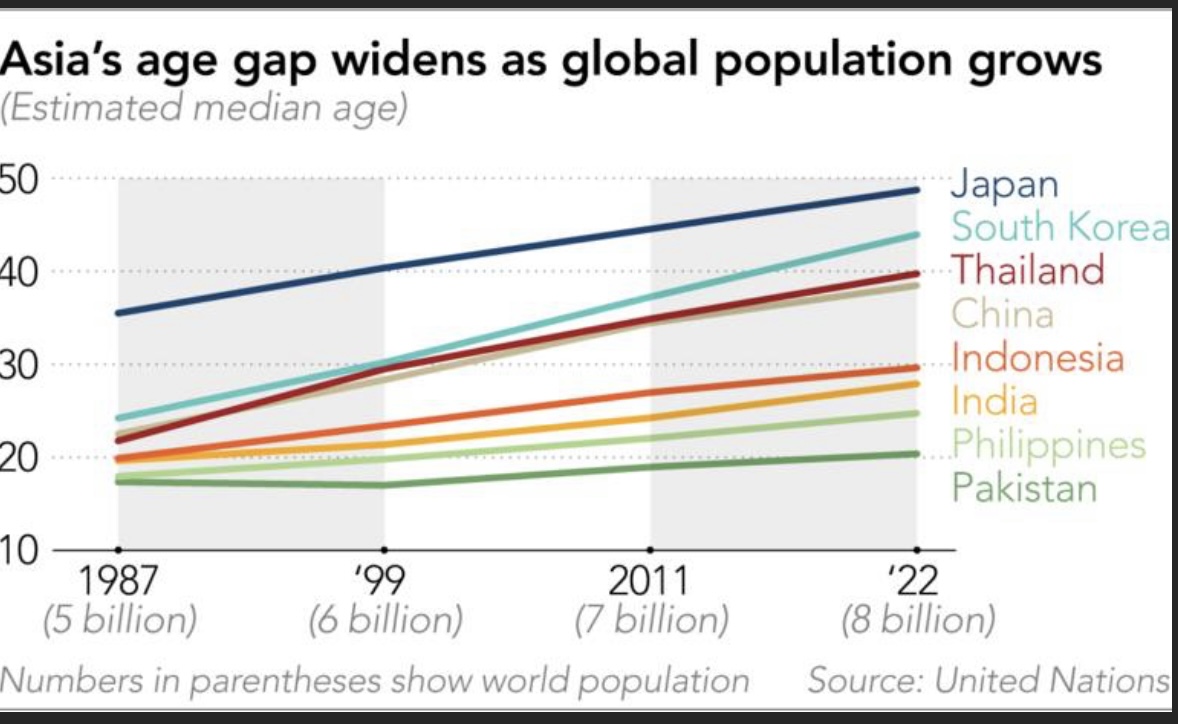
2. Pakistan is the fifth most populous country in the world with 230 million souls, a median age of barely 22 and two-thirds of the population under the age of 30. That means unlike most of the world, it has a favorable demographic future.

2. Unlike, say, Nigeria, where the ethnic divisions and decades of corruption mean that it well-nigh impossible to treat the country as one unified market for goods and services, Pakistan is one common market even with its various tribal divisions.

Pakistan Population Youngest Among Major Asian Nations. Source: Nikkei Asia

Karabell concludes with the following: 

Pakistan is on a cusp. We should honor the fact that whichever way the consensus believes it will go, the country is also poised to breakout on the upside. Which path will only be clear in retrospect, but we should pay more attention to the potential of things going right along with the legitimate focus on all that is going wrong.

Friday, November 13, 2020

Turkish and Israeli Drones Enable Azerbaijan's Decisive Victory Over Armenia

Defense analysts believe that Turkish and Israeli drones have helped Azerbaijan achieve decisive victory against Armenia. "Azerbaijan’s drones owned the battlefield in Nagorno-Karabakh — and showed future of warfare" says the Washington Post headline as tweeted by drone warfare expert Franz-Stefan Gady. Low-cost Azeri drones killed thousands of Armenian soldiers in Nagorno-Karabakh and destroyed hundreds of Armenian tanks and artillery pieces, giving a huge advantage to Azerbaijan and forcing the Armenian surrender.  Armenian Prime Minister accused Pakistan of sending troops to help Azerbaijan in the conflict. Pakistan rejected Armenian allegations and congratulated Azerbaijan on its victory. 

Turkish Drones

Azeris deployed a variety of drones in their war against Armenia to wrest control of Nagorno-Karabakh, a region that is legally part of Azerbaijan but controlled by Armenians. Azeris used Turkish Bayraktar drones which are large and reusable drones. They also Kamikaze drones made by Israel which are small and designed for one-time use in destroying targets.  The small Israeli-made suicide drones are sometimes also referred to as "loitering munitions". Azeris used big old WW2 Antonov AN-2 biplanes as decoys to fool Armenian air defense systems. 

Michael Kofman, military analyst and director of Russia studies at CNA, a defense think tank in Arlington, Va. is quoted by the Washington Post as saying, “Drones offer small countries very cheap access to tactical aviation and precision guided weapons, enabling them to destroy an opponent’s much-costlier equipment such as tanks and air defense systems.”  “An air force is a very expensive thing,” he added. “And they permit the utility of air power to smaller, much poorer nations.”

In 2019, dozens of cheap drones were deployed against Abqaiq and Khurais oil fields to cut Saudi Aramco's production by half, according to multiple media reports. Saudi and US officials have blamed Iran for the destructive hit. This was the first time that cheap drone swarms loaded with explosives dodged sophisticated air defense systems to hit critical infrastructure targets in the history of warfare.  

Small drones are hard to detect even by the most sophisticated radars. It's even harder to shoot down a drone swarm because of their small size and large numbers. After Abqaiq and Khurais attacks last year, Saudi sources revealed that 25 drones and missiles were used to hit the two sites that produced 5.7 million barrels of oil per day. The incoming low-flying small drones and missiles successfully evaded US-supplied sophisticated air defense system. Multi-billion dollar cutting edge American military hardware mainly designed to deter high altitude attacks has proved no match for low-cost drones and cruise missiles used in a strike that crippled its giant oil industry. 

Related Links:


Haq's Musings

South Asia Investor Review

Pakistan-China Defense Industry Collaboration Irks West

Pakistan's Cyber Attack and Defense Capability

Is India a Paper Elephant?

Pakistan's Aircraft Exports

Pakistan Navy Modernization

IDEAS 2014 Arms Show

Pakistan Defense Industry

Silicon Valley Book Launch of "Eating Grass"

Pakistan's Human Capital

Pakistan Economy Nears Trillion Dollars

Pakistan's Sea-Based Second Strike Capability

Riaz Haq Youtube Channel

VPOS Youtube Channel

Monday, July 4, 2016

Multinationals Snapping Up Pakistani Companies For Growth

Two multinational giants acquired 2 Pakistani companies in just the last week alone as part of their growth strategy to establish presence in Pakistan.

Dutch dairy giant FrieslandCampina acquired 51 % of Karachi-based Engro Foods Limited, the second largest dairy producer in Pakistan. In the same week, Turkey's Arcelik announced purchase of Dawlance, Pakistan's market-leading home appliance maker.  Both cited opportunity for double-digit growth in the emerging market as the main reason for their acquisitions.

Pakistan's Emerging Market Upgrade:

Earlier in June, Morgan Stanley announced its decision that Pakistan's MSCI shares index will be upgraded from frontier to emerging market status. Pakistan's Karachi Stock Exchange KSE100 Index has rallied 14% in 2016, making it Asia's best performing market so far this year in anticipation of the MSCI announcement.

Pakistan Dairy Market:

Pakistan is the third largest milk-manufacturing country in the world, with 38 billion liters on an annual basis, according to Retail Detail of Europe.  FrieslandCampina wants to take advantage of the shift to packaged dairy products in Pakistan: not even 10 % of milk consumption comes from processed and packaged milk in Pakistan, but FrieslandCampina expects that to change in the near future.

“Thanks to this well-organized and very successful company, we have obtained a strong position in the Pakistani dairy market. A growing middle class is switching to processed and packaged milk in Pakistan and Engro Foods provides a platform to build on. This acquisition will contribute to the value proposition we want to give our member dairy manufacturers. We will also help develop the agricultural industry in Pakistan with our extensive knowledge on the dairy manufacturing process and thanks to our Dairy Development Programme", CEO Roelof Joosten said.

To tap into the Pakistani market, FrieslandCampina is buying 51% of Engro Foods at an estimated price of $448 million, a securities filing said on Monday. Topline Securities said Engro Corporation will generate cash of around Rs. 47 billion, part of which will most likely be invested in energy-related projects with a higher rate of return, according to a report in  Pakistan's Express Tribune newspaper.

Home Appliance Demand in Pakistan:

Pakistan's $3 billion home appliance market is experiencing double digit annual growth. It has attracted the attention of China's Haier, a multinational giant that recently acquired American General Electric's home appliance business.

Haier has 8 industrial complexes, two of which are foreign--one in the United States, and one in Pakistan,  according to  Xiaofei Li, the author of "China's Outward Foreign Investment: A Political Perspective". In these Special Economic Zones, Haier does localization to suit the needs of the consumers.  For Pakistani market, Haier especially designed a washer that can hold 15 long gowns at one time. There are many more such Special Economic Zones envisaged as part of the CPEC (China-Pakistan Economic Corridor).  It will be essentially an industrial corridor spanning almost the entire length of the country from the Arabia sea coast to the Karakorams where it enters China via the Karakoram Highway (KKH), the word's highest paved road.

Pakistan's privately-held Dawlance is also a major player in Pakistan's home appliance market. It is Pakistan's leading refrigerator and microwave brand, No. 2 air conditioners and No. 3 in the laundry category. In  2015, it reported $221 million in revenue and $45 million in EBITDA (earnings before interest, taxes, depreciation and amortization), according to Nikkei Asian Review.


“Pakistan is the sixth most populous country in the world with a population of 200 million people. In particular its young population and increasingly growing economy make it an enticing prospect as a market in the region. With the acquisition of Dawlance in Pakistan, Arçelik will employ a total workforce of 30,000 worldwide and will have a global production base of 18 manufacturing facilities including Turkey, Romania, Russia, China, South Africa and Thailand. Our acquisition is also a powerful example of south-south cooperation, representing a technology and know-how transfer between developing countries,” said Fatih EbiçlioÄŸlu, the head of the Consumer Durables Group of Koç Holding that controls Arcelik, according to Turkey's Hurriyet Daily News.

Summary:

Smart money is starting to flow into Pakistan again as the world recognizes the country's tremendous economic potential as a growing emerging market.  Investors and businesses are looking to profit from expanding Pakistani economy backed by growing middle class consumption and rising Chinese investments in energy and infrastructure.

Related Links:

Haq's Musings

China's Haier Expands Manufacturing in Pakistan

Japanese Multinationals Rank Pakistan Among Top Growth Markets

Chinese FDI in Pakistan For CPEC Projects

Pakistan Included in MSCI Emerging Market Index

Pakistan's Middle Class Grows to 55% of Population

China-Pakistan Industrial Corridor (CPEC)

Pakistan Launches $8.2 Billion Rail Upgrade Project

Sunday, July 3, 2016

Terror in Bangladesh & Turkey; India’s Curry & Dal Crises; Pakistani Mangoes in America

Who terrorized Dhaka and Istanbul? Why were these cities targeted by terrorists? Is terror spreading farther and wider after recent foreign military interventions to check ISIS in Syria? Have mistakes by Muslim nations' governments contributed to the growing wave of terror? Can military force alone end it? If not, what else needs to be done? What kind of comprehensive strategy is needed?

Why is India suffering from curry and dal crises? Why are prices of dal, tomatoes. potatoes and other essential foods rising rapidly in India? What is Modi government doing to increase supply and ease rising food inflation in the country? What are its chances of success in short and long term?

Why are Pakistani mangoes becoming more easily and widely available in America? Are Pakistan mango exports finally ramping up? What took so long for Pakistani mangoes to arrive in significant quantities in Silicon Valley? Can 6 million strong Pakistani diaspora's demand drive greater Pakistani exports of mangoes and food other items?


Viewpoint From Overseas host Faraz Darvesh discusses these questions with panelists Ali H. Cemendtaur and Riaz Haq (www.riazhaq.com)

https://youtu.be/Lzx8I8C2MIo


http://dai.ly/x4jj855


Terror in Bangladesh & Turkey; India's Curry... by ViewpointFromOverseas
https://vimeo.com/173269056


Terror in Bangladesh & Turkey; India's Curry & Dal Crises; Pakistani Mangoes in America from Ikolachi on Vimeo.

Related Links:

Haq's Musings

Did the West Sow the Seeds of ISIS in Syria and Iraq?

Dal Crisis in South Asia

Pakistani Mangoes in America

Pakistani Diaspora

Talk4Pak Think Tank

VPOS Youtube Channel

VPOS Vimeo Channel

Friday, February 19, 2016

Can Pakistan Use Qatar LNG Price Leverage For Better Iran Gas Deal?

Pakistan has recently negotiated a good bargain with Qatar for importing $16 billion worth of liquified natural gas (LNG).

Pakistan will import as much as 20 million tons of the super-chilled gas annually from various sources including Qatar, enough to fuel about two-thirds of Pakistan’s power plants. Gas shortage has idled half the nation’s generators. A 75 percent drop in LNG prices since 2014 has  dramatically reduced the cost of the South Asian country’s energy needs, according to a Bloomberg report.

LNG arriving in Pakistan from Qatar will fetch 13.37% of the preceding three-month average price of a Brent barrel (considering the present Brent price as a proxy, that would equate to $167.5 per 1000 cubic meters), according to a report in Azerbaijan's Trend News.  It translates to $4.50 per million BTUs.

A comparison with Iran's gas deals with Turkey and Iraq indicates that Iranian gas will not be competitive with Qatari LNG on Pakistani market. In 2014 Iran was exporting gas to Turkey at above $420 per 1000 cubic meters, but the figure plunged to $225, or $6 per million BTUs, currently due to low oil price. Iran previously said that the price of gas for Iraq would be similar to Turkey's price.

International Chamber of Commerce (ICC) arbitration court has recently ordered Iran to reduce its gas price to Turkey by 15% after Turkey complained. It's not clear if Iran will comply but even if it does, its price will still be $5.10 per million BTUs, much higher than the Qatari LNG price of $4.50 per million BTUs for Pakistan.

As recently as two years ago, LNG shipped to big North Asian consumer like Japan and Korea sold at around $15 to $16 a million British thermal units. Late last year, the price hit $6.65 a million BTUs, down 12% from September, according to research firm Energy Aspects. It expects prices to fall further in Asia this year, to under $6 per million BTUs, as a wave of new gas supply in countries from the U.S. to Angola to Australia comes on line, according to Wall Street Journal.

 Petronet LNG Ltd, India’s biggest importer of liquefied natural gas (LNG), is saving so much money buying the commodity from the spot market that it’s willing to risk penalties for breaking long-term contracts with Qatar.

Will Pakistan be able to negotiate a better price with Iran? It seems difficult given the fact that Iranians have a reputation of being very difficult to deal with. Here's an excerpt about Iranians' negotiating style from Iranian-American author Vali Nasr's book "The Dispensable Nation":

"I remember a conversation in 2006 with Jack Straw, who was then Britain’s foreign secretary, about his time talking to Iran. He said, People think North Koreans are difficult to negotiate with. Let me tell you, your countrymen [Iranians] are the most difficult people to negotiate with. Imagine buying a car. You negotiate for a whole month over the price and terms of the deal. You reach an agreement and go to pick up the car. You see it has no tires. “But the tires were not part of the discussion,” the seller says. “We negotiated over the car.” You have to start all over again, now wondering whether you have to worry about the metal rim, screws, or any other unknown part of the car. That should give you a sense of what talking to Iran looks like".


Source: US EIA
Regardless of whether Pakistan succeeds in using Qatar price leverage with Iran. it's good to see Pakistan finally beginning to take advantage of historic low gas prices to alleviate its severe load-shedding of gas and electricity.

Growing Demand-Supply Gap in Pakistan

In addition to signing the Qatar LNG deal, Pakistan has launched its first LNG import terminal in Karachi and started receiving shipments from Qatar. Pakistan has also signed a $2 billion deal with Russians to build a north-south pipeline from Gwadar to Lahore. But the country needs to rapidly build up capacity to handle imports and distribution of significant volumes of LNG needed to resolve its acute long-running energy crisis.


Here's a related video discussion:
http://dai.ly/x3ccasi


Pakistan Local Elections; Indian Hindu... by ViewpointFromOverseas


https://vimeo.com/144586144


Pakistan Local Elections; Indian Hindu Extremism; LNG Pricing; Imran-Reham Split from WBT TV on Vimeo.


https://youtu.be/LZavD-tkReg


Related Links:

Haq's Musings

Can Pakistan Take Advantage of Historic Low LNG Prices?

Pakistan's Twin Energy Crises of Gas and Electricity

Affordable Fuel For Pakistan's Power Generation

Pakistan Shale Oil and Gas Deposits

China-Pakistan Economic Corridor 

Blackouts and Bailouts in Energy Rich Pakistan

Pakistanis Suffer Load Shedding While IPPs Profits Surge

Saturday, November 28, 2015

Amir Khan Under Fire Over “Intolerance” in India; Black Friday in Pakistan; Russia-Turkey Conflict in Syria; PPP’s Asim Husain Charged

Why did Bollywood Amir Khan talk about “intolerance” in India? Why did Hindu Nationalists attack him so furiously over it? Did they prove their intolerance by their rabid reaction?

What is Thanksgiving in America? What is Black Friday about? Why is Black Friday happening in Pakistan?

Why did Turkey shoot down down a Russian warplane at Syria border? Was it really violating Turkish airspace? Or was it attacking Turkish supported anti-Assad forces? How will this complicate fight international fight against ISIS (Daish)?

Why are Sindh Rangers and NAB vigorously pursuing PPP leaders Dr. Asim Husain and Sharjeel Memon? How will this affect PPP governance and corruption in Sindh? How will it shape civil-military ties and politics in Pakistan?

Viewpoint From Overseas host Faraz Darvesh discusses these questions with panelists Misbah Azam and Riaz Haq (www.riazhaq.com)


https://vimeo.com/147199858


Amir Khan Under Fire Over "Intolerance" in India; Black Friday in Pakistan; Russia-Turkey Conflict in Syria; PPP's Asim Husain C from WBT Productions on Vimeo.

http://www.dailymotion.com/video/x3g1tsa_amir-khan-under-fire-black-friday-in-pakistan-russia-turkey-conflict-ppp-s-asim-husain-charged_news


Amir Khan Under Fire; Black Friday in Pakistan... by ViewpointFromOverseas
https://youtu.be/_y07qQCtWXw


Related Links:

Haq's Musings

Black Friday in Pakistan

Growing Intolerance in Modi's India

Crime and Politics in Pakistan

ISIS Threat in Europe and America

Modi's Superpower Delusions

Talk4Pak Think Tank

VPOS Youtube Channel

VPOS Vimeo Channel

Tuesday, April 1, 2014

Will Erdogan's Election Victory Impact Pak-Turk Schools in Pakistan?

Prime Minister Recep Tayyip ErdoÄŸan has scored a convincing victory over his opponents in the latest municipal polls in Turkey.  His Justice and Development Party (AKP) has won 44% of all the votes, well ahead of the 29% for the opposition People's Republican Party (CHP) which was founded as a secular party by Mustafa Kemal Ataturk, the father of modern Turkey.


The results of these municipal elections are being seen as a national referendum on Erdogan’s 11-year-old rule after massive street protests by the Opposition against his rule amid a slew of corruption allegations which have threatened to tarnish his reputation. The accusations, taking the form of leaked recordings of conversations mostly featuring the prime minister that were anonymously posted online, prompted Erdogan to crack down on social media and and journalists, according to the Washington Post.

Erdogan has accused his former ally Fethullah Gülen and his Gülen movement of orchestrating the corruption investigations against him and related media leaks as a "foreign conspiracy" against his rule. Gülen lives in self-imposed exile in Pennsylvania and his followers have occupied positions in the police and the judiciary and are said to be leading the corruption investigation.

New York Times has recently reported that Mr. Erdogan's "power struggle with Mr. Gulen has upended Turkish politics, historically defined by the divisions between the secular and religious, by exposing a new fault line between two Islamist traditions that once united to push the military from politics through a series of sensational, and highly contentious, trials".

Gülen movement runs a large network of schools around the world, including a number of successful Pak-Turk schools in Pakistan. Mr. Erdogan is pursuing closure of Gulen schools around the world to punish Fethullah Gulen. In a recent television interview, Erdogan said he was in touch with Pakistani officials to shut down Pak-Turk Schools. In his TV interview, ErdoÄŸan said the only topic of a recent meeting with Shahbaz Sharif was the activities of these schools in Pakistan. There are 18 Gülen-affiliated schools in Pakistan under the name Pak-Turk schools, according to Turkey's Hurriyet Daily News. 

Gulen has tens of thousands of American children attending his schools.  In a CBS 60 Minutes segment last year, here's how correspondent Leslie Stahl described Gulen schools in the United States: "Over the past decade scores of charter schools have popped up all over the U.S., all sharing some common features. Most of them are high-achieving academically, they stress math and science, and one more thing: they're founded and largely run by immigrants from Turkey who are carrying out the teachings of a Turkish Islamic cleric: Fethullah Gulen". CBS report said Gulen schools in the United States have 20,000 students enrolled with 30,000 more on waiting list. The growing popularity of Turkish charter schools has drawn suspicion and criticism of various groups in the United States. 

ErdoÄŸan has also spoken to US President Barack Obama about his concerns over the activities of Fethullah Gulen.  “I told Obama [during a recent phone conversation] that the person who is responsible for the unrest in Turkey lives in your country, in Pennsylvania. I told him this clearly. I said, ‘I expect what’s necessary [to be done].’ You have to take the necessary stance if someone threatens my country’s security,” ErdoÄŸan said during an interview on private broadcaster ATV late March 6. “[Obama] looked at it positively. ‘We got the message,’ he said,” he added. 

Gulen schools have a good reputation. They are serving a large student population all over the world. My hope is that they will continue to get the education they need and deserve. One way to resolve it might be to transfer management of such schools and still keep them operating to deliver quality education. 

Related Links:

Haq's Musings

Can Turkish Soaps and Schools Counter Saudi Influence? 

Turkey, Pakistan and Secularism

Pakistan Media Revolution

Violent Social Revolution in Pakistan

Clash of Ideas in Islam

Upwardly Mobile Pakistan

 Silent Social Revolution in Pakistan

The Eclipse of Feudalism in Pakistan

Social and Structural Transformations in Pakistan

Malala Moment: Profiles in Courage-Not!

Urbanization in Pakistan Highest in South Asia

Rising Economic Mobility in Pakistan

Upwardly Mobile Pakistan


Thursday, March 21, 2013

Can Turkish Soaps and Schools Counter Saudi Influence in Pakistan?

Cultural invasion of Pakistan is in full swing with Turkish schools and soap operas finding broad acceptance across the country. Local TV channels are airing soap operas dubbed in Urdu and Gülen movement is operating over a dozen schools in different parts of the country.


Turkish Entertainment: 

Since last summer,  channel Urdu1 has enjoyed top TV ratings with its multiple daily airings of the Turkish soap opera Ishq-e-Mamnu, or “Forbidden Love", according to the New York Times. Afraid of being left behind, Geo Entertainment, part of Pakistan's biggest media empire spawned by recent media revolution in the country, has joined the bandwagon with its prime-time airing of  Noor. It's a rags to riches story of a woman, and her adoring husband, played by the blue-eyed former model Kivanc Tatlitug.

Ishq-e-Mamnoon Cast Members
While the soaps depict a western lifestyle and deal with subjects that are considered taboo in Pakistan, they include characters with Muslim names which many Pakistanis can identify with. 

This latest trend contrasts sharply with what has been happening in the country for several decades.  Since 1980s, Pakistan's cultural transformation has been led, in part, by Pakistani workers traveling to and returning from Arab countries. These workers have brought with them Arab notions of Islamic piety and hard-line Wahabi beliefs to Pakistan. This phenomenon has contributed to the proliferation of radical madrassas funded by Saudi money in many parts of the country.

Arabs, seen as model Muslims by many Pakistanis, are themselves soaking up Turkish culture. Back in 2008, Saudi-owned Middle East Broadcasting Centre (MBC) bought Noor and broadcast it across the Arab world to win its hearts and minds. Now Turkish shows are dominating the Arab airwaves. Even Greece, traditional rival of Turkey, has become so hospitable to Turkish soaps that they "are gaining a worshipful following in Greece", according to Mary Andreou who writes for the Greek newspaper Adesmeftos Typos.

Magnificent Century – Turkey’s most popular and most talked-about but controversial soap is about the lavish lifestyle of Suleiman The Magnificent who ruled the Ottoman Empire from 1520 to 1566 at the height of its glory and is still revered as Kanuni, or Lawgiver. His empire included large parts of Eastern and Central Europe and the entire Middle East. It is watched in 43 countries by 200 million people, according to David Rohde in The Atlantic. The Hurriyet reports that Turkish soap opera exports have grown from US$1 million in 2007 to nearly US$100 million today. Around a hundred different Turkish serials are exported in dubbed or subtitled form to North Africa, the Balkans, the Middle East, Asia, and Latin America.

Turkish Education:

In Pakistan, Turkish presence extends beyond television entertainment; there's a network of Turkish schools being operated by Gülen Movement, a transnational religious, social, and possibly political movement led by Turkish Islamic scholar Fethullah Gülen. It's been described by  New York Times as  coming "from a tradition of Sufism, an introspective, mystical strain of Islam". Currently, Gulen Pakistan is operating 14 Pak-Turk schools serving over 3000 students in Islamabad, Lahore, Karachi, Khairpur, Multan, Peshawar and Quetta.

Pak-Turk School, Jamshoro, Pakistan
 In a CBS 60 Minutes segment last year, here's how correspondent Leslie Stahl described Gulen schools in the United States: "Over the past decade scores of charter schools have popped up all over the U.S., all sharing some common features. Most of them are high-achieving academically, they stress math and science, and one more thing: they're founded and largely run by immigrants from Turkey who are carrying out the teachings of a Turkish Islamic cleric: Fethullah Gulen". CBS report said Gulen schools in the United States have 20,000 students enrolled with 30,000 more on waiting list. The growing popularity of Turkish charter schools has drawn suspicion and criticism of various groups in the United States.

Critics:

Growing Turkish influence in Pakistan has its critics. Local actors and producers decry the new competition of Turkish soaps for "destroying our society".  Others see as part of the American conspiracy. Mesut Kacmaz, a Muslim teacher from Turkey, was warned by a mosque near where he works never to return wearing a tie, according to a news report.

Future: 

Today's Turkey is a modern democratic and secular state run by moderate Islamists. It is seen by many Muslims, including Pakistani Muslims, as a model pluralist society that offers many lessons for the rest of the Islamic world.  But it has many detractors as well. For example, there is significant resistance to growing Turkish cultural and educational influence in Pakistan.  The Turkish influence is still small but rising rapidly, and the resistance from entrenched orthodoxy is increasing with it. It does offer hope as an anti-dote to the  radical Saudi influence that is at least partly responsible for growing violence in Pakistan. While I do see signs of hope with the emergence of Turkey as model for Pakistan and other Muslim countries, only time will tell as to how this culture war unfolds to shape Pakistan's future. 

Here's a video clip of Ishq-e-Mamnoon:

Ishq E Mamnoon OST Title Song Full 720p HQ from Prince Mughal on Vimeo.


Related Links:

Haq's Musings

Turkey, Pakistan and Secularism

Pakistan Media Revolution

Violent Social Revolution in Pakistan

Clash of Ideas in Islam

Upwardly Mobile Pakistan

 Silent Social Revolution in Pakistan

The Eclipse of Feudalism in Pakistan

Social and Structural Transformations in Pakistan

Malala Moment: Profiles in Courage-Not!

Urbanization in Pakistan Highest in South Asia

Rising Economic Mobility in Pakistan

Upwardly Mobile Pakistan

Wednesday, June 16, 2010

Is America Young and Barbaric?

Contrary to the growing belief that the United States of America is already past its prime and going downhill from here, George Friedman, the Chairman of Stratfor and author of "The Next 100 Years", believes that the American Age has just begun. Friedman forecasts that the 21st century will be the American century. Surprisingly, he expects a significant challenge to the US power only from Russia, not China or other members of the so-called BRIC quartet. Neither India nor Pakistan are likely to emerge as great powers in this century, according to Friedman. He does see rising Turkey (allied with Japan and Germany in this century) as the biggest challenger to US power by 2050 after the reconstituted Russian challenge is defeated by the United States with Turkey's help.


Friedman argues on page 28 of his book that "psychologically, the United States is a bizarre mixture of overconfidence and insecurity". This, he says, "is exactly the American condition in the twenty-first century. The world's leading power is having an extended adolescent identity crisis, complete with incredible new strength and irrational mood swings".

There are three stages of development of cultures: Barbarism, civilization and decadence, according to Friedman. He puts the United States currently in the barbaric stage. He says that "America, like Europe in sixteenth century, is still barbaric (a description, not a moral judgment). Its culture is unformed. Its will is powerful. Its emotions drive it in different and contradictory directions".

Here are a few more interesting observations about the US conflict with elements in the Muslim world, and the emergence of the Turkish challenge by mid twenty-first century:

1. America is a place where the right wing despises Muslims for their faith and the left wing hates them for their treatment of women. Such seemingly different perspectives are tied together in a self-righteous belief that the American values are superior to Muslim values. Americans, being at a barbaric stage, are ready to fight for their self-evident truths.

2. Perhaps more than for any other country, the US grand strategy is about war, and the interaction between war and economic life. The United States is historically a warlike country. The nation has been directly or indirectly at war for most of of its existence...the war of 1812, the Mexican-American War, the Civil War, the Spanish-American War, World Wars I and II, the Korean War, Vietnam War and Desert Storm. And the US has been constantly at war in Afghanistan and Iraq since the beginning of this century.

3. The United States has achieved its strategic objective of further dividing and destabilizing the Islamic world after 911. The US-induced chaos and deep divisions in the Islamic world are sufficient to fend off any challenges to the US power from any of the large Muslims nations of Indonesia, Pakistan, Iran or Egypt during this century. Even if America loses in Afghanistan, it has already scored a strategic win against the deeply divided Islamic world.

4. After the second collapse of Russia in 2020, Turkey will be backed by the United States to emerge as a stable platform in a sea of instability and chaos all around it. The Turks will have substantial economic and military presence extending in all directions in Eurasia. Israel will recognize the Turks as a regional power and reach an accommodation with them. Eventually, the US will feel existentially threatened by the combination of Turkey's political and economic power, and go to war with Turkey. The US and its European allies will prevail over Turkey and its coalition by using space-based weapons and technology in 2050s.

Friedman acknowledges that 100 years is a long period to make forecasts about, but he believes that the knowledge of history combined with current trends make it possible to prognosticate about the events in the 21st century.

All analyses and forecasts aside, no one has a perfect crystal ball. Only time will tell how the new world order emerges in the 21st century. But I do think the demise of the US power is highly exaggerated, as are the predictions of BRIC's extraordinary rise in this century.


Related Links:

Haq's Musings

Are India and Pakistan Failed States?

Israel, Pakistan and Russia Defy Washington

Gaza Flotilla and US Media Coverage

One Man's Hero is Another Man's Terrorist

US, NATO Fighting to Stalemate in Afghanistan

Turkey's Erdogan Blasts Israel at Davos

Clash of Ideas in Islam