Riaz Haq writes this data-driven blog to provide information, express his opinions and make comments on many topics. Subjects include personal activities, education, South Asia, South Asian community, regional and international affairs and US politics to financial markets. For investors interested in South Asia, Riaz has another blog called South Asia Investor at http://www.southasiainvestor.com and a YouTube video channel https://www.youtube.com/channel/UCkrIDyFbC9N9evXYb9cA_gQ
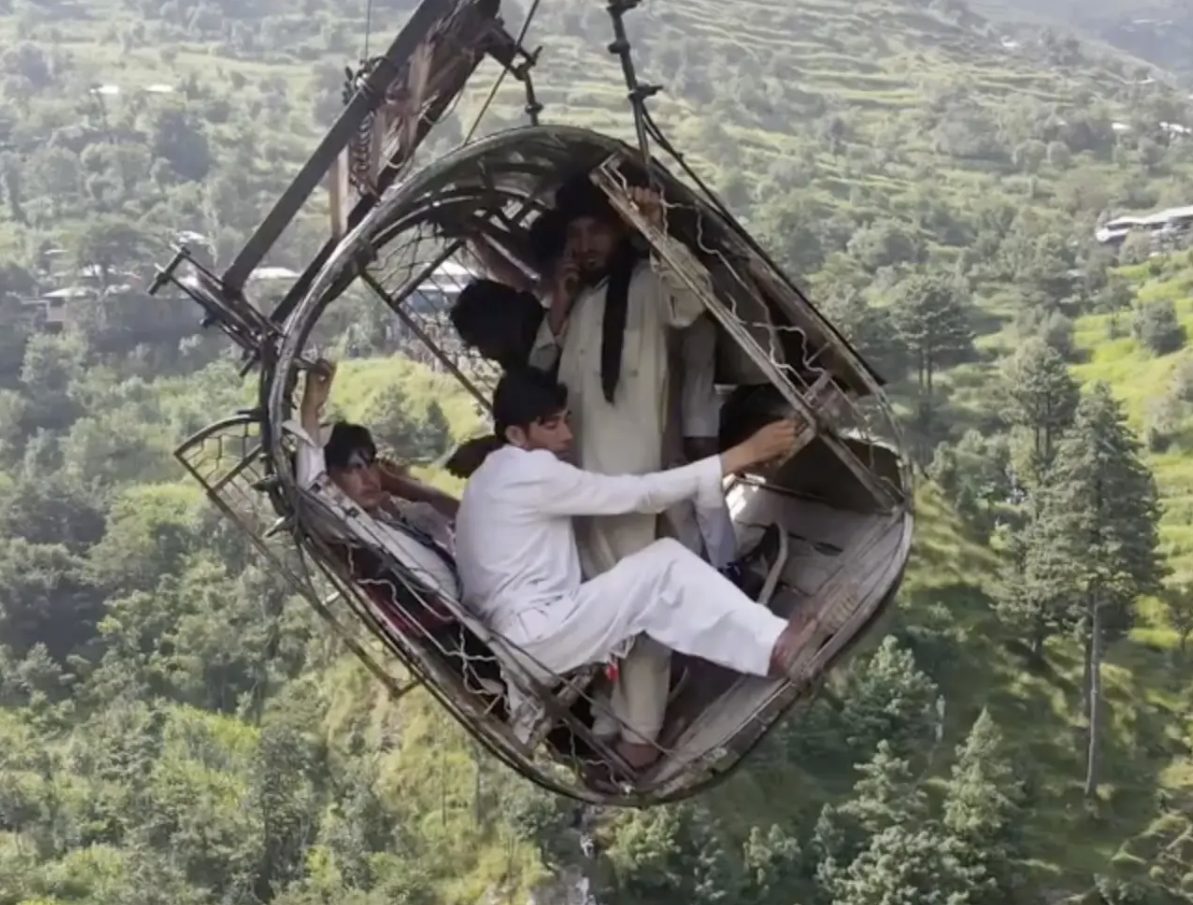
Global media coverage of a recent cable car rescue in northern Pakistan has brought to light the widespread use of the improvised aerial transportation systems across mountain communities in the country. The improvised cable car system and the recent zip-line rescue are both testaments to local rural ingenuity. These systems serve as a lifeline for villagers living on sparsely populated hilltops in places like Mansehra, Swat and Azad Kashmir. They allow them to access clinics, jobs, markets and schools on a daily basis. Building the alternative road infrastructure for these mountainous terrains would be much more expensive and time-consuming. A better example of a fast, safe and relatively less expensive public transportation system for such areas can be found in a modern cable car system built in La Paz, Bolivia. Pakistan should explore a public-private partnership to use the local talent to build a safe, fast and cheap cable car system to meet their residents' needs.
Disabled Pakistan Cable Car Prior to Rescue
Improvised Cable Cars:
Improvised cable cars are built from scrap and strung up by local communities. It is cheaper and there is no comparable alternative infrastructure. They often use the upper body of a pick-up truck. The system relies on a network of cables which are anchored at various points along the route. These cables support the weight of the cabins and passengers. The main support cables run continuously, while the cabins are pulled by a moving "haul rope".
The cabins are moved and stopped by a combination of mechanical systems. A drive mechanism located at the stations provides the propulsion to move the cabins along the cables. Braking systems are used to slow and stop the cabins.
Zip-line Rescue:
A cable car with 8 passengers, mainly schoolchildren, was left dangling after a support cable broke earlier this month. Pakistan Army helicopters mounted a rescue effort that succeeded in rescuing only one child. The military called off its effort after the air stirred up by the helicopter rotor caused the cable car to shake violently and the daylight dimmed. That's when the local zip-line experts stepped in and successfully rescued the remaining 7 passengers who were trapped hundreds of meters above a valley.
Cable Car System in La Paz Bolivia
Bolivian Example:
In 2014, Bolivia inaugurated a cable car system with a length of nearly 7 miles threading through 11 stations, making it the world's largest network of aerial urban transportation. Built by Austria's Doppelmayr Garaventa Group, the La Paz system has become very popular. It serves 18,000 people an hour.
Pakistan's Options:
The governments of Khyber Pakhtunkhwa and Azad Kashmir need to find safe, fast and cost-effective transportation systems for their far-flung hilltop communities. Neither the current road infrastructure nor the improvised cable car systems meet these objectives. Both governments should explore a public-private partnership to use the local talent to build a safe and cheap cable car system to meet their residents' needs. In addition to providing job opportunities for locals, such a system could also become a big attraction for tourists to enjoy seeing the picturesque landscape from the air. It could also be used to promote winter sports in these beautiful areas extending from KPK to Gilgit-Baltistan and Azad Kashmir.
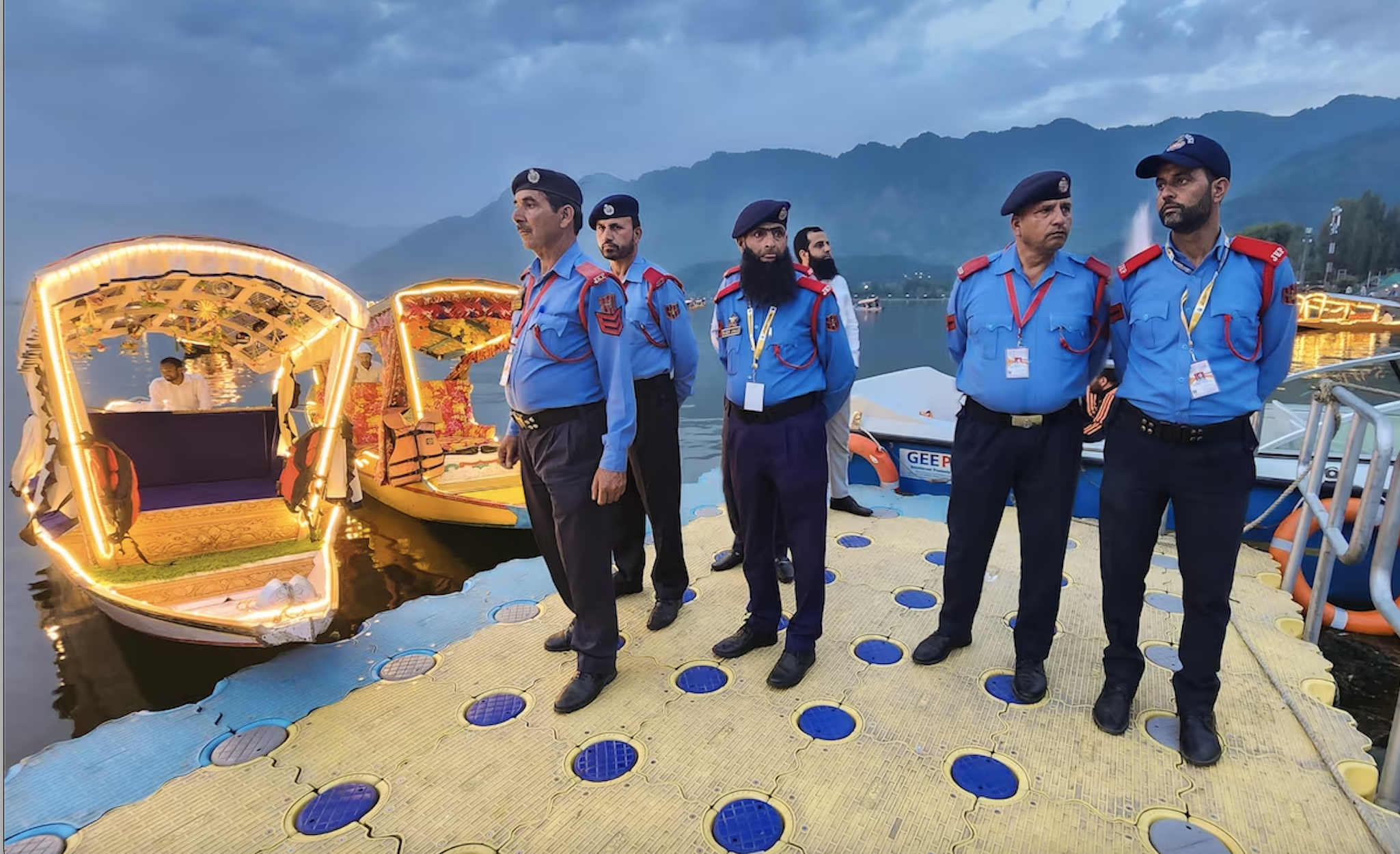
Prime Minister Narendra Modi's campaign to show normalcy in the Indian occupied territory of Jammu and Kashmir has backfired. Three member countries of the G20 boycotted the tourism event in Srinagar. The rest of them sent local embassy staff to attend. The event also drew negative worldwide media coverage of the brutality of India's "settler colonialism" in the disputed territory. It elicited strong condemnation from the United Nations. Prior to the event, India’s tourism secretary, Arvind Singh had promised that the meeting will not only “showcase (Kashmir’s) potential for tourism” but also “signal globally the restoration of stability and normalcy in the region.” The Modi government failed to achieve both of these objectives.
G20 Meeting in Indian Military Occupied Kashmir
Meeting Boycott:
China, Saudi Arabia and Turkey did not attend the G20 event in Srinagar. Rest of the G20 members sent diplomats posted in New Delhi to attend it. It's not unusual for foreign diplomats to visit disputed territories such as Jammu and Kashmir. Last year, Donald Blome, US Ambassador to Pakistan, visited what he called "Azad Jammu and Kashmir". The G20 Tourism Working Group meeting in Kashmir drew condemnation from China and the United Nations.
“China firmly opposes holding any form of G20 meetings on disputed territory. We will not attend such meetings,” said Chinese Foreign Ministry spokesperson Wang Wenbin at a press briefing on May 19 in Beijing.
Fernand de Varennes, U.N. special rapporteur on minority issues, criticized the meeting, saying that by hosting the session in Kashmir, “India is seeking to normalize what some have described as a military occupation by instrumentalizing a G20 meeting and portray an international 'seal of approval’.”
The UN representative warned the G20 of “unwittingly providing a veneer of support to a facade of normalcy at a time when massive human rights violations, illegal and arbitrary arrests, political persecutions, restrictions and even suppression of free media and human rights defenders continue to escalate.”
The global media coverage of the G20 meeting in Kashmir has largely been negative. It has highlighted the brutal occupation of the region by the Indian military.
A piece in The Conversation accused India of "using the G20 summit to further its settler-colonial ambitions in Kashmir". It pointed out that the "route to Gulmarg (G20 event location) is lined with barbed wire. Armed soldiers keep watch from fortified bunkers". The Conversation piece offers the following advice to anyone visiting Indian Occupied Kashmir:
"Those visiting (Indian Occupied) Kashmir must first learn about the decolonial history of the region, one that honors Kashmiri calls for self-determination and sovereignty. They must follow the principle of do no harm by not visiting tourist sites or using tour operators run by Indian authorities. They should support local Kashmiri-run businesses as much as possible. There is no simple resolution for tourism on occupied lands. Tourism amid settler-colonialism manifests in exploitation, dispossession, commodification and other injustices and inequities. The goal of ethical travel is not immediate perfection or self-exoneration. It is an invitation to think about our own actions and complicity".
A story in "The Guardian" noted that the G20 Kashmir meeting "required a large show of security at Srinagar international airport". It added: "India’s presidency of the G20 group of leading nations has become mired in controversy after China and Saudi Arabia boycotted a meeting staged in Kashmir, the first such gathering since India unilaterally brought Kashmir under direct control in August 2019".
Voice of America reported that the "security moved into the background to give a sense of normalcy amid reports of mass detentions" as the event drew closer.
Modi's Blunders:
Prime Minister Modi's PR campaign has clearly backfired. His government's actions have failed to project any sense of normalcy in the disputed region. In fact, Mr. Modi's blunders have helped internationalize the issue of Kashmir on the world stage. They have drawn China further into the Kashmir dispute, particularly in the Ladakh region where the Chinese troops have taken large chunks of what India claims as its territory.
In an Op Ed for the Deccan Herald, Indian Journalist Bharat Bhushan has accused Modi government of "overplaying its hand in organizing a G20 event in Srinagar". He has summed up the fallout from the G20 Kashmir Meeting failure as follows:
"Prime Minister Narendra Modi’s upcoming State visit to the United States makes this rebuff on J&K by the international community, especially significant. What might have been ignored by India and perhaps down-played, at least publicly by the US, in the build-up to the Modi-Biden summit, will now become an additional irritant in the bilateral relationship. Did the Modi government bait fate by overplaying its hand in organizing a G20 event in Srinagar?"
Here's India's JNU Professor speaking about illegal Indian occupation of Kashmir, Manipur and Nagaland:
Karachi Shipyard, the oldest and the only major shipyard in Pakistan, is experiencing unprecedented growth. It is rapidly expanding manufacturing facilities to respond to growing demand for both civilian and military vessels. Karachi also has several small boat yards near Karachi Fish Harbor where craftsmen build wooden fishing vessels with their hands to meet fishermen's demand. There are now plans in the works for building a new shipyard in Gwadar. Pakistan has the potential to build a large "Blue Economy" in its 290,000 square kilometers of coastal water or about 36% of the country's land area open for tapping vast resources in it. These resources include seafood and energy resources as well as international transport and trade connectivity with the rest of the world. It offers opportunities for water sports, recreation and tourism in the coastal areas of Pakistan. Pakistan needs a large fleet of ships to defend it and to take full economic advantage of it.
Several new dry docks are being built at Karachi Shipyard and Engineering Works (KSEW) to cater to growing demand from Pakistan Navy and other government agencies. Two patrol boats have been built jointly with Dutch builder Damen at KSEW and delivered to Pakistan Customs.
Four Type-039B ‘Hangor Class’ Chinese designed AIP submarines are planned to be built at KSEW. Keel-laying ceremony was held recently at KSEW for Turkish-designed MILGEM corvettes for Pakistan Navy. There are discussions underway to build Dutch Damon corvettes at KSEW for Pakistan Navy.
Karachi shipyard is too small for servicing large ships owned by Pakistan National Shipping Corporation (PNSC).
Karachi Fish Harbor:
Pakistani craftsman are continuing to build wooden fishing vessels for domestic and foreign buyers. They deliver 30 to 40 fishing vessels every year, in addition to repair work at the yard. Their foreign customers include fishermen from Iran, Yemen, Saudi Arabia and UAE.
Currently, the builders are taking orders for cargo vessels since the demand for fishing boats has gone down due to a variety of reasons, including the use of over-aged vessels, according to Arab News.
Gwadar Shipyard:
Karachi Shipyard and Engineering Works (KSEW) has recently acquired land in Gwadar to establish another major shipyard where much larger ships can be built and serviced. KSEW chief Rear Admiral Ather Saleem has told The News “The decision has been taken in view of increased movement of ships and maritime activities at Gwadar Port in the backdrop of China-Pakistan Economic Corridor (CPEC).”
KSEW in Karachi currently has 2 dry docks of limited capacities of 18,000 and 26, 000 DWT. It also has 3 shipbuilding berths with capacities of 6000 DWT, 15000 DWT and 26000 DWT. These are too small for Pakistan National Shipping Corporation cargo ships and tankers. Deadweight tonnage of the biggest PNSC tanker Aframax Tanker Quetta is 107,215.
Blue Economy:
Pakistan has a 1,000 kilometers long coastline on the Arabian Sea with maritime sovereignty over 200 nautical miles deep Exclusive Economic Zone (EEZ) and 150 nautical miles of Continental Shelf. This adds 290,000 square kilometers of sea or about 36% of the country's land area open for tapping vast resources in it.
Pakistan's "Blue Economy" in this extended economic zone includes seafood and energy resources as well as international transport and trade connectivity with the rest of the world. It offers opportunities for water sports, recreation and tourism in the coastal areas of Pakistan. Pakistan needs a large fleet of ships to defend it and to take full economic advantage of it.
Large numbers of Pakistanis headed north for respite from summer heat during Eid ul Fitr holidays last week. Tens of thousands went to Swat using the newly built Swat Expressway while others chose even cooler temperatures in the heights of the Karakoram mountain via the improved Karakoram Highway.
Karakoram Highway
Some of the preferred tourist destinations included Hunza, Astore, Fairy Meadows, Neelum Valley, Swat and Kumrat. In addition to using tents in camping areas, many tourists found accommodations in public rest houses ordered opened by Prime Minister Imran Khan.
Fairy Meadows near Nanga Parbat in Gilgit Baltistan
Then US Secretary of State Hillary Clinton warned in 2009 that Pakistan was “abdicating to the Taliban”. Various western commentators and pundits went further by predicting Pakistan's "imminent collapse", and the usual foreign policy rags chimed in with their shrill talk of Pakistan as a "failed state". By 2011, Pakistan Army cleared Swat of the militants, brought refugees back home and began to restore tourism.
Swat Expressway
Built by Pakistani military's Frontier Works Organization (FWO) under contract for Khyber Pukhtunkhwa privincial government, the Swat Expressway is a state-of-the-art 81 kilometers (50 miles) long 4-lane controlled access motorway that is opening up the hidden treasures of Swat, Chitral, Dir Upper, Dir Lower, Kohistan, Shangla, Buner, Mohmand and Bajaur districts to the world. It's been funded by a $50 million grant by the Saudi government. Its southernmost point is Karnal Sher interchange in Swabi District on Peshawar-Islamabad M1 Motorway and goes north to Chakdara Dir Lower district after passing through 21 bridges and 1300 meters twin tunnels on National Highway N-45.
Karakoram Highway (KKH)
Karakoram Highway:
Karakoram Highway (KKH), the highest paved road in the world, is a 1,300 kilometer (810 miles) Pakistani national highway that extends from Hasan Abdal in the Punjab province via Khyber Pukhtunkhwa (KP) prvince to the Khunjerab Pass in Gilgit-Baltistan, where it crosses into China. KKH upgrade is a $1.3 billion project expected to be completed as part of China-Pakistan Economic Corridor (CPEC) by 2020. After the upgrade, widths of its various sections will be in the range of 12.5 meters to 30 meters. Minimum widths of lanes will generally be between 2.5 to 3.25 meters.
Hazara Motorway in Abbottabad, Pakistan
KKH has opened up a world of unmatched natural beauty and splendor of places like Hunza, Astore and Fairy Meadows for domestic and foreign tourists. It has connected many cities and towns including Haripur, Abbottabad, Mansehra, Battagram, Besham, Pattan, Dasu, Chilas, Gilgit, Aliabad, Gulmit, Sust, Tashkurgan, Upal And Kashgar.
Hazara Motorway M15 Connecting M1 Motorway With Abbottabad & Mansehra in KP
Pakistan's tourism industry, currently estimated at $20 billion (6.9% of GDP in 2016), is booming, according to data available from multiple reliable sources. World Travel and Tourism Council (WTTC) forecasts it to grow to over $36 billion within a decade.
Hazara Motorway M15 Connecting M1 Motorway With Abbottabad & Mansehra in KP
Economic Impact of Tourism:
Pakistan tourism industry generates $20 billion in revenue and supports 3.6 million jobs directly and indirectly, according to the World Travel and Tourism Council. Foreign visitors generate nearly a billion US$ in exports.
Significantly improved security situation has helped boost annual tourist arrivals in Pakistan by 300% since 2013 to 1.75 million in 2016, while domestic travelers increased 30% to 38.3 million, according to the state-owned Pakistan Tourism Development Corp. Hotel bookings increased 80 percent in 2016, according to Jovago, Pakistan’s biggest hotel booking website.
By contrast, foreign tourist arrivals in the country’s larger neighbor, India, jumped from 6.97 million in 2013 to 8.8 million in 2016, according to Indian government figures. 88% of India's and 92% of Pakistan's tourism revenue is domestic. India's tourism industry is worth $209 billion (9.6% of of GDP in 2016), according to WTTC.
Malam Jabba Ski Resort in Swat Valley
A story in the Financial Times, a British newspaper, quotes British tour operator Jonny Bealby as saying, “While I am sure this will raise some eyebrows, we are starting to see a marked increase in tourism to Pakistan". Bealby's company arranged 55% more clients to Pakistan in 2017 compared with 2016, and advance bookings are more than 100 per cent up on this point 12 months ago, according to the Financial Times.
Top Adventure Tourism Destination:
British Backpackers Society has recently ranked Pakistan as its top destination for adventure tourism. The Society describes Pakistan “one of the friendliest countries on earth, with mountain scenery that is beyond anyone’s wildest imagination”.
Pakistan government's tourism campaign — including covering buses in several major world cities with beautiful pictures of Pakistan's tourist attraction — have helped raise the country’s profile. Increased investments in roads, airports and other infrastructure have helped ease travel.
Pakistan government has announced its decision to provide 30 day tourist visa on arrival for visitors from 24 countries on three continents.
Summary:
Improved security and new infrastructure are boosting Pakistan's domestic and international tourism. The industry in Pakistan is booming with 300% increase in foreign tourist arrivals since 2013. Tens of thousands of domestic tourists went to Swat using the newly built Swat Expressway while others chose even cooler temperatures in the heights of the Karakoram mountain via the improved Karakoram Highway. Some of the preferred tourist destinations included Hunza, Astore, Fairy Meadows, Neelum Valley, Swat and Kumrat. In addition to using tents in camping areas, many tourists found accommodations in public rest houses ordered opened by Prime Minister Imran Khan. Tourism industry contributed $20 billion (6.9% of GDP in 2016) and supported 3.6 million jobs in Pakistan in 2016. World Travel and Tourism Council (WTTC) forecasts it to grow to over $36 billion within a decade.
Pakistan's tourism industry, currently estimated at $20 billion (6.9% of GDP in 2016), is booming, according to data available from multiple reliable sources. World Travel and Tourism Council (WTTC) forecasts it to grow to over $36 billion within a decade.
Economic Impact of Tourism:
Pakistan tourism industry generates $20 billion in revenue and supports 3.6 million jobs directly and indirectly, according to the World Travel and Tourism Council. Foreign visitors generate nearly a billion US$ in exports.
Significantly improved security situation has helped boost annual tourist arrivals in Pakistan by 300% since 2013 to 1.75 million in 2016, while domestic travelers increased 30% to 38.3 million, according to the state-owned Pakistan Tourism Development Corp. Hotel bookings increased 80 percent in 2016, according to Jovago, Pakistan’s biggest hotel booking website.
By contrast, foreign tourist arrivals in the country’s larger neighbor, India, jumped from 6.97 million in 2013 to 8.8 million in 2016, according to Indian government figures. 88% of India's and 92% of Pakistan's tourism revenue is domestic. India's tourism industry is worth $209 billion (9.6% of of GDP in 2016), according to WTTC.
A story in the Financial Times, a British newspaper, quotes British tour operator Jonny Bealby as saying, “While I am sure this will raise some eyebrows, we are starting to see a marked increase in tourism to Pakistan". Bealby's company arranged 55% more clients to Pakistan in 2017 compared with 2016, and advance bookings are more than 100 per cent up on this point 12 months ago, according to the Financial Times.
Top Adventure Tourism Destination:
British Backpackers Society has recently ranked Pakistan as its top destination for adventure tourism. The Society describes Pakistan “one of the friendliest countries on earth, with mountain scenery that is beyond anyone’s wildest imagination”.
Pakistan government's tourism campaign — including covering buses in several major world cities with beautiful pictures of Pakistan's tourist attraction — have helped raise the country’s profile. Increased investments in roads, airports and other infrastructure have helped ease travel.
Pakistan government has announced its decision to provide 30 day tourist visa on arrival for visitors from 24 countries on three continents.
Summary:
Tourism industry in Pakistan is booming with 300% increase in foreign tourist arrivals since 2013. It contributed $20 billion (6.9% of GDP in 2016) and supported 3.6 million jobs in 2016. World Travel and Tourism Council (WTTC) forecasts it to grow to over $36 billion within a decade.
Here's a video about Pakistan narrated by an American Journalist Cynthia Ritchie:
What does former Indian foreign secretary Shyam Saran say about ties with Pakistan in his recent book "How India Sees the World: Kautilya to the 21st Century"? Why have "low-hanging fruit" issues between India and Pakistan like Siachin and Sir Creek not been resolved? Whose fault is it? Who in India torpedoed solutions agreed with Pakistan at the last minute? Why does ancient Indian thinker Kautilya, regarded as the Indian Machiavelli, dominate foreign policy thinking in India with regard to Pakistan and Afghanistan?
Why did US Defense Secretary General James Mattis go to India? What was his agenda relative to India's role in Afghanistan and cementing US-India defense ties? Why does Indian security analyst Prof Bharat Karnad say that India "severing relations with TTP will mean India surrendering an active card in Pakistan and a role in Afghanistan as TTP additionally provides access to certain Afghan Taliban factions"? Did Mattis ask India to stop supporting the Tehreek-e-Taliban Pakistan (TTP) terrorist activities against Pakistan as Karnad anticipated?
Is the US Federal Government response to widespread destruction after Hurricane Maria in US territory of Puerto Rico adequate? Why is the mayor of San Juan so angry? Why is she being attacked by President Trump for demanding faster relief operations? Why did it take more than a week for the US to assign a military general to oversee disaster relief in Puerto Rico? Was President Trump too busy attacking the NFL players taking the knee during the playing of the US national anthem?
How is tourism industry doing in Pakistan? How has the improved security situation and better infrastructure positively impacted tourism in Pakistan? What are latest figures released by WTTC, the World Travel and Tourism Council, for Pakistan? How much does the industry contribute to Pakistan's GDP? What is its potential over the next decade? How does it help promote goodwill for Pakistan?
Viewpoint From Overseas host Misbah Azam discusses these questions with Ali H. Cemendtaur and Riaz Haq (www.riazhaq.com)
U.S. President Donald Trump's revised travel ban on citizens of six Muslim-majority countries will not reduce its impact on tourism, according to Taleb Rifai, the head of UN World Tourism Organization. "People don't go to places where they don't feel welcome," he added.
Reports indicate that foreign travelers from many non-Muslim majority countries have also been met with hostility by US officials upon arrival in the United States.
Mem Fox, author of children's books advocating tolerance and acceptance, was detained by U.S. immigration officials as she arrived in America to give a talk about the importance of tolerance and acceptance, the Washington Post reported. She said "the manner in which we were interrogated — in public view about really private information — was terrible. It was the insolence that was beyond mind-boggling.”
Hopper, an app which uses data to predict and analyze airfares, says that its research indicates that searches for flights to the US between January 26 and February 1 by internet users from 122 different countries dropped 17 per cent compared to the first three weeks in January, according to media reports.
Trump's travel ban has already resulted in a worldwide 6.5 per cent drop in the number of airline bookings for travelers headed to the United States, according to Daily Mail.
Meanwhile, New York City projects it will see 300,000 fewer international visitors in 2017 than it did in 2016, a 2.1% dip, according to a report in USA Today. It's the first time that group of travelers has shrunk since 2008, according to NYC and Company, New York's tourism arm.
The US travel industry had nearly $250 billion in sales to foreigners in 2015 and had a $98 billion trade surplus, the most of any sector, according to MarketWatch. Without travel, the U.S. trade deficit would be about 20% larger, $600 billion instead of $500 billion.
It seems that President Trump's policies are not only hurting America's image abroad but also contributing to potential job losses in travel and tourism industry that employs millions of Americans. Such policies are more likely to hurt than help the "working class white" Americans who voted for Mr. Trump.
Cassie De Pecol, recognized by the Guinness Book of World Records for traveling to all 196 countries of the world in shortest time, has put Pakistan at number 5 among the top 10 "must visit" countries.
Other countries on De Pecol's top 10 list are: Mongolia, Bhutan, Maldives, Vanuatu, Oman, Tunisia, Peru, Costa Rica and USA.
De Pecol said people must visit Pakistan “to get a true sense of raw, authentic Asian culture, and for the food.” Earlier, in an Instagram message at the start of her Pakistan visit she wrote: “My time here in Pakistan has just begun and has been one of the many wonderfully educational and culturally enriching experiences…. Don’t judge by its color or a country by the media", according to media reports.
De Pecol, a Connecticut native, left the United States on July 14, 2015, and just completed her 196-country tour Feb 2, 2017 — beating the current Guinness record of three years and three months, according to Today.com.
De Pecol needed money to finance her expedition. She found her first nonprofit endorsement through the International Institute for Peace Through Tourism, and after that, she decided to reach out to big and small companies and independent investors to contribute to her mission. “A lot of people think it’s so easy to find a sponsor to travel,” she today Today. “One of the most difficult aspects of this expedition was trying to find funding through sponsorship.”
Here's a documentary about Pakistan by Cynthia Ritchie:
Pakistan's travel and tourism industry is booming with significant improvement in security situation. In 2015, it contributed 7% of Pakistan's GDP. It includes foreign and domestic travel and tourism spending or employment in the equivalent economy-wide concept in the published national income accounts or labour market statistics.
There are are multiple indicators showing this industry will contribute more this year. Growth in air travel and hotel occupancy are among the top indicators of travel and travel and tourism industry growth.
“The rate of hotel occupancy has surged to 80% across the country compared to 35% before the current calendar year started,” said Beach Luxury Hotel Director Business Development Rehan Wahid, according to report in the Express Tribune newspaper. “Hotels in Islamabad and Lahore are fully booked most of the days. However, this is yet to happen in Karachi,” he said.
Thanks to the ramp-up of China-Pakistan Economic Corridor (CPEC) related projects, Gwadar is leading the way for new hotel construction with permits issued for least 5 new 5-star hotels so far in the new port city. These include a 250-room hotel apartment project of the management of Pearl Continental Hotels and another one of the Bahria Group. Gwadar Airport growth of 73% was the fastest of all airports in Pakistan.
Air Travel:
Pakistan air travel market is among the fastest growing in the world. IATA (International Air Transport Association) forecasts Pakistan domestic air travel will grow at least 9.5% per year, more than 2X faster than the world average annual growth rate of 4.1% over the next 20 years. The Indian and Brazilian domestic markets will grow at 6.9% and 5.4% respectively.
Pakistan saw 23% growth in airline passengers in 2015, according to Anna Aero publication. Several new airports began operations or expanded and each saw double digit growth in passengers. However, Gwadar Airport growth of 73% was the fastest of all airports in Pakistan.
The top 12 airports all saw large double digit increases. Multan grew 64%, Quetta 62% and Faisalabad +61% all climbing one place as a result of all of them seeing a growth of over 60%. Turbat Airport in Balochistan is the newest airport to reach the top 12 in terms of traffic.
Security Situation:
The key reason for travel and tourism boom is significant improvement in the security situation since the launch of Pakistan Army anti-terror campaign called Zarb-e-Azb. Civilian deaths have been cut from 2,378 in 2011 to 412 this year until August 14, 2016. Total number of deaths, including civilians and security personnel, have been reduced from 11,704 in 2009 to 1232 so far in 2016, according to South Asia Terrorism Portal (SATP.org)
Hotel occupancy rates have risen from just 35% in 2015 to 80% this year. Air travel is growing rapidly with IATA forecasting Pakistan to be among the world's fastest growing air travel markets. All airports in the country, including several new ones, are seeing double digit increases in the number of passengers flying in and out of them. Improved security since the start of Operation Zarb e Azb and political stability are underpinning growing confidence in Pakistan.
Decried by many as "racist poverty porn" and condemned by Bollywood superstar Amitabh Bachan in his blog for showing India as "a third world dirty under belly developing nation (sic)", the movie Slumdog Millionaire has been greeted by howls of protests in India. But it has been widely acclaimed in the West. It is sparking international interest in the vast slums of Mumbai. “Slumdog” may take in $100 million during its run in U.S. and Canadian theaters, according to Media By Numbers LLC. The low-budget movie had $43.9 million in receipts before collecting 10 Oscar nominations on Jan. 22, 2009. There have been charges of child exploitation against Slumdog producer and director which have been denied by Danny Boyle. “The actors were paid very well. We have not released any figures — either what they were paid or what they will receive when they complete their education — because it would make them vulnerable to certain elements, because they are quite large sums of money.”
Reports suggest the stars are entitled to a trust fund if they have remained in education for a certain length of time. The production company wanted to make sure the child actors would benefit from a decent education as well as the money, he said. Slumdog is not the only Academy Award contender focusing on poverty, squalor and its effects in India. Another documentary "The Final Inch" -- which has also been nominated for an Academy Award -- takes a real-life look at India's slums. The film explores the final battle against polio, a largely forgotten disease that continues to ravage the world's poorest areas -- areas that the Hollywood feature so graphically depicts.
Poverty tours in India, Brazil and South Africa are not an entirely new phenomenon. Favela tours in Rio De Janeiro in Brazil and South African shanty town tours have attracted tourists for years. It is primarily the popular Slumdog Millionaire, nominated for 10 Oscars including Best Picture award, that is translating to more rubberneckers in the Mumbai, India, slum where it was filmed — and is re-igniting a debate over the ethics of "poverty tourism", according to USA Today. Chris Way, the co-founder of Reality Tours that operates the poverty tour of the Mumbai slum, estimates that sales are up by about 25% since Slumdog Millionaire's release. Though he credits some of the increase to a gradual rebound in tourism after terrorist attacks in Mumbai killed more than 170 people in November, publicity surrounding the film has played a big role.
The tours have come under criticism for exploiting poverty. But Way defends his tours as a way to help the poor in Mumbai. In India, "a lot of people think the movie is 'poverty porn,' " says Way, a Brit who has lived in Mumbai since 2004. But any criticism of his tours "comes from misunderstanding what we are trying to do … break down the negative image of slums, (and) highlight the industry and sense of community." Reality Tours charges $10 or $20 a person, depending on length of the tour, and pledges to donate 80% of after-tax profits to local charities. Though the business hasn't yet cleared a profit, it paid for a community center. With the expected attendance of the slum child actors of Mumbai at the Oscars tomorrow in Los Angeles, Way's company and Mumbai tourism are likely to get a further boost in the coming months. There is speculation that Azharuddin Mohammed Ismail, 10, and Rubina Ali, 9, both of whom were plucked from their homes in a Mumbai slum by director Danny Boyle and his team, will steal the show from the big glamorous stars of Hollywood.
Child poverty is not unique to India. MSNBC recently reported that the worsening economy in Pakistan is especially taking its toll on children and some are being abandoned by their parents. The report highlighted the case of three mothers who could not afford to feed their children. "The three women came together to my center," Bilquis Edhi of Edhi Center said. "They asked me to please take their children; they could no longer feed them."
"The mothers were sobbing as they tried to leave the children and the children were crying clinging to their mothers," Edhi said. "It was heart wrenching to watch."
While the news of abandoned or begging children offers only a small anecdotal evidence of the sorry state of Pakistani children, the official data paints an equally grim picture. Ranked at 136 on a list of 177 countries, Pakistan's human development ranking remains very low. Particularly alarming is the low primary school enrollment for girls which stands at about 30% in rural areas, where the majority of Pakistanis live. In fact, the South Asia average of primary school enrollment is pulled down by Pakistan, the only country in all of Asia and the Pacific with the lowest primary enrollment rate of 68 per cent in 2005. This is 12 percentage points lower than that of Maldives, which, at 80 per cent, has the second lowest rate in Asia and the Pacific. Low primary enrollment rate and poor health of children in Pakistan raise serious concerns about the future of the nation in terms of the continuing impact of low human development on its economic, social and political well-being.
According to Asia Children's Rights report, about 8 million Pakistani children, or 40 percent of the total population of children under the age of 5, suffer from malnutrition. About 63 percent of children between 6 months and 3 years have stunted growth and 42 percent are anemic or underweight. Poor nutrition leaves these children vulnerable to diseases. Pakistan is among the few countries of the world where Polio is still endemic. Poor conditions extend to the education sector as well. Over 23 million children in Pakistan have never been to school. The International Labor Organization data shows 3.3 million children, between the ages of 5 and 14 years in Pakistan, are forced to work rather than attend school. A quarter of a million of them work as domestic servants. The most recent United Nations Human Development Report indicates that the youth literacy rate in Pakistan is an abysmal 58 percent, among the lowest in the world. Sexual abuse is another problem. Homelessness of children is quite common. Over 10,000 children below the age of 15 live on the streets and sidewalks of Karachi alone. Many of them are forced to beg for survival. Most of these children say they left home because of domestic violence and family financial problems, according to Edhi Foundation which cares for some of them. According to a report by Amnesty International, there are more than 4,500 juvenile prisoners in Pakistani jails and 66 percent of them are being tried. Juvenile detainees are kept with adults, leaving them vulnerable to sexual and physical abuse.
I hope that the growing interest in Mumbai slums goes beyond a temporary fad and a fleeting voyeuristic exercise. This extraordinary interest should translate into action to help the people of the slums escape the abject poverty and squalor that define them and their daily existence. Jeff Greenwald, executive director of EthicalTraveler.org, put it well when he spoke with USA Today. "If one takes such a tour out of a genuine desire to learn and a passion for social justice, the experience can be valuable, eye-opening, even life-changing. If one goes as a spectator, it's little different than a visit to the zoo," he said.
This opportunity of global interest in child poverty should not be wasted. Instead, it should spur the Slumdog director to set up a foundation with some of the proceeds from the film to champion the cause of poor children with UNICEF in South Asia and the rest of the world.
A recent issue of San Jose Mercury News has a pictorial about grinding poverty in India done by John Boudreau and Dai Sugano. This heartbreaking pictorial illustrates the extent of the problem that India faces, a problem that could potentially be very destabilizing and put the entire society at the risk of widespread chaos and violence.
On the day of our departure for Jeddah, with our bags packed and goodbyes dispensed with, our group found itself together at the coffee shop of the hotel. There each one of us talked about whether this trip had changed our opinions of Pakistan and its people.
This is a country of about 160 million people scattered about four provinces and Azad Kashmir. As the world's fifth largest democracy, Pakistan has had its share of questionable leadership, but there is enough evidence that the country's progress had not taken a back seat.
We all agreed that the media had been over blowing Pakistan's lack of safety and security. Never once had we felt threatened for our personal safety during our entire trip, and there were many times when individually we would set off on our own to the busiest sections of the cities we had visited.
Nether were our pre-visit ideas about a dirty and poor country justified, for we saw enough to prove otherwise. The infrastructure wherever we went was either intact or in the process of being upgraded.
We also felt that in the context of their internal politics, news of Pakistan's emerging industries and economies were continuously being relegated to the back pages of the media.
Perhaps it has more to do with Pakistan's preoccupation with conflicts at their northern borders over recent times, but little is written on the fact that with more than 100 universities and 150 research institutes, Pakistan produces 100,000 engineering graduates annually, and another 100,000 technically trained graduates.
More than 50 foreign companies have set up R&D facilities in Pakistan recently. Some of these include multinationals such as GE, DuPont, Bell Labs, IBM and Microsoft. In the business of automobiles, Pakistan manufactures and sells engine components to five of the world's largest manufacturers. Suzuki and Hyundai are recent entrants to the manufacturing buzz in Pakistan setting up full-fledged plants, with Pakistan taking its rank as the ninth largest automobile manufacturer in the world.
Along with heavy industry, Pakistan is also one of the world's largest exporters of textiles and related products. Garment exports alone are expected to fetch in $8 billion by year's end.
In its quest for self-reliance, Pakistan is among seven countries in the world that launch their own satellites. It is also among a few countries that have developed and built their own nuclear power capabilities using their own indigenous technology.
New emerging industries in areas of interest include mecha-tronics, biotechnology, pharmaceuticals and clinical research. And foreign investment has shown a remarkable increase in recent years. Ironically, Gulf countries awash with high returns on the sale of oil have yet to take advantage of an educated labor pool and invest heavily in this growing economy.
And as with the aspirations of the Saudi ambassador in Pakistan, we too wished well for our Pakistani hosts, for they do have a country that should make Pakistanis everywhere proud and more determined to develop their political participation in a positive manner. It is their country, and they should all join hands under the crescent and the star, the symbol of their flag to ensure a secure and stable government, free from personal agendas.
As we settled in our seats for the flight back home, individually we all vowed Insha Allah that we would one day return to Pakistan with our families. We had had but a glimpse into this land of tourism and resilience and all of us wanted more.
Pakistan Revisited — VI: A Time for Reflection By Tariq A. Al-Maeena, talmaeena@aol.com Saturday 17 May 2008 (11 Jumada al-Ula 1429)