Monday, February 7, 2022

How Many Hours of Work Buys an iPhone 12 in India, Pakistan?

It takes an Indian minimum wage worker twice as long to afford an Apple iPhone 12 as his Pakistani counterpart. A minimum wage Pakistani has to work 1,642 hours, or about 10 months of work, to buy an iPhone 12, according to Bloomberg News. An Indian minimum worker, on the other hand, must work nearly twice as long, a total of 3,254 hours, to buy it.  It takes 1,791 hours in Indonesia and 2,045 hours in Egypt. Assuming a 40-hour work-week and two weeks of vacation, there are 2,000 hours of work in a year. Given these figures, it can be safely assumed that very few minimum wage workers in the developing world can afford to buy an iPhone 12.

Hours of Work Needed to Buy iPhone 12. Source: Bloomberg

Bloomberg reported the following on February 4 as follows: "Based on minimum wage levels, a new report from Grover.com estimates it would take 6,639 hours for a Venezuelan to earn enough for the prized smartphone and 3,254 hours for an Indian. Chinese people must work 680 hours to make enough money". 

Minimum Wage in Selected Countries. Source: ILO via The Business Standard

International Labor Organization's Global Wage Report 2020-21 reported that the minimum wage in Pakistan is $491 a month in purchasing power parity, the highest in South Asia. India's minimum wage is $215 a month, less than half of Pakistan's. 

India is one of the most unequal countries in the world, according to the World Inequality Report 2022. There is rising poverty and hunger. Nearly 230 million middle class Indians have slipped below the poverty line, constituting a 15 to 20% increase in poverty. India ranks 94th among 107 nations ranked by World Hunger Index in 2020. Other South Asians have fared better: Pakistan (88), Nepal (73), Bangladesh (75), Sri Lanka (64) and Myanmar (78) – and only Afghanistan has fared worse at 99th place. Meanwhile, the wealth of Indian billionaires jumped by 35% during the pandemic. 

Neoliberal policies in emerging markets like India have spurred economic growth in last few decades. However, the gains from this rapid growth have been heavily skewed in favor of the rich. The rich have gotten richer while the poor have languished. The average per capita income in India has tripled in recent decades but the minimum dietary intake has fallen. According to the World Food Program, a quarter of the world's undernourished people live in India. The COVID19 pandemic has further widened the gap between the rich and poor. 

Related Links:

Haq's Musings

South Asia Investor Review

Pakistan Among World's Largest Food Producers

Naya Pakistan Housing Program

Food in Pakistan 2nd Cheapest in the World

Indian Economy Grew Just 0.2% Annually in Last Two Years

Pakistan to Become World's 6th Largest Cement Producer by 2030

Has Bangladesh Really Left India and Pakistan Behind?

Pakistan Projected to Be World's 7th Largest Consumer Market

Coronavirus, Lives and Livelihoods in Pakistan

Vast Majority of Pakistanis Support Imran Khan's Handling of Covid19 Crisis

Pakistani-American Woman Featured in Netflix Documentary "Pandemic"

Incomes of Poorest Pakistanis Growing Faster Than Their Richest Counterparts

Can Pakistan Effectively Respond to Coronavirus Outbreak? 

How Grim is Pakistan's Social Sector Progress?

Pakistan's Sehat Card Health Insurance Program

Trump Picks Muslim-American to Lead Vaccine Effort

COVID Lockdown Decimates India's Middle Class

Pakistan Child Health Indicators

Pakistan's Balance of Payments Crisis

How Has India Built Large Forex Reserves Despite Perennial Trade Deficits

India's Unemployment and Hunger Crises"

PTI Triumphs Over Corrupt Dynastic Political Parties

Strikingly Similar Narratives of Donald Trump and Nawaz Sharif

Nawaz Sharif's Report Card

Riaz Haq's Youtube Channel


Saturday, February 5, 2022

Bill Gates and BMW Back Pakistani-American Mujeeb Ijaz's Battery Startup

Our Next Energy (ONE), a two-year-old Michigan startup founded by Pakistani-American Mujeeb Ijaz, has received $25 million in initial investment from Bill Gates' Breakthrough Energy Ventures and German automaker BMW. Storage battery technology is a key area of innovation to bring about clean energy revolution.   Mujeeb Ijaz has engineered a way to achieve longer ranges for electric vehicles from lithium-iron-phosphate (LFP) batteries, a more stable but less powerful chemistry than the nickel-based batteries currently used by most automakers. Mujeeb's brother Mansoor Ijaz made headlines in 2011 when he wrote a Financial Times Op Ed regarding his conversations with Husain Haqqani who was serving as Pakistan's ambassador in Washington. Mujeeb's father Mujaddid Ahmed Ijaz was a Pakistani experimental physicist and a professor of physics at Virginia Tech.  

Mujeeb Ijaz, Founder CEO of Our Next Energy (ONE)

Mujeeb Ijaz, Pakistani-American founder and CEO of ONE, is a 30 year veteran of battery systems technologies. He has worked at Ford Motor Company and Apple. Mujeeb holds 31 U.S. patents in the field of battery technology and energy management systems. He is a graduate of Virginia Tech. Mujeeb recently demonstrated a prototype of its new battery in a Tesla Model S, driving 752 miles (1,210 kilometers) on a single charge. 

ONE’s key innovation is the way it designs battery packs. Ijaz, a veteran of Apple’s secretive car project, said he’s landed his first customer, an EV startup that makes medium-duty delivery trucks, according to Seattle Times. He declined to name the customer but said production will start in November 2022. The growth of the electric-vehicle market has brought challenges for the industry, including a shortage of batteries and soaring prices for raw materials such as nickel and cobalt, the latter of which is fraught with ethical issues. Nickel, the metal the auto industry largely relies on today to provide power and range, is prone to fire, a risk the industry is spending billions to control.

Another notable leader revolutionizing the auto industry is Sajjad Khan, Pakistani-German, who is leading German luxury carmaker Mercedes-Benz's entry into the electric vehicle market with six new all-electric “EQ” models, according to media reports.  Sajjad Khan was born in Karachi and graduated from NED Engineering University with a degree in computer science. 

Silicon Valley is at the forefront of this clean energy revolution led by Tesla. Tesla is more than an electric car company; the company also supplies solar panels and batteries. Other automakers are also taking their cues from Tesla.  China's BYD Auto has only recently been surpassed by Tesla in production volumes. Auto giants General Motors and BMW are both building electric cars and planning to build "gigafactories" like Tesla's to manufacture battery packs for vehicles and homes. Pakistan is building up renewable power generation capacity. The country has also recently announced its National Electric Vehicle Policy that offers incentives to transition to clean energy.

Bloomberg estimates that Batteries and electric transmission account for about 40% of passenger cars’ costs. European demand is met by mainly Japanese and South Korean battery makers like Panasonic, LG Chem Ltd. and Samsung SDI Co. In the U.S., Tesla has built its own battery cells at its Gigafactory to manage costs and satisfy demand for the cars it produces. Chinese demand for battery packs is met by BYD.

High-capacity battery pack costs have dropped nearly 40% since 2015, according to Wood Mackenzie data as reported by Wall Street Journal. The prices of lithium and vanadium—two of several key raw materials that are used in such batteries—also have declined over the past year or so.

Battery storage costs have fallen nearly 90% in the past decade, according to NextEra Energy.  Cost reductions are expected to continue to only $8 to $14 per MW-hour by 2022, or about a penny per kW-hour. For perspective, the average kW-hour of electricity costs about 13 cents for retail users.

NextEra Energy forecasts that post-2023, wind plus energy storage costs will be $20 to $30 per MW-hour, and solar plus energy storage will be $30 to $40 per MW-hour. Natural gas is expected to match the solar-plus-storage costs.

Thursday, February 3, 2022

Upper Caste Hindu-American Professor Acknowledges Internalized Islamophobia

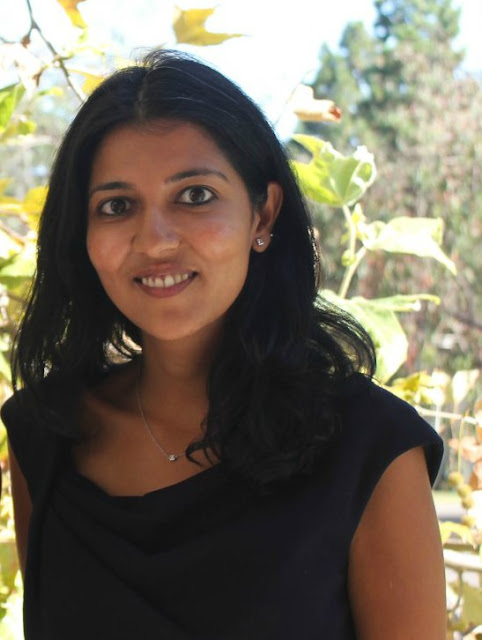
Dr Saiba Varma, Associate Professor of Anthropology at University of California in San Diego (UCSD), has recently been under fire for hiding her familial ties to to a top RAW official while working on her book "The Occupied Clinic: Militarism and Care in Kashmir".  “As an upper-caste and upper-class Indian citizen and subject, I have actively and passively internalized anti-Muslim racism my entire life. I am complicit in the colonization of Kashmir and other regions forcibly incorporated into the Indian nation-state", she acknowledges in her book released last year.  

Dr. Saiba Verma


“Borrowing and extending techniques from British colonial rule, the Indian state enacted the world’s most established, sophisticated, and pervasive systems of emergency rule and legislation and repeatedly criminalized pro-independence demands as ‘conspiracies’ and ‘anti-national.’ The Indian state’s global image as ‘the world’s largest democracy,’ a generous aid donor, and non-interventionist actor have helped disguise its military excesses in Kashmir and other border regions", she adds. 

In her defense, Dr. Saiba has tweeted: “My father (a top official of Indian Indian intelligence RAW posted in Kashmir)  had no direct bearing on the research I’ve done. Recognizing the need to acknowledge this relationship, however, during my fieldwork I disclosed it to Kashmiri scholars and journalists I was close to. My ethical practices and scholarly arguments are accountable to them".  “In my book, I write: "As Stuart Hall once stated, there is no innocent discourse...There is no innocent way for any scholar of Indian origin, including myself, to engage with Kashmir."

American academia has substantial and growing numbers of upper caste Hindu faculty. More than 80 faculty members of the California State University (CSU) have spoken out against a recent decision of CalState University system to include caste in its non-discriminatory policy.  Praveen Sinha, a professor at CSU Long Beach said. "We cannot but oppose the unique risk that CSU's move puts on us as they add a category that is only associated with people of Indian descent such as myself and thousands of other faculty and students in the CSU system. It is going to create divisions where they simply do not exist". 

Devesh Kapur, a professor of political science at the University of Pennsylvania and co-author of The Other One Percent: Indians in America (Oxford University Press, 2017), says that the vast majority of Indian-Americans, including university professors, are upper caste Hindus. He explains the phenomenon of high-achieving Indian-Americans as follows: “What we learned in researching this book is that Indians in America did not resemble any other population anywhere; not the Indian population in India, nor the native population in the United States, nor any other immigrant group from any other nation.” 

Kapur talks about what he calls “a triple selection” process that gave Indian-Americans a boost over typically poor and uneducated immigrants who come to the United States from other countries. The first two selections took place in India. As explained in the book: “The social system created a small pool of persons to receive higher education, who were urban, educated, and from high/dominant castes.” India’s examination system then selected individuals for specialized training in technical fields that also happened to be in demand in the United States. Kapur estimated that the India-American population is nine times more educated than individuals in the home country.

The results of the Indian American Attitudes Survey (IAAS) conducted in 2020 show that India's Hindu Nationalist Prime Minister Narendra Modi's massive popularity among Hindu Americans. The findings of the survey sponsored by Washington-based think tank Carnegie Endowment For International Peace reveal that 69% of Hindu Americans approve of Mr. Modi's performance. 70% of Hindu Americans agree or strongly agree that white supremacy is a threat to minorities in the United States, compared to 79% of non-Hindu Indian American. Regarding Hindu majoritarianism in India, however, the data point to a much sharper divide: only 40% of Hindus agree that Hindu majoritarianism is a threat to minorities, compared to 67% of non-Hindus, according to the 2020 IAAS Survey.

69% of Hindu Americans Support Modi. Source: Indian American Attitudes Survey 2020

The 7 in 10 approval rating of Mr. Modi by Hindu Indian Americans stands in sharp contrast to that of barely one in five Muslim Indian Americans. Indian American Christians are almost evenly divided: 35 percent disapprove, 34 percent approve, and 30 percent did not express an opinion. Twenty-three percent of respondents without a religious affiliation and 38 percent from other faiths approve of Modi’s performance, respectively. The share of “don’t knows” is the smallest for Hindus and Muslims compared to other religious categories, suggesting that views among respondents of these two faiths are the most consolidated.

Related Links:

Haq's Musings

South Asia Investor Review

Pakistani-Americans: Young, Well-educated and Prosperous

Hindus and Muslim Well-educated in America But Least Educated Worldwide

What's Driving Islamophobia in America?

Pakistani-Americans Largest Foreign-Born Muslim Group in Silicon Valley

Caste Discrimination Among Indian-Americans in Silicon Valley

Islamophobia in America

Silicon Valley Pakistani-Americans

Pakistani-American Leads Silicon Valley's Top Incubator

Silicon Valley Pakistanis Enabling 2nd Machine Revolution

Karachi-born Triple Oscar Winning Graphics Artist

Pakistani-American Ashar Aziz's Fire-eye Goes Public

Two Pakistani-American Silicon Valley Techs Among Top 5 VC Deals

Pakistani-American's Game-Changing Vision 

Minorities Are Majority in Silicon Valley 


Tuesday, February 1, 2022

US Says NO to Food as Human Right While Afghanistan Suffers Under Sanctions

On November 9, 2021, the United States, the world's most vocal supporter of human rights, voted against a United Nations committee's draft on the right to food which passed by 180 votes in favor to 2 against (Israel, United States). The UN committee expressed alarm that in 2020, "the number of people lacking access to adequate food rose by 320 million ‑ to 2.4 billion ‑ amounting to nearly a third of the world’s population, and that between 720 million and 811 million people faced hunger". Currently, the hunger situation in Afghanistan is the most acute with over half the population suffering from extreme levels of hunger. Afghanistan has been subjected to US sanctions since the US loss to the Taliban in 2021. 

UN Vote on Food as Human Right


 “Hunger is a violation of human dignity”, Cuba’s delegate said while addressing the UN Committee meeting. Presenting the draft, he voiced concern that the United States has blocked consensus on the text for four years in a row. The United States representative — highlighting conditions in the Lake Chad Basin, Yemen and Somalia ‑ said the draft contains unbalanced and inaccurate positions that her delegation simply cannot support. The concept of food sovereignty could justify food protectionism, negatively impacting food security, she explained, adding that the United States does not recognize the right to food, as it lacks a definition in international law.    

Meanwhile, Shelley Thakral, the World Food Program spokesperson for Afghanistan, says more than half the population — some 23 million Afghans — are facing what the WFP calls extreme levels of hunger. Malnutrition is soaring. Food prices have risen. And the WFP's surveys show the overwhelming majority of Afghans, 98% of the population, lack enough food to eat. Many are surviving on limited diets with less fresh vegetables, dairy or meat – or none at all, according to an NPR report

Afghanistan is not the first example of the US sanctions resulting in mass hunger and starvation. The reality is that the United States' sanctions over the years have denied many people around the world their basic right to food.The sanctions do not just hit the current generation of people experiencing hunger.  Sanctions permanently damage the social and economic fabric of the targeted nations. The effects of hunger last multiple generations in terms of their sub-par physical and mental development. 

In a recent article published in The Guardian, Nicholas Mulder, author of "The Economic Weapon: The Rise of Sanctions as a Tool of Modern War" has criticized the use of sanctions. He has said  "Promoting economic stimulus at home while enforcing deprivation abroad is a self-defeating way to seek world stability". Here is an except from Mulder's "The Economic Weapon": 

"As sanctions have become an accepted tool of liberal international institutions, the threshold for using them has declined. How to respond to the violation of norms remains, ultimately, a political question. In the spring of 1919, Robert Cecil waved away protests against using blockade to overthrow Bolshevism by responding that he saw “no other alternative.” Many of today’s internationalists, too, see few alternatives. This perception has driven some of the most grievously counterproductive uses of sanctions, most prominently against Iraq in the 1990s, when its strangulation at the hands of the UN Security Council cost hundreds of thousands of lives and permanently damaged the country’s social and economic fabric. These humanitarian nightmares are an important reminder of the lethal early twentieth-century origins of sanctions. But most economic sanctions used today are far more mundane in character. In 2015 a UN official estimated that one-third of the world’s population lives in countries that are under some form of economic sanctions. These range from the specific, such as individual travel bans and asset freezes, to more general measures, such as technological and trade restrictions. Today’s omnipresent sanctions have traveled a long way from their interwar purpose of preventing war".

As far back as 1924, famous British economist John Maynard Keynes  had argued that aiding our allies is more effective than sanctioning our foes. Mulder reminds the great powers of today, particularly the United States, that Keynes' lesson should be heeded now. 

Related Links:


Haq's Musings

South Asia Investor Review

Pakistan Among World's Largest Food Producers

Naya Pakistan Housing Program

Food in Pakistan 2nd Cheapest in the World

Hunger Worsens in India Amid COVID Pandemic

Pakistan to Become World's 6th Largest Cement Producer by 2030

Pakistan's 2012 GDP Estimated at $401 Billion

US Defeat By The Afghan Taliban

Coronavirus, Lives and Livelihoods in Pakistan

Vast Majority of Pakistanis Support Imran Khan's Handling of Covid19 Crisis

Pakistani-American Woman Featured in Netflix Documentary "Pandemic"

Incomes of Poorest Pakistanis Growing Faster Than Their Richest Counterparts

Can Pakistan Effectively Respond to Coronavirus Outbreak? 

How Grim is Pakistan's Social Sector Progress?

Pakistan Fares Marginally Better Than India On Disease Burdens

Trump Picks Muslim-American to Lead Vaccine Effort

COVID Lockdown Decimates India's Middle Class

Pakistan Child Health Indicators

Pakistan's Balance of Payments Crisis

How Has India Built Large Forex Reserves Despite Perennial Trade Deficits

Conspiracy Theories About Pakistan Elections"

PTI Triumphs Over Corrupt Dynastic Political Parties

Strikingly Similar Narratives of Donald Trump and Nawaz Sharif

Nawaz Sharif's Report Card

Riaz Haq's Youtube Channel

Friday, January 28, 2022

NY Times: Modi Bought Israeli Pegasus Spyware as Part of $2 Billion Deal

In a long investigative report titled "The Battle for the World’s Most Powerful Cyberweapon" published today, the New York Times has revealed that the Indian Prime Minister Narendra Modi bought the Pegasus spyware as part of a 2017 $2 billion deal he signed with then Israeli Prime Minister Benjamin Netanyahu. 

Israeli NSO Pegasus Spyware


Here's the relevant excerpt of the New York Times report on Modi-Netanyahu deal:

"In July 2017, Narendra Modi, who won office on a platform of Hindu nationalism, became the first Indian prime minister to visit Israel. For decades, India had maintained a policy of what it called “commitment to the Palestinian cause,” and relations with Israel were frosty. The Modi visit, however, was notably cordial, complete with a carefully staged moment of him and Prime Minister Netanyahu walking together barefoot on a local beach. They had reason for the warm feelings. Their countries had agreed on the sale of a package of sophisticated weapons and intelligence gear worth roughly $2 billion — with Pegasus and a missile system as the centerpieces. Months later, Netanyahu made a rare state visit to India. And in June 2019, India voted in support of Israel at the U.N.’s Economic and Social Council to deny observer status to a Palestinian human rights organization, a first for the nation". 

Mr. Modi has used the Israeli spyware to not only spy on his critics at home but also his perceived enemies abroad. Pakistani Prime Minister Imran Khan is among the most prominent targets of the Modi government's cyber attacks, according to a recently released Project Pegasus report.  The Indian government has neither confirmed nor denied the report.  The focus of the report is the use of the Israeli-made spyware by about  a dozen governments to target politicians, journalists and activists. The users of the Pegasus software include governments of  Bahrain, Morocco, Saudi Arabia, India, Mexico, Hungary, Azerbaijan, Togo and Rwanda.     

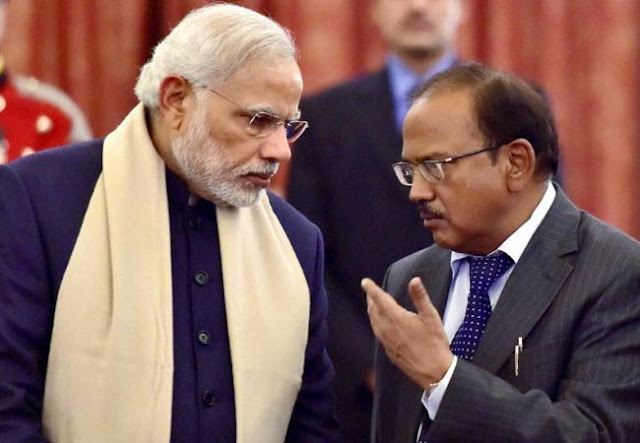
Indian Prime Minister Modi with National Security Advisor Ajit Doval

Modi's National Security Advisor (NSA) Ajit Doval is the man behind India's acquisition of cyberweapons like the Israeli Pegasus spyware. Indian National Security Council Secretariat (NSCS), which reports to National Security Adviser (NSA) Ajit Doval, has seen a tenfold increase in budgetary allocation, according to a Hindu newspaper story published in 2017.  Prior to becoming Modi's NSA, Doval openly advocated using the Taliban terrorists against Pakistan.  Recently, Doval has talked about weaponizing "the civil society" . “The new frontiers of war, what you call the fourth-generation warfare, is the civil society,”  he said in November 2021. Elaborating further, he said wars have ceased to become an effective instrument for achieving political or military objectives. They are too expensive or unaffordable and, at the same time, there is uncertainty about their outcome. “But it is the civil society (NGOs) that can be subverted, suborned, divided, manipulated to hurt the interests of a nation. You are there to see they stand fully protected,” he said. 

This is not the first time that Pakistan has figured prominently as India's favorite target for cyber hacks. Last year, a report in The Sunday Guardian of India said: "Mobile phones of around 30 Pakistani government servants, who include serving army generals, officials attached with the ISI and senior bureaucrats, were hacked into by using Pegasus spying software during April and May 2019". 

In addition to the use of spyware, the Indian government has been engaged in a massive, long-running disinformation campaign targeting Pakistan. EU Disinfo Lab, an NGO that specializes in disinformation campaigns, has found that India is carrying out a massive 15-year-long disinformation campaign to hurt Pakistan. The key objective of the Indian campaign as reported in "Indian Chronicles" is as follows: "The creation of fake media in Brussels, Geneva and across the world and/or the repackaging and dissemination via ANI and obscure local media networks – at least in 97 countries – to multiply the repetition of online negative content about countries in conflict with India, in particular Pakistan".  After the disclosure of India's anti-Pakistan propaganda campaign, Washington-based US analyst Michael Kugelman tweeted: "The scale and duration of the EU/UN-centered Indian disinformation campaign exposed by @DisinfoEU is staggering. Imagine how the world would be reacting if this were, say, a Russian or Chinese operation".  

Pegasus Spyware Explained. Source: The Guardian 


Pegasus is spying software made by NSO Group, an Israeli company whose exports are regulated and controlled by the Israeli government. It uses several different messaging apps to plant itself in mobile phones. Last year, Apple issued a warning to its customers of a "zero-click" version of the Pegasus software. It does not require the phone user to click on any links or messages for the spyware to take control of the device. Once installed, it can read and export any information or extract any file from SMS messages, address books, call history, calendars, emails and internet browsing histories.   

The Israeli spyware will likely inspire other software developers elsewhere to copy and improve it, contributing to a proliferation of such hacking and spying tools around the world. The governments and officials who use it to target others will eventually become targets themselves, unless the nations of the world agree to some norms of internationally accepted cyber behavior. It's high time to think about it. 


Monday, January 24, 2022

Pakistan Cut Public Debt in Half On Musharraf's Watch in 1999-2008

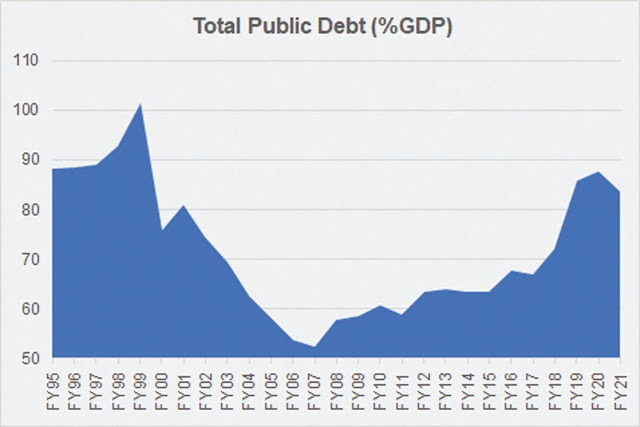
In 1999, President Pervez Musharraf inherited a massive debt of over 100% of GDP run up by the Pakistan Peoples Party and the Pakistan Muslim League (Nawaz) governments in 1990s. Musharraf's policies not only revived the bankrupt economy but also brought down debt to 52% of GDP by 2007. 

Pakistan Debt to GDP 1995-2021. Source: IMF


PPP Government's 2008 Letter to IMF:

In a letter to the International Monetary Fund in 2008, the PPP government hailed Musharraf's economic record without mentioning his name in the following words:

"Pakistan's economy witnessed a major economic transformation in the last decade (2000-2008). The country's real GDP increased from $60 billion to $170 billion, with per capita income rising from under $500 to over $1000 during 2000-07.....the volume of international trade increased from $20 billion to nearly $60 billion. The improved macroeconomic performance enabled Pakistan to re-enter the international capital markets in the mid-2000s. Large capital inflows financed the current account deficit and contributed to an increase in gross official reserves to $14.3 billion at end-June 2007. Buoyant output growth, low inflation, and the government's social policies contributed to a reduction in poverty and improvement in many social indicators". (see MEFP, November 20, 2008, Para 1).

Savings and Investments:

Domestic savings rate reached 18% of the GDP and foreign direct investment (FDI) hit a record level of $5.4 billion in 2007-8. This combination of domestic and foreign investments nearly tripled the size of the economy from $60 billion in 1999 to $170 billion in 2007, according to IMF. Exports nearly tripled from about $7 billion in 1999-2000 to $22 billion in 2007-2008, adding millions of more jobs. Pakistan was lifted from a poor, low-income country with per capita income of just $500 in 1999 to a middle-income country with per capita income exceeding $1000 in 2007.

FDI in Musharraf years came in many sectors, ranging from telecommunications to manufacturing.
Several mobile phone and Internet service operators built networks worth billions of dollars. Without this telecom infrastructure, there would be no tech industry, no freelancers and no fast-growing tech exports today.

New cement plants met growing demand that more than doubled cement consumption, FMCG (fast moving consumer goods) sector took off to meet demand from growing middle class and production of cars and motorcycles jumped. 


Human Capital Development: 

In addition to the economic revival, Musharraf focused on the social sector as well. Pakistan's Human Development Index (HDI) score grew an average rate of 2.7% per year under President Musharraf from 2000 to 2007, and then its pace slowed to 0.7% per year in 2008 to 2012 under elected politicians, according to the 2013 Human Development Report titled “The Rise of the South: Human Progress in a Diverse World”.


Primary Enrollment Source: Economic Survey of Pakistan

Youth Literacy Rate Source: Economic Survey of Pakistan

Overall, Pakistan's human development score rose by 18.9% during the Musharraf years and increased just 3.4% under elected leadership since 2008. The news on the human development front got even worse in the last three years, with HDI growth slowing down as low as 0.59% — a paltry average annual increase of under 0.20 per cent. Going further back to the  decade of 1990s when the civilian leadership of the country alternated between PML (N) and PPP,  the increase in Pakistan's HDI was 9.3% from 1990 to 2000, less than half of the HDI gain of 18.9% on Musharraf's watch from 2000 to 2007.

R&D Spending Jumped 7-fold as % of GDP 1999-2007 Source: World Bank

Acceleration of HDI growth during Musharraf years was not an accident.  Not only did Musharraf's policies accelerate economic growth, helped create 13 million new jobs, cut poverty in half and halved the country's total debt burden in the period from 2000 to 2007, his government also ensured significant investment and focus on education and health care. The annual budget for higher education increased from only Rs 500 million in 2000 to Rs 28 billion in 2008, to lay the foundations of the development of a strong knowledge economy, according to former education minister Dr. Ata ur Rehman. Student enrollment in universities increased from 270,000 to 900,000 and the number of universities and degree awarding institutions increased from 57 in 2000 to 137 by 2008. Government R&D spending jumped from 0.1% of GDP in 1999 to 0.7% of GDP in 2007. In 2011, a Pakistani government commission on education found that public funding for education has been cut from 2.5% of GDP in 2007 to just 1.5% - less than the annual subsidy given to the various PSUs including Pakistan Steel and PIA, both of which  continue to sustain huge losses due to patronage-based hiring.

Pakistan's High-Tech Exports Tripled as % of Manufactured Exports. Source: World Bank

Pakistan textile exports more than doubled from $5.2 billion to more than $11 billion during the Musharraf years. Exports soared 19.43% in 2001, 20% in 2004, 24.5% in 2005 and 11.23% in 2006, all on President Musharraf's watch, according to "The Rise and Fall of Pakistan's Textile Industry: An Analytical View" published by Javed Memon, Abdul Aziz and Muhammad Qayyum.     


Pakistan Textile Exports Growth. Source: Javed Memon

Pakistan experienced rapid economic and human capital growth in years 2000 to 2008 on President Pervez Musharraf's watch. Savings, investments and exports hit new records and the rate of increase in human development reached new highs not seen before or since this period.  Without this human capital, there would be no tech industry, no freelancers and no fast-growing tech exports today.

Employment Growth in South Asia. Source: World Bank

Pakistan's employment growth was the highest in South Asia region in 2000-2010, followed by Nepal, Bangladesh, India, and Sri Lanka in that order, according to a World Bank report titled "More and Better Jobs in South Asia".

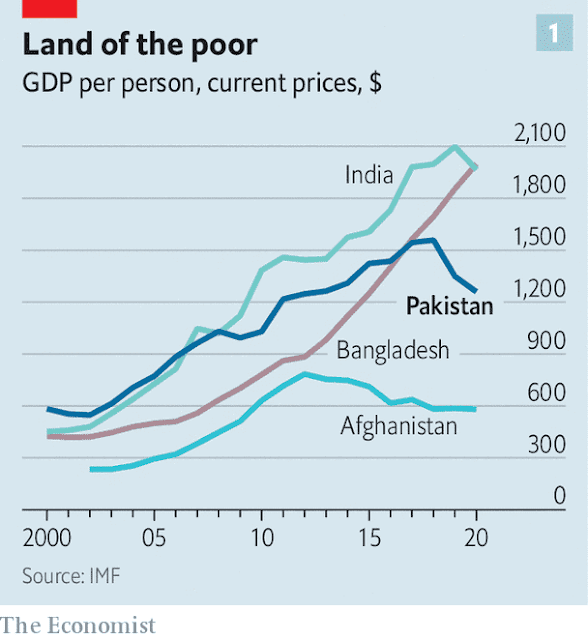
Comparing Per Capita GDP Trajectory in South Asia. Source: The Economist

Until 2010, Bangladesh was a laggard in South Asia region. Its per capita income was about half of Pakistan's. Now Bangladesh's per capita GDP is higher than both India's and Pakistan's. What changed? The biggest change is Bangladeshi leader Shaikh Hasina's decision to stifle the unruly Opposition and the media to bring political and economic stability to the South Asian nation of 160 million people. It has eliminated a constant sense of crisis and assured investors and businesses of continuity of government policies. With development taking precedence over democracy, Shaikh Hasina followed the example of Asian Tigers  by focusing on export-led economic growth of her country. She incentivized the export-oriented garment industry and invested in human development. Bangladesh now outperforms India and Pakistan in a whole range of socioeconomic indicators: exports, economic growth, infant mortality rate, primary school enrollment, fertility rate and life expectancy.    

Related Links:


Friday, January 21, 2022

Pakistan Nuclear Power Generation Soared 66% in 2021

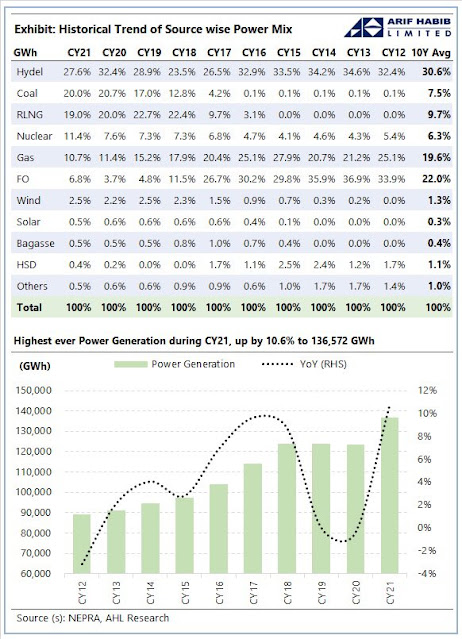
Nuclear power plants in Pakistan generated 15,540 GWH of electricity in 2021, a jump of 66% over 2020. Overall, Pakistan's power plants produced 136,572 GWH of power, an increase of 10.6% over 2020, indicating robust economic recovery amid the COVID19 pandemic. 

Pakistan Electric Power Generation. Source: Arif Habib


Hydroelectric dams contributed 37,689 GWH of electricity or 27.6% of the total power generated, making hydropower the biggest contributor to power generated in the country. It is followed by coal (20%), LNG (19%) and nuclear (11.4%). 


Cost Per Unit of Electricity in Pakistan. Source: Arif Habib

Nuclear offers the lowest cost of fuel for electricity (one rupee per KWH) while furnace oil is the most expensive (Rs. 22.2 per KWH). 
 
Pakistan Electric Power Generation Fuel MiX. Source: Arif Habib

Construction of 1,100 MW nuclear power reactor K2 unit in Karachi was completed by China National Nuclear Corporation in 2019, according to media reports. Fuel is being loaded in a similar reactor unit K3 which will add another 1,100 MW of nuclear power to the grid in 2022. Chinese Hualong One reactors being installed in Pakistan are based on improved Westinghouse AP1000 design which is far safer than Chernobyl and Fukushima plants.  

The biggest and most important source of low-carbon energy in Pakistan is its hydroelectric power plants, followed by nuclear power. Pakistan ranked third in the world by adding nearly 2,500 MW of hydropower in 2018, according to Hydropower Status Report 2019.  China added the most capacity with the installation of 8,540 megawatts, followed by Brazil (3,866 MW), Pakistan (2,487 MW), Turkey (1,085 MW), Angola (668 MW), Tajikistan (605 MW), Ecuador (556 MW), India (535 MW), Norway (419 MW) and Canada (401 MW).

New Installed Hydroelectric Power Capacity in 2018. Source: Hydroworld.com


Hydropower now makes up about 28% of the total installed capacity of 33,836 MW as of February, 2019.   WAPDA reports contributing 25.63 billion units of hydroelectricity to the national grid during the year, “despite the fact that water flows in 2018 remained historically low.” This contribution “greatly helped the country in meeting electricity needs and lowering the electricity tariff for the consumers.”

Pakistan's Current Account Balance vs International Oil Prices. Source: Arif Habib


Recent history shows that Pakistan's current account deficits vary with international oil prices.  Pakistan's trade deficits balloon with rising imported energy prices. One of the keys to managing external account balances lies in reducing the country's dependence on foreign oil and gas. 


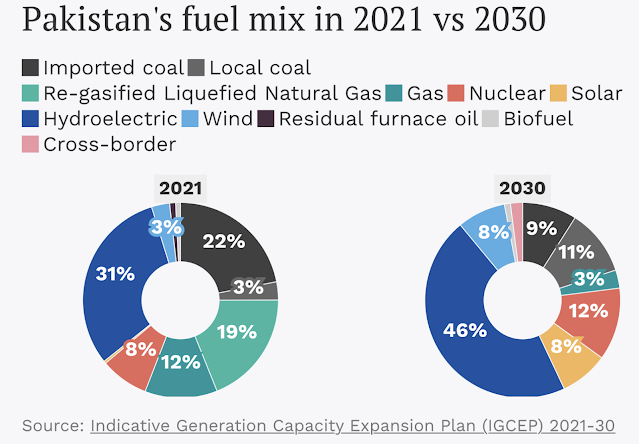
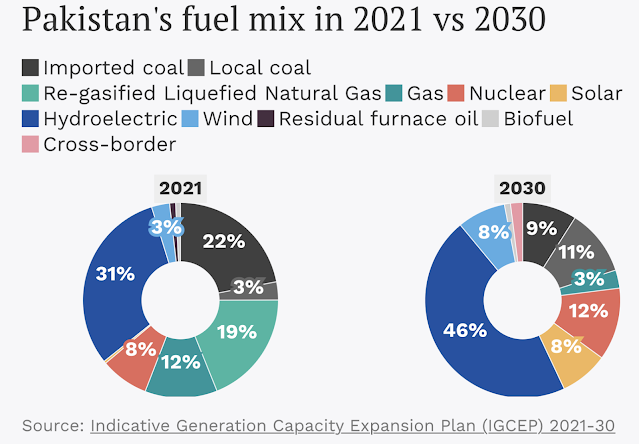
Pakistan Power Generation Fuel Mix. Source: Third Pole

It is true that Pakistan has relied on imported fossil fuels to generate electricity. The cost of these expensive imported fuels like furnace oil mainly used by independent power producers (IPPs) has been and continues to be a major contributor to the "exaggerated external demand driven by its rentier economy" referred to by Atif Mian in a recent tweet. However, Pakistan has recently been adding hydronuclear and indigenous coal-fired power plants to gradually reduce dependence on imported fossil fuels. 

Related Links:


Haq's Musings

South Asia Investor Review

Pakistan Among World's Largest Food Producers

Naya Pakistan Housing Program

Food in Pakistan 2nd Cheapest in the World

Indian Economy Grew Just 0.2% Annually in Last Two Years

Pakistan to Become World's 6th Largest Cement Producer by 2030

Has Bangladesh Surged Past India and Pakistan in Per Capita Income?

Pakistan's Computer Services Exports Jump 26% Amid COVID19 Lockdown

Coronavirus, Lives and Livelihoods in Pakistan

Vast Majority of Pakistanis Support Imran Khan's Handling of Covid19 Crisis

Pakistani-American Woman Featured in Netflix Documentary "Pandemic"

Incomes of Poorest Pakistanis Growing Faster Than Their Richest Counterparts

Can Pakistan Effectively Respond to Coronavirus Outbreak? 

How Grim is Pakistan's Social Sector Progress?

Double Digit Growth in Pakistan's Energy Consumption Confirms Economic Recovery


Trump Picks Muslim-American to Lead Vaccine Effort

COVID Lockdown Decimates India's Middle Class

Pakistan to be World's 7th Largest Consumer Market by 2030

Pakistan's Balance of Payments Crisis

How Has India Built Large Forex Reserves Despite Perennial Trade Deficits

Conspiracy Theories About Pakistan Elections"

PTI Triumphs Over Corrupt Dynastic Political Parties

Strikingly Similar Narratives of Donald Trump and Nawaz Sharif

Nawaz Sharif's Report Card

Riaz Haq's Youtube Channel

Tuesday, January 18, 2022

Pakistan Economy "Not in a Good Place"? Atif Mian's Gloom Justified?

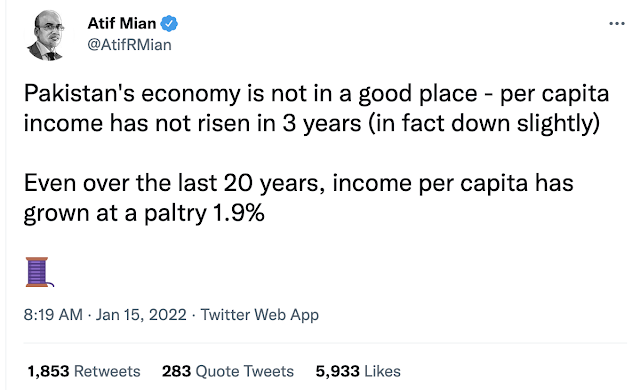
Pakistani-American economist Atif Mian has recently analyzed Pakistan's economy in a series of tweets. He has said "Pakistan's economy is not in a good place", adding that the nation's "per capita income has not risen in 3 years (in fact down slightly)". He has particularly mentioned the country's "exaggerated external demand driven by its rentier economy", "flawed energy policy" and "a broken economic decision system" among the main causes for poor economic performance.  Is Atif Mian's diagnosis correct? Is the official reported data Atif Mian using accurate? What is the current PTI government doing or not doing to correct the problems identified by Mr. Mian? Let's try and assess the situation. 

Economist Atif Mian's Tweet on Pakistan Economy


Per Capita Income:

Pakistan's officially reported GDP and per capita incomes are grossly understated. These are based on the last economic census that was done from April 2003 to December 2003 and published in 2005. The last agriculture census was in 2010, and livestock census in 2006, according to Dr. Ishrat Husain, former governor of The State Bank of Pakistan. The country's economy has changed significantly since then, adding several new economic activities while others have become less important.  For example, the Quantum Index of Large Scale Manufacturing (QIM) with 2005-06 base year gives a weight to textiles of 20.9% (Yarn 13.7 and cloth 7.2). But the textile industry has moved up to higher value added products as reflected in its exports. The value added textiles (non-yarn and non-cloth) now make almost 80% of the total textile exports. These changes are not reflected in current GDP calculations. 

In its 2014 annual report, the State Bank of Pakistan talked about a number of new sectors that are either under-reported or not covered at all: "In terms of LSM growth, a number of sectors that are showing strong performance; (for example, fast moving consumer goods (FMCG) sector; plastic products; buses and trucks; and even textiles), are either under reported, or not even covered. The omission of such important sectors from official data coverage, probably explains the apparent disconnect between overall economic activity in the country and the hard numbers in LSM."

Bangladesh just rebased its GDP in 2020-21 to 2015-16. This has boosted its per capita income by double digits for every year since 2015-16.  Bangladesh's per capita income for the 2015-16 fiscal year has now gone up to $1,737 from $1,465 in the old calculation. For the 2019-2020 fiscal, the per capita income has gone up to $2,335 from $2,024.  The new GDP estimate covers 21 sectors, up from 15 sectors previously.  India last rebased its GDP in 2015, a change that bumped up its per capita GDP by double digits. Nigeria's last rebasing in 2012 increased the size of its economy (GDP) by nearly 90%. Pakistan's current base year is 2005-6. Rebasing which is now long overdue will almost certainly increase Pakistan's per capita income by double digits. 

In this age of big data, it is important for Pakistan to ensure that its bureaucracy at Pakistan Bureau of Statistics (PBS) keeps the national economic data as current as possible. PBS should release the results of the Census of Manufacturing Industries CMI 2015-16 and the finance ministry should rebase Pakistan's economy to year 2015-16 to better reflect the current economic realities. This data is extremely important for businesses, investors, lenders and policymakers. 

Energy Mix:

It is true that Pakistan has relied on imported fossil fuels to generate electricity. The cost of these expensive imported fuels like furnace oil mainly used by independent power producers (IPPs) has been and continues to be a major contributor to the "exaggerated external demand driven by its rentier economy" referred to by Atif Mian. However, Pakistan has recently been adding hydronuclear and indigenous coal-fired power plants. 

Pakistan Power Generation Fuel Mix. Source: Third Pole


Construction of a 1,100 MW nuclear power reactor K2 unit in Karachi has been completed by China National Nuclear Corporation, according to media reports. A similar reactor unit K3 will add another 1,100 MW of nuclear power to the grid, bringing the total nuclear power installed capacity of Pakistan to 3,630 MW (12% of total power) by the end of 2022.  Hualong One reactors being installed in Pakistan are based on improved Westinghouse AP1000 design which is far safer than Chernobyl and Fukushima plants.  In addition, Pakistan is also generating  9,389  MW (about 28% of total power) of low-carbon hydroelectric power in response to rising concerns about climate change. 

Hydroelectric dams contributed 37,689 GWH of electricity or 27.6% of the total power generated, making hydropower the biggest contributor to power generated in the country. It is followed by coal (20%), LNG (19%) and nuclear (11.4%). 


Cost Per Unit of Electricity in Pakistan. Source: Arif Habib

Nuclear offers the lowest cost of fuel for electricity (one rupee per KWH) while furnace oil is the most expensive (Rs. 22.2 per KWH). 


Pakistan Exports Trend 2011-21. Courtesy of Ali Khizer


External Accounts Balance:

Pakistan is the world's sixth largest labor exporter with nearly 10 million Pakistanis working overseas. These workers sent home $31 billion in remittances calendar year 2021 (CY2021), up 19% from CY2020. In addition, Pakistan merchandise exports hit a new record of $28.3 billion in CY2021. Together, Pakistan's merchandise exports and overseas worker remittances added up to nearly $60 billion in 2021. 

Pakistan Textile Exports Trend 2011-21. Courtesy of Ali Khizer


Exports of textiles that make up the bulk of Pakistani exports jumped 32% from $13.1 billion in CY2020 to $17.3 billion in CY2021. The country's technology exports soared 40% to $2.5 billion in CY2021.  “So far, (the) country’s exports of non-traditional products, including information technology, have grown by 60 percent in the last four months," says Special Assistant to the Prime Minister on Commerce and Investment Abdul Razak Dawood. 

Pakistan's Higher Value Added Exports. Source: Dr. Ishrat Husain


Pakistan's textile manufacturing and exports are moving from yarn and fabric toward higher value added products like readymade garments. The value added textiles (non-yarn and non-cloth) now make almost 80% of the total textile exports, according to Dr. Ishrat Husain. 

Pakistan's Current Account Balance vs International Oil Prices. Source: Arif Habib


Recent history shows that Pakistan's current account deficits vary with international oil prices.  Pakistan's trade deficits balloon with rising imported energy prices. One of the keys to managing external account balances lies in reducing the country's dependence on foreign oil and gas. 

Summary:

Professor Atif Mian's criticism of Pakistan's economy is partially valid but his pessimism is unwarranted. He is working with flawed data based on an economic census conducted more than 15 years ago.  This data does not truly reflect current economic activities, per capita incomes and productivity. Pakistani bureaucracy needs to ensure that the underlying data for GDP and productivity is regularly updated to inform businessmen, investors, lenders and policymakers. Pakistan is also significantly boosting its foreign exchange earnings through exports and remittances from overseas workers. The issue of reliance on expensive fossil fuel imports is also being addressed by building more hydro, nuclear and renewable energy. At the same time, indigenous coal-fired power plants are also being added. Unlike Atif Mian, I do see light at the end of the tunnel. 

Related Links:


Haq's Musings

South Asia Investor Review

Pakistan Among World's Largest Food Producers

Naya Pakistan Housing Program

Food in Pakistan 2nd Cheapest in the World

Indian Economy Grew Just 0.2% Annually in Last Two Years

Pakistan to Become World's 6th Largest Cement Producer by 2030

Has Bangladesh Surged Past India and Pakistan in Per Capita Income?

Pakistan's Computer Services Exports Jump 26% Amid COVID19 Lockdown

Coronavirus, Lives and Livelihoods in Pakistan

Vast Majority of Pakistanis Support Imran Khan's Handling of Covid19 Crisis

Pakistani-American Woman Featured in Netflix Documentary "Pandemic"

Incomes of Poorest Pakistanis Growing Faster Than Their Richest Counterparts

Can Pakistan Effectively Respond to Coronavirus Outbreak? 

How Grim is Pakistan's Social Sector Progress?

Double Digit Growth in Pakistan's Energy Consumption Confirms Economic Recovery


Trump Picks Muslim-American to Lead Vaccine Effort

COVID Lockdown Decimates India's Middle Class

Pakistan to be World's 7th Largest Consumer Market by 2030

Pakistan's Balance of Payments Crisis

How Has India Built Large Forex Reserves Despite Perennial Trade Deficits

Conspiracy Theories About Pakistan Elections"

PTI Triumphs Over Corrupt Dynastic Political Parties

Strikingly Similar Narratives of Donald Trump and Nawaz Sharif

Nawaz Sharif's Report Card

Riaz Haq's Youtube Channel