Showing posts with label Exports. Show all posts

Wednesday, October 29, 2025

Pakistan's Rising Arms Sales to Developing Nations

Pakistan is emerging as a major arms supplier to developing countries in Asia and Africa. Azerbaijan, Myanmar, Nigeria and Sudan have all made significant arms purchases from Pakistan in recent years.  Azerbaijan expanded its order for JF-17 Thunder Block III multi-role fighter jets from Pakistan from 16 to 40 aircraft. The recent order extends a 2024 contract worth $1.6 billion to modernize Baku’s airborne combat fleet to $4.6 billion. This makes Azerbaijan the largest export customer of the Pakistan-made warplane. Bangladesh is negotiating purchase of up to 32 JF-17 Thunder Block III aircraft from Pakistan. 

Pakistan PFX Concept Fighter. Source: Raksha Anirveda


In Africa, Pakistan has recently signed a $1.5 billion contract to supply combat drones and military trainer aircraft. The order includes 150 armored vehicles, 220 drones and 10 K-8 Karakorum trainer/light attack aircraft.  Earlier in 2021, Pakistan sold three JF-17 Thunder fighter jets and ten Super Mushshak trainer aircraft to Nigeria in a deal worth nearly $200 million. From 2018 to 2021, Pakistan sold 11 JF-17 Thunder Block I aircraft to Myanmar. 

Air forces of about a dozen developing nations are buying and deploying Pakistani made aircrafts. The reasons for their choice of combat-tested Pakistan manufactured airplanes include advanced BVR (beyond visual range) features, affordability and ease of acquisition, maintenance and training.

Pakistan started developing defense hardware for import substitution to reduce external dependence and to save hard currency. Now the country's defense industry is coming of age to lead the way to high value-added manufactured exports.

Pakistan has unveiled its PFX (Pakistan Fighter Experimental) program as a significant upgrade to its JF-17 joint program with China. The new upgrade will have a number of stealth features ranging from the use of radar-absorbing composite materials and diverterless supersonic inlets (DSI) to internal weapons bay (IWB) which will significantly reduce the aircraft's radar signature. It is targeted for completion by the end of this decade. In addition, the PFX's twin-engine design will improve maneuverability and allow greater payload capacity. 

The program is part of Pakistan's broader strategy to reduce reliance on foreign suppliers and strengthen the domestic defense industry. Currently, 58% of JF-17 components are manufactured locally by PAC, but Pakistan aims to increase this share to achieve full production autonomy for the PFX. It is not just about the PAF modernization but also about positioning Pakistan as an important player in the global military aviation market. 

The PFX is an evolution of a plan that Pakistan announced in 2017 to develop and produce 5th generation fighter planes. It is part of Pakistan Air Force's highly ambitious Project Azm that includes building Kamra Aviation City dedicated to education, research and development and manufacturing of advanced fighter jets, unmanned aerial vehicles (UAVs) and weapon systems.

The PAF has already started replacing its aging fleet with the induction of the Chinese J10C fighter jets which are considered 4.5 Gen. The J10-C has stealth features like diverterless supersonic inlets (DSI).  Its BVR capability is supported by PL-15 missiles, with an engagement range of up to 200 kilometers, facilitating long-range target engagements. 

The PAF has also begun the process of acquiring 5th generation Chinese J35 fighter jets. The delivery of 40 J35 fighters to Pakistan is expected within two years, potentially altering regional dynamics, particularly concerning India. 

Related Links:

Haq's Musings

South Asia Investor Review

US Missile Sanctions: Is Pakistan Really Developing ICBMs?

Pakistan's Cyber Attack and Defense Capability

IDEAS2024: Pakistan Defense Industry Expo

Pakistan's Aircraft Exports

Pakistan Navy Modernization

West's Technological Edge in Geopolitical Competition

Pakistan Defense Industry

Silicon Valley Book Launch of "Eating Grass"

Ukraine's Lesson For Pakistan: Never Give Up Nukes!

Pakistan Destroyed Indian Rafales, S-400 Air Defense System

Pakistan's Sea-Based Second Strike Capability

Riaz Haq Youtube Channel

VPOS Youtube Channel


Saturday, January 13, 2024

Pakistan to Set New Record For Rice Exports in 2023-24

The United States Department of Agriculture is forecasting that Pakistan's rice exports will set a new record of 5 million metric tons in 2023-24.  This is nearly 30% more than the 3.9 million tons Pakistan exported last year. It is being attributed to a bumper rice crop in the country and strong global demand after India imposed restrictions on its exports. A large exportable surplus has helped Pakistani exporters to offer competitive prices in the international market, but prices are likely to remain high due to an increase in demand, according to S&P Global Commodity Insights. European Union and Middle East are the main export markets for Pakistani Basmati rice while Africa and the Far East have emerged as the key export destinations for non-Basmati rice from Pakistan. 

Top Rice Exporting Countries. Source: Aljazeera

Pakistan is the world's fourth largest exporter of rice after India, Thailand and Vietnam. Last year (2022-23), India exported an estimated 20.5 million tons of rice, almost 2.5 times that of the second largest exporter, Thailand with 8.5 million tons. Thailand was followed by Vietnam (7.9 million tons), Pakistan (3.6 million tons) and the United States (2.1 million tons).

Pakistan Rice Exports. Source: S&P Global


Pakistan is among the world's largest food producing countries. It produces large and growing quantities of cereals, meat, milk, fruits and vegetables. Currently, Pakistan produces about 38 million tons of cereals (mainly wheat, rice and corn), 17 million tons of fruits and vegetables, 70 million tons of sugarcane, 60 million tons of milk and 4.5 million tons of meat.  Total value of the nation's agricultural output exceeds $50 billion.  Improving agriculture inputs and modernizing value chains can help the farm sector become much more productive to serve both domestic and export markets.  

One of the objectives of Pakistan government's Special Investment Facilitation Council (SIFC) is to bring in new investments to modernize farming.  Already, Pakistan has signed a memorandum of understanding with Kuwait for $10 billion worth of projects, including some focused on food security. The government is also collaborating with China Machinery Engineering Corp., an engineering and construction heavyweight, and China’s Famsun, an agriculture equipment company, according to a presentation about the initiative in November seen by Bloomberg. 

The initial focus of the Green Pakistan program is on transforming parts of the Cholistan desert to farms and fruit orchards As much as 4.8 million acres of the desert may be allocated fir this purpose.  Many parcels of land available for lease are in arid and underdeveloped regions, supporting irrigation initiatives. Some farmers are already working on their own to implement drip irrigation in Cholistan. Back in 2019, Zofeen Ibrahim of The Third Pole publication met one such farmer named Hasan Abdullah. He uses a measured amount of water mixed with fertilizer via drip irrigation to precisely irrigate his 50 acre citrus farm located on the sand dunes. As much as 60% of the cost of installing drip irrigation system has come from the provincial government. 

Related Links:

Haq's Musings

South Asia Investor Review

Chicken Cheaper Than Daal

Meat Industry in Pakistan

Bumper Crops and Soaring Tractor Sales in Pakistan

Meat and Dairy Revolution in Pakistan

Pakistanis Consuming More Calories, Fruits and Vegetables

Eid ul Azha: Multi-Billion Dollar Urban-to-Rural Transfer

Pakistan's Rural Economy

Pakistan Among World's Largest Food Producing Countries

Median Incomes in India and Pakistan

Tuesday, February 7, 2023

Remembering Pervez Musharraf (1943-2023): A True Patriot Who Made Pakistan Stronger

President Pervez Musharraf of Pakistan passed away this week. May his soul rest in peace. Amen. He was a true patriot who honestly served his country to the best of his ability. He strengthened his country's economy, society and military. Per capita incomes of Pakistanis doubled on his watch, lifting the country from a low-income to a middle-income country. His government liberalized media and telecommunications, leading to rapid growth in both industries.  President Musharraf dramatically accelerated his people's human development by investing heavily in education and healthcare. After what has transpired in recent years, most Pakistanis will remember his time in office as a golden age for the country. 

President Pervez Musharraf 1943-2023


Higher education reform backed by huge increases in spending led to a large increase in college and university enrollment and graduation rates. He halved Pakistan's debt burden and doubled exports during his 8 years in office. Pakistan built up credible nuclear deterrence by ensuring development of a variety of nuclear-capable missiles of various ranges. Pakistan developed the JF-17, its first indigenous fighter jet aircraft with China, and the Pakistan Air Force started deploying it during the Musharraf years.  He negotiated the upgrade of PAF F-16s and acquisition of dozens of new F-16s. 

Pakistan Debt and Fiscal Deficit Trend 2000-2020

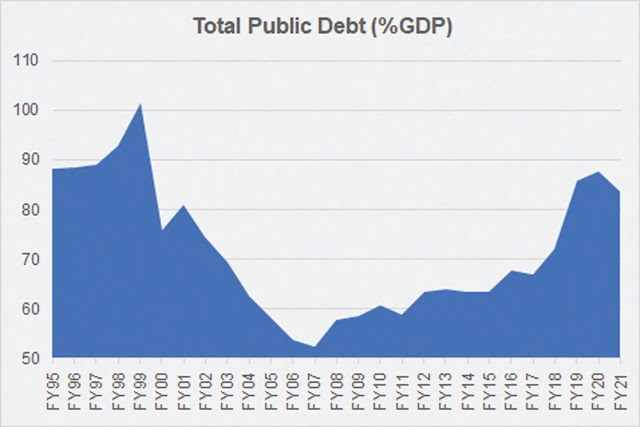
In 1999, President Pervez Musharraf inherited a massive debt of 100% of GDP run up by the Pakistan Peoples Party and the Pakistan Muslim League (Nawaz) governments in the 1990s. Musharraf's policies not only revived the bankrupt economy but also brought down debt to 52% of GDP by 2007. 

Pakistan Debt to GDP 1995-2021. Source: IMF


PPP Government's 2008 Letter to IMF:

In a letter to the International Monetary Fund in 2008, the PPP government hailed Musharraf's economic record without mentioning his name in the following words:

"Pakistan's economy witnessed a major economic transformation in the last decade (2000-2008). The country's real GDP increased from $60 billion to $170 billion, with per capita income rising from under $500 to over $1000 during 2000-07.....the volume of international trade increased from $20 billion to nearly $60 billion. The improved macroeconomic performance enabled Pakistan to re-enter the international capital markets in the mid-2000s. Large capital inflows financed the current account deficit and contributed to an increase in gross official reserves to $14.3 billion at end-June 2007. Buoyant output growth, low inflation, and the government's social policies contributed to a reduction in poverty and improvement in many social indicators". (see MEFP, November 20, 2008, Para 1).

Pakistan Manufacturing Value Added 2000-2021. Source: World Bank


Savings and Investments:

Domestic savings rate reached 18% of the GDP and foreign direct investment (FDI) hit a record level of $5.4 billion in 2007-8. This combination of domestic and foreign investments nearly tripled the size of the economy from $60 billion in 1999 to $170 billion in 2007, according to IMF. Exports nearly tripled from about $7 billion in 1999-2000 to $22 billion in 2007-2008, adding millions of more jobs. Pakistan was lifted from a poor, low-income country with per capita income of just $500 in 1999 to a middle-income country with per capita income exceeding $1000 in 2007.

FDI in the Musharraf years came in many sectors, ranging from telecommunications to manufacturing.
Several mobile phone and Internet service operators built networks worth billions of dollars. Without this telecom infrastructure, there would be no tech industry, no freelancers and no fast-growing tech exports today.

New cement plants met growing demand that more than doubled cement consumption, FMCG (fast moving consumer goods) sector took off to meet demand from growing middle class and production of cars and motorcycles jumped. 


Human Capital Development: 

In addition to the economic revival, Musharraf focused on the social sector as well. Pakistan's Human Development Index (HDI) score grew an average rate of 2.7% per year under President Musharraf from 2000 to 2007, and then its pace slowed to 0.7% per year in 2008 to 2012 under elected politicians, according to the 2013 Human Development Report titled “The Rise of the South: Human Progress in a Diverse World”.


Primary Enrollment Source: Economic Survey of Pakistan

Youth Literacy Rate Source: Economic Survey of Pakistan


Pakistan University Enrollment Jumped in Musharraf Years. Source: World Bank


Overall, Pakistan's human development score rose by 18.9% during the Musharraf years and increased just 3.4% under elected leadership since 2008. The news on the human development front got even worse in the last three years, with HDI growth slowing down as low as 0.59% — a paltry average annual increase of under 0.20 per cent. Going further back to the  decade of 1990s when the civilian leadership of the country alternated between PML (N) and PPP,  the increase in Pakistan's HDI was 9.3% from 1990 to 2000, less than half of the HDI gain of 18.9% on Musharraf's watch from 2000 to 2007.

R&D Spending Jumped 7-fold as % of GDP 1999-2007 Source: World Bank

Acceleration of HDI growth during the Musharraf years was not an accident.  Not only did Musharraf's policies accelerate economic growth, helped create 13 million new jobs, cut poverty in half and halved the country's total debt burden in the period from 2000 to 2007, his government also ensured significant investment and focus on education and health care. The annual budget for higher education increased from only Rs 500 million in 2000 to Rs 28 billion in 2008, to lay the foundations of the development of a strong knowledge economy, according to former education minister Dr. Ata ur Rehman. Student enrollment in universities increased from 270,000 to 900,000 and the number of universities and degree awarding institutions increased from 57 in 2000 to 137 by 2008. Government R&D spending jumped from 0.1% of GDP in 1999 to 0.7% of GDP in 2007. In 2011, a Pakistani government commission on education found that public funding for education has been cut from 2.5% of GDP in 2007 to just 1.5% - less than the annual subsidy given to the various PSUs including Pakistan Steel and PIA, both of which  continue to sustain huge losses due to patronage-based hiring.

Pakistan's High-Tech Exports Tripled as % of Manufactured Exports. Source: World Bank

Pakistan textile exports more than doubled from $5.2 billion to more than $11 billion during the Musharraf years. Exports soared 19.43% in 2001, 20% in 2004, 24.5% in 2005 and 11.23% in 2006, all on President Musharraf's watch, according to "The Rise and Fall of Pakistan's Textile Industry: An Analytical View" published by Javed Memon, Abdul Aziz and Muhammad Qayyum.     


Pakistan Textile Exports Growth. Source: Javed Memon

Pakistan experienced rapid economic and human capital growth in the years 2000 to 2008 on President Pervez Musharraf's watch. Savings, investments and exports hit new records and the rate of increase in human development reached new highs not seen before or since this period.  Without this human capital, there would be no tech industry, no freelancers and no fast-growing tech exports today.

Employment Growth in South Asia. Source: World Bank

Pakistan's employment growth was the highest in the South Asia region in 2000-2010, followed by Nepal, Bangladesh, India, and Sri Lanka in that order, according to a World Bank report titled "More and Better Jobs in South Asia".

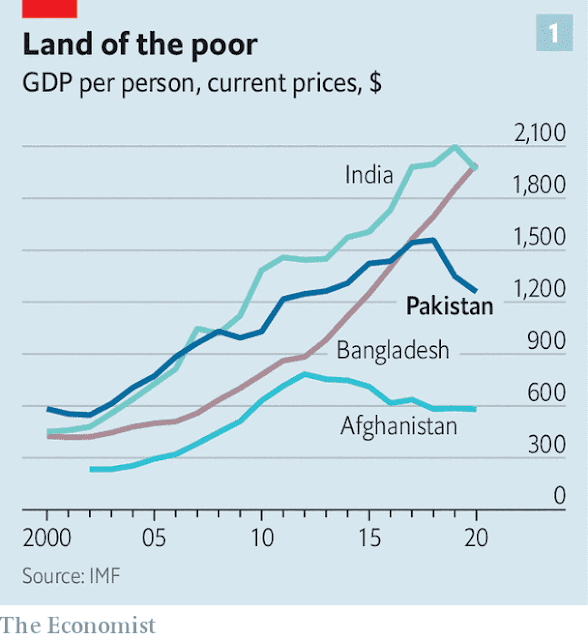
Comparing Per Capita GDP Trajectory in South Asia. Source: The Economist

Until 2010, Bangladesh was a laggard in the South Asia region. Its per capita income was about half of Pakistan's. Now Bangladesh's per capita GDP is higher than both India's and Pakistan's. What changed? The biggest change is Bangladeshi leader Shaikh Hasina's decision to stifle the unruly Opposition and the media to bring political and economic stability to the South Asian nation of 160 million people. It has eliminated a constant sense of crisis and assured investors and businesses of continuity of government policies. With development taking precedence over democracy, Shaikh Hasina followed the example of Asian Tigers  by focusing on export-led economic growth of her country. She incentivized the export-oriented garment industry and invested in human development. Bangladesh now outperforms India and Pakistan in a whole range of socioeconomic indicators: exports, economic growth, infant mortality rate, primary school enrollment, fertility rate and life expectancy.    

Related Links:


Tuesday, July 26, 2022

Pakistan Agriculture: Record Harvests Forecast After Heavy Monsoon Rains

In the first few months of 2022,  Pakistan has exported more rice to China than Vietnam, the historic top supplier, according to the United States Department of Agriculture (USDA).  Pakistan's total rice exports are forecast to jump by 450,000 tons to 4.8 million tons, almost 30% higher than the prior year. 

Women Farmers Planting Rice in Pakistan. Source: Reuters


Pakistan experienced broad-based economic growth across all key sectors in FY 21-22; manufacturing posted 9.8% growth, services 6.2% and agriculture 4.4%. The 4.4% growth in agriculture is particularly welcome; it helps reduce rural poverty.  The country is expected to have yet another record year for agriculture in 2022-23 after heavy monsoon rains. Rice is an important food crop in Pakistan  but wheat is the principal grain consumed domestically. Unfortunately, the same hot and dry planting conditions that delayed planting of the 2022 rice crop in Punjab and Sindh provinces have adversely affected Pakistan’s wheat production. This has forced the government to import wheat at a time of high prices amid the war in Ukraine, a major wheat exporter. 

A Cotton Field in Pakistan


The recent monsoon rains will help to kick-start the sowing of major Kharif (autumn) crops including rice, cotton, sugarcane and corn after about a month's delay.  “There was 40% less water available for the Kharif season (during May-June 2022),” an official of the Ministry of National Food Security and Research said while talking to The Express Tribune on Saturday. Earlier in March this year, Pakistan's Federal Committee on Agriculture (FCA) had said “for the Kharif year 2022, the water availability in canals head will be 65.84 million acre feet (MAF) against last year’s 65.08 MAF”. Recent rains have helped fill up major water reservoirs across the country.  About 150,000 cubic feet per second of water is being released from Pakistan's largest Tarbela dam which is more than the combined irrigation needs of the two provinces.  It is also generating over 3,000 MW of electricity, according to media reports. 

Heavy 2022 Monsoon Rainfall. Source: Pakistan Met Office 


“Cotton production is expected to improve to 9.5-10 million bales (one bale weighs 170 kg) in the wake of ongoing rainfall in cotton belts in Punjab and Sindh,” said Pakistan Central Cotton Committee Vice President Dr Muhammad Ali Talpur. “Cotton production will remain high, as farmers have improved crop management in the backdrop of higher prices in the domestic (and international) market.”

Drought Map of Pakistan. Source: Relief Web

Pakistan's agriculture output is the 10th largest in the world. The country produces large and growing quantities of cereals, meat, milk, fruits and vegetables. Currently, Pakistan produces about 38 million tons of cereals (mainly wheat, rice and corn), 17 million tons of fruits and vegetables, 70 million tons of sugarcane, 60 million tons of milk and 4.5 million tons of meat.  Total value of the nation's agricultural output exceeds $50 billion.  Improving agriculture inputs and modernizing value chains can help the farm sector become much more productive to serve both domestic and export markets.  

Pakistan's Thar Desert After Monsoon 2022. Source: Emmanuel Guddu 


Pakistanis are eating more and healthier foods, according to the Economic Survey of Pakistan 2021-22. Per capita average daily calorie intake in Pakistan has jumped to 2,735 calories in FY 2021-22 from 2,457 calories in 2019-20. The biggest contributor to it is the per capita consumption of fresh fruits and vegetables which soared from 53.6 Kg to 68.3 Kg, less than half of the 144 Kg (400 grams/day) recommended by the World Health Organization. Healthy food helps cut disease burdens and reduces demand on the healthcare system. Under former Prime Minister Imran Khan's leadership, Pakistan succeeded in achieving these nutritional improvements in spite of surging global food prices amid the Covid19 pandemic. 

Investments in modernization of the agriculture production process and farm-to-market value chain will require major reforms to ensure growers get a bigger share of the value. The extraordinary power of the middlemen (arthis) as financiers needs to be regulated. This can not happen without legislation in close consultation with the growers. Improving agriculture inputs and modernizing value chains can help raise the productivity of the farm sector for it to serve both domestic and export markets better.  

Related Links:


Haq's Musings

South Asia Investor Review

Chicken Cheaper Than Daal

Meat Industry in Pakistan

Bumper Crops and Soaring Tractor Sales in Pakistan

Meat and Dairy Revolution in Pakistan

Pakistanis Consuming More Calories, Fruits and Vegetables

Eid ul Azha: Multi-Billion Dollar Urban-to-Rural Transfer

Pakistan's Rural Economy

Pakistan Among World's Largest Food Producing Countries

Median Incomes in India and Pakistan

Saturday, June 25, 2022

Amazon Marketplace: Pakistani Sellers Among World's Top 3 Fastest Growing

A year after joining Amazon Marketplace, Pakistan is currently ranked as the third biggest source of new sellers joining in 2022, according to Marketplace Pulse research. Amazon e-commerce platform has global reach. As of March 2021, Amazon Marketplace operated and sold in 18 countries, mostly in advanced economies of Europe, Japan and North America as well as in emerging markets like Brazil, China, India, Arab Gulf states and Turkey.  

Pakistani Sells on Amazon Marketplace. Source: Runway Pakistan


Amazon added Pakistan to the countries allowed to sell on its marketplace in May 2021 after a year-long talks between Amazon, Pakistan’s Ministry of Commerce, and the National e-Commerce Council. Prime Minister Imran Khan's Special Assistant Razzak Dawood personally led this effort to boost Pakistan's exports. Eventually, the new sellers from Pakistan will contribute significantly to the country's exports, particularly in cotton textiles and apparel categories. 

Even before officially joining Amazon Marketplace, there was already a cottage industry of gig workers that had sprung up in Pakistan to support merchants who had been unofficially selling products on Amazon Marketplace. These Pakistani merchants registered from countries such as the United Kingdom which are already on Amazon's approved list.

Pakistani gig workers include Amazon Virtual Assistants. These are freelancers providing services such as customer call centers, administrative tasks, fulfillment, and web development. Online freelance marketplace Fiverr lists over 7,000 Pakistanis who advertise themselves as Amazon Virtual Assistants, more than from any other country. 

Here's Amazon Marketplace Pulse's ranked list of seller countries in terms of new sellers who have joined Amazon Marketplace in the last 12 months: 

Rank Seller Country

1 United States

2 China

3 Pakistan

4 United Kingdom

5 Turkey

6 Canada

7 Vietnam

8 India

9 Brazil

10 Japan

As to future growth, Marketplace Pulse Research projects a lot more sellers coming from Pakistan which is home to the world’s largest Amazon seller groups: “eCommerce by Enablers” with over 1.2 million members, “Extreme Commerce by Sunny Ali” has more than 1.1 million members, and “Ecommerce Success Pakistan” has nearly 200,000. The groups started years before Pakistani sellers were officially allowed to sell on Amazon.

Related Links:


Saturday, May 28, 2022

Pakistan's Global Fashion Brands Creating Other Branded Exports Opportunities

Pakistan is moving to higher value-addition in textile sector with branding. Khaadi, Gul Ahmed, J. by Junaid Jamshed, Sapphire, Sana Safinaz and others growing into global brands by expanding into countries with large Pakistani diaspora. Other Pakistani companies that have gained international brand recognition include Shan Masala, Pakola, Tapal Tea and K&N Frozen Foods. These companies are helping boost much needed exports to narrow Pakistan's growing current account deficits. 

Pakistani Global Brands. Source: Pakistan & Gulf Economist


As the Pakistani diaspora has grown to nearly 10 million in recent years, several Pakistani clothing and food brands have entered markets in the United States, United Kingdom, European Union and the Middle East. These markets create opportunities to build more Pakistani global brands, create jobs and grow Pakistan's exports. 

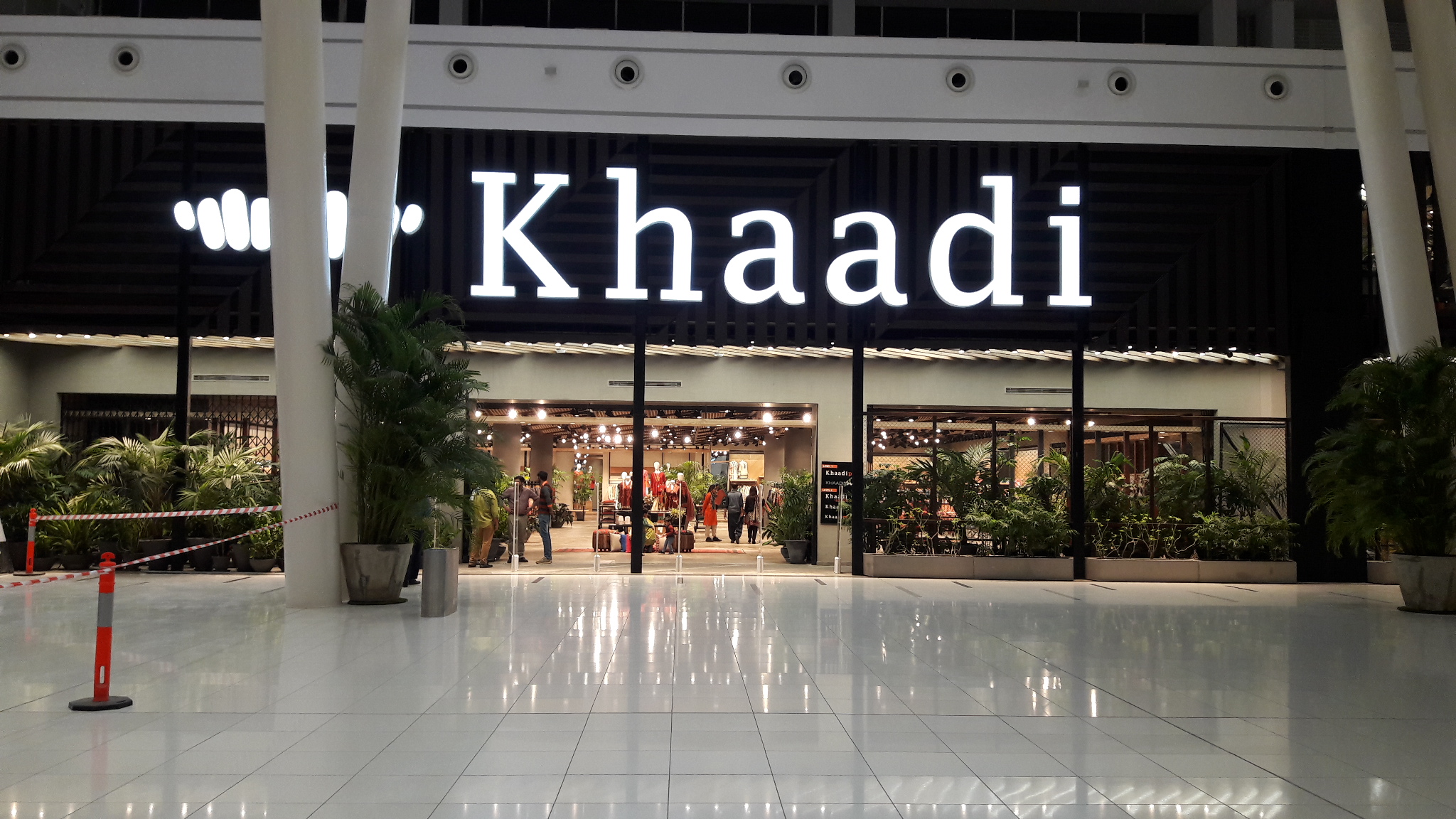
Khaadi Store, Package Mall, Lahore, Source: Wikimedia


Khaadi, which specializes in women's apparel, has attracted $25 million investment from International Finance Corporation (IFC) to help the company expand its business, create jobs, promote gender equality, and support the country’s crucial textiles sector after the COVID pandemic. Khaadi has established country-specific online stores for Canada, EU, Qatar, UAE, UK, US and Pakistan. In addition, the company has 57 physical retail outlets across Pakistan, UK and GCC countries. Investment Monitor, one of a network of 30+ proprietary B2B websites, has acknowledged the potential for Pakistani fashion brands in the following words:

"Despite its difficulties, Pakistan does have strong and innovative manufacturers, notably those developing their own apparel brands have emerged. Some of this has been based on advances in the Pakistan production of fine weave lawn cloth. And Pakistan consumers are becoming more brand conscious, being happy to seek out and wear local labels. Apparel brands, such as Khaadi (of Karachi); Sapphire (Lahore) and Sana Safinaz (Karachi), have focused on value addition and with Pakistan consumers prepared to pay for local quality, high profits have followed, including by developing exports".  

K&N Foods, a Pakistani branded poultry company, has recently started a poultry processing plant in New York. The company will sell Halal chicken products in the United States and Canada under the brand name of “K&N's Foods USA, LLC”. Beginning in the spring of 2013, the company invested more than $5 million in the purchase and renovation of a former Birds Eye plant which will employ almost 200 people in the Fulton area. Initially, K&N will focus on value-added processing of poultry purchased from other slaughter plants. The target market for these products will be specialty ethnic stores, supermarkets, and food service operations. 

Brands add value to the product being sold. This added value is effectively the difference between a product's price to consumers and the cost of producing it. Value can be added in several different ways, such as adding and promoting a brand name to a generic product or assembling a product in an innovative way. Brand marketing is done to create a consumer preference based on actual or perceived features or quality of what they buy from the store shelves. 

Developing countries like Pakistan manufacture products like ready-made garments for brand-name companies like Nike, Adidas, Levy's, etc. These garments are sold at a huge mark-up in the United States, and only tiny fraction of the money goes to Pakistan. 

Another global sector dominated by Pakistani manufacturers is surgical instruments. These precision instruments are sold by German companies under German labels with no mention of them having been made in Pakistan. Bulk of the money earned by selling goes goes into the pockets of German companies whose brand names appear on these surgical instruments. 

Manufacturers can earn much more by either building their own brands by spending a lot of money over a long time on advertising and marketing or by acquiring existing brands. Chinese manufacturers have been both in recent years to claim a much bigger share of profits generated by selling their products. Pakistani manufacturers can learn from the Chinese experience to do the same.

Related Links:

Haq's Musings

South Asia Investor Review

European Union: Fastest Growing Source of Remittances to Pakistan

Pakistani-Americans: Young, Well-educated and Prosperous

Ready-Made-Garments/Textile Boom in Pakistan

Fashion Week Karachi 2016

Pakistani Halal Meat Industry Experiencing Strong Growth

Over Half A Million Pakistanis Migrating Overseas Each Year

Pakistan Most Urbanized in South Asia

Pakistan Forecast to Become World's 7th Largest Consumer Market By 2030

Amazon Expands Pakistani Exports Opportunities


Tuesday, March 29, 2022

Pakistan Prime Minister Imran Khan Demonstrated Effectiveness as Crisis Leader

Prime Minister Imran Khan has effectively led Pakistan through multiple crises in the last 4 years. Khan inherited dangerously low forex reserves in 2018 which are now at  $23 billion, near the highest level in the nation's history. The COVID pandemic that hampered Pakistan's recovery has been handled well with the fully vaccinated rate for the eligible population at more than 75%. Not only has Khan deftly navigated his nation through these crises but his government has also revived the country's economy and grown exports by 26%.  Domestic savings rate recovered to nearly 17% after plunging to a low of 12% in 2018.  The year 2021 was a banner year for Pakistan's technology startups that raised over $350 million in funding, more than the amount raised in the previous 5 years. Manufacturing and construction industries are enjoying a boom last seen during the Musharraf years in 2000-2007. 

Pakistan has pursued an independent foreign policy under the PTI government. The nation has maintained friendly ties with all great powers, including China, Russia and the United States, as well the Islamic world. At a recent OIC foreign ministers' summit in Islamabad, Chinese foreign minister Wang Yi attended and endorsed OIC's support for the movement for “right to self-determination” in Jammu and Kashmir.

Historic Inflation Rates in India & Pakistan. Source: World Bank


Rising prices of food and fuel are still a major issue for the people of Pakistan and the rest of the world. Recent geopolitical crisis with the Russian invasion of Ukraine has only served to accelerate global inflation. It presents a serious challenge to the governments in Pakistan and elsewhere in the world. 

Pakistan's opposition parties have recently come together to try to topple Prime Minister Imran Khan's government. These opposition parties have little in common other than their hunger for power. If they succeed, the country will plunge into yet another period of instability and uncertainty that will reverse progress made in the last few years to stabilize the country's economy. 

Pakistan's Exports:

Pakistan's exports of goods and services have jumped 26% to $25 billion in the first 8 months of the current fiscal year, up from $20 billion in the same period last year. A key reason for recurring balance of payments crises and IMF bailouts has been the lack of growth in Pakistan's exports. 

Pakistan Exports in First 8 Months (July 21-Feb 22) in FY 22. Source: Razzak Dawood


The 26% export growth is particularly welcome after several years of stagnation seen during the PML N government of Prime Minister Nawaz Sharif. 

Job Creation: 

Pakistan’s economy created 5.5 million jobs during the past three years –on an average 1.84 million jobs a year, which is far higher than yearly average of creation of new jobs during the 2008-18 decade, according to the Labor Force Survey (LFS) published by the Pakistan Bureau of Statistics (PBS). 

Pakistan Employment By Sectors. Source: Pakistan Bureau of Statistics

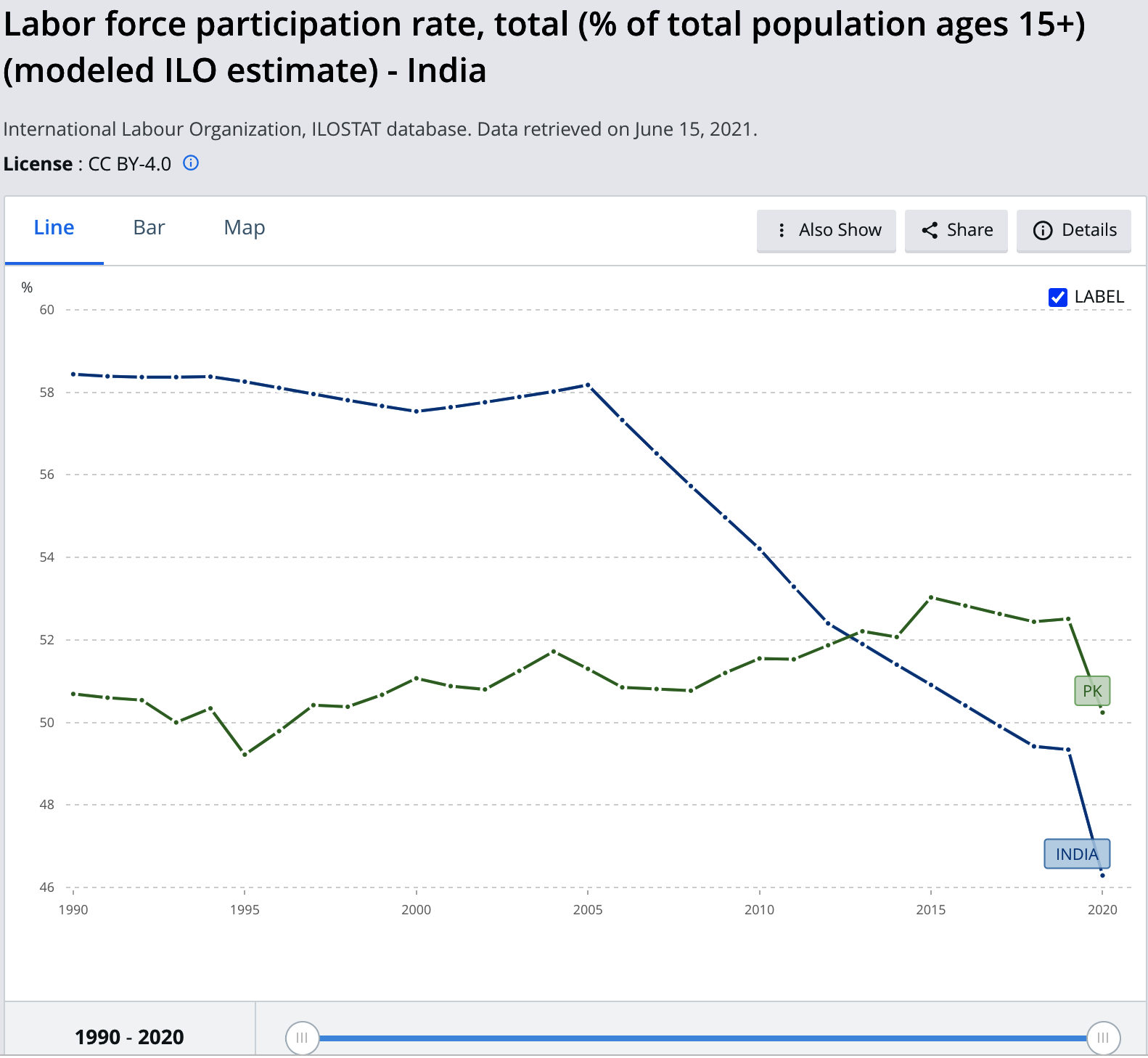
For the first time in recorded history, the labor force participation rate in Pakistan is now higher than in India, according to the ILO/World Bank estimates.


Labor Participation Rates in India and Pakistan. Source: World Bank/ILO


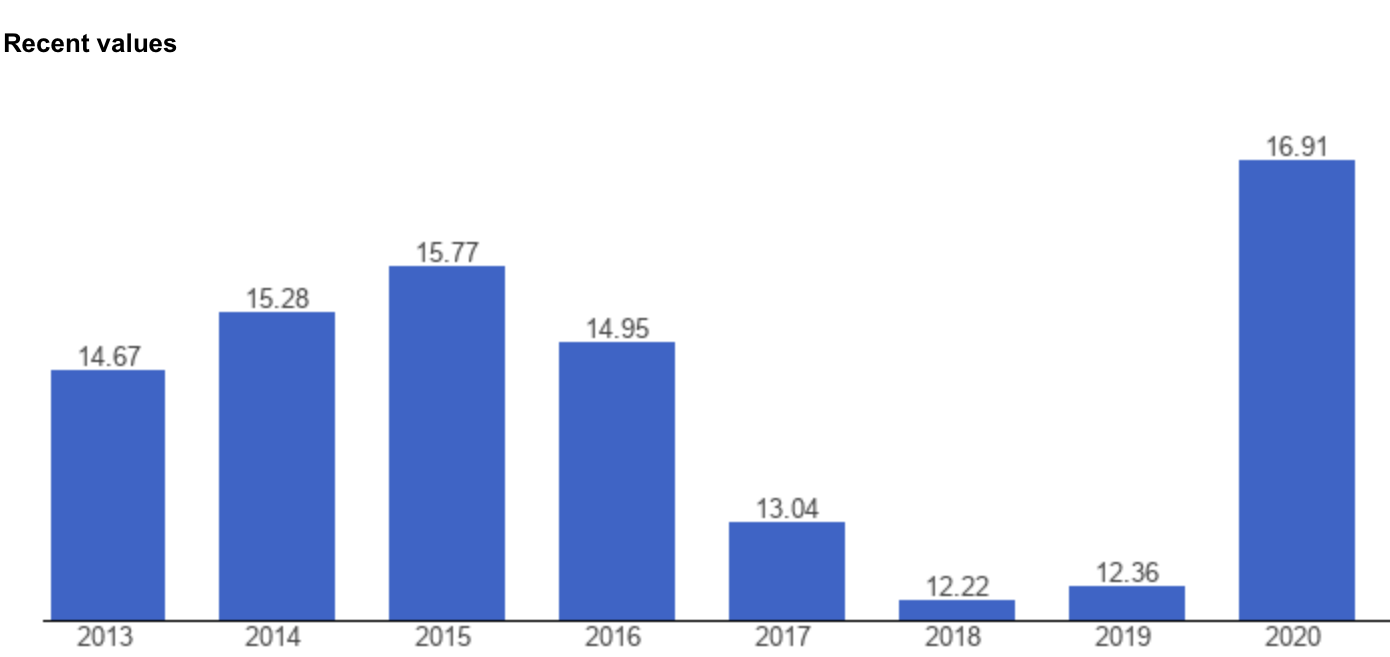
Unemployment rate in Pakistan is just 4.3% in spite of COVID19 pandemic. Jobless rate in India is 8%, much higher than in Pakistan. 

Unemployment Rate in India and Pakistan. Source: ILO/World Bank


Savings Rate:

Pakistan's domestic savings rate recovered to nearly 17% after plunging to a low of 12% in 2018. Savings are extremely important for increased investment to spur GDP growth in any country, including Pakistan.

Pakistan Savings Rate. Source: Global Economy

IMF Bailout:

Pakistan's forex reserves were running dangerously low forcing the country to seek a $6 billion IMF bailout in 2018 to avoid default.  The total reserves now exceed $22 billion.

Reko Diq Mining Deal Revival: 

Prime Minister Imran Khan's government recently resolved an $11 billion in damages that the country faced for improperly canceling a huge copper-gold mining deal in Balochistan.  

Reko Diq is the world's 4th largest undeveloped copper-gold porphyry deposit with over 14 million tons of copper and 21 million ounces of gold. The project was abandoned in 2011 after a Pakistan Supreme Court bench headed by former Chief Justice Iftikhar Chaudhry canceled the mining license granted to Tethyan Copper Company (TCC), a joint venture between Canada's Barrick Gold and Antofagasta Minerals of Chile. TCC challenged the cancellation in the International Centre for Settlement of Investment Dispute (ICSID). On July 12, 2019, the ICSID Tribunal awarded TCC $5.894 billion plus interest of  $700,000 per day in damages against Pakistan. As of 1 March 2022, the award stood at $6.5 billion. The new agreement between Barrick Gold Corporation  and the governments of Pakistan and Balochistan does away with this award. It also increases the share of the project owned by Pakistan from 25% to 50%, brings in $10 billion investment, the largest single investment in the country, and creates 8,000 jobs. Reko Diq is part of the Tethyan metallogenic belt (TMB) that extends from the Balkans in Europe to Pakistan including Serbo-Macedonian, Anatolian, Takab, Kerman and Chagai metallogenic belts. It is believed to be rich in copper and gold deposits.

Manufacturing and Construction Boom: 

Large scale manufacturing grew by 8.2% in February 2022,  after posting 7.6% growth during July-Jan FY22.  

QIM Index 2019-22. Source: APP

Pakistan Large Scale Manufacturing Index. Source: Mettis Global

The LSMI Quantum Index Number (QIM) hit an all-time high of 136.2 points in January, 2022. It averaged 120 points during July-January (2021-22), up from 111.5 points during July-January (2020-21), showing growth of 7.6%, according to latest PBS data.

Cement shipments in Pakistan. Source: All Pakistan Cement Manufacturers Association


Pakistan cement production has increased by double digits to respond to demand for housing and infrastructure construction on Prime Minister Imran Khan's watch. 

Technology Boom:

The year 2021 was a banner year for technology startups in Pakistan.  There was a 437% jump in investments in the startups, raising a total of $352 million across 72 deals in 2021, according to Aljazeera. 

Pakistan Startup Investments. Source: Aljazeera

Pakistan technology exports have soared 30% to $1.7 billion in the first 8 months of the current fiscal year, according to the State Bank of Pakistan. 

Expansion of Social Safety Net:

Pakistan's PTI government has built South Asia’s first digital National Socio-Economic Registry (NSER) as a part of its ambitious effort to build a basic social safety net. The Ehsaas (also known as BISP- Benazir Income Support)) program's socio-economic registry includes household information by  geography, age, income, education, health, disability, employment, energy consumption, land and livestock holdings etc. Ehsaas Programs include both Unconditional Cash Transfers (UCT) and Conditional Cash Transfers (CCT). Unconditional Cash Transfers are made only to people living in extreme poverty or distress. Conditional Cash Transfers like Waseela-e-Taleem and Nashonuma  are given for education and nutrition respectively.  In addition, there are feeding centers (langars) for the hungry and shelters (panahgahs) for the homeless. 

OIC Foreign Ministers in Islamabad:

Recent conference of Islamic countries foreign ministers hosted by Pakistan in Islamabad was attended by 56 nations. Chinese foreign minister Wang Yi attended as a special guest. Here's an excerpt of the Islamabad Declaration issued at the conclusion of the two-day conference:

“We declare that the final settlement of the Jammu and Kashmir dispute in accordance with UN Security Council resolutions is indispensable for durable peace in South Asia. We reiterate our call on India to: a) reverse its unilateral and illegal measures instituted since 5th August 2019; b) cease its oppression and human rights violations against the Kashmiris in IIOJK; c) halt and reverse attempts to alter the demographic structure and to redraw electoral constituencies in IIOJK; and d) take concrete and meaningful steps for full implementation of the UN Security Council resolutions on Jammu and Kashmir,”

Response to Indian hostility:

Prime Minister Imran Khan's government won praise for its handling of India's aggression with unprovoked air strikes in Balakot in February 2019. Pakistan responded with "Operation Swift Retort", shot down two Indian fighter jets and captured an Indian Air Force pilot. But Khan's government avoided further escalation of the incident. Similarly, Pakistan responded calmly to the "accidental firing" of Indian Brahmos cruise missile into Pakistan that could have easily escalated into a full-scale war between two nuclear-armed neighbors. 

No-Confidence Vote:

Pakistan's opposition parties have recently come together to try to topple Prime Minister Imran Khan's government. These opposition parties have little in common other than their hunger for power. If they succeed, the country will plunge into yet another period of instability and uncertainty that will reverse progress made in the last few years to stabilize the country's economy.