Showing posts with label Russia. Show all posts

Thursday, August 20, 2026

Is the Pakistani Military Ready for Modern Drone Warfare?

The Russia-Ukraine war and the US-Israel-Iran war have recently demonstrated the effectiveness of drone warfare. Is the Pakistani military learning lessons from them to prepare for future conflicts? Let's examine the answer to this question based on recent announcements. 

Pakistan's Long Range Drone D-248

Pakistan has revealed a 3,000-kilometer range one-way drone in July this year. The state-owned Heavy Industries Taxila (HIT) displayed two new long-range loitering munitions – the D-248 and the S-369 – at the 2026 Indus Robotics and Autonomous Systems (RAS) Expo on July 22–23, 2026 in Islamabad.  

The D-248 drone uses a tailless delta configuration – similar to Iran’s Shahed-136 – and carries a maximum take-off weight (MTOW) of 240 kg, a wingspan of 3.3 m, a payload of 30-50 kg, a maximum speed of 225 kph, a cruise speed of 185 kph, an endurance of 12-14 hours, and a flight ceiling of up to 4,500 m.  Iran's Shahed drones have been used in both the Ukraine-Russia war and the US-Iran conflict. Shahed-136 is relatively inexpensive. It has a swarm capability, and a precision-strike capability at extended ranges.

Pakistani Military Official in Ukraine. Source: New York Times

Pakistan is also in talks with Ukraine's Fire Point whose long-range drones have launched spectacular strikes deep inside Russia in recent weeks. Fire Point is promoting its FP-1 Deep Strike, a loitering munition with a range of 2,600 km, as well as FP-2 Front Strike, a loitering munition with a range of up to 200 km.

During a recent exercise, called Combined Resolve, Ukrainian drone units easily spotted and defeated U.S. troops and armored vehicles on rotation from Fort Hood in Texas, according to people familiar with the events, reports the Wall Street Journal. It's not just the Americans who fared badly against Ukrainian drones; the British and the Swedes have also witnessed easy Ukrainian triumphs in military exercises. The U.S. has also struggled to defend against Iran’s long-range Shahed drones, which have killed and injured many American soldiers and destroyed aircraft.

The exercising troops from the United States sent heavy armored vehicles into battle that threw up dust and were easy for Ukrainian reconnaissance drones to spot, according to a participant. Those drones were followed by drones dropping explosives and first-person-view drones, which smash into targets in combat, this person said.

Drones are becoming an important part of modern warfare, as demonstrated by ongoing conflicts in Europe and the Middle East. Gaining military advantage in future conflicts will increasingly depend on how well states conduct technology-driven multi-domain operations by integrating aircraft, drones, electronic warfare, cyber operations, intelligence and AI-assisted analysis. 


Related Links:

Haq's Musings

South Asia Investor Review

US Missile Sanctions: Is Pakistan Really Developing ICBMs?

Pakistan's Cyber Attack and Defense Capability

IDEAS2024: Pakistan Defense Industry Expo

Pakistan's Rising Arms Sales

Pakistan Navy Modernization

Drone Swarms: Saudi Oil Fields Attack Shows Destructive Power

Pakistan Defense Industry

Silicon Valley Book Launch of "Eating Grass"

Turkish and Israeli Drones Enable Azerbaijan's Decisive Victory Over Armenia

Pakistan Destroyed Indian Rafales, S-400 Air Defense System

Pakistan's Sea-Based Second Strike Capability

Riaz Haq Youtube Channel

VPOS Youtube Channel


Wednesday, February 4, 2026

Can Pakistan's JF-17 Become Developing World's Most Widely Deployed Fighter Jet?

Worldwide demand for the JF-17 fighter jet, jointly developed by Pakistan Aeronautical Complex (PAC) and China’s Chengdu Aircraft Industry Group (CAIG), is surging. It is attracting buyers in Africa, Asia and the Middle East. At just $40 million a piece, it is a combat-proven flying machine with no western political strings attached. It has enormous potential as the lowest-cost 4.5 generation fighter jet featuring AESA radar, enhanced electronics, and superior weapons systems. 

Pakistan PFX Concept Fighter. Source: Raksha Anirveda

In addition to the Pakistan Air Force, it is currently deployed by the air forces of Azerbaijan, Myanmar and Nigeria. Multi-billion dollar orders are in the pipeline from several countries, including Saudi Arabia, Libya and Sudan. Bangladesh is reportedly negotiating to purchase JF-17s in the near future. These orders are not just one-time purchases; they include service and training contracts, as well as spare parts and future upgrades. The US-based business publication Bloomberg recently reported: "After Pakistan said it used the jets to great effect in its brief conflict with India last year, at least five countries have expressed interest in buying them. That sudden demand may put the country’s defense industry in a crunch".  So the question now is: Can Pakistan deliver? 

Currently, Pakistan Aeronautical Complex (PAC) has the capacity to manufacture up to 20 JF-17s per year, sufficient to fill the orders from the Pakistan Air Force. It uses a Pakistani airframe, Chinese-made KLJ-7A AESA radar and Russian Klimov RD-93 turbofan engine. Additional capacity is being added at PAC to meet rapidly growing demand. A Chinese aviation expert told China's Global Times that this could be a "sweet problem" for Pakistan, as backed by strong order demand, the country's aviation industry is expected to develop rapidly, and potential capacity constraints are ultimately not a true concern given China's support for Pakistan in manufacturing this type of fighter jet. 

The JF-17 is opening doors for Pakistan’s defense industry. The country is emerging as a major arms supplier to developing countries in Asia and Africa.  Talks underway with at least 13 countries for JF-17 jets, drones and weapons, with several negotiations at an advanced stage.

Azerbaijan, Myanmar, Nigeria and Sudan have all made significant arms purchases from Pakistan in recent years.  Azerbaijan expanded its order for JF-17 Thunder Block III multi-role fighter jets from Pakistan from 16 to 40 aircraft. The recent order extends a 2024 contract worth $1.6 billion to modernize Baku’s airborne combat fleet to $4.6 billion. This makes Azerbaijan the largest export customer of the Pakistan-made warplane. Bangladesh is negotiating purchase of up to 32 JF-17 Thunder Block III aircraft from Pakistan. 

In the Middle East  Pakistan has orders to supply JF-17s to Libya and Saudi Arabia. In a deal with Libya, Pakistan will sell over two dozen JF-17 fighter jets and 12 Super Mushak trainer aircraft used for basic pilot training.  Pakistan and Saudi Arabia are in negotiations to convert about $2bn of Saudi loans into a deal to buy JF-17 fighter jets, according to Reuters. 

In Africa, Pakistan has recently signed a $1.5 billion contract to supply combat drones and military trainer aircraft to Sudan. The order includes 150 armored vehicles, 220 drones and 10 K-8 Karakorum trainer/light attack aircraft.  Earlier in 2021, Pakistan sold three JF-17 Thunder fighter jets and ten Super Mushshak trainer aircraft to Nigeria in a deal worth nearly $200 million. From 2018 to 2021, Pakistan sold 11 JF-17 Thunder Block I aircraft to Myanmar. 

Air forces of about a dozen developing nations are buying and deploying Pakistani made aircrafts. The reasons for their choice of combat-tested Pakistan manufactured airplanes include advanced BVR (beyond visual range) features, affordability and ease of acquisition, maintenance and training.

Pakistan started developing defense hardware for import substitution to reduce external dependence and to save hard currency. Now the country's defense industry is coming of age to lead the way to high value-added manufactured exports.

Pakistan has unveiled its PFX (Pakistan Fighter Experimental) program as a significant upgrade to its JF-17 joint program with China. The new upgrade will have a number of stealth features ranging from the use of radar-absorbing composite materials and diverterless supersonic inlets (DSI) to internal weapons bay (IWB) which will significantly reduce the aircraft's radar signature. It is targeted for completion by the end of this decade. In addition, the PFX's twin-engine design will improve maneuverability and allow greater payload capacity. 

The program is part of Pakistan's broader strategy to reduce reliance on foreign suppliers and strengthen the domestic defense industry. Currently, 58% of JF-17 components are manufactured locally by PAC, but Pakistan aims to increase this share to achieve full production autonomy for the PFX. It is not just about the PAF modernization but also about positioning Pakistan as an important player in the global military aviation market. 

The PFX is an evolution of a plan that Pakistan announced in 2017 to develop and produce 5th generation fighter planes. It is part of Pakistan Air Force's highly ambitious Project Azm that includes building Kamra Aviation City dedicated to education, research and development and manufacturing of advanced fighter jets, unmanned aerial vehicles (UAVs) and weapon systems.

The PAF has already started replacing its aging fleet with the induction of the Chinese J10C fighter jets which are considered 4.5 Gen. The J10-C has stealth features like diverterless supersonic inlets (DSI).  Its BVR capability is supported by PL-15 missiles, with an engagement range of up to 200 kilometers, facilitating long-range target engagements. 

The PAF has also begun the process of acquiring 5th generation Chinese J35 fighter jets. The delivery of 40 J35 fighters to Pakistan is expected within two years, potentially altering regional dynamics, particularly concerning India. 

Related Links:

Haq's Musings

South Asia Investor Review

US Missile Sanctions: Is Pakistan Really Developing ICBMs?

Pakistan's Cyber Attack and Defense Capability

IDEAS2024: Pakistan Defense Industry Expo

Pakistan's Rising Arms Sales

Pakistan Navy Modernization

West's Technological Edge in Geopolitical Competition

Pakistan Defense Industry

Silicon Valley Book Launch of "Eating Grass"

Ukraine's Lesson For Pakistan: Never Give Up Nukes!

Pakistan Destroyed Indian Rafales, S-400 Air Defense System

Pakistan's Sea-Based Second Strike Capability

Riaz Haq Youtube Channel

VPOS Youtube Channel


Monday, September 8, 2025

Trump's Tariffs on India: Can China or Russia Make Up For Lost Exports to US?

The United States is the biggest export market for India. Among its top 5 trading partners, the US is also the only country with which India runs a trade surplus. This surplus is now at risk with the 50% tariff recently imposed by President Donald Trump on imports from India. Can Prime Minister Narendra make up for it by cozying up to China and Russia? Recent trade data shows he can't. 


While India has enjoyed a significant surplus in trade with the US,  the South Asian nation has been running large trade deficits with China and Russia. Last year, for example, India had a $100 billion trade deficit with China and a $62 billion deficit with Russia. On the other hand, India ran over a $40 billion trade surplus with the US. Given these figures, it's hard to understand what India hopes to achieve by getting closer to Beijing and Moscow. The fact is that the US is the world's biggest economy that offers the largest and most profitable export market for most countries. Loss of the US export market spells major trouble for any economy in the world. President Donald Trump knows this and he is using it to make new trade deals to America's advantage. Europeans, Japanese and Koreans have essentially accepted higher tariffs in return for continued access to the US market, while China is negotiating a trade deal with Washington. 

The loss of the US export market also means heavy job losses in India's major sectors like textiles, shoes, gems and jewelry and shrimps exports. Christopher Wood, the global head of equity strategy at the investment bank Jefferies, puts the economic blow at £41 billion-£45 billion, according to the Guardian newspaper. He singles out textiles, footwear, jewelry and gems, all of which are highly labour-intensive, as “the most negatively impacted”. Tens of millions of jobs are at risk in these industries.  "The stakes for India’s government are political as well as economic. The prime minister, Narendra Modi, has pitched manufacturing as a way to provide jobs to the millions of young Indians who join the labour force each year. These industries employ tens of millions, directly and indirectly", the Guardian reports. 

Explaining the punitive India tariffs, US Treasury Secretary Scott Bessent has said: "India came to the table early. They’ve been slow rolling things. So I think that the president, the whole trade team has been frustrated with them. And also, you know, India, India has been a large buyer of sanctioned Russian oil that they then resell as refined products. So, you know, they have not been a great global actor". 

Indian Prime Minister Narendra Modi clearly misjudged what he needed to do with Trump 2.0. He continued business as usual, counting on his "bromance" with the US president to get a favorable deal. He thought the US policy of "strategic altruism" with India will continue as it had under the Trump 1.0 and Biden administrations. Modi let his billionaire friends Adani and Ambani rake in billions in profits on Russian oil trade. The discounted Russian oil Adani and Ambani bought was refined and exported for a huge profit to buyers around the world. Now the ordinary Indians are paying the price for Modi's folly. 

Worried about a slowing economy, the Modi government is now trying to stimulate domestic consumption by cutting GST (general sales taxes). It is a good move but it will not make up for dollars lost from the precipitous fall in exports to the US market. This fear is causing the Indian currency to fall against the US dollar. There are tough times ahead for the Indian economy. 

Related Links:

Haq's Musings

India's Unemployment Crisis

How Long Can Modi Escape Accountability For Murder? 

Modi-Trump Bromance Over

US Government Brackets Modi With Murderous Dictators

Asley Tellis Wants the US to Continue its Policy of Strategic Altruism with India

India Tariffs: Does Trump Have a Grand Strategy?

India's Ex Spooks Blame Kulbhushan Jadhav For Getting Caught

Ajit Doval Lecture on "How to Tackle Pakistan" 

Mohan Lal Bhaskar: An Indian Raw Agent in Pakistan


Sunday, August 31, 2025

US-India Ties: Does Trump Have a Grand Strategy?

Since the dawn of the 21st century, the US strategy has been to woo India and to build it up as a counterweight to rising China in the Indo-Pacific region. Most beltway analysts agree with this policy. However, the current Trump administration has taken significant actions, such as the imposition of 50% tariffs on India's exports to the US, that appear to defy this conventional wisdom widely shared in the West. Does President Trump have a grand strategy guiding these actions?  George Friedman, the founder of Geopolitical Futures, believes the answer is Yes. 

George Friedman


George Friedman is an American futurologist, political scientist, and writer. He writes about international relations. He is the founder and chairman of Geopolitical Futures. Prior to founding Geopolitical Futures, he was chairman of the publishing company Stratfor

In a recent podcast, Friedman said "India is not an essential country from the American standpoint". "They (Indians) are a useful ally, but precisely not indispensable and in fact, not really able to give us what we want", he added. "They do participate in the quad, but their naval force is not significantly needed. The quad being an alliance basically against China at sea. And simultaneously, it was discovered that their economic capacity is far below what we need. So it was not that they were dispensable, but at the same time, it was not something that we had to take into account greatly". 

Getting tough with the Indians also allowed the US to "signal to the Chinese that we’re not going to be going to war with them, which they worried about India and to the Russians that we really are going to impose tariffs". 

In answer to a question as to whether the Indians might feel the US is using them as "a tool as it tries to reach deals with Russia and China", Friedman said: "this is the problem of weaker nations trying to play games with very strong nations. They get used". 

What Friedman has articulated runs counter to a quarter century of the US policy of boosting India to check China. Even some of India's friends in Washington are starting to acknowledge that India is no match to China. Ashley Tellis, a strongly pro-India analyst in the United States, recently wrote an essay for Foreign Affairs magazine titled "India's Great Power Delusions". Here is an excerpt from it:

"Although India has grown in economic strength over the last two decades, it is not growing fast enough to balance China, let alone the United States, even in the long term. It will become a great power, in terms of relative GDP, by midcentury, but not a superpower. In military terms, it is the most significant conventional power in South Asia, but here, too, its advantages over its local rival are not enormous: in fighting in May, Pakistan used Chinese-supplied defense systems to shoot down Indian aircraft. With China on one side and an adversarial Pakistan on the other, India must always fear the prospect of an unpalatable two-front war. Meanwhile, at home, the country is shedding one of its main sources of strength—its liberal democracy—by embracing Hindu nationalism. This evolution could undermine India’s rise by intensifying communal tensions and exacerbating problems with its neighbors, forcing it to redirect security resources inward to the detriment of outward power projection. The country’s illiberal pivot further undermines the rules-based international order that has served it so well". 

Related Links:

Haq's Musings

Indian Military Begins to Accept its Losses Against Pakistan

How Long Can Modi Escape Accountability For Murder? 

Modi-Trump Bromance Over

US Government Brackets Modi With Murderous Dictators

Asley Tellis Wants the US to Continue its Policy of Strategic Altruism with India

Is the US Young and Barbaric?

India's Ex Spooks Blame Kulbhushan Jadhav For Getting Caught

Ajit Doval Lecture on "How to Tackle Pakistan" 

Mohan Lal Bhaskar: An Indian Raw Agent in Pakistan


Friday, June 27, 2025

Trump Administration Seeks Pakistan's Help For Promoting “Durable Peace Between Israel and Iran”

US Secretary of State Marco Rubio called Pakistan Prime Minister Shehbaz Sharif to discuss promoting “a durable peace between Israel and Iran,” the State Department said in a statement, according to Reuters.  Both leaders "agreed to continue working together to strengthen Pakistan-US relations, particularly to increase trade", said a statement released by the Pakistan government.

Pakistani Prime Minister Shehbaz Sharif and US Secretary of State Marco Rubio

The call came after Iran and Israel agreed to a ceasefire to end what President Donald Trump described as a "12-day war". It is yet another indication of Pakistan's close ties with both Tehran and Washington. Pakistan strongly condemned Israel's "unprovoked attack" and the US bombing of Iran's nuclear facilities. It also  shows Washington’s growing engagement with Islamabad at a time when the Trump administration is exploring a new diplomatic initiative with Tehran, possibly “as early as next week”. President Trump met Pakistan’s army chief Field Marshal Asim Munir at the White House last week where they discussed Iran, which Trump said Pakistan knew about better than most other countries. 

Earlier in May this year, President Trump, Vice President JD Vance and Secretary Rubio arranged India-Pakistan ceasefire after 4 days of fighting between the two South Asian neighbors. Testifying before the US Congress earlier this month, the US Central Command Chief General Michael Kurilla described Pakistan as a “phenomenal partner in the counterterrorism world”. This statement coincided with the Washington visit of the Indian parliamentary delegation led by Shashi Tharoor. Tharoor's delegation's aim was to "isolate Pakistan" after the Pahalgam militant attack in Kashmir which India blamed on Pakistan without presenting any evidence. 

Pakistan also enjoys close ties with China and Russia. China-Pakistan friendship has meant significant diplomatic support and massive investment in infrastructure, as well as the state-of-the-art military hardware for the country's armed forces. Russia, too, has drawn closer to Pakistan. It has recently agreed to invest in a modern steel plant in Karachi where an abandoned Soviet-era steel mill stands today. 

Shanghai Cooperation Organization (SCO) Defense Ministers

At a recent Shanghai Cooperation Organization (SCO) Defense Ministers meeting in China, nine member countries(China, Kazakhstan, Kyrgyzstan, Russia, Tajikistan, Uzbekistan, Pakistan, Iran and Belarus)  rejected India's attempt to insert a reference to Pahalgam in the joint statement.  Earlier, India distanced itself from SCO's joint condemnation of Israel’s attacks on Iran. India also abstained from voting on a UN resolution regarding the Israel-Palestine conflict, specifically related to the humanitarian situation in Gaza. This decision continues India's pattern of abstaining on resolutions criticizing Israel. 

While India claims the mantle of the "Global South" leadership, its actions do not align with its ambition. On the other hand, Pakistan's policies and actions are much more aligned with those of the BRICS nations. Pakistan is not currently a member of the BRICS yet, but both China and Russia have publicly expressed support for its inclusion as a full member. 

Related Links:

Haq's Musings

South Asia Investor Review

Pakistan Downs India's French Rafale Jets in a Major Aerial Battle

Has Modi Succeeded Diplomatically or Militarily Against Pakistan After Pahalgam?

Has Pakistan Destroyed India's S-400 ADS?

Prof Mearsheimer on International Geopolitics in South Asia

Pakistan Navy Modernization

West's Technological Edge in Geopolitical Competition

Modi's India: A Paper Elephant?

Pahalgam Attack: Why is the Indian Media Not Asking Hard Questions?

Ukraine's Lesson For Pakistan: Never Give Up Nukes!

Pakistan Economy Nears Trillion Dollars

Pakistan's Sea-Based Second Strike Capability

Riaz Haq Youtube Channel

VPOS Youtube Channel

Tuesday, March 11, 2025

Trump's Policies Ringing Alarm Bells in Delhi

"We are in Zelenskyy’s shoes now", read a recent headline in a major Indian newspaper. There are similar concerns being raised in other world capitals in Asia and Europe after President Donald Trump's decisions to cut military supplies and stop sharing intelligence with Ukraine following a White House summit with President Volodymyr Zelenskyy of Ukraine who is facing the military might of Russia on the battlefield in Europe.    

From L to R: Putin, Trump, Xi and Modi

“My absolute priority will be to strengthen Europe as quickly as possible so that, step by step, we can really achieve independence from the USA,” said Friedrich Merz, Germany's chancellor-elect. Singapore Defence Minister Ng Eng Hen said the  US has “changed from liberator to great disruptor to a landlord seeking rent”.

The events of last week have revived the memory of a quote attributed to former US Secretary of State Dr. Henry Kissinger who is reported to have said: "The word will go out to the nations of the world that it may be dangerous to be America's enemy, but to be America's friend is fatal."

New Delhi has been counting on Washington's help to fend off hostile China which sits on its doorsteps. There are some Indians who believe Russia would come to India's help in the event of war with China.  But former US National Security Advisor Jake Sullivan threw cold water on this idea when he said: "In fact, it (Russia) is becoming the junior partner to China.  And in that way, they would side with China over India any day of the week". 

Trump has fundamentally changed the geopolitics of Asia and Europe. Old alliances no longer matter. Now it's all about each transaction which Trump wants to ensure favors the United States. 

During the last Trump Administration in 2019, India's friends in Washington argued for a US policy of "strategic altruism" with India. The new Trump administration seems to be rejecting such talk. Prior to his recent meeting with Prime Minister Narendra Modi at the White House, President Donald Trump described India as the "worst abuser of tariffs" and announced "reciprocal tariffs" on Indian imports to the United States.  At the same time, Mr. Trump cracked down on both legal and illegal immigration from India. His administration is deporting thousands of illegal Indian immigrants in handcuffs and shackles on US military aircraft. Meanwhile, stringent new regulations on temporary work visas could significantly delay visa processing times and reduce the number of Indian workers employed in the United States on H1B visas. 

Tariffs Comparison. Source: BBC


In a 2019 piece titled "The India Dividend: New Delhi Remains Washington’s Best Hope in Asia" published in Foreign Affairs journal, authors Robert Blackwill and Ashley Tellis argued that the Trump Administration should continue the US policy of "strategic altruism" with India that began with US-India nuclear agreement. They asked President Trump to ignore the fact that the US companies and economy have only marginally benefited, if at all, from this policy. They see India as a "superpower in waiting" and urge Washington to focus on the goal of having India as an ally to check China's rise. They see Chinese support for India's arch-rival Pakistan and China’s growing weight in South Asia and beyond as a threat to India. 

India Tops Source Countries For H1B Visa Holders. Source: USCIS


Trump's trade and immigration policies are going to hurt India at a time when its economic growth is declining and job growth is stagnant.  The latest Indian annual budget has offered middle class tax relief to spur growth.  But economists warn it may not be enough for the vast majority of Indians, whose income still falls below taxable limits and who may still be reeling from the impact of the COVID pandemic, which devastated their earnings, according to a report in Aljazeera. “There is a vast base [of people] where recovery has not come back after the pandemic,” says Kaushik Basu, professor of economics at Cornell University. “We see this in data that the agricultural labour base has increased. And agriculture may well be just a parking spot.”

Illegal immigration from India to the US has dramatically increased on Prime Minister Modi's watch. A Pew Research Center report said that as of 2022, India ranked third, after Mexico and El Salvador, on the list of countries with the largest number of undocumented immigrants — 725,000 — living in the U.S.

India has a serious unemployment problem, particularly for the young people entering the job market by the millions each year. This problem is concealed by headline  economic growth figures highlighted by the Modi government. At the same time, India is losing its best and brightest in a massive brain drain. 

President Trump has clearly not taken the advice of India's friends in Washington. He is in no mood for "strategic altruism". Instead, the Trump Administration has signaled that it will treat ties with India as just another transactional relationship. 

Related Links:

Haq's Musings

South Asia Investor Review

Guess Why Pakistani Analyst Uzair Younus is Making Headlines in India!

Ambassador Kishore Mahbubani: America Does Not Respect India

World Happiness Report: India Among Saddest Nations of the World

Indian-American Ashley Tellis Advocates For US Strategic Altruism with India

WB Poverty Update: India Biggest Contributor to Increase in Poverty

India in Crisis: Unemployment, Hunger Persist After Waves of Covid

Modi's Blunders and Delusions 

India's Israel Envy: What If Modi Attacks Pakistan?

Project Azm: Pakistan to Develop 5th Generation Fighter Jet

Pakistan Navy Modernization

Pakistan's Sea-Based Second Strike Capability

Are Some Pakistanis Feeding Modi's Delusions of Grandeur?

Is the West Unwittingly Helping Modi Realize His Akhand Bharat Hindutva Dream?

Has Pakistan Lost All Wars? 


Sunday, December 8, 2024

Russian Hackers Steal Indian Military Secrets From Pakistani Cyber Spies

Hackers linked to Russian intelligence have stolen Indian military data from cyber spies believed to be working on behalf of the Pakistani state, according to an assessment by Microsoft researchers. All those involved are part of what are known as "advanced persistent threat" (APT) organizations in their respective countries.  TechTarget defines "Advanced Persistent Threat (APT) as "a prolonged, targeted cyber attack that involves an attacker gaining and maintaining unauthorized access to a network for an extended period". The goal of an APT is to steal sensitive data, rather than cause damage to the network or infect systems with malware. It is harder to defend against such intrusions than to attack. 


In a recent blog post, Microsoft researchers have discussed how Russian FSB's Secret Blizzard APT has breached a Pakistan-based threat activity cluster called Storm-0156 ATP to steal India's military secrets gathered by Pakistani intelligence. Since then, researchers from Microsoft and Black Lotus Labs say, Secret Blizzard has been able to leech off of Storm-0156's cyberattacks, accessing sensitive information from various Afghani government agencies and Indian military and defense targets. 

State actors in India and Pakistan are known to target each other for cyber espionage. Last year, the Pakistani government warned its officials about a number of India-linked APT groups, including PatchWork and Sidewinder, targeting Pakistan. Some Indian ATP groups also target China. 

Some Pakistani APTs targeting India have also been revealed in recent years. Among these are SideCopy and Transparent Tribe. 

Given the cyberthreat landscape in South Asia, Pakistan is trying to improve its cybersecurity posture, steering $18 million in funding for cybersecurity research and adding $36 million to its budget to develop better cybersecurity technical capabilities. 

International Telecommunications Union (ITU) has ranked Pakistan (score 96.69/100) among top tier countries for cybersecurity in 2024.  Out of a maximum score of 20, Pakistan received 20 for legal measures, 18.21 for technical measures, 20 for organization measures, 20 for capacity development and 18.48 for cooperative measures, according to the Global Cybersecurity Index 2024 report released by the ITU. 

Pakistan Cybersecurity Scores 2024. Source: ITU

Pakistan's tier one cybersecurity ranking is a big improvement from its 79th rank (score 64.88 from 100) it got in the cybersecurity ranking by the ITU in 2020. Four years ago, Pakistan scored 15.97 on legal measures, 12.26 on technical measures, 11.01 on organizational measures, 17.25 on capacity development and 8.38 on cooperative measures. 

Increasing penetration and rapid growth of the Internet user base in Pakistan has brought in a lot of user complaints of bullying and fraud, necessitating government action, including new legislation and capacity building to fight cyber crimes. 

Pakistan Telecom Indicators as of July 2024. Source: PTA


In 2018, Pakistan launched its National Center for Cyber Security (NCCS) as a joint project of Higher Education Commission (HEC) and the Federal Planning Commission. The Center includes several Research and Development (R&D) Labs at Pakistani universities. These universities have been given the mandate to establish NCCS affiliated Labs in different specialties of cybersecurity under the Center's secretariat.  Earlier this year, Pakistan's economic coordination committee (ECC), a ministerial level body, allocated $36 million for work on cybersecurity measures. 

Like many other nations, the cybersecurity threats in Pakistan include hacking, identity theft, cyber-bullying, cyberstalking, spoofing, financial frauds, digital piracy, viruses and worms, malicious software, money laundering, denial of service attacks, electronic terrorism, vandalism, and pornography. 

Pakistan has passed a cybercrime bill and established a National Response Center for Cyber Crime (NR3C).  NR3C has expertise in Digital Forensics, Technical Investigation, Information System Security Audits, Penetration Testing and Training. Since its inception, it has been involved in capacity building in various departments including Police, Intelligence, Judiciary and Prosecutors. Cyber Scouts is the latest initiative of NR3C, in which, selected students of different private/public schools are trained to deal with computer emergencies and increasing awareness of cyber threats amongst their fellow students, teachers and parents.

Sunday, September 10, 2023

G20 Summit in India: Modi's Personal PR Extravaganza?

Indian Prime Minister Narendra Modi successfully transformed routine rotational G20 presidency into an extravagant personal PR exercise this week. The Indian mass media and the general public saw Mr. Modi's face plastered all over the Indian capital. Some analysts described it as the kickoff of  the Indian leader's political campaign for national elections scheduled for next year. As Mr. Modi spoke of "one earth, one family, one future", his right-wing Hindutva allies continued their unhindered campaign of murder and mayhem against the Christian community in the Indian state of Manipur.  Globally, too, Mr. Modi lived up to his reputation of "Divider In Chief" as the Chinese leader Xi Jinping and the Russian leader Vladimir Putin chose to stay away from the gathering attended by all the western leaders. Both China and Russia stand in the way of the continuation of centuries-old unchallenged western hegemony of the world. 

Modi: Hero of Hatred at G20. Source: India Today

After the Gujarat anti-Muslim pogrom of 2002, Narendra Modi made the cover of India Today magazine with the caption "Hero of Hatred". Modi was denied a visa to visit the United States.  The US visa ban on Modi was lifted in 2014 after he became prime minister. Since then,  Narendra Modi's image has been rehabilitated by the West as the US and Western Europe seek allies in Asia to counter the rise of China.  However, Modi's actions on the ground in India confirm that he remains "Hero of Hatred" and "Divider In Chief" at his core.  A recent two-part BBC documentary explains this reality in significant detail. The first part focuses on the 2002 events in Gujarat when Modi as the state chief minister ordered the police to not stop the Hindu mobs murdering Muslims and burning their homes and businesses.  The second part looks at Modi government's anti-Muslim policies, including the revocation of Kashmir's autonomy (article 370) and a new citizenship law (CAA 2019) that discriminates against Muslims. It shows the violent response by security forces to peaceful protests against the new laws, and interviews the family members of people who were killed in the 2020 Delhi riots orchestrated by Modi's allies. 

 Modi Divider In Chief. Source: Time Magazine

In a  recent piece for Nikkei Asia, Indian journalist Swaminathan Aiyar dismisses Modi's attempts to recast himself as "Vishwaguru", the teacher of the world. Here's an excerpt of Aiyar's piece titled "India's Modi is not the world's guru": 

"Modi's notion of being the world's guru is just as ridiculous as his twisted history of "centuries of enslavement," which has been used to attack India's religious minorities. A guru is nothing without disciples. If India or Modi himself is the world's guru, who are the disciples? The least likely candidates are Western powers which believe, rightly or wrongly, that they are the true global gurus. It might seem that India's disciples would be most likely to come from its geographic neighborhood rather than distant lands. But even a cursory examination shows otherwise. Does Pakistan regard India as a guru? No, it is India's greatest foe. It has allied with China, India's other major foe, to try and put India in its place. No disciples there. What about Bangladesh, which India helped to achieve independence from Pakistan in 1971? There is now little gratitude for India's help, which is accurately viewed as a ploy to split and disempower Pakistan rather than an altruistic move to aid Bangladeshis. Sri Lanka? Many there harbor ill will toward New Delhi in the belief that it supported the development of the Tamil Tiger insurgency when Indira Gandhi was India's prime minister in the early 1980s. The insurgency became a civil war in which up to 100,000 were killed. Hard to find disciples there. What about Nepal, a predominantly Hindu nation? Ever since then-Indian Prime Minister Jawaharlal Nehru intervened in a royal power struggle in 1951, Nepalese have viewed New Delhi as an imperial power to be feared. India has on more than one occasion blocked essential supplies to Nepal to try to exert political influence. Nepalese may be Hindus, but they are anything but Modi's disciples" 

Cartoonist Mocks Modi's Answer at the White House. Source: Satish Acharya


President Joseph R. Biden and other western leaders are making a huge mistake by coddling divisive and dangerous Modi.  While the western nations are seeking an alliance with India to counter rising China, the Hindutva leadership of India has no intention of confronting China. In a piece titled “America’s Bad Bet on India”,  Indian-American analyst Ashley Tellis noted that the Biden administration had “overlooked India’s democratic erosion and its unhelpful foreign policy choices” in the hopes that the US can “solicit” New Delhi’s “contributions toward coalition defense”.

Earlier this year, India's External Affairs Minister S Jaishankar confirmed New Delhi's unwillingness to confront China in an interview: “Look they (China) are a bigger economy. What am I going to do? As a smaller economy, I am going to pick up a fight with bigger economy? It is not a question of being a reactionary; it is a question of common sense.”

Modi's India is driven much more by a desire to bring back what the right-wing Hindus see as the "glory days" of India through "Hindu Raj" of the entire South Asia region, including Pakistan. The arms and technology being given to Modi will more likely be used against India's smaller neighbors, not against China. 


Monday, August 21, 2023

Pakistan's Political Crisis: Did Washington Cause "Regime Change" in Islamabad?

Did the U.S. make it clear to Pakistan in 2022 that Imran Khan was not acceptable as the prime minister of the South Asian country? Did the Pakistani military then use the Opposition parties led by Nawaz Sharif and Asif Ali Zardari to remove Imran Khan from power through a successful No-Confidence vote in the parliament? The answer to both of these questions appears to be a resounding "yes" based on the leaked contents of a secret diplomatic cable, the actions of the Opposition politicians and the attempts to dismantle the Pakistan Tehreek-e-Insaf (PTI) and the jailing of Imran Khan on trumped-up charges. These events have created significant political instability in the country and prompted former US National Security Advisor John Bolton to urge the Biden administration to take a clear position before the “terrorists, China and Russia take advantage” of the situation.

Former Prime Minister Imran Khan (L) and General Asim Munir

Diplomatic Cable:

A leaked diplomatic cable from Pakistani Ambassador Asad Majeed Khan quotes Donald Lu, Assistant Secretary of State for South Asia in the Biden Administration, as saying,  “I think if the no-confidence vote against the Prime Minister succeeds, all will be forgiven in Washington because the Russia visit is being looked at as a decision by the Prime Minister. Otherwise, I think it will be tough going ahead.”

In answer to a question at a recent press conference, the US State Department spokesman Mathew Miller has essentially confirmed the contents of the diplomatic cable. 

This appears to have been enough for the then Pakistan Army Chief General Bajwa to orchestrate the passage of the No-Confidence Motion against Prime Minister Imran Khan with the help of Nawaz Sharif, Asif Ali Zardari and other politicians who ganged up on Imran Khan. 

PTI Dismantled, Imran Khan Jailed:

The Pakistani military did not just content itself with removing Imran Khan from power. A campaign to dismantle Khan's political party, the largest party in the country that ruled the country and two of its four provinces, is in full swing. A Gallup poll in February this year reported that 61% of voters approved of Imran Khan. His support is the strongest among young people who make up the bulk of the population. 

The jailing of Imran Khan and mass arrests of his party members are sending a clear signal that Pakistan's most popular leader, based on recent polls, is no longer acceptable to the military. The US government has remained silent in the middle of this mass crackdown in Pakistan. Washington appears to be unconcerned about civil liberties and democracy in Pakistan. 

US Interests in South Asia:

Are the US interests in South Asia best served by destabilizing strategically-located nuclear-armed Pakistan? Polls indicate that Imran Khan remains the most popular politician in Pakistan. The removal of his government from power and the dismantling of his party are increasingly turning ordinary Pakistanis against the United States. 

In an interview with Voice of America (VOA) Urdu service this week, former National Security Advisor John Bolton said he “worries about” the Biden administration’s foreign policy about South Asia because “it’s not clearly defined”.  

Replying to another question asked by VOA, Mr Bolton said Biden administration officials “don’t know what their strategic imperatives are. And it’s been confused and inarticulate on the situation in Pakistan”.

Here's a video clip of US State Department Mathew Miller's Press Conference:

https://youtu.be/g6vvj2zveOQ


 Related Links:


Wednesday, May 17, 2023

India-Russia Trade: Is Indian Rupee Worthless For Cross-Border Transactions?

What good is a currency in global trade if it can not be used to buy products and services from other nations that a country needs?  The answer to this question came when Russia said it has accumulated billions of rupees in Indian banks which it can not use. “This is a problem”,  Russian Foreign Minister Sergei Lavrov told reporters in India’s Western state of Goa on the sidelines of the Shanghai Cooperation Organization meeting.  “We need to use this money. But for this, these rupees must be transferred in another currency, and this is being discussed now”.  Russia has decided it won't take any more Indian rupees. Moscow has rejected New Delhi's proposal for the Kremlin to invest rupees from oil and military equipment payments back into Indian capital markets so the currency doesn't pile up.

Global Export Map 2023. Source: World Population Review


Only the currencies issued by the governments of the world's largest exporters are useful for buying products and services on the world markets. China, United States, Germany, Japan and the United Kingdom are the world's top 5 exporting nations as of 2020. This makes Chinese Yuan, US Dollar, European Euro, Japanese Yen and British Pound the most important international trade currencies. Of these currencies, only the Chinese Yuan is not impacted by the western sanctions on trade with Russia. Russia wants India to convert Indian Rupees to Chinese Yuan to pay for energy and military equipment imports from Russia. 

Yuan vs Dollar in Chinese Cross-Border Trade. Source: Bloomberg 


The share of the Chinese Yuan in international trade has been increasing since the US imposed sanctions on the use of the US dollar in trade with Russia. Earlier this year, the Chinese Yuan eclipsed the US dollar as the most used currency for Chinese cross-border transactions, according to Market Insider. The Yuan's use in cross-border payments and receipts rose to 48.4% at the end of March while the dollar's share slid to 46.7%, according to a Reuters calculation of data from China's State Administration of Foreign Exchange. The yuan's use in global trade finance remains low, though it has shown steady increases. Data from SWIFT showed that the Chinese yuan's share of global currency transactions for trade finance rose to 4.5% in March, while the US dollar accounted for 83.71%, according to Reuters. 

Related Links:

Haq's Musings

South Asia Investor Review

Impact of Russia Sanctions on US Dollar

India Biggest Winner of Russia Sanctions and US-China Tensions

Ukraine Resists Russia Alone: A Tale of West's Broken Promises

Ukraine's Lesson For Pakistan: Never Give Up Nuclear Weapons

Pakistani-American Heads SWIFT

Russia Sanction: India Profiting From Selling Russian Oil

Indian Diplomat on Pakistan's "Resilience", "Strategic CPEC"

Why Does India Lag So Far Behind China?

Monday, February 20, 2023

India Emerges the Biggest Winner of the Ukraine War and Growing US-China Tensions

"It may be dangerous to be America's enemy, but to be America's friend is fatal" Henry Kissinger

India is emerging as the biggest beneficiary of the Ukraine War and the US efforts to check China's rise. Indian businesses are busting US sanctions to take advantage of the vacuum left in Russia by the exit of western businesses since the start of the Ukraine War.  At the same time, the US is rewarding India by promoting it as an alternative to China in the global supply chain.  Meanwhile, Beijing is warning New Delhi that India "will be the biggest victim" of America's "proxy war" against China. 

L to R: Modi, Putin, Xi and Biden

Soaring Russia-India Trade: 

Since the start of Russia's invasion of Ukraine, India has ramped up its imports of Russian oil by a whopping 33 times, according to the Christian Science Monitor.  Dr. Nivedita Kapoor, an Indian expert at the Higher School of Economics in Moscow, told the Monitor: “Right now the focus is on pharmaceuticals, electronics, machinery, chemical products, medical instruments, and agricultural products,” says Dr. Kapoor. “We have already been exporting these goods to Russia, and there is potential for major increases. ... It may be harder to expand the list due to the threat of secondary sanctions. In this environment, the Indian private sector looks at Russia as a risky market. But the immediate potential is very big.”   

“The best solution would be for Russia to make an early end to this war,” Kapoor said. “We can envisage a situation where Western companies have already exited the Russian market, and burned their bridges, while the Indian private sector no longer regards business with Russia as a risky proposition, carrying the threat of secondary sanctions. All that would go away for us, but we need to see an end to this war”, she added. 

India in Global Supply Chain: 

With growing Washington-Beijing tensions,  the United States is trying to decouple its economy from China's. The Wall Street Journal has reported that the Biden administration is turning to India for help as the U.S. works to shift critical technology supply chains away from China and other countries that it says use that technology to destabilize global security.

The US Commerce Department is actively promoting India Inc to become an alternative to China in the West's global supply chain.  US Commerce Secretary Gina Raimondo recently told Jim Cramer on CNBC’s “Mad Money” that she will visit India in March with a handful of U.S. CEOs to discuss an alliance between the two nations on manufacturing semiconductor chips. “It’s a large population. (A) lot of workers, skilled workers, English speakers, a democratic country, rule of law,” she said.

China-India Border Conflict: 

India's unsettled land border with China will most likely continue to be a source of growing tension that could easily escalate into a broader, more intense war, as New Delhi is seen by Beijing as aligning itself with Washington. 

In a recent Op Ed in Global Times, considered a mouthpiece of the Beijing government, Professor Guo Bingyun  has warned New Delhi that India "will be the biggest victim" of the US proxy war against China. Below is a quote from it: 

"Inducing some countries to become US' proxies has been Washington's tactic to maintain its world hegemony since the end of WWII. It does not care about the gains and losses of these proxies. The Russia-Ukraine conflict is a proxy war instigated by the US. The US ignores Ukraine's ultimate fate, but by doing so, the US can realize the expansion of NATO, further control the EU, erode the strategic advantages of Western European countries in climate politics and safeguard the interests of US energy groups. It is killing four birds with one stone......If another armed conflict between China and India over the border issue breaks out, the US and its allies will be the biggest beneficiaries, while India will be the biggest victim. Since the Cold War, proxies have always been the biggest victims in the end". 

Related Links:

Haq's Musings

South Asia Investor Review

Do Indian Aircraft Carriers Pose a Threat to Pakistan's Security?

Can Washington Trust Modi as a Key Ally Against China?

Ukraine Resists Russia Alone: A Tale of West's Broken Promises

Ukraine's Lesson For Pakistan: Never Give Up Nuclear Weapons

AUKUS: An Anglo Alliance Against China?

Russia Sanction: India Profiting From Selling Russian Oil

Indian Diplomat on Pakistan's "Resilience", "Strategic CPEC"

Vast Majority of Indians Believe Nuclear War Against Pakistan is "Winnable"


Thursday, October 20, 2022

Why Has Modi's India Failed to Internationally Isolate Pakistan Despite its Best Efforts?

Indian Prime Minister Narendra Modi's government has pursued a policy of internationally isolating Pakistan for the last 8 years. Indian diplomats and mainstream media have engaged in a concerted campaign to hurt Pakistan diplomatically and economically during this period. Even the sport of cricket has not been spared.  All of the available evidence suggests that this Indian campaign has failed.  

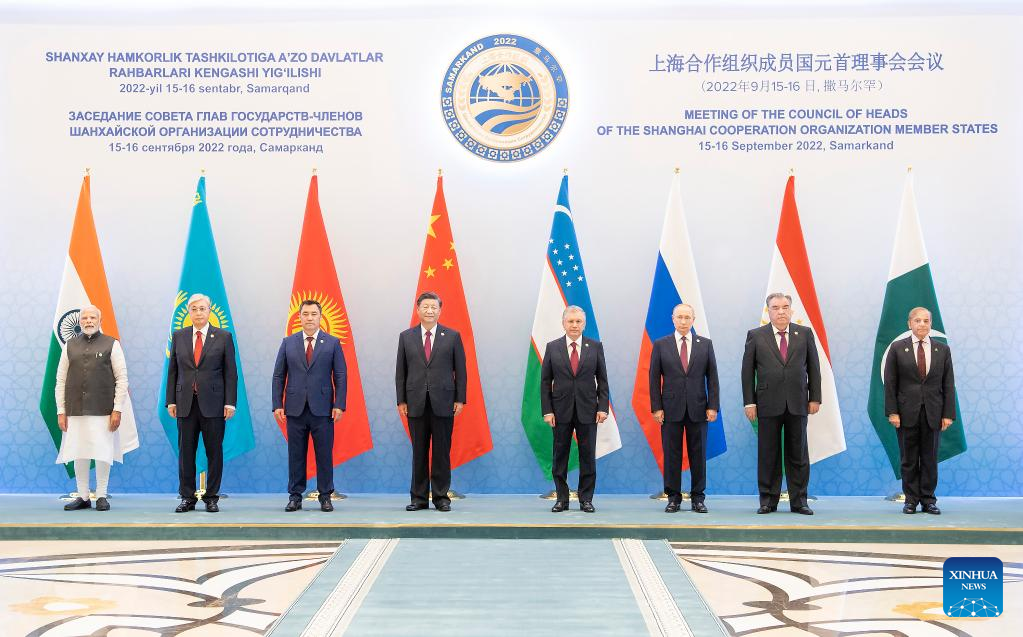
Pakistan PM with Other World Leaders at SCO Summit in Samarkand, Uzbekistan. Source: Xinhua

A prominent Indian journalist Shekhar Gupta has recently summarized the reasons for the Modi government's failure to achieve its objectives relative to Pakistan. Gupta argues that Pakistan is too important to be ignored or isolated by the international community. He says, "Pakistan is too big in terms of population, too powerful militarily, too Muslim, too nuclear and too well located to be isolated". 

Pakistan PM Shahbaz Sharif with President and Mrs. Biden. Source: White House

Here are some of the key points Shekhar Gupta makes in episode 1093 of his show Cut The Clutter : 

1.Pakistan is our most important neighbor. We must focus on Pakistan.

2, We can not ignore Pakistan in India because the world can not ignore Pakistan

3. The Western world has an intrinsic relationship with Pakistan which doesn't go away

4. The West does not see Pakistan as so useful to them today and yet Pakistan can not be isolated.

5. You can see all the indications that Pakistan is not isolated.

6. A lot of (Indian) TV channels say Pakistan is isolated but the evidence doesn't support it.

7. Pakistan FM visited Washington and met his counterpart Tony Blinken. 

8. Pakistan Army Chief has received a warm welcome at the US Defense Dept and met US Defense Secretary Lloyd Austin. Bajwa matters more than the Pakistan Defense Minister. Nobody knows his name.

9. US Ambassador to Pakistan Donald Blome, a career diplomat, has visited "Pakistan Occupied Kashmir" and called it Azad Kashmir...Azad means free.

10. When the chips are down in the region Pakistan is the ally Americans reach out to.

11. The US does not want Pakistan to drift to China.

12. German foreign minister Annalena Baerbock has spoken about Kashmir...the K word. She has asked for the UN to help solve the Kashmir issue.

13. Pakistan Army Chief General Bajwa is not a warmonger. He wants to normalize ties with India. He wants to trade with India. He doesn't want Faiz Hameed to succeed him. He used to be the ISI chief and took credit for the Taliban victory in Afghanistan. Do the Americans have leverage here?

14. Where does Pakistan's unique power come from? Why can't Pakistan be ignored? Why can't Pakistan be isolated?

15. The Indian public needs to understand it.

16. Pakistan is too big in terms of population, too powerful militarily, too Muslim, too nuclear and too well located to be isolated.

17. Pakistan has the 5th largest population and its population is growing fast. It could soon exceed Indonesia to become the largest Muslim nation in the world.

18. Pakistan has the 5th strongest military in the world.

19. In terms of nuclear weapons, Pakistan has the 4th largest nuclear arsenal in the world.

20. Pakistan is too well located to be isolated. It has geo-strategic location. Pakistan is the western gateway to China. Pakistan opened China's ties with the US. And then helped the US defeat the Soviet Union.

21. The factors that made Pakistan such a strong ally to US still exist. Don't blame the Pakistanis for it.

22. India is not willing to commit to an alliance with the US.

23. Imran Khan tried to change Pakistan's foreign policy to be more like India's but he failed.

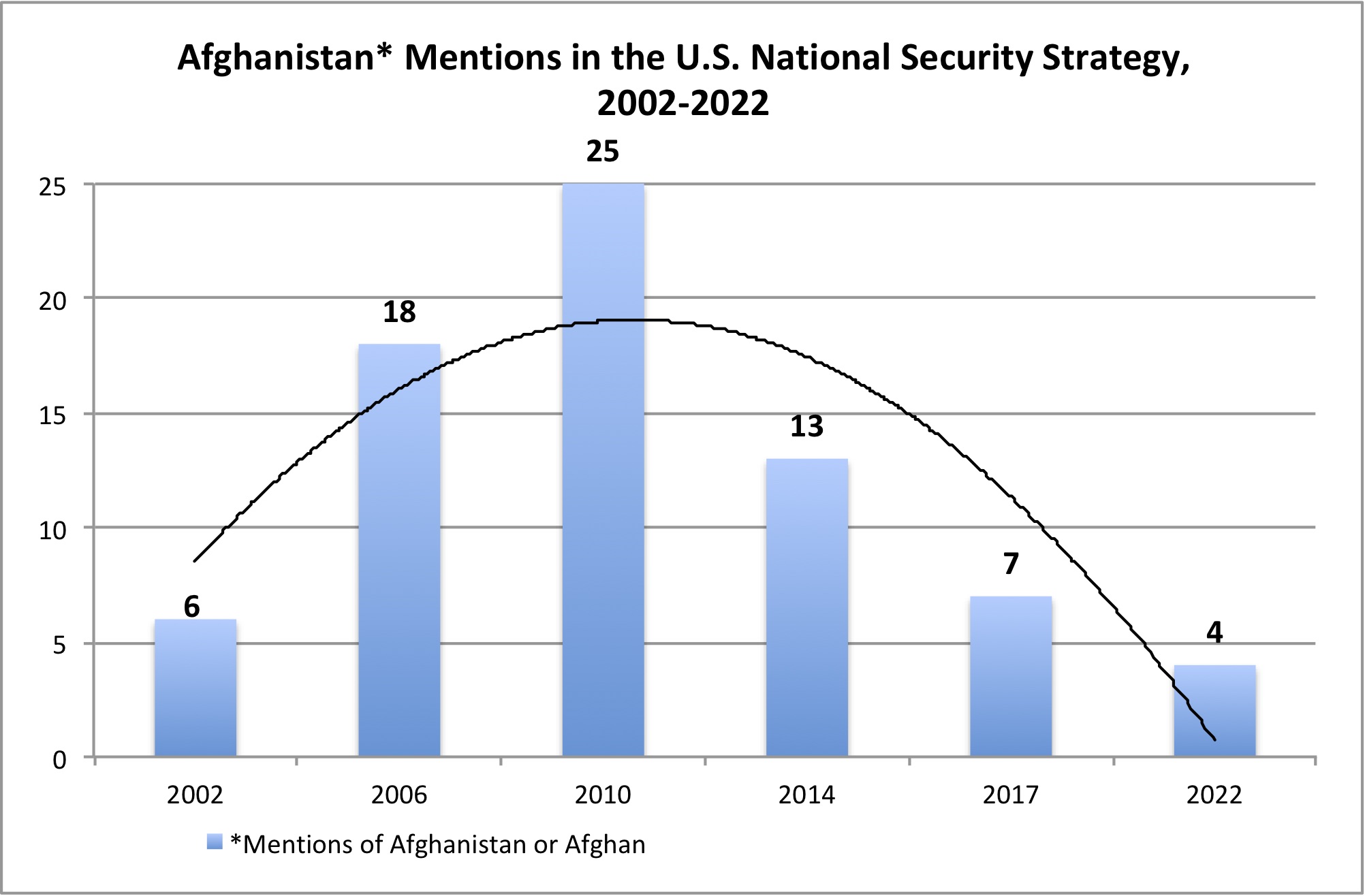
Mentions of Afghans and Afghanistan in US National Security Strategy via Sameer Lalwani 

Prime Minister Modi is getting similar inputs and advice from retired Indian diplomat Sharat Sabharwal. In his recently published book "India's Pakistan Conundrum", Sabharwal disabuses his fellow Indians of the notion that Pakistan is about to collapse. He also writes that "Pakistan has shown remarkable resilience in the face of adversity".  "Pakistan is neither a failed state nor one about to fail", he adds. He sees "limitations on India’s ability to inflict a decisive blow on Pakistan through military means". The best option for New Delhi, he argues, is to engage with Pakistan diplomatically. In an obvious message to India's hawkish Hindu Nationalist Prime Minister Narendra Modi, he warns: "Absence of dialogue and diplomacy between the two countries carries the risk of an unintended flare-up". Ambassador Sabharwal served as Indian High Commissioner to Pakistan from 2009 to 2013. Prior to that, he was Deputy High Commissioner in Islamabad in the 1990s.

Here's Shekhar Gupta's video titled "Gen Bajwa in DC, US envoy, German FM statements on Kashmir, show why Pakistan can’t be isolated."

https://youtu.be/NuXd4d_clf4

Related Links:

Haq's Musings

South Asia Investor Review

Modi's India: A Paper Elephant?

Can Washington Trust Modi's India as Key Ally in Asia?

US-Pakistan F-16 Deal: Indian Minister Jaishankar Throws a Tantrum

Ukraine's Lesson For Pakistan: Never Give Up Nuclear Weapons

Geopolitically Important Pakistan Brings Together China, Russia, US, UK For Joint Naval Drills

US and China Compete For Influence in Pakistan

Indian Diplomat on Pakistan's "Resilience", "Strategic CPEC"

Vast Majority of Indians Believe Nuclear War Against Pakistan is "Winnable"