Showing posts sorted by relevance for query cyber war. Sort by date Show all posts

Tuesday, October 18, 2011

US Cyber Attack on Pakistan?

After a reportedly successful US-Israeli stux-net cyber attack on Iranian nuclear installations last year, there is now a report in the New York Times that the Obama administration has considered deploying cyber warfare against Pakistan as well.

The New York Times quotes unnamed US officials as acknowledging that the US "military planners suggested a far narrower computer-network attack to prevent Pakistani radars from spotting helicopters carrying Navy Seal commandos on the raid that killed Osama bin Laden on May 2." It says the idea of cyber attack on Pakistani air defense system was dropped, and radar-evading Black Hawk helicopters and stealthy RQ-170 Sentinel surveillance drone were instead used to for the raid in the Pakistani town of Abbottabad. The CIA spied on Osama bin Laden’s compound in Pakistan by video transmitted from a new bat-winged stealth drone, the RQ-170 Sentinel, which hovered high above Abbottabad for weeks before the raid. There are speculations that the US might be doing such aerial surveillance in other parts of Pakistan, particularly on Pakistan's nuclear installations.

Recently, officials at Creech Air Force Base in Nevada acknowledged a virus infecting the drone “cockpits” there, according to Wired magazine. The source of the virus has not been identified. Back in 2009, the Wall Street Journal reported that militants in Iraq used $26 off-the-shelf software to intercept live video feeds from U.S. Predator drones, potentially providing them with information they needed to evade or monitor U.S. military operations.


At the 2009 World Economic Forum, the U.S.-based security software firm McAfee's CEO Dave Walt reportedly told some attendees that China, the United States, Russia, Israel and France are among 20 countries locked in a cyberspace arms race and gearing up for possible Internet hostilities. He further said that the traditional defensive stance of government computer infrastructures has shifted in recent years to a more offensive posture aimed at espionage, and deliberate disruption of critical networks in both government and private sectors. Such attacks could disrupt not only command and control for modern weapon systems such as ballistic missiles, but also critical civilian systems including banking, electrical grid, telecommunications, transportation, etc, and bring life to a screeching halt.

In a Sept 2010 report, the Wall Street Journal quoted cyber security specialists saying that "many countries including the U.S., Russia, China, Israel, the U.K., Pakistan, India and North and South Korea have developed sophisticated cyber weapons that can repeatedly penetrate and have the ability to destroy computer networks".

Last year, Chinese hackers apparently succeeded in downloading source code and bugs databases from Google, Adobe and dozens of other high-profile companies using unprecedented tactics that combined encryption, stealth programming and an unknown hole in Internet Explorer, according to new details released by the anti-virus firm McAfee and reported by Wired magazine. These hack attacks were disguised by the use of sophisticated encryption, and targeted at least 34 companies in the technology, financial and defense sectors, exploiting a vulnerability in Adobe’s Reader and Acrobat applications.

While the Chinese cyber attacks on US and India often get wide and deep coverage in the western media, a lower profile, small-scale cyber warfare is also raging in the shadows between India and Pakistan, according to some reports. These reports indicate that around 40-50 Indian sites are being attacked by Pakistani hackers on a daily basis whereas around 10 Pakistani sites are being hit by their Indian counterparts.

Here is how Robert X. Cringeley described the potential effects of full-scale India-Pakistan cyber war in a June 2009 blog post captioned "Collateral Damage":

"Forget for the moment about data incursions within the DC beltway, what happens when Pakistan takes down the Internet in India? Here we have technologically sophisticated regional rivals who have gone to war periodically for six decades. There will be more wars between these two. And to think that Pakistan or India are incapable or unlikely to take such action against the Internet is simply naive. The next time these two nations fight YOU KNOW there will be a cyber component to that war.

And with what effect on the U.S.? It will go far beyond nuking customer support for nearly every bank and PC company, though that’s sure to happen. A strategic component of any such attack would be to hobble tech services in both economies by destroying source code repositories. And an interesting aspect of destroying such repositories — in Third World countries OR in the U.S. — is that the logical bet is to destroy them all without regard to what they contain, which for the most part negates any effort to obscure those contents."


Coming back to the US, it is no secret that the Pentagon and the CIA have increasingly been using America's significant technology edge for war fighting in many parts of the world in recent years. One example is the growing fleet of the remotely controlled stealthy drones being deployed in Afghanistan, Pakistan, Iraq, Yemen and elsewhere for espionage and attacks. Among other new developments, the modern drone is just one of the ways to fight wars covertly in remote places at low cost to America in terms of dollars and casualties, often without so munch as declaring such wars.

The Pentagon now has some 7,000 UAVs, compared with fewer 50 just 10 years ago. The US Air Force is now anticipating a decrease in manned aircraft but expects its number of “multirole” aerial drones like the Reaper — the ones that spy as well as strike — to nearly quadruple, to 536, according to NY Times. Already the Air Force is training more remote pilots, 350 this year alone, than all of the fighter and bomber pilots combined.

The covert nature of drone warfare is particularly true outside Afghanistan and Iraq which are declared wars. In Pakistan, for instance, the secret war is being fought by the CIA, an intelligence agency, not the American military. This war is not even publicly acknowledged by the US administration, and it's a clear violation of international laws and all conventions of war.

The US politicians, spies and generals seem to be calculating that the American people would be more willing to support such wars if they don't bust the US budget and result in as few American body bags as possible. However, this calculation ignores the basic fact that most international conflicts, including terrorism, are essentially political in nature, and must be solved by political rather than the military means.

Related Links:

Haq's Musings

Cyber Attacks in India, Pakistan and China

Nature of Future India-Pakistan Warfare

ITU Internet Access Data by Countries

Foreign Origin of India's Agni Missiles

Pakistan's Space Capabilities

Seeing Bin Laden's Death in Wider Perspective

Pakistan's Multi-Billion Dollar IT Industry

John Arquilla: Go on the Cyberoffensive

Pakistan Defense Industry Going High Tech

India-Pakistan Military Balance

21st Century High Tech Warfare

Tuesday, April 6, 2010

Cyber Wars Across China, India and Pakistan

Last year at the World Economic Forum, U.S.-based security software firm McAfee's CEO Dave Walt reportedly told some attendees that China, the United States, Russia, Israel and France are among 20 countries locked in a cyberspace arms race and gearing up for possible Internet hostilities. He further said that the traditional defensive stance of government computer infrastructures has shifted in recent years to a more offensive posture aimed at espionage, and deliberate disruption of critical networks in both government and private sectors. Such attacks could disrupt not only command and control for modern weapon systems such as ballistic missiles, but also critical civilian systems including banking, electrical grid, telecommunications, transportation, etc, and bring life to a screeching halt.

Richard Clark, the former US cyber security czar, explained in a Newsweek interview the potential impact of cyber attacks on privately owned and operators infrastructure as follows:

"I think the average American would understand it if they suddenly had no electricity. The U.S. government, [National Security Administration], and military have tried to access the power grid's control systems from the public Internet. They've been able to do it every time they have tried. They have even tried to issue commands to see if they could get generators to explode. That's the famous Aurora experiment in Idaho. Well, it worked. And we know there are other real cases, like the power grid taken out in Brazil as part of a blackmail scheme. So the government knows it can be done, the government admits it can be done, the government intends to do it to other countries. Even the Chinese military has talked publicly about how they would attack the U.S. power grid in a war and cause cascading failures".


As if to confirm Walt's assertions, the Chinese hackers have allegedly stolen Indian national security information, 1,500 e-mails from the Dalai Lama’s office, and other sensitive documents, according to a report released by researchers at the University of Toronto. Media reports also indicated that government, business, and academic computers at the United Nations and the Embassy of Pakistan in the US were also targets. The UofT report also indicated there was no evidence to suggest any involvement by the Chinese government, but it has put Beijing on the defensive. Similar reports earlier this year said security investigators had traced attacks on Google and other American companies to China-based computers.

Chinese hackers apparently succeeded in downloading source code and bugs databases from Google, Adobe and dozens of other high-profile companies using unprecedented tactics that combined encryption, stealth programming and an unknown hole in Internet Explorer, according to new details released by the anti-virus firm McAfee and reported by Wired magazine. These hack attacks were disguised by the use of sophisticated encryption, and targeted at least 34 companies in the technology, financial and defense sectors, exploiting a vulnerability in Adobe’s Reader and Acrobat applications.

While the Chinese cyber attacks on US and India often get wide and deep coverage in the western media, a lower profile, small-scale cyber warfare is also raging in the shadows between India and Pakistan, according to some reports. These reports indicate that around 40-50 Indian sites are being attacked by Pakistani hackers on a daily basis whereas around 10 Pakistani sites are being hit by their Indian counterparts.

According to Pakistani blogger Arsalan Jamshed, cyberwars between the two countries started in May 1998. Soon after India officially announced its first nuclear test, a group of hackers, believed to be Pakistani, called milw0rm broke into the Bhabha Atomic Research Center web site and posted anti-India and anti-nuclear messages. The cyberwars usually have been limited to defacing of each others' sites. Defacement causes only superficial damage, in which only the home page of a site is replaced with hacker's own page, usually with some message for the victim. Such defacements started in May 1998 and continued during Kargil War in 1999 and then during that era when the tension between India and Pakistan was at its peak from Dec 2001 to 2002. Therefore, the period between 1999 to 2002 was very crucial, when the troops were busy across the LOC exchanging fire and the hackers were busy in defacing each others' websites.

In 2003, Indian and Pakistani hackers attacked each others' servers using variants of Yaha-Q email worm to shut down about 20 different applications, including personal firewalls and anti-virus software, according to Tony Magallanez, a system engineer with Finland-based F-Secure Corp.

Last year, there were news reports of Indian cyber attacks on Pakistan's Oil and Gas Regularity Authority. In retaliation, some Pakistani attackers hacked the websites of the Indian Institute of Remote Sensing, the Center for Transportation Research and Management, the Army's Kendriya Vidyalaya of Ratlam and the Oil and Natural Gas Corporation (ONGC). In one particular instance, Pakistani hackers removed the "most wanted" list from the Indian state Andhra Pradesh's CID (criminal investigation department) website and replaced it with messages threatening their Indian cyber rivals.

Unwelcome computer intrusions by Pakistani hackers are not new. The nation has the dubious distinction of being the birth place of the first ever personal computer virus known to mankind. Popularly called the 'Brain virus', it was created in 1986 by two Pakistani brothers, Amjad and Basit Farooq Alvi. This virus, which spread via floppy disks, was known only to infect boot records and not computer hard drives like most viruses today. The virus also known as the Lahore, Pakistani, Pakistani Brain, Brain-A and UIUC would occupy unused space on the floppy disk so that it could not be used and would hide from detection. It would also disguise itself by displaying the uninfected bootsector on the disk.

Responding to the increasing threat perception of cyber attacks, the Indian Navy Chief Admiral Sureesh Mehta has called for leveraging Indian strengths in Information Technology to build cyber warfare capabilities in India.

According to a Times of India report last year, the Indian Army is boosting the cyber-security of its information networks right down to the level of divisions, which are field formations with over 15,000 troops.

In addition to creating cyber-security organization to protect against cyber attacks and data thefts, the Indian Army leaders have also underlined the urgent need for "periodic cyber-security audits" by India's Army Cyber Security Establishment (ACSE).

The Indian Army's actions are a response to reports that both China and Pakistan are bolstering their cyber-warfare or information warfare capabilities at a rapid clip.

While the India-Pakistan cyber conflict is at best the stuff of minor league, the real major league contest is likely to occur between the United States and its major adversaries, particularly China. The Pentagon already employs legions of elite hackers trained in cyberwarfare, according to a Wired Magazine story in November, 2009. But they mostly play defense, and that's what Naval Postgraduate School professor John Arquilla wants to change. He'd like the US military's coders to team up with network specialists abroad to form a global geek squad. Together, they could launch preemptive online strikes to head off real-world battles.

Among other things, the Wired magazine story had a scenario discussed by John Arquilla where an elite geek squad of world hackers could be used to prevent India-Pakistan nuclear war by taking out the command and control systems of both nations.

The increasing cyber attacks on U.S. government's networks and critical infrastructure, and the growing complexity of IT infrastructure, are driving a surge in federal cybersecurity spending; the U.S. federal government's total cumulative cybersecurity spending would be $55 billion between 2010 and 2015, according a report by Homeland Security News Wire. At the same time, countries such as China and Russia recognize the fact that the United States has an unfair advantage over them in cyber warfare simply because most of the operating system and infrastructure software used in the world today has its origins in the United States. These concerns are fueling efforts by most major nations in the world to enhance their cyber security, and they are focusing on development of capacity to retaliate as a deterrence.

As to the potential cyber component of any future wars between India and Pakistan, its dramatic impact could reverberate across the globe as the computers used in South Asia for outsourced work from the United States and Europe come under crippling attacks from hackers on both sides. Here is how Robert X. Cringeley describes it in a June 2009 blog post captioned "Collateral Damage":

"Forget for the moment about data incursions within the DC beltway, what happens when Pakistan takes down the Internet in India? Here we have technologically sophisticated regional rivals who have gone to war periodically for six decades. There will be more wars between these two. And to think that Pakistan or India are incapable or unlikely to take such action against the Internet is simply naive. The next time these two nations fight YOU KNOW there will be a cyber component to that war.

And with what effect on the U.S.? It will go far beyond nuking customer support for nearly every bank and PC company, though that’s sure to happen. A strategic component of any such attack would be to hobble tech services in both economies by destroying source code repositories. And an interesting aspect of destroying such repositories — in Third World countries OR in the U.S. — is that the logical bet is to destroy them all without regard to what they contain, which for the most part negates any effort to obscure those contents."

Related Links:

Haq's Musings

Nature of Future India-Pakistan Warfare

ITU Internet Access Data by Countries

Foreign Origin of India's Agni Missiles

Pakistan's Space Capabilities

Pakistani-American Entrepreneurs in Silicon Valley

Pakistan's Multi-Billion Dollar IT Industry

John Arquilla: Go on the Cyberoffensive

Pakistan Defense Industry Going High Tech

India-Pakistan Military Balance

21st Century High Tech Warfare

Saturday, January 5, 2019

Global Cyber Arms Race Heating Up?

The United States has launched successful cyber attacks against Iran and North Korea in recent years, according to multiple credible reports. These cyber attacks have caused physical destruction of thousands of Iranian nuclear centrifuges and disrupted North Korean missiles on launchpads or shortly after takeoff. Some of the code and developer tools used in the attacks have leaked out. These leaks are enabling other nations to learn and develop their own offensive cyber weapons. The United States and the United Kingdom have accused Russia of using social media apps like Facebook and Twitter to exploit and deepen divisions during the US presidential elections and the UK's Brexit referendum in 2016. Similar warfare techniques, described by the US RAND Corporation as New Generation or Hybrid Warfare, are probably being deployed by other nations as well. It refers to the use of a broad range of subversive instruments, many of which are nonmilitary, to further a country's national interests. It wouldn't be far-fetched to think that India and Pakistan are learning from New Generation Warfare techniques developed and deployed by technologically advanced nations.

US-Israel Joint Stuxnet Against Iran:

A large number of  Iranian centrifuges suddenly started to blow up around 2008-9 soon after President Barack Obama's inauguration. The mystery was finally resolved in the summer of 2010  when a computer worm later named Stuxnet escaped Iran’s Natanz plant and spread around the world on the Internet.

New York Times' David Sanger reported that the United States and Israel developed Stuxnet and then tested it by building replicas of the Iranian Natanz plant equipped with Pakistani P-1 centrifuge designed in 1980s. Americans obtained P-1 centrifuges from Libyan leader Moammar Ghadafi and dismantled them to learn how it worked. P-1 uses a Siemens controller S7-417. Stuxnet inserted malware in the Siemens controller to suddenly change the centrifuge speed which caused its destruction.  It was designed to attack computers with specific configuration of Siemens S7-417 controller. Here's how New York Times' David Sanger described the test results:

"After several false starts, it worked. One day, toward the end of Mr. Bush’s term, the rubble of a centrifuge was spread out on the conference table in the Situation Room, proof of the potential power of a cyberweapon. The worm was declared ready to test against the real target: Iran’s underground enrichment plant."

US Left-of-Launch Attack Against North Korea:

A very high percentage of North Korean missile launches failed in the period from 2015 to 2017. The missiles either blew up on the launchpads or failed soon after launch. These failures are widely attributed to American cyber attacks.

American strategists see Left-of-Launch cyber weapons as a low-cost extension of their missile defense strategy. Gen. James Dickinson, the chief of Army Space and Missile Defense Command and Army Forces Strategic Command, explains it as follows:

“You’ve probably heard the conversation about how we’re on the wrong side of the cost curve for missile defense many times. We’re utilizing multi-million-dollar interceptors against very inexpensive missiles and those types of threats, So it’s a balance. It has to be a balance between the end game, if you will, where we’re relying on an interceptor to defeat the threat and other approaches."

Russia's Information Warfare in US, UK:

The United States and the United Kingdom have accused Russia of using social media apps like Facebook and Twitter to exploit and deepen divisions during the US presidential elections and the UK's Brexit referendum in 2016.

American and British intelligence officials believe Russia used all major social media platform to spread words, images and videos tailored to voters’ interests to help elect President Trump. Similar allegations have been made by the British government about Russian interference to influence the outcome of the Brexit vote in the U.K.

Facebook, Google and Twitter acknowledged in 2017 that they had identified Russian interference on their sites. The companies have responded to the threat — Facebook, in particular, created a “war room” in 2018 to fight interference around elections — but none has revealed interference around US midterm elections in 2017 on the same scale as in 2016.

Cyber Weapons Code and Tools Leaks:

Stuxnet worm and recently leaked NSA's hacking tools by Shadow Brokers have revealed the extent of US intelligence agencies' cyber spying and hacking operations. Symantec's Liam O'Murchu who was among the first to unravel Stuxnet says it is "by far the most complex piece of code that we've looked at — in a completely different league from anything we’d ever seen before." It is almost certain that the code is being reverse-engineered and repurposed as their weapon by cyber warriors in many countries around the world.

In 2013, a group known as "Shadow Brokers" leaked NSA's sophisticated cyberweapons that have exposed major vulnerabilities in Cisco routers, Microsoft Windows, and Linux mail servers.  Soona after the Shadow Brokers leak, North Korea is believed to have developed and used WannaCry ransomware. It encrypts files on the target PC's hard drive, making them inaccessible, then demands a ransom payment in bitcoin to decrypt them.

Summary:

American agencies have launched successful cyber campaigns against adversaries like  Iran and North Korea in recent years, according to multiple credible reports. These cyber attacks have caused physical destruction of thousands of Iranian nuclear centrifuges and disrupted North Korean missiles on launchpads or shortly after takeoff. Some of the code and developer tools used in the attacks have leaked out. These leaks are enabling other nations to learn and develop their own offensive cyber weapons. The United States and the United Kingdom have accused Russia of using social media apps like Facebook and Twitter to cause and deepen divisions during the US presidential elections and the UK's Brexit referendum in 2016. Similar warfare techniques, described by the US RAND Corporation as New Generation or Hybrid Warfare, are probably being deployed by other nations as well. It refers to the use of a broad range of subversive instruments, many of which are nonmilitary, to further a country's national interests. It wouldn't be far-fetched to think that India and Pakistan are learning from New Generation Warfare techniques developed and deployed by technologically advanced nations.


Thursday, April 29, 2021

Pre-COVID Fiction: India Wins US-China War Imagined For 2034

In a recently published fiction imagined for 2034 by former top US Admiral James Stavridis and Elliot Ackerman, China and the United States go to war that ends in India's victory. The authors portray Indians as heroes whose statesmen-ship de-escalates World War III, negotiates peace and helps India emerge as the new global superpower. Patel, the Indian uncle of the Indian-American deputy national security advisor Sandeep Chowdhury tells him, "America’s hubris has finally gotten the better of its greatness." The authors imagine the United Nations headquarters moves from New York to Mumbai after the war. Had this book been written after watching thousands of Indian victims of COVID19 gasping for breath and dying daily on the streets of New Delhi, I think Ackerman and Stavridis would have conceived  and developed a completely different plot line for their novel.  

2034 Book Cover


Elliot Ackerman and James Stavridis, authors of "2034: A Novel of the Next World War", imagine a series of incidents in South China Sea and the Persian Gulf. These incidents trigger cyber warfare, global internet outages and the use of tactical nuclear weapons fired from warplanes and warships. The military conflict results in millions of deaths in the cities of San Diego and Shanghai. India intervenes at this point by attacking and destroying Chinese and American fighter planes and ships to stop the war. 

The end of active fighting is followed by New Delhi Peace Accords arranged by the Indian government. The United Nations headquarters is moved from New York to Mumbai. At one point in the conflict, the authors have Patel lecture his nephew Sandeep Chowdhury, the US deputy national security advisor: 

"America’s hubris has finally gotten the better of its greatness. You’ve squandered your blood and treasure to what end? For freedom of navigation in the South China Sea? For the sovereignty of Taiwan? Isn’t the world large enough for your government and Beijing’s? Perhaps you’ll win this war. But for what? To be like the British after the Second World War, your empire dismantled, your society in retreat? And millions of dead on both sides?"

Rising Positivity Rates of COVID19 Tests in South Asia. Source: Our World in Data

Some reviewers of the book have speculated that China may want to take Taiwan by force for one particular technology company, the Taiwan Semiconductor Manufacturing Company (TSMC) which is currently the world's most advanced semiconductor technology company. Semiconductor components underlie all cutting edge applications from artificial intelligence (AI) and smartphones to self-driving cars and advanced military equipment.

The possibility of war between China and the United States can not be dismissed. However, the book's portrayal of India's emergence as a global superpower is pure fantasy.  Had this book been written after watching thousands of Indian victims of COVID19 gasping for breath and dying daily on the streets of New Delhi, Ackerman and Stavridis would have conceived  and developed a completely different plot line for their novel.  

Related Links:

Haq's Musings

South Asia Investor Review

India Tops World Hunger Charts

Is India Superpoor or Superpower?

Rape as a Political Weapon Used By Hindutva

Hindu Nationalism Inspired By Nazism, Fascism

Rise of Islamophobia After Sept 11, 2001 Terrorist Attacks

700,000 Indian Soldiers Versus 7 Million Kashmiris

Modi's Kashmir Blunder and India-Pakistan Nuclear Conflict

Is India a Paper Elephant? 

Howdy Modi Rally Exposes Indian-Americans to Charges of Hypocrisy

Modi's Extended Lockdown in Indian Occupied Kashmir

Hinduization of India

Brievik's Hindutva Rhetoric

Indian Textbooks

India's RAW's Successes in Pakistan

Riaz Haq Youtube Channel

VPOS Youtube Channel

Monday, January 26, 2015

Revolution in Military Affairs: Cyberweapons, Robots and Communications in South Asia

How is increasing use of technology transforming modern warfare?

What will be the impact of widespread deployment of cyberweapons like Stuxnet worm used by the United Sates to cause extensively physical destruction of Iran's nuclear centrifuges? Will such weapons be used to destroy critical infrastructure of telecommunications, water and power and the economy of the enemy?

Will the boots on the ground be replaced by bots on the ground, in the air and on the water in the future? How autonomous will such bots be? How will the armed drones distinguish between combatants and non-combatants in war?

Will bio-hacking lead to new extremely lethal biological agents developed and deployed by terrorists and rogue individuals and nations?

How is the information technology changing the battlefield awareness with more effective command, control, communications, computers, and intelligence (C4I)?

Are India and Pakistan modernizing their militaries for technology-based warfare?

What are the key ethical issues raised by high-tech warfare? Will it make it easier for nations with advanced technology to start wars with impunity?

Capacity For Revolution in Military Affairs Source:  Laird & Mey 1999


Vision 2047 host Farrukh Shah Khan discusses these questions with Riaz Haq in the following video:

http://vimeo.com/117678020


Vision 2047: Impact of Revolution in Military Affairs on South Asia from WBT TV on Vimeo.

http://www.dailymotion.com/video/x2fo3yh_how-will-technology-change-warfare-in-south-asia_tech


How Will Technology Change Warfare in South Asia- by faizanmaqsood1010
As to the potential cyber component of any future wars between India and Pakistan, its dramatic impact could reverberate across the globe as the computers used in South Asia for outsourced work from the United States and Europe come under crippling attacks from hackers on both sides. Here is how Robert X. Cringeley describes it in a June 2009 blog post captioned "Collateral Damage":

"Forget for the moment about data incursions within the DC beltway, what happens when Pakistan takes down the Internet in India? Here we have technologically sophisticated regional rivals who have gone to war periodically for six decades. There will be more wars between these two. And to think that Pakistan or India are incapable or unlikely to take such action against the Internet is simply naive. The next time these two nations fight YOU KNOW there will be a cyber component to that war.

And with what effect on the U.S.? It will go far beyond nuking customer support for nearly every bank and PC company, though that’s sure to happen. A strategic component of any such attack would be to hobble tech services in both economies by destroying source code repositories. And an interesting aspect of destroying such repositories — in Third World countries OR in the U.S. — is that the logical bet is to destroy them all without regard to what they contain, which for the most part negates any effort to obscure those contents."


Related Links:

Haq's Musings

Pakistan Defense Production Goes High-Tech

Drones Outrage and Inspire Pakistanis

RMA Status in Pakistan

Cyber Wars in South Asia

Pakistan's Biggest Ever Arms Bazar

Genomics and Biotech Advances in Pakistan

India's Israel Envy: What if Modi Attacks Pakistan

Eating Grass: Pakistan's Nuclear Program


Tuesday, March 24, 2015

Gen Kidwai on Pakistan's 2nd Strike Capability and Nuclear Triad

General Khalid Kidwai, the man who headed Pakistan's strategic forces for 15 years, has said his country is close to having nuclear "second strike capability" with a "sea-based platform".

 Kidwai said the 2750 Kilometer range Shaheen 3 ballistic missile has been developed in response to reports of India's plans to locate nuclear bases on Andaman and Nicobar islands in the Indian ocean.


On the tactical nuclear missile Nasr with a range of just 37 miles, Kidawi said it was intended to deter India's "Cold Start" doctrine which sought to exploit gaps between Pakistan's conventional and nuclear capabilities.

Kidwai was speaking at a 2015 Carnegie International Nuclear Policy Conference in Washington DC recently.

Before answering questions from former US Defense official Peter Lavoy who moderated the discussion and the audience, Kidwai made the following points in his introductory remarks:

1. One nuclear power is trying to teach another a "lesson" at the line of control in Kashmir

2.  Conflicts must be managed for socio-economic development in South Asia.

3. Managing conflict is not revisionism--it's common sense.

4.  Fear of nuclear war can maintain peace and enable socio-economic development

 5. Pakistan's tactical nuclear weapons are a response to India's offensive doctrine.

6.   It's unfortunate that the debate has degenerated into lesser issues of command and control and nuclear weapons falling into wrong hands.

7. Discriminatory access to technology is wrong-headed. It does not contribute to managing conflict.


Here are some Q&As from the session:


Question (Lavoy) : History of Pakistan's nuclear weapons...greatest accomplishment and biggest regrets

Answer (Kidawi) : No regrets. I am a "satisfied soldier". Greatest achievement: More comprehensive satisfaction of taking scientific experiments to complete operationalization with a variety of nuclear weapons. It has ensured peace in South Asia. War as an instrument policy is out.

Question: How do you regard nuclear weapons...extension of conventional war fighting?

Answer:  They are seen as deterrent, not as primary war-fighting capability.

Question: What's the logic of Nasr with such a short range?

Answer:  US has short-range nukes. Pakistan is not unique. Our adversary was seeing gaps in Pakistan capability to find space to launch conventional strikes. Nasr filled the gap to deter "cold start doctrine".

Question: Concern is about intermingling of conventional and strategic making nuclear war more likely, not less likely.

Answer:  If tactical nukes make India think twice, if not ten times, then they make sense. It's to stop India's bluster of massive retaliation and not provoke mutual destruction.

Question: The other side of the range, Shaheen 3, what is its actual range? It's 2750 Km.

Answer: Logic is to respond to reports of development of Indian bases in Andaman and Nicobar islands in the Indian ocean. Pakistan has no need to go beyond the 2750 Km range.

Question: Shaheen 3's political dimension is troubling with capability to hit other countries in the Middle East (Israel?) Why is Pakistan's 2750 Km troublesome while India's 10,000 to 12,000 Km not troublesome?

Q&As with the Audience:

Question: Is Pakistan's nuclear program open-ended? How many is enough?

Answer:  It's not open-ended. It's to assure minimum deterrence.

 Question: Saudis have often hinted at access to Pakistan nuclear weapons?

Answer:  You should ask the Saudis why they are saying that. I can tell you that Pakistan will not be a source of nuclear weapons technology for any country.

Question: When would Pakistan have transparency of its nuclear program, like numbers of weapons? 

Answer: No government of Pakistan will reveal number of weapons. It'll maintain ambiguity.

Question: Other nuclear weapons states call their weapons "weapons of peace"? Should you worry about their use in war?

Answer: Pakistan's nuclear weapons are bedrock of Pakistan's security.

Question: Will Pakistan develop nuclear submarine as 2nd strike capability.

Pakistan will develop 2nd strike capability to maintain balance with India.

Question: Will Pakistan's 2nd capability be sea-based?

Answer: Yes.

Question: How will you coordinate army navy and air force commands in terms of nuclear weapons?

Answer: SPD is the coordination authority using elaborate C4ISR and transportation.

Question: You need a quiet submarine to avoid detection. Can you do it?

Answer: Yes, we are close to it. We'll have it in the next few years.

Question (Lavoy): Can Pakistan afford it?

Answer:  There are a lot of fantastic figures quoted about Pakistan's defense spending. But Pakistan's nuclear costs are a fraction of total defense expenditures which are in the range of 3 to 3.5% of GDP.

Question: Will Pakistan sign international treaties?

Answer: Maybe in the next few years.

Question: What is Pakistan's plans in space?

Answer:  Unfortunately, Pakistan's space program is lagging behind. SPD's interest in space program is in ensuring C4I2SR for our military needs.

Question: Pakistan's image after AQ Khan episode has not improved. What is Pakistan doing about it?

Answer: We are making serious efforts to join NSG (Nuclear Suppliers Group).

 Question (from Voice of Vietnam): Pakistan is China's only ally. Can Pakistan use its ties with China to promote peace in Asia?

Answer: I disagree that Pakistan is China's only ally. But Pakistan and China have been close friends since 1960s. Our alliance with China is not against any country but to promote peace.

Question (Lavoy): Have you asked your military colleagues to cut ties with terrorism that could start the war you are trying to avoid.

 Answer: I disagree with the premise of the question. The situation we are in was thrust upon Pakistan. First lack of resolution of Kashmir issue and then superpower conflict in Afghanistan have led to militancy and terrorism we are dealing with.

Here's the full video of the session with Gen Kidawi:

https://youtu.be/CNZCw0BXKyE


I think senior American analyst and South Asia watcher Stephen Cohen summed up the current situation in South Asia when he said: "The alphabet agencies—ISI, RAW, and so forth—are often the chosen instrument of state policy when there is a conventional (and now a nuclear) balance of power, and the diplomatic route seems barren."

I see little likelihood of full-scale war between India and Pakistan. The best way for the two nuclear armed neighbors to proceed is sustained diplomatic engagement to resolve all outstanding issues including Kashmir. If the diplomatic route remains barren, there will be continuation of covert and proxy wars in the region.

Related Links:

Haq's Musings

Pakistan's Shaheen 3 Can Hit Deep Inside India and Israel

Transcript of Gen Khalid Kidwai's Conversation at Carnegie Endowment

Pakistan Building Nuclear Submarine?

India's Israel Envy

Pakistan Space Program

Revolution in Military Affairs

Pakistan Defense Production Goes High-Tech

Drones Outrage and Inspire Pakistanis

RMA Status in Pakistan

Cyber Wars in South Asia

Pakistan's Biggest Ever Arms Bazar

Genomics and Biotech Advances in Pakistan

India's Israel Envy: What if Modi Attacks Pakistan

Eating Grass: Pakistan's Nuclear Program

Kerry Challenges Modi With Hard Evidence

Monday, April 25, 2022

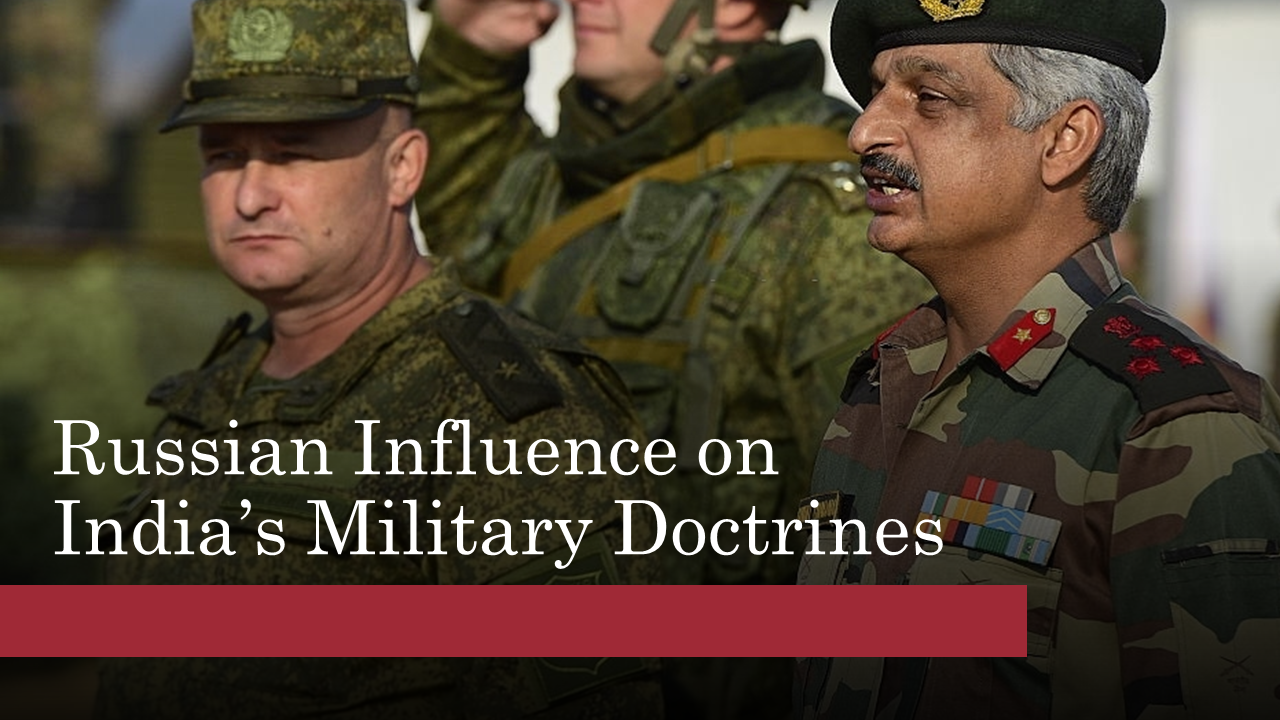
Ukraine War: Time For India To Rethink its Military Doctrine Modeled On Russia's?

India's Russian-equipped and trained military is watching with great concern Russia's losses in the Ukraine war. Moscow has lost 20,000 soldiers, nearly 500 main battle tanks and a large warship so far, according to media reports. Ukraine's use of Turkish drones, US-made anti-tank guided missiles (ATGMs) Javelins and Ukrainian anti-ship Neptune missiles has taken a heavy toll on the Russian Army and Navy. It is notable that India's Cold Start Doctrine against Pakistan is modeled on the Russian formation known as the “operational maneuver group” (OMG).   

Russian Influence On Indian Military Doctrine. Source: Air University, US Air Force

Russian Influence on Indian Military Doctrine:

It is well known that the Indian Army relies on Russian tanks, artillery, rockets, and ammunition. The Indian Navy uses Russian ships, submarines and missiles and the Russian Su-30 MKI forms the backbone of the Indian Air Force. Like Russia, the Indian military doctrine is based on deploying large platforms (tanks, artillery, ships and fighter-bombers) with massive firepower.  Here's an excerpt of an article by Dr. Vipin Narang, an Indian-American analyst, on the subject: 

"In terms of doctrine and strategy, although it may be difficult to trace direct influence and lineage between Russia and India, there are several pieces in India’s conventional and nuclear strategy that at least mirror Russia’s behavior. On the conventional side, the core formation in the quick-strike concept known as “Cold Start” or “proactive strategy options” was modeled on the Russian formation known as the “operational maneuver group” (OMG). The idea was to have a formation that could be rapidly assembled from tank and armored divisions that could break through reinforced defenses—NATO for Russia, and Pakistan’s I and II Corps in the plains and desert sectors for India.

"On the nuclear side, India is currently seized with the same dilemma as the Soviet Union was during the Cold War: both NATO and Pakistan threaten battlefield nuclear weapons against conventional thrusts (India, at least, presumably would be retaliating following a Pakistan-backed provocation). While both states refined their conventional concept of operations, there may have also been corresponding adjustments to their nuclear strategies. It was long believed that, in response to NATO threats to use nuclear weapons first on the battlefield, the Soviet Union had strong preemptive counterforce elements in its strategy to try to at least disarm the United States of its strategic nuclear weapons for damage limitation. It is increasingly evident that at least some serious Indian officials are interested in developing the same sort of option: preemptive counterforce against Pakistan’s strategic nuclear forces, both for damage limitation and to reopen India’s conventional superiority. It is no surprise perhaps, then, that India chose to go ahead with acquiring Russia’s S-400 missile and air defense system, despite the threat of Countering America's Adversaries Through Sanctions Act (CAATSA) sanctions from the United States: the S-400 is key to India’s damage limitation strategy, capable of potentially intercepting residual ballistic and cruise missiles that a counterforce strike might miss". 


Pakistani Military Official in Ukraine. Source: New York Times

Turkish Drones: 

Turkish Bayraktar TB2 has been highly effective in destroying Russian tanks and armor in Ukraine. It is playing a key role in Ukraine's counter offensives against Russia's invasion. It is proving so effective that "Ukrainian forces are singing its praises, literally", according to a CNN report

Indian Army has nearly 6,000 tanks of Russian origin. These tanks are just as vulnerable to drone and anti-tank missiles as the Russian tanks that perished in Ukraine. 

Pakistan has developed Baktar Shikan, a second-generation man-portable anti-tank guided missile (ATGM) system which uses optical aiming, IR tracking, remotely controlled and wire transmitted guidance signals. It can also be mounted on attack helicopters and Armored Personnel Carriers (APCs). Its long range, penetration power and a powerful anti-jamming capability form a potent defense against armored targets.

Pakistan is also reported to have already acquired Turkish Bayraktar TB2 drones recently. It was displayed in the Pakistan Day Parade on March 23, 2022, along with other military equipment acquired recently by the Pakistani defense forces. 

Anti-Ship Missiles:

Ukraine claims that its Neptune anti-ship missiles hit and sank Moskva in Black Sea.  It was a large 10,000-ton guided missile cruiser of the Russian Navy that was launching cruise missiles on targets in Eastern and Southern Ukraine. It is the largest warship to have been sunk in action since WWII. 

Vast majority of Indian Navy ships, including its aircraft carriers and missile frigates, are designed, built and equipped by Russians.  

Pakistan recently showcased its anti-ship missile Harbah at DIMDEX 2022, a defense expo in Qatar. It  is a medium range ship launched subsonic cruise missile system capable of targeting sea as well as land targets in “all weather operation” at a maximum range of 280 kilometers, according to a report in NavalNews. The missile is fire and forget type. It relies on inertial navigation technologies with GPS and GLONASS systems. According to its manufacturer GIDS, the missile features the following guidance systems: a DSMAC camera, imaging infrared seeker, and radar seeker.

Summary:

The war in Ukraine is forcing a defense strategy rethink in countries such as India which rely on Russian equipment and training. Hindustan Times has quoted an unnamed former Indian Army Chief as saying:  “War videos available show that the Russian Army has tactical issues in Ukraine war. Tell me, which tank formation goes to war in a single file without air or infantry cover when the opponent is equipped with the best anti-tank guided missile like Javelin or Turkish Bayraktar TB2 missile firing drones? There is question on Russian air supremacy with Ukraine Army armed with shoulder fired Stinger surface to air missiles as well as the night fighting capability of the Russian Air Force.”

Related Links:

Haq's Musings

South Asia Investor Review

Pakistan-China Defense Industry Collaboration Irks West

Pakistan's Cyber Attack and Defense Capability

Is India a Paper Elephant?

Pakistan's Aircraft Exports

Pakistan Navy Modernization

West's Technological Edge in Geopolitical Competition

Pakistan Defense Industry

Silicon Valley Book Launch of "Eating Grass"

Ukraine's Lesson For Pakistan: Never Give Up Nukes!

Pakistan Economy Nears Trillion Dollars

Pakistan's Sea-Based Second Strike Capability

Riaz Haq Youtube Channel

VPOS Youtube Channel


Thursday, May 20, 2010

US Media Leaks Diplomacy to Coerce Pakistan

There have recently been a slew of statements attributed to unnamed American officials reported in the American national media threatening Pakistan with "severe consequences". All of these reports are designed to build pressure on Pakistan Army to comply with the US demands to immediately begin offensive military operations in North Waziristan in the wake of failed bombing attempt at Times Square in New York.

Here are some examples of pressure on Pakistan from New York Times and Washington Post:

"The Obama administration has delivered new and stiff warnings to Pakistan after the failed Times Square car bombing that it must urgently move against the nexus of Islamic militancy in the country’s lawless tribal regions, American and Pakistani officials said."

"General Kayani, with whom General McChrystal has forged a positive relationship, was essentially told, “ ‘You can’t pretend any longer that this is not going on,’ ” another American official said. “ ‘We are saying you have got to go into North Waziristan.’ ”

"The officials spoke on the condition of anonymity because of the delicacy of continuing diplomatic efforts here."


New York Times May 8, 2010

"There's going to be enough here to trigger a policy debate," predicted one senior official with access to U.S. intelligence on Pakistan and involvement in White House discussions about the bombing attempt. "This is going to really create a new focus on Pakistan, militants in the tribal areas and their recruitment of and connections" to terror operatives recruited in the West, the official said. Like others who agreed to discuss sensitive U.S.-Pakistan relations and the ongoing bomb investigation, this official would speak only on the condition of anonymity.

Impatient with the intricacies of Pakistani politics, its anti-American sensitivities and its fixation on India as its greatest strategic threat, these officials see the Times Square incident as weighing in favor of a far more muscular and unilateral U.S. policy. It would include a geographically expanded use of drone missile attacks in Pakistan and pressure for a stronger U.S. military presence there.


Washington Post May 9, 2010

It is normal Washington practice to use well-timed media leaks in Washington Post, New York Times, CBS and other media, including blogs, twitter and new social media, to effect changes in policies and behaviors within and outside the United States. Such leaks are almost always attributed to unnamed officials, and intended to put pressure to act in ways preferred by the leakers.

In its recent issue, the Newsweek describes how President Obama himself became the target of such pressure tactics during his Afghan policy review last year. Here is how Jonathan Alter explains it in Newsweek:

"In fact, the military, practiced in the ways of Washington, now ran PR circles around the neophytes in the Obama White House, leaking something to the Pentagon reporters nearly every day. The motive for all the leaks seemed clear to the White House: to box the president into the policy that McChrystal had recommended, at least another 80,000 troops and an open-ended commitment lasting 10 years or more.

Admiral Mullen, the son of a Hollywood publicist whose clients included Bob Hope and Jimmy Stewart, looked unassuming but knew how to handle himself in the press. Gen. David Petraeus, the CentCom commander, of course was a pro at cultivating reporters. Even before the leaking of the report, McChrystal, working with Mullen's approval, made himself shockingly accessible to the press. He sat for a long, colorful interview with 60 Minutes,appeared on the cover of The New York Times Magazine, and dismissed the Biden plan (few troops, targeting Al Qaeda with drones) to NEWSWEEK.

Mullen dug himself in especially deep at his reconfirmation hearings for chairman of the Joint Chiefs when he made an aggressive case for a long-term commitment in Afghanistan. White House chief of staff Rahm Emanuel was enraged at Mullen's public testimony and let the Pentagon know it. When Petraeus gave an interview to Washington Post columnist Michael Gerson on Sept.4 calling for a "fully resourced, comprehensive counterinsurgency campaign," the chief of staff was even angrier. Mullen and Petraeus thought the whole thing was a big misunderstanding. They said that once they heard the policy was under review, they stopped talking. "Hey, Denis, don't worry," Petraeus told NSC chief of staff Denis McDonough, "I get it."


Will the increased pressure work to achieve US objectives in Afghanistan and Pakistan? It is hard to tell, particularly because of Pakistani military's stretched resources and its sensitivity against yielding to US pressure. Similar tactics by Washington against Afghan President reportedly failed badly when Mr. Hamid Karzai threatened to "join the Taliban" rather than yield to American pressure. In the end, Obama ended up making amends for the failed tactics by showing extraordinary hospitality to Mr. Karazi during his recent trip to Washington.

If the US pressure does succeed in pushing the Pakistani military to comply and take on multiple groups the US labels as "terrorists" in various parts of Pakistan, it may end up precipitating a long and bloody civil war in that country. The last thing the world needs is further destabilization of nuclear armed Pakistan. A long and bloody civil war in Pakistan will be far more dangerous for the US, South Asia-West Asia region and the World. A much more deliberate and thoughtful strategy is required to rid Pakistan and the World of the scourge of domestic and intentional terrorism.

Related Links:

Hunger Kills Far More People Than Terror

Cyber Wars in India, Pakistan and China

The War of the Leaks

Is America Losing the Afghan War?

India's Hostility Toward Pakistan

US Afghan Exit: Trigger for India to Talk to Pakistan?

Facts and Myths about Afghanistan and Pakistan

Obama's New Regional Strategy

Webchat On Obama's New Regional Strategy

Stephen Cohen on India-Pakistan Relations

Obama's Afghan Exit Strategy

Obama's New Regional Strategy in Afghanistan and Pakistan

US Escalating Covert War in Pakistan?

Can India "Do a Lebanon in Pakistan?

20th Anniversary of Soviet Defeat in Afghanistan

Growing Insurgency in Swat

Afghan War and Collapse of the Soviet Union

US, NATO Fighting to Stalemate in Afghanistan?

FATA Faceoff Fears

FATA Raid Charades

Tuesday, November 29, 2022

Karachi Defense Expo 2022: Pakistan Military's Focus on AI, Connectivity and Drone Warfare

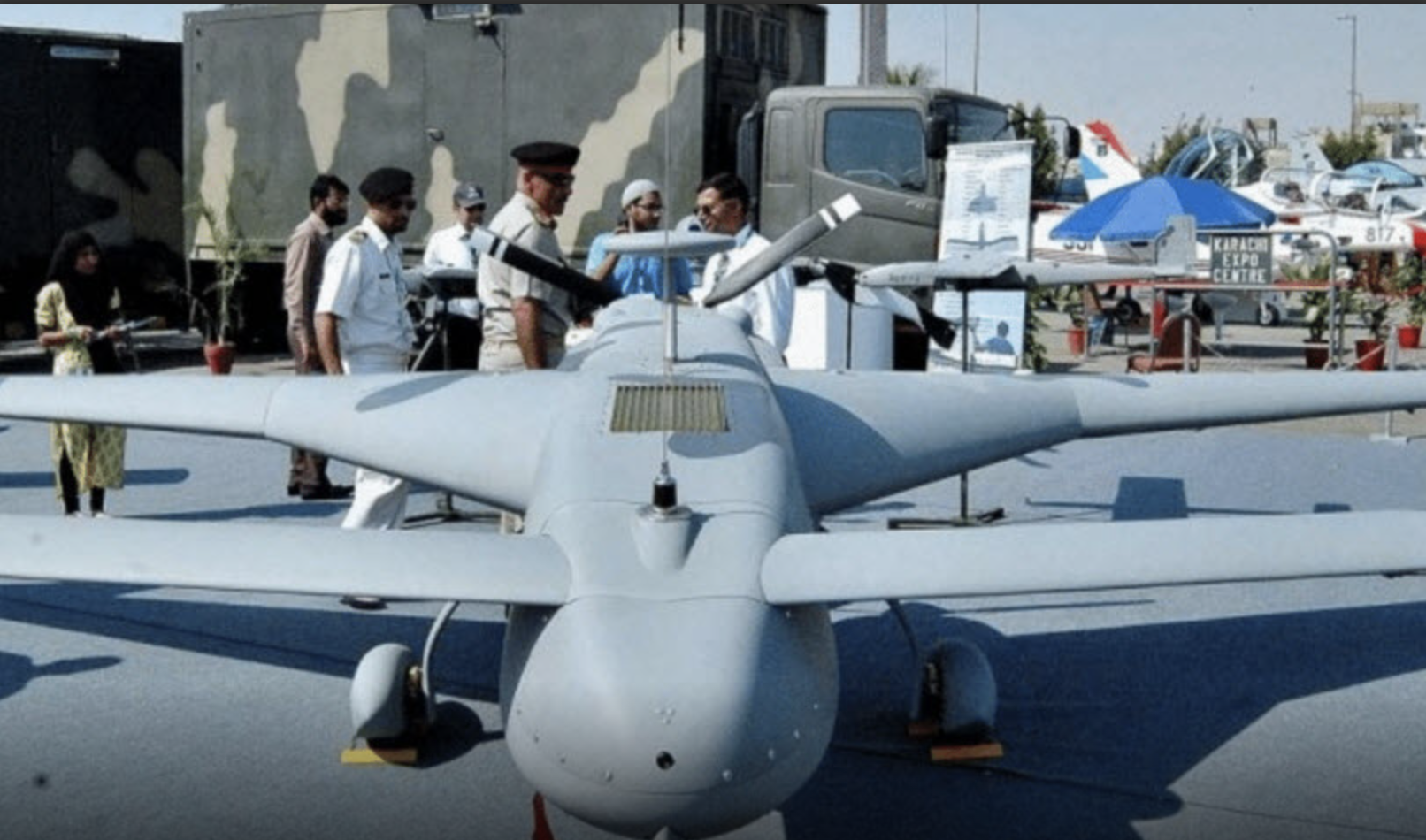
Pakistan displayed its latest drones at IDEAS 2022 (International Defence Exhibition and Seminar) Defense Expo held in November in Karachi. It also presented sessions on artificial intelligence (AI), machine learning (ML) and connectivity. The event attracted more than 50 countries, including large pavilions set up by Pakistan's closest friends China and Turkey.  The four-day IDEAS 2022 opened on November 15, 2022 at Karachi Expo Centre, bringing together 300 leading national and international defense manufacturers and over 300 foreign delegates from 57 countries.

Pakistan's Shahpar 2 Attack Drone

Shahpar 2 Drone:

On display at IDEAS 2022 was Shahpar-2 Medium Altitude Long Endurance (MALE) attack drone  produced by Global Industrial and Defense Solutions (GIDS), a Pakistani state-owned defense conglomerate. It can fly at a maximum speed of around 222 kilometers per hour (kph) with maximum range of around 1,050 kilometers, and the data link range of 300 kilometers. It can contact satellites in day or night operations.   

Shahpar 2 drone can locate, surveil, track and attack targets.  Its Zumr-II (EO/IR) turret is an improved and lighter version of Zumr-I (EP) turret. It can also be equipped with SAR, COMINT/ELINT payload. For sensors and targeting systems drone has an internal hard-point where it carry 50 kg (110 lb) payload. (Zumr-I weighs 36.5 kg (80 lb) while Zumr-II weighs 49 kg (108 lb)). The drone has two external hard-points where it can carry laser guided weapons, AGMs 60 kg (130 lb) each. Shapar 2 has already been inducted into service with Pakistan’s Army, Navy, and Air Force. 

Pakistan Navy's Cruise Missiles: Babur, Harba and Zarb. Source: Quwa

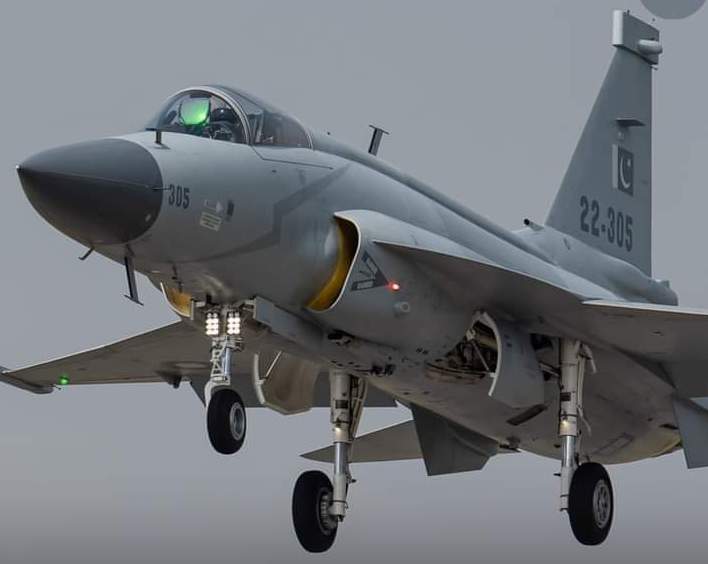
Also on display were advanced Harbah anti-ship cruise missiles made by Pakistan's state-owned Global Industrial and Defence Solutions (GIDS) and electronic warfare system produced by National Radio and Telecommunication Corporation (NRTC). The locally developed Al-Khalid tanks and modern assault rifles manufactured by Pakistan Ordinance Factories (POF) were also exhibited. Visitors also got a close look at the Pakistan Air Force (PAF) JF-17 Thunder fighter jets produced jointly by China and Pakistan. 

JF-17 Block III: 

JF-Block-III is a BVR (Beyond Visual Range) multi-role fighter jet capable of firing long range air-to-air missiles like China's PL-10 and PL-15. It features active electronically scanned array (AESA) radar system, making it Pakistan Air Force’s first AESA-equipped fighter aircraft. Combination of AESA radar and 120-mile range PL-15 missiles make the JF-17 Block 3 an extremely lethal fighter for beyond visual range combat, considerably more capable than any fighter in Pakistani service including the F-16.  It also has a new electronic warfare system, upgraded avionics including a three-axis fly-by-wire digital flight control system, and a helmet-mounted display and sight (HMDS) system. With its new integrated sensor package, the aircraft will have the capability for quick information sharing and network-enabled operations that facilitate earlier detection and interception of enemy aircraft. 

Pakistan JF-17 Block 3 Fighter Jet


Chinese and Turkish Pavilions:

Pakistan’s longtime allies China and Turkey had the largest foreign presence at IDEAS 2022. Chinese state-run defense conglomerate China North Industries Group Corporation Limited (NORINCO) displayed missiles and weapon systems including the Red Arrow 9A anti-tank guided missile.  

Turkey displayed a scale model of its fifth-generation fighter, codenamed the TF-X, at Pakistan’s IDEAS expo 2022. Over two dozen Turkish defense manufacturers participated in Pakistan’s IDEAS defense expo this year. 

Top Turkish defense manufacturers, including Roketsan, state-run STM and ASFAT, showcased their products ranging from modern armed drones to tactical mini-UAV systems. Turkish Aerospace exhibited the models of the T129 ATAK helicopter, Gokbey multirole helicopter, Gokturk-2 observation satellite, as well as Anka unmanned aerial vehicle (UAV) and Aksungur medium-altitude long-range endurance (MALE) UAV.

AI and Connectivity:   

Pakistan Air Force (PAF) launched a Cognitive Electronic Warfare (CEW) program in 2020 at its Center for Artificial Intelligence and Computing (CENTAIC). Modern connected weapon systems generate vast amounts of data requiring artificial intelligence and machine learning software for speedy analysis and rapid decision-making on the battlefield.  

A seminar titled ‘Artificial Intelligence (AI) in Defence Market: A Paradigm Shift in Military Strategy and National Security’ was organized as part of IDEAS-22. Also discussed was ‘One Network’, an advanced communication project, under which 3,000 kilometers of underground fibre optic cable is being laid along the motorways in Pakistan.  

An example of connectivity and integration was demonstrated in Operation Swift Retort against India in February 2019. The success of this operation was the result of combat-proven PAF fighters which are fully integrated with the air defense system (e.g. AWACS), and are mutually data-linked, alongside all AEW (Airborne Early Warning) and ground sensors. 

Rethink After Ukraine War:

The war in Ukraine is forcing a defense strategy rethink in countries around the world. This is particularly true of  countries such as India that rely mainly on Russian equipment and training. Hindustan Times has quoted an unnamed former Indian Army Chief as saying:  “War videos available show that the Russian Army has tactical issues in Ukraine war. Tell me, which tank formation goes to war in a single file without air or infantry cover when the opponent is equipped with the best anti-tank guided missile like Javelin or Turkish Bayraktar TB2 missile firing drones? There is question on Russian air supremacy with Ukraine Army armed with shoulder fired Stinger surface to air missiles as well as the night fighting capability of the Russian Air Force.”

Tuesday, August 25, 2015

Indian Hindu Nationalists' US Envy: "Surgical Strikes" in Pakistan?

Is India's Modi planning a limited war with Pakistan? The talk in the Indian media suggests that he may be doing just that. Here are excepts of a couple of recent opinion pieces on the subject published in the Indian media:


"The idea of (India's) hot pursuit of terrorists has also not been fully tested yet. Security experts say that aircrafts or commandos can execute an operation against militant camps in Pakistan but argue that returning back to India may not be easy."  Sushil Aaron, Hindustan Times


"Even though a limited war would have high costs for Pakistan, a crisis would frighten away the investors he (Modi) needs to realise his economic vision. Firing across the LoC has been demonstrated not to deter the Pakistan army. Targeting jihadist leaders across the LoC is an option, but India just doesn’t have the capacities for it at present." Praveen Swami, The Indian Express

These opinion pieces remind me of a post titled "India's America Envy" that I wrote in 2011:


Since Osama Bin Laden's death in Pakistani town of Abbottabad on May 1, 2011, I am seeing a dramatic increase in cyber activity by many Indians manifesting itself as a constant stream of anti-Pakistan hateful commentary being posted on almost all major news discussion forums.

But, amidst all the usual venomous babble, the following fantasy by an Indian blogger Prashant Agrawal published in the Wall Street Journal stands out in particular:

India’s prime minister greets the Mi-25 helicopters carrying Indian Navy MARCOS commandos. He shakes hands with the returning troops, congratulates and thanks them. For the photographers, he holds up his thumbs, “Mission Accomplished”-style. The MARCOS are returning from Pakistan where they took out some of India’s, and the world’s, most wanted terrorists.

That was the story that didn’t happen yesterday or the week before or the month before or the year before or the decade before that. It’s the story that some, perhaps many, Indians have wished to read. It hasn’t happened but the chances of it happening have gone up slightly.


How interesting!

This reminds me of what Indian author and journalist Pankaj Mishra wrote some years ago. Here's an except from his article:

Gung-ho members of India's middle class clamor for Israeli-style retaliation against jihadi training camps in Pakistan. But India can "do a Lebanon" only by risking nuclear war with its neighbor; and Indian intelligence agencies are too inept to imitate Mossad's policy of targeted killings, which have reaped for Israel an endless supply of dedicated and resourceful enemies.

Prior to this latest episode of wishful thinking, I had heard of India’s “Israel Envy”, a phrase coined by former Indian minister Sashi Tharoor immediately after Mumbai terror attacks in 2008.

Now it seems that gung-ho Indians like Prashant are also suffering from India’s “America Envy”.

Since I wrote above piece in 2011, the 2014 election of Hindu Nationalist Prime Minister Narendra Modi has further emboldened the likes of Prashant among Indian policymakers. They are playing with fire that will burn them along with others in the region. I sincerely hope better sense will prevail in New Delhi and Modi and his Hindu Nationalist government will choose to return to dialog  with Pakistan without pre-conditions to discuss all issues, including the core issue of Kashmir.

Related Links:

Haq's Musings

Fear and Panic Among Indian Army Generals in 1965

India's Israel Envy: What If Modi Attacks Pakistan?

India Teaching Young Students Akhand Bharat 

Pakistan Army at the Gates of Delhi

India's War Myths

India-Pakistan Military Balance

Pakistan Army Capabilities

Modi's Pakistan Policy

India's Israel Envy