Showing posts with label Nepal. Show all posts

Saturday, August 29, 2026

Nepal Tragedy Raises Fears of Massive Glacier Melt in Pakistani Mountains

Northern Pakistan is home to over 13,000 glaciers which pose a risk of catastrophic flash floods similar to the recent flash floods in Nepal. Pakistani officials have warned that shifts in glacier behavior are increasing the risk of glacial lake outburst floods (GLOF), particularly in Gilgit-Baltistan and Khyber Pakhtunkhwa, where communities face growing exposure to sudden flooding and landslides. 

Glacial Lake in Pakistan's Gilgit-Baltistan Region. Source: AIGEO360


Pakistan is actively monitoring its glaciers using real-time weather tracking and roughly 350 sensor devices installed by the National Disaster Management Authority (NDMA) and the Pakistan Meteorological Department (PMD) to mitigate glacial flash flood risks. 

This year, the PMD reported record-breaking summer heat across northern valleys (such as Chilas reaching 48.5°C and Bunji hitting 46.1°C), accelerating ice melt in Gilgit-Baltistan region and Khyber Pakhtunkhwa province. The heat triggered two major GLOF events that were officially recorded during the 2026 monsoon season in Gilgit-Baltistan, causing localized road and infrastructure damage but no casualties due to early siren activation and community alerts. 

Pakistani lawmakers and committees argue that the current count of 350 sensors remains critically low for tracking the vast Hindu Kush–Karakoram–Himalayan (HKH) glacier network. They are calling for expanded international support to significantly increase the number of sensors to enhance monitoring network. 

Hasanabad Bridge Collapse in Pakistan


Earlier in 2022, record-high temperatures in Pakistan's northern region caused Shisper glacier to melt rapidly, triggering the collapse of the Hassanabad Bridge along the Karakoram Highway. 

Pakistan is in the midst of a major solar energy revolution led by consumers. Driven by soaring electricity costs, unreliable grid infrastructure, and cheap imported solar panels, millions of households and businesses have installed rooftop solar. This rapid transition to solar has transformed the country's energy landscape.  According to the report, Pakistan’s total electricity demand increased by 33 terawatt-hours (TWh) between fiscal years 2023 and 2025. Distributed solar generation alone grew by 36 TWh during the same period, making it the primary driver of electricity demand growth and offsetting declines elsewhere in the power system.

Pakistan, which contributes less than 1% of global carbon emissions, is among the countries considered most vulnerable to climate change. About a third of the country was devastated by massive floods in 2022. The nation committed continued pursuit of nature-based solutions to the problem at COP26 in Glasgow in 2021. As part of this commitment, the country is planting one of the world's largest mangrove forests in the Indus River Delta, a key component of its Ten Billion Tree Tsunami campaign launched by former Prime Minister Imran Khan. 

The United States, Europe, India, China and Japan, the world's biggest polluters, must accept responsibility for the catastrophic floods in Pakistan and climate disasters elsewhere. A direct link of the disaster in Pakistan to climate change has been confirmed by a team of 26 scientists affiliated with World Weather Attribution, a research initiative that specializes in rapid studies of extreme events, according to the New York Times. 


Related Links:

Haq's Musings

South Asia Investor Review

Pakistan's Energy Imports

Ten Billion Tree Tsunami: Olive Revolution in Pakistan

Rooftop Solar Net Metering Growth in Pakistan 

Climate Change "Loss and Damage"

Pakistan is the 3rd Fastest Growing Trillion Dollar Economy

CPEC Financing: Is China Ripping Off Pakistan?

Pakistan Ramps Up Nuclear Power Generation

Is Pakistan Ready For Clean Energy Revolution?

China Global Power Database on Power Plants in Pakistan

CPEC Transforming Pakistan

Pakistan's $20 Billion Tourism Industry Boom

Pakistan Among Top 3 Countries For New Hydro Installed Capacity

Riaz Haq's YouTube Channel

PakAlumni Social Network

Saturday, July 15, 2023

Is the West Unwittingly Helping Modi Realize His Akhand Bharat Hindutva Dream?

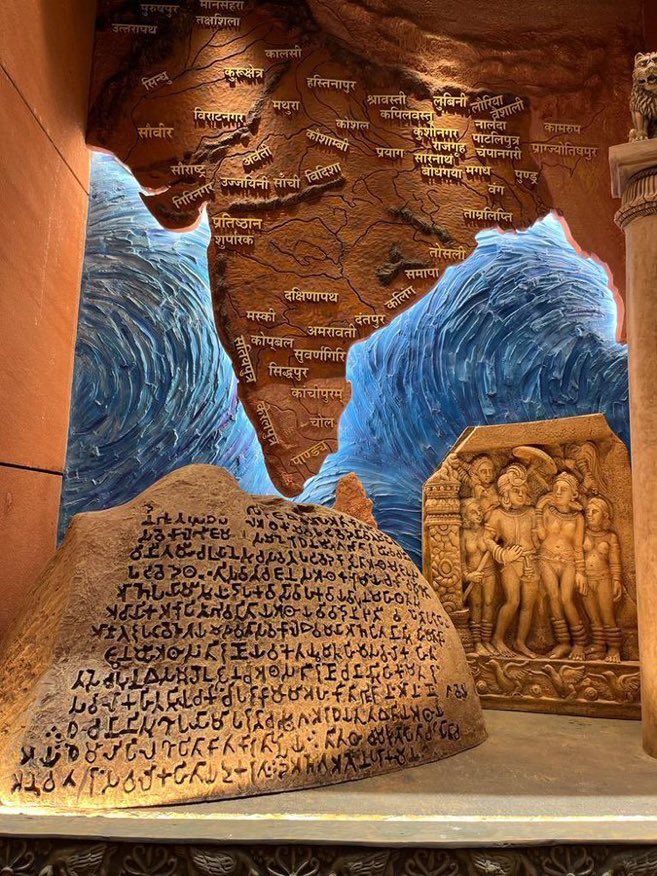
Indian Prime Minister Narendra Modi has recently opened a new parliament building in New Delhi. Prominently displayed in this new building is a provocative map of "Akhand Bharat" (Greater India) that includes neighboring nations of Nepal, Bhutan, Pakistan, Bangladesh and Sri Lanka as part of India. After the inauguration, Modi's parliamentary affairs minister Pralhad Joshi  tweeted a picture of the mural and wrote: “The resolve is clear – Akhand Bharat.”  Akhand Bharat is part of the Fascist Hindutva ideology of Modi's party.  In the last two months since this chauvinistic display, the tight embrace and arming of Modi by the West is raising fears of destabilizing South Asia. Pakistani officials have recently talked about a revision of the country's "full-spectrum" nuclear doctrine with the addition of "zero-range" nuclear weapons as a deterrent against western-armed Hindutva-fueled Indian aggression.

Akhand Bharat Mural in Indian Parliament. Source: Pralhad Joshi


Akhand Bharat: 

Earlier this year, Prime Minister Modi's ideological leader chief Mohan Bhagwat,  the head of the right-wing Hindu organization Rashtriya Swayamsevak Sangh (RSS), said ‘Akhand Bharat’ was the undisputed truth and a divided Bharat was a nightmare. 

Now the Akhand Bharat mural and its justification by an Indian minister have drawn condemnation from Bangladesh, Nepal and Pakistan. “The gratuitous assertion of ‘Akhand Bharat’ is a manifestation of a revisionist and expansionist mindset that seeks to subjugate the identity and culture of not only India’s neighboring countries but also its own religious minorities,” said Pakistani foreign office spokesperson Mumtaz Zahra Baloch.

Western Arms Deals:

Large arms deals have been recently announced during Prime Minister Modi's recent visits to Washington and Paris. New weapons acquisitions range from modern fighter jets to submarines. India is already the world's largest arms importer. India's defense budget ($81 billion) is the fourth largest in the world, according to Stockholm-based think tank SIPRI. Coming soon after the unveiling of  the Akhand Bharat mural,  these new modern lethal weapons' purchases by New Delhi are seen as a serious threat by India's neighbors. 

America's Bad Bet:

While the western nations are seeking an alliance with India to counter rising China, the Hindutva leadership of India has no intention of confronting China. In a piece titled “America’s Bad Bet on India”,  Indian-American analyst Ashley Tellis noted that the Biden administration had “overlooked India’s democratic erosion and its unhelpful foreign policy choices” in the hopes that the US can “solicit” New Delhi’s “contributions toward coalition defense”.

Earlier this year, India's External Affairs Minister S Jaishankar confirmed New Delhi's unwillingness to confront China in an interview: “Look they (China) are a bigger economy. What am I going to do? As a smaller economy, I am going to pick up a fight with bigger economy? It is not a question of being a reactionary; it is a question of common sense.”

Modi's India is driven much more by a desire to bring back what the right-wing Hindus see as the "glory days" of India through "Hindu Raj" of the entire South Asia region, including Pakistan. The arms and technology being given to Modi will more likely be used against India's smaller neighbors, not against China. 

Pakistan's Likely Response:

General Khalid Kidwai, Advisor to Pakistan’s National Command Authority and pioneer Director General of Pakistan’s Strategic Plans Division, has warned about the  ‘toxic mix of poisonous ideology’ posing a serious threat to strategic stability in South Asia. “I have no hesitation in stating that minimum Pakistani counter measures would be put in place if a reckless imbalance is induced in South Asia, it is not a warning, it's a contingency foreseen,” General Kidwai added, according to Pakistani media reports. 

In May this year, retired Lt. Gen. Khalid Kidwai provided new details of Pakistan’s nuclear doctrine. He has talked about "zero range" nuclear weapons. Prior to this, the officially acknowledged lowest range in Pakistan’s nuclear inventory was the Nasr, or Hatf-9 ballistic missile, with a range of 60 kilometers (about 37 miles).  Kidwai described two dimensions of Pakistan's Full Spectrum Deterrence: “horizontal,” which comprises of a robust land, air and sea inventory of a variety of nuclear weapons, and “vertical,” which encapsulates adequate range coverage of its vectors from “zero meters to 2,750 kilometers”with “destructive yields suited for strategic, operational, and tactical levels.” Such an elaborate arsenal, he argued, provides Pakistan with a “strategic shield”, blunting the extant conventional asymmetry with India. Most significant was his statement that “vertically the spectrum encapsulates adequate range coverage from 0 meters to 2,750 kilometers [about 1,700 miles] as well as nuclear weapons destructive yields at three tiers—strategic, operational, and tactical.”  Talking about "zero range" weapons, analyst Sitara Noor  explained it as follows in a recent article that appeared in Foreign Policy magazine:  

"Talk of zero-range weapons suggests that Pakistan is either going to develop artillery shells as the United States, Soviet Union, and United Kingdom did during the Cold War—raising questions of whether it is going to be an M28/M29 Davy Crockett-style recoilless rifle system, the smallest weapon in the U.S. nuclear arsenal, developed during the 1950s as a front-line weapon with yields as low as a fraction of a kiloton—or it could be a hint that Pakistan could possibly lay nuclear land mines across the India-Pakistan border to deter Indian advances. Observers, especially in India, are left wondering whether this statement is based on some existing scientific research and design testing and necessary doctrinal thought process. Kidwai’s statement does not provide any such details, and in the spirit of ambiguity that Pakistan seems to have benefited from, there is unlikely to be a follow-up soon to clear the air". 


Summary:

The West is making a "bad bet" on Modi's India as a check against rising China. Modi and his fellow right-wing Hindus have no interest in confronting China. They are much more obsessed in realizing their Hindutva dream of Akhand Bharat (Greater India) by attempting to subjugate their smaller neighbors.  This obsession could lead to a destabilization of the South Asia region, including an  India-Pakistan nuclear war. 

Sunday, December 10, 2017

Nepal Voters Reject Pro-India Ruling Party to Elect Left-Wing Alliance

Media reports indicate that pro-India Nepali Congress Party (NCP) led by Sher Bahadur Deuba is heading toward a major defeat in parliamentary elections. Nepalese people have shown strong preference for the Opposition left-wing alliance led K.P. Sharma Oli and Pushpa Kamal Dahal Prachandathat that could garner two-thirds majority in the national legislature. The 2015-16 blockade of Nepal by India appears to have played a decisive role in voters' choice.

Nepal's Capital Kathmandu

Indian Blockade of Nepal:

In 2015, landlocked Nepal passed a new constitution with 90% of the votes in the national legislature. India did not like some of its provision and shut its border to put pressure on Nepal to force a change. Indian government denied it was responsible for the blockade. But no one could deny the ground reality of a major economic and humanitarian crisis in Nepal because of its total dependence on India for food, fuel and other supplies.

Nepali Response:

Leaders of the Nepali Congress which has always been close to New Delhi failed to unequivocally condemn the Indian action.  However,  the left-wing parties put the blame squarely on India for the crisis the crisis that caused a lot of pain in Nepal.

China vs India:

Nepal is a small landlocked country sandwiched between China to the north and India to the South. However, Nepal has had close ties to India because the two share a common religion and culture. Nepal has relied on India for almost all of its supplies.

The left-wing alliance favors closer ties with China. It seeks to reduce dependence on India by opening up supply routes through China, including a Kathmandu-Lhasa train link which goes over difficult terrain. India strongly opposes it for geopolitical reasons.

Nepalese Resentment of India:

When a devastating earthquake hit Nepal in 2015, Indian media descended en masse to portray the benevolence of Indians for the victims of disaster. The Nepalese found them so overbearing that they started a new hashtag #GoHomeIndianMedia which tracked for weeks.

Source: Nepal's Himal Magazine

The Indian media also attacked Pakistan's relief efforts in Nepal while it attempted to amplify India's response to disaster. Nepal's Himal magazine's cartoon mocked the Indian media by showing a photojournalist popping out of a smiling aid carrying Indian soldier's pocket.

Superpower Delusions:

Indian leaders have superpower delusions. They express such delusions by attempting to intimidate their neighbors--particularly smaller neighbors. Indians have stirred trouble in Bangladesh by using their intelligence service; they recruited, armed and trained LTTE terrorists in Sri Lanka; they blockaded Nepal; and they are using Afghan soil to wage proxy war of terror against Pakistan. All of these activities are not winning them any friends in the neighborhood.

Summary:

Nepali voters have rejected pro-India politicians and voted in left-wing alliance that seeks better ties with China. The 2015-16 blockade of Nepal by India appears to have played a decisive role in voters' choice. It's yet another reminder that India's attempts to intimidate its neighbors are backfiring. It's time for Modi and company to re-evaluate their foreign policy that seems to be guided by the Kautilya Doctrine that says: "Your neighbor is your enemy; your neighbor's neighbor is your friend."

Related Links:

Haq's Musings

Indian Media's Nepal Quake Coverage Disaster

India's Kautilya Doctrine

Why is India Sponsoring Terror in Pakistan?

India's Superpower Delusions

Pakistani Arms Helped Defeat LTTE in Sri Lanka

BJP Makes "Akhand Bharat" Part of Indian Textbooks

Earthquakes in South Asia

China-Pakistan Ties

Sunday, October 4, 2015

India's Superpower Delusions: Modi's Flawed Policies

"If you (India) want to run with the big dogs, you have to stop pissing with the puppies".
 Robert Blackwill, Ex US Ambassador to India

Prime Minister Narendra Modi with Top Foreign Policy Advisor Ajit Doval 

What Mr. Blackwill said about India back in 2006 still rings true with Modi's foreign policy team's poor handling of Nepal.  In a piece titled "Has Narendra Modi's foreign policy bubble burst", a BBC report summed up the situation in the following words:

"For many in India, Narendra Modi is seen as the country's best brand ambassador. That's quite apparent from his many overseas visits in his first 16 months in office - he has generated plenty of interest, airtime and drawn adulation from the extensive Indian diaspora. But that may not be enough in sustaining relationships in the neighbourhood, as he is fast finding out."

India's Regional Ties:

There seems to be emerging consensus that Prime Modi's "Neighborhood First" policy he announced at the time of his inauguration last year appears to be on the verge of collapse.

The Hindu Nationalists' foreign policy spearheaded by former RAW Chief Ajit Doval is causing rapid deterioration of India's relations with most of its neighbors ranging in size from China and Pakistan to Maldives and Nepal. Written during Prime Minister Modi's recent US visit, including a large reception given by Indian Americans in Silicon Valley, an opinion piece by policy analyst Jyoti Malhotra concludes as follows:  "So as the prime minister charms America, flanked by his two key aides Ajit Doval and S Jaishankar, the thought surfaces: Let him also spare a thought for India’s crisis-ridden neighbourhood".

India's Biggest Policy Blunder:

India threw away its substantial conventional military edge over Pakistan when the Hindu Nationalist government of Atal Bihari Vajapayee decided to carry out its nuclear tests in 1998.  It gave Pakistan the justification it needed to go nuclear a few weeks later, thereby achieving balance of terror with its much larger neighbor with a huge conventional military.

Indian analyst Krishna Kant explains his country's policymakers blunder as follows: "Nuclear weapons have reduced Pakistan defense cost while we (India) have been forced to spend tens of billions of dollars to acquire latest military hardware in a bid to retain the edge. Its shows in the defence budget of the two countries since 1999 nuclear blasts. All through 1980s and 90s, Pakistan was spending around a third of its government budget and 5-6% of its GDP on defence, or about twice the corresponding ratios for India. After going nuclear, Pakistan’s defence spending decelerated and its share in GDP is expected to be decline to around 2.5% in the current fiscal year, slightly ahead of India’s 2%. This is releasing resources for Pakistan to invest in productive sectors such as infrastructure and social services, something they couldn’t do when they were competing with India to maintain parity in conventional weapons."

Ajit Doval's Rhetoric Against Pakistan:

Kant argues that the Hindu Nationalists blunders in the past have severely limited India's policy options vis-a-vis Pakistan. Here's how how he concluded his Op Ed in Business Standard: "In this environment, a hard talk by Mr Doval followed by a high-decibel drama by the government on the National Security Advisor’s talk between the two countries seems nothing more than a show for the gallery. The audience may be applauding right now, but claps may turn to boos as the public realises the inconsistencies in the script and the pain it inflicts on the hero."

Summary:

Hindu Nationalists' superpower delusions have led them to policies that are hurting India's position in South Asia region and the world. No amount of hard talk by Ajit Doval can change this fact.  Former Indian Prime Minister Mr. Manmohan Singh has recently said: "India and Pakistan need sustained engagement to realise the vast potential of benefits of liberalisation of trade and investment in the South Asian region." Modi and Doval need listen to Mr. Singh. India's best bet is to engage with Pakistan as well as other neighbors on a sustained basis to deal with the realities as they exist.


Viewpoint From Overseas host Faraz Darvesh discusses the subject with panelists Ali H. Cemendtaur and Riaz Haq (www.riazhaq.com)

https://vimeo.com/141373288


India-Pakistan Tensions; Kunduz Fall; Delhi Beef Murder; Oregon Shooting from WBT TV on Vimeo.

https://youtu.be/fqqkilJzc4I


Related Link:

Haq's Musings

Modi's Pakistan Policy

Modi in Silicon Valley

Rise of  the Sangh Parivar

India's Israel Envy: What If Modi Attacks Pakistan

Jaswant Singh on India's Foreign Policy's "Strategic Confinement"

Ex RAW Agent Document's India's Successes in Pakistan

Thursday, April 30, 2015

Nepal Quake Coverage Exposes Indian Media's Malice Toward Pakistan

Pakistan's relief efforts to aid Nepal earthquake victims went unnoticed by the hostile Indian media until some doctors from India "discovered" beef packets in the relief material brought in by PAF cargo planes to Kathmandu.

MREs from Pakistan's PANA Foods


This "discovery' then triggered the shameless 24X7 anti-Pakistan propaganda in the mainstream Indian media that was unsparing even amidst the horrific death and devastation suffered by the Nepalese people.

Pakistan Army Field Hospital in Kathmandu
Pakistan's humanitarian relief supplies in response to the tragic suffering of the Nepalese earthquake victims included available emergency stock of MREs (Meals Ready to Eat) that were specially prepared for Pakistani military by PANA foods.  It is possible that the relief supplies contained some beef packets which were clearly marked, as Pakistani foreign ministry spokeswoman Tasneen Aslam explained: "The Meal Ready to Eat (MRE) is a pre-packed kit of 20 items for a full day's meals. On each and every packet inside the kit the name of the dish is clearly written in English and Urdu so that people may choose whatever they like to eat or discard."

Indian Media in Indian Army's Pocket Source: Himal


An Indian reporter of The Daily Mail quoted Dr. Singh, a doctor from India, as saying, “When we reached the airport to collect the food items from Pakistan, we found packets of ready-to-eat meals, including packets of ‘beef masala’. There were other food items too."
Most Googled Product Or Service Source: Business Insider

It seems that the Indian media and Hindu Nationalists have become obsessed with cows and beef since the  election victory of Prime Minister Narendra Modi last year. It has been recently reported by Business Insider that "cow" is now the most googled product in India.  It seems to have been prompted by the beef bans now spreading across Indian states. The most googled product (service) in Pakistan is that of wedding-related products and services.

This is not the first time that Indian media have whipped up war sentiments against Pakistan; there are many many past examples.

In January 2013, India accused Pakistani soldiers of beheading an Indian soldier at the Line of Control in Kashmir. Barkha Dutt, a hawkish TV anchor at NDTV, led the Indian media charge against Pakistan by accusing Pakistani military of "savagery" and "barbarism". Indian prime minister talked of "no business as usual", and Indian Army chief told his "commanders to be aggressive and offensive" and the Indian Air Force chief threatened to  use "other options". Pakistan's offer to have the incidents independently investigated by the United Nations was rejected.

All the talk of "Aman Ki Asha" went out the window when Pakistani hockey players were unceremoniously ejected from India as the right-wing Hindu organizations were aided and abetted by the hawkish anti-Pakistan  Indian media. Hindu Nationalist BJP leader Sushma Swaraj demanded "ten Pakistani heads for one Indian head".

Soon, Barkha Dutt's phony outrage and Sushma Swaraj's bloodthirsty rhetoric about "beheading" were exposed by a quick Google search by Najam Sethi. Sethi found an article in a Nepalese publication Himal in which Barkha described how she was shown a severed head of a Pakistani as war trophy by an Indian Army officer in Kargil in 1999.

Other examples of hate-mongering Indian media coverage include:

1. Alice Albinia in the preface to her book "Empires of the Indus":

"It was April, 2000, almost a year since the war between Pakistan and India over Kargil in Kashmir had ended, and the newspapers which the delivery man threw on to my terace every morning still portrayed Pakistan as a rogue state, governed by military cowboys, inhabited by murderous fundamentalists: the rhetoric had the patina of hysteria."

2. John Briscoe, Harvard Professor and water expert on coverage of India-Pakistan water dispute:

Living in Delhi and working in both India and Pakistan, I was struck by a paradox. One country was a vigorous democracy, the other a military regime. But whereas an important part of the Pakistani press regularly reported India's views on the water issue in an objective way, the Indian press never did the same. I never saw a report which gave Indian readers a factual description of the enormous vulnerability of Pakistan, of the way in which India had socked it to Pakistan when filling Baglihar. How could this be, I asked? Because, a journalist colleague in Delhi told me, "when it comes to Kashmir – and the Indus Treaty is considered an integral part of Kashmir -- the ministry of external affairs instructs newspapers on what they can and cannot say, and often tells them explicitly what it is they are to say."

3. Shekhar Gupta in Indian Express:

Can we deny the fact that every new terror attack on the Pakistani establishment, every development that marks a further decline in the authority of its government is greeted with an utterly unconcealed sense of delight? This is not just the mood of the mobs here. Even the “intelligentsia”, the TV talking heads, opinion page columnists, government spokespersons, all have the same smug air of “I-told-you-so” and “so-what-else-did-they-expect” satisfaction. And they ask the same patronising question: hell, can Pakistan be saved?


Here's a video of Pakistan C-130 Relief Flight landing in Kathmandu during a strong aftershock:

 http://www.dailymotion.com/video/x2ogyj9_paf-s-c-130-landing-in-nepal_news


PAF's C-130 Landing in Nepal by PakistanDefenceCommand

Related Links:

Haq's Musings

Earthquake Fears in South Asia

Indian Media Manufacturing Consent?

Indian Media Whip Up War Hysteria

Disease Burdens in South Asia

Pakistan's Media Boom

Manufacturing Consent: Political Economy of the Mass Media

India 63 Years After Independence

Pew Poll in India

Media Subdues The Public. It’s So In India, Certainly

Empires of the Indus

Thursday, November 5, 2009

India Deploys 100,000 Troops Against Maoists Revolt

Is this the start of a bloody revolution by the poor and left-behind Indian masses? Does the size of the force of over 100,000 Indian soldiers represent the seriousness of the threat the Indian government face in fighting the rebels? Contrast this with the force of 30,000 soldiers Pakistan has deployed in South Waziristan, or the 68000 American troops in the entire Afghan war theater.

Indian author and activist Arudhati Roy has accused Indian government of mounting an assault on the poor by maligning them as terrorists. "You know, when September 11th happened, I think some of us had already said that a time would come when poverty would be sort of collapsed and converge into terrorism. And this is exactly what’s happened. The poorest people in this country today are being called terrorists", she said recently.

Gajurel, a senior leader of the Nepalese Maoists, has recently been quoted by Rajdhani daily as saying, "We have extended our full support and cooperation to the Indian Maoists, who are launching armed revolt."

There has been a surge in Maoist violence in India in recent months - the rebels have kidnapped and killed policemen, held up an express train, attacked police stations, and blown up railway lines and communication links in affected states.

The Maoist insurgency started in 1967 and has spread to cover a third of India's districts, forming a so-called "red corridor" in mainly central areas.

The rebels have a presence in more than 223 of India's 600-odd districts across 20 states, according to the government.

There have been more than 1,400 cases related to violence by Maoists between January and August, according to official records. Nearly 600 civilians have died over that period.

India’s rapid economic growth has made it an emerging global power but also deepened stark i nequalities in society. Maoists accuse the government of trying to push tribal groups off their land to gain access to raw materials and have sabotaged roads, bridges and even an energy pipeline, according to the NY Times.

The intensity of Naxalites' hatred for the Indian ruling elite can be gauged by the fact that their leader Ganapathi, a former schoolteacher, denounced Prime Minister Manmohan Singh and Home Minister P Chidambaran as "terrorists." In a recent interview at his secret jungle hideout with the weekly magazine Open, he said "the people will rise up like a tornado under our party's leadership to wipe out the reactionary blood-sucking vampires ruling our country." At another point, the 59-year old Ganapathi declared: "Those (government) sharks want to loot the wealth and drive the tribal people of the region to further impoverishment."

The Maoists were once dismissed as a ragtag band of outdated ideologues, but the Indian government is now preparing to deploy nearly 100,000 strong force for a prolonged counterinsurgency campaign to hunt down the guerrillas in some of the country’s most rugged, isolated terrain.

By threatening to unleash a violent revolution if the Indian government went ahead with its planned large-scale offensive against his insurgent forces, Maoists leader Ganapathi has made the intentions of the rebels obvious. Already, his men, and even some women fighters, have carried out acts that are now normally associated with the Taliban. They have kidnapped and beheaded government officials, blown up electricity and telephone towers, destroyed roads and railway tracks, killed political opponents and attacked police stations and other official installations. The offensive against the Naxalites will certainly weaken and deprive them of some of their bases and hideouts, but the issue cannot be resolved by the use of force alone. Many members of the Indian intelligentsia sympathize with the cause of the Maoists and objective analysts see it as an economic issue and one concerning social justice. The Indian ruling elite needs to deal with the root-cause of the insurgency instead of applying force through the state apparatus to decimate the rebels.

Here's are two video clip about Maoists in India:

Here is British Writer William Dalrymple talking about India and Pakistan:


Related Links:

Bloody revolution in India

Arundhai Roy on Maoist Revolt

India's Maoist Revolution

NY Times on Maoists

Can Indian Democracy Deliver?

G rinding Poverty in Resurgent India

Pakistan's Choice: Globalization or Talibanization

The Tornado Awaiting India

Countering Militancy in FATA

Taliban or Rawliban?

Political, Economic and Social Reforms in Pakistan

Fix ing Sanitation Crisis in India

Western Myths About "Stable, Peaceful, Prosperous" India

Taliban Target Landed Elite

Feudal Punjab Fertile For Terror

Caste: India's Apartheid

Tuesday, August 5, 2008

Scaling K2, the Ultimate Challenge

Not only is it dangerous, climbing Mount Everest is not cheap, either in terms of lives or dollars. And yet, hundreds are drawn each year to climb it. Commercial expeditions can cost climbers $60,000 to $75,000 each. Nepalese government charges fees ranging from $25000 for one member expedition to $70,000 for seven members. The total cost for climbing is steep, according to CNN. An expedition to the world's second highest peak, K2 in Pakistan, runs around $50,000 per climber. A trip to Everest has the steepest price at $65,000. Individual climbers can easily spend $5,000 on equipment. The total Mt. Everest annual revenue runs into tens of millions of dollars and provides employment to several thousand people. 3,681 people have made the summit so far, but thousands more have tried. About 170 climbers have died in their attempts to reach the summit.


While Mount Everest is considered the tallest peak at 8,848 meters (29,029 feet), it is K2, believed to be the second tallest at 8,611 meters (28,251 ft), that is documented as the most dangerous. In fact, there have been rumors circulating in the mountaineering world that new measurements show that K2 is actually taller than Everest. Rumors that it might actually be much, much higher - 12 feet taller than Everest - began in 1987 after a British expedition measured K2 and found it to be 29,041 feet. If confirmed, this new measurement, along with the greater challenge of K2, could hurt significant tourist revenue stream of Nepal and bring it to Pakistan.

In contrast to Mt. Everest summit's total of 3,681 successful climbs, only 280 climbers have reached the K2 summit. "It's enormous, very high, incredibly steep and much further north than Everest which means it attracts notoriously bad weather," says Britain's most celebrated mountaineer Sir Chris Bonnington, who lost his colleague Nick Escourt in an avalanche on K2's western side during an expedition in 1978. In 1986 13 climbers were killed in a week when a vicious storm stranded numerous expeditions. It is often said that if you were to summit K2 with a climbing partner, it is best to say your goodbyes well ahead the descent, because the statistics claim that one of the two will not come back alive. 46% of the attempts end in death, most during descent, according to a K2 climbers website. The fatality rate for those who reach the summit at 27% is about three times higher than that for Mount Everest, according to BBC.

The latest news of more fatalities seems to confirm K2's status as the most challenging, if not the tallest. At least eleven climbers including three South Koreans, two Nepalis, two Pakistanis, and French, Serbian, Norwegian and Irish climbers had died on the mountain, according to Pakistani authorities. The climbers include Koreans, Pakistanis, Nepalis, a Dutchman and an Italian, reports say, but exact details remain unclear. As about 25 climbers descended from the peak of K2 in the darkness on Friday, an avalanche swept some climbers away and left others stranded. An Italian member of the group has been reached by Pakistani rescuers and taken to an advance base camp on the mountain. The latest reports indicate Pakistani military helicopters have rescued two Dutch climbers stranded on K2. The survivors are being treated for frostbite at Pakistani military hospitals, according to media reports.

While there have been many inspiring stories of success and survival of climbers after storms and avalanches on K2, the story of Greg Mortenson stands out. In 1993, Mortenson, an American from the state of Montana, went to climb K2 in northern Pakistan. After more than 70 days on the mountain, Mortenson and three other climbers completed a life-saving rescue of a fifth climber that took more than 75 hours. After the rescue, he began his descent of the mountain and became weak and exhausted. Two local Balti porters took Mortenson to the nearest city, but he took a wrong turn along the way and ended up in Korphe, a small village, where he recovered.

To pay the remote community back for their compassion, Mortenson said he would build a school for the village. After a frustrating time trying to raise money, Mortenson convinced Jean Hoerni, a Silicon Valley pioneer, to found the Central Asia Institute. A non-profit organization, CAI's mission is to promote education and literacy, especially for girls, in remote mountain regions of Pakistan and Afghanistan. Hoerni named Mortenson as CAI's first Executive Director. Reviewing Greg Mortenson's book "Three Cups of Tea: One Man's Mission to Promote Peace . . . One School at a Time", New York Times columnist Nicholas Kristoff argues "a lone Montanan (Mortenson) staying at the cheapest guest houses has done more to advance U.S. interests in the region than the entire military and foreign policy apparatus of the Bush administration". Kristoff quotes Greg Mortenson, an Army veteran, as saying “Schools are a much more effective bang for the buck than missiles or chasing some Taliban around the country".

While some international and Pakistani climbers and tourists may be dissuaded by the extreme dangers of K2 climbing (or rather descending) or the fear of the Taliban, many more would be drawn to it for the very same reason. As the stories of the challenging mountain reach the worldwide audience, I expect much larger numbers to flock to it for the risks and thrills it offers. With relatively modest investments for average tourists and serious climbers facilities such as access roads, hotels, restaurants, guided tours, a climbing history museum, a climbing skills school, mountaineering equipment and clothing stores, Pakistan can develop a strong revenue stream to create jobs, build schools and promote opportunities for the friendly natives in its picturesque northern areas.

Here's an excerpt from a recent Time Magazine article on Pakistan's tourism potential:

The truth is Pakistan could be — should be — an incredible tourist destination. It offers wonderful Mughal ruins, evocative British colonial architecture, world-class hiking and climbing in the Karakoram Mountains, gorgeous rolling green meadows, captivating culture, great food (especially the fruits and kebabs), and some of the best carpet shops in South Asia. Unfortunately, it is also regularly described as the world's most dangerous country — which, while more intriguing than slogans like "Malaysia, Truly Asia" or "I Feel Slovenia," is not exactly an inducement for people to visit.

Here's a video clip of a K2 Canadian Expedition in 2006:

Wednesday, April 16, 2008

The Nepalese Choice: Is This Possible in Pakistan?

Pakistanis have had to choose between the military dictators and the familiar corrupt politicians for all of their 60 years of history. They have gone back and forth between these two choices. This year, they have chosen the familiar corrupt politicians after suffering many indignities and food and electricity crises of last year. Not only have Pakistanis rejected the military rule, they have also rejected the Islamic parties who made significant gains in 2002 elections, right after the US bombing of Afghanistan with Pakistan's assistance. Besides the Islamic parties whom they have just handed a major defeat, do Pakistanis have a another choice? Is there a force lurking within Pakistan that could suddenly rise up as a viable alternative?

Contrary to expectations of most observers, Nepal has voted such a force into power. Charles Haviland of the BBC reports that "Nepal has been rocked by an electoral thunderbolt. As the Maoists surge towards victory in the elections to a constitutional assembly, even some of their leaders have expressed surprise at its apparent scale."

If Pakistanis continue to be ill-served by their rulers as they have been, is the Nepal scenario likely to play out in Pakistan? Probably not. Is it possible. I think it is. Only time will tell.