Showing posts with label Nuclear weapons. Show all posts

Thursday, February 24, 2022

Ukraine's Lesson For Pakistan: Never Give Up Nuclear Weapons

Commenting on Ukraine, Russian analyst  Alexey Kupriyanov told Indian journalist Nirupama Subramanian: "For us, Ukraine is the same as Pakistan for India". What he failed to mention is that Pakistan has developed and retains its nuclear arsenal while Ukraine gave up its nukes in the 1990s after the fall of the Soviet Union. Many Ukrainians now regret this decision. Ukrainians know that no country with nuclear weapons has ever been physically invaded by a foreign military. They now understand the proven effectiveness of nuclear deterrence.  They realize that all the talk about "rules-based order" is just empty rhetoric. The reality is the Law of the Jungle where the strong prey on the weak. The US military invasions of Afghanistan and Iraq have shown that Washington is just as guilty of violating the "rules-based order" as Moscow. 
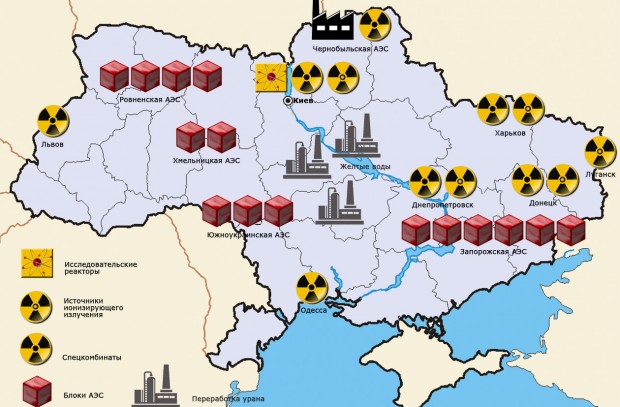
Ukraine Gave Up Nukes in 1990s. Source: Utica Phoenix


Denuclearization of Ukraine:

When Ukraine became independent in the early 1990s,  it was the third-largest nuclear power in the world with thousands of nuclear arms. In the years that followed, Ukraine made the decision to denuclearize completely based on security guarantee from the U.S., the U.K. and Russia, known as the Budapest Memorandum.  Ukrainian analyst Mariana Budjeryn explained in an interview with NPR's Mary Louise Kelly as follows: 

"It is clear that Ukrainians knew they weren't getting the exactly - sort of these legally binding, really robust security guarantees they sought. But they were told at the time that the United States and Western powers - so certainly, at least, the United States and Great Britain, they take their political commitments really seriously. This is a document signed at the highest level by the heads of state".

US Efforts to Stop Pakistan's Nukes:

The order to conduct Pakistan's nuclear tests came from Mr. Nawaz Sharif who was Pakistan's prime minister in 1998. It came on May 28, just over two weeks after India's nuclear tests conducted May 11 to May 13, 1998. Pakistan went ahead with the tests in spite of the US pressure to abstain from testing.  US President Bill Clinton called Prime Minister Nawaz Sharif immediately after the Indian tests to urge restraint.  It was followed up by Deputy Secretary of State Strobe Talbott's visit to Islamabad on May 16, 1998.

In his 2010 book titled "Engaging India: Diplomacy, Democracy, and the Bomb", Secretary Talbott has described US diplomatic efforts to dissuade Pakistan in the two weeks period between the Indian and Pakistani nuclear tests. Here are a few excerpts of the book divided into four sections covering Clinton's call to Sharif, Talbott's visits to the Foreign Office (FO), general headquarters (GHQ) and Prime Minister's House:


Clinton's Call to Sharif: 

Clinton telephoned Sharif, the Pakistani PM, to whet his appetite for the planes, huge amounts of financial aid, and a prize certain to appeal to Sharif—an invitation for him to make an official visit to Washington.

“You can almost hear the guy wringing his hands and sweating,” Clinton said after hanging up.

Still, we had to keep trying. Our best chance was an emergency dose of face-to-face diplomacy. It was decided that I would fly to Pakistan and make the case to Nawaz Sharif.

Meeting at Foreign Office in Islamabad:

On arrival in Islamabad, we had about an hour to freshen up at a hotel before our first official meeting, which was with the foreign minister, Gohar Ayub Khan, and the foreign secretary (the senior civil servant in the ministry), Shamshad Ahmad.

When we got to the foreign ministry, we found that the Pakistani civilian leaders had finally figured out how to handle our visit, and the result was a bracing experience. My two hosts rolled their eyes, mumbled imprecations under their breath, and constantly interrupted.

They accused the United States of having turned a blind eye to the BJP’s preparations for the test.

As for the carrots I had brought, the Pakistanis gave me a version of the reaction I had gotten from General Wahid five years earlier. Offers of Pressler relief and delivery of “those rotting and virtually obsolete air- planes,” said Gohar Ayub, were “shoddy rugs you’ve tried to sell us before.” The Pakistani people, he added, “would mock us if we accepted your offer. They will take to the streets in protest.”

I replied that Pakistanis were more likely to protest if they didn’t have jobs. Gohar Ayub and Shamshad Ahmad waved the point aside. The two Pakistani officials were dismissive. The current burst of international outrage against India would dissipate rapidly, they predicted.

Visit to General Headquarter (GHQ) in Rawalpindi:

We set off with police escort, sirens blaring, to (Chief of Army Staff) General Karamat’s headquarters in Rawalpindi.

Karamat, who was soft-spoken and self-confident, did not waste time on polemics. He heard us out and acknowledged the validity of at least some of our arguments, especially those concerning the danger that, by testing, Pakistan would land itself, as he put it, “in the doghouse alongside India.”

His government was still “wrestling” with the question of what to do he said, which sounded like a euphemism for civilian dithering. There was more in the way Karamat talked about his political leadership, a subtle but discernible undertone of long-suffering patience bordering on scorn.   For example, he noted pointedly “speculation” that Pakistan was looking for some sort of American security guarantee, presumably a promise that the US would come to Pakistan’s defense if it was attacked by India, in exchange for not testing. “You may hear such a suggestion later,” Karamat added, perhaps referring to our upcoming meeting with Nawaz Sharif. I should not take such hints seri- ously, he said, since they reflected the panic of the politicians. Pakistan would look out for its own defense.

What Pakistan needed from the United States was a new, more solid relationship in which there was no “arm- twisting” or “forcing us into corners.” By stressing this point, Karamat made clear that our arguments against testing did not impress him.

Meeting at Prime Minister's House:

I shared a car back to Islamabad with Bruce Riedel and Tom Simons to meet Nawaz Sharif.

What we got from the Prime Minister was a Hamlet act, convincing in its own way—that is, I think he was genuinely feeling torn—but rather pathetic.

On this occasion Nawaz Sharif seemed nearly paralyzed with exhaustion, anguish, and fear. He was—literally, just as Clinton had sensed during their phone call—wringing his hands. He had yet to make up his mind, he kept telling us. Left to his own judgment, he would not test.

His position was “awkward.” His government didn’t want to engage in “tit-for-tat exchanges” or “act irresponsibly.” The Indian leaders who had set off the explosion were “madmen” and he didn’t want “madly to follow suit.”

But pressure was “mounting by the hour” from all sides, including from the opposition led by his predecessor and would-be successor, Benazir Bhutto. “I am an elected official, and I cannot ignore popular sentiment.” Sharif was worried that India would not only get away with what it had done but profit from it as well. When international anger receded, the sanctions would melt away, and the BJP would parlay India’s new status as a declared nuclear weapons state into a permanent seat on UN SC. I laid out all that we could do for Pakistan, although this time I tried to personalize the list a bit more.

Clinton told me two days before that he would use Sharif’s visit to Washington and Clinton’s own to Pakistan to “dramatize” the world’s gratitude if Sharif refrains from testing. This point aroused the first flicker of interest I’d seen. Nawaz Sharif asked if Clinton would promise to skip India on his trip and come only to Pakistan. There was no way I could promise that. All I could tell Nawaz Sharif was that Clinton would “recalibrate the length and character” of the stops he made in New Delhi and Islamabad to reflect that Pakistan was in favor with the United States while India was not. Sharif looked more miserable than ever.

Toward the end of the meeting, Sharif asked everyone but me to wait outside. (Foreign Secretary) Shamshad (Ahmad) seemed miffed. He glanced nervously over his shoulder as he left. When we were alone I gave the prime minister a written note from Secretary Albright urging him to hold firm against those clamoring to test.  The note warned about the economic damage, to say nothing of the military danger, Pakistan faced from an escalating competition with India. Sharif read the note intently, folded the paper, put his head in his hands for a moment, then looked at me with desperation in his eyes.

At issue, he said, was his own survival. “How can I take your advice if I’m out of office?” If he did as we wanted, the next time I came to Islamabad, I'd find myself dealing not with a clean-shaven moderate like himself but with an Islamic fundamentalist “who has a long beard.” He concluded by reiterating he had not made up his mind about testing. “If a final decision had been reached I'd be in a much calmer state of mind. Believe me when I tell you that my heart is with you. I appreciate and would even privately agree with what you're advising us to do.”

Summary:

After the Russian invasion of Ukraine, many Ukrainians are now regretting the decision to give up their nuclear weapons in 1990s based on western security assurances. In 1998, Pakistan flatly refused to do what the Ukrainians did. It is clear from Secretary Talbot's description that Prime Minister Nawaz Sharif did not want to go forward with the nuclear tests but he had no choice. Fearing that he would be removed from office if he decided not to conduct atomic test, he told Talbott, “How can I take your advice if I’m out of office?”  Summing up the failure of the US efforts to stop Pakistan's nuclear tests, US Ambassador to Pakistan Ann Patterson said the following in a cable to Washington in 2009 :  "The Pakistani establishment, as we saw in 1998 with the nuclear test, does not view assistance -- even sizable assistance to their own entities -- as a trade-off for national security vis-a-vis India".

Related Links:

Haq's Musings

South Asia Investor Review

US-Pakistan Civilian Nuclear Deal?

India's Hostility Toward Pakistan 

Modi's India: A Paper Elephant?

Debunking Haqqani's Op Ed: "Pakistan's Elusive Quest For Parity

Eating Grass: The Making of the Pakistani Bomb

Cyberwars Across India, Pakistan and China

Pakistan's Defense Industry Going High-Tech

Pakistan's Space Capabilities

India-Pakistan Military Balance

Scientist Reveals Indian Nuke Test Fizzled

The Wisconsin Project

The Non-Proliferation Review Fall 1997

India, Pakistan Comparison 2010

Can India "Do a Lebanon" in Pakistan?

Global Firepower Comparison

Evaluation of Military Strengths--India vs. Pakistan

Only the Paranoid Survive

India Races Ahead in Space

21st Century High-Tech Warfare'


Tuesday, April 23, 2019

State of Pakistan's Relations With Iran and India

What does Pakistan Prime Minister Imran Khan hope to accomplish during his Iran visit? What are the key issues bedeviling Iran-Pakistan relations? Cross-border terrorism alleged by both? Pakistan's relations with the Gulf Arabs? CPEC? Afghanistan? Gwadar? Chabahar? Indian RAW's use of Iran to launch terror attacks in Pakistani Balochistan? Who calls the shots in Iran? President Rouhani or the hardline Iranian Revolutionary Guard leaders?


Why is Indian Prime Minister Narendra Modi continuing to threaten Pakistan with use of force, including use of nuclear weapons? Is this part of his election campaign to appeal to his base? Or will this intimidation go beyond elections if he wins a second term? Is Pakistan Prime Minister's hope of better ties with India under BJP just a mirage? Are analysts like Moeed Yusuf right about India waiting it out to achieve overwhelming superiority to eventually dictate term to Pakistan?

Viewpoint From Overseas host Faraz Darvesh discusses these questions with Misbah Azam and Riaz Haq (www.riazhaq.com)

https://youtu.be/seNerO7_KsM


Related Links:

Haq's Musings

South Asia Investor Review

Indian Agent Kulbhushan Jadhav Operated From Iran

Modi's India: A Paper Elephant?

Dr. Moeed Yusuf on Future of India-Pakistan Conflict

Iran-Pakistan Ties

Iran-Saudi Conflict

Pakistan's Nuclear Program

Iran Nuclear Deal

1971 India-Pakistan War

Chabahar vs Gwadar Ports

Did America Contribute to the Rise of ISIS?

Sunday, September 30, 2018

Pakistani-American Scholar Dr. Moeed Yusuf in Silicon Valley

Pakistani-American scholar Dr. Moeed Yusuf, Associate Vice President of the Asia Center at the U.S. Institute of Peace in Washington D.C., visited Silicon Valley on September 29, 2018.  Dr. Yusuf  spoke at an event organized by Talk4Pak (talk4pak.com) team to launch his recently published book "Brokering Peace in Nuclear Environments U.S. Crisis Management in South Asia".

Dr. Moeed Yusuf (L) with Faraz Darvesh


The event was moderated by Faraz Darvesh. It started with a brief intro by Riaz Haq to Talk4Pak followed an introduction to  the main speaker by Dr. Misbah Azam.

Riaz Haq (L) with Faraz Darvesh


Riaz Haq introduced Talk4Pak as a media platform intended to connect Pakistani-Americans with Pakistan to stimulate discussion on issues of interest to the diaspora.  Talk4Pak principals include Faraz Darvesh, Misbah Azam, Sabahat Ashraf, Ali Hasan Cemendtaur, and Riaz Haq. Talk4Pak engages with its target audience via social media platforms like YouTube, Facebook and Twitter. Talk4Pak produces two regular shows: Viewpoint From Overseas in English and Azad Labon Kay Sath in Urdu.

Dr. Moeed Yusuf Signing Books


Talk4Pak shows feature discussions with analysts, activists, journalists, intellectuals, writers and thinkers. Guests include a range: Dr. Moeed Yusuf, Dr. Adil Najam, Dr. Ishrat Husain, Brigadier Feroz Khan,  Shuja Nawaz, Raoof Hasan, Munir Malik, Jibran Nasir, Ayesha Siddiqa, Asma Jahangir,  Munizae Jahangir, Monis Rahman, Husain Haqqani, Tarek Fatah, Dr. Nyla Ali Khan (grand-daughter of Shaikh Abdullah), Raza Rumi, Zahid Husain, Mazhar Abbas,  Amir Abbas, Farrukh Pitafi, Zarar Khuro, Jared Taylor and others.

Dr. Misbah Azam (L) Introducing Dr. Moeed Yusf


Misbah introduced Dr. Moeed W. Yusuf as Associate Vice president of the Asia Center at the U.S. Institute of Peace (USIP). Yusuf has been engaged in expanding USIP’s work on Pakistan/South Asia since 2010. His current research focuses on youth and democratic institutions in Pakistan, policy options to mitigate militancy in Pakistan and the South Asian region in general, and U.S. role in South Asian crisis management. His latest book, Brokering Peace in Nuclear Environments: U.S. Crisis Management in South Asia, was released by Stanford University Press in May 2018. The book offers an innovative theory of brokered bargaining to better understand and solve regional nuclear crises.

Dr. Moeed Yusuf Signing Books


In "Brokering Peace in Nuclear Environments U.S. Crisis Management in South Asia" by Dr. Moeed Yusuf published by Stanford University Press, the author analyzes American diplomacy in three critical periods: Kargil conflict in 1999; the stand-off after the Indian Parliament attack in 2001 and the terrorist attack in Mumbai in 2008.

Dr. Moeed Yusuf with Dinner Attendees


Yusuf argues that the US-Soviet Cold War deterrence model does not apply to the India-Pakistan conflict and offers his theory of "brokered bargaining". In chapters that detail the US role during three India-Pakistan crises, it is clear that the US rejected India's insistence on bilateralism in resolving India-Pakistan disputes.  The author says that "in each episode, the concern about the escalation forced the United States to engage, largely unsolicited, and use a mix of rewards (or promises of) and punishments (or threats of) with the regional rivals to achieve de-escalation--ahead of its broader regional or policy interests."

Dt. Moeed Yusuf Speaking at Talk4Pak Silicon Valley Event 


At the talk4pak Silicon Valley event, Dr. Yusuf addressed three areas of focus: 

1. US-Pakistan relations: Yusuf says Washington now sees India, not Pakistan, as its strategic partner in South Asia. Washington's entire relationship with Islamabad today revolves almost exclusively around Afghanistan where American and Pakistani interests do not converge. The only time the United States gets involved in India-Pakistan conflict is when there is a serious crisis that the world fears could escalate into a nuclear confrontation between them. 

2. India-Pakistan Ties: There is no sustained dialogue between New Delhi and Islamabad to resolve issues such as Kashmir between the two neighbors. Yusuf speculates that India wants to wait it out for the time when its economic and military differential with Pakistan becomes so large that Delhi can dictate terms to Islamabad as the unchallenged regional hegemon. 

3. Afghanistan War: Pakistan does not believe that the Afghan Taliban can be militarily defeated and insists that the United States must talk directly with them to reach a political settlement.  Yusuf now believes that the recent start of direct dialogue between the United States and the Taliban may bring an eventual end to America's longest war.

Audience at Talk4Pak Silicon Valley


Dr. Moeed Yusuf's "Brokering Peace in Nuclear Environments U.S. Crisis Management in South Asia" is a thought provoking book as is his presentation at the talk4pak Silicon Valley event. Both should stimulate serious discussion of how regional nuclear powers like India and Pakistan can engage with each other more deeply to maintain peace and stability in their neighborhood. This will require both parties, India and Pakistan, to have sustained dialogue to resolve core issues like Kashmir that underly recurring crises.

Here's a video of the presentation at talk4pak event of September 29, 2018:

https://youtu.be/U5qIWAKviHE


Related Links:

Haq's Musings

South Asia Investor Review

India-Pakistan Conventional Military Balance

Freeing Colonized Minds in Pakistan

America's "We're the Good Guys" Narrative

Funding of Hate Groups, NGOs, Think Tanks: Is Money Free Speech?

US and China Vying For Influence in Pakistan

Pakistan-China-Russia Vs India-Japan-US

Pakistan Rising or Failing: Reality vs Perception

Pakistan's Trillion Dollar Economy Among top 25

MQM-RAW Link

Riaz Haq Youtube Channel

VPOS Youtube Channel

Saturday, March 31, 2018

India-Pakistan Nuclear Arms Race

Why has Pakistan developed and successfully tested nuclear-capable MIRV (Multiple Independent Re-entry Vehicles) and SLCM (Submarine Launched Cruise Missile)? How do these additions to Pakistan's nuclear arsenal enhance its nuclear deterrence against India? Was Pakistan forced into these technologies by India's development of anti-ballistic missiles and nuclear triad? How will India respond to these developments? Does India have multiple warhead missiles under development?

Indian Children's Book Cover. Source: New York Times
Why has Pakistan developed tactical nuclear weapons like short-range Nasr missile? Can't Pakistan use its conventional armed forces to effectively deter India's plans under its Cold Start Doctrine (CSD)? What is Pakistan's New Concept of War Fighting (NCWF) Doctrine? Would Pakistan be able to mobilize its conventional forces rapidly? Would Pakistan army, air force and navy be able to coordinate their response under NCWF Doctrine?

Why is India waging a proxy terror war in Pakistan? Why does western government officials' and western media's public narrative completely ignore the reality that has been privately unofficially acknowledged by some American and Indian insiders?

What are the chances of India and Pakistan talking peace? Has Pakistan been an obstacle to peace with India? Can Kashmir issue be set aside for India and Pakistan to have better ties?  Are Pakistanis ready for a peace deal with India?

Why do analysts like Christine Fair see similarities between India's BJP party and America's Ku Klux Klan (KKK)? Why is Indian Prime Minister Narendra Modi described as being like a KKK Grand Wizard? Why is Nazi leader Adolf Hitler promoted as an "inspirational leader" in an Indian children's book? Why do Hindu Nationalists include Hitler among world leaders who have “devoted their lives for the betterment of their country and people.”

Does India under Nazi-loving Hindu Nationalist Modi pose a serious threat to peace in South Asia and the rest of the world? Could Hindutva fanaticism spark an India-Pakistan nuclear war?  Are India's ruling Hindu Nationalists overconfident and reckless enough to start a war against Pakistan? What do independent and Indian analysts think about the conventional strengths of the two militaries?

Viewpoint From Overseas host Faraz Darvesh discusses these questions with Misbah Azam and Riaz Haq (www.riazhaq.com)

https://youtu.be/3BT2rgFbkZA


Related Links:

Haq's Musings

South Asia Investor Review

India-Pakistan Ties: Who's at Fault?

700,000 Indian Soldiers vs 10 Million Kashmiris

Why is India Sponsoring Terror in Pakistan?

Ex RAW Agents Blame Kulbhushan Jadhav For Getting Caught

Pakistan's Conventional Deterrence Against India

Pakistan's Nuclear Triad

Islamophobia Going Mainstream

Christine Fair Compares India's BJP with America's KKK

Hindutva-Nazi Alliance

Hindutva Going Global

Riaz Haq's Youtube Channel

Viewpoint From Overseas Channel 

Friday, March 9, 2018

Pakistani Military's Conventional Deterrence Against India's Cold Start Doctrine

It is widely assumed that India enjoys substantial conventional military superiority over Pakistan. Many speculate that the difference between the conventional military strengths of the two South Asian rivals is so great that Pakistan would be forced to quickly resort to the use of nuclear weapons in the event of an Indian attack. Are these assumptions and speculations accurate? How has the situation evolved since the nations went nuclear in 1998? Are nukes Pakistan's only deterrence against Indian aggression? Let's examine the answers to these questions based on the recent work of several analysts and authors.

India-Pakistan Standoff 2001-2002:

Soon after the September 11, 2001 attacks in the United States, there was an incident with several gunmen entering the Indian parliament building and killing 14 people on December 13, 2001. India immediately accused Pakistan of involvement in the attack and vowed to respond militarily. Pakistan categorically denied India's accusations.

What followed was a massive mobilization of Indian troops to the Line of Control in Kashmir and the international border with Pakistan.  It was dubbed "Operation Parakram" by the Indian Army.  Pakistan responded with its own major mobilization of troops on its side of the LoC and the international border. Thus began the longest standoff between the two neighbors.

By October 2002, India began to pull back its troops along her border and later Pakistan did the same, and in November 2003 a cease-fire between the two nations was signed. Why did India back off from its explicit threats to attack Pakistan? A recent book "Defeat is an Orphan" by Myra McDonald answers this question as follows:

"Since partition, the Indian Army--with 1.1 million men compared to 550,000 in the Pakistan Army--had the advantage in terms of numbers. But it was a lumbering beast. India's vast size meant the army was spread more thinly across the country than in Pakistan, acting as a brake on mobilization. Its three armoured strike corps, designed to strike deep into Pakistan territory, were based in central India and took nearly three weeks to maneuver into position because of their sheer size. The slowness of the mobilization gave Pakistan enough time to prepare its defenses....Much of the equipment pressed into frontline service, from Vijayanta tanks of 1970s vintage to even older artillery pieces, was barely suited to fighting a modern war. It was only when the Indian Army began to mobilize that its slowness and shortages ---of road vehicles for deployment, missiles, ammunition, and war stores---became apparent. "The very first few days of Operation Parakram exposed the hollowness of our operational preparedness," said General V.K.Singh, who was then with XI Corps in Punjab. Having lost the advantage of surprise because of its slow mobilization, the Indian Army did not have enough superiority in numbers and equipment to guarantee a decisive victory. Nor could it rely on air power to make up for its weakness on the ground. At independence, India had abolished the role of commander-in-chief of all armed forces, replacing it with three weaker, co-equal, service chiefs who each had a tendency to go their own way. Thus though India's air power was superior to that of Pakistan in 2001-2002, the different branches of its armed forces were not integrated enough to consider a ground assault backed by air strikes and close air support. Had India pressed ahead with an attack on Pakistan that January--and in such situation is with the defender--it risked becoming quickly bogged down. "The slender edge that India had could have led to nothing but a stalemate and...a stalemate between a large and much smaller country amounts to victory for the smaller country, " said Brigadier Kanwal in an analysis of India's military preparedness. Nor did India have the capacity to dig in for a long war where its greater size relative to Pakistan could have eventually triumphed. Thanks to cutbacks, it had run down stocks of ammunition to save money. Even without Pakistan's possession of nuclear weapons to deter an Indian invasion, the balance of power in conventional forces was enough to give pause for thought."

India's Cold Start Doctrine:

The Failure of India's Operation Parakram forced some soul searching and a re-evaluation that gave birth to the Indian Army's Cold Start Doctrine (CSD). It is a limited-war strategy designed to quickly seize Pakistani territory without provoking a a nuclear conflict. Supposedly a secret strategy, Indian Army Chief General Rawat confirmed its existence in 2017. Here's an analysis by Indian analyst Meenakshi Sood of India's CSD and Pakistan's expected response:

"While Pakistan’s nuclear response to CSD (Cold Start Doctrine) has dominated the narrative, it is the conventional response that was devised first. In the last few years of General Musharraf’s presidency, especially between 2004 and 2007, India and Pakistan were engaged in backchannel negotiations and came tantalizingly close to finding a solution to the Kashmir issue. Then the 2007 Lawyers’ Movement forced Musharraf out of power and a new leadership took charge. With General Kayani as the new chief of army staff, the threat from India came back into focus, and so did the perceived risk of CSD. Given India’s military capability and its declared Cold Start Doctrine, Kayani believed that Pakistan could not afford to let its guard down as the country prepared according to “adversaries’ capabilities, not intentions.” He went on to give his assessment of the timeline by which India would be able to operationalize CSD — two years for partial implementation and five years for full — betraying the urgency he attached to a counter-response. Between 2009 and 2013, the Pakistan Army conducted military exercises codenamed Azm-e-Nau to formalize and operationalize a conventional response to CSD. At its conclusion, Pakistan adopted a “new concept of war fighting” (NCWF) that aims to improve mobilization time of troops and enhance inter-services coordination, especially between the Army and the Pakistan Air Force (PAF). To this end, Pakistan Air Force’s aerial exercise High Mark was conducted alongside Azm-e-Nau III in 2010, which saw the participation of over 20,000 troops from all services in areas of southern Punjab, Sialkot, and Sindh along Pakistan’s eastern border with India. The 2010 exercises were the largest conducted by the Army since 1989. PAF’s exercise High Mark, conducted every five years, synchronizes the Air Force’s response with Army maneuvers, covering a vast area from Skardu in the north to the Arabian Sea in the south. As per military sources, with the implementation of the NCFW, the Pakistan Army will be able to mobilize even faster than India. This should worry India as CSD’s raison d’etre lies in the short reaction time it requires to launch an offensive. If Pakistan is indeed able to mount a counter-offensive even before India fires the first shot, literally and figuratively, it blunts the effectiveness of the Indian military doctrine."


Source: SIPRI

India's Conventional Superiority:

Professor Walter Ladwig III of the Department of War Studies at London's Kings College  says that India's conventional edge over Pakistan is overblown. In a 2015 paper, Ladwig wrote that Pakistan’s conventional deterrence against India in the near to medium term is "much better than the pessimists allege". Here's an excerpt of Ladwig's paper titled "Indian Military Modernization and Conventional Deterrence in South Asia":

"In recent years, headline grabbing increases in the Indian defense budget have raised concerns that India’s on-going military modernization threatens to upset the delicate conventional military balance vis-à-vis Pakistan. Such an eventuality is taken as justification for Islamabad’s pursuit of tactical nuclear weapons and other actions that have worrisome implications for strategic stability on the subcontinent. This article examines the prospects for Pakistan’s conventional deterrence in the near to medium term, and concludes that it is much better than the pessimists allege. A host of factors, including terrain, the favorable deployment of Pakistani forces, and a lack of strategic surprise in the most likely conflict scenarios, will mitigate whatever advantages India may be gaining through military modernization. Despite a growing technological edge in some areas, Indian policymakers cannot be confident that even a limited resort to military force would achieve a rapid result, which is an essential pre-condition for deterrence failure".


Summary:

Common assumptions about India's insurmountable conventional superiority over Pakistan are not founded in reality, according to military experts.  Professor Walter Ladwig of the War Studies Department at London's Kings College believes that Pakistan’s conventional deterrence against India in the near to medium term is "much better than the pessimists allege".  Pakistan's  NCWF (New Concept of War Fighting) developed in response to India's CSD (Cold Start Doctrine) is designed to "mount a counter-offensive even before India fires the first shot", according to Indian analyst Meenakshi Sood. Ladwig sums it up well: "Despite a growing technological edge (over Pakistan) in some areas, Indian policymakers cannot be confident that even a limited resort to military force would achieve a rapid result, which is an essential pre-condition for deterrence failure".

Related Links:

Haq's Musings

Is Pakistan Ready for War with India?

India's Israel Envy: What If Modi Attacks Pakistan?

Project Azm: Pakistan to Develop 5th Generation Fighter Jet

Pakistan Navy Modernization

Pakistan's Sea-Based Second Strike Capability

Who Won the 1965 War? India or Pakistan?

Wednesday, October 7, 2015

US-Pakistan Civil Nuclear Deal On Obama-Sharif Summit Agenda?

"The Pakistani establishment, as we saw in 1998 with the nuclear test, does not view assistance -- even sizable assistance to their own entities -- as a trade-off for national security vis-a-vis India". US Ambassador Anne Patterson, September 23, 2009


Having failed to persuade, intimidate, bribe and sanction Pakistan to abandon its nuclear weapons program, there are credible reports that Washington is now ready to accept Pakistan as a legitimate nuclear weapons state in exchange for limiting the range of the country's ballistic missiles.

Washington is abuzz with the news of major think tank analyses and credible media reports indicating that the October 22, 2015 Obama-Sharif summit agenda includes US-Pakistan civil nuclear deal along the lines of India-US civilian nuclear deal.


According to a Washington Post report, the deal with Pakistan centers around a civilian nuclear agreement similar to the one the United States arrived at with India, in exchange for a Pakistani commitment that would "restrict its nuclear program to weapons and delivery systems that are appropriate to its actual defense needs against India's nuclear threat."

As part of such a deal,  the United States will support an eventual waiver for Pakistan by the 48-nation Nuclear Suppliers Group, of which the United States is a member. At U.S. urging, that group agreed to exempt India from rules that banned nuclear trade with countries that evaded the Non-Proliferation Treaty. This so-called “civil nuclear agreement” allowed India partial entry into the club of nuclear powers, in exchange for its willingness to apply International Atomic Energy Agency safeguards to its civilian program, according to the Washington Post's veteran columnist David Ignatius.

Prior to the Washington Post report, the Washington-based Stimson Center and the Carnegie Endowment think tanks published a 20,000-word essay on Pakistan’s nuclear program and diplomatic ambitions last week. Written by Toby Dalton and Michael Krepon and titled "Nuclear Mainstream", it recommends Pakistan to agree to meet five conditions for its nuclear mainstreaming:

(1) Shift from the full spectrum deterrence to strategic deterrence

(2) Limit production of tactical weapons or short range delivery weapons

3) Become amenable to talks on the fissile material cut off treaty (FMCT)

4) Delineate civil and military nuclear programs

5) Sign the Comprehensive Test Ban Treaty (CTBT)


Given Pakistan's growing energy needs,  the country will most likely engage with the United States to try and get a stamp of legitimacy from the NSG. However, the Washington Posts's Ignatius believes that such "negotiations would be slow and difficult, and it's not clear that Islamabad would be willing to accept the limitations that would be required." Meanwhile, the issue is being discussed quietly in the run-up to Prime Minister Nawaz Sharif's visit to Washington on October 22.

Viewpoint From Overseas host Misbah Azam discusses US-Pak Civil Nuclear Deal and other subjects with panelists Ali Hasan Cemendtaur and Riaz Haq (www.riazhaq.com).

http://www.dailymotion.com/video/x39adcl_na-122-poll-significance-ghulam-ali-s-indian-concert-us-pakistan-civil-nuclear-deal_news


NA-122 Poll Significance; Ghulam Ali's Indian... by ViewpointFromOverseas

https://youtu.be/YD25bAMc-Jo


Related Links:

Haq's Musings

US Must Accept Pakistan as Legitimate Nuclear Weapons State

Pakistan's Shaheen 3 Can Hit Deep Inside India and Israel

India-US Civilian Nuclear Deal 

Eating Grass: The Making of the Pakistani Bomb

Gen Kidwai on Pakistan 2nd Strike Capability and Nuclear Triad

India's Israel Envy: What If Modi Attacks Pakistan?


Monday, February 11, 2013

Silicon Valley Launch of "Eating Grass- The Making of the Pakistani Bomb"

Unlike most western accounts of Pakistani nuclear program which begin and end with A.Q. Khan's network,  Brig Feroz H. Khan's  scholarly work "Eating Grass" offers a very comprehensive story of the "Making of The Pakistani Bomb". Feroz Khan takes the reader through the interdisciplinary nature and the inherent complexity of what it takes to develop, build and operationalize a nuclear weapons arsenal.

Book Cover: PINSTECH Campus, Nilore, Pakistan

Setting the Record Straight:

The standard Western and Indian narrative has us believe that A.Q. Khan stole the uranium enrichment technology and built the Pakistani atom bomb, and then proliferated it to Iran, Libya and North Korea. To put it perspective,  Feroz Khan explains that it takes at least 500 scientists and 1300 engineers with relevant training and skills to have a nuclear weapons program, according to a 1968 UN study. In a piece titled "Laser Isotope Enrichment-a new dimension to the nth country problem?", Dr. Robert L. Bledsoe writes as follows: "a United Nations study conservatively estimates that at least 500 scientists and 1300 engineers are needed to develop and maintain warhead production facilities, and an additional 19,000 personnel (more than 5000 of them scientists and engineers) are required to produce delivery vehicles of the intermediate ballistic missile variety".

Book Launch:

Khan's book was launched in Silicon Valley at the Fremont Marriott yesterday, with about 100 invited guests, including this blogger, in attendance. The author was introduced by Ms. Sabahat Rafique, a prominent local Pakistani-American. The author, currently a lecturer at Naval Postgraduate School in Monterey,  spoke briefly about the extensive research he undertook to write the book. He was joined by Prof Rifaat Husain, visiting scholar at Stanford University's Center for International Security and Cooperation, to answer questions.

L to R: Sabahat Rafiq, Feroz Khan, Riaz Haq, Yasmeen Haq at "Eating Grass" Book Launch


Human Capital Development:

"Eating grass", published by Stanford University Press, traces the origins of Pakistani nuclear program to the work of Dr. Rafi Mohammad Chaudhry in 1950s and of Dr. Ishrat Husain Usmani in 1960s, both of whom were graduates of Aligarh Muslim University. Dr. Chaudhry did his doctoral research in physics under the supervision of the famous British physicist Ernest Rutherford at Cambridge and Dr. Usmani got his Ph.D. in physics at Imperial College, University of London, with Nobel Laureate Professor P.M.S. Blackett as his adviser.  Along with Pakistani Nobel Laureate Dr. Abdus Salam, Chaudhry and Usmani built laboratories and academic institutions and inspired generations of Pakistanis to study subjects in STEM (Science, Technology, Engineering and Mathematics) fields to produce the scientific and engineering talent for the young nation beginning in 1950s and 1960s.

Source: OECD Global Education Digest 2009

Darra Adam Khel cottage industry making copies of sophisticated firearms is a testament to the reverse engineering prowess in Pakistan. Faced with multiple layers of sanctions, Pakistanis have now developed industrial scale reverse engineering capabilities. The best example of it is Pakistan's cruise missile Babur which was derived from US Tomahawk cruise missile. Some of these Tomahawk missiles landed intact in Pakistani territory when Clinton ordered cruise missile attack on Bin Laden in August 1998 in response to USS Cole attack by Al Qaida.

Zulfikar Ali Bhutto's Role: 

The title of the book "Eating Grass" alludes to Zulfikar Ali Bhutto's famous quote "we will eat grass, even go hungry, but we will get one of our own (atom bomb). We have no other choice".  Khan goes beyond the quote to highlight Bhutto's substantial role in promoting Pakistan's nuclear program in 1960s. After India's humiliating defeat at the hands of the Chinese in 1962 and the Chinese nuclear test in 1964, Bhutto realized that India, too, would follow suit with a bomb of its own. He started lobbying with President Ayub Khan to start the bomb effort as early as mid 1960s. Ayub and most of his cabinet dismissed the idea but Bhutto remained committed to it and started taking modest steps toward building the scientific capability for it. As part of this effort, Pakistan Atomic Energy Commission (PAEC) and Pakistan's Institute of Nuclear Science and Technology (PINSTECH) were established in 1960s under the leadership of Dr. I.H. Usmani. These were followed by the construction of Karachi Nuclear Power Plant (KANUPP) in 1970s. These institutions became training grounds for thousands of engineers and scientists in Pakistan in the field of nuclear science and technology.

1971 India-Pakistan War:

It was Pakistan's dismemberment after a humiliating defeat in India-Pakistan war of 1971 and India's first successful nuclear test in 1974 that, according to Khan,  strengthened Pakistanis' resolve to weaponize the country's nuclear program.  This new resolve gave strong impetus to expanding research and development activities and covert acquisition of a range of components necessary to build indigenous capability to produce nuclear warheads and delivery mechanisms. This was done in the face of strict international controls mandated by NPT and MTCR to prevent proliferation of nuclear and missile technologies.

Parallel covert efforts started with the establishment of a uranium enrichment facility at Kahuta which was headed by A.Q. Khan. A.Q Khan, a graduate of Karachi University, had been working on uranium enrichment in Europe for many years. He had the knowledge and the experience. He also had a wide range of contacts he had developed over the years while working at URENCO in Europe which he used to establish a procurement network. A.Q. Khan succeeded in acquiring the components and building thousands of gas centrifuges to produce highly enriched uranium (HEU) well ahead of a similar plutonium (Pu) reprocessing program underway at PAEC.

The book explains that HEU from A.Q. Khan's Research Lab (KRL) was essential but alone was not enough to make a bomb. It was PAEC that did the R&D to metalize UF6 into bomb core, and designed and built trigger mechanism with specialized explosives, lenses and detonators. It also required lots of cold testing to test the bomb design before conducting hot tests.

May 1998 Nuclear Tests:

Pakistan finally decided to go ahead with its atomic weapons tests in response to India's tests in May, 1998. It took only two weeks for Pakistan to do so after the Indian tests. Pakistan's then-prime minister Nawaz Sharif ordered the tests in the face of intense international pressure, particularly from the US President Bill Clinton who made multiple phone calls to Sharif asking him to refrain from it.The tests were followed by severe international sanctions led by the United States against Pakistan.

Ballistic and Cruise Missiles:

In addition to the work on the bomb, both PAEC and KRL labs also pursued development of reliable delivery vehicles for nuclear warheads. While PAEC worked on solid fuel rockets based on Chinese M-11 design, KRL focused on liquid-fueled variety based North Korean Nodong, writes Khan in "Eating Grass".  Khan says Pakistanis have also reverse engineered American Tomahawk cruise missile as part of their efforts to add stealth capability to hit targets deep inside India from air, land and sea.

Command and Control: 

Khan goes into the efforts made by Pakistan under President Musharraf since 2000 to put in place robust security of its nuclear assets and sophisticated command and control structures. A separate strategic command has been established to operationalize its nuclear weapons capability. And it is continuing to develop with changing needs.

Response to Indo-US Nuclear Deal:

Khan says in the book that there are eight Indian reactors exempted by US-India nuclear deal from IAEA safeguards leaving India free to process and accumulate 500 Kg weapons-grade plutonium per year. In addition, India is rapidly expanding its HEU production for its nuclear submarine by adding thousands of centrifuges.

Pakistan has responded by increasing its plutonium production at its indigenously built Khushab reactor complex which is not covered by IAEA safeguards, according to Khan. KRL is also continuing to produce about 100 Kg per year HEU with a new generation of P-3 and P-4 centrifuges at much higher separation rate.

Damaging Episodes:

Khan does not gloss over the severe damage done to Pakistan by AQ Khan's proliferation network and concerns raised by a meeting of Pakistani nuclear scientists Sultan Bashiruddin Mehmood and Abdul Majeed with Osama Bin Laden. He discusses at length how AQ Khan turned his procurement network into a proliferation network for personal profit. Musharraf saw the AQ Khan's proliferation as the "most difficult thing to deal with". The author quotes Musharraf as saying, "(T)he public image of A.Q. Khan was that of a legend and father of the bomb. He certainly was a hero for his role and contribution to the nuclear program, but at the same time no other person brought so much harm to the nuclear program than him".

 As to Mehmood and Majeed, Khan says that they designed Khushab reactors. Their expertise was in reactor design, not bomb-making, and they couldn't have helped Al Qaeda  acquire a bomb even if they wanted to. Nonetheless, they reinforced international suspicions about Pakistan's primarily defensive nuclear efforts.

Criticism of the Book:

As expected, the main criticism of the book has come from Indian reviewers. In a 500-page book, Indian critics have singled  out a one-line citation by the author that on December 16, 1971, Prime Minister Indira Gandhi stood before the Indian Parliament and, amid a thunderous standing ovation, stated that India had “avenged several centuries of Hindu humiliation at the hands of Mughal emperors and sultans”. Khan has cited his reference for it as follows: V. Longer, The Defence and Foreign Policy of India (New Delhi: Sterling Publishers, 1998), 205. Cited in Sattar, Pakistan's Foreign Policy 1947-2005, 119.


Summary:

Brig Feroz Khan's "Eating Grass" is an erudite work that offers the first authentic insider account of the making of the Pakistani bomb. It details a story of spectacular scientific and strategic achievement by a nation dismissed as a temporary "tent" and a "nissen hut" at birth by Viceroy Lord Mountbatten in 1947. That same "nissen hut" is now a nuclear power about which Brookings' Stephen Cohen has said as follows:

“One of the most important puzzles of India-Pakistan relations is not why the smaller Pakistan feels encircled and threatened, but why the larger India does. It would seem that India, seven times more populous than Pakistan and five times its size, and which defeated Pakistan in 1971, would feel more secure. This has not been the case and Pakistan remains deeply embedded in Indian thinking. There are historical, strategic, ideological, and domestic reasons why Pakistan remains the central obsession of much of the Indian strategic community, just as India remains Pakistan’s.”

Brig Feroz Khan concludes his book on a somber note by mentioning "massive corruption" and "stagflation" in the country he served. "Perhaps it never crossed Zulfikar Ali Bhutto's mind that his words (eat grass...even go hungry) would become a self-fulfilling prophesy."

Here's a video of President Pervez Musharraf speaking about Dr. AQ Khan's contribution to the Pakistani atomic bomb development:

https://youtu.be/TOL2_Jw1YvI


Here's a video of this blogger talking with Brig Firoz Khan, the author of "Eating Grass":

"Eating Grass-The Making of the Pakistani Bomb"-- Riaz Haq Talks With Author Brig Firoz Khan from WBT TV on Vimeo.


Related Links:

Haq's Musings

India's Indigenous Copies of Nukes and Missiles 

India's Nuclear Bomb by George Perkovich

Bulletin of Atomic Scientists

Cyberwars Across India, Pakistan and China

Pakistan's Defense Industry Going High-Tech

Pakistan's Space Capabilities

India-Pakistan Military Balance

Scientist Reveals Indian Nuke Test Fizzled

The Wisconsin Project

The Non-Proliferation Review Fall 1997

India, Pakistan Comparison 2010

Can India "Do a Lebanon" in Pakistan?

Global Firepower Comparison

Evaluation of Military Strengths--India vs. Pakistan

Only the Paranoid Survive

India Races Ahead in Space

21st Century High-Tech Warfare

World Military Spending

Indian Attempts to Scuttle F-16s For Pakistan

Attrition Rates For IAF and PAF

Mockery of National Sovereignty