Showing posts with label Apparel. Show all posts

Saturday, May 28, 2022

Pakistan's Global Fashion Brands Creating Other Branded Exports Opportunities

Pakistan is moving to higher value-addition in textile sector with branding. Khaadi, Gul Ahmed, J. by Junaid Jamshed, Sapphire, Sana Safinaz and others growing into global brands by expanding into countries with large Pakistani diaspora. Other Pakistani companies that have gained international brand recognition include Shan Masala, Pakola, Tapal Tea and K&N Frozen Foods. These companies are helping boost much needed exports to narrow Pakistan's growing current account deficits

Pakistani Global Brands. Source: Pakistan & Gulf Economist


As the Pakistani diaspora has grown to nearly 10 million in recent years, several Pakistani clothing and food brands have entered markets in the United States, United Kingdom, European Union and the Middle East. These markets create opportunities to build more Pakistani global brands, create jobs and grow Pakistan's exports

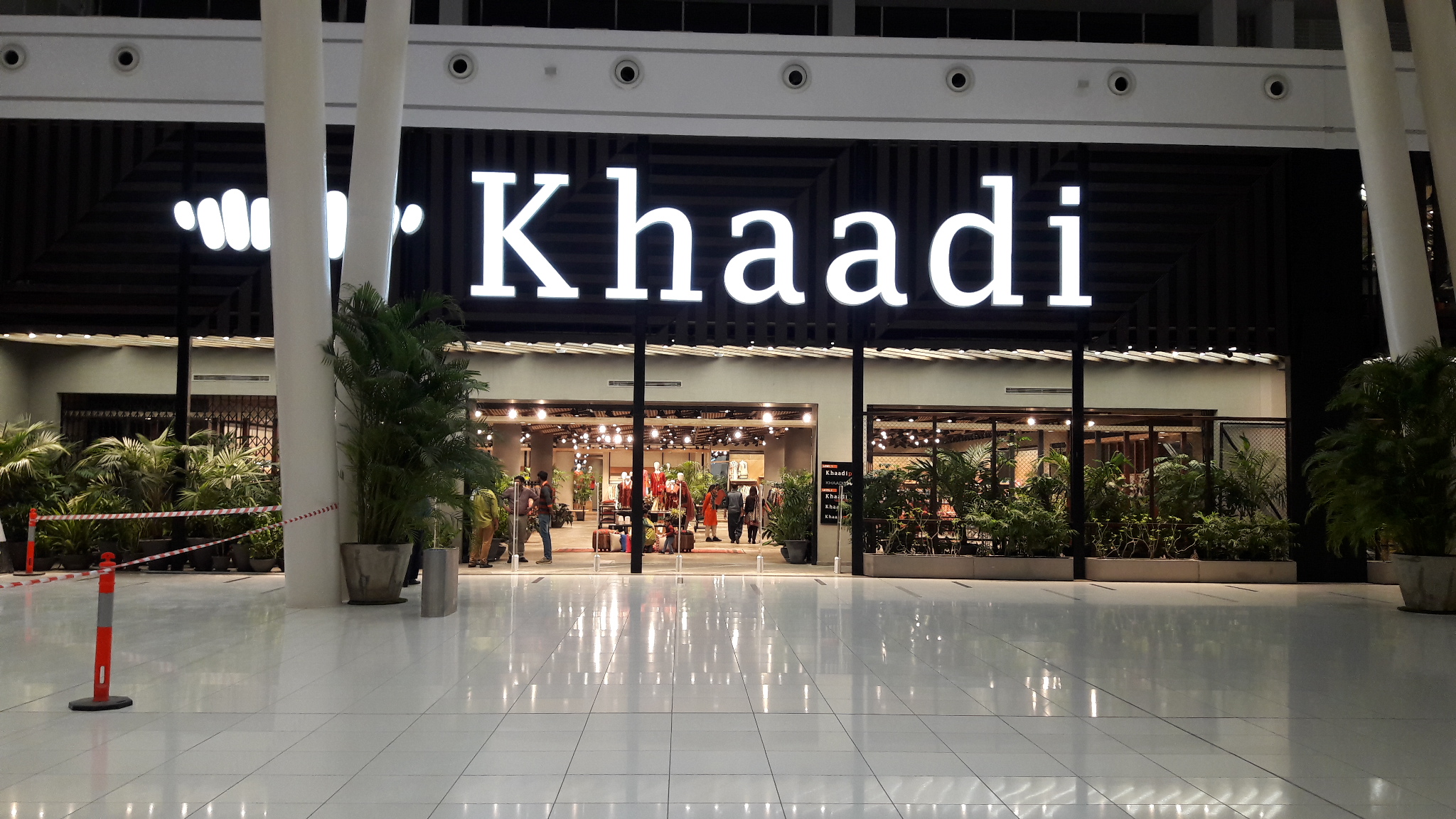
Khaadi Store, Package Mall, Lahore, Source: Wikimedia


Khaadi, which specializes in women's apparel, has attracted $25 million investment from International Finance Corporation (IFC) to help the company expand its business, create jobs, promote gender equality, and support the country’s crucial textiles sector after the COVID pandemic. Khaadi has established country-specific online stores for Canada, EU, Qatar, UAE, UK, US and Pakistan. In addition, the company has 57 physical retail outlets across Pakistan, UK and GCC countries. Investment Monitor, one of a network of 30+ proprietary B2B websites, has acknowledged the potential for Pakistani fashion brands in the following words:

"Despite its difficulties, Pakistan does have strong and innovative manufacturers, notably those developing their own apparel brands have emerged. Some of this has been based on advances in the Pakistan production of fine weave lawn cloth. And Pakistan consumers are becoming more brand conscious, being happy to seek out and wear local labels. Apparel brands, such as Khaadi (of Karachi); Sapphire (Lahore) and Sana Safinaz (Karachi), have focused on value addition and with Pakistan consumers prepared to pay for local quality, high profits have followed, including by developing exports".  

K&N Foods, a Pakistani branded poultry company, has recently started a poultry processing plant in New York. The company will sell Halal chicken products in the United States and Canada under the brand name of “K&N's Foods USA, LLC”. Beginning in the spring of 2013, the company invested more than $5 million in the purchase and renovation of a former Birds Eye plant which will employ almost 200 people in the Fulton area. Initially, K&N will focus on value-added processing of poultry purchased from other slaughter plants. The target market for these products will be specialty ethnic stores, supermarkets, and food service operations. 

Brands add value to the product being sold. This added value is effectively the difference between a product's price to consumers and the cost of producing it. Value can be added in several different ways, such as adding and promoting a brand name to a generic product or assembling a product in an innovative way. Brand marketing is done to create a consumer preference based on actual or perceived features or quality of what they buy from the store shelves. 

Developing countries like Pakistan manufacture products like ready-made garments for brand-name companies like Nike, Adidas, Levy's, etc. These garments are sold at a huge mark-up in the United States, and only tiny fraction of the money goes to Pakistan. 

Another global sector dominated by Pakistani manufacturers is surgical instruments. These precision instruments are sold by German companies under German labels with no mention of them having been made in Pakistan. Bulk of the money earned by selling goes goes into the pockets of German companies whose brand names appear on these surgical instruments. 

Manufacturers can earn much more by either building their own brands by spending a lot of money over a long time on advertising and marketing or by acquiring existing brands. Chinese manufacturers have been both in recent years to claim a much bigger share of profits generated by selling their products. Pakistani manufacturers can learn from the Chinese experience to do the same.

Related Links:

Haq's Musings

South Asia Investor Review

European Union: Fastest Growing Source of Remittances to Pakistan

Pakistani-Americans: Young, Well-educated and Prosperous

Ready-Made-Garments/Textile Boom in Pakistan

Fashion Week Karachi 2016

Pakistani Halal Meat Industry Experiencing Strong Growth

Over Half A Million Pakistanis Migrating Overseas Each Year

Pakistan Most Urbanized in South Asia

Pakistan Forecast to Become World's 7th Largest Consumer Market By 2030

Amazon Expands Pakistani Exports Opportunities


Tuesday, October 5, 2021

Pakistan's Denim Exports to US Soared 62% in First Six Months of 2021

Pakistan exported $38 million worth of denim clothing to the United States in July, 2021. This figure represents 140% growth over July, 2020. Mexico's denim exports grew 58% while those of Bangladesh grew 24% in this period, according to the US Office of Textiles and Apparel. 

US Denim Apparel Imports. Source: US Office of Textiles and Apparel

Among the top Asian suppliers, Pakistan's exports to US jumped 62.16% year to date to $188.94 million. Bangladesh’s exports increased 42.82% to $362.38 million in this period while shipments from China were up 13.28% to $192.49 million. 

Pakistan’s textiles and clothing exports are expected to rise in the coming months as the US moves orders out of China and other neighboring Asian countries. The focus on more value addition and new textile policy of the country will support the organic growth in exports. The depreciation of PKR has also boosted textile exports.

The monthly average of apparel exports from Pakistan was $565.60 million in H1 2021, which is expected to rise by 13.44% in H2 2021 to reach $641.60 million, according to a report in Fiber2Fashion. The US, the UK, Germany, Spain and France were the top importers of Pakistani apparel in H1 and accounted for approximately 68.27% of total apparel exports of the country, according to Fibre2Fashion’s market analysis tool TexPro.

Pakistan's textile and garment exports jumped 22.94% to reach $15.4 billion in Fiscal Year 2020-21 (July 2020-June 2021), according to data from Pakistan Bureau of Statistics.  At the same time, the country's technology exports surged 47% to set a new record of $2.12 billion for the last fiscal year that ended in June 2021. Pharmaceutical exports also saw 25.3% growth to $241 million in the first 11months of FY 2021, indicating Pakistan's export diversification with higher value added goods and services. 

Pakistan Textile/Apparel Exports. Source: Arif Habib Ltd
Pakistan Textile Exports FY 2006-2021. Source: APTMA

Overall, Pakistan's exports of goods for fiscal 2020-21 rose 13.7% to $25.63 billion. The nation's service exports increased 9.2% to $5.93 billion in fiscal 2021. Combined exports of goods and services added up to $31.56 billion in July 2020 to June 2021 period. 

Pakistan Tech Exports. Source: Arif Habib Ltd. 


Imports grew 23.2%, much faster than exports as the economy recovered from the COVID-induced slump, widening the trade gap in the process. Energy demand drove imports of oil and gas to new highs. 

Pakistan Current Account Balance. Source: Arif Habib Ltd. 

During the last two fiscal years,  Karachi has accounted for 51% of Pakistan’s exports, Lahore came in 2nd with 18%, Faisalabad 3rd with 12% and Sialkot 4th with 8.5%. 

Pakistan's Exports by Cities. Source: FBR

Record inflow of nearly $30 billion in remittances from overseas Pakistanis helped reduce the current account deficit to $1.85 billion in FY 2020-21. It's down 58.4% from $4.45 billion in FY 2019-20. 

Overseas Pakistanis' remittances represent 10% of the country's gross domestic product (GDP). This money helps the nation cope with its perennial current account deficits. It also provides a lifeline for millions of Pakistani families who use the money to pay for food, education, healthcare and housing. This results in an increase in stimulus spending that has a multiplier effect in terms of employment in service industries ranging from retail sales to restaurants and entertainment. 

Over 10 million Pakistanis are currently working/living overseas, according to the Bureau of Emigration. Before the COVID19 pandemic hit in 2020,  more than 600,000 Pakistanis left the country to work overseas in 2019. The average yearly outflow of Pakistani workers to OECD countries (mainly UK and US) and the Middle East has been over half a million in the last decade. 


Pakistan ranks 6th among the top worker remittance recipient countries in the world.  India and China rank first and second, followed by Mexico 3rd, the Philippines 4th, Egypt 5th and Pakistan 6th.  

Related Links:

Haq's Musings

South Asia Investor Review

Pakistan's Debt Crisis

Declining Investment Hurting Pakistan's Economic Growth

Brief History of Pakistan Economy 

Can Pakistan Avoid Recurring IMF Bailouts?

Pakistan is the 3rd Fastest Growing Trillion Dollar Economy

CPEC Financing: Is China Ripping Off Pakistan?

Information Tech Jobs Moving From India to Pakistan

Pakistan is 5th Largest Motorcycle Market

"Failed State" Pakistan Saw 22% Growth in Per Capita Income in Last 5 Years

CPEC Transforming Pakistan

Pakistan's $20 Billion Tourism Industry Boom

Home Appliance Ownership in Pakistani Households

Riaz Haq's YouTube Channel

PakAlumni Social Network

Friday, March 27, 2020

Coronavirus: Pakistan's Exports Crash Amid Global Health Crisis

Pakistan Textile Industry was celebrating a big milestone with 20% jump in exports in February 2020 when coronavirus struck a heavy blow. Some western retailers canceled orders while others put them on hold as the virus spread to Western Europe and the United States in late February and early March. Then came the lockdown in Pakistan that shut down factories and halted transport in Pakistan.

Here's how Guido Schlossman, President and CEO of Synergies Worldwide, a global supply chain management firm with an office in Pakistan, summed up the situation for Sourcing Journal: “Most clients have either cancelled or put orders on hold...That would have huge ramifications and losses, and the fear is that most small factories may shut, whereas the mid and big factories will have huge financial liabilities and losses.” “Ninety-five percent of clients have either cancelled, put on hold or given new delivery dates ranging from 4-6 weeks delay to about 8-10 months,” Schlossman said. “That is how huge the holding period and losses would be for the factories.”

“All over Pakistan it’s a complete lockdown in all the provinces everywhere,” Hafiz Mustanser Ahmed, managing director of Lahore-based factory  U.S. Apparel and Textiles, told Sourcing Journal last week.U.S. Apparel & Textiles, which typically produces 100,000 garments a day, is seeing “huge, huge” order cancellations, Ahmed said.

“The transportation when it comes to taking the employees to the factories or the public transportation, it’s all 100 percent closed. All the factories are closed.” For now, moving goods back and forth between the ports and Lahore, Pakistan’s second-biggest textile manufacturing hub after Karachi, is still allowed, but there simply aren’t many goods to move, said Ahmed, whose factory produces denim bottoms for Levi’s, Target, H&M, J.Crew, Primark and Costco, to name a few.

Other Asian garment exporting nations face a similar situation. Bangladesh has issued stay-at-home orders and India has ordered a 21-day nationwide lock-down. The difference is that Pakistan exports had just begun to recover when the COVID-19 global pandemic struck. Now demand for apparel in the western markets is not likely to materialize for at least a month or two. Meanwhile, job losses in Pakistan are almost certain. A prolonged slump in the west will spell disaster for Pakistan's exports and delay the nation's economic recovery.

Pakistan's service economy will also suffer in a prolonged lock-down. Service sector accounts for  50% of the world GDP and 54% of Pakistan's GDP.  Social distancing will significantly impact the services, particularly retail, restaurants, travel, transport and education sectors. Imran Khan has expressed fear that the pandemic will devastate the economies of developing countries. “My worry is poverty and hunger," Khan said. "The world community has to think of some sort of a debt write-off for countries like us, which are very vulnerable, at least that will help us in coping with (the coronavirus).”


Related Links:

Haq's Musings

South Asia Investor Review

Can Pakistan Effectively Respond to Coronavirus Pandemic?

Trump Vows to At Least Quadruple Pakistan's Exports to US

Trump's China Tariffs Helping Pakistan's Exports

Are Pakistan's Garment Exports Cost Competitive With Bangladesh?

Can Pakistan Avoid Recurring Balance of Payment Crisis?

Pakistan Economy Hobbled By Underinvestment

Pakistan's IT Exports Surging

Can Indian Economy Survive Without Western Capital Inflows?

Pakistan-China-Russia Vs India-Japan-US

Chinese Yuan to Replace US $ as Reserve Currency?

Remittances From Overseas Pakistanis

Can Imran Khan Lead Pakistan to the Next Level?

China to Expand Manufacturing in Special Economic Zones