Showing posts with label PAF. Show all posts

Saturday, May 31, 2025

Pakistan's Homegrown Link-17 Kill Chain Helped Shoot Down India's Rafale Fighter Jets

Using a homegrown datalink (Link-17) communication system, Pakistan has integrated its ground radars with a variety of fighter jets and airborne early warning aircraft (Swedish Erieye AWACS) to achieve high level of  situational awareness in the battlefield, according to experts familiar with the technology developed and deployed by the Pakistan Air Force. This integration allows quick execution of a "kill chain" to target and destroy enemy aircraft, according to experts. This capability was demonstrated recently in the India-Pakistan aerial battle of May 7-8 that resulted in the downing of several Indian fighter jets, including the French-made Rafale.  

Pakistan PAF's Homegrown Link-17. Source: Secret Projects


Pakistan Air Force (PAF) pilots flying Chinese-made J10C fighter jets fired the Chinese PL-15 air-to-air missiles and shot down at least two Indian Air Force's French-made Rafale jets in history's largest ever aerial battle, according to multiple media and intelligence reports. India had 72 warplanes on the attack and Pakistan responded with 42 of its own, according to the Pakistani military. 

Speaking on a recent podcast, Michael Dahm, a senior fellow at AFA’s Mitchell Institute for Aerospace Studies, said the kill chain may have started with a Pakistani ground radar—“maybe a surface-to-air missile system, or some other type of radar system”—which “illuminated the Indian target.” Then, a Pakistani J-10C fighter “launched its missiles, probably at range, and finally, an airborne early warning and control aircraft used a midcourse datalink to update and guide the missile to the Indian fighter.”   “The Pakistani Air Force deployed …’ A’ launched by ‘B’ and guided by ‘C’” and hit the target, he added. 

PAF Kill Chain During Op Sindoor. Source: Blackbird


Link-17 enables secure and jam-resistant voice and data exchanges between connected assets. Combined with electronic warfare, it allows the Pakistani military to control the electromagnetic spectrum, giving access to the enemy communications and denying them access to their own.  It also enables networked participants to view in real-time each other’s sensor feeds, which could come from radars, sonars, electro-optical (EO) systems such as cameras, and others. Link-17 has given the PAF a network protocol that it can use with a wide range of aerial assets, especially domestically driven programs, such as the JF-17 Thunder. 

Military aviation analysts conclude from the results of the air battle that the Chinese technology is as good, if not better than, the western technology. However, it must be understood that the way the technology is actually deployed in the battlefield is as important in achieving good results as the technology itself. Also, the men count as much, if not more than, the machines.  The legendary US Air Force pilot Chuck Yeager called Pakistan Air Force pilots "the best in the world".  In another tweet in 2015, Yeager said "they (PAF pilots) kicked the Indians butt". 

Related Links:

Haq's Musings

South Asia Investor Review

Pakistan Downs India's French Rafale Jets in a Major Aerial Battle

Has Modi Succeeded Diplomatically or Militarily Against Pakistan After Pahalgam?

Has Pakistan Destroyed India's S-400 ADS?

Pakistan's Aircraft Exports

Pakistan Navy Modernization

West's Technological Edge in Geopolitical Competition

Modi's India: A Paper Elephant?

Pahalgam Attack: Why is the Indian Media Not Asking Hard Questions?

Ukraine's Lesson For Pakistan: Never Give Up Nukes!

Pakistan Economy Nears Trillion Dollars

Pakistan's Sea-Based Second Strike Capability

Riaz Haq Youtube Channel

VPOS Youtube Channel

Friday, May 9, 2025

Pakistan Downs India's French Rafale Fighter Jets in History's Largest Aerial Battle

Pakistan Air Force (PAF) pilots flying Chinese-made J10C fighter jets shot down at least two Indian Air Force's French-made Rafale jets in history's largest ever aerial battle involving over 100 combat aircraft on both sides, according to multiple media reports. India had 72 warplanes on the attack and Pakistan responded with 42 of its own, according to Pakistani military. The Indian government has not yet acknowledged its losses but senior French and US intelligence officials have confirmed that at least one Indian Rafale jet was shot down by Pakistan on May 7, 2025. Reports of  more Rafale downings are being investigated by western intelligence officials. This marks the first time that the sophisticated French-made warplane has been lost in combat.


Rafale is the most advanced French 4.5 generation fighter plane. Indian Prime Minister Narendra spoke about India's need for Rafale back in 2019 after the last IAF-PAF dogfight and said: "We (Indians) acutely felt the absence of Rafale today.....if we had Rafale today the results would have been very different....desh ka bahut nuksaan hua hai"  Then Mr. Modi proceeded to spend $7.4 billion to purchase 26 Rafale fighter jets from France in the hope of achieving air superiority over Pakistan.  Each Rafale cost Indian taxpayers $288 million. 

Military aviation analysts conclude from the results of the air battle that the Chinese technology is as good, if not better than, the western technology. However, men count as much, if not more than, the machines.  The legendary US Air Force pilot Chuck Yeager called Pakistan Air Force pilots "the best in the world".  In another tweet in 2015, Yeager said "they (PAF pilots) kicked the Indians butt". 

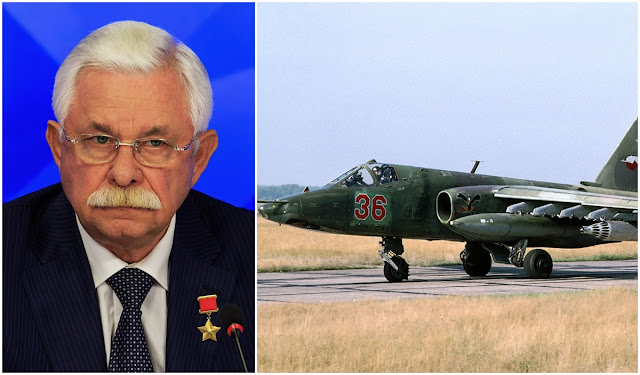
In the 1980s, the Pakistan Air Force pilots went head-to-head with Russian combat pilots in Afghanistan. The Pakistan Air Force (PAF) has the distinction of being the only air force that has engaged and shot down multiple Russian fighter pilots in combat since WWII.  The most prominent among those shot down by PAF was Colonel Alexander Rutskoy who ejected over Pakistani soil and was captured by Pakistan. After his release, Rutskoy was decorated as a hero of the Soviet Union and went onto become vice president of Russia under Boris Yeltsin, before leading an attempted coup in 1993, according to The National Interest publication. 

The aerial battle between Pakistani and Indian fighter jets, which Pakistani officials claim downed five Indian planes, was one of the “largest and longest in recent aviation history,” a senior Pakistani security source told CNN.  Over 100 combat planes battled for over an hour, with neither side leaving its own airspace, according to the CNN source who detailed that the missile exchanges were happening at distances sometimes greater than 160 kilometers (100 miles).  The entire air battle was conducted using BVR (beyond visual range) radars/sensors with stand-off weapons. 

Global militaries and defense analysts are now studying the India-Pakistan aerial battle on May 7, 2025, according to Reuters. Here's an excerpt of the Reuters' report: 

"Experts said the live use of advanced weapons would be analyzed across the world, including in China and the United States which are both preparing for a potential conflict over Taiwan or in the wider Indo-Pacific region. One U.S. official, speaking on condition of anonymity, told Reuters there was high confidence that Pakistan had used the Chinese-made J-10 aircraft to launch air-to-air missiles against Indian fighter jets". 

Here's Prime Minister Modi Speaking of India's Acute Need For Rafale in 2016:

https://youtu.be/QIt0EAAr3PU?si=KpcJW60jvD9r0xeQ


Related Links:

Haq's Musings

South Asia Investor Review

US Missile Sanctions: Is Pakistan Really Developing ICBMs?

Pakistan's Cyber Attack and Defense Capability

IDEAS2024: Pakistan Defense Industry Expo

Pakistan's Aircraft Exports

Pakistan Navy Modernization

West's Technological Edge in Geopolitical Competition

Modi's India: A Paper Elephant?

Pahalgam Attack: Why is the Indian Media Not Asking Hard Questions?

Ukraine's Lesson For Pakistan: Never Give Up Nukes!

Pakistan Economy Nears Trillion Dollars

Pakistan's Sea-Based Second Strike Capability

Riaz Haq Youtube Channel

VPOS Youtube Channel

Wednesday, March 16, 2022

Pakistan Air Force: The Only Air Force That Shot Down Multiple Russian Fighter Pilots in Combat Since WWII

As the United States and other NATO members hesitate in imposing No-Fly zone over Ukraine for fear of direct confrontation with Russia, here's a piece of history from the Soviet invasion of Afghanistan in the 1980s: The Pakistan Air Force (PAF) has the distinction of being the only air force that has engaged and shot down multiple Russian fighter pilots in combat since WWII.  The most prominent among those shot down by PAF was Colonel Alexander Rutskoy who ejected over Pakistani soil and was captured by Pakistan. After his release, Rutskoy was decorated as a hero of the Soviet Union and went onto become vice president of Russia under Boris Yeltsin, before leading an attempted coup in 1993, according to The National Interest publication. 

Col Alexander Rutskoy of USSR Air Force Shot Down Over Pakistan


In 1986, the F-16s of the Pakistan Air Force's No. 9 Griffin and 14 Shaheen squadrons began flying combat air patrols along the Afghan border. That year.  The Soviet and Afghan forces began a series of offensives targeting mujahideen bases in the Panjshir valley, supported with intensified bombardments of refugee camps.  Here's an excerpt from The National Interest report on the subject: 

"By 1987, Soviets records indicate that Pakistani fighters had begun roaming into Afghan airspace—particularly harassing efforts to provide aerial resupply to besieged garrisons like Khost, only ten miles across the border. On March 30, 1987 two F-16s intercepted an An-26 twin-turboprop cargo plane near Khost, each striking it with one Sidewinder from just under a mile away. The ponderous cargo plane crashed into the snowy mountains below, killing all 39 aboard. Over the course of the conflict, Pakistani F-16 pilots also claimed the destruction of several Mi-8 transports helicopter, another An-26 on a reconnaissance mission in 1989, and a maneuver kill versus an An-24 transport which was actually attempting to defect..........On November 3, 1988 the PAF would bag its final jet kill when Lt. Khalid Mahmood shot down a DRAAF Su-2M4K. Pakistan formally credits its F-16 pilots with 10 kills during the conflict, while Soviet records confirm the loss of three Su-22s, an Su-25 and An-26. Some sources claim the PAF shot down at least a dozen more aircraft during the Soviet war in Afghanistan which ostensibly were not formally credited because they involved violations of Afghan airspace".  

Pakistan took enormous risks in the 1980s by supporting and providing sanctuaries to the Afghan Mujahideen insurgents who fought the Soviet occupation of Afghanistan. Pakistan Air Force took on the Soviet Air Force and shot down several Russian fighter aircraft in dogfights. Pakistanis did this knowing that the US provided no security guarantees to Pakistan. Are Poland and Romania, both NATO members, willing to take such risks? Would the United States allow these NATO members to risk a broader war with Russia? Here's an excerpt from an article by Bruce Riedel, senior fellow and director of the Brookings Intelligence Project. It is titled "Could Ukraine Be Putin's Afghanistan?":

"Being the frontline state behind the mujahideen brought considerable risk and danger for Pakistan. The Russians supported Pakistani dissidents who organized terror attacks inside the country including hijacking Pakistani civilian aircraft and attempts to assassinate Zia (who died in a suspicious plane crash in 1988). Pakistani fighters engaged Soviet aircraft in dogfights. The Pakistani tribal border areas became dangerous and unruly. A Kalashnikov culture emerged that still haunts Pakistan today". 

Related Links:

Haq's Musings

South Asia Investor Review

Pakistani-American Banker Heads SWIFT, the World's Largest Interbank Payment System

Ukraine Resists Russia Alone: A Tale of West's Broken Promises

Ukraine's Lesson For Pakistan: Never Give Up Nuclear Weapons

Flying Legend Chuck Yeager Admired Pakistan Air Force

Balakot and Kashmir: Fact Checkers Expose Indian Lies

Ukraine's Muslim Billionaire Akhmetov Holds Balance of Power

Ukraine's Muslims Oppose Russia


Thursday, September 23, 2021

The Lying Indian Media Caught Red Handed!

In 2018, Indian Prime Minister Narendra Modi's right-hand man and home minister Amit Shah told his party's volunteers commonly known as Modi Bhakts: "We can keep making messages go viral, whether they are real or fake, sweet or sour". "Keep making messages go viral. We have already made a WhatsApp group with 32 lakh people in Uttar Pradesh; every morning they are sent a message at 8 am", Shah added, according to a report in Dainik Bhaskar, an Indian Hindi-language daily newspaper.

Indian Fake News Peddlers Rahul Kanwal (L) and Arnab Goswami

Amit Shah's advice has been heeded by not only BJP trolls but also many in the Indian mainstream media, including India Today and Republic TV.  

After the 2019 aerial battle between Indian Air Force and Pakistan Air Force over Kashmir, India government and media claimed shooting down a Pakistani F-16.  India Today TV anchor Rahul Kanwal invited  Abhijit Aiyar Mitra, an Indian aviation expert, to confirm that the wreckage he was showing as evidence was that of a Pakistani F-16. 

Mr. Mitra embarrassed his host on live TV by debunking the claim and correctly stating that Pakistani F-16s are equipped with Pratt and Whitney engines and what the TV host was calling a Pakistani F-16 engine was made by a different manufacturer. Watch it here:

https://youtu.be/FJ8MmTvRZ8Q


In a recent airing of 'The Debate' on Republic World TV, host Arnab Goswami invited Indian analyst General G.D. Bakshi and PTI spokesperson Abdul Samad Yaqoob — to represent Pakistan.

Goswami to Yaqoob: "You go and check today ... on the fifth floor of the Serena Hotel, I am telling you, please check, fifth floor of the Serena Hotel in Kabul, how many Pakistani army officers are there?"

Yaqoob: " "What I got to know from my sources [is that] Serena has only two floors. There are no third, fourth or fifth floors." Watch it here:

https://youtu.be/9ZQ1NttzbZE


India with its massive disinformation campaign against Pakistan, as recently revealed by EU Disinfo Lab, appears to be following what a US think tank RAND calls "Firehose of Falsehood" propaganda model. It has over 750 fake media outlets covering 119 countries. There are over 750 domain names, some in the name of dead people and others using stolen identities. Pakistani policymakers charged with countering the Indian propaganda should read the RAND report "Firehose of Falsehoods" for its 5 specific recommendations to the US government to effectively respond to the Russian disinformation campaign. In particular they should heed its key advice: "All other things being equal, messages received in greater volume and from more sources will be more persuasive.......Don't expect to counter Russia's firehose of falsehood with the squirt gun of truth. Instead, put raincoats on those at whom the firehose is aimed" 

Wednesday, December 9, 2020

Remembering Chuck Yeager (1923-2020): Flying Legend Admired Pakistan Air Force Pilots

United States Air Force's legendary pilot Charles Yeager died on December 7, 2020 at the age of 97. He was a highly decorated soldier who was also awarded the US Presidential Medal of Freedom, America's highest civilian award. He remained active on twitter until very recently. In a 2017 tweet, Yeager called Pakistan Air Force pilots "the best in the world".  In another tweet in 2015, Yeager said "they (PAF pilots) kicked the Indians butt". 

General Charles Yeager (1923-2020)

General Yeager got the world's attention as early as 1944 when he shot down 5 German fighter aircraft in a single day. Later, he became the first man to break the sound barrier. Yeager's life as a daredevil pilot was documented by Tom Wolf in his 1979 book "The Right Stuff" that was later made into a movie. Actor Sam Shepard played Yeager in the movie. 

@GenChuckYeager's 2015 Tweet

General Yeager, a colonel in 1971, served as an advisor to Pakistan Air Force. He was there during the 1971 India-Pakistan war. Here's what he said about his experience in Pakistan:

"This Air Force (PAF), is second to none" "The air war lasted two weeks and the Pakistanis scored a three-to-one kill ratio, knocking out 102 Russian-made Indian jets and losing thirty-four airplanes of their own. I'm certain about the figures because I went out several times a day in a chopper and counted the wrecks below." "They were really good, aggressive dogfighters and proficient in gunnery and air combat tactics. I was damned impressed. Those guys just lived and breathed flying. "

@GenChuckYeager's 2017 Tweet

In addition to serving in Pakistan, Yeager also worked as an advisor in the Philippinnes and Spain. In the 1950s and ’60s, Yeager commanded squadrons, rising to colonel and later to brigadier general. After his retirement, he continued flying for the Air Force and NASA in some capacity as well as performing test flights on light aircraft for Piper Aircraft.

Related Links:

Haq's Musings

South Asia Investor Review

China-Pakistan Defense Production Collaboration Irks West

Balakot and Kashmir: Fact Checkers Expose Indian Lies

Is Pakistan Ready for War with India?

Pakistan-Made Airplanes Lead Nation's Defense Exports

Modi's Blunders and Delusions 

India's Israel Envy: What If Modi Attacks Pakistan?

Project Azm: Pakistan to Develop 5th Generation Fighter Jet

Pakistan Navy Modernization

Pakistan's Sea-Based Second Strike Capability

Who Won the 1965 War? India or Pakistan?


Sunday, March 3, 2019

JF-17 Manufacturer's Stock Soars After Pakistan Air Force's Success Against India

Squadron Leader Hasan Siddiqui of Pakistan Air Force (PAF), flying a Pakistan-made JF-17 Block 2 serial 15-201 fighter jet, shot down Wing Commander Abhinandan Varthaman of Indian Air Force (IAF) flying a Russia made MiG 21. Abhinandan was captured by Pakistan last week. The news has boosted the stock price of CAC (Chengdu Aircraft Corporation) which jointly developed JF-17 Thunder with Pakistan Aeronautical Complex (PAC).

JF-17 Thunder Fighter:

The development of JF-17, a modern highly capable and relatively inexpensive fighter jet, is the crowning achievement to-date of the Pakistan-China defense production cooperation. It's being deployed by Pakistan Air Force with Pakistan Aeronautical Complex (PAC). The latest version is capable of launching a variety of nuclear and conventional weapons ranging from smart bombs and air-launched cruise missile Raad to anti-ship missiles.

Pakistan Aeronautical Complex (PAC) got its start decades ago by setting up maintenance facilities for advanced fighters like French Mirage and US F-16s and by manufacturing Mushshak and Super Mushshak trainer aircraft. It is now also building JF-17s as well as a variety of drones, including combat UAV Burraq being used in Pakistan's war against militants in Waziristan.

Global Arms Producers. Source: SIPRI

India-Pakistan Aerial Combat:

Squadron Leader Hasan Siddiqui of Pakistan Air Force (PAF), flying a Pakistan-made JF-17 Block 2 serial 15-201 fighter jet, shot down Wing Commander Abhinandan Varthaman of Indian Air Force (IAF) flying a Russia made MiG 21. Abhinandan was captured by Pakistan last week.

Indian officials have confirmed the loss of IAF's MiG 21, acknowledging that MiG-21 Bison, Su-30MKI and Mirage 2000 aircraft were all scrambled to head off the PAF strike squadrons over Kashmir.

The confirmation that JF-17 Thunder was used in successful aerial combat came in a tweet from Retired PAF Air Marshal Shahid Latif who tweeted: "Proud to announce, I was project director for JF-17 Thunder program jointly produced by Pakistan and China during the [2001-2008] tenure of general Pervez Musharraf. Today, same jets targeted and shot down Indian jets which entered Pakistani airspace."

Stock Market Reaction:

Within hours of the Pakistan Air Marshall's tweet, the publicly traded shares of Shenzhen-listed Sichuan Chengfei Integration Technology (CAC-SCIT), a sister company of JF-17 maker Chengdu Aircraft Corporation (CAC), rose 10% five minutes on Wednesday - hitting the maximum daily increase allowed on the Chinese stock market, according to the South China Morning Post.  The shares in CAC-SCIT, which makes car parts, rose a further 10% on Thursday. CAC is not publicly listed.  CAC-SCIT shares had dropped back 5.57% by midday on Friday.

JF-17 Export Potential:

The JF-17 recently won an export order from Nigeria. Next possible customer is Myanmar where JF-17 was recently seen in an air force parade. The New York Times has reported that a joint China-Pakistan defense manufacturing hubs in Pakistan is being set up to win new export customers among Muslim countries. Pakistan is already in talks with Malaysia for sale of JF-17s to Malaysian Air Force. There is potential to export close to a billion dollars worth of JF-17 Thunders.

PAF's Tail Choppers:

Squadron Leader Hasan Siddiqui is a member of PAF's 14 Squadron called ‘Tail Choppers’ which was officially re-equipped with Pakistan Aeronautical Complex (PAC) JF-17 fighters on February 16, 2017, according to AirForces Monthly magazine.  Here's an excerpt from the magazine:

"The initial batch of 16 JF-17s replaced some of the last remaining Chengdu F-7Ps that had been in service with the ‘Tail Choppers’ at PAF Base Minhas. The ‘Tail Choppers’ became the fifth PAF squadron to operate the type after 26 Squadron ‘Black Spiders’, 16 Squadron ‘Black Panthers’, the Combat Commanders School, and 2 Squadron ‘Minhas’. The squadron was the second to re-equip with Block 2 aircraft. However, it the first to fly the Block 2 operationally with the air-to-air refuelling probe fitted. On June 19, 2017, a JF-17 shot down an Iranian reconnaissance unmanned aerial vehicle (UAV) over Panjgur, Balochistan, 28 miles (45km) inside Pakistani territory."

Summary:

Confirmation that PAF's Squadron Leader Hasan Siddiqui flying JF-17 Block 2 shot down an Indian fighter jet has boosted investor interest in the aircraft with double digit percentage increase in CAC's share price. It is likely to boost Pakistan's exports of this fighter jet to Nigeria, Myanmar and Malaysia.

Here's a 2018 Pakistani music video featuring Squadron Leader Hasan Siddiqui:

https://youtu.be/tEgDU5KT9cE


Related Links:

Haq's Musings

South Asia Investor Review

China-Pakistan Defense Production Collaboration Irks West

Balakot and Kashmir: Fact Checkers Expose Indian Lies

Is Pakistan Ready for War with India?

Pakistan-Made Airplanes Lead Nation's Defense Exports

Modi's Blunders and Delusions 

India's Israel Envy: What If Modi Attacks Pakistan?

Project Azm: Pakistan to Develop 5th Generation Fighter Jet

Pakistan Navy Modernization

Pakistan's Sea-Based Second Strike Capability

Who Won the 1965 War? India or Pakistan?

Saturday, March 2, 2019

Balakot & Kashmir: Fact Checkers Expose Indian Lies

Indian government and media have made a series of false claims about Balakot "militant casualties" and "shooting down Pakistani F16". Both of these claims have been scrutinized and debunked by independent journalists, experts and fact checkers. There is no dispute about the fact that Squadron Leader Hasan Siddiqui of Pakistan Air Force (PAF), flying a Pakistan-made JF-17 fighter, shot down Wing Commander Abhinandan Varthaman of Indian Air Force (IAF) flying a Russia made MiG 21. Abhinandan was captured by Pakistan and then released to India.

Pakistani F-16:

PAF's Hasan Siddiqui (above) shot down IAF's Wing Commander Abhi (below)
Indian government and media claimed that an Indian Air Force pilot shot down a Pakistani F-16 on February 26, 2019 over Kashmir. This claim and the evidence offered were examined by Belling Cat, a fact-check site that successfully investigated the downing of a Malaysian passenger jet over Ukraine. Belling Cat's Veli-Pekka Kivimäkithere concluded that "no compelling evidence offered as of yet that an F-16 would have been shot down, and all signs point to MiG-21 wreckage having been on display thus far".

Abhijit Aiyar Mitra, an Indian aviation expert participating in an India Today TV Show, embarrassed the India TV show host Rahul Kanwal on live TV  when asked to identify a wrecked engine as being an F-16 engine. The expert correctly stated that Pakistani F-16s are equipped with Pratt and Whitney engines and what the TV host was calling a Pakistani F-16 engine was made by a different manufacturer.

Both Kivimäki and Mitra concluded that the image offered as evidence of Pakistani F-16 engine was in fact from a MiG 21 wreckage.

Balakot Casualties:

Announcing the Indian air strikes in Pakistan, Indian Foreign Secretary Vijay Gokhale claimed the strike killed “a very large number of Jaish-e-Mohammad terrorists, trainers, senior commanders, and groups of jihadis who were being trained for Fidayeen action were eliminated.” Another senior government official told reporters that about 300 militants had been killed.

The Indian government claim was soon followed by a video clip purportedly capturing a portion of that air strike on social media. Fact Check site snopes.com analyzed this video and declared the Indian claim "false".

Reuter reporters visited the target area in Balkot in Pakistan and talked to an eyewitness who said, “No one died. Only some pine trees died, they were cut down. A crow also died.” Here's an excerpt from the Reuter's report:

People in the area said Jaish-e Mohammad did have a presence, running not an active training camp but a madrassa, or religious school, less than a kilometer from where the bombs fell. “It is Taleem ul Quran madrassa. The kids from the village study there. There is no training,” said Nooran Shah, another villager.

Indian Warplane Down:

There is no dispute about the fact that Squadron Leader Hasan Siddiqui of Pakistan Air Force (PAF), flying a Pakistan-made JF-17 fighter, shot down Wing Commander Abhinandan Varthaman of Indian Air Force (IAF) flying a Russia made MiG 21. Abhinandan was captured by Pakistan and then released to India.

Summary:

All of the Indian claims about "JeM militant casualties" and shooting down of Pakistani F-16 have been debunked by independent fact-checkers and foreign media reporting on it.  Villagers in Balakot told Reuters that "Only some pine trees died, they were cut down. A crow also died.”  Belling Cat's Veli-Pekka Kivimäkithere and Indian analyst Abhijit Mitra have said that the images of the wreckage being offered as proof of downed F-16 are in fact from MiG-21. There is no dispute about the fact that Squadron Leader Hasan Siddiqui of Pakistan Air Force (PAF), flying a Pakistan-made JF-17 fighter, shot down Wing Commander Abhinandan Varthaman of Indian Air Force (IAF) flying a Russia made MiG 21. Abhinandan was captured by Pakistan and then released to India.

Here's a video clip of Indian aviation expert Abhijit Mitra embarrassing his India Today host:

https://youtu.be/FJ8MmTvRZ8Q


Tuesday, August 1, 2017

Project Azm: Pakistan to Develop 5th Generation Fighter Plane

Pakistan has announced plans to develop and produce 5th generation fighter plane, according to media reports. It's part of Pakistan Air Force's highly ambitious Project Azm that includes building Kamra Aviation City dedicated to education, research and development and manufacturing of advanced fighter jets, unmanned aerial vehicles (UAVs) and weapon systems.

Pakistan's JF-17 Jet Fighter
Human Capital:

Development of a new advanced fighter is a wide-ranging effort that will encompass building human capital in a variety of fields including material science, physics, electronics, computer science, computer software, electrical engineering, mechanical engineering, aerospace engineering, avionics, weapons design, etc etc.

Air University:

Pakistan Air Force's Air University, established in 2002 in Islamabad, will add a new campus in Kamra Aviation City. The university already offers bachelor's master's and doctoral degrees in several subjects. Pakistan Air Force Chief Sohail Aman told Quwa Defense News that the campus will “provide the desired impetus for cutting-edge indigenization programs, strengthen the local industry and harness the demands of foreign aviation industry by reducing … imports and promoting joint research and production ventures.”

Defense Exports:

Air forces of about a dozen developing nations are buying and deploying Pakistani made aircrafts. The reasons for their choice of Pakistan manufactured airplanes range from lower cost to ease of acquisition, maintenance and training.

Pakistan started developing defense hardware for imports substitution to reduce external dependence and to save hard currency. Now the country's defense industry is coming of age to lead the way to high value-added manufactured exports.

Pakistan Super Mushshak Trainer Aircraft
Nigerian Air Force is the latest to announce purchase of Pakistan made Super Mushshak aircraft after the United States' refusal to sell to Nigeria, according to American periodical Newsweek.  Nigerian Air Force chief Air Marshal Sadique Abubakar was quoted by the Nigerian media as saying that "Pakistan has accepted to sell ten trainer airplanes. And that is why the Pakistan Chief of Air Staff is coming for the induction ceremony which is going to take place in Kaduna".

Several other countries are in the process of making decisions to purchase aircraft from Pakistan. A report in Pakistan's Express Tribune newspaper says that Turkey has decided to buy 52 Super Mushshak trainer aircraft.  The Tribune also reported that Azerbaijan may buy a couple of dozen JF-17 Thunder fighter jets jointly developed by Pakistan and China.

Along with exporting existing hardware, Pakistan is continuing its efforts to enhance the capabilities with new versions. For example, fighter-jet JF-17’s Block III is expected to open up new opportunities for Pakistani defense exports.

The new JF-17 Block III will be a twin-seat trainer version with advanced Active Electronically-Scanned Array radar and mid-air-refueliling probe. It will use new composite materials to increase its performance, besides addition of other updates in cockpit and weapons’ pods, according to Pakistani media reports.

Pakistan's Defense Industry Collaboration With China, Turkey:

Growing defense collaboration between China and Pakistan irks the West, according to a report in the UK's Financial Times newspaper.  The paper specifically cites joint JF-17 Thunder fighter jet, armed drone Burraq and custom AIP-equipped submarines as examples of close cooperation between the two nations.

More recently, Pakistan has also begun to collaborate with Turkey in developing arms. In particular, Pakistan has been mentioned as a prospective partner in the TFX, Turkey’s next-generation fighter effort.

Pakistan's bitter experience with the unreliability of its cold war allies as weapons suppliers has proved to be a blessing in disguise. It has forced Pakistan to move toward self-reliance in production of the weapons it needs to defend itself from foreign and domestic enemies.

It all started back in 1965 when the US and its western allies placed an arms embargo on Pakistan during war with India. The bitterness grew stronger when the US forced France to cancel its contract to supply a breeder reactor to Pakistan in 1974 soon after India conducted its first nuclear test.

Khushab Nuclear Reactor:

Fortunately for Pakistan, the French had already given Pakistanis scientists drawings and specifications before canceling the breeder reactor contract. Work on Khushab reprocessing plant stated in 1974 when Pakistan signed a contract with the French company Saint-Gobain Techniques Nouvelles (SGN). In 1978, under U.S. pressure, France canceled the contract. Pakistan then proceeded to indigenously produce its own nuclear breeder reactors at Khushab. Four such reactors are now operating to produce plutonium for Pakistan's nuclear weapons program. Having done its first nuclear test in 1998, Pakistan now has a large and growing nuclear arsenal it needs to deter any enemy adventurism against it.

Babar Cruise Missile:

Since MTCR (Missile Technology Control Regime) prevented Pakistan from acquiring delivery vehicles from other countries, the country had to develop its own ballistic and cruise missiles to carry nuclear weapons.

The story of Babar Cruise Missile development is particularly interesting. It is believed that Pakistani engineers learned the technology by dismantling and studying a US Tomahawk cruise missile that fell in Pakistani territory when President Bill Clinton fired these missiles to target Al Qaeda in Afghanistan.

JF-17 Thunder Fighter:

The development of JF-17, a modern highly capable and relatively inexpensive fighter jet, is the crowning achievement to-date of the Pakistan-China defense production cooperation. It's being deployed by Pakistan Air Force with Pakistan Aeronautical Complex (PAC) on recently rolling out the 16th Block 2 JF-17 aircraft for PAF's 4th squadron. The latest version is capable of launching a variety of nuclear and conventional weapons ranging from smart bombs and air-launched cruise missile Raad to anti-ship missiles.

Pakistan Aeronautical Complex (PAC) got its start decades ago by setting up maintenance facilities for advanced fighters like French Mirage and US F-16s and by manufacturing Mushshak and Super Mushshak trainer aircraft. It is now also building JF-17s as well as a variety of drones, including combat UAV Burraq being used in Pakistan's war against militants in Waziristan.

Nuclear-Capable AIP Submarines:

Pakistan is expanding and modernizing its underwater fleet with 8 additional AIP-equipped submarines. Four of these subs will be manufactured in Pakistan.  These will reportedly be custom versions of Yuan class diesel-electric subs with additional wider tubes from which cruise missiles can be launched. A key requirement for  these submarines is to be stealthy—and the AIP-equipped Yuan class is indeed very quiet. The trick is in the submarine’s air-independent propulsion fuel cells, which provide power under the surface as the diesel engines—used for running on the surface—rest and recharge. Though relatively limited in range, this system is quieter than the nuclear-powered engines on American and Russian submarines, which must constantly circulate engine coolant.

Arms as Pakistan's Cottage Industry

Pakistan has a long history of arms manufacturing as a cottage industry. The dusty little town of Darra Adam Khel, only a half-hour drive from Peshawar, reminds visitors of America's Wild West. The craftsmen of this town are manufacturers and suppliers of small arms to the tribal residents of the nation's Federally Administered Tribal Areas who carry weapons as part of their ancient culture. The skilled craftsmen of FATA make revolvers, automatic pistols, shotguns and AK-47 rifles. Until five years ago, the list also had items such as anti-personnel mines, sub-machine guns, small cannons and even rocket launchers. Pakistani government has forced the tribesmen to stop making heavy assault weapons to try and prevent the Taliban and Al Qaeda from getting access to such weapons.

Pakistan's arms industry has come a long way from making small arms as a cottage industry in the last few decades. The US and Western arms embargoes imposed on Pakistan at critical moments in its history have proved to be a blessing in disguise. In particular, the problems Pakistan faced in the aftermath of Pressler Amendment in 1992 became an opportunity for the country to rely on indigenous development and production of defense equipment.

Pakistan's Military Industrial Complex

The country now boasts a powerful industrial, technological and research base developing and manufacturing for its armed forces a wide variety of small and large weapons ranging from modern fighter jets, battle tanks, armored vehicles, frigates and submarines to armed and unarmed aerial vehicles and high tech firearms and personal grenade launchers for urban combat. Some of these items were on display at IDEAS 2014, the 5-day biennial arms show held November 2014 in Karachi, Pakistan.

Praise by Vice Chief of Indian Army:

General Sarath Chand, the Vice Chief of Indian Army, has been quoted by the Indian media as saying:  “I would even go to the extent of saying that Pakistan probably has a better industrial base, as far as defense production is concerned, than our country. In fact they export defense equipment abroad, definitely more than what we are doing.”

Summary: 

Pakistan has announced plans to develop and produce 5th generation fighter plane as part of the country's Air Force's highly ambitious Project Azm that includes building Kamra Aviation City dedicated to education, research and development and manufacturing of advanced fighter jets, unmanned aerial vehicles (UAVs) and weapon systems. It's a recognition that the country can not be truly independent and have real national security unless it can develop and manufacture the arms it needs to defend itself. Pakistan is just starting to do it but it has a very long way to go. Pakistan is also beginning to export defense hardware to developing nations.  Pakistan is recognizing the need to develop significant human capital and build a vibrant economy to make progress on this front.

Related Links:

Haq's Musings

Pakistan-China Defense Industry Collaboration Irks West

Pakistan's Aircraft Exports

Pakistan Navy Modernization

IDEAS 2014 Arms Show

Pakistan Defense Industry

Silicon Valley Book Launch of "Eating Grass"

Pakistan's Human Capital

Pakistan Economy Nears Trillion Dollars

Pakistan's Sea-Based Second Strike Capability

Tuesday, August 26, 2014

Did Pakistan Pilots Carry Out UAE AF Air Strikes in Libya?

UAE fighter jets flying from bases in Egypt carried out airstrikes in Libya a week ago, according to US media reports. Question: Did Pakistani pilots working for UAE participate in these missions?

 Targets were hit in the Libyan capital of Tripoli  secretly without without informing the Obama administration beforehand. The first wave of airstrikes hit positions in Tripoli controlled by insurgent militias, including a small weapons depot. The second wave targeted rocket launchers and military vehicles owned by militias, the New York Times reports.

UAE Air Force F-16E Block 60 
It is widely known that the vast majority of pilots working for the UAE Air Force are Pakistanis. The involvement of Pakistan Air Force in UAE began in 1970s with a training mission in the Gulf nation. Some of the serving PAF officers are on deputation, but most are on civilian contracts with the Air Force Headquarters in Abu Dhabi. Officers of other nationalities have also trained UAE pilots, among them Moroccans, Canadians, Jordanians, and South Africans.

After 1998 US-sanctions on Pakistan following its nuclear tests, the United States objected to plans by the United Arab Emirates air force to contract up to 200 Pakistan air force fighter pilots to fly F-16D Block 60 fighters it had ordered from Lockheed Martin. The deal was significantly delayed as UAE threatened to re-open the fighter competition to choose alternate suppliers. It was eventually resolved and the US agreed to deliver the purchased F-16s to UAE.

If Pakistanis indeed took part in these missions, it would raise several serious questions:

1. Were these PAF's serving pilots on deputation with UAE Air Force? Or retired officers on contract? If they were on deputation, did they seek permission from Pakistani government to accept these missions?

2.  Will such missions drag Pakistan into ongoing Middle East conflicts and hurt Pakistan's interests in the region?

3. Will those targeted seek revenge against Pakistanis?

Related Links:

Haq's Musings

Pakistan Army at the Gates of Delhi 

"Eating Grass" Book Launch in Silicon Valley

Demolishing Indian War Myths 

Kashmiris Remain Defiant

India-Pakistan Military Balance

Assessing Pakistan Army Capabilities

Can India "Do a Lebanon" in Pakistan?

Pakistan's Defense Industry Going High-Tech

Thursday, August 27, 2009

Pakistan Launches UAV Production Line at Kamra

At a ceremony held at the Pakistan Aeronautical Complex (PAC), Kamra, last Thursday, Air Marshal Farhat Hussain Khan, the chairman of the PAC board, announced the launch of Falco UAV production in Pakistan in collaboration with Selex Galileo of Italy. Speaking on the occasion, the Air Marshal said the UAV co-production facility was a major step towards the long-term goal of self-reliance in military aviation industry.

In the opinion of this blogger, it is expected that most Pakistanis will take pride in the nation's indigenous capacity to build and eventually use armed drones to put down the insurgent groups such as the Tehrik-e-Taliban Pakistan (TTP) who have unleashed a reign of terror in Pakistani towns and cities. Most such attacks cause large numbers of innocent civilian casualties and powerful, palpable anger against the responsible groups.

Many Pakistanis will also see the development and manufacturing of UAVs positively in the context of Pakistan's competition with archrival India's UAV effort backed by the Israelis. But there are some elements in Pakistan who are irrevocably opposed to any military action by US or Pakistan against the Taliban or Al Qaeda and their allies. They will loudly oppose the the development, manufacture and use of drones against any internal insurgency, just as they have opposed the US drones attacking targets in Pakistan's FATA region. Fortunately, support for such groups on both the left and the right is rapidly declining, especially after the reported killing of Baitullah Mehsud who was seen as public enemy #1 by the vast majority of Pakistanis.

While it is absolutely desirable for Pakistan to replicate US Predator capabilities and become self-reliant to avoid the political backlash when US predator strikes claim innocent Pakistani civilian lives, I doubt if it'll happen any time soon. While Washington has offered the UCAV (Unmanned Combat Aerial Vehicles) technology to its allies in Europe, it has been reluctant to make it available to Pakistan. Meanwhile, the Indians are likely to get the US armed drone know-how through the Israelis.

The growing interest by Pakistani military and also foreign companies and governments has helped spawn several private Pakistani UAV companies specializing in air-frames, launch and propulsion, flight control, tele-command and control systems, signal intelligence, training simulators, etc. In addition to Integrated Dynamics, other private companies involved in UAV development and manufacturing include, East-West Infinity, Satuma and Global Industrial Defense Solutions.

Pakistan UAV1
Flamingo - Satuma Pakistan

Pakistan UAV 2
Mukhbar- Satuma Pakistan

Pakistan UAV Uqaab
Uqaab - Air Weapons Complex

I think the current generation of Pakistani drones, including the Italian designed Falco, are not at all comparable to the larger US drones armed with powerful Hellfire missiles and sophisticated targeting technology which still results in serious errors. Regardless of the sophistication of drones, such errors can only be reduced by improving the accuracy and reliability of the human intelligence on the ground in FATA.

Here's a recent report by Farhan Bokhari of Jane's Defense Weekly on Falco production launch in Pakistan:

The Pakistan Aeronautical Complex (PAC), Pakistan's chief aircraft manufacturing facility, has formally launched plans to part-produce the Falco unmanned aerial vehicle (UAV), a system already acquired by the Pakistan Air Force (PAF) from Italian company Selex Galileo. The project, unveiled on 20 August, will result in some of the Falco's parts being manufactured domestically to reduce reliance on Italian imports.

The new programme marks an important step towards achieving an indigenous UAV capability - something seen as increasingly important to the PAF as it expands its role in the country's war against militants across North West Frontier Province (NWFP). Air Chief Marshal Rao Qamar Suleman, the chief of staff of the PAF, told Jane's earlier in August about the PAF's growing role in supporting anti-terrorism operations. UAVs are understood to be central to these efforts. Earlier this year, the Pakistani military successfully blocked an advance by Taliban militants in and around the northern Swat valley, with the PAF "carrying out several strikes on Taliban strongholds" following UAV surveillance, according to a senior Pakistani security official.

The PAC chairman Air Marshal Farhat Hussain Khan said at the project's opening ceremony that continued use of the Falco "would greatly enhance the PAF's operational capability". Western defence officials in Islamabad told Jane's that Pakistan would eventually seek another armed UAV or work with Selex Galileo to develop a weaponised version of the Falco. "Today, the Falco UAV is principally for [reconnaissance] and intel-gathering purposes," said one official. "But I am sure the Pakistanis will eventually try to go for UAVs armed with missiles."

The launch of the Falco project precedes the PAC's roll-out, expected later this year, of the first locally built JF-17 fighter, an aircraft jointly developed by the PAC and China's Chengdu Aircraft Corporation (CAC). The PAF plans to acquire at least 250 JF-17s to form the backbone of its fighter fleet. "The Falco UAV and the JF-17 both fit into the same philosophy, which is to reduce reliance wherever possible on imports," said the Western official. "Over time, Pakistan seems to be getting into handling more and more sophisticated technology."


Falco UAV Finds Pakistan A Most Suitable Environment

The Pakistan Air force has initiated the start of the Falco UAV Co-Production Project. The project was inaugurated at Pakistan Aeronautical Complex (PAC) Kamra last Thursday, with Air Marshal Farhat Hussain Khan, Chairman, PAC Board, was the featured guest at the occasion. Falco is an advanced tactical Unmanned Aerial Vehicle (UAV) designed by Selex Galileo, Italy, and will be co-produced by Pakistan Aeronautical Complex, Kamra. The Falco UAV will address the present and future surveillance and reconnaissance needs of the Pakistan Air Force. Speaking on the occasion, Air Marshal Farhat Hussain said the addition of UAV co-production facility would be a major step towards the long-term goal of self reliance in military aviation industry. He lauded the efforts of engineers and technicians of Pakistan Aeronautical Complex who had worked diligently for the last two years to establish the facility. He further stated that Falco UAV will greatly enhance the PAF operational capability. Earlier, Managing Director Aircraft Manufacturing Factory, Air Vice Marshal Aminullah Khan and Managing Director F6 RF, Air Commodore Nadeem Aslam, presented an appraisal of the project activities. The induction of this technology has opened a new dimension in the field of aviation manufacturing at PAC and would be used for other requirements of aviation industry. The roll-out of the first co-produced Falco UAV from Pakistan Aeronautical Complex should occur in the near future.


Here is a video clip about Pakistani drones:


Related Links:

Asian Defense

Pakistan's Defense Production Going High Tech

Flying High in Korangi: Pakistani Drones

Growing India-Israel Defense Collaboration

Pakistan Military Business and Industrial Revolution

Jane's Defense Industry Briefing on Pakistan

India-Pakistan Military Balance

Pakistan's Arms Industry

India's Israeli Supported UAV Plans

Pakistan Defense Production

Dinar Standard

Washington Offers Predators to Germany, Italy

Demolishing India's War Myths about Pakistan

Chuck Yeager on Pakistan Air Force