Showing posts sorted by relevance for query china power plants. Sort by date Show all posts

Saturday, July 6, 2019

Pakistan Ramps Up Nuclear Power to Boost Low-Carbon Electricity

Construction of 1,100 MW nuclear power reactor K2 unit in Karachi has been completed by China National Nuclear Corporation, according to media reports. A similar reactor unit K3 will add another 1,100 MW of nuclear power to the grid, bringing the total nuclear power installed capacity of Pakistan to 3,630 MW (12% of total power) by 2022.  Hualong One reactors being installed in Pakistan are based on improved Westinghouse AP1000 design which is far safer than Chernobyl and Fukushima plants.  In addition, Pakistan is also generating  9,389  MW (about 28% of total power) of low-carbon hydroelectric power in response to rising concerns about climate change.

Karachi Nuclear Power Plant (KANUPP):

With the placement of the outer containment shell, K2 is  now ready for containment and heat tests. It is scheduled to begin operations in 2020. It’s built using the Chinese HPR1000 technology, which features a dual containment design, with the outer containment providing additional protection for the primary containment.

Karachi Nuclear Power Plant K2 Unit Under Construction. Source: CNNC

KANUPP is Pakistan's first nuclear power plant where construction started in 1966 in Karachi. The plant was connected to the national grid on 18 October 1972. KANUPP, a pressurized heavy water reactor of 137 MW gross capacity was constructed by Canadian General Electric under a turnkey contract. In 1976, vendor support for spare parts and fuel was withdrawn. The PAEC undertook the task of indigenously manufacturing the required spare parts and nuclear fuel on an emergency basis and, since 1980, KANUPP has successfully operated using fuel manufactured by the PAEC, according to International Atomic Energy Agency (IAEA). Here is an except of IAEA's 2018 report on nuclear power in Pakistan:

"Despite the keen interest of Pakistan in building additional nuclear plants, it took more than two decades before the second nuclear power plant started construction. This delay was due to Pakistan’s lack of access to international nuclear technology coupled with a lack of indigenous industrial infrastructure. The construction of Pakistan’s second nuclear plant, C-1, a pressurized water reactor (PWR), was made possible in 1993 with the help of the China National Nuclear Corporation (CNNC). The plant was connected to the national grid on 13 June 2000 and has a gross capacity of 325 MW. A third nuclear power plant, C-2, with 325 MW gross capacity started commercial operation on 18 May 2011. The fourth unit, C-3, started commercial operation on 6 December 2016. It has a gross capacity of 340 MW and a similar plant, C-4, sited beside C-3, was connected to the grid on 25 June 2017. The first concrete pours to mark the start of construction of Karachi Coastal Power Project, a project containing two nuclear units, K-2 and K-3 (1100 MW each), based on an improved PWR design, were 20 August 2015 and 31 May 2016, respectively."

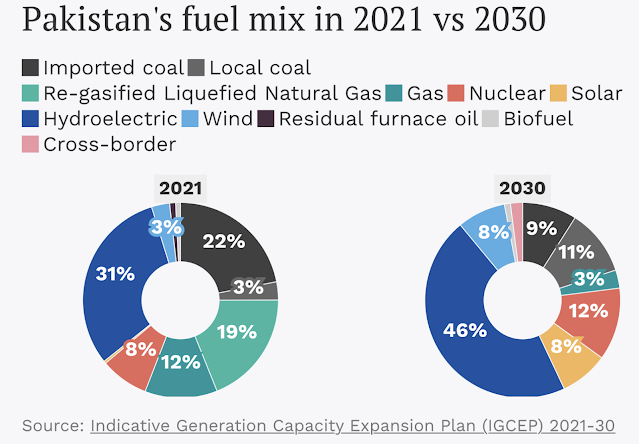
Pakistan Power Generation Fuel Mix. Source: Third Pole


International Energy Agency:

International Energy Agency (IEA) has recently warned that "steep decline in nuclear power would threaten energy security and climate goals". "With nuclear power facing an uncertain future in many countries, the world risks a steep decline in its use in advanced economies that could result in billions of tonnes of additional carbon emissions", the IEA has said.

Pakistan Among 31 Countries Operating Nuclear Power Plants


Nuclear is the second-largest low-carbon power source in the world today, accounting for 10% of global electricity generation. It is second only to hydropower at 16%, according to International Energy Agency (IEA). Pakistan nuclear plants are expected to generate 3,630 MW  (12% of total power vs 10% global average) by 2022.  Pakistan is also generating  9,389  MW (about 28% of total power vs 16% global average) of low-carbon hydroelectric power in response to rising concerns about climate change.

Nuclear Plant Safety Concerns:

Activists in Pakistan have raised serious concerns about potential risks from K2 and K3 plants to the population in Karachi. Are such concerns valid?

The worst nuclear disaster in the history of nuclear power generation was at Chernobyl in present day Ukraine. One of the key reasons was that the Chernobyl plant did not have the fortified containment structure common to most nuclear power plants elsewhere in the world. KANUPP K-2 and K-3 reactors have two containment shells: primary and secondary. It is noteworthy that Bhopal Union Carbide disaster was history's worst industrial disaster, far bigger in terms of human toll than the Chernobyl disaster.

China signed a technology transfer deal with the United States in 2006 that put the Westinghouse AP1000 reactor design at the “core” of its atomic energy program. Chinese reactor manufacturers also resolved to build advanced third-generation technology in their safety review after the 2011 Fukushima nuclear plant disaster.

Unlike Fukushima where underground emergency cooling system failed due to flooding, the Hualong One design stores water above the reactor that can be gravity-fed to keep it cool if the pumps fail in the event of meltdown. The Chinese HPR1000 reactors employ multiple redundant generators and cooling systems to lower meltdown risk.

Hydropower Generation:

The biggest and most important source of low-carbon energy in Pakistan is its hydroelectric power plants. Pakistan ranked third in the world by adding nearly 2,500 MW of hydropower in 2018, according to Hydropower Status Report 2019.  China added the most capacity with the installation of 8,540 megawatts, followed by Brazil (3,866 MW), Pakistan (2,487 MW), Turkey (1,085 MW), Angola (668 MW), Tajikistan (605 MW), Ecuador (556 MW), India (535 MW), Norway (419 MW) and Canada (401 MW).

New Installed Hydroelectric Power Capacity in 2018. Source: Hydroworld.com

Pakistan's Water and Power Development Authority (WAPDA) says commissioning of the 108-MW Golen Gol 2, 1,410-MW Tarbela 4th Extension and 969-MW Neelum Jhelum hydropower projects in 2018 boosted its hydroelectric generating capacity of 9,389 MW, an increase of 36% in just one year, according to Hydro Review. Hydropower now makes up about 28% of the total installed capacity of 33,836 MW as of February, 2019.   WAPDA reports contributing 25.63 billion units of hydroelectricity to the national grid during the year, “despite the fact that water flows in 2018 remained historically low.” This contribution “greatly helped the country in meeting electricity needs and lowering the electricity tariff for the consumers.”

Top 20 Countries by Newly Installed Hydropower Capacity. Source: IHA

Pakistan has the potential to generate 59,000 MW of hydropower, according to studies conducted by the nation's Water and Power Development Authority (WAPDA). Currently, it's generating only 9,389 MW of hydroelectric power, about 16% of the estimated potential. Media reports indicate that China is prepared to finance and build another 40,000MW capacity as part of the development of the Northern Indus Cascade region which begins in Skardu in Gilgit-Baltistan and runs through to Tarbela, the site of Pakistan’s biggest dam, in Khyber-Pakhtunkhwa province.

Pakistan has made only a small contribution to climate change through carbon emissions.  And yet, it counts among the dozen or so nations considered most vulnerable to its damaging effects. These include rising temperatures, recurring cycles of floods and droughts and resulting disruption in food production.

Summary: 

Construction of 1,100 MW nuclear power reactor K2 unit in Karachi has been completed by China National Nuclear Corporation, according to media reports. A similar reactor unit K3 will add another 1,100 MW of nuclear power to the grid, bringing the total nuclear power installed capacity of Pakistan to 3,630 MW (12% of total power) by 2022.  Hualong One reactors being installed in Pakistan are based on improved Westinghouse AP1000 design which is far safer than Chernobyl and Fukushima plants.  In addition, Pakistan is also generating  9,389  MW (about 28% of total power) of low-carbon hydroelectric power in response to rising concerns about climate change. One of the ways Pakistan can help reduce carbon emissions is by realizing its full nuclear and hydroelectric power potential by building more nuclear plants and dams. The development of the Northern Indus Cascade region to generate 40,000MW of hydropower is a significant part of this effort.

Related Links:

Haq's Musings

South Asia Investor Review

Nuclear Power in Pakistan

Recurring Cycles of Drought and Floods in Pakistan

Pakistan's Response to Climate Change

Massive Oil and Gas Discovery in Pakistan: Hype vs Reality

Renewable Energy for Pakistan

Digital BRI: China and Pakistan Building Fiber, 5G Networks

LNG Imports in Pakistan

Growing Water Scarcity in Pakistan

China-Pakistan Economic Corridor

Ownership of Appliances and Vehicles in Pakistan

CPEC Transforming Pakistan

Pakistan's $20 Billion Tourism Industry Boom

Riaz Haq's YouTube Channel

PakAlumni Social Network

Sunday, August 7, 2022

Pakistan Plans to Convert Coal-Fired Power Plants to Burn Domestic Thar Lignite

With a new 330 MW mine-mouth coal-fired power plant in Tharparkar, Pakistan has now reached 990 MW of power fueled by the local lignite. Thar coal production is being expanded and plans are in place to convert three more imported anthracite coal fired plants to burn domestic lignite as soon as its production is expanded and a rail link is completed to transport the fuel to the rest of the country. Plans call for using Thar coal in three coal-fired plants currently burning imported coal: Sahiwal Coal Power, China Hub Coal Power and Port Qasim Coal, each of 1,320MW installed capacity. These power plants may require some limited equipment changes to burn domestic lignite. It is worth noting that Pakistan contributes less than 1% of the global greenhouse-gas emissions. Using the higher polluting domestic Thar lignite is crucial to Pakistan's desperate need for cheap energy to spur industrialization for economic growth without running into recurring balance of payments crises. 

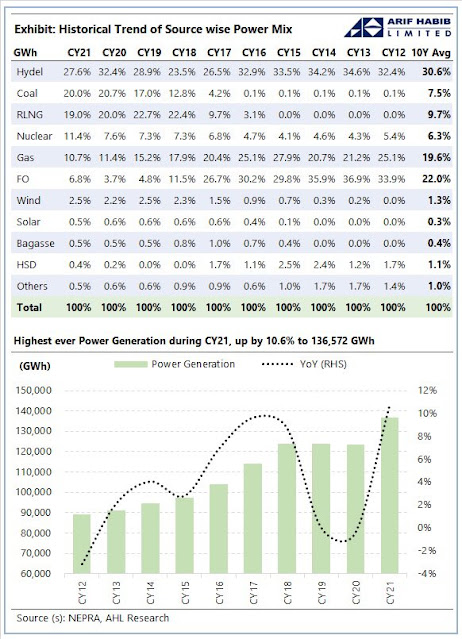
Pakistan Electric Power Generation Fuel MiX. Source: Arif Habib

 Last year, hydroelectric dams contributed 37,689 GWH of electricity or 27.6% of the total power generated, making hydropower the biggest contributor to power generated in the country. It was followed by coal (20%), LNG (19%) and nuclear (11.4%).  Nuclear power plants generated 15,540 GWH of electricity in 2021, a jump of 66% over 2020.  Overall, Pakistan's power plants produced 136,572 GWH of power in 2021, an increase of 10.6% over 2020, indicating robust economic recovery amid the COVID19 pandemic. 

Lucky power plant in Karachi has been designed to use Thar Lignite Coal when it is available in sufficient quantity.  Until that time, it will operate on imported lignite coal. Domestic lignite production is being expanded in a bid to replace costly fossil fuel imports that are depleting Pakistan's foreign exchange reserves and exacerbating circular debt in the power sector, according to Nikkei Asia.  

SECMC (Sindh Engro Coal Mining Company) has commissioned a study for converting the China-Pakistan Economic Corridor coal plants in Hub, Jamshoro and Sahiwal to indigenous lignite. A 105km long Thar Rail project is being planned to connect Thar coal fields with Main Line (ML-1) at the New Chhor Halt Station to transport lignite to the power plants in the rest of the country. The transportation of lignite by trucks to Karachi and Kallar Kahar shows its movement by road and rail is feasible and safe despite higher moisture.


Pakistan Electric Power Generation. Source: Arif Habib


Cost Per Unit of Electricity in Pakistan. Source: Arif Habib


Nuclear offers the lowest cost of fuel for electricity (one rupee per KWH) while furnace oil is the most expensive (Rs. 22.2 per KWH). 
 

Construction of 1,100 MW nuclear power reactor K2 unit in Karachi was completed by China National Nuclear Corporation in 2019, according to media reports. Another similar reactor unit K3 is now in operation. It will add another 1,100 MW of nuclear power to the grid in 2022. Chinese Hualong One reactors being installed in Pakistan are based on improved Westinghouse AP1000 design which is far safer than Chernobyl and Fukushima plants.  

The biggest and most important source of low-carbon energy in Pakistan is its hydroelectric power plants, followed by nuclear power. Pakistan ranked third in the world by adding nearly 2,500 MW of hydropower in 2018, according to Hydropower Status Report 2019.  China added the most capacity with the installation of 8,540 megawatts, followed by Brazil (3,866 MW), Pakistan (2,487 MW), Turkey (1,085 MW), Angola (668 MW), Tajikistan (605 MW), Ecuador (556 MW), India (535 MW), Norway (419 MW) and Canada (401 MW).

New Installed Hydroelectric Power Capacity in 2018. Source: Hydroworld.com


Hydropower now makes up about 28% of the total installed capacity of 33,836 MW as of February, 2019.   WAPDA reports contributing 25.63 billion units of hydroelectricity to the national grid during the year, “despite the fact that water flows in 2018 remained historically low.” This contribution “greatly helped the country in meeting electricity needs and lowering the electricity tariff for the consumers.”

Pakistan's Current Account Balance vs International Oil Prices. Source: Arif Habib


Recent history shows that Pakistan's current account deficits vary with international oil prices.  Pakistan's trade deficits balloon with rising imported energy prices. One of the keys to managing external account balances lies in reducing the country's dependence on foreign oil and gas. 


Pakistan Power Generation Fuel Mix. Source: Third Pole

It is true that Pakistan has relied on imported fossil fuels to generate electricity. The cost of these expensive imported fuels like furnace oil mainly used by independent power producers (IPPs) has been and continues to be a major contributor to the "exaggerated external demand driven by its rentier economy" referred to by Atif Mian in a recent tweet. However, Pakistan has recently been adding hydronuclear and indigenous coal-fired power plants to gradually reduce dependence on imported fossil fuels. 

Related Links:


Haq's Musings

South Asia Investor Review

Pakistan Among World's Largest Food Producers

Naya Pakistan Housing Program

Food in Pakistan 2nd Cheapest in the World

Indian Economy Grew Just 0.2% Annually in Last Two Years

Pakistan to Become World's 6th Largest Cement Producer by 2030

Has Bangladesh Surged Past India and Pakistan in Per Capita Income?

Pakistan's Computer Services Exports Jump 26% Amid COVID19 Lockdown

Coronavirus, Lives and Livelihoods in Pakistan

Vast Majority of Pakistanis Support Imran Khan's Handling of Covid19 Crisis

Pakistani-American Woman Featured in Netflix Documentary "Pandemic"

Incomes of Poorest Pakistanis Growing Faster Than Their Richest Counterparts

Can Pakistan Effectively Respond to Coronavirus Outbreak? 

How Grim is Pakistan's Social Sector Progress?

Double Digit Growth in Pakistan's Energy Consumption Confirms Economic Recovery


Trump Picks Muslim-American to Lead Vaccine Effort

COVID Lockdown Decimates India's Middle Class

Pakistan to be World's 7th Largest Consumer Market by 2030

Pakistan's Balance of Payments Crisis

How Has India Built Large Forex Reserves Despite Perennial Trade Deficits

Conspiracy Theories About Pakistan Elections"

PTI Triumphs Over Corrupt Dynastic Political Parties

Strikingly Similar Narratives of Donald Trump and Nawaz Sharif

Nawaz Sharif's Report Card

Riaz Haq's Youtube Channel

Saturday, April 4, 2009

Pakistan Pursues Hydroelectric Projects


Pakistan and Germany have initiated serious discussions of German funding of eight ongoing and new hydropower projects worth billions of dollars. These talks are taking place in Islamabad between visiting German Minister for Economic Co-operation and Development Ms. Heidemaire Wiegoreak Zeul and Pakistani Prime Minister's Adviser on Finance Mr. Shaukat Tarin, according Business Recorder newspaper.

The projects currently under discussion include 621 MW Palas hydropower project, 567 MW Spat Gah hydropower project, 28 MW Basho hydropower project, 33 MW Harpo hydropower project, 70 MW Lawi hydropower project, Naigaj hydropower project and 300 KW Hingol hydropower project, 43 KW Kurram Tangi Dam. As a start, the German Economic Minister said her country had already committed finances for Keyal Khwar hydropower project located in NWFP on river Indus at Dasu. The project would generate 130 MW power. The focus of many of these development projects are the rural areas in the North West Frontier Province and the least developed federally administered tribal areas of the country affected by insurgencies.


Ms. Heidemaire Wiegoreak Zeul said that Germany was part of Friends of Democratic Pakistan (FoDP) and she had come here for the assessment of the situation and development needs to be discussed at Tokyo in April 17 and then again at the end of April during the annual meeting of the World Bank and IMF. She added that this support was important for Pakistan's development to stabilize the country and the region.

In addition to megaprojects such as 1000 MW Neelum-Jhelum hydropower project, a number of community-based micro hydro projects are being executed with the help of the Agha Khan Foundation in Pakistan's Northern Areas and NWFP. Within this region, out of a total of 137 micro-hydro plants, the AKRSP has established 28 micro-hydros with an installed capacity of 619kW. Initially, in 1986, these plants started as research and demonstration units. These projects were extended to Village Organizations (VOs) and became participatory projects. A Village Organization (VO) is a body of villagers who have organized themselves around a common interest.

After formation, each village organization signed a partnership with AKRSP to abide by all terms and conditions necessary for the village development. The entire responsibility of implementation was passed on to the VOs. AKRSP provided the negotiated cost of the plants and technical input required during the construction period. All the VOs completed the civil work of the plants. They purchased and transported machinery from other parts of Pakistan. The VO members provided subsidized or free unskilled labour and locally produced building material.

South Asia Hydropower Potential Source: Economist Magazine


Pakistan's current installed capacity is around 19,845 MW, of which around 20% is hydroelectric. Much of the rest is thermal, fueled primarily by gas and oil. Per capita energy consumption of the country is estimated at 14 million Btu, which is about the same as India's but only a fraction of other industrializing economies in the region such as Thailand and Malaysia, according to the US Dept of Energy 2006 report. To put it in perspective, the world average per capita energy use is about 65 million BTUs and the average American consumes 352 million BTUs.

The electric power situation in India is not much better. The country is suffering its worst electricity crisis and it has become a key election issue in states like Karnataka and Maharashtra. Some major cities in India are facing alarming situations; continuous load shedding in Bangalore has led to diesel shortage as people are using diesel generators to deal with the crisis. Maharashtra, Uttar Pradesh, West Bengal and Haryana are the worst hit by the ongoing crisis and they are facing power gaps of about 5,000MW, 1,000MW, 2000MW, 1,500MW respectively. In Maharashtra, state officials are asking industrial consumers to lower their demand by 10% or be ready to face forced load shedding (rolling blackouts). Cities and towns are facing 7 to 13 hours blackouts.

With 40% of the Pakistani households that have yet to receive electricity, and only 18% of the households that have access to pipeline gas, the energy sector is expected to play a critical role in economic and social development. With this growth comes higher energy consumption and stronger pressures on the country’s energy resources. At present, natural gas and oil supply the bulk (80 percent) of Pakistan’s energy needs. However, the consumption of those energy sources vastly exceeds the supply. For instance, Pakistan currently produces only 18.3 percent of the oil it consumes, fostering a dependency on expensive, imported oil that places considerable strain on the country’s financial position, creating growing budget and trade deficits. On the other hand, renewable energyfrom hydro, wind and solar are perhaps underutilized and underdeveloped today, as Pakistan has ample potential to exploit these resources.

Pakistan has vast reserves of coal. But there is very little energy produced by burning coal. China has now agreed to invest about $600 million for setting up an integrated coal mining-cum-power project in Sindh. The project will produce 180 million tons of coal per year, which is sufficient to fuel the proposed 405 MW power plant. Pakistan is currently world's seventh largest coal-producing country, with coal reserves of more than 185 billion tons (second in the world after U.S.A.'s 247 billion tons). Almost all (99 percent) of Pakistan's coal reserves are found in the province of Sindh. Pakistan's largest coal field is Thar coal field which is spread over an area of 9100 square kilometers, and contains 175 billion tons of coal. So far this coal field has not been developed but efforts are underway.

In addition to the coal project, China has agreed to build several other power plants in Pakistan to help the South Asian nation deal with its worsening electricity crisis. When completed over the next several years, these plants, including Nandipur (425 MW, Thermal), Guddu(800 MW, Thermal) and Neelam-Jhelum(1000 MW, Hydro), Chashma (1200 MW, Nuclear) will add more than 3000 MW of power generating capacity for the energy-hungry country. Pakistan is currently facing a deficit of 4,000 to 5,000 megawatts, resulting in extensive load-shedding (rolling blackouts) of several hours a day.

China has already installed a 325-megawatt nuclear power plant (C1) at Chashma and is currently working on another (C2) of the same capacity that is expected to be online by 2010. The agreements for C3 and C4 have also been signed. The United States has objected to China supplying C3 and C4 on the grounds that any Pak-China nuclear cooperation would require consensus approval by the NSG, of which China is now a member, for any exception to the guidelines. The US is applying double standards since it supported and got approval for such an exception from NSG for its own nuclear deal with India.

Beyond the power generation capacity expansion projects, Pakistan must also pay attention to modernizing its national grid. The country's creaky and outdated electricity infrastructure loses over 30 percent of generated power in transit, more than seven times the losses of a well-run system, according to the Asian Development Bank and the World Bank; and a lack of spare high-voltage grid capacity limits the transmission of power from hydroelectric plants in the north to make up for shortfalls in the south.

The current power crisis has given a significant impetus for serious efforts to develop a series of power projects. With so many projects in the pipeline, it can be expected that there is relief on the way for the electricity deprived nation in not too distant a future. In rural areas in particular, Pakistan has a better chance of meeting the UN Millennium Development Goals by building infrastructure projects and providing energy and water for development.

Related Links:

Power Shortage...Where?

UN Millennium Development Goals in Pakistani Village
China Sees Opportunity Where Others See Risk

Pakistan Faces Severe Water Shortage

World's Largest Solar Deals

Pakistan's Electricity Crisis Worsens

Pakistan Inks Hydroelectric Power Deal

Friday, March 18, 2011

Japan Nuclear Fallout in South Asia and the World

Japan has suffered a massive human tragedy caused by a major 9.0 earthquake and the devastating tsunami that followed. Within days of its occurrence, the natural catastrophe has now been completely overshadowed by growing fears of total meltdown at Fukushima-Daiichi nuclear plant. It would not be an exaggeration to say that the whole world from California to Pakistan is watching these ominous developments and fearing the worst.

Lacking any oil and gas reserves of its own, the energy-hungry Japan relies heavily on nuclear energy. The nation currently has 55 nuclear plants and 14 more are being planned or built, according to the Wall Street Journal. It's the third largest producer of nuclear energy behind the United States and France, according to Bloomberg News.


South Asian nations of India and Pakistan are looking to ramp up nuclear power production to deal with their chronic energy shortages and to meet growing electricity needs. India has 20 existing nuclear power plants and planning or building 23 more. Pakistan has 2 atomic power plants and currently building or planning 3 more. With 20 atomic reactor plants currently in operation, China is in the midst of a huge ramp with 77 more plants in various stages of planning and construction.

The world's nuclear plant designers, builders and operators have their anxious eyes on Japan to understand the full extent of the problems at Fukushima, and the evolving public reaction to the unfolding events. What do we know so far about it? It appears that the 40-year-old Fukushima plant stood up to the country’s worst earthquake on record March 11 only to have its power and back-up generators knocked out by the 7-meter tsunami that followed. Back-up diesel generators that might have kept the core cool, and averted the disaster were positioned in a basement, where they were inundated by waves and rendered useless.

In addition to the loss of backup power for cooling the core, the other major issue highlighted by the Fukushima disaster is the spent fuel storage. Like Japan, the US stores spent fuel rods on site densely packed in pools at the reactors. It is these spent fuel rods that have lost water and caused a fire from hydrogen explosions in one of the reactors, and released radiations into the atmosphere.

A number of countries, including China, France, Germany and Russia, have suspended the approval process for new nuclear plants and ordered a review of the existing plants since the Japanese nuclear power crisis began. Prime Minister Manmohan Singh of India has asked for a full safety audit of India's 20 operating nuclear reactors, but India's atomic energy chief Srikumar Banerjee insists that India's plants are "100% safe", according to media reports. Similarly, a statement issued by Pakistan Atomic Energy Commission says that their plants’ safety had been assessed by experts from International Atomic Energy Agency (IAEA) and the World Association of Nuclear Operators (WANO) over the years....apparently meaning that they are no safer than the Japanese plants built in the 1970s that had similar audits and approval.

The recent Upper Big Branch coal mine explosion in West Virginia and the Deepwater Horizon blowout and oil spill in the Gulf of Mexico tell us that there is no such thing as 100% safe when it comes to producing energy. However, the current nuclear radiation crisis in Japan has the strong potential to reshape the energy debate which was just beginning to favor nuclear energy as green and safe. Let's hope that the outcome forces us to carefully balance safety concerns with the energy needs of growing population amidst shrinking hydrocarbon resources and climate change concerns.

Related Links:

Haq's Musings

Can Thorium Energy Save Planet Earth?

Pakistan Launches Wind Power Projects

Renewable Energy to Solve Pakistan's Electricity Crisis

India's Growing Population and Depleting Resources

Wind Turbine Manufacturing in Pakistan

Pakistan Pursues Hydroelectric Power Projects

Solar Energy for Sunny Pakistan

Wind Power Tariffs in Pakistan

Pakistan's Twin Energy Shortages

Pakistan Council of Renewable Energy Technology

Electrification Rates By Country

Renewable Energy for Pakistan

Abundant Cheap Electricity From Pakistani Coal

Pakistan Policy on Renewable Technology

Sugarcane Ethanol Project in Pakistan

Community Based Renewable Energy Project in Pakistan

Tuesday, March 24, 2009

China Signs Power Plant Deals With Pakistan


China has agreed to build several power plants in Pakistan to help the South Asian nation deal with its worsening electricity crisis. When completed over the next several years, these plants, including Nandipur (425 MW, Thermal), Guddu(800 MW, Thermal) and Neelam-Jhelum(1000 MW, Hydro), Chashma (1200 MW, Nuclear) will add more than 3000 MW of power generating capacity for the energy-hungry country. Pakistan is currently facing a deficit of 4,000 to 5,000 megawatts, resulting in extensive load-shedding (rolling blackouts) of several hours a day.

China has already installed a 325-megawatt nuclear power plant (C1) at Chashma and is currently working on another (C2) of the same capacity that is expected to be online by 2010. The agreements for C3 and C4 have also been signed. The United States has objected to China supplying C3 and C4 on the grounds that any Pak-China nuclear cooperation would require consensus approval by the NSG, of which China is now a member, for any exception to the guidelines. The US is applying double standards since it supported and got approval for such an exception from NSG for its own nuclear deal with India.

Under another agreement, China has agreed to invest about $600 million for setting up an integrated coal mining-cum-power project in Sindh. The project will produce 180 million tons of coal per year, which is sufficient to fuel the proposed 405 MW power plant. Pakistan is currently world's seventh largest coal-producing country, with coal reserves of more than 185 billion tons (second in the world after U.S.A.'s 247 billion tons). Almost all (99 percent) of Pakistan's coal reserves are found in the province of Sindh. Pakistan's largest coal field is Thar coal field which is spread over an area of 9100 square kilometers, and contains 175 billion tons of coal. So far this coal field has not been developed but efforts are underway.

The Export-Import Bank of China will lead the multi-national bank financing and China Export and Credit Insurance Corporation (Sinosure) will provide political risk and credit default insurance for the first 425 MW project at Nanipur, Gujranwala estimated to cost $329m, according to Associated Press of Pakistan. Other participating banks include BNP-Paribas, HSBC Bank plc, and CIC France. The lead contractor is China's Dongfang Electric Corporation Limited, with G.E. France as a sub-contractor.


Political risk has been rising in many developing nations, including the South Asian nations of Bangladesh, India, Pakistan and Sri Lanka (see 2008 political risk map). The cost of insurance against political and economic risk has also been going up, as the global economic crisis unfolds. Hong Kong-based Political & Economic Risk Consultancy Ltd. has recently rated India as the riskiest of 14 Asian countries, not including Pakistan and Afghanistan, it analyzed for 2009.

With their national coffers bulging and their exports driven economy slowing, the Chinese see opportunity in the developing world where others see political and economic risks. It is an opportunity for China to assure the continuing availability of raw materials and oil for its growing industries and to diversify its export markets. In addition to helping bail out the ailing US economy, China is using some of its vast cash reserves of $2 trillion to offer supplier financing as well as insurance for the non-Chinese partners to cover political and credit risk in the emerging markets. With bilateral trade volume of about $7 billion, Pakistan is only one example of Chinese interest. Others include politically-risky Afghanistan, and many nations of Sub-Saharan Africa where the Chinese are financing and building major infrastructure projects. In Afghanistan, China has committed nearly $2.9 billion to develop the Aynak copper field, including the infrastructure that must be built with it such as a power station to run the operation and a railroad to haul the tons of copper it hopes to extract. The Aynak project is the biggest foreign investment in Afghanistan to date, according to Reuters. The trade between Africa and China has grown an average of 30% in the past decade, topping $106 billion last year.

Looking at how the Chinese are working with many developing nations in Asia and Africa, it appears to be an unwritten Chinese policy to offer trade and investment in projects rather than direct cash aid. Given the rampant government corruption in many developing nations, including Pakistan, the Chinese policy is a sound one. It attempts to benefit the people and the nation more than the corrupt politicians and government officials who they must deal with.

In terms of Chinese dominance in power infrastructure development, one only needs to look at the heavy Chinese presence in the Indian power sector development. According to the Wall Street Journal, Chinese companies are now supplying equipment for about 25% of the new power capacity India is adding to its grid, up from almost nothing a few years ago. They have sent thousands of skilled workers to Indian plant sites, some of which boast Chinese chefs, Chinese television and ping pong.

Clearly, the Chinese objectives are not entirely altruistic. Their strategy is driven by enlightened self-interest in the developing world, which they see as source of commodities that their industries need as well as growing export market for their products and services. But the Chinese want to do good and do well at the same time by helping to lift people out of poverty in the developing world. By doing so, they want to be seen as friends and partners by the people in Asia, Africa and Latin America. The strategy enhances China's status as the new superpower that takes its global leadership role seriously.

Related Links:

Chinese Do Good and Do well in Developing World

World's Largest Solar Deals

Pakistan Inks Neelum-Jhelum Deal

Political Risk Insurance

Political and Economic Risk Consultancy

Pakistan's Electricity Crisis

Forget Chinindia! It's Chimerica to the Rescue!

Friday, January 21, 2022

Pakistan Nuclear Power Generation Soared 66% in 2021

Nuclear power plants in Pakistan generated 15,540 GWH of electricity in 2021, a jump of 66% over 2020. Overall, Pakistan's power plants produced 136,572 GWH of power, an increase of 10.6% over 2020, indicating robust economic recovery amid the COVID19 pandemic. 

Pakistan Electric Power Generation. Source: Arif Habib


Hydroelectric dams contributed 37,689 GWH of electricity or 27.6% of the total power generated, making hydropower the biggest contributor to power generated in the country. It is followed by coal (20%), LNG (19%) and nuclear (11.4%). 


Cost Per Unit of Electricity in Pakistan. Source: Arif Habib

Nuclear offers the lowest cost of fuel for electricity (one rupee per KWH) while furnace oil is the most expensive (Rs. 22.2 per KWH). 
 
Pakistan Electric Power Generation Fuel MiX. Source: Arif Habib

Construction of 1,100 MW nuclear power reactor K2 unit in Karachi was completed by China National Nuclear Corporation in 2019, according to media reports. Fuel is being loaded in a similar reactor unit K3 which will add another 1,100 MW of nuclear power to the grid in 2022. Chinese Hualong One reactors being installed in Pakistan are based on improved Westinghouse AP1000 design which is far safer than Chernobyl and Fukushima plants.  

The biggest and most important source of low-carbon energy in Pakistan is its hydroelectric power plants, followed by nuclear power. Pakistan ranked third in the world by adding nearly 2,500 MW of hydropower in 2018, according to Hydropower Status Report 2019.  China added the most capacity with the installation of 8,540 megawatts, followed by Brazil (3,866 MW), Pakistan (2,487 MW), Turkey (1,085 MW), Angola (668 MW), Tajikistan (605 MW), Ecuador (556 MW), India (535 MW), Norway (419 MW) and Canada (401 MW).

New Installed Hydroelectric Power Capacity in 2018. Source: Hydroworld.com


Hydropower now makes up about 28% of the total installed capacity of 33,836 MW as of February, 2019.   WAPDA reports contributing 25.63 billion units of hydroelectricity to the national grid during the year, “despite the fact that water flows in 2018 remained historically low.” This contribution “greatly helped the country in meeting electricity needs and lowering the electricity tariff for the consumers.”

Pakistan's Current Account Balance vs International Oil Prices. Source: Arif Habib


Recent history shows that Pakistan's current account deficits vary with international oil prices.  Pakistan's trade deficits balloon with rising imported energy prices. One of the keys to managing external account balances lies in reducing the country's dependence on foreign oil and gas. 


Pakistan Power Generation Fuel Mix. Source: Third Pole

It is true that Pakistan has relied on imported fossil fuels to generate electricity. The cost of these expensive imported fuels like furnace oil mainly used by independent power producers (IPPs) has been and continues to be a major contributor to the "exaggerated external demand driven by its rentier economy" referred to by Atif Mian in a recent tweet. However, Pakistan has recently been adding hydronuclear and indigenous coal-fired power plants to gradually reduce dependence on imported fossil fuels. 

Related Links:


Haq's Musings

South Asia Investor Review

Pakistan Among World's Largest Food Producers

Naya Pakistan Housing Program

Food in Pakistan 2nd Cheapest in the World

Indian Economy Grew Just 0.2% Annually in Last Two Years

Pakistan to Become World's 6th Largest Cement Producer by 2030

Has Bangladesh Surged Past India and Pakistan in Per Capita Income?

Pakistan's Computer Services Exports Jump 26% Amid COVID19 Lockdown

Coronavirus, Lives and Livelihoods in Pakistan

Vast Majority of Pakistanis Support Imran Khan's Handling of Covid19 Crisis

Pakistani-American Woman Featured in Netflix Documentary "Pandemic"

Incomes of Poorest Pakistanis Growing Faster Than Their Richest Counterparts

Can Pakistan Effectively Respond to Coronavirus Outbreak? 

How Grim is Pakistan's Social Sector Progress?

Double Digit Growth in Pakistan's Energy Consumption Confirms Economic Recovery


Trump Picks Muslim-American to Lead Vaccine Effort

COVID Lockdown Decimates India's Middle Class

Pakistan to be World's 7th Largest Consumer Market by 2030

Pakistan's Balance of Payments Crisis

How Has India Built Large Forex Reserves Despite Perennial Trade Deficits

Conspiracy Theories About Pakistan Elections"

PTI Triumphs Over Corrupt Dynastic Political Parties

Strikingly Similar Narratives of Donald Trump and Nawaz Sharif

Nawaz Sharif's Report Card

Riaz Haq's Youtube Channel


Tuesday, October 12, 2021

Soaring Prices of Imported LNG Threaten Pakistan's Economic Recovery

Soaring LNG prices are adversely affecting Pakistan's balance of payments and threatening the nation's post-COVID economic recovery.  Pakistan's trade deficit has widened to nearly $12 billion in July-September 2021 quarter, up more than 100% from the same period last year. The nation's heavy reliance on expensive imported energy has been the main cause of prior balance of payments crises that have forced it to seek IMF bailouts more than a dozen times in the last 70 years. 


Global LNG Prices. Source: The Peninsula Qatar 


Pakistan: World's Fastest Growing LNG Market. Source: Bloomberg


Global Commodity Price Increases


The average LNG price for November delivery into Northeast Asia was estimated at about $32 per metric million British thermal units (mmBtu), up nearly 20 percent from the previous week, according to the Peninsula Qatar publication. Price agency S&P Global Platts said on Thursday that its Japan-Korea-Marker, which is widely used as a benchmark for spot LNG contracts, rose to $34.47 per mmBtu.       

Pakistan Trade Stats. Source: Topline Securities

Rising LNG prices have forced power generating companies in Pakistan, Bangladesh and the Middle East to start switching fuels pushing oil prices higher.  About 60% of Pakistan's current LNG needs are covered by long-term contracts at significantly lower prices than the current spot prices. US crude closed above $80 for the first time since late in 2014, bringing its climb since the end of last October to 125%, according to the Wall Street Journal

Pakistan Coal Power Plants Under CPEC. Source:China's Global Power Database

All Pakistani Power Plants Under CPEC. Source: China's Global Power Database


The key to Pakistan managing its current accounts lies in reducing reliance on imported energy and dramatically increasing its exports. Pakistan already faces climate change pressures forcing it to change its energy mix to reduce the use of fossil fuels. 

Pakistan's Malik Amin Aslam with CNN's Becky Anderson 

Malik Amin Aslam, Pakistan Prime Minister Imran Khan's special assistant on climate change, said recently in an interview with CNN that his country is seeking to change its energy mix to favor green.  He said Pakistan's 60% renewable energy target would to be based on solar, wind and hydro power projects, and 40% would come from hydrocarbon and nuclear which is also low-carbon. “Nuclear power has to be part of the country’s energy mix for future as a zero energy emission source for clean and green future,” he concluded. Here are the key points Aslam made to Becky Anderson of CNN:

1. Pakistan wants to be a part of the solution even though it accounts for less than 1% of global carbon emissions. 

 2. Extreme weather events are costing Pakistan significant losses of lives and property. Pakistan is among the countries most vulnerable to the effects of climate change. 

3. Pakistan is moving towards renewable energy by converting 60% of its energy mix to renewable by 2030. Electric vehicle (EV) transition is also beginning in his country. 

4. Aslam said:  “We are one of the world leaders on nature based solutions. However, the World Bank (WB) in its Report yesterday came up with really good numbers in a comparison done of countries who are shifting their mainstream development towards environment friendly policies and Pakistan came atop among them,” the SAPM explained. 

900 MW Zonergy Solar Park in Bhawalpur, Pakistan


To a question on Pakistan’s capacity to make investments in nature based solutions, he said, “We cannot afford not to do it….that’s a cliche in our country and we are living that cliche in Pakistan. We are not just talking the climate talk rather doing climate action in Pakistan.” 

1,100 MW Karachi Nuclear Power Plant Unit 2


To a question on the 26th Conference of Parties (COP-26) under the United Nations Framework Convention on Climate Change, Amin said his country’s revised "national determined contributions" (NDCs) are going to be released next week. “….that’s going to clearly tell the world that this (money) we had spent in nature and could do further and that was also our direction,” he added. The SAPM informed that Pakistan was going to COP 26 with a very clear message that the country has been affected by climate change, climate injustice, adding, “but we are one of the countries that are leading the way to nature based solutions.” 

Pakistan Among Top 3 Countries For Newly Installed Hydro


He cited the WB Report and said 44% of the country’s mainstream development was climate friendly investment and it had doubled in the past one year. He said 60% renewable energy target would to be based on solar, wind and hydro power projects, and 40% would come from hydrocarbons and nuclear which is also low-carbon. “Nuclear power has to be part of the country’s energy mix for future as a zero energy emission source for clean and green future,” he concluded.

Installed Wind Power in Pakistan. Source: Modor Intelligence 


It's noteworthy that Pakistan's neighbor India currently generates 70% of its electricity from coal extracted from Indian coal mine.  It is aiming for renewables and nuclear energy to account for 40% of its installed electricity capacity by 2030.   

Pakistan NDCs (Nationally Determined Contributions) For Climate Goals. Source: UN


Here's a video of Malik Amin Aslam's interview with CNN"s Becky Anderson:

https://youtu.be/Q_s4kQXChuM