Showing posts with label us dollar. Show all posts

Monday, September 19, 2022

Hasina Seeks Modi's Help to Survive Bangladesh's Economic Crisis

Shaikh Hasina, the Prime Minister of Bangladesh, recently visited New Delhi to seek political and economic assistance from the Indian Prime Minister Narendra Modi. This summit was preceded by Bangladesh Foreign Minister Abdul Momen's trip to India where he said,  "I've requested Modi government to do whatever is necessary to sustain Sheikh Hasina's government".  Upon her return from India, Sheikh Hasina told the news media in Dhaka, "They (India) have shown much sincerity and I have not returned empty handed". It has long been an open secret that Indian intelligence agency RAW helped install Shaikh Hasina as Prime Minister of Bangladesh, and her Awami League party relies on New Delhi's support to stay in power. Bangladesh Foreign Minister Abdul Momen has described India-Bangladesh as one between husband and wife. In an interview with Indian newspaper 'Ajkal,' he said, "Relation between the both countries is very cordial. It's much like the relationship between husband and wife. Though some differences often arise, these are resolved quickly."  Both Bangladeshi and Indian officials have reportedly said that Sheikh Hasina "has built a house of cards". 

Bangladesh PM Shaikh Hasina (L) with Indian PM Narendra Modi

 British Indian analyst Dr. Avinash Paliwal explains Shaikh Hasina's current dilemma as follows: "Politically reliant on New Delhi, she (Hasina) is finding it increasingly difficult to manage the ramifications of India's turn towards Hindu nationalism that misuses migration from Bangladesh and the Rohingya crisis for domestic electoral gain". Justice Surendra Kumar Sinha, Bangladesh's former Chief Justice,  has said India is backing Sheikh Hasina's autocratic government for its own interest. Here's how prominent Indian journalist SNM Abdi explains Indian intelligence agency RAW's influence in Bangladesh: "India wields more influence in Bangladesh than the Security Council’s five permanent members put together. The Research and Analysis Wing (RAW) is the most dreaded outfit in the neighboring country surpassing even the brutally unforgiving RAB (Rapid Action Battalion). Hasina lives in mortal fear of RAW. She knows that she will be toppled if she displeases India. So she has adopted the policy of pleasing India to retain power at any cost".

Bangladesh has received wide acclaim for its remarkable economic success under the authoritarian leadership of Shaikh Hasina over the last decade. She has jailed many of her political opponents and hanged others. She has tamed the country's judiciary and gagged Bangladeshi mainstream media. What has helped her retain power is the fact she has New Delhi's support and she has succeeded in delivering rapid economic growth that has helped improve the lives of ordinary Bangladeshis. However,  a combination of current global inflation and the resulting economic crisis is threatening to unravel this formula.  

Bangladesh's currency has lost 11% of its value against the US dollar in just one week, import bill has soared by nearly 44%, forex reserves of $37 billion are falling and the revenue from ready made garments export and remittances is not keeping pace with the fast rising imports. Bangladesh is now seeking a $4.5 billion loan to cope with the situation. In addition, India has agreed to trade with Bangladesh in local currencies to reduce pressure on forex reserves. 

Bangladesh is not the only economy in trouble. The European Union, United Kingdom, Japan, Sri Lanka and Pakistan are also experiencing severe economic pain. India's forex reserves are falling and its current account deficit is rising as foreign investors pull out. High energy prices and the strong US dollar are hurting most of the world economies. Food and energy prices have shot up due to the Russia-Ukraine war. The US currency driven by aggressive US Federal Reserve policy of rate hikes has reached new highs. A stronger dollar for the US means cheaper imports, a tailwind for efforts to contain inflation, and record relative purchasing power for Americans. But the rest of the world is straining under the dollar’s rise, according to the Wall Street Journal


Saturday, March 12, 2022

Will Russia Sanctions Accelerate Inflation, Devalue US Dollar and Strengthen Chinese Yuan?

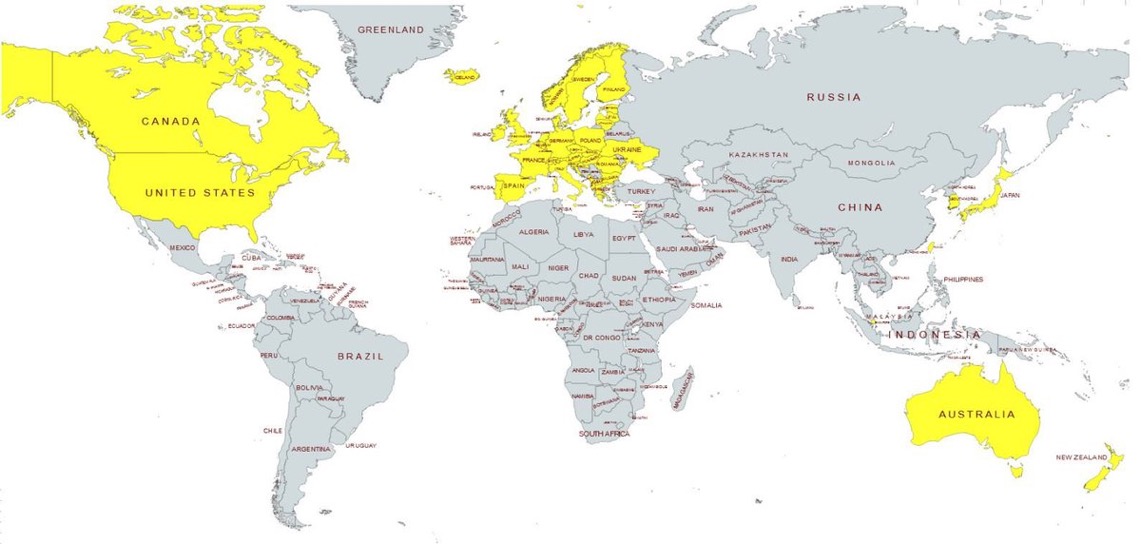
Russia is a commodities superpower. The nation's Eurasian landmass is rich in all kinds of natural resources from food to fuel to metals. To punish Moscow for invading Ukraine, the US and G-7 nations have imposed sanctions on Russia. These sanctions have effectively removed Russian commodities from the global supply chain, triggering double digit price increases for food, fuels and metals. Will the G-7 actions leave the US dollar much weaker? Will the Chinese currency, backed by commodities, gain strength at the expense of the US dollar and Euro? Will the era of commodity-backed money return? In a note to clients, Credit Suisse investment strategist Zoltan Pozsar has answered some of these questions. He says "this (Russia) crisis is not anything we have seen since President Nixon took the U.S. dollar off gold in 1971". "After this war is over, "money" will never be the same again.....and bitcoin (if it still exists then) will probably benefit from all this,” he adds. 

Map of "International Community" Sanctioning Russia

Post World War II History:

The current global financial system was created in Bretton Woods located in the US State of New Hampshire.  Over 700 delegates representing 44 countries met in Bretton Woods in July 1944. The Bretton Woods System, now referred to as Bretton Woods I, required a currency peg to the U.S. dollar which was in turn pegged to the price of gold. This system collapsed in the 1970s but created a lasting influence on international currency exchange and trade through its development of the IMF and World Bank. Zoltan Pozsar believes it is now time for Bretton Woods III. What is Bretton Woods III? Here's how Zoltan Pozsar explains it:

"From the Bretton Woods era backed by gold bullion, to Bretton Woods II backed by inside money (Treasuries with un-hedgeable confiscation risks), to Bretton Woods III backed by outside money (gold bullion and other commodities)". 

Russia's Commodity Exports. Source: Bloomberg

Commodity Superpower: 

Russia is a vast country. Russian landmass extends from Europe to East Asia. It is one of the largest suppliers of oil, gas, metals and wheat. Russia is also a major exporter of fertilizer. China will likely take advantage of the western sanctions to buy up Russian commodities at lower prices. 

Pozsar argues that while Western central banks cannot close the gap between Russian and non-Russian commodity prices as sanctions lead them in opposite directions, the People’s Bank of China can “as it banks for a sovereign who can dance to its own tune.”

“If you believe that the West can craft sanctions that maximize pain for Russia while minimizing financial stability risks and price stability risks in the West, you could also believe in unicorns,” Pozsar wrote.

Pre-Ukraine War Inflation in US. Source: Wall Street Journal


Bretton Woods III:

Pozsar argues that the Bretton Woods II collapsed when the G7 countries seized Russia’s foreign exchange (FX) reserves, leading to a rise of outside money – reserves kept as commodities – over inside money – reserves kept as liabilities of global financial institutions. 

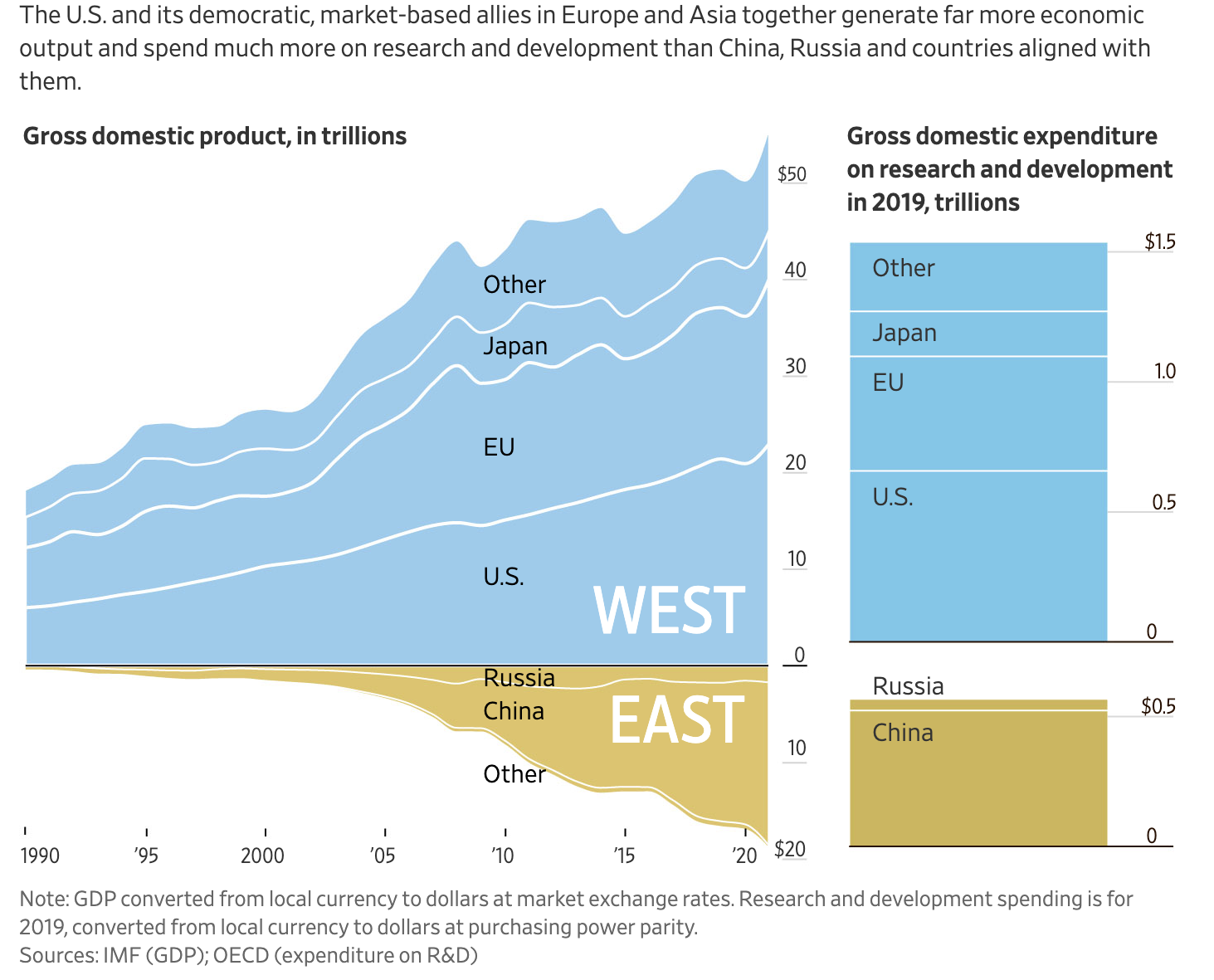
East vs West Economic Output. Source: Wall Street Journal


"We are witnessing the birth of Bretton Woods III – a new world (monetary) order centered around commodity-based currencies in the East (Chinese Yuan) that will likely weaken the Eurodollar system and also contribute to inflationary forces in the West,” Zoltan wrote. 

Related Links:

Haq's Musings

South Asia Investor Review

Pakistani-American Banker Heads SWIFT, the World's Largest Interbank Payment System

Pakistani-Ukrainian Billionaire Zahoor Sees "Ukraine as Russia's Afghanistan"

Ukraine Resists Russia Alone: A Tale of West's Broken Promises

Ukraine's Lesson For Pakistan: Never Give Up Nuclear Weapons

Can the Chinese Yuan Replace the US Dollar?

Pakistan's Global Diaspora

Ukraine's Muslim Billionaire Akhmetov Holds Balance of Power

Ukraine's Muslims Oppose Russia


Friday, January 24, 2020

Why is America So Deeply Involved in the Middle East? Energy? Geography?

What is the importance of the Middle East for the West? Is it energy resources to fuel the industrialized West? Or the key trade and shipping routes passing through the Persian Gulf and the Suez Canal used by ships to sail from Asia to Europe and North America?

Map of Greater Middle East (Morocco to Pakistan)

Why is oil, the most traded commodity, priced and traded in US Dollars? Does oil trade help maintain the US Dollar as the international trade and reserve currency and solidify US control of the global financial system, giving the US a very powerful tool to control the world?

What is the history of West's involvement in the Middle East? Can it be traced back to the fall of the Ottoman Empire in early 20th century?

When did the United States take over where Britain and France left off? Cold War? Iranian leader Mosaddegh's overthrow by CIA? Suez Crisis?

Energy revolution is in full swing in Silicon Valley with widespread use of solar panels, electric vehicles and storage batteries. Like other technologies emerging from Silicon Valley, this energy revolution will spread to the rest of the United States and the world in the next decades. How will it change US policy and posture in the Middle East?

Does the US involvement in the Middle East pose a threat to Pakistan? Is Pakistan next after Iran? Will Pakistan's nuclear weapons help keep Pakistan secure? What economic and other powerful tools does the United States have to put pressure on Pakistan or any other country?

ALKS host Faraz Darvesh discusses these questions with Misbah Azam and Riaz Haq (www.riazhaq.com).

https://youtu.be/DQIUue1tb4A


Related Links:

Haq's Musings

South Asia Investor Review

Muslims in Silicon Valley

US Dollar as International Trade/Reserve Currency

Soleimani Was the Hardest of the Hardliner

Sykes-Picot Agreement in Middle East

Confessions of an Economic Hitman

Putin Challenges American Exceptionalism

Remittances to Pakistan Up 21X Since Year 2000

Modi's Kashmir Blunder

Godfather Metaphor for Uncle Sam

Clean Energy Revolution

Destructive Power of Drone Swarm on Saudi Oil Installation

US Dominates List of World's Top Universities

Indian RAW Agent Kulbhushan Jhadav Used Chabahar

Iran-Saudi Conflict

Pakistan's Nuclear Program

Iran Nuclear Deal

1971 India-Pakistan War

Chabahar vs Gwadar Ports

Did America Contribute to the Rise of ISIS?

Riaz Haq's YouTube Channel

PakAlumni Social Network

Sunday, March 2, 2008

The Future of US Dollar As Reserve Currency

There are mounting global concerns about sharp decline in the value of US dollar against the euro and other major world currencies. Not only has it fueled inflation with higher prices of basic commodities such as food grains, oil and metals but it has also diminished the value of the reserves held in dollars by the vast majority of central banks around the world. These issues are giving to rise to a discussion of how long can the US dollar remain as the currency of choice for central bankers. To understand this discussion, let's look at the history of reserve currencies in the past and the current situation with global trade.

When the 20th century began, the U.S. was already the world's biggest economy, but the British pound still accounted for nearly two-thirds of official foreign-exchange reserves held by the world's central banks. The dollar didn't become the dominant currency until after World War II. Even then, some commodities still traded in pounds: The London sugar market didn't jettison sterling for a dollar-denominated trading contract until around 1980. The history lesson here is that, while the reserve and trade currencies can and do change, it takes a significant re-architecture of the world economy and trade and significant amount of time for it to happen. Nearly two-thirds of the world's central-bank reserves remain denominated in dollars, according to data from the International Monetary Fund, despite widespread fears of a mass exodus from the currency. The euro accounts for about a quarter -- up from 18% when it was introduced in 1999, but less than its predecessor currencies' share in 1995. Because the U.S. is such a huge trading partner for so many countries, the reserve buildup isn't easily unwound.
According to the Wall Street Journal, the dollar is also deeply entrenched in world trade. Businesses lower their transaction costs by dealing in a common currency. More than 80% of exports from Indonesia, Thailand and Pakistan are invoiced in dollars, for instance, according to the latest figures available in research by the European Central Bank, although less than a quarter of their exports go to the U.S.

While many nations want to change at least part of their reserve holdings from US dollars to euros, they know if they sell a significant share of their dollar reserves, it would weaken the dollar's value. That would potentially hurt their own trade competitiveness, and push down the value of their remaining dollar reserves. If they keep the dollars, a buildup of unwanted assets would only mount.
"There is no alternative to the dollar as a trading currency in Asia," Andy Xie, a Hong Kong-based economist told the Wall Street Journal. "Eventually, the renminbi [yuan] will replace the dollar in Asia, perhaps in our lifetime. But it will take at least 30 to 40 years."