Showing posts with label Nuclear Safety. Show all posts

Monday, March 14, 2022

Can Modi's India Be Trusted With Nukes?

India's March 9 "accidental firing" of Brahmos nuclear-capable supersonic cruise missile into Pakistan has raised serious questions about the safety of the Indian nuclear arsenal. Do the people in charge of India's nukes have basic competence to handle such weapons? Was this really an "unauthorized" or "accidental" firing? Why was there a long delay by New Delhi in acknowledging the incident?  Could Pakistan be blamed if it assumed that extremist right-wing Hindu elements had taken control of the missile system in India and fired it deliberately into Pakistani territory? Has the Indian government risked the lives of 1.6 billion people of South Asia?
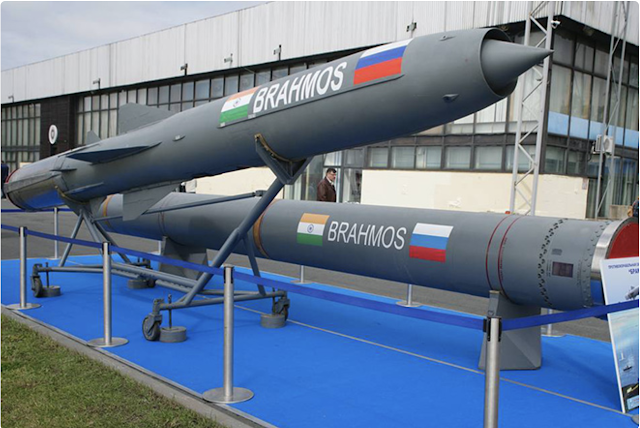


Top Indian defense analysts Sushant Singh and Bharat Karnad have strongly criticized the Indian government for the incident and its response. Singh has accused the Indian government of risking the lives of 1.6 billion people.  Karnad has called the incident "quite shocking and simply cannot be credibly explained away by referring to a 'technical glitch'". Both have praised Pakistan's "mature" response to the incident. 

In an OpEd in the Deccan Herald, Mr. Singh says "we (India) have come out looking like either bumbling idiots or out of control, while the Pakistanis have come out as being both capable and mature".  In an interview with Rediff, Professor Karnad said, "This is quite shocking and simply cannot be credibly explained away by referring to a ‘technical glitch’".  Here are more detailed excerpts of remarks by Singh and Karnad:  

Excerpts From "A Broken Arrow" by Sushant Singh published in the Deccan Herald: 

"India and Pakistan are nuclear weapon states that came close to climbing the escalation ladder in the aftermath of the Balakot airstrikes just three years ago. My column in this paper on February 27 (“Three years ago, we were on the brink of war”) had warned of the risks highlighted in February-March 2019, which have been overlooked since. The accidental firing of an Indian missile has brought the spotlight on those risks again. It would be irresponsible to ignore them now".

"The lives of 1.6 billion people of India and Pakistan cannot be dependent on such lucky breaks. It is for these reasons – the destructive capacity of nuclear weapons, the minimal time available to take a decision, and Pakistan’s strategic mindset – accidents are unacceptable. Questions raised in western capitals about the safety and security of our nuclear weapon systems and processes were regularly dismissed by New Delhi by citing its impeccable track-record and supposedly fool-proof systems. It allowed India, despite the concerted efforts of certain American experts, to de-hyphenate itself from Pakistan’s poor track record of proliferation, its weak security systems always seen to be at risk of being infiltrated by religious religious extremists in uniform. On issues of nuclear safety, Pakistan has always attempted to bracket India with itself, but has often failed. But now, we have come out looking like either bumbling idiots or out of control, while the Pakistanis have come out as being both capable and mature. India can dismiss all Pakistani allegations but there will be renewed questions from the US non-proliferation lobby that are going to be tougher for New Delhi to respond to".

"India, as the bigger country, has the cushion of geography, while Pakistan, driven by the insecurity of a small territory, has a nuclear security doctrine of ‘first use’. To avoid the destruction of its arsenal and delivery systems by a pre-emptive Indian strike, it deems it necessary to strike India first in the event of hostilities threatening to break out. This makes the situation more dangerous in the subcontinent"

"An environment of relative calm between India and Pakistan, with a ceasefire on the LoC in Kashmir, definitely helped the Pakistani military keep its cool in the face of an Indian missile. Would it have reacted so maturely in the midst of military or political tensions? Or can Pakistan be blamed if they assume that certain rogue elements had taken control of the missile system in India and fired on it? Crucially, if the missile had a self-destruct feature, why wasn’t it activated? Should we expect every junior Pakistani military officer to display the same sagacity and courage as the Soviet naval officer Vasili Arkhipov, the Brigade Chief of Staff on submarine B-59, who refused to fire a nuclear missile and prevented a nuclear disaster in 1962? Or of the Soviet military duty officer Stanislav Petrov who, on seeing an early-warning system showing an incoming US strike, with about half-a-dozen missiles, in the early hours of September 26, 1983, made the call – in the face of incomplete information and doubt -- that it was a system malfunction, instead of reporting it to his superiors as enemy missile launches?"

Excerpts From Bharat Karnad's Interview with Rashme Sehgal:

RS: What does this say about their safety mechanisms and the technical prowess in the way these dangerous weapons are being maintained in India?

BK: That’s precisely the worry attending on this misfiring.

Indeed, the Pakistani government was quick to capitalise on this incident of the Brahmos missile going astray.

Prime Minister Imran Khan’s National Secrity Adviser Dr Moeed Yusuf publicly expressed concern and asked the international community to note the fairly casual manner in which missiles are operated.by the Indian armed forces.

He went on, understandably, to extend that concern to India’s handling of nuclear weapons and their delivery systems.

Such criticism is bound to have an effect on international opinion and hurt India’s self-confessed status as a ‘responsible State’.

RS: The defence ministry seems to have landed with egg on its face.

BK: A whole barnyard full of eggs, in fact. This is quite shocking and simply cannot be credibly explained away by referring to a ‘technical glitch’.

The triggering mechanism is a hardy piece of work including a firing sequence and a final authorisation.

How this process was obviated is a mystery.

RS: Pakistan’s foreign office summoned India’s charge d’affaires in Islamabad to lodge a warning that this unprovoked violation of its airspace could have endangered passenger flights and civilian lives.

BK: Well, yeah, anything could have happened, including the missile, even with a dummy warhead, kinetically taking out a passenger aircraft.

In your view, could this have been a BrahMos cruise missile possessing nuclear capability?

The Brahmos missile has interchangeable warheads and can carry both conventional and nuclear weapons.

But most forward-deployed Indian cruise missiles are conventionally armed.

RS: If it was a nuclear missile — albeit unarmed — is there a possibility in the future that the command and control system could fail again in the future which could have dangerous consequences for both nations?

BK: Unless the government clarifies the nature of the ‘technical glitch’ everything is in the realm of speculation. That could include a faulty command and control system.

RS: According to reports, Pakistani officials claim it was fired from Sirsa. How far is that assessment correct?

BK: No reason to doubt the Pakistani claim because the Pakistani air defence complex at Sargodha, District Miani, is very advanced and capable of detecting cruise and ballistic missile firings and minutely tracking their trajectory.

Related Links:

Haq's Musings

South Asia Investor Review

The West Must Accept Pakistan as a Legitimate Nuclear State

Balakot and Kashmir: Fact Checkers Expose Indian Lies

Is Pakistan Ready for War with India?

Pakistan-Made Airplanes Lead Nation's Defense Exports

Modi's Blunders and Delusions 

India's Israel Envy: What If Modi Attacks Pakistan?

Project Azm: Pakistan to Develop 5th Generation Fighter Jet

Pakistan Navy Modernization

Pakistan's Sea-Based Second Strike Capability

Who Won the 1965 War? India or Pakistan?

Pakistani Military's Performance in 1971 War


Friday, March 18, 2011

Japan Nuclear Fallout in South Asia and the World

Japan has suffered a massive human tragedy caused by a major 9.0 earthquake and the devastating tsunami that followed. Within days of its occurrence, the natural catastrophe has now been completely overshadowed by growing fears of total meltdown at Fukushima-Daiichi nuclear plant. It would not be an exaggeration to say that the whole world from California to Pakistan is watching these ominous developments and fearing the worst.

Lacking any oil and gas reserves of its own, the energy-hungry Japan relies heavily on nuclear energy. The nation currently has 55 nuclear plants and 14 more are being planned or built, according to the Wall Street Journal. It's the third largest producer of nuclear energy behind the United States and France, according to Bloomberg News.


South Asian nations of India and Pakistan are looking to ramp up nuclear power production to deal with their chronic energy shortages and to meet growing electricity needs. India has 20 existing nuclear power plants and planning or building 23 more. Pakistan has 2 atomic power plants and currently building or planning 3 more. With 20 atomic reactor plants currently in operation, China is in the midst of a huge ramp with 77 more plants in various stages of planning and construction.

The world's nuclear plant designers, builders and operators have their anxious eyes on Japan to understand the full extent of the problems at Fukushima, and the evolving public reaction to the unfolding events. What do we know so far about it? It appears that the 40-year-old Fukushima plant stood up to the country’s worst earthquake on record March 11 only to have its power and back-up generators knocked out by the 7-meter tsunami that followed. Back-up diesel generators that might have kept the core cool, and averted the disaster were positioned in a basement, where they were inundated by waves and rendered useless.

In addition to the loss of backup power for cooling the core, the other major issue highlighted by the Fukushima disaster is the spent fuel storage. Like Japan, the US stores spent fuel rods on site densely packed in pools at the reactors. It is these spent fuel rods that have lost water and caused a fire from hydrogen explosions in one of the reactors, and released radiations into the atmosphere.

A number of countries, including China, France, Germany and Russia, have suspended the approval process for new nuclear plants and ordered a review of the existing plants since the Japanese nuclear power crisis began. Prime Minister Manmohan Singh of India has asked for a full safety audit of India's 20 operating nuclear reactors, but India's atomic energy chief Srikumar Banerjee insists that India's plants are "100% safe", according to media reports. Similarly, a statement issued by Pakistan Atomic Energy Commission says that their plants’ safety had been assessed by experts from International Atomic Energy Agency (IAEA) and the World Association of Nuclear Operators (WANO) over the years....apparently meaning that they are no safer than the Japanese plants built in the 1970s that had similar audits and approval.

The recent Upper Big Branch coal mine explosion in West Virginia and the Deepwater Horizon blowout and oil spill in the Gulf of Mexico tell us that there is no such thing as 100% safe when it comes to producing energy. However, the current nuclear radiation crisis in Japan has the strong potential to reshape the energy debate which was just beginning to favor nuclear energy as green and safe. Let's hope that the outcome forces us to carefully balance safety concerns with the energy needs of growing population amidst shrinking hydrocarbon resources and climate change concerns.

Related Links:

Haq's Musings

Can Thorium Energy Save Planet Earth?

Pakistan Launches Wind Power Projects

Renewable Energy to Solve Pakistan's Electricity Crisis

India's Growing Population and Depleting Resources

Wind Turbine Manufacturing in Pakistan

Pakistan Pursues Hydroelectric Power Projects

Solar Energy for Sunny Pakistan

Wind Power Tariffs in Pakistan

Pakistan's Twin Energy Shortages

Pakistan Council of Renewable Energy Technology

Electrification Rates By Country

Renewable Energy for Pakistan

Abundant Cheap Electricity From Pakistani Coal

Pakistan Policy on Renewable Technology

Sugarcane Ethanol Project in Pakistan

Community Based Renewable Energy Project in Pakistan

Monday, September 22, 2008

Can You Imagine US-Pakistan Role Reversal?

Earlier in February this year, Haq's Musings blog brought to you the "Pakistani View of US Nuclear Weapons Safety" by Hugh Gusterson, a parody of Pakistani position regarding US nuclear weapons safety. With the increasing frequency of US incursions into Pakistan's FATA region, have you ever wondered how things would look to an independent observer if the US and Pakistan found themselves in each others' shoes? Well, Pakistani-American Junaid Levesque-Alam has imagined such role reversal. Here's a post he recently wrote for his blog "Crossing the Crescent".

Pakistan Invades America -- "Without Permission"

By M. Junaid Levesque-Alam

September 17, 2008

The U.S. State Department lodged a sharp protest over ongoing Pakistani missile strikes and ground raids today, saying the Islamic Republic was violating American sovereignty.

"We will try to convince Pakistan . . . to respect [the] sovereignty of the United States -- and God willing, we will convince," State Department Spokesman Sean McCormack told reporters.1

The controversy stems from the Pakistan Army's recent decision, leaked in a prominent Pakistani newspaper, to mount intensifying air attacks and new ground assaults against extremists hiding in American safe havens across the ocean.

American papers reported that under the new policy, the Pakistani military will no longer seek America's permission in killing Americans, but will inform American diplomats about these killings as a friendly gesture between close allies.2

Pakistan Army General Ashfaq Kayani told reporters outside Islamabad late last night that the new strategy was justified. "We are working to prevent more attacks on the Pakistani people," he said.3

The general's stance signified strong Pakistani dissatisfaction with America's reluctance to crack down on religious fundamentalists and neoconservatives, who, experts note, have deep ties to American intelligence services and military leaders. The largely unchecked extremists, experts observe, have used America to bolster the agenda of their ideological counterparts across the ocean in Israel, and to strike directly against Pakistan and other parts of the Muslim world.

"We have to strike them over there so that they cannot order strikes against us here at home," General Kayani said, referring to American firepower that has terrorized hundreds of thousands of civilians on either side of the Pak-Afghan border and in the Middle East.

As Kayani spoke, new precision attacks and commando raids were being conducted against ranches in Texas, small towns in Alaska, the offices of AIPAC and energy-related lobbying firms in Washington, D.C. Commandos were also dispatched to America's unruly federally-administered Bible Belt, where resentment of government authority runs high.

Several high-value targets were killed in the attacks. Local media outlets claimed 50 civilians were also killed, but these assertions could not be independently verified. Pakistani officials said they would send in their own team to investigate the claims, time permitting.

Seeking to assuage domestic concerns, American officials downplayed the actions of their staunch ally. "The nation should not be upset by the statement of Pakistani General Kayani," White House Press Secretary Dana Perino said in an official statement.4 "Pakistan respect U.S. sovereignty and looks at us as partners," she added.5

U.S. officials also insisted no secret deal had been reached beforehand allowing Pakistanis to strike inside American territory. "Media reports about authorization for Pakistani raids into the U.S. are incorrect," the American ambassador to Pakistan, Anne Patterson, told Fox News last night. She added that the South Asian country had "no aggressive designs or postures" toward America.6

Regimes allied to Pakistan, including those in Iraq, Iran, Lebanon, Venezuela, Bolivia, and Palestine, expressed support for the new Pakistani strategy, citing the need to "remove and destroy" strongholds where key militants have masterminded attacks against their countries.7

Informed of this, Ambassador Patterson appeared unfazed, saying, "Pakistan respects American sovereignty." She insisted that Pakistani officials provided her with assurances that "no such order had been given" for new rules of engagement.8 Finally, the ambassador explained, America had already carried out its own recent military offensive that left hundreds of rural Americans dead, relieving the need for further Pakistani intervention.

But in Islamabad, Pakistani corps commanders said their new strategy would see continued implementation in the coming weeks. Speaking on condition of anonymity, one commander said that as far as Pakistan was concerned, "most things have been settled in terms of how we're going to proceed."9


Notes

Except for note 2, all the above-quoted statements are real quotes; only the roles have been switched.

1 Quote actually taken from Pakistani PM Yousaf Gilani. Reuters, Sept. 12, 2008.

2 It was actually the Pakistan daily, Dawn, which reported on the U.S. policy shift as follows: "Under this new policy, the US military will notify Pakistan's government when it conducts raids, but will not seek its permission." Sept. 12, 2008.

3 Quote actually taken from US Joint Chiefs of Staff Admiral Mike Mullen. Dawn (Pakistan Daily), Sept. 12, 2008.

4 Quote actually taken from PM Gilani. (Source: note 3)

5 Quote actually taken from Pakistani Ambassador Husain Haqqani. (Source: note 3)

6 Quotes actually taken from Ambassador Haqqani. (Source: note 3)

7 Quote actually taken from U.S. ally and Afghan President Hamid Karzai. Washington Post, Sept. 12, 2008. ()

8 Quotes actually taken from Ambassador Haqqani. (Source: note 7)

9 Quote actually taken from anonymous U.S. official. (Source: note 7)
M. Junaid Levesque-Alam is a Pakistani-American who blogs about America and Islam at Crossing the Crescent. He writes about American Muslim identity for WireTap magazine and has been published in CounterPunch, Dissident Voice, The Nation (online), and The American Muslim. He works as a communications coordinator for an anti-domestic violence agency in the NYC area and obtained his undergraduate degree in journalism from Northeastern University. He can be reached at: junaidalam1@gmail.com