Showing posts sorted by relevance for query thar. Sort by date Show all posts

Friday, February 19, 2021

Development Boom in Thar Brings Hope For Pakistan's Least Developed Region

New roads, an airport and a water reservoir in Tharparkar are opening up Pakistan's least developed region. Jobs are being created, drought-resistant nutritious trees and crops being planted and fish farms being established for the benefit of the the people of Thar. New water pond is attracting migratory birds that feed on fish. 

Tharparkar Peacock


Underground Water: 

Fortunately for the people of Thar, Sindh Engro Coal Mining Company has discovered significant amount of underground water, the most precious commodity in drought-hit Tharparkar region of Pakistan.  Syed Abul Fazal Rizvi, Chief Executive Officer (CEO) of SECMC and Thar Foundation was quoted by Business Recorder as saying, “While carrying out hydrogeological studies for Thar coal project, we found out abundant water reserves of groundwater at the depth of 450 plus feet in the whole of the desert region." The available water in Thar has the potential to irrigate thousands of acres of land by applying modern watering methods such as drip and sprinkler systems, he added. 

Rizvi said in collaboration with Pakistan Agriculture Research Council (PARC) and Institute of Sustainable Halophyte Utilization of Karachi University, Thar Foundation has produced commercially viable amounts of Apple Ber, guava, dates, Rhodes Grass (for livestock feed), Castor (cooking) Oil, Cluster Bean (guar), and vegetables. Utilizing the underground saline water, the foundation has piloted a 40-acre plot of land to grow fruits, vegetables, and local grass species and established Sindh’s largest private sector nursery which nurtures 500,000 saplings at a time. It has also set up a 68-acre Green Park which has grown local species of trees that comprises Neem, Babur, Roheero, Kandi, Moringa, and other species.

Gorano Pond has begun to attract a lot of migratory birds that feed on fish. Some species, the report said, have even started nesting on the partly submerged tree tops, according to the Turkish Andolu News Agency. 

Tharparkar Peacock: Courtesy Emmanuel Guddu via Gulf News


Moringa Trees Fight Malnutrition:

Aga Khan University and Sindh Agriculture University are jointly promoting Moringa tree planting in Pakistan's Thar desert to fight malnutrition, according to multiple media reports. Moringa has gained popularity as superfood in the West in recent years. People of drought-stricken Tharparkar have been suffering from malnutrition and disease in the middle of a long-running drought in the region. Sindh Agriculture University, Tando Jam, and the Aga Khan University will plant 40,000 moringa tree seedlings in Matiari, a rural district in central Sindh, in an effort to improve the health of malnourished mothers, children and adolescents in the area. The moringa tree plantation campaign has been funded by the Prince Sadruddin Aga Khan Fund for the Environment, a $10 million fund dedicated to practical solutions to environmental problems.  

Moringa tree packs 92 essential nutrients, 46 antioxidants, 36 anti-inflammatories and 18 amino acids which help your body heal and build muscle. Native to South Asia, the hardy and drought-resistant Moringa tree can contribute to everything from better vision and stronger immune system to healthier bones and skin. Moringa has 25 times more iron than spinach, 17 times more calcium than milk, 15 times more potassium than bananas and nine times more protein than yoghurt,  according to Dr. Shahzad Basra of the University of Agriculture in Faisalabad, Pakistan. “It also has seven times more vitamin C compared to oranges, over 10 times more vitamin A compared to carrots and three times more vitamin E compared to almonds", he added. No wonder the powder made from Moringa leaves is sold as superfood in the West. Global market for Moringa products is estimated at $5 billion and growing at 8% CAGR. 

Fish Production For Protein:

Dewatering operation of the deep aquifers underneath the coal deposits has discovered large amounts of water which has been removed and pumped into a lake called Gorano Pond. This has opened up  organic fish farming in the region. 


Gorano is 35 KMs south of the Islamkot Taulka where an artificial reservoir of 1500 Acres was established, according to Business Recorder.  Dewatering started in April 2017 from SECMC coal mine and so far, 600 Acres of the reservoir have been filled with water. More than 100,000 fish-seedlings (3-4inches in size) were initially released and within 8-9 months with full grown fish reaching more than 1Kg in weight only on natural feed (Zooplanktons, Phytoplanktons, Algae and other marine insects available in Pond) and were declared fit for consumption by an external laboratory.

Jobs For Locals:

Sindh Engro Coal Mining Company (SECMC), the largest contractor working in Thar desert coal project, has committed itself to hiring locals wherever possible.

When SECMC launched its Female Dump Truck Driver Program near the town of Islamkot in Thar,  Kiran Sadhwani, a female engineer, visited several villages to motivate women to apply for the job and empower themselves, according to Express Tribune newspaper. “Not all women who are working as dumper drivers are poor or in dire need of money. It is just that they want to work and earn a living for themselves and improve the lives of their families,” she told the paper. SEMC is hiring 30 women truck drivers for its Thar projects, according to Dawn newspaper.

Private Sector's Role in Thar:

Most of the social sector improvement effort in Tharparkar is part of what is known as "Corporate Social Responsibility" (CSR). It is led by Sindh Engro Coal Mining Co (SECMC), and the Thar Foundation, funded by SECMC. SECMC is joint venture of Engro Corporation (Dawood Group) and Sindh government.  The Thar Foundation is a special department under SECMC that serves as the CSR office of the Thar project, and handles all the CSR work in the entire Thar area on behalf of all the funding parties. Also helping out are Prince Sadruddin Aga Khan Fund & several universities in Sindh, including Karachi University, Aga Khan University and Tando Jam Agriculture University.

 Related Links:

Haq's Musings


Wednesday, October 11, 2017

Pakistani Hindu Women Ride High On Thar Development Wave

As the world celebrates the International Day of the Girl today, the Thar development boom is empowering Pakistani Hindu women with jobs in nontraditional occupations ranging from engineering to truck driving, according to multiple media reports. These pioneering women will hopefully be a source of inspiration for young girls.

Thar Development:

Thar, one of the least developed regions of Pakistan, is seeing unprecedented development activity in energy and infrastructure projects.  New roads, airports and buildings are being built along with coal mines and power plants as part of China-Pakistan Economic Corridor (CPEC). There are construction workers and machinery visible everywhere in the desert. Among the key beneficiaries of this boom are Thari Hindu women who are being employed by Sindh Engro Coal Mining Company (SECMC) as part of the plan to employ locals. Highlighted in recent news reports are two Hindu women in particular: Kiran Sadhwani, an engineer and Gulaban, a truck driver.

Kiran Sadhwani, a Thari Hindu Woman Engineer. Source: Express Tribune

Thar Population:

The region has a population of 1.6 million. Most of the residents are cattle herders. Majority of them are Hindus.  The area is home to 7 million cows, goats, sheep and camel. It provides more than half of the milk, meat and leather requirement of the province. Many residents live in poverty. They are vulnerable to recurring droughts.  About a quarter of them live where the coal mines are being developed, according to a report in The Wire.

Hindu Woman Truck Driver in Thar, Pakistan. Source: Reuters

Some of them are now being employed in development projects.  A recent report talked of an underground coal gasification pilot project near the town of Islamkot where "workers sourced from local communities rested their heads after long-hour shifts".

Hindu Woman Truck Driver in Thar, Pakistan. Source: Reuters 

In the first phase, Sindh Engro Coal Mining Company (SECMC) is relocating 5 villages that are located in block II.  SECMC is paying villagers for their homes and agricultural land.

SECMC’s chief executive officer, Shamsuddin Ahmed Shaikh, says his company "will construct model towns with all basic facilities including schools, healthcare, drinking water and filter plants and also allocate land for livestock grazing,” according to thethirdpole.net He says that the company is paying villagers above market prices for their land – Rs. 185,000 ($ 1,900) per acre.

Hindu Women Employment:

Sindh Engro Coal Mining Company (SECMC), the largest contractor working in Thar desert coal project, has committed itself to hiring locals wherever possible.

When SECMC launched its Female Dump Truck Driver Program near the town of Islamkot in Thar,  Kiran Sadhwani, a female engineer, visited several villages to motivate women to apply for the job and empower themselves, according to Express Tribune newspaper. “Not all women who are working as dumper drivers are poor or in dire need of money. It is just that they want to work and earn a living for themselves and improve the lives of their families,” she told the paper.

SEMC is hiring 30 women truck drivers for its Thar projects, according to Dawn newspaper.

Summary:

As the world celebrates the International Day of the Girl today, it's good to see the Thar development boom empowering Pakistani Hindu women with jobs in nontraditional occupations ranging from engineering to truck driving. These pioneering women will inspire and empower young girls to pursue their dreams in Pakistan and elsewhere in the world.

Related Links:

Haq's Musings

Working Women Seeding a Silent Revolution in Pakistan

Thar Development Boom in Pakistan

Abundant, Cheap Coal Power for Pakistan

Fact-Checking Farahnaz Ispahani's Claims on Pakistani Minorities

Pakistani Hindu Population Fastest Growing in the World

Recurring Droughts in Pakistan

Thar Drought: Pre-cursor to Dust Bowl in Pakistan?

Campaign of Fear, Uncertainty and Doubt About CPEC

Thursday, December 22, 2022

Rural Pakistan: New Infrastructure Driving Socioeconomic Revolution in Tharparkar

In a 2018 New York Times Op Ed titled "How Not to Engage With Pakistan",  ex US Ambassador to Pakistan Richard G. Olson wrote: "Its (CPEC's) magnitude and its transformation of parts of Pakistan dwarf anything the United States has ever undertaken". Among the parts of Pakistan being transformed by China Pakistan Economic Corridor (CPEC) are some of the least developed regions in Balochistan and Sindh, specifically Gwadar and Thar Desert. Over 70% of Thar desert's population is Hindu. 

Tharparkar: Road Built Under CPEC. Source: Emmanuel Guddu

More recently, Pakistani architect and social activist Arif Hasan has detailed the socioeconomic impact of new infrastructure in Tharparkar district, further reinforcing what Ambassador Olson wrote about how CPEC is transforming Pakistan's least developed areas. In his book titled "Tharparkar: Drought, Development, and Social Change", author Arif Hasan has highlighted the following (excerpted from Arif Hasan's recent piece published in Dawn):

1. New roads, airports, solar panels, cell towers and mobile phones are opening up opportunities for employment, entrepreneurship, education and healthcare for the Thari population. 

2. New infrastructure is empowering Thari women to challenge the long established patriarchy in Tharparkar. A major change has occurred in gender relations — males are less restrictive; there is an increase in education and hygiene; women now move around without male escorts. Women are giving up old traditional clothes for more fashionable dresses. 

3. Road construction in Thar that started in the Musharraf era (2000-2008)  has made transportation cheaper and easier. Before these new roads, the old six-wheeler kekra (WW II era American Army truck) was the only mode of vehicular transportation in the desert.  It was slow and expensive. It has now been replaced by normal Bedford trucks which are cheaper to run.   

4.  Bank loans to buy taxis are now available. Number of taxis operating in Thar has increased from 150 to over 400, while the qingqis in Mithi have increased from over 150 to over 300 since 2013. 

5. The old kekras (old American Army 6-wheelers) have been converted into water tankers; people can now actually order one by phone, to pick up potable water from Mithi and deliver it to villages. 

6. The new roads have helped substantially increase trade and commerce.  Thar’s agricultural produce now reaches distant markets — six to seven trucks per day carry onions from Nagarparkar to Lahore, and vegetables and fruit from other parts of Sindh and Punjab are now easily available in Thar.  

7. Roads have helped in the increase of salt and china clay mining. These have created more jobs, especially for those villages that are next to the mines. The lives of the families who have benefitted from this growth in the job market have changed and the first investments they make is in the building of pakka houses, with steel channel and brick-tiled roofs. Another important investment is in motorbikes, which makes flexible and faster mobility possible. People have sold their camels and donkeys to buy motorbikes.

8. Thari men now work in the garment industry in Karachi, where they save and send home Rs 10-12,000 a month.

9. Tourist traffic has grown in Thar with tens of thousands of people visiting the area every year after the rains and for the many religious festivals that the desert celebrates. Women producing traditional handicrafts are able to sell their wares to the tourists.  This creates economic opportunities for the local population. 

10. Dozens of carpentry workshops are now operating in Mithi. The carpenters have moved in from the rural areas of Thar, where they worked for the rural population, who paid them in grain. 

11. Number of retail stores has also increased — in Mithi there were 20 to 25 grocery stores in 2015, as opposed to seven or eight 10 years earlier. Earlier, the store owners used to travel to Hyderabad to buy goods but, today, because of the road and mobile phone, they just order the items from Karachi and the transporter delivers them. The clients at the stores are both rural and urban.

12. Access to healthcare units in district capital Mithi is a lot easier and faster, and has been of special importance in maternity-related cases.

13. With the construction of new roads, the villagers are now more willing to send their children to school, including girls, because schools are easier to access. 

Back in 2018, I wrote a post titled "CPEC is Transforming Least Developed Parts of Pakistan". Below is an except that talks about Thar development: 

Thar Desert:

Thar, one of the least developed regions of Pakistan, is seeing unprecedented development activity in energy and infrastructure projects.  New roads, airports and buildings are being built along with coal mines and power plants as part of China-Pakistan Economic Corridor (CPEC). There are construction workers and machinery visible everywhere in the desert. Among the key beneficiaries of this boom are Thari Hindu women who are being employed by Sindh Engro Coal Mining Company (SECMC) as part of the plan to employ locals. Highlighted in recent news reports are two Hindu women in particular: Kiran Sadhwani, an engineer and Gulaban, a truck driver.

Kiran Sadhwani, a Thari Hindu Woman Engineer. Source: Express Tribune


Thar Population:

The region has a population of 1.6 million. Most of the residents are cattle herders. Majority of them are Hindus.  The area is home to 7 million cows, goats, sheep and camels. It provides more than half of the milk, meat and leather requirement of the province. Many residents live in poverty. They are vulnerable to recurring droughts.  About a quarter of them live where the coal mines are being developed, according to a report in The Wire.


Hindu Woman Truck Driver in Thar, Pakistan. Source: Reuters


Some of them are now being employed in development projects.  A recent report talked of an underground coal gasification pilot project near the town of Islamkot where "workers sourced from local communities rested their heads after long-hour shifts".

Hindu Woman Truck Driver in Thar, Pakistan. Source: Reuters 


In the first phase, Sindh Engro Coal Mining Company (SECMC) is relocating 5 villages that are located in block II.  SECMC is paying villagers for their homes and agricultural land.

SECMC’s chief executive officer, Shamsuddin Ahmed Shaikh, says his company "will construct model towns with all basic facilities including schools, healthcare, drinking water and filter plants and also allocate land for livestock grazing,” according to thethirdpole.net He says that the company is paying villagers above market prices for their land – Rs. 185,000 ($ 1,900) per acre.

Sunday, August 28, 2016

Pakistan's Thar Desert Riding CPEC Development Wave

Thar, one of the least developed regions of Pakistan, is seeing unprecedented development activity in energy and infrastructure projects.  New roads, airports and buildings are being built along with coal mines and power plants. There are construction workers and machinery visible everywhere in the desert. Along with renewed hopes for the region and its people, development boom is also raising concerns about the environment and its impact on the residents.

Thar Coal Development. Photo Credit: Amar Guriro 


Thar Development Projects:

The Tharparker District or simply the Thar Desert is located in the southeastern province of Sindh. It is  receiving a lot of attention because the desert sands hide an estimated 175 billion tons of coal underneath.

In December 2015, China agreed to invest $1.2 billion to develop Thar coal and establish a 660 MW coal-fired power plant.

The coal deposits are divided into 12 blocks, each containing approximately 2 billion tons. In the first phase the Sindh provincial government has allocated block II to Pakistan's Sindh Engro Coal Mining Company (SECMC) to excavate 1.57 billion tons of coal and build a 660 megawatt power plant. The plant is expected to provide power to the Pakistani national grid by June 2019. Later expansion to produce 1,320 MW of power is also planned.

Muhammad Makki, a doctoral student at the University of Queensland in Australia, recently visited the region.  Makki saw "signs of a resource boom already animating the dull landscape of the region – roads, airports, site offices, power lines, guest houses and rising real estate price are evident".

Thar Population:

The region has a population of 1.6 million. Most of the residents are cattle herders. Majority of them are Hindus.  The area is home to 7 million cows, goats, sheep and camel. It provides more than half of the milk, meat and leather requirement of the province. Many residents live in poverty. They are vulnerable to recurring droughts.  About a quarter of them live where the coal mines are being developed, according to a report in The Wire.

Hindu Woman Truck Driver in Thar, Pakistan. Source: Reuters

Some of them are now being employed in development projects.  Makki saw an underground coal gasification pilot project near the town of Islamkot where "workers sourced from local communities rested their heads after long-hour shifts".

Hindu Woman Truck Driver in Thar, Pakistan. Source: Reuters 

In the first phase, Sindh Engro Coal Mining Company (SECMC) is relocating 5 villages that are located in block II.  SECMC is paying villagers for their homes and agricultural land.

SECMC’s chief executive officer, Shamsuddin Ahmed Shaikh, says his company "will construct model towns with all basic facilities including schools, healthcare, drinking water and filter plants and also allocate land for livestock grazing,” according to thethirdpole.net He says that the company is paying villagers above market prices for their land – Rs. 185,000 ($ 1,900) per acre.

Impact to Date:

Islamabad-based Pakistani economist Dr. Pervez Tahir recently visited and found that "the impact of the road, augmented by mobile connectivity, is multidimensional" Here's an excerpt of what he wrote in The Express Tribune:

"Walking long distances has given way to motorbikes and overloaded buses have taken the place of kekras, the rickety shuttle truck-bus of the World War II vintage. Children suffering from malnutrition and other ailments are reported directly to the media as well as the hospital in Mithi on mobile phones. The high numbers of the suffering children had always existed; only the media was late in discovering these cases. The media attention did bring politicians and bureaucrats to the region, facilitated of course by the road. The hospital in Mithi is now much better staffed and well-stocked with medicines. It is now a thriving town with a good number of schools and a college. Even an English-medium private school was in evidence. A sub-campus of a university is also coming up. Locals complained about the lack of girls schools, especially at the post-primary level. This is a sign of growing awareness. There was also frustration that the locals are not given the party tickets for the National and Provincial assembly seats. Mobile connectivity and the road have linked the famous craftswomen of Thar with the main markets much more effectively. At a community meeting in Islam Kot, women were quoting prices that broadly corresponded with the prices charged in Karachi’s Zeb un Nisa Street."

Summary:

Thar development boom is part of Pakistan's efforts to solve its energy crisis as part of China-Pakistan Economic Corridor (CPEC) projects. It is stimulating a lot of economic activity in Tharparker region that will impact the local population and the environment. Sindh government and the companies working there claim that they are trying to maximize benefits for the region and the country while mitigating any problems associated with it. It's important that they live up to their claims.

Here's a video report by Amar Guriro:

https://vimeo.com/179874726

Pakistan’s coal expansion brings misery to villagers in Thar desert from thethirdpole on Vimeo.

Related Links:

Haq's Musings

Thar Drought

China-Pakistan Economic Corridor

Abundant, Cheap Coal Electricity For Pakistan

Mobile Connectivity in Pakistan

Pakistan Sees Robust Growth in Consumption of Energy, Cement and Steel

Politcal Stability Returns to Pakistan

Auto and Cement Demand Growth in Pakistan

Pakistan's Red Hot Air Travel Market

China-Pakistan Economic Corridor FDI

Mobile Broadband Subscriptions and Smartphone Sales

Pakistan in MSCI Emerging Market Index

Saturday, March 3, 2018

Hindu Dalit Woman Elected to Pakistan Senate

Krishna Kumari Kohli today made history by becoming the first-ever Hindu Dalit woman Senator in the upper house of Pakistan, according to media reports.  Her election represents a major milestone for women and minority rights in the Islamic Republic of Pakistan.

Pakistan Senator Krishna Kumari Kohli

Once a bonded laborer, the 39-year-old Kohli from rural Sindh was elected to a Senate seat reserved for minorities. She was nominated by the Pakistan Peoples Party.

Senator Krishan Kumari Kohli: 

Kohli, was born in Nagarparkar village in the Thar desert region to a poor Hindu Dalit peasant family in 1979. She and her family were held as bonded labor for at least three years in a jail run by a landlord when Kohli was a child. Married at the age of 16,  Kohli still pursued a masters degree in sociology from the Sindh University.  Kohli now works for minority rights, especially those related to girls' education.

Thar Development:

Thar, one of the least developed regions of Pakistan, is seeing unprecedented development activity in energy and infrastructure projects.  New roads, airports and buildings are being built along with coal mines and power plants as part of China-Pakistan Economic Corridor (CPEC). There are construction workers and machinery visible everywhere in the desert. Among the key beneficiaries of this boom are Thari Hindu women who are being employed by Sindh Engro Coal Mining Company (SECMC) as part of the plan to employ locals. Highlighted in recent news reports are two Hindu women in particular: Kiran Sadhwani, an engineer and Gulaban, a truck driver.

Kiran Sadhwani, a Thari Hindu Woman Engineer. Source: Express Tribune

Thar Population:

The region has a population of 1.6 million. Most of the residents are cattle herders. Majority of them are Hindus.  The area is home to 7 million cows, goats, sheep and camel. It provides more than half of the milk, meat and leather requirement of the province. Many residents live in poverty. They are vulnerable to recurring droughts.  About a quarter of them live where the coal mines are being developed, according to a report in The Wire.

Hindu Woman Truck Driver in Thar, Pakistan. Source: Reuters

Some of them are now being employed in development projects.  A recent report talked of an underground coal gasification pilot project near the town of Islamkot where "workers sourced from local communities rested their heads after long-hour shifts".

Hindu Woman Truck Driver in Thar, Pakistan. Source: Reuters 

In the first phase, Sindh Engro Coal Mining Company (SECMC) is relocating 5 villages that are located in block II.  SECMC is paying villagers for their homes and agricultural land.

SECMC’s chief executive officer, Shamsuddin Ahmed Shaikh, says his company "will construct model towns with all basic facilities including schools, healthcare, drinking water and filter plants and also allocate land for livestock grazing,” according to thethirdpole.net He says that the company is paying villagers above market prices for their land – Rs. 185,000 ($ 1,900) per acre.

Hindu Women Employment:

Sindh Engro Coal Mining Company (SECMC), the largest contractor working in Thar desert coal project, has committed itself to hiring locals wherever possible.

When SECMC launched its Female Dump Truck Driver Program near the town of Islamkot in Thar,  Kiran Sadhwani, a female engineer, visited several villages to motivate women to apply for the job and empower themselves, according to Express Tribune newspaper. “Not all women who are working as dumper drivers are poor or in dire need of money. It is just that they want to work and earn a living for themselves and improve the lives of their families,” she told the paper.

SEMC is hiring 30 women truck drivers for its Thar projects, according to Dawn newspaper.

Summary:

Krishna Kumari Kohli today made history by becoming the first-ever Hindu Dalit woman Senator in the upper house of Pakistan, according to media reports.  Her election represents a major milestone for women and minority rights in the Islamic Republic of Pakistan.

Beyond the symbolic election of Senator Kohli, it is good to see that Thar development boom is empowering Pakistani Hindu women with jobs in nontraditional occupations ranging from engineering to truck driving. These pioneering women will inspire and empower young girls to pursue their dreams in Pakistan and elsewhere in the world.

Related Links:

Haq's Musings

Working Women Seeding a Silent Revolution in Pakistan

Thar Development Boom in Pakistan

Abundant, Cheap Coal Power for Pakistan

Fact-Checking Farahnaz Ispahani's Claims on Pakistani Minorities

Pakistani Hindu Population Fastest Growing in the World

Recurring Droughts in Pakistan

Thar Drought: Pre-cursor to Dust Bowl in Pakistan?

Campaign of Fear, Uncertainty and Doubt About CPEC

Tuesday, January 9, 2018

CPEC is Transforming The Least Developed Parts of Pakistan

In a New York Times Op Ed titled "How Not to Engage With Pakistan",  ex US Ambassador to Pakistan Richard G. Olson says "Its (CPEC's) magnitude and its transformation of parts of Pakistan dwarf anything the United States has ever undertaken".  Olson goes on to warn the Trump Administration that "Without Pakistani cooperation, our (US) army in Afghanistan risks becoming a beached whale".

Among the parts of Pakistan being transformed by China Pakistan Economic Corridor (CPEC) are some of the least developed regions in Balochistan and Sindh, specifically Gwadar and Thar Desert. Here is more on these regions:

Gwadar Port City:

Gwadar is booming. It's being called the next Shenzhen by some and the next Hong Kong by others as an emerging new port city in the region to rival Dubai. Land prices in Gwadar are skyrocketing, according to media reports. Gwadar Airport air traffic growth of 73% was the fastest of all airports in Pakistan where overall air traffic grew by 23% last year, according to Anna Aero publication.  A new international airport is now being built in Gwadar to handle soaring passenger and cargo traffic.


In addition to building a major seaport that will eventually handle 300-400 million tons of cargo in a year, China has built a school, sent doctors and pledged about $500 million in grants for an airport, hospital, college and badly-needed water supply infrastructure for Gwadar, according to Reuters.

400 Km Long Kachhi Canal From Punjab to Balochistan

The Chinese grants include $230 million for a new international airport in Gwadar, one of the largest such disbursements China has made abroad, according to researchers and Pakistani officials.

New development work in Gwadar is expected to create as many as 20,000 jobs for the local population.

Steel Bridges on Multan-Qila Saifullah Section of Highway N-70 Connecting Punjab and Balochistan. Source: Dawn

Thar Desert:

Thar, one of the least developed regions of Pakistan, is seeing unprecedented development activity in energy and infrastructure projects.  New roads, airports and buildings are being built along with coal mines and power plants as part of China-Pakistan Economic Corridor (CPEC). There are construction workers and machinery visible everywhere in the desert. Among the key beneficiaries of this boom are Thari Hindu women who are being employed by Sindh Engro Coal Mining Company (SECMC) as part of the plan to employ locals. Highlighted in recent news reports are two Hindu women in particular: Kiran Sadhwani, an engineer and Gulaban, a truck driver.

Kiran Sadhwani, a Thari Hindu Woman Engineer. Source: Express Tribune

Thar Population:

The region has a population of 1.6 million. Most of the residents are cattle herders. Majority of them are Hindus.  The area is home to 7 million cows, goats, sheep and camel. It provides more than half of the milk, meat and leather requirement of the province. Many residents live in poverty. They are vulnerable to recurring droughts.  About a quarter of them live where the coal mines are being developed, according to a report in The Wire.

Hindu Woman Truck Driver in Thar, Pakistan. Source: Reuters

Some of them are now being employed in development projects.  A recent report talked of an underground coal gasification pilot project near the town of Islamkot where "workers sourced from local communities rested their heads after long-hour shifts".

Hindu Woman Truck Driver in Thar, Pakistan. Source: Reuters 

In the first phase, Sindh Engro Coal Mining Company (SECMC) is relocating 5 villages that are located in block II.  SECMC is paying villagers for their homes and agricultural land.

SECMC’s chief executive officer, Shamsuddin Ahmed Shaikh, says his company "will construct model towns with all basic facilities including schools, healthcare, drinking water and filter plants and also allocate land for livestock grazing,” according to thethirdpole.net He says that the company is paying villagers above market prices for their land – Rs. 185,000 ($ 1,900) per acre.

Summary:

Ex US Ambassador Richard Olson is absolutely right in his assessment that "(CPEC's) magnitude and its transformation of parts of Pakistan dwarf anything the United States has ever undertaken".  Olson goes on to warn the Trump Administration that "Without Pakistani cooperation, our (US) army in Afghanistan risks becoming a beached whale". The "magnitude" of CPEC and its "transformation" that Olson refers to is clearly visible in some of the least developed regions of Pakistan in Balochistan and Sindh provinces.  Gwadar port city and Thar desert are humming with unprecedented development activity fueled by billions of dollars of funds allocated by China and Pakistan.  

Related Links:


Sunday, August 7, 2022

Pakistan Plans to Convert Coal-Fired Power Plants to Burn Domestic Thar Lignite

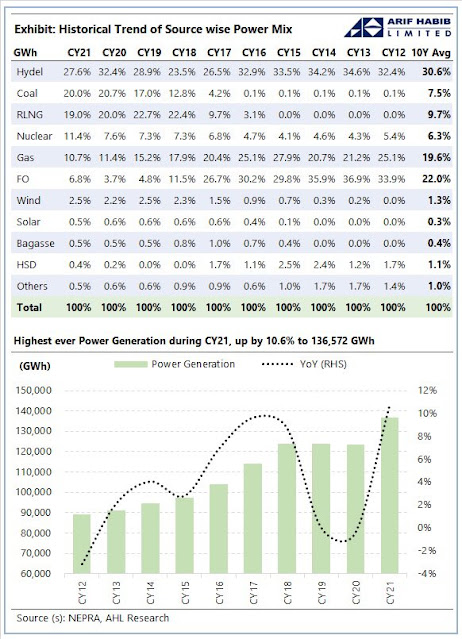
With a new 330 MW mine-mouth coal-fired power plant in Tharparkar, Pakistan has now reached 990 MW of power fueled by the local lignite. Thar coal production is being expanded and plans are in place to convert three more imported anthracite coal fired plants to burn domestic lignite as soon as its production is expanded and a rail link is completed to transport the fuel to the rest of the country. Plans call for using Thar coal in three coal-fired plants currently burning imported coal: Sahiwal Coal Power, China Hub Coal Power and Port Qasim Coal, each of 1,320MW installed capacity. These power plants may require some limited equipment changes to burn domestic lignite. It is worth noting that Pakistan contributes less than 1% of the global greenhouse-gas emissions. Using the higher polluting domestic Thar lignite is crucial to Pakistan's desperate need for cheap energy to spur industrialization for economic growth without running into recurring balance of payments crises. 

Pakistan Electric Power Generation Fuel MiX. Source: Arif Habib

 Last year, hydroelectric dams contributed 37,689 GWH of electricity or 27.6% of the total power generated, making hydropower the biggest contributor to power generated in the country. It was followed by coal (20%), LNG (19%) and nuclear (11.4%).  Nuclear power plants generated 15,540 GWH of electricity in 2021, a jump of 66% over 2020.  Overall, Pakistan's power plants produced 136,572 GWH of power in 2021, an increase of 10.6% over 2020, indicating robust economic recovery amid the COVID19 pandemic. 

Lucky power plant in Karachi has been designed to use Thar Lignite Coal when it is available in sufficient quantity.  Until that time, it will operate on imported lignite coal. Domestic lignite production is being expanded in a bid to replace costly fossil fuel imports that are depleting Pakistan's foreign exchange reserves and exacerbating circular debt in the power sector, according to Nikkei Asia.  

SECMC (Sindh Engro Coal Mining Company) has commissioned a study for converting the China-Pakistan Economic Corridor coal plants in Hub, Jamshoro and Sahiwal to indigenous lignite. A 105km long Thar Rail project is being planned to connect Thar coal fields with Main Line (ML-1) at the New Chhor Halt Station to transport lignite to the power plants in the rest of the country. The transportation of lignite by trucks to Karachi and Kallar Kahar shows its movement by road and rail is feasible and safe despite higher moisture.


Pakistan Electric Power Generation. Source: Arif Habib


Cost Per Unit of Electricity in Pakistan. Source: Arif Habib


Nuclear offers the lowest cost of fuel for electricity (one rupee per KWH) while furnace oil is the most expensive (Rs. 22.2 per KWH). 
 

Construction of 1,100 MW nuclear power reactor K2 unit in Karachi was completed by China National Nuclear Corporation in 2019, according to media reports. Another similar reactor unit K3 is now in operation. It will add another 1,100 MW of nuclear power to the grid in 2022. Chinese Hualong One reactors being installed in Pakistan are based on improved Westinghouse AP1000 design which is far safer than Chernobyl and Fukushima plants.  

The biggest and most important source of low-carbon energy in Pakistan is its hydroelectric power plants, followed by nuclear power. Pakistan ranked third in the world by adding nearly 2,500 MW of hydropower in 2018, according to Hydropower Status Report 2019.  China added the most capacity with the installation of 8,540 megawatts, followed by Brazil (3,866 MW), Pakistan (2,487 MW), Turkey (1,085 MW), Angola (668 MW), Tajikistan (605 MW), Ecuador (556 MW), India (535 MW), Norway (419 MW) and Canada (401 MW).

New Installed Hydroelectric Power Capacity in 2018. Source: Hydroworld.com


Hydropower now makes up about 28% of the total installed capacity of 33,836 MW as of February, 2019.   WAPDA reports contributing 25.63 billion units of hydroelectricity to the national grid during the year, “despite the fact that water flows in 2018 remained historically low.” This contribution “greatly helped the country in meeting electricity needs and lowering the electricity tariff for the consumers.”

Pakistan's Current Account Balance vs International Oil Prices. Source: Arif Habib


Recent history shows that Pakistan's current account deficits vary with international oil prices.  Pakistan's trade deficits balloon with rising imported energy prices. One of the keys to managing external account balances lies in reducing the country's dependence on foreign oil and gas. 


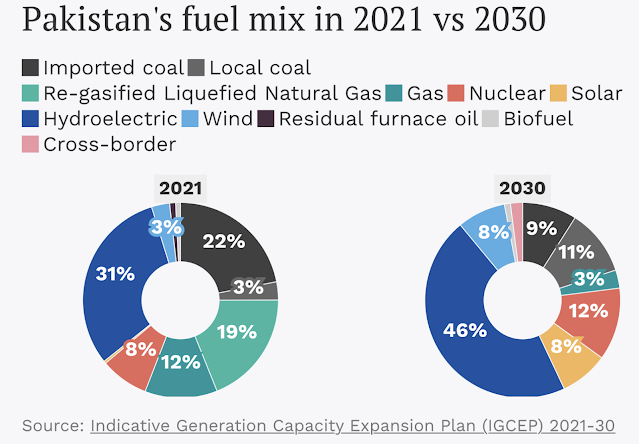
Pakistan Power Generation Fuel Mix. Source: Third Pole

It is true that Pakistan has relied on imported fossil fuels to generate electricity. The cost of these expensive imported fuels like furnace oil mainly used by independent power producers (IPPs) has been and continues to be a major contributor to the "exaggerated external demand driven by its rentier economy" referred to by Atif Mian in a recent tweet. However, Pakistan has recently been adding hydro, nuclear and indigenous coal-fired power plants to gradually reduce dependence on imported fossil fuels. 

Related Links:


Haq's Musings

South Asia Investor Review

Pakistan Among World's Largest Food Producers

Naya Pakistan Housing Program

Food in Pakistan 2nd Cheapest in the World

Indian Economy Grew Just 0.2% Annually in Last Two Years

Pakistan to Become World's 6th Largest Cement Producer by 2030

Has Bangladesh Surged Past India and Pakistan in Per Capita Income?

Pakistan's Computer Services Exports Jump 26% Amid COVID19 Lockdown

Coronavirus, Lives and Livelihoods in Pakistan

Vast Majority of Pakistanis Support Imran Khan's Handling of Covid19 Crisis

Pakistani-American Woman Featured in Netflix Documentary "Pandemic"

Incomes of Poorest Pakistanis Growing Faster Than Their Richest Counterparts

Can Pakistan Effectively Respond to Coronavirus Outbreak? 

How Grim is Pakistan's Social Sector Progress?

Double Digit Growth in Pakistan's Energy Consumption Confirms Economic Recovery


Trump Picks Muslim-American to Lead Vaccine Effort

COVID Lockdown Decimates India's Middle Class

Pakistan to be World's 7th Largest Consumer Market by 2030

Pakistan's Balance of Payments Crisis

How Has India Built Large Forex Reserves Despite Perennial Trade Deficits

Conspiracy Theories About Pakistan Elections"

PTI Triumphs Over Corrupt Dynastic Political Parties

Strikingly Similar Narratives of Donald Trump and Nawaz Sharif

Nawaz Sharif's Report Card

Riaz Haq's Youtube Channel

Monday, January 22, 2018

WEF Reports More Pakistanis Sharing Fruits of Economic Growth

More and more Pakistanis are sharing in their nation's development, according to World Economic Forum (WEF). Pakistan ranks 47 among 74 emerging economies ranked for inclusive development by WEF released recently at Davos, Switzerland. Inclusive development in the South Asian country has increased 7.56% over the last 5 years. World Economic Forum assesses inclusive development  based on "living standards, environmental sustainability and protection of future generations from further indebtedness."

WEF Inclusive Development Report 2018:

The WEF inclusive development index ranks Pakistan at 47, below Bangladesh at 34 but above India at 62. The 7.56% rate of increase in inclusive development in Pakistan is higher than 4.55% in Bangladesh and 2.29% in India. China ranks 26 and its inclusion is rising at a rate 2.94%.

WEF IDI Rankings. Source: WEF

Pakistan has improved its ranking from 52 last year to 47 this year, while India's rank worsened to 62 this year from 60 last year.  China's ranking also worsened from 15 last year to 26 this year.

Another WEF report compiled by Oxfam said the richest 1% of Indians took 73% of the wealth generated last year.

Income Share Change in Asia's Poorest Quintile: 

The share of national income of Pakistan's poorest 20% of households has increased from 8.1% to 9.6% since 1990 , according to the United Nations Economic and Social Commission for Asia and Pacific (NESCAP) Statistical Yearbook for 2015.  It's the highest share of income for the bottom income quintile in the region.

The countries where people in the poorest income quintile have increased their share of total income include Kyrgyzstan (from 2.5 per cent to 7.7), the Russian Federation (4.4 per cent to 6.5), Kazakhstan (7.5 per cent to 9.5) and Pakistan (8.1 per cent to 9.6).  India's bottom income quintile has seen its share of income drop from 9% to 7.8%.

Bottom Quintile Income Share Change. Source: UNESCAP Statistical Yearbook

Although more people in China have lifted themselves out of poverty than any other country in the world, the poorest quintile in that country now accounts for a lower percentage of total income (4.7 per cent) than in the early 1990s (8.0 per cent). The same unfortunate trend is observed for a number of other countries, including in Indonesia (from 9.4 per cent to 7.6) and in the Lao People’s Democratic Republic (from 9.3 per cent to 7.6).

CPEC Transforming Least Developed Regions:

Development of China Pakistan Economic Corridor (CPEC) is transforming Pakistan.  Among the parts of the contry being transformed the most by CPEC are some of the least developed regions in Balochistan and Sindh, specifically Gwadar and Thar Desert. Here is more on these regions:

Gwadar Port City:

Gwadar is booming. It's being called the next Shenzhen by some and the next Hong Kong by others as an emerging new port city in the region to rival Dubai. Land prices in Gwadar are skyrocketing, according to media reports. Gwadar Airport air traffic growth of 73% was the fastest of all airports in Pakistan where overall air traffic grew by 23% last year, according to Anna Aero publication.  A new international airport is now being built in Gwadar to handle soaring passenger and cargo traffic.


In addition to building a major seaport that will eventually handle 300-400 million tons of cargo in a year, China has built a school, sent doctors and pledged about $500 million in grants for an airport, hospital, college and badly-needed water supply infrastructure for Gwadar, according to Reuters.

The Chinese grants include $230 million for a new international airport in Gwadar, one of the largest such disbursements China has made abroad, according to researchers and Pakistani officials.

New development work in Gwadar is expected to create as many as 20,000 jobs for the local population.

Thar Desert:

Thar, one of the least developed regions of Pakistan, is seeing unprecedented development activity in energy and infrastructure projects.  New roads, airports and buildings are being built along with coal mines and power plants as part of China-Pakistan Economic Corridor (CPEC). There are construction workers and machinery visible everywhere in the desert. Among the key beneficiaries of this boom are Thari Hindu women who are being employed by Sindh Engro Coal Mining Company (SECMC) as part of the plan to employ locals. Highlighted in recent news reports are two Hindu women in particular: Kiran Sadhwani, an engineer and Gulaban, a truck driver.

Kiran Sadhwani, a Thari Hindu Woman Engineer. Source: Express Tribune

Thar Population:

The region has a population of 1.6 million. Most of the residents are cattle herders. Majority of them are Hindus.  The area is home to 7 million cows, goats, sheep and camel. It provides more than half of the milk, meat and leather requirement of the province. Many residents live in poverty. They are vulnerable to recurring droughts.  About a quarter of them live where the coal mines are being developed, according to a report in The Wire.

Hindu Woman Truck Driver in Thar, Pakistan. Source: Reuters

Some of them are now being employed in development projects.  A recent report talked of an underground coal gasification pilot project near the town of Islamkot where "workers sourced from local communities rested their heads after long-hour shifts".

Summary:

More and more Pakistanis are sharing the fruits of development in Pakistan as shown by the World Economic Forum report on inclusive growth. WEF ranks Pakistan at 47, below Bangladesh at 34 but above India at 62. The 7.56% rate of increase in inclusive development in Pakistan is higher than 4.55% in Bangladesh and 2.29% in India.   The share of national income of Pakistan's poorest 20% of households has increased from 8.1% to 9.6% since 1990 , according to the United Nations Economic and Social Commission for Asia and Pacific (NESCAP) Statistical Yearbook for 2015.  It's the highest share of income for the bottom income quintile in the region.  Development of China Pakistan Economic Corridor (CPEC) is transforming Pakistan.  Among the parts of the country being transformed the most by CPEC are some of the least developed regions in Balochistan and Sindh, specifically Gwadar and Thar Desert.