Showing posts sorted by date for query twin deficits. Sort by relevance Show all posts

Saturday, March 11, 2023

Guess Why Pakistani Analyst Uzair Younus is Making Headlines in India!

Pakistani analyst Uzair Younus has recorded personal impressions of his recent India visit on his YouTube channel, as well as in an interview on another YouTube channel called "Pakistan Experience".  Indian media have gleefully jumped on it with headlines like "Visiting India Was Like Stepping Into The Future" and a "Pakistani analyst" talking of India's "communal harmony". It has helped Younus' channel draw its highest ever views, and inundated it with Indian trolls' comments praising Hindu Nationalist Prime Minister Narendra Modi and denouncing Pakistan.  This is yet another confirmation of what former US President Barack Obama wrote in his book "A Promised Land": “Expressing hostility toward Pakistan was still the quickest route to national unity (in India)”. 

Indians See Uzair Younus Endorsing Indian PM Modi's Policies


Digital Payments: 

Younus' "stepping into the future" comment refers primarily to the ubiquity of QR codes for retail digital payments that he observed in India. He said the currency in circulation accounts for 13% (actual: 13.7%) of India's GDP, versus 20% of GDP (actual: 18%) in Pakistan. He also saw the GST (Goods and Services Tax) numbers displayed at all retailers, and the GST taxes being paid everywhere. 
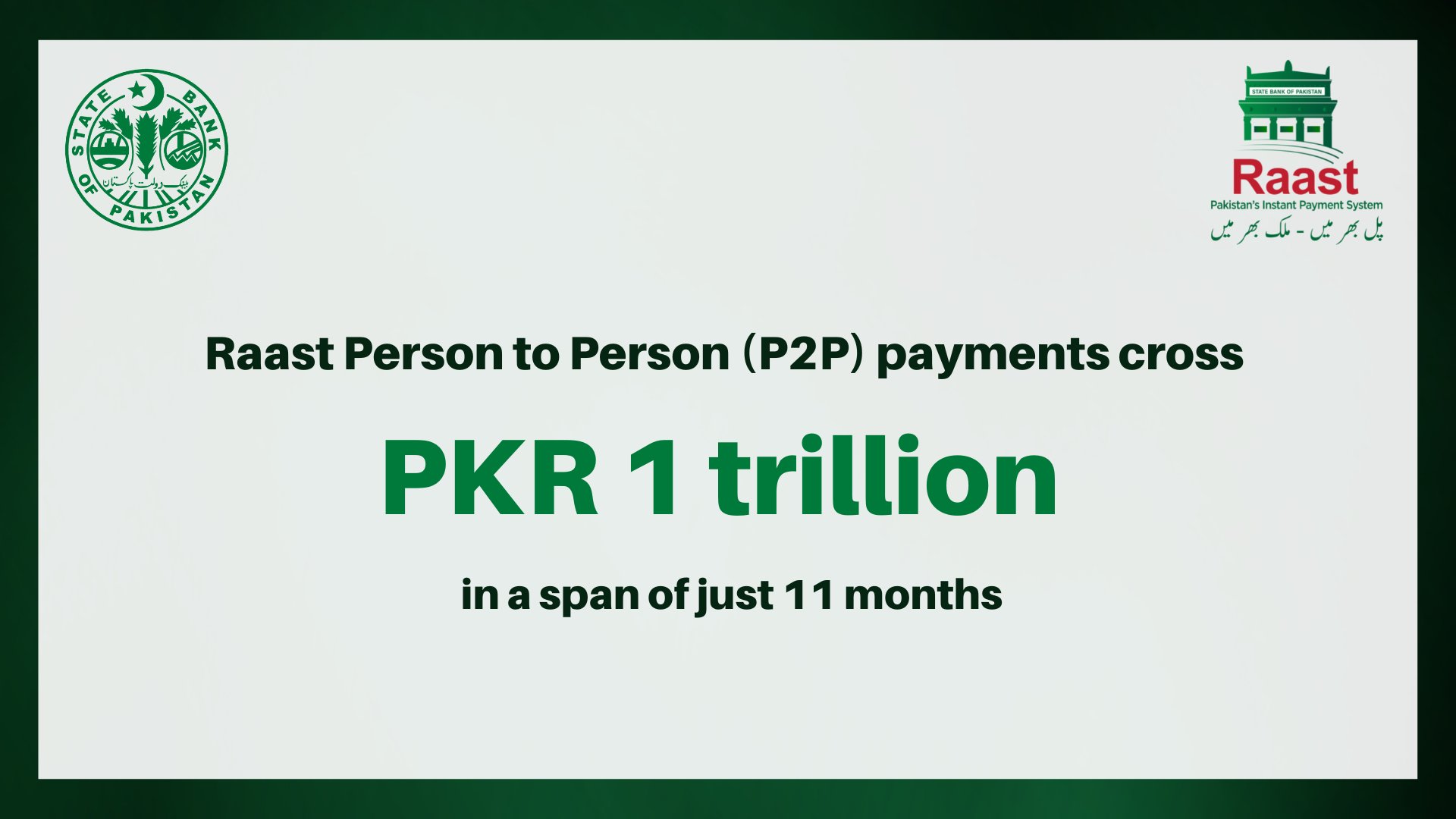
Pakistan's RAAST P2P System Taking Off. Source: State Bank of Pakistan


There's no question that India has made significant strides in digitizing payments in recent years. However, it should be noted here that Pakistan, too, is making progress in digital payments. Raast, Pakistan's P2P payments equivalent of India's UPI, has crossed Rs. one trillion mark in payments in 11 months, according to the State Bank of Pakistan.  Pakistan is also among the world's top 10 smartphone markets. 

Pakistan Among World's Top 10 Smartphone Markets. Source: NewZoo


Infrastructure: 

Younus also praised India's growing infrastructure and compared it with Pakistan's, claiming that the Pakistani infrastructure is better but it only serves the rich. He cited the example of driving time to Islamabad International Airport (serving 5 million population in the metro area) in Pakistan being much shorter than the driving time to Delhi Airport (serving 33 million+ population in the metro area) in India, claiming that it is because only the rich use the Islamabad Airport. This makes me wonder if the 5 million passengers who traveled in and out of Islamabad last year are all rich? 

Communal Harmony: 

Uzair cited the example of a Muslim peer's shrine in Rajkot being looked after by Hindus which the Indian media interpreted as "communal harmony" in its reporting. The fact is that India is ranked as the world's worst in terms of religious hostilities, particularly against Muslims, according to a Pew Survey.  Scoring a high 9.5 on a scale of 10, India’s score is found to be worse than all the South Asian countries, including Pakistan, which scores 7.7, followed by Bangladesh 7.2, Afghanistan 6.5, Burma (Myanmar). 5.9, Sri Lanka 5.6, Nepal 2.6, China 1.3 and Bhutan 0.4.


India Tops Social Hostilities. Source: Telegraph India

National Debt and Deficits: 

Uzair Younus argues that the Indian infrastructure is not built with loans while Pakistan takes on debt to build its infrastructure. It seems that the esteemed Pakistani analyst is unaware of the fact that India is the world's biggest borrower of infrastructure loans from various international financial institutions such as the World Bank, the Asian Development and the Asian Infrastructure Investment Bank. 

India's external debt to GDP ratio is about 20% while Pakistan's is 34%.  In addition, both India and Pakistan also run twin deficits: budget deficit and current account deficit (CAD). India's fiscal deficit is about 6.4% and its CAD is 3.3% of GDP. Corresponding figures for Pakistan are 7.9% and 4.6%. 

India has perennially run huge trade and budget deficits. But substantial western capital inflows since the end of the Cold War have helped India avoid a balance of payments crisis. So, India's economic success is in part due to the change in global geopolitics in this century. In short, the West, led by the United States, is boosting India to counter China. 

India is now emerging as the biggest beneficiary of the Ukraine War and the US efforts to check China's rise. Indian businesses are busting US sanctions to take advantage of the vacuum left in Russia by the exit of western businesses since the start of the Ukraine War.  At the same time, the US is rewarding India by promoting it as an alternative to China in the global supply chain.  Meanwhile, Beijing is warning New Delhi that India "will be the biggest victim" of America's "proxy war" against China. 

Women at Work:

Younus saw many women at work in Indian cities, some engaged in constructions, other riding scooters to work. He compares it to what he perceives as absence of women in the workplace in Pakistan. What he misses is the fact that the female labor participation rate in India is, in fact, lower than in Pakistan, according to the International Labor Organization data.  

Female labor force participation rate in India has recently fallen to just 19%, the second lowest after Afghanistan's 15% in the South Asia region. By contrast, Pakistan's women's labor force participation rate is 21%, Sri Lanka's 31% and Bangladesh's 35%. Prime Minister Narendra Modi's mishandling of the COVID19 pandemic has hit Indian women particularly hard, with 90% of those who lost their jobs now shut out of the workforce. 

Female Labor Force Participation Rate in South Asia. Source: World Bank


The precipitous loss of women workers is disastrous news for India's economy, which had started slowing before the COVID19 pandemic, according to a Bloomberg report. Rosa Abraham, an economics professor at Azim Premji University in Bengaluru, tracked more than 20,000 people as they navigated the labor market during the pandemic.. She found that after the first lockdown, women were several times more likely to lose their jobs than men and far less likely to recover work after restrictions were lifted. "When men are faced with this kind of a huge economic shock, then they have a fallback option," Abraham told Bloomberg. "They can navigate to different kinds of work. But for women, there is no such fallback option. They can't negotiate the labor market as effectively as men do." 

Optimism: 

Based on the small sample of people he met in India and Pakistan, Uzair concludes that people in India are very optimistic while those in Pakistan are despondent. Results of a recent Gallup International Poll of 64 nations differ from his conclusion. 

Doing Better Than Parents. Source: Gallup International

Pakistan is in the middle of multiple serious crises. But the vast majority of Pakistanis feel that they have better lives than their parents did, and they think their children will have even better lives than theirs, according to a Gallup International Poll of 64 countries conducted from August to October last year. The poll asked two questions: 1) Do you feel your life is better, worse or roughly similar to that  of your parents? and 2) Do you think your children will have a better, worse or roughly the same life as you? The answers to these questions reveal that Pakistanis are among the top 5 most positive nations among 64 countries polled by Gallup International. Anecdotal evidence in terms of packed shopping malls and restaurants in Pakistan's major cities confirms it. Such positivity augurs well for Pakistan's prospects of successfully dealing with the current crises. It will drive the nation's recovery. 

Nearly two-thirds (65%) of Pakistanis said they live better than their parents did. And 69% of Pakistani parents think their children will have better lives than they do. In neighboring India, 54% of respondents feel their lives are better than their parents' while only 43% say their children will have better lives than theirs'.  The global average for the former is 51% and it is 44% for the latter. The poll results put Pakistanis among the world's five most hopeful nations

Uzair Younus' Background:

Uzair talks about his family's humble beginnings in a small Gujarati village near Rajkot which he visited during his India tour. His grandparents fled to Pakistan in search of better lives. He grew up in Clifton, an upscale neighborhood of Karachi. 

In his effusive praise of the neighboring country that has twice elected Modi, Uzair completely missed the fact that Narendra Modi, now India's prime minister, is widely believed to be the perpetrator of a anti-Muslim pogrom in 2002 when he was the chief minister of Gujarat. The Muslim survivors of the 2002 massacre are still languishing near a mountain of trash on the outskirts of Ahmedabad, battling poverty and disease. Uzair Younus should have paid a visit to show solidarity with them. 

Related Links:


Sunday, July 10, 2022

India's Forex Reserves Fall As Foreign Investors Head For The Exits

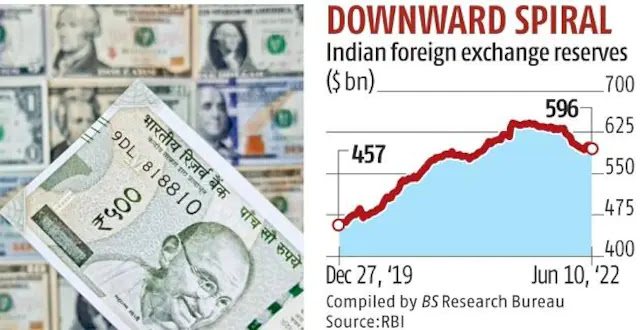
India's foreign exchange reserves are falling rapidly as foreign investors flee and the country's trade and current account deficits widen. More than $267 billion worth of India's external debt of the total $621 billion is due for repayment in the next nine months. This repayment is equivalent to about 44% of India's foreign exchange reserves. This combination of investors' exodus, widening twin deficits and short-term debt repayments has caused the Indian rupee to hit new lows. Unlike China and other nations that have accumulated large reserves by running trade surpluses, India runs perennial trade and current account deficits. The top contributor to India's forex reserves is debt which accounts for 48%. Portfolio equity investments known as “hot” money or speculative money flows account for 23% of India's forex reserves, according to an analysis published by The Hindu BusinessLine

India's Declining Forex Reserves. Source: Business Standard


Investor Exodus: 

Foreign portfolio investors have pulled out a whopping $33.5 billion from equity and $2.1 billion from debt segments of Indian financial markets, for a total net outflow of $35.6 billion from October 2021 to June 2022,  according to data compiled by the National Securities Depository Limited. In the first half of this calendar year, the total net outflows were $29.7 billion. 

It's not just the FPIs leaving India; a number of multinational companies are also pulling foreign direct investment (FDI) from India. Several big names including German retailer Metro AG, Swiss building-materials firm Holcim, US automaker Ford, UK banking major Royal Bank of Scotland, US motorcycle manufacturer Harley-Davidson and US banking behemoth Citibank have chosen to pull the plug on their operations in India or downsize their presence in recent years. 

Widening Deficits: 

India's finance ministry has warned of a growing twin deficit problem, with higher commodity prices and rising subsidy burden leading to an increase in both the fiscal and current account deficits. India's June trade deficit widened to a record high of $25.63 billion, mainly due to a rise in crude oil and coal imports, from $9.61 billion a year earlier.  India's April-May fiscal deficit was $25.8 billion. 

Summary:

India's current level of forex reserves is enough for less than 10 months of imports projected for 2022-23. But the country has had a structural current account deficit which has been funded by large capital inflows. The accumulation of forex reserves has been due to surplus in the capital account. Since late February, the foreign exchange reserves have declined by $36 billion. India still has large forex reserves but its economy is in the same boat as other emerging markets that run large and worsening trade and current account deficits. With declining forex reserves, India is likely to face headwinds as the US Federal Reserves raises interest rates to fight inflation. 

Related Links:


Haq's Musings

South Asia Investor Review

India in Crisis: Unemployment and Hunger Persist After COVID waves

Naya Pakistan Housing Program

Food in Pakistan 2nd Cheapest in the World

Western Money Keeps Indian Economy Afloat

Pakistan to Become World's 6th Largest Cement Producer by 2030

How Has India Accumulated Large Forex Reserves Despite Perennial Trade Deficits?

Pakistan's Computer Services Exports Jump 26% Amid COVID19 Lockdown

Coronavirus, Lives and Livelihoods in Pakistan

Vast Majority of Pakistanis Support Imran Khan's Handling of Covid19 Crisis

Pakistani-American Woman Featured in Netflix Documentary "Pandemic"

Incomes of Poorest Pakistanis Growing Faster Than Their Richest Counterparts

Can Pakistan Effectively Respond to Coronavirus Outbreak? 

How Grim is Pakistan's Social Sector Progress?

Pakistan Fares Marginally Better Than India On Disease Burdens

Trump Picks Muslim-American to Lead Vaccine Effort

Democracy vs Dictatorship in Pakistan

Pakistan Child Health Indicators

Pakistan's Balance of Payments Crisis

Panama Leaks in Pakistan

Conspiracy Theories About Pakistan Elections"

PTI Triumphs Over Corrupt Dynastic Political Parties

Strikingly Similar Narratives of Donald Trump and Nawaz Sharif

Nawaz Sharif's Report Card

Riaz Haq's Youtube Channel


Saturday, September 12, 2020

Thirlwall Law: Why Hasn't Pakistan's GDP Grown Faster Than 5% Average Since 1960s?

Pakistan's economy has grown at a compounded annual growth rate (CAGR) of about 5% since the 1960s. While Pakistan's average 5% annual economic growth rate is faster than the global average, it falls significantly short of its peer group in Asia. The key reason is that, unlike Pakistan's, the East Asian nation's growth has been fueled by rapid rise in exports. History shows that Pakistan has run into balance of payments (BOP) crises whenever its growth has accelerated above 5%. These crises have forced Pakistan to seek IMF bailouts 13 times in its 73 year history. Pakistan's current account deficits would be a lot worse without 23X growth in remittances from overseas Pakistanis since year 2000.  What Pakistan has experienced is BOP-constrained growth as explained in 1979 by Thirlwall Law, a law of economics named after British economist Anthony Philip Thirlwall.  Another reason why Pakistan has lagged its Asian peers in terms of economic growth is its lower savings and investment rates. Every time Pakistan has faced a balance of payments crisis, the result has been massive currency devaluation, high inflation and slower growth for a period pf multiple years. This is is exactly what Pakistan's current government led by Prime Minister Imran Khan is dealing with right now.  This pain is the result of years of flat exports, soaring imports and excessive debt taken on during former Prime Minister Nawaz Sharif's PMLN government from 2013 to 2018. The best way for Pakistan to accelerate its growth beyond 5% in a sustainable manner is to boost its exports by investing in export-oriented industries, and by incentivizing higher savings and investments. 

History of Pakistan's IMF Bailouts

Economic Growth Since 1960: 

The World Bank report released in June, 2018 shows that Pakistan's GDP has grown from $3.7 billion in 1960 to $305 billion in 2017, or 82.4 times. In the same period,  India's GDP grew from $37 billion in 1960 to $2,597 billion in 2017 or 71.15 times. Both South Asian nations have outpaced the world GDP growth of 60 times from 1960 to 2017.

While Pakistan's GDP growth of 82X from 1960 to 2017 is faster than India's 71X and it appears impressive, it pales in comparison to Malaysia's 157X, China's 205X and South Korea's 382X during the same period.


Thrilwall's Model: 

Thrilwall's BOP-constrained growth model says that no country can sustain long-term growth rates faster than the rate consistent with its current account balance, unless it can finance its growing deficits. Indeed, if imports grow faster than exports, the current account deficit has to be financed by borrowing from abroad, i.e., by the growth of capital inflows. But this cannot continue indefinitely. Here's how Jesus Felipe, J. S. L. McCombie, and Kaukab Naqvi describe it in their May 2009 paper titled "Is Pakistan’s Growth Rate Balance-of-Payments Constrained? Policies and Implications for Development and Growth"  published by Asian Development Bank: 

"The reason is straightforward. If the growth of financial flows is greater than the growth of GDP, then the net overseas debt to GDP ratio will rise inextricably. There is a limit to the size of this ratio before international financial markets become distinctly nervous about the risk of private and, especially in less developed countries, public default. If much of the borrowing is short-term, then there is danger of capital flight, precipitating the collapse of the exchange rate. Not only will this cause capital loses in terms of foreign currency (notably United States [US] dollars) of domestic assets owned by foreigners (the lenders), but it will also cause severe domestic liquidity problems. This is especially true of many developing countries as overseas borrowing by banks and firms is predominantly denominated in a foreign currency, normally US dollars. As the exchange rate plummets, so domestic firms have difficulty finding domestic funds to finance their debt and day-today operations, often with disastrous consequences."

Investment as Percentage of GDP Source: State Bank of Pakistan 


Pakistan's Rising Current Account Deficit:

Pakistan's external debt has been rising rapidly in recent years to fund its ballooning twin deficits of domestic budget and external accounts. It pushed the external debt service cost to $12 billion in fiscal 2019-20, and added to the trade deficit of nearly $24 billion. Remittances of $21 billion from Pakistani diaspora reduced the current account deficit to $11 billion, but still forced the new PTI government to seek yet another IMF bailout with its stringent conditions to control both fiscal and current account deficits. These conditions resulted in dramatic slow-down in the country's GDP growth. 

Pakistan's External Debt. Source: Wall Street Journal


Pakistan's Exports: 

Pakistan’s exports have continued to lag behind that of its South Asian competitors since the early 1990s. Bangladesh’s exports have increased by 6.2 times compared to Pakistan’s, measured in terms of exports per capita, and that of India by 6.8 times, according to Princeton's Pakistani-American economist Atif Mian. 

Exports Per Capita in South Asia. Source: Dawn 


Balance of Payments Crises:

Every time Pakistan has faced a balance of payments crisis, the result has been massive currency devaluation, high inflation and slower growth for a period of multiple years. This is is exactly what Pakistan's current government led by Prime Minister Imran Khan is dealing with right now.  This pain is the result of years of flat exports, soaring imports and excessive debt taken on during former Prime Minister Nawaz Sharif's PMLN government from 2013 to 2018. 

Export Growth in South Asia. Source: WSJ

Savings and Investment: 

The second reason why Pakistan lagged its Asian peers in terms of economic growth is its lower savings and investment rates. There's a strong relationship between investment levels and gross domestic product. The more a country saves and invests, the higher its economic growth.  A State Bank of Pakistan report explains it as below:

"National savings (in Pakistan) as percent of GDP were around 10 percent during 1960s, which increased to above 15 percent in 2000s, but declined afterward. Pakistan’s saving rate also compares unfavorably with that in neighboring countries: last five years average saving rate in India was 31.9 percent, Bangladesh 29.7 percent, and Sri Lanka 24.5 percent..... Similarly, domestic savings (measured as national savings less net factor income from abroad) also declined from about 15 percent of GDP in 2000s, to less than 9 percent in recent years. Domestic savings are imperative for sustainable growth, because inflow of income from abroad (remittances and other factor income) is uncertain due to cyclical movements in world economies, exchange rates, and external shocks".

Net Foreign Direct Investment Source: State Bank of Pakistan

21X Remittance Growth Since Year 2000:

Remittance inflows from Pakistani diaspora have jumped 21-fold from about $1 billion in year 2000 to $24 billion in 2020, according to the World Bank. In terms of GDP, these inflows have soared nearly 7X from about 1% in year 2000 to 6.9% of GDP in 2018.


Meanwhile, Pakistan's exports have declined from 13.5% of GDP in year 2000 to 8.24% of GDP in 2017.  At the same time, the country's import bill has increased from 14.69% in year 2000 to 17.55% of GDP in 2017.  This growing trade imbalance has forced Pakistan to seek IMF bailouts four times since the year 2000.  It is further complicated by external debt service cost of over $6 billion (about 2% of GDP) in 2017. Foreign investment in the country has declined from a peak of $5.59 billion (about 4% of GDP) in 2007 to a mere $2.82 billion (less than 1% of GDP) in 2017. While the current account imbalance situation is bad, it would be far worse if Pakistani diaspora did not come to the rescue.

Summary:

Pakistan's average economic growth of 5% a year has been faster than the global average since the 1960s, it has been slower than that that of its peers in East Asia. It has essentially been constrained by Pakistan recurring balance of payment (BOP) crises as explained by Thirlwall's Law. Pakistan has been forced to seek IMF bailouts 13 times in the last 70 years to deal with its BOP crises. This has happened in spite of the fact that remittances from overseas Pakistanis have grown 24X since year 2000. Every time Pakistan has faced a balance of payments crisis, the result has been massive currency devaluation, high inflation and slower growth for a period pf multiple years. This is is exactly what Pakistan's current government led by Prime Minister Imran Khan is dealing with right now.  This pain is the result of years of flat exports, soaring imports and excessive debt taken on during former Prime Minister Nawaz Sharif's PMLN government from 2013 to 2018.   The best way for Pakistan to accelerate its growth beyond 5% is to boost its exports by investing in export-oriented industries, and by incentivizing higher savings and investments. 

Related Links:

Haq's Musings

South Asia Investor Review

Pakistan's Debt Crisis

Declining Investment Hurting Pakistan's Economic Growth

Brief History of Pakistan Economy 

Can Pakistan Avoid Recurring IMF Bailouts?

Pakistan is the 3rd Fastest Growing Trillion Dollar Economy

CPEC Financing: Is China Ripping Off Pakistan?

Information Tech Jobs Moving From India to Pakistan

Pakistan is 5th Largest Motorcycle Market

"Failed State" Pakistan Saw 22% Growth in Per Capita Income in Last 5 Years

CPEC Transforming Pakistan

Pakistan's $20 Billion Tourism Industry Boom

Home Appliance Ownership in Pakistani Households

Riaz Haq's YouTube Channel

PakAlumni Social Network

Sunday, December 29, 2019

Pakistan's Year 2019 in Review: Economic and Security Challenges

Pakistan started the year 2019 in the midst of a very serious economic crisis with very high twin deficits and extremely low foreign exchange reserves. While Pakistan's internal security challenges subsided, the external security concerns grew with India's attack on Balakot in 2019. Tough actions by PTI government have started to pay off at the end of year 2019.  Toward the end of the year, Pakistan's twin deficits declined substantially and credit rating agency Moody's upgraded Pakistan's outlook from negative to stable. Mass migration continued both within and outside Pakistan. About 600,000 Pakistanis went to work overseas in 2019. And at least 4 times more Pakistanis moved from rural to urban areas.  Pakistan had high profile visits of the royal families from the UK and the Netherlands as well as the visit of the Sri Lankan cricket team, the first foreign team to play test series in Pakistan in a decade. Conde Nast Travel picked Pakistan as the top tourism destination for 2020. Regional security situation worsened with Indian and Kashmiri Muslims facing the threat of genocide at the hands of newly re-elected Indian government of Hindu fanatic Prime Minister Narendra Modi.

Economic Crisis:

The year 2019 began with Pakistan battling massive twin deficits, deteriorating foreign currency reserves, low exports, diminishing tax revenues, a weak currency, unsustainable external debt payments, and soaring sovereign debt. This crisis has forced the country to seek IMF (International Monetary Fund) bailout, the 13th such request in Pakistan's 72 year history.

Tough actions by PTI government have started to pay off at the end of year 2019.  In October 2019, Pakistan saw a monthly trade surplus of $99 million, its first in decades. Pakistan's exports in November 2019  jumped 9.6% to $2.02 billion while imports dropped 17.53% to $3.815 billion over corresponding month of last year, the Ministry of Commerce data showed.

Pakistan Trade Data 2019

In December 2019, IMF's Pakistan representative Maria Teresa Daban Sanchez said as follows: “Pakistan has put behind its difficult years of security. Now, it is time for the business community and society in general to enjoy this new time and to really unleash the potential of Pakistan.”

Moody's credit rating agency upgraded Pakistan's outlook from negative to stable as the year 2019 came to a close.

Security Challenge:

While newly elected PTI government was still dealing with the economy, the Indian Air Force entered Pakistani airspace and dropped bombs in Balakot on the orders of India's far-right Prime Minister Narendra Modi. The Indian action drew strong Pakistani response with Pakistan Air Force crossing the Line of Control in Kashmir and shooting down two Indian fighter jets.  Pakistan also captured an Indian fighter pilot shot down down in Azad Kashmir. It was Pakistani Prime Minister Imran Khan's deft handling of the regional crisis that prevented further escalation into a full-blown India-Pakistan war that could have gone nuclear. The year 2019 ended with Pakistani economy stabilizing and Indian and Kashmiri Muslims facing the threat of genocide at the hands of newly re-elected Indian government of Hindu fanatic Prime Minister Narendra Modi.

The Indian action drew strong Pakistani response with Pakistan Air Force crossing the Line of Control in Kashmir and shooting down two Indian fighter jets.  Pakistan also captured an Indian fighter pilot shot down down in Azad Kashmir. It was Pakistani Prime Minister Imran Khan's deft handling of the regional crisis that prevented further escalation into a full-blown India-Pakistan war that could have gone nuclear. The year 2019 ended with Pakistani economy stabilizing and Indian and Kashmiri Muslims facing the threat of genocide at the hands of newly re-elected Indian government of Hindu fanatic Prime Minister Narendra Modi.

Source: South Asia Terrorism Portal

Pakistan saw lowest terror related fatalities in a decade with 228 deaths in the first half of 2019. This is a huge improvement from 2009 when Pakistan had nearly 12,000 deaths in terrorism related incidents.

Source: Conde Nast Traveller 

Improved security helped Pakistan earn number one spot among top tourism destinations picked by Conde Nast Travel magazine.  Pakistan hosted Prince William and his wife Kate Middleton as well as Queen Maxima of the Netherlands among other top foreign dignitaries. In December, Pakistan had its first cricket test series at home in a decade with the visit of the Sri Lankan cricket team.

International Relations:

Pakistan's relations with India sank to a new low when Prime Minister Narendra Modi ordered bombing of Balakot in February 2019 and Pakistan responded by crossing the Line of Control and shooting down two Indian fighter jets in Kashmir and capturing an Indian pilot.  It was Pakistani Prime Minister Imran Khan's deft handling of the regional crisis that prevented further escalation into a full-blown India-Pakistan war that could have gone nuclear. The year 2019 ended with Pakistani economy stabilizing and Indian and Kashmiri Muslims facing the threat of genocide at the hands of newly re-elected Indian government of Hindu fanatic Prime Minister Narendra Modi.

Prime Minister Imran Khan's visit to the White House and meeting with President Trump helped warm up ties with the United States. Speaking with the media in a joint press conference with Prime Minister Imran Khan in the Oval Office, President Trump said: "It's my honor to have the very popular and great athlete, the Prime Minister of Pakistan at White House". The President added that Pakistan was helping the US to "extricate" US troops from Afghanistan, through political negotiations.

Prime Minister Imran Khan's rally drew nearly 30,000 Pakistani-Americans to Capital One Arena on Sunday, July 21, 2019. It was the largest ever public gathering of any diaspora to welcome a foreign visiting leader in the United States until the more recent Howdy Modi rally in Houston that drew nearly 60,000 people. Earlier record of 18,000 was set by Indian Prime Minister Narendra Modi's rally at New York City's Madison Square Garden in 2014.

China, Saudi Arabia and United Arab Emirates maintained close ties with Pakistan and offered valuable assistance to Islamabad to deal with its economic difficulties. United States and the European Union (EU) nations also supported IMF's bailout of Pakistan.

Massive Migration:

Nearly 600,000 Pakistanis went overseas for work in the first 11 months of 2019, according to figures recently released by Pakistan Bureau of Emigration and Overseas Employment. This phenomenon helped contain unemployment in a country where about 2 million young people are entering the job market each year. It has also helped remittances soar nearly 21X to nearly $21 billion since the year 2000.

Emigrants From Pakistan 1990-2019. Source: Pakistan Bureau of Emigration


Pakistan is in the midst massive migration, both internal and external. Over half a million Pakistanis are migrating overseas while about 2 million are migrating internally from rural to urban areas. These trends are transforming the nation. Overseas remittances are soaring. Pakistan is becoming more urban. The country is also seeing growing foreign cultural influences from both the West and the Middle East.

Summary:

Pakistan faced serious economic and security challenges in 2019. While Pakistan's internal security challenges subsided, the external security concerns grew with India's attack on Balakot in 2019. Tough actions by PTI government have started to pay off at the end of year 2019.  Toward the end of the year, Pakistan's twin deficits declined substantially and credit rating agency Moody's upgraded Pakistan's outlook from negative to stable. Mass migration continued both within and outside Pakistan. About 600,000 Pakistanis went to work overseas in 2019. And at least 4 times more Pakistanis moved from rural to urban areas.  Pakistan had high profile visits of the royal families from the UK and the Netherlands as well as the visit of the Sri Lankan cricket team, the first foreign team to play test series in Pakistan in a decade. Conde Nast Travel picked Pakistan as the top tourism destination for 2020. Regional security situation worsened with Indian and Kashmiri Muslims facing the threat of genocide at the hands of newly re-elected Indian government of Hindu fanatic Prime Minister Narendra Modi.

Related Links:

Haq's Musings

South Asia Investor Review

Pakistan's Debt Crisis

India's Attack on Balakot and Pakistan's Response

Internal and External Mass Migration in Pakistan

Retired Justice Katju: Dark Clouds Over India

Pakistan Tourism Boom

Digital BRI: China and Pakistan Building Fiber, 5G Networks

LNG Imports in Pakistan

Growing Water Scarcity in Pakistan

China-Pakistan Economic Corridor

Ownership of Appliances and Vehicles in Pakistan

CPEC Transforming Pakistan

Pakistan's $20 Billion Tourism Industry Boom

Riaz Haq's YouTube Channel

PakAlumni Social Network

Wednesday, May 8, 2019

PTI's New Economic Team Line-Up in Pakistan

Who are the members of Pakistan's top new economic leadership team? Who's Reza Baqir? Who's Shabbar Zaidi? Why were the changes necessary? Were the latest changes made to remove previous PMLN government's loyalists considered to be responsible for the current economic crisis? Did their policies and actions contribute to large twin deficits? Did the International Monetary Fund (IMF) force these changes as a condition for the country's bailout?

Pakistan's External Debt. Source: Wall Street Journal

Pakistan Current Account Deficit. Source: State Bank of Pakistan

As Pakistan awaits the news of the discovery of large offshore oil reserves, what lessons should Pakistan learn from the governance failures in Venezuela? Is Venezuela suffering because of its government's hostility toward the United States? Will large oil reserves be a panacea for Pakistan's economic problems?

Viewpoint From Overseas host Faraz Darvesh discusses these questions with Sabahat Ashraf (ifaqeer) and Riaz Haq (www.riazhaq.com)

https://youtu.be/1UucUo_eU90


Related Links:

Haq's Musings

South Asia Investor Review

Pakistan's Debt Crisis

Can Pakistan Avoid Recurring IMF Bailouts?

Expectation of Massive Offshore Oil Discovery in Pakistan

CPEC Financing: Is China Ripping Off Pakistan?

Information Tech Jobs Moving From India to Pakistan

Pakistan is 5th Largest Motorcycle Market

"Failed State" Pakistan Saw 22% Growth in Per Capita Income in Last 5 Years

CPEC Transforming Pakistan

Pakistan's $20 Billion Tourism Industry Boom

Home Appliance Ownership in Pakistani Households

Riaz Haq's YouTube Channel

PakAlumni Social Network

Saturday, April 27, 2019

Blowout Concerns Delay Confirmation of Pakistan Offshore Oil Discovery

Blowout concerns have stopped offshore drilling in Pakistan yet again. It was underway to confirm discovery of oil and gas in at Kekra-1 well in G-bloc with pre-drill estimate of over 1.5 billion barrels of oil. It was scheduled to restart on April 20, 2019 after pause of 12 days, according to Pakistani media reports. Now it is delayed until the blowout preventer equipment is fixed and ready to use again.

Offshore Blowout Preventer Stack. Courtesy: British Petroleum

Blowout Preventer Problem: 

The drilling was stopped on April 8 at the depth of 4,810 meters for cementing and casing process which took almost 12 days to complete. Now there are concerns about the proper functioning of the blowout preventer (BOP). Once the BOP repair is completed, Mobile Exxon and ENI as joint operators at Kekra-1 well will resume drilling of the remaining 650-800 meters.

Time required to drill the remaining 650-800 meters will depend on the rate of penetration (RoP).  Pakistan petroleum ministry officials were quoted by The News as saying that they "don’t yet have precedents to form a reliable estimate for the RoP for offshore Indus-G, where Kekra-01 is being drilled. An RoP of 10 meters per hour (generally considered low) would mean that it would take 80 hours or a little more than three days to reach the target depth.’’

Top 3 Offshore Drilling Sites in Asia-Pacific. Source: Bloomberg

Exxon-Mobil's Entry in Pakistan:

American energy giant Exxon-Mobil has joined the offshore oil and gas exploration efforts started by Oil and Gas Development Corporation (OGDC), Pakistan Petroleum Limited (PPL) and Italian energy giant ENI, according to media reports.

Each company will have 25% stake in the joint venture under an agreement signed at the Prime Minister’s Secretariat in May among ExxonMobil, Government Holdings Private Limited (GHPL), PPL, ENI and OGDC.

Exxon-Mobile's entry in Pakistan brings deep offshore drilling technology, its long experience and financial resources to the country. It is expected to accelerate exploration and more discoveries.

Pakistan Oil Basins:

A Pakistan Basin Study conducted in 2009 found that the country has six onshore and two offshore basins; offshore basins being the Indus basin and the Makran basin in the Arabian Sea.

The Indus offshore basin is a rift basin that geologists say developed after the separation of the Indian Plate from Africa in the late Jurassic period. It is believed to be the second largest submarine fan system in the world after the Bay of Bengal with high probability of hydrocarbon discoveries.

The Makran Offshore basin is separated from the Indus Offshore basin by Murray ridge, according to Syed Mustafa Amjad's report in Dawn. It is an oceanic and continental crust subduction zone with deepwater trenches and volcanic activity. The basin consists of oceanic crust and periodic emergence of temporary mud islands along the coast suggesting strong evidence of large hydrocarbon deposits.

Pakistan Hydrocarbon Potential:

The United States Energy Information Administration (EIA) estimates that Pakistan has 586 TCF (trillion cubic feet) of gas in Pakistan of which 105 TCF is technically recoverable.

In addition to gas deposits, US EIA estimates there are 227 billion barrels of oil in Pakistan with 9.1 billion barrels being technically recoverable.

Pakistan also has 185 billion tons of coal deposits in Thar desert which are just beginning to be extracted by Sindh Engro Coal Mining Corporation.

Oil and Gas exploration and production companies are currently planning to drill 90 wells in different parts of  the country. Under the plan, as many as 50 exploratory and 40 development wells would be drilled in a bid to make the country self-sufficient in the energy sector, according to media reports.

During the last five years, the sources said the exploration and production companies drilled 445 new wells, out of which 221 were exploratory, adding that the increased exploration activities resulted in 116 new oil and gas discoveries.

Current Account Deficits:

Energy imports make up a big chunk of Pakistan's total imports. Bulk of the annual 200 million barrels of oil demand has to be imported. Rising oil prices worsen the current account deficit and put pressure on Pakistan's reserves, forcing the country to seek periodic IMF bailouts.

Pakistan's trade deficit is nearly $40 billion a year and debt service costs are about $11 billion a year. How can Pakistan fund this balance of payments deficit of about $50 billion? Remittances of $21 billion in current FY2019 from Pakistani diaspora are expected to reduce it to $30 billion. PTI government has taken on billions of dollars in loans from Gulf Arabs and China. Given the low rates of foreign investments in the country, a big chunk of the remaining deficit will have to be met by borrowing even more funds which will further increase future debt service costs.

Pakistan's Current Account Deficit. Source: Trading Economics

As a result, Pakistan is now battling massive twin deficits, deteriorating foreign currency reserves, low exports, diminishing tax revenues, a weak currency, onerous external debt payments, and soaring sovereign debt. This crises has forced the country to seek IMF (International Monetary Fund) bailout, the 13th such request in Pakistan's 72 year history.

Summary:

Blowout concerns have stopped offshore drilling in Pakistan yet again. It was underway to confirm discovery of oil and gas in at Kekra-1 well in G-bloc with pre-drill estimate of over 1.5 billion barrels. Pakistan made 2 key oil and gas discoveries in 3rd quarter and another 3 discoveries in the 4th quarter of 2017. These discoveries appear to have prompted US-based Exxon-Mobil to join off-shore drilling efforts in Pakistan.  American energy giant's entry in Pakistan brings advanced ultra deep sea drilling technology, its long experience in offshore exploration and financial resources to the country. It is expected to accelerate exploration and lead to more discoveries.  US Energy Information Administration (EIA) estimates that Pakistan has technically recoverable deposits of 105 trillion cubic feet (TCF) of gas and 9.1 billion barrels of oil. Reducing energy imports by increasing domestic production will likely ease Pakistan's current account deficits and reduce its need to seek repeated IMF bailouts.

Here's a discussion on the subject:

https://youtu.be/7o2MbUs2U38


Here's a video explaining offshore drilling for oil and gas:

https://youtu.be/anM9hZDA_cE


Related Links:

Haq's Musings

South Asia Investor Review

US EIA Estimates of Oil and Gas in Pakistan

Pakistan's Debt Crisis

Can Pakistan Avoid Recurring IMF Bailouts?

Pakistan is the 3rd Fastest Growing Trillion Dollar Economy

CPEC Financing: Is China Ripping Off Pakistan?

Information Tech Jobs Moving From India to Pakistan

Methane Hydrate Release After Balochistan Quake

Thar Coal Development

Why Blackouts and Bailouts in Energy-Rich Pakistan?

Riaz Haq's Youtube Channel

Saturday, April 13, 2019

Current Debt Crisis Threatens Pakistan's Future

Pakistan is battling massive twin deficits, deteriorating foreign currency reserves, low exports, diminishing tax revenues, a weak currency, unsustainable external debt payments, and soaring sovereign debt. This crisis has forced the country to seek IMF (International Monetary Fund) bailout, the 13th such request in Pakistan's 72 year history.

Pakistan Debt Service: Source SBP
Pakistan's debt repayment costs rose to $5.4 billion for first half of fiscal 2019 ( July 2018-Dec 2018), up from $7.5 billion for the entire fiscal 2018 (July 2017-June 2018), according to the State Bank of Pakistan. At this rate, the total debt service cost for current fiscal 2019 will exceed $11 billion, adding to the nation's debt crisis.

Pakistan's External Debt. Source: Wall Street Journal

This $11 billion debt service cost will add to the projected trade deficit of nearly $40 billion for the current fiscal year. How can Pakistan fund this balance of payments deficit of about $50 billion? Remittances of $21 billion in current FY2019 from Pakistani diaspora are expected to reduce it to $30 billion. PTI government has taken on billions of dollars in loans from Gulf Arabs and China. Given the low rates of foreign investments in the country, a big chunk of the remaining deficit will have to be met by borrowing even more funds which will further increase future debt service costs.

Pakistan's Current Account Deficit. Source: Trading Economics

As a result, Pakistan is now battling massive twin deficits, deteriorating foreign currency reserves, low exports, diminishing tax revenues, a weak currency, onerous external debt payments, and soaring sovereign debt. This crises has forced the country to seek IMF (International Monetary Fund) bailout, the 13th such request in Pakistan's 72 year history.

Pakistan Debt as Percentage of GDP. Source: Trading Economics


In the short term, PTI government's efforts are beginning to pay off. The current account deficit (CAD) in first 8 months of FY2019 (July-Feb 2018) declined to $8.844 billion, down 22.5%, from $11.421 billion in same period last year, according to SBP as reported by Dawn newspaper.

Pakistan's Debt Burden Highest Among 25 Emerging Nations

However, Pakistan's economic woes are far from over. The country's twin deficits are structural. Its exports and tax collections as percentage of its GDP are among the lowest in the world. British civil society organization Jubilee Debt Campaign conducted research in 2017 that showed that Pakistan has received IMF loans in 30 of the last 42 years, making this one of the most sustained periods of lending to any country.

History of Pakistan's IMF Bailouts

Pakistan needs to find a way to build up and manage significant dollar reserves to avoid recurring IMF bailouts. The best way to do it is to focus on increasing the country's exports that have remained essentially flat in absolute dollars and declined as percentage of GDP over the last 5 years. Pakistan's economic attaches posted at the nation's embassies need to focus on all export opportunities in international markets and help educate Pakistani businesses on the best way to take advantage of them. This needs to be concerted effort involving various government ministries and departments working closely with industry groups. At the same time, the new government needs to crack down on illicit outflow of dollars from the country.

Pakistan Debt Service as Percentage (45%) of Budget Among World's Highest 


Azad Labon Ke Sath host Faraz Darvesh discusses Imran Khan's challenges with Misbah Azam and Riaz Haq (www.riazhaq.com)

https://youtu.be/CQ41Qt_2XQM


Related Links:

Haq's Musings

South Asia Investor Review

Pakistan's Debt Crisis

Can Pakistan Avoid Recurring IMF Bailouts?

Pakistan is the 3rd Fastest Growing Trillion Dollar Economy

CPEC Financing: Is China Ripping Off Pakistan?

Information Tech Jobs Moving From India to Pakistan

Pakistan is 5th Largest Motorcycle Market

"Failed State" Pakistan Saw 22% Growth in Per Capita Income in Last 5 Years

CPEC Transforming Pakistan

Pakistan's $20 Billion Tourism Industry Boom

Home Appliance Ownership in Pakistani Households

Riaz Haq's YouTube Channel

PakAlumni Social Network