Showing posts with label Economic Crisis. Show all posts

Tuesday, February 28, 2023

ABP India Summit 2023: Javed Akhtar Saw "No Visible Poverty" in Lahore, Pakistan

Famous Indian writer and poet Javed Akhtar told his audience at a conference in Mumbai that he saw "no visible poverty" in Lahore during his multiple visits to Pakistan over the last three decades. Responding to Indian novelist Chetan Bhagat's query about Pakistan's economic crisis at ABP's "Ideas of India Summit 2023" in Mumbai, Akhtar said: "Unlike what you see in Delhi and Mumbai, I did not see any visible poverty in Lahore".  This was Akhtar's first interview upon his return to India after attending "Faiz Festival" in Lahore, Pakistan. 
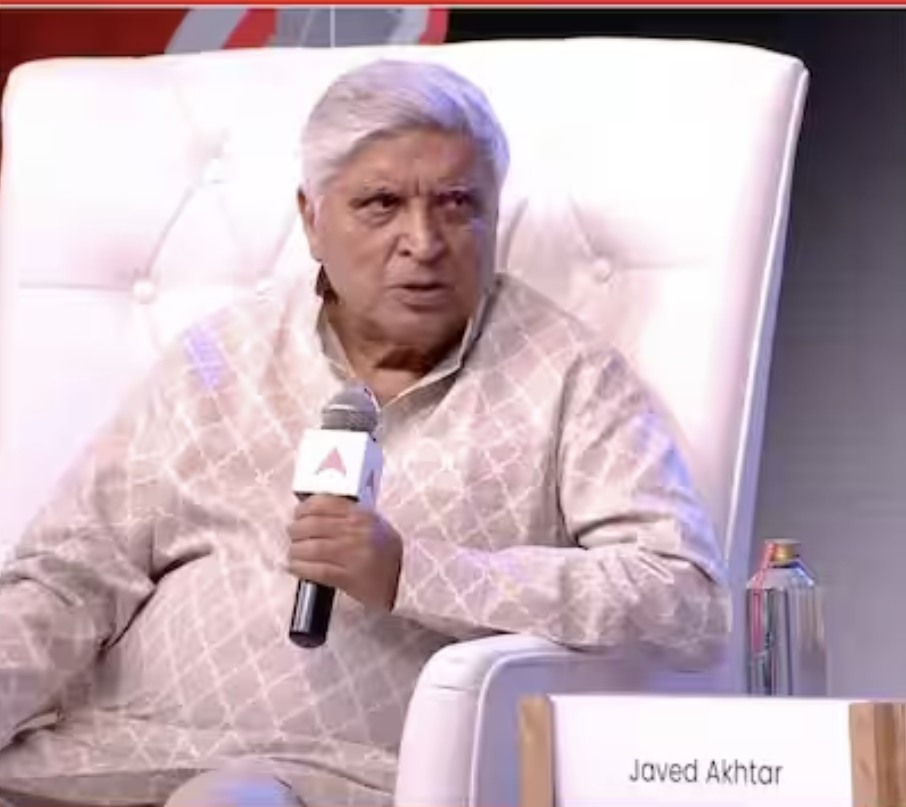
Javed Akhtar at ABP Ideas Summit in Mumbai

Chetan Bhagat began by talking about high inflation, low forex reserves and major economic crisis in Pakistan and followed it up by asking Javed Akhtar about its effects he saw on the people in Pakistan. In response, Akhtar said, "Bilkul Nahin (Not at all). In India you see poverty right in front of you, next door to a billionaire. Maybe it is kept back of the beyond. Only some people are allowed to enter certain areas. But you don't see it (poverty) on the streets. In India, it is right in front of you...amiri bhi or gharibi bhi (wealth and poverty). Sare kam apke samne hain (It's all in front of you). Wahan yeh dekhai nahin deta (you don't see it in Pakistan)". 

Alhamra Arts Center, Lahore, Pakistan

Disappointed by the response, Bhagat suggested that the Indian visitor could have been guided by his hosts through certain routes where he couldn't see any poverty. Javed Akhtar then said "it's not possible to hide poverty. I would have seen at least a "jhalak" (glimpse) of it as I always do in Delhi and Mumbai....I have been to Pakistan many times but I have not seen it". 

What Javed Akhtar saw and reported recently is obviously anecdotal evidence. But it is also supported by hard data. Over 75% of the world's poor deprived of basic living standards (nutrition, cooking fuel, sanitation and housing) live in India compared to 4.6% in Bangladesh and 4.1% in Pakistan, according to a recently released OPHI/UNDP report on multidimensional poverty.  Here's what the report says: "More than 45.5 million poor people are deprived in only these four indicators (nutrition, cooking fuel, sanitation and housing). Of those people, 34.4 million live in India, 2.1 million in Bangladesh and 1.9 million in Pakistan—making this a predominantly South Asian profile". 

Global Multidimensional Poverty Index 2022. Source: OPHI/UNDP

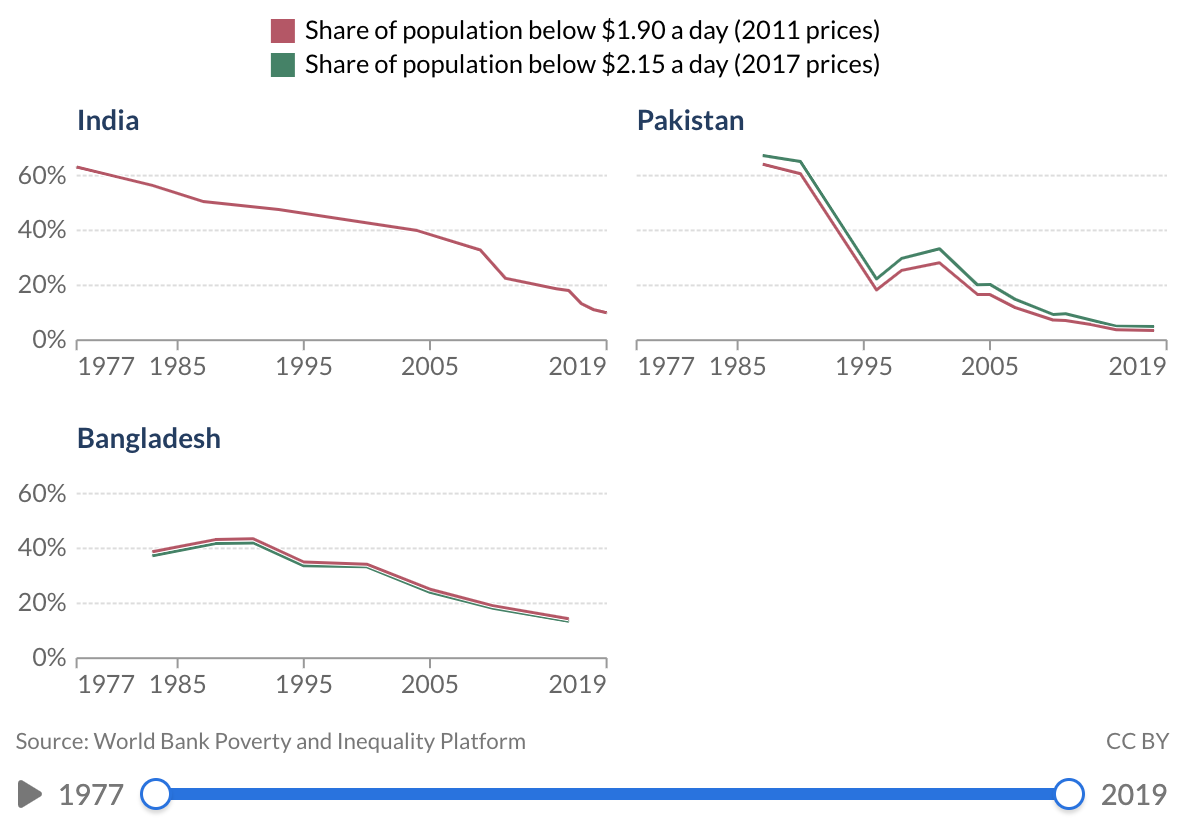
Income Poverty in Bangladesh, India and Pakistan. Source: Our World in Data


The UNDP poverty report shows that the income poverty (people living on $1.90 or less per day) in Pakistan is 3.6% while it is 22.5% in India and 14.3% in Bangladesh. In terms of the population vulnerable to multidimensional poverty, Pakistan (12.9%) does better than Bangladesh (18.2%) and India (18.7%)  However, Pakistan fares worse than India and Bangladesh in multiple dimensions of poverty. The headline multidimensional poverty (MPI) figure for Pakistan (0.198) is worse than for Bangladesh (0.104) and India (0.069). This is primarily due to the education and health deficits in Pakistan. Adults with fewer than 6 years of schooling are considered multidimensionally poor by OPHI/UNDP.  Income poverty is not included in the MPI calculations. The data used by OHP/UNDP for MPI calculation is from years 2017/18 for Pakistan and from years 2019/2021 for India. 

Multidimensional Poverty in South Asia. Source: UNDP

The Indian government's reported multidimensional poverty rate of 25.01% is much higher than the OPHI/UNDP estimate of 16.4%. NITI Ayog report released in November 2021 says: "India’s national MPI identifies 25.01 percent of the population as multidimensionally poor".
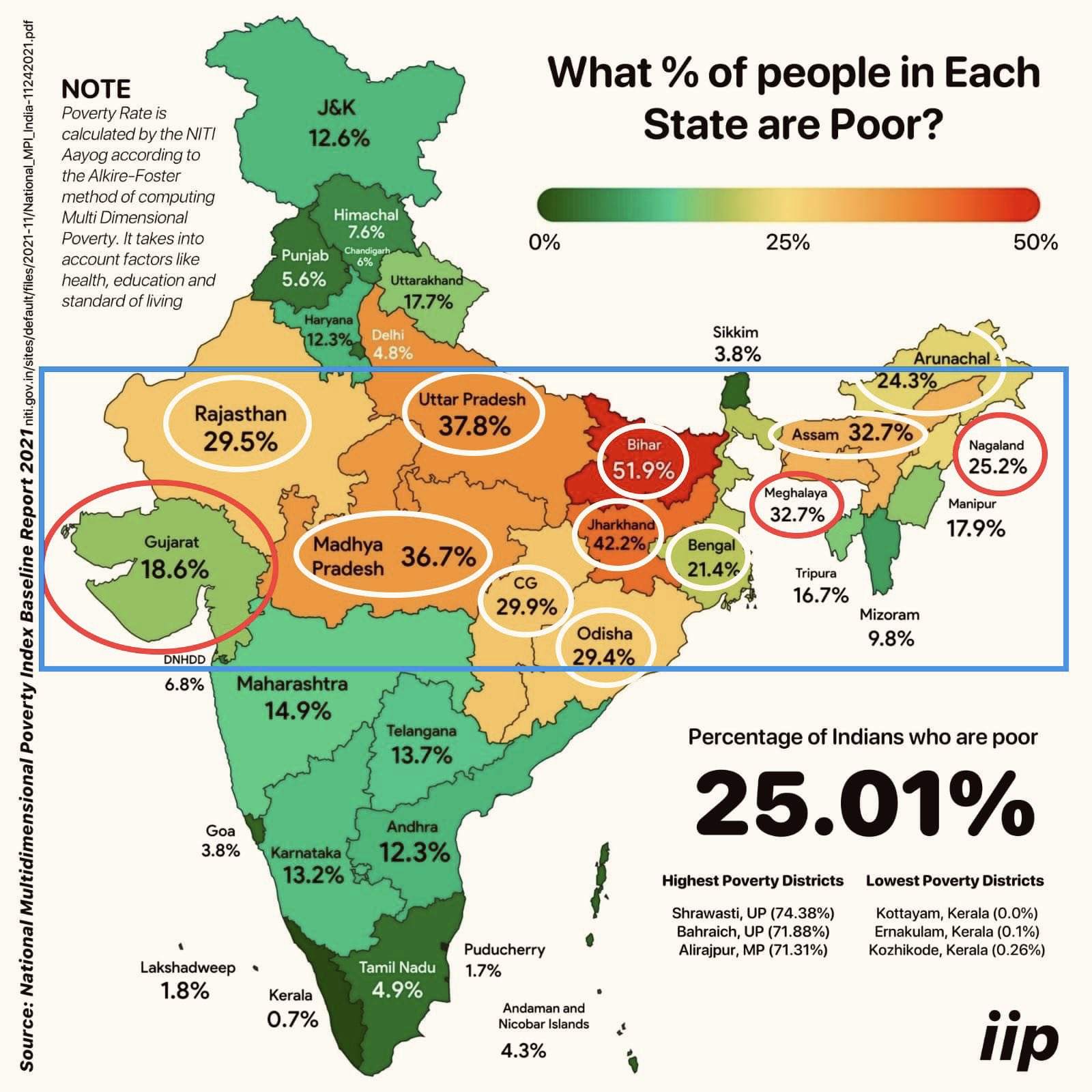
Multidimensional Poverty in India. Source: NITI Ayog via IIP

Earlier last year,  Global Hunger Index 2022 reported that  India ranks 107th for hunger among 121 nations. The nation fares worse than all of its South Asian neighbors except for war-torn Afghanistan ranked 109, according to the the report. Sri Lanka ranks 64, Nepal 81, Bangladesh 84 and Pakistan 99. India and Pakistan have levels of hunger that are considered serious. Both have slipped on the hunger charts from 2021 when India was ranked 101 and Pakistan 92. Seventeen countries, including Bosnia, China, Kuwait, Turkey and UAE, are collectively ranked between 1 and 17 for having a score of less than five.

Here's a video of Javed Akhtar's interview with Chetan Bhagat at ABP's "Ideas of India Summit 2023".  Please watch from 4:19 to 6:00 minutes. 

https://www.youtube.com/live/pZ5e81ysKGQ?feature=share


Related Links:


Haq's Musings

South Asia Investor Review

Pakistan Among World's Largest Food Producers

Pakistan Floods 2022

Food in Pakistan 2nd Cheapest in the World

India in Crisis: Unemployment and Hunger Persist After COVID

India Rising, Pakistan Collapsing

Record Number of Indians Seeking Asylum in US

Vast Majority of Pakistanis Support Imran Khan's Handling of Covid19 Crisis

Incomes of Poorest Pakistanis Growing Faster Than Their Richest Counterparts

Pakistanis Consuming More Calories, Fruits & Vegetables Per Capita 

How Grim is Pakistan's Social Sector Progress?

Pakistan Fares Marginally Better Than India On Disease Burdens

COVID Lockdown Decimates India's Middle Class

Pakistan Child Health Indicators

Pakistan's Balance of Payments Crisis

How Has India Built Large Forex Reserves Despite Perennial Trade Deficits

Riaz Haq's Youtube Channel

Wednesday, February 1, 2023

Pakistanis Remain Hopeful Amid Crises: 69% Think Their Children Will Do Better

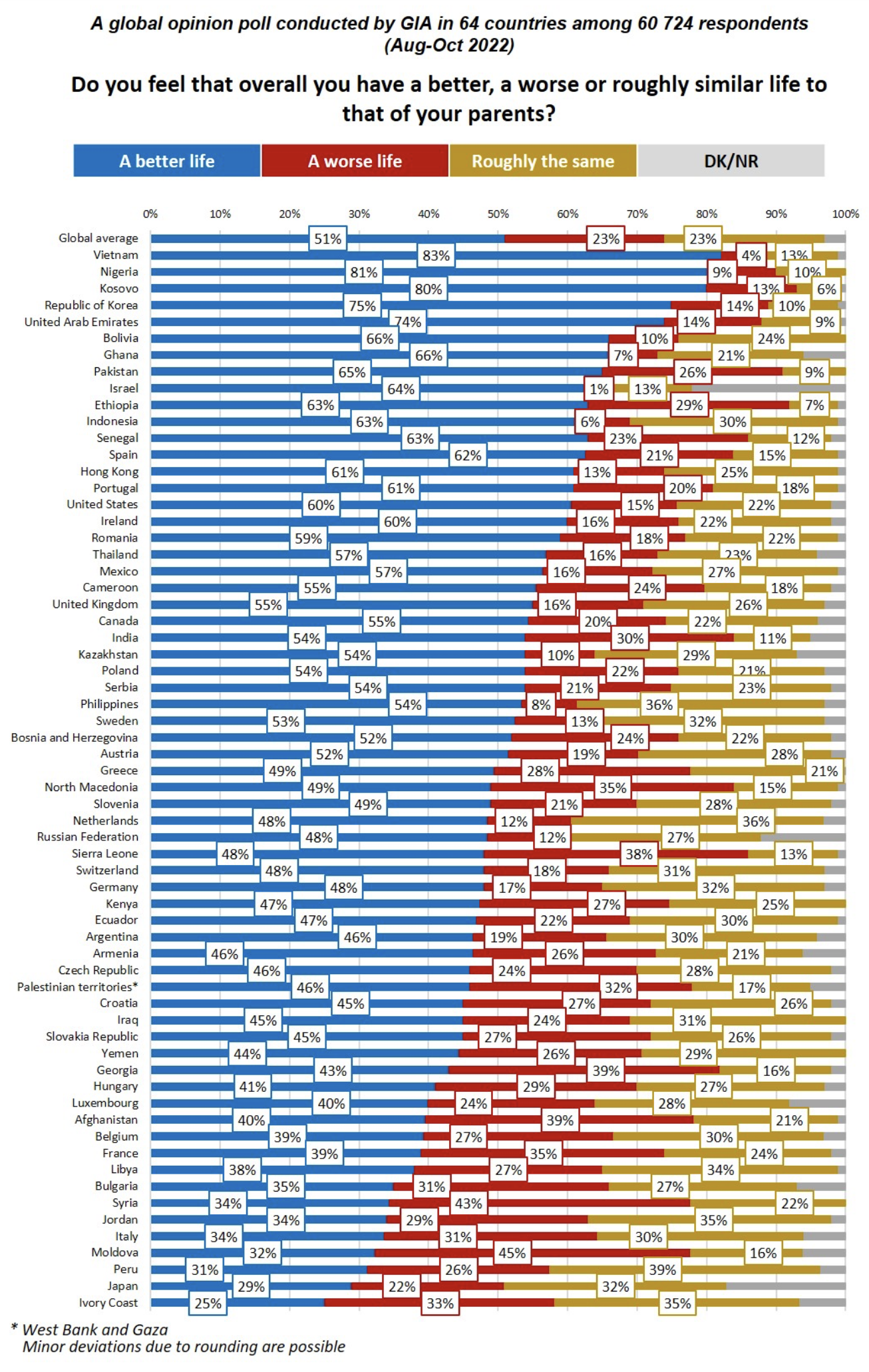
Pakistan is in the middle of multiple serious crises. But the vast majority of Pakistanis feel that they have better lives than their parents did, and they think their children will have even better lives than theirs, according to a Gallup International Poll of 64 countries conducted from August to October last year. The poll asked two questions: 1) Do you feel your life is better, worse or roughly similar to that  of your parents? and 2) Do you think your children will have a better, worse or roughly the same life as you? The answers to these questions reveal that Pakistanis are among the top 5 most positive nations among 64 countries polled by Gallup International. Anecdotal evidence in terms of packed shopping malls and restaurants in Pakistan's major cities confirms it. Such positivity augurs well for Pakistan's prospects of successfully dealing with the current crises. It will drive the nation's recovery. 

Doing Better Than Parents. Source: Gallup International

Pakistanis Among Most Optimistic: 

Nearly two-thirds (65%) of Pakistanis said they live better than their parents did. And 69% of Pakistani parents think their children will have better lives than they do. In neighboring India, 54% of respondents feel their lives are better than their parents' while only 43% say their children will have better lives than theirs'.  The global average for the former is 51% and it is 44% for the latter. The poll results put Pakistanis among the world's five most hopeful nations

Optimism For Children. Source: Gallup International


Most of the countries are positive on both questions, but if one looks for instance for countries with both above 50% positive answers, Nigeria stands out with 171 (81% positive for today plus 90% positive for tomorrow), followed by Kosovo (162), the United Arab Emirates (150), Ghana (141) and Pakistan (134), according to Gallup International. 

Sum of Percentages of Positive Answers to Both Questions. Source: Gallup

Pakistan (69% better minus 18% worse) is among the most positive countries. India is much less positive (43% minus 33%). Nigeria (90% minus 6%) tops the list in terms of positivity and the most negative is Slovenia (14% minus 53%). Among the prominent countries where GIA could poll, expectations for their children’s future are highest in Nigeria, followed by Russia (52% minus 10%), Mexico (48% minus 30%) and the USA (43% minus 31%). When combining the two questions, another perspective is added. For instance, Moldova shows a total of 86 (45% saying that their live is worse  than the one of their parents plus 41% expecting a worse life of today’s children), followed in this negative ranking by North Macedonia (82: 35% negative assessments plus 47% negative predictions), Afghanistan (81), Syria and Italy (78), etc.

Economic Mobility in Pakistan: 

Pakistanis' positive responses in the Gallup poll appear to be supported by a World Bank study. Economic mobility across generations, also known as intergenerational mobility (IGM), is a key measure of human progress. It shows that Pakistan is doing relatively well, according to a World Bank sponsored study. The analysis examines whether those born in poverty or in prosperity are destined to remain in the same economic circumstances into which they were born, and looks back over a half a century at whether children’s lives are better or worse than their parents’ in different parts of the world.

Inter-Generational Income Mobility Map of the World 2018. Source: World Bank


Intergenerational Income Mobility Study:

The World Bank study uses a newly created 2018 database—the Global Database of Intergenerational Mobility (GDIM)—that covers more than 95 percent of the global population.  Intergenerational income mobility measures how children's incomes compare with their parents' incomes at similar stages of life over a period of 50 years.

Inter-Generational Income Inequality Scatter Plot of the World 2018. Source: World Bank


The study found that higher intergenerational income mobility is associated with lower income inequality.

Inclusive Development: 

More and more Pakistanis are sharing in their nation's development, according to The World Economic Forum (WEF). Pakistan ranks 47 among 74 emerging economies ranked for inclusive development by the WEF released report at Davos, Switzerland. Inclusive development in the South Asian country has increased 7.56% over the last 5 years. The World Economic Forum assesses inclusive development  based on "living standards, environmental sustainability and protection of future generations from further indebtedness."  

“Man can live about forty days without food, about three days without water, about eight minutes without air...but only for one second without hope.”  American author Hal Lindsey


Monday, January 23, 2023

Pakistan Is Not Collapsing!

Pakistan is currently facing major economic and political crises. These are partly of its own making but mostly the result of external shocks in terms of commodity prices that have exacerbated the nation's balance of payments.  The Pakistani military's unnecessary meddling in politics and resulting political instability have not helped either. The unprecedented floods in the country have further added to the severity of the challenges.  

US and China Compete For Influence in Pakistan. Source: Wall Street Journal


Pakistan's multidimensional crisis has spurred many in India and elsewhere to predict the Pakistani state's imminent collapse. Some disgruntled Pakistanis have also jumped on the doomsayers' bandwagon. What is often ignored in such oft-repeated dire predictions is Pakistan's size and its geopolitical importance in the world. Indian analyst Amit Bhandari has summarized it well in a recent Hindustan Times Op-ed: "Despite the severity of the challenges, Pakistan is unlikely to collapse — largely because of its geostrategic importance. A bailout by the IMF or friendly countries will happen".  Let me expand on Bhandari's comments:

1. The collapse of a large country like Pakistan will be very destabilizing for the South Asia region and the world. Pakistan is the world's 5th most populous country. It has a large military armed with nuclear weapons.

2. Pakistan's location is geopolitically very important. It borders Afghanistan, China, India, Iran and the Indian Ocean.  It has a coastline next to the sea lanes that transport the bulk of the world's oil. It is connected to multiple strategically important regions of the world:  Central Asia, Middle East, South Asia and West Asia.  

3. China, the United States and Gulf Arabs have expressed a strong interest in maintaining Pakistan's stability. All of them are offering assistance to Pakistan.  China will continue to support Pakistan as it tries to stabilize its financial situation, state media quoted President Xi Jinping as saying, according to Reuters. Prince Mohammad Bin Salman of Saudi Arabia has offered to increase loans and investments of over $10 billion to Pakistan, according to Bloomberg.  American officials have said they support the IMF assistance to Pakistan, according to Dawn newspaper

4. Pakistan has received pledges of $10 billion worth of loans and grants to rebuild after devastating floods last year, according to Bloomberg News. The amount pledged exceeds the $8 billion that Pakistan sought at the United Nations Donors Conference in Geneva, Switzerland. 

Debt to GDP Ratios. India 91%, Pakistan 87%. Source: Visual Capitalist

Pakistanis are no strangers to forecasts of their country's collapse. There have been many such forecasts over the last 75 years, starting with its birth.  Western and Indian forecasts of Pakistan's collapse are not new.  Lord Mountbatten, the British Viceroy of India who oversaw the partition agreed with the assessment of Pakistan made by India's leaders when he described Pakistan as a "Nissen hut" or a "temporary tent" in a conversation with Jawarhar Lal Nehru.

Here's the exact quote from Mountbatten: "administratively it [wa]s the difference between putting up a permanent building, a nissen hut or a tent. As far as Pakistan is concerned we are putting up a tent. We can do no more." The Brits and the Hindu leadership of India both fully expected Pakistan to fold soon after partition.


1999 DoD Forecast: Pakistan Disappears by 2015

A 1999 US Defense Department study titled "Asia 2025" forecast Pakistan's collapse by 2015.  It further said that Pakistan would become part of a "South Asian Superstate" controlled by India as a "regional hegemon". Two of the study's contributors were "South Asia experts" of Indian origin. Much of the South Asia section of this study appears to be wishful thinking rather than serious analysis.  Resilient Pakistan has defied this and many other similar forecasts of its demise since its birth. 

Goldman Sachs Forecast Over Next 50 Years

Goldman Sachs analysts Kevin Daly and  Tadas Gedminas project Pakistan's economy to grow to become the world's sixth largest by 2075.  In a research paper titled "The Path to 2075", the authors forecast Pakistan's GDP to rise to $12.7 trillion with per capita income of $27,100.  India’s GDP in 2075 is projected at $52.5 trillion and per capita GDP at $31,300.  Bangladesh is projected to be a $6.3 trillion economy with per capita income of $31,000.  By 2075, China will be the top global economy, followed by India 2nd, US 3rd, Indonesia 4th, Nigeria 5th and Pakistan 6th. The forecast is based primarily on changes in the size of working age populations over the next 50 years.  

OpenAI's ChatGPT on Pakistan's Possible Collapse


There's no question that Pakistan is in the midst of very serious political and economic crises. The nation is deeply divided politically. The country's economic performance is dismal. It is of paramount importance for Pakistanis to come together to deal honestly with their internal political and economic differences. Doing so will help Pakistan's large young population realize their full potential to join the ranks of the world's top ten economies. 

Here's a Wall Street Journal video on US-China Competition in Pakistan:

https://youtu.be/wvw-85CC1t4


Tuesday, May 13, 2014

Declining Investment Hurting Pakistan Economic Growth

Pakistan needs investment of 20% of GDP to achieve 5% economic growth, a capital-to-output ratio (COR) of four, according to Mohsin Mushtaq Chandna, economic minister at the Pakistan Embassy in Washington, DC.

Major Issues:

In a wide-ranging presentation to the Pakistan Club at the University of Chicago Booth School of Business, Mr. Chandna, an alumnus of the university, listed the following major issues facing Pakistani economy:

1. Pressure on capital account

2. Declining FDI

3. Declining tax to GDP ratio

4. Over reliance on monetary policy

5. Excessive domestic borrowing

6. Extremely volatile internal and external geo-political environment

7. Energy shortages

8. Increase in poverty and unemployment rates

Heavy Borrowing: 

To make up for the shortfall in investments and tax revenues, the Pakistani government is forced to borrow heavily from commercial banks and international financial institutions such as the World Bank, the Asian Development Bank and the IMF, in addition to recent floating of $2 billion worth of bonds on international debt market. These debts add to the debt-to-GDP ratio and put further pressure on the cost of debt service.

Many of the problems highlighted by Mr. Chandna did not exist during President Musharraf's rule when foreign and domestic investments climbed to new highs and debt-to-gdp rartio declined.

Pakistan Domestic Savings Rate Source: World Bank


Domestic savings rate was about 18% and foreign direct investment reached $5.2 billion, or 3.5% of Pakistan's GDP. These investments fueled economic growth from 2000-2008.  In my view, the activist judges led by former chief justice Iftikhar Mohammad Chaudhry have contributed significantly to the sharp decline in FDI and domestic investments in the country.

Gross Fixed Capital Formation in Pakistan. Source: ADB


Foreign Direct Investment (FDI):

World Bank's data shows that foreign direct investment (FDI) in Pakistan reached a peak of over $5 billion (3.6% of GDP) in 2007 and then fell sharply in the wake of Justice Chaudhry's reversal of the privatization of Pakistan Steel Mills. FDI has essentially dried up and the Pakistan Steel Mills Corporation has accumulated losses over Rs. 100 billion in spite of multiple bailouts at taxpayers expense. It is currently operating at just 3% of capacity and its monthly payroll adds up to Rs. 500 million, according to Dawn.

FDI as % of GDP in Pakistan Source: World Bank

Canceled Privatization Deals:

Huge subsidies are being given at taxpayers' expense to Pakistan Steel Mills and several other state-owned enterprises which take resources away from more pressing needs for spending on education, health care and infrastructure. In fact, Pakistan Education Task Force Report 2011 reported that "under 1.5% of GDP [is] going to public schools that are on the front line of Pakistan's education emergency, or less than the subsidy for PIA, Pakistan Steel, and Pepco."

Speaking at a recent international judicial conference in Islamabad, Dr. Ishrat Hussain, current dean of the Institute of Business Administration and former governor of The State Bank of Pakistan, said there has not been a single privatization deal in Pakistan since the Supreme Court's 2006 decision voiding the steel mill transaction.

Dr Hussain said that despite fulfilling the legal requirements, the fear that the country’s courts may take suo motu notice of the transaction, and subsequently issue a stay order, deters businesses from investing in Pakistan, according to a report in The Express Tribune. “A large number of frivolous petitions are filed every year that have dire economic consequences. While the cost of such filings is insignificant the economy suffers enormously,” he added.

Crucial Projects Delayed:

Among other projects, Dr. Hussain particularly cited Reko Diq and LNG projects which could not proceed because of judicial activism of Pakistan Supreme Court judges.

The lack of progress on liquefied natural gas (LNG) deal has exacerbated Pakistan's energy crisis. It would have brought in 400 million cubic feet of gas per day to bridge the growing supply-demand gap now crippling Pakistan's economy.

The invalidation of Reko Diq license to  Tethyan, joint venture of Canada's Barrick and Chile's Antofagasta, has turned away Pakistan's single largest foreign investment deal to date. The deposit in Balochistan was expected to produce about 200,000 tons of copper and 250,000 ounces of gold annually. Under the deal Baluchistan province would hold a 25 percent stake in the project, with Tethyan holding the remaining 75 percent.

Militants Released:

In addition to activist judges intervention in economic matters, there have also been many instance in which hundreds of known militants have been released by Pakistani courts. Those released have then committed acts of terror which have also scared away investors, both foreign and local.

Summary:

Mohsin Mushtaq Chandna's presentation of the data and facts is quite comprehensive. A combination of poor governance and activist judges have significantly contributed to the major issues highlighted in the presentation. I hope Prime Minister Nawaz Sharif's government is up to the tough challenges faced by Pakistan.  Failure to confront these challenges would produced yet another lost decade like the decade of 1990s when Pakistan's economic growth was just 3-4%.

You can find a pdf version of Mr. Chandna's presentation on PakAlumni.com website:

http://www.pakalumni.com/forum/topics/assessment-of-the-state-of-pakistan-economy-in-may-2014

Related Links:


Saturday, August 24, 2013

India Suffers Rapid Loss of Investor Confidence

Plummeting Indian rupee is the most obvious symptom of the world losing confidence in India. The crisis of confidence is so great that Jim O'Neill, former Goldman Sachs executive whose BRIC acronym made India an attractive investor destination in 2001,  has recently said that “if I were to change it, I would just leave the "C"" in BRIC.

India has long run huge twin deficits. India imports a lot more than it exports, and its government spends a lot more than its revenue receipts. India has so far been able to finance its trade and budget deficits with foreign capital inflows. Such flows have been driven mainly by the easy money policies pursued by the US Federal Reserve and other central banks in Europe and Japan in recent years. Over $170 billion of India's $390 billion foreign debt is due for repayment within a year. India's current foreign exchange reserves are $278 billion, and repaying $170 billion debt will dramatically deplete its reserves causing further panic in financial markets.

The US Fed in Washington has been buying $85 billion worth of bonds with a few computer key strokes every month to stimulate the US economy.


Many investors had been borrowing money in US dollars at extremely low rates to invest their borrowings for higher returns in emerging markets like India.  With  US economic recovery beginning to take hold, the US Fed has signaled that it may reduce or end these bond purchases. As a result of this change, foreign investors are retrenching from the emerging markets to take advantage of better returns in US and frontier markets.

In contrast to big declines in emerging markets like India and Indonesia, some frontier markets such as the UAE, Bulgaria and Pakistan have returned over 50 percent this year in dollar terms, according to Reuters. Unlike in the big emerging economies, listed companies in Kenya or Pakistan tend to be true plays on the emerging market consumer. Earnings growth estimates for this year have risen sharply almost everywhere to 10-15 percent (versus the 9.8 percent average in emerging markets)

In addition to the stellar performance of Karachi's KSE-100 this year, Pakistani euro bonds listed on the Luxembourg stock exchange are also doing well, according to Pakistan's Dawn newspaper.  In the last four months, these bonds have surged by more than 10 per cent (excluding coupon payment), which places them among the best performing in emerging and frontier markets. During this period, yields on the bonds have declined by more than 300 basis points.

India and Indonesia have been specially hard hit because both are dependent on significant foreign inflows to fill their current-account gaps. Foreign investors have already sold a net $11.6 billion of Indian debt and equities since late May, sparking fears of continued weakness, according to Reuters. As a result, Indian rupee and major Indian stock indices have both suffered double digit losses this year. Weakness in the Indian currency, which tumbled almost 15 percent this year, could further fuel inflation, and hurt consumers in an election year. Compared to 2011-12, the Indian GDP has declined by more than $200 billion to about $1.65 trillion this year.

The Reserve Bank of India (RBI), the country's central bank,  has said it plans to buy long-dated government debt to  stabilize markets after rising volatility threatened to hurt an economy that is already growing at  the slowest pace in a decade. But the BRI actions appear to be too little too late.

There does not appear to be any quick fix to the falling rupee and declining investor confidence. The longer term solution lies in containing both the budget and the trade deficits. It will require strong political will to cut spending and reduce imports in the immediate future. Such actions will make the situation worse before it gets better. Will India's ruling politicians muster the courage to swallow the bitter pill so close to the upcoming elections in 2014? I doubt it.

Related Links:

Haq's Musings

India's Hyphenation: India-Pakistan or India-China?

India's Share of World's Poor Jumps as World Poverty Declines

Forget Chindia--Chimerica Will Rescue the World

World Bank on Poverty Across India

Superpoor India's Superpower Delusions

Are India and Pakistan Failed States? 

India Home to World's Largest Number of Poor, Hungry and Illiterate

India Leads the World in Open Defecation

India Tops in Illiteracy and Defense Spending

Indians Poorer than sub-Saharan Africans

Sunday, October 2, 2011

Mismanagement Worsening Pak's Power Crisis

It is becoming increasingly clear that it is the total absence of financial management, not just insufficient installed generating capacity, that is the crux of the worsening energy problems in Pakistan.

Riots have broken out as the Punjab, Pakistan's largest province, finds itself in the midst of the worst ever electricity crisis in the nation's history. The power shortfall has reached almost 9000 megawatts across the country, over half of the total demand of about 17000 MW.

Many public and private power producers have shut down their power plants due to the suspension of fuel supply by Pakistan State Oil, the state-owned oil company, according to a report in the Express Tribune. The oil company is demanding payment of Rs. 155 billion in outstanding dues from the power producers before resuming fuel supply.


The key players in this "circular debt" trap are the federal and provincial governments as the biggest deadbeats, the power distributors like LESCO and KESC, the power producers like Pepco and Hubco, and the fuel suppliers like government-owned Pakistan State Oil (PSO) and partially state-owned Pak-Arab Refinery Ltd (PARCO). This debt circle begins with the government as the biggest debtor and ends with a government-owned entity as the biggest creditor. So the obvious question is: If the government is both the biggest debtor and the biggest creditor, then why is it that the government leaders can not solve the problem? Is it the lack of will? or the lack of competence?

Increased load shedding in Pakistan has cost 400,000 jobs in recent years, according to the World Bank. Although the World Bank report does not address it directly, the anecdotal evidence suggests that almost all of Pakistan's 13 million jobs in the decade of 2000-2010 were created from 2000-2007 when the economy showed robust gdp growth.

Clearly, the circular debt problem has assumed alarming proportions, threatening Pakistan's future. The IMF and the US officials in their recent meetings with Pakistan government have described the circular debt as a significant threat to the country’s economy.

Unless the government urgently takes serious steps to manage and resolve this worsening electricity crisis by putting a fully empowered competent team in charge, it will only get worse and make life impossible for both businesses and consumers, and cause a total collapse of an already struggling national economy.

Related Links:

Haq's Musings

Circular Debt and Load Shedding

Integrated Energy Plan 2009-2022

Musharraf's Economic Legacy

Pakistan's Tops Jobs Growth in South Asia

World Bank Report on Jobs in South Asia

Pakistan's Twin Energy Crises

Pakistan's Worsening Electricity Crisis

Pakistan's Struggling Economy

Lahore School of Economics Paper on Circular Debt

Monday, August 1, 2011

Pakistan's Consumers Spending Again

First 9 months of fiscal 2010-2011 saw production of television sets jump 28.6% and automobile production increase by 14.6%, according to Economic Survey of Pakistan 2010-2011. From July 2010 to March 2011, production of cars, light commercial vehicles and two and three wheelers grew by 16.4%, 20.5% and 12.6% respectively. These figures confirm the return of Pakistanis' appetite for consumer durables after a significant drop from 2007-2008 to 2008-2009.

Automobile:

146,271 vehicles were produced in Pakistan in 8 months from July 2010 to February 2011, representing an increase of 9.2% y-o-y on the 133,918 units produced over the same period of FY09/10, according to figures from the Pakistan Automotive Manufacturers Association (PAMA). This consists of 85,924 units for passenger car production, 1,807 units truck production, 308 units bus production, 580 units jeep production, 12,000 units pick-up production and 45,652 units farm tractor production. Sales largely mirror production in Pakistan's auto market: the first eight months of FY10/11 saw a total of 143,785 new vehicles sold in the country, an increase of 7.1% y-o-y. Extrapolating the eight-month data across 12 months, total vehicle production would amount to 219,407 units, while total vehicle sales would register 215,678 units. This compares to the BMI forecast for the full fiscal year of just over 221,500 and just over 224,000 for production and sales respectively. However, these figures for FY10/11 aggregate sales and production are still considerably below the high watermark reached for both variables in FY07/08.


Although FY10/11 and FY09/10 have seen reasonably strong growth in y-o-y terms for both sales and production volumes, the industry is still recovering from a disastrous year in FY08/09, which was hit by a combination of the global economic downturn and severe internal political instability.

Consumer Electronics:

The media revolution of 24X7 news, entertainment and sports centered around rising number of television channels drove tv set sales up by 28.6% in 2010-2011.


Pakistan's consumer electronics market, including personal computers, mobile handsets and audio-video products, is now estimated at about $1.8 billion. BMI forecasts that this market will grow to $3 billion by 2015.

Computers accounted for about 20% of Pakistan's consumer electronics spending in 2010. BMI forecasts Pakistan's domestic market computer hardware sales (including notebooks and accessories) of $312 million in 2011, up from $292 million in 2010. Computer hardware CAGR for the 2011- 2015 period will be about 8%.

Mobile Handsets Pakistan's market handset sales are expected to grow at a CAGR of 16% to 29.5 million units in 2015, as mobile subscriber penetration reaches 70%. Revenues growth will be slower due to lower average selling prices (ASPs) of mobile handsets, with most handsets sold at less than $40. Another issue is the declining growth rate of mobile subscriber penetration, which is now more than 60%. 3G licenses are still expected to be awarded in 2011, but Pakistan's telecoms regulator has yet to confirm this.

Fast Moving Consumer Goods:

Fast moving consumer goods (GMCG) sector, including food, beverage and tobacco, grew by 9.3%, according to Economic Survey of Pakistan 2010-11. Adverting revenue from this sector has continued to drive proliferation of electronic mass media in Pakistan.

Conclusion:

The continuing growth in consumer spending is a testament to Pakistanis' resilience in the midst of multiple and very serious crises of energy shortages, continuing militancy and political violence and instability. The question is how long can this extraordinary resilience last if the corrupt and incompetent Pakistani politicians continue to persist in their mismanagement of the country and its economy.

Related Links:

Haq's Musings

Resilient Pakistan

Pakistan's Rural Economy Showing Strength

Pakistan's Exports and Remittances Rise to New Highs

Incompetence Worse Than Corruption

Sugar Crisis in Pakistan

Agricultural Growth in India, Pakistan and Bangladesh

Pakistan's Rural Economic Survey

Pakistan's KSE Outperforms BRIC Exchanges in 2010

High Cost of Failure to Aid Flood Victims

Karachi Tops Mumbai in Stock Performance

India and Pakistan Contrasted in 2010

Pakistan's Decade 1999-2009

Musharraf's Economic Legacy

World Bank Report on Rural Poverty in Pakistan

Copper, Gold Deposits Worth $500 Billion at Reko Diq, Pakistan

China's Trade and Investment in South Asia

India's Twin Deficits

Pakistan's Economy 2008-2010

Auto Industry in India, Pakistan and China

Media Revolution in Pakistan

Thursday, March 11, 2010

Field Hockey: Pakistan's Race to the Bottom

Pakistan field hockey has hit rock bottom. The four-time world champions and winners of the Olympic gold medal in field hockey have ranked at 12 out of 12 nations that participated in this year's World Cup in India. And it's not just hockey; the fortunes of the national cricket team are also in steep decline. Pakistan Cricket Board, the nation's cricket body, has slapped bans and fines on the top players of the national cricket team after the loss of all of the matches played during their recent Australian tour.

With the close relatives and cronies of the ruling feudal politicians heading Pakistan Cricket Board (PCB) and Pakistan Hockey Federation (PHF) as well as other key functions in government, the nation's sports are not immune from the corrosive effects of the national politics of the day. What is happening in the sports arena is tragic, but it is not limited to Pakistani sports teams. The fall of cricket and hockey are symptomatic of a much larger problem. There is a race to the bottom in the national life; the economy is stagnant since 2008, after being among the best performing in the region; its politics is petty; there is total breakdown in law and order; the nation is slipping in the UNDP human development rankings; there is growing sense of insecurity from terror attacks; the country is experiencing unprecedented multiple crises of power, water, gas, food, and the list goes on and on. A wave of toxic cynicism is engulfing the entire nation in the absence of inspiring and competent national leadership.

It was under the military government of President Musharraf that Pakistan's private mass media were born and bred, and enjoyed unprecedented freedom in the history of the nation. Ten years ago Pakistan had one television channel. Today it has over 100. Together they have begun to open up a country long shrouded by political, moral and religious censorship under military and civilian "democracy" alike. Now they are taking on the government, breaking social taboos and, most recently, pushing a new national consensus against the Taliban.

The multiple TV channels spawned by the Musharraf media revolution were joined by the expanded middle class which also grew along with the media to bring down the previous government in 2008. Now, the ruling feudal politicians, and prominent media personalities are mindlessly and tirelessly repeating the mantra that "even the worst democracy is better than the best dictatorship." They insist on it as an article of faith. What they completely ignore is the fact that "good" dictatorships in many East Asian nations have helped create strong economies with large and highly developed middle class populations, leading them to durable and competent democracies.

Clearly, the politicians and the TV talk show hosts are not the ones paying the heaviest price for the current sham democracy led by the most incompetent and corrupt people. Instead, it is the lower middle class and the poor who are suffering the most. Many of them have lost their jobs and slipped back into poverty with the declining economy during the last two years. They are unable to buy the basic necessities such as food and fuel because of high inflation. They lack the resources to insulate themselves from the terrible effects of deteriorating governance in the name of democracy. Unlike the feudal politicians and the well-paid TV talking heads, the poor and lower middle classes can not buy private security, or get a private diesel generator, or have private delivery of water to their homes. Nor do they have affordable access to justice from the "independent judiciary" or the services of the largely absent "pro bono" lawyers to petition the courts on their behalf. They are left to fend for themselves with no help from the urban elite or the members of the "civil society" who make up the vast majority of the most vocal supporters of feudal democracy in Pakistan.

Pakistan's average economic growth rate was 6.8% in the 60s (Gen. Ayub Khan), 4.5% in the 70s(Zulfikar Bhutto), 6.5% in the 80s (Gen. Zia ul-Haq), and 4.8% in the 90s (Benazir Bhutto and Nawaz Sharif). Growth picked up momentum in the 21st Century under General Musharraf, and from 2000-2007, Pakistan's economy grew at an average 7.5%, making it the third fastest growing economy in Asia after China and India. There were 2-3 million new jobs created each year from 2000-2007, which significantly enlarged the middle class, and helped millions escape poverty.

Unfortunately, there is a troubling history of the democratic process in Pakistan resulting in the election of leaders who are demonstrably both corrupt and incompetent. After surviving the lost decade of the 1990s under such leaders, and then thriving in the last decade under a more competent dictator until 2007, Pakistan has once again returned to the bad old days of the 1990s. The economy is stagnating, inflation is high, there are shortages of everything from food to water and power and security, unemployment is rising, and many are slipping back into poverty.

It would be great if Pakistanis could have both competence and honesty in their leaders. However, I would personally insist on competence to deliver good governance as a minimum criterion for leadership positions, if I can't have both.

Here is my incomplete wish list for the kind of competencies desirable in governing Pakistan at this critical juncture in its life:

1. Motivational Competency: The leadership needs to sell a vision of a secure, peaceful, stable and prosperous Pakistan, and motivate the people to work toward achieving it. It's not going to be easy, but strong motivational skills can help inspire the nation, in spite of the deep skepticism and toxic cynicism that pervades the nation's discourse today.

2. Security Competency: What the leadership needs is a comprehensive strategy using a mix of intelligence capability, political dialog, military force and close monitoring to isolate and defeat those who continue to perpetrate murder and mayhem on the streets of Pakistan. Such a policy must be developed, debated, sold to the people, and constantly refined to produce results.

3. Human Development Competency: No nation can achieve greatness unless its human resource potential is developed and utilized to the fullest. It is a challenge that will require a team of committed and competent professionals with the full backing and the resources of the state to build a public-private partnership for mass literacy campaigns and to provide access to food and health care. Beyond that, there will be a serious focus required to build great institutions of higher learning to develop knowledge based economy for the twenty-first century.

4. Economic Competency: There is a need to build a non-partisan economic leadership team with the best available talent and experience in Pakistan. Such a team should be chartered to come up with policies and programs to spur nation's economic growth to create opportunities for the tens of millions of young people, and to generate the national resources for funding ambitious programs in human and economic development of the nation.

Can our current leadership do it? Their past record is not reassuring. However, if they make a serious effort toward it, and start to show some results, I am confident they will find real support for their efforts in Pakistan. Results from good governance by the leadership will be the best guarantee for reversing the current race to the bottom and ensure the survival of democracy in Pakistan.

The rhetoric that "even the worst democracy is better than the best dictatorship" can not save democracy. If the current crop of elected politicians are really serious about strengthening democracy, it is important for them to pursue a broad good governance agenda in Pakistan with education and training of politicians as the center piece. It is important for them to revive the idea of a school of government in Islamabad to increase the chances for democracy to survive and thrive in Pakistan. Unless the politicians find a way to improve governance to solve people's problems, the nation will be condemned to repeat the past history of democracy's failure in Pakistan.

Related Links:

Why is Democracy Failing in Pakistan?

Pakistan's Economic Performance Since 2008

Human Development Slipping in South Asia

Pakistan's Decade of 1999-2009 in Review

ASEAN Architect Suharto Passes On

NRO and Corrupt Democracies in South Asia

Malaysia National Front Suffers Setback

Musharaf's Economic Legacy

Musharaf's Media Revolution

Pakistan's Corruption Indexes

Return to Bad Old Days in Pakistan

Shaukat Aziz's Economic Legacy

Daily Carnage in Pakistan

Saturday, August 1, 2009

July in Dubai


My family and I stopped in Dubai for a three-day vacation in July on our way to Pakistan from the United States. As I was planning the Dubai stopover, a friend of mine who maintains an apartment in Dubai for his frequent business trips there heard about it, and offered to me the use of his apartment and his driver for the duration of our stay. This friendly gesture proved to be extremely convenient and valuable for us. Not only did the driver meet us at the airport upon arrival, he stayed with us and showed us around the usual places such as Palm Jumeirah, Burj ul Arab, Atlantis hotel and resort, various shopping malls, etc. He also arranged for a desert safari for us. In addition to the tourism, my family and I got a chance to meet an old friend of mine and his family, who have been settled in Dubai for the last thirty years. He heads the sales office of a major European company there.

Our Dubai arrival was very smooth. The plane landed at 4AM, about a half hour earlier than scheduled, and the immigration and customs procedure were very quick and efficient. As we came out of the airport terminal building, our eyeglasses were all fogged up by the heat and humidity of Dubai. We had to take them off to look for the driver who was supposed to receive us. He did arrive shortly after, and took us to the apartment and got us settled in there. On our way, we heard the muezzin's calls for the morning prayers from several mosques, reminding us that we were in a Muslim nation. We stopped at a Pakistani restaurant, and picked up a breakfast of desi omelets and paratha and ate at the apartment.

After resting for a few hours, we ventured out to the Dubai city mall. As we drove from the apartment, the city appeared to be enveloped in a rather thick haze that the driver suggested was dust. The roads were wide, and we could see many shiny new buildings, and few cranes on either side of the road. The traffic seemed fairly light for a normal business day. We headed to the Mall's food court for lunch. Many of the restaurants were familiar, including KFC, Burger King, Krispy Kreme and Subway, but we decided to go for the middle eastern fare at a Lebanese place. The food was quite good and reasonably priced. Since I needed a GSM cell phone and a local SIM, the driver took me to a phone company outlet, where an Indian gentleman was kind enough to suggest buying at Carrefour at a much better price, which I did. The cell phone was activated within an hour after installing the SIM and I was able to make several calls, including overseas calls.

The mall has many European stores selling designer merchandise, along with many small stores carrying all kinds of things ranging from apparel to jewelry, shoes, flowers, toys, electronics and food items. The stores selling expensive European designer apparel and accessories such as expensive bags, shoes and jewelry appear to be particularly favored by the rich Emirati women who are quite fashion-conscious. One could see glimpses of many of them, even though some were covered from head to toe, wearing expensive designer stuff visible underneath their black covers.

In the evening, my wife and daughters checked out some of the desi apparel and jewelry stores, and later we visited my old friend's apartment. He had arranged for dinner at a restaurant called Barbecue Delight that offered a delectable buffet with a wide selection including chicken tikka, seekh kabab, nihari, naan, biryani etc. We enjoyed the food and talked about how things are going in Dubai. He confirmed for us what we had heard and observed; the business is significantly down from a year ago, the rents have come down, the real estate prices are slipping, many people have lost their jobs and left the Emirate, some with the keys in their cars abandoned at the airport. It was reported earlier this year that Dubai police have found at least 3,000 automobiles -- sedans, SUVs-- abandoned outside Dubai International Airport in the prior four months. Dubai and other emirates in the UAE have been heavily criticized for their labor laws that badly treat the poor immigrant labor building the infrastructure. In 2007, the New York Times reported that "after several years of unprecedented labor unrest, the government is seeking peace with this army of sweat-stained migrants who make local citizens a minority in their own country and sustain one of the world's great building booms. Regulators here have enforced midday sun breaks, improved health benefits, upgraded living conditions and cracked down on employers brazen enough to stop paying workers at all."

There have also been reports of bailout of debt-ridden Dubai by Abu Dhabi recently, when Dubai was unable to honor a $10 billion bond in June, 2009. Another default is likely on a $10 billion bond coming due in December this year. Dubai has a reported debt load of over $80 billion that must be handled even as the property values continue to fall. These issues of debt and falling property prices will continue to be a drag on Dubai’s recovery. However, as the crisis unfolds, Dubai does have an advantage: no other city in the Middle East has the vision or the infrastructure to act as a services hub for the rest of the oil-rich region, which is expected to rebound from this global recession faster than other areas. With $600 billion of foreign exchange reserves and sovereign investments, the United Arab Emirates, of which Dubai is a part, has considerable resources to support Dubai's recovery.

Continuing our vacation the next day, we saw more malls including the Mall of the Emirates and Ibn Batoota mall. These malls did not seem crowded. But there were quite a few kids at the indoor ski resort at the Mall of the Emirates. The artificial ski slope seemed to be fairly tame, like a beginner bunny slope at ski resorts in the Sierras, perfect for the curious young ones wanting to explore skiing and snowboarding. We then went to see the newly built Palm Jumeirah, a man-made island about 5 km in diameter. It covers an area of 600 hectares and was reclaimed from the sea. Once complete, the development will increase the Dubai shoreline by 75 km. We saw a lot of apartments and villas on Jumeirah that appear to be empty. Many are said to have been bought by foreign, non-resident speculators who who were hoping to make a quick buck by flipping these properties prior to the bubble burst.

While most environmentalists believe Palm Jumeirah is a disaster, it is a great engineering feat and aesthetically quite pleasing, particularly the Atlantis hotel and resorts are beautiful. There is a very impressive aquarium inside Atlantis that features live sharks. But there are persistent concerns that most of the reclaimed development will come under water as the sea level rises with global warming later this century.

We headed out to Sharjah for the desert safari in the afternoon. We were driven in a Toyota Landrover, and as we approached the desert, the driver partially let out the air from the tires to get better traction on sand. It was quite a thrill ride over the sand dunes and felt much like a roller coaster ride. The driver drove up to the top of the sand dunes, and then rapidly came down the other side, slipping and sliding all the way.

Following the sand dune adventure in Sharjah, there were camel rides, dinner and belly dance at a camp in Dubai. The driver explained to us that the camp is located in Dubai because the Emir of Sharjah has forbidden drinking and dancing in his emirate.

It was an enjoyable few days for us in Dubai. It's an emirate like no other, allowing night clubs to operate along with its many mosques. In spite of its current economic difficulties and concerns about labor practices, it has the potential to come back strong because of its multiple advantages, such as many first-world businesses, excellent infrastructure and its ambitious leadership. It represents a place where the average people of South Asia and the Middle East can get a taste of how the other half in the first world lives, and hope to aim higher to improve their own lives in their native lands.

Related Links:

Dubai Incorporated

South Asians Flee Dubai as Economy Slows

UAE Investments in Pakistan

Global Warming Impact

Bye-Bye, Dubai