Showing posts sorted by relevance for query bollywood. Sort by date Show all posts

Sunday, September 25, 2016

Bollywood Eyes Pakistan Market Amid Declining Sales in India

Amid the Hindu Nationalists calls for sending Pakistani actors home, what is being overlooked is the fact that Bollywood needs Pakistan more than Pakistan needs Bollywood.  Why? Let me explain.

Pakistan is Bollywood's second biggest foreign market. Last year, Pakistan's box office receipts jumped by 28% while India's domestic box office collection fell 6.7%.

Decline in Bollywood's revenue at home is forcing the Indian movie industry to look to Pakistan for growth. Part of the Indian strategy is to feature Pakistani actors and artists in its productions to increase Bollywood's appeal to Pakistan's growing moviegoers market.

The money earned by Pakistani actors working in Bollywood is minuscule compared to the business Bollywood films are doing in the rapidly growing Pakistan market.

Pakistani Actors in Bollywood: Fawad Khan,  Mahira Khan, Mawra Hocane


Bollywood ticket sales fell by 6.7% to INR 2,568 crore ($385m) from 2014’s total of  INR 2,754 crore (US$413), according to figures published by India's Business Standard. Alarmed by declining sales, Disney Studios have decided to pull out of India.

After suffering huge losses at the domestic box office, the most recent one being Ashutosh Gowariker's Mohenjo Daro, Disney India - the company formed after Disney acquired controlling stake in UTV - has pulled the plug on all things Bollywood. Instead, Disney will only focus on its Hollywood films distribution, licensing and merchandising business in India, according to India Today.

On the other hand, Pakistani cinema, though small, is growing very rapidly with the explosive growth of multiplex theater screens. Pakistan's "The News Sunday" estimates that box office receipts in the country jumped 28 per cent in 2015 as compared to 2014 and this figure is only expected to grow in coming years. On Eid ul Azha this year, the top 3 highest-grossing films were all produced in Pakistan, according to EasyTickets.pk.

Source: EasyTickets.pk

Here's how Indian media and entertainment analyst Akar Patel describes Bollywood's business opportunity in Pakistan:

"In Pakistan, there is a big market for Indian movies in their multiplexes. For decades this revenue was lost to Bollywood because the movies were pirated. Under former president Pervez Musharraf, the official screening of movies was allowed, benefiting both nations. Today all Bollywood movies are shown there. Unfortunately, the current state of ties between the two countries has been allowed to deteriorate so much that we should not be surprised if Musharraf's wise decision is reversed."

It is a win-win arrangement with Pakistani artists working with their Indian counterparts in Indian movies and increasing Bollywood revenue from Pakistan market.

If the anti-Pakistan rhetoric and the attacks on Pakistani artists in Mumbai continue, it is very likely that Pakistan will respond by banning the showing of Indian films in a rapidly expanding market market for Bollywood entertainment. In addition to increasing estrangement between the two neighbors, stopping cooperation and collaboration will be a significant blow for the entertainment industries in both India and Pakistan.

Related Links:

Haq's Musings

Peepli Live Destroys Indian Myths

Bollywood-Hollywood Combos

Indian Bollywood Seeks Cultural Dominance

US Mortgage Fraud Funded Bollywood Movie

Coke Studio: Music Drives Coke Sales in Pakistan


Wednesday, April 19, 2017

Bollywood Revenue in Sharp Decline: Down 12% in 2016

Bollywood movie revenue suffered 12% drop in 2016 to $338 million, the sharpest decline ever, according to Reuters news agency. Meanwhile, the global movie revenue rose just 1% to a record $38.6 billion last year, according to a report by Motion Pictures Association of America.

Box office sales hit a record $11.4 billion in the United States and Canada, up 2% from 2015, thanks to blockbusters such as “Rogue One: A Star Wars Story,” “The Secret Life of Pets,” and “Captain America: Civil War”, according to a report in Los Angeles Times.

By contrast, the Bollywood revenue, a tiny fraction of the global film market,  has been in decline since 2014. It fell from $413 million in 2014 to $385 million in 2015 to $338 million in 2016, down 6.7% from 2014 to 2015 and then again dropping 12% from 2015 to 216.

While Bollywood business is in sharp decline, the Pakistani cinema, though small, is growing very rapidly with the explosive growth of multiplex theater screens. Pakistan's "The News Sunday" estimates that box office receipts in the country jumped 28 per cent in 2015 as compared to 2014 and this figure is only expected to grow in coming years.

Here's how Indian media and entertainment analyst Akar Patel describes Bollywood's business opportunity in Pakistan:

"In Pakistan, there is a big market for Indian movies in their multiplexes. For decades this revenue was lost to Bollywood because the movies were pirated. Under former president Pervez Musharraf, the official screening of movies was allowed, benefiting both nations. Today all Bollywood movies are shown there. Unfortunately, the current state of ties between the two countries has been allowed to deteriorate so much that we should not be surprised if Musharraf's wise decision is reversed."

It can be a win-win arrangement with Pakistani artists working with their Indian counterparts in Indian movies and increasing Bollywood revenue from the growing Pakistan market that is already the second largest market for Bollywood entertainment. However, the powerful Hindu Nationalists appear to be succeeding in thwarting this partnership.

If the anti-Pakistan rhetoric and the attacks on Pakistani artists in Mumbai continue, it is very likely that Pakistan will respond by reimposing the ban on showing of Indian films in a rapidly expanding market market for Bollywood entertainment. In addition to increasing estrangement between the two neighbors, stopping cooperation and collaboration will be a significant blow for the entertainment industries in both India and Pakistan.

Related Links:

Haq's Musings

Bollywood Eyes Pakistan Market

Peepli Live Destroys Indian Myths

Bollywood-Hollywood Combos

Indian Bollywood Seeks Cultural Dominance

US Mortgage Fraud Funded Bollywood Movie

Tuesday, April 24, 2018

Pakistani Film Cake Breaks Sindhi Stereotypes

Pakistani movie "Cake" is a Sindhi family drama set in Karachi and rural Sindh.  I had the chance to see it on a Silicon Valley theater screen in California.

Cake is nothing like the usual Bollywood fare featuring an "item song" included in a series of song-and-dance sequences. It tells a story accompanied with a great soundtrack showcasing the classic Sindhi poetry of Shah Abdul Latif Bhitai and Shaikh Ayaz, some of it sung by Allan Fakir in his mournful voice.

Directed by Asim Abbasi, the movie has an interesting plot and it tells a good story. What makes its  plot especially relevant to the Pakistani diaspora is that it involves a theme familiar to them: Ailing elderly parents  (Jamalis ably played by Mohammad Ahmed and Beo Raana Zafar) in Pakistan with two of their three children living overseas. It also defies the stereotypical depiction of patriarchal Sindhi men as cruel landlords oppressing their women and peasants.

At the center of the story is Zareen (Aamina Sheikh) who takes care of her aging parents in Karachi and their land in rural Sindh. She is joined by her sister Zara (Sanam Saeed) from London when their elderly parents' health suddenly deteriorates.  Many long unresolved family issues come to the surface as they spend time together.  Some of the issues are triggered by the arrival of Christian nurse Romeo (Adnan Malik) who helps the sisters in providing care to their parents.

Except for a few sentences spoken in Sindhi by Aamina Sheikh, the rest of the movie features Urdu as the primary language spoken by the main characters in the movie. It shows how widely Urdu has been embraced by all ethnic groups as the lingua franca binding Pakistanis together as a nation.

Cake is a well-made and beautiful movie featuring great acting talent that breaks old stereotypes. It is yet another confirmation of the renaissance that the Pakistani cinema has seen in the last decade.

Related Links:

Haq's Musings

South Asia Investment Review

Bollywood Revenue in Sharp Decline

Bollywood Eyes Pakistan Market

Peepli Live Destroys Indian Myths

Bollywood-Hollywood Combos

Indian Bollywood Seeks Cultural Dominance

US Mortgage Fraud Funded Bollywood Movie


Sunday, February 8, 2009

Bollywood and Hollywood Create Combos


Bollywood and Hollywood are joining forces to produce a whole slew of hybrid movies with money, stars and scripts flowing in both directions. The motivation is clear: Both purveyors of entertainment are looking to expand their audiences. "It's the right time for these two giants to shake hands," Mr. Vidhu Vinod Chopra, Indian writer and director, told the Wall Street Journal, adding that Hollywood stands to benefit from India's large movie audiences. "We have stars like Aamir Khan, who has more eyeballs than Tom Cruise, Brad Pitt, anybody."

Though it is dwarfed by Hollywood's $10b in sales last year, India's domestic film industry is growing much faster at 15% annually and is projected to hit $4 billion by 2012, up from $1.9 billion in 2007, according to PricewaterhouseCoopers.

Wall Street Journal is reporting a number of joint projects currently in development: Screenwriter Paul Schrader, famous for such films as "Taxi Driver" and "Raging Bull," is working on a thriller with an Indian producer. Sylvester Stallone will appear in "Kambakkht Ishq," or "Incredible Love," an action-filled comedy shot in Los Angeles and starring Akshay Kumar. Indian film mega star Shahrukh Khan is producing and starring in a superhero film that will be co-written by American and Indian screenwriters and digitally souped up by American special-effects technicians.

The critical or commercial success of such projects, however, remains a big question mark based on the reception of the recent releases of Slumdog Millionaire and Chandni Chowk. While Slumdog Millionaire grossed about $70m in America and received nominations for many of the most prestigious Hollywood awards, it was greeted by howls of protests in India. Bollywood's biggest superstar of all time, Amitabh Bachchan, scolded Slumdog producers on his blog for showing India as "a third world dirty under belly developing nation (sic)" when poverty can be found in rich countries as well. Contrast that with Chandni Chowk's miserable performance, with less than a million dollars gross in spite of being released on 125 screens, the biggest ever Bollywood release in America. Chandni Chowk was considered an average draw at the Indian box office, with Rs. 400 million in ticket sales.

American audiences may not warm to Indian-style kitschy, song-and-dance sequences and melodramatic staples. In 2007, Columbia Tri-Star funded and produced "Saawariya," which failed to capture a wide audience in India and flopped in its limited U.S. release, earning $885,574 in American theaters. Executives at Sony Pictures, which owns Columbia, declined to say how much the film made in India but noted that they more than recovered their investment.

In spite the huge gap in taste between the South Asian and American audiences, it would be hard to dismiss the new Indo-American hybrid film genre, given the amount of talent, money and serious interest by the big studios and investors in Los Angeles and Mumbai going in to make it a success. It will be very interesting to see how such a wide gap is bridged by the undeniable talent on both sides.

Here's the title track for Chandni Chowk to China:


Related Links:

India's Bid to Extend Cultural Dominance

Mumbai's Slumdog

Harry Potter Versus Hari Puttar

Amitabh Bachan Slams Slumdog

Highest Grossing Bollywood Films

Highest Grossing Hollywood Films

Monday, July 15, 2024

Ambani Wedding: Billionaires, BJP and Bollywood

Last few months have seen a grotesque display of obscene wealth in India, a country with well-documented levels of extreme poverty, hunger and unemployment. Indian billionaire Mukesh Ambani has splurged hundreds of millions of dollars on his son's wedding attended by top politicians including Prime Minister Narendra Modi, Hollywood and Bollywood celebrities and Ambani's fellow billionaires who have accumulated vast amounts of wealth in one of the world's most unequal countries.  Experts blame it on Mr. Modi's policies promoting crony capitalism.  Viral Acharya, former deputy governor of Reserve Bank of India, told the BBC that their ability to acquire large distressed companies, a growing appetite for mergers and acquisitions, and India's conscious industrial policy of creating "national champions via preferential allocation of projects and in some cases regulatory agencies turning a blind eye to predatory pricing".

Indian Prime Minister Modi at the Ambani Wedding in Mumbai. Source: ANI

Between 2014-15 and 2022-23 on Mr. Modi's watch, the rapid rise in inequality in India has been particularly striking in terms of wealth concentration, according to World Inequality Lab. The top 1% now control over 40% of total wealth in India, up from 12.5% in 1980, and they earn 22.6% of total pre-tax income, up from 7.3% in 1980.  Almost 90% of the country's billionaire wealth has been found concentrated in the hands of the upper castes. The Inequality Report concludes: "This spectacular rise of inequality (in India) makes the “Billionaire Raj” headed by India’s modern bourgeoise more unequal than the British Raj headed by the colonialist forces. It also squarely places India among the most unequal countries in the world". 

Bollywood, the powerful Indian film industry, has become a key enabler of BJP's billionaire-friendly and   Islamophobic policies. In a piece titled “India's theatrical politics: Bollywood, billionaires and the BJP", authors Sehr Rushmeen and Wanya Sidhu write: "By shaping narratives that subtly endorse “Hindutva” ideologies, sometimes even employing Muslim actors to deliver skewed messages, Bollywood contributes to a socio-political echo chamber in favor of Modi’s BJP...... Bollywood movies transcend mere entertainment; they convey narratives cleverly crafted to align with the BJP’s political agenda. By consistently portraying Muslims and Pakistan in a negative spotlight, these Indian blockbusters perpetuate a cycle of fear and nationalistic fervor to garner votes for the BJP while discarding the imperative of forging national unity".

Meanwhile, India's child-wasting rate of 18.7% is the highest in the world, according to the Global Hunger Index (GHI) 2023 released last year.  The South Asian country’s child wasting rate is higher than that of war-torn Yemen (at 14.4%) and Sudan (at 13.7%), which are ranked second and third in the world. Pakistan's child wasting rate is 8%.  It represents the share of children under age five who have low weight for their height, reflecting acute undernutrition.  The child wasting rate of the South Asia region is 14.8%, the highest of any world region and more than twice the child wasting rate of Africa. India is home to a quarter of the world's most undernourished people. According to the United Nations, India has nearly 195 million undernourished people. This is more than any other country, including China. 

India Tops in Child Wasting Rate. Source: The Wire


India Tops the World in Child Wasting. Source: Global Hunger Index 2023


India's Hindu Nationalist government  of Prime Minister Narendra Modi wants to project India as a superpower launching moon missions and hosting G20 summits. Since the GHI 2023 report runs counter to this PR exercise, New Delhi has rejected its findings. But its own National Family Health Survey 5 (NFHS 5) says that "Thirty-six percent of children under age five years are stunted; 19 percent are wasted; 32 percent are underweight; and 3 percent are overweight. Children born to mothers with no schooling and children in the lowest wealth quintile are most likely to be undernourished". 

Overall, India ranks at the 111th position out of 124 countries, with neighboring Pakistan (102nd), Bangladesh (81st), Nepal (69th) and Sri Lanka (60th) faring better than India in the index. India has slipped four notches from its 107th position in 2022.

India has slipped 4 places, from 107 in 2022 to 111 in 2023, on GHI. Pakistan's ranking has also slipped 3 places, from 99 to 102.  It is not a huge surprise since the country is still facing the aftermath of the disastrous floods of 2022. It is also suffering from a serious economic crisis. Meanwhile, India's Modi government is making claims to being the world's fastest growing economy. And yet, Indian children are the most malnourished in the world. 

India Malnutrition Indicator Trends. Source GHI 2023

Pakistan Malnutrition Indicator Trends. Source GHI 2023


There's a close relationship between hunger and poverty. At the $3.65 poverty line, India accounts for 40% of the slight upward revision of the global poverty rate from 23.6% to 24.1%, according to the World Bank September 2023 Global Poverty Update. It is the same update that made the following recent headline in the Indian and Pakistani media about Pakistan: "Pakistan's 40% Population Lives Below Poverty Line, Says World Bank". Fact: 45.9% of Indians and 39.4% of Pakistanis live below the $3.65 a day poverty line as of September, 2023, according to the latest World Bank global poverty update that takes into account the impact of inflation on poverty rates. But neither the Pakistani media nor India's compliant "Godi Media" reported it. Nor did they question why poverty in India is growing despite the Modi government's claim to be "the world's fastest growing economy". 

Related Links:


Haq's Musings

South Asia Investor Review

Pakistan Among World's Largest Food Producers

Pakistan Floods 2022

Food in Pakistan 2nd Cheapest in the World

India in Crisis: Unemployment and Hunger Persist After COVID

India Rising, Pakistan Collapsing

Record Number of Indians Seeking Asylum in US

Vast Majority of Pakistanis Support Imran Khan's Handling of Covid19 Crisis

Incomes of Poorest Pakistanis Growing Faster Than Their Richest Counterparts

Pakistanis Consuming More Calories, Fruits & Vegetables Per Capita 

How Grim is Pakistan's Social Sector Progress?

Pakistan Fares Marginally Better Than India On Disease Burdens

COVID Lockdown Decimates India's Middle Class

Pakistan Child Health Indicators

Pakistan's Balance of Payments Crisis

How Has India Built Large Forex Reserves Despite Perennial Trade Deficits

Riaz Haq's Youtube Channel

Friday, November 14, 2008

US Mortgage Fraud Funded Bollywood!

An Indian-American investor and producer of Bollywood movies has been convicted of mortgage fraud in the United States. How did he scam US banks and investors? How did US mortgage money end up funding Bollywood? To answer these questions, let's look at the broader story of US mortgage fraud and its impact on the international financial markets and the world economy.


The French stock market triggered worldwide shares selloff in August 2007 after BNP Paribas, the largest publicly traded bank in France, suspended investors’ ability to remove money from three funds that had invested in American mortgage securities. The bank said it had become temporarily unable to place a value on the funds, which have turned sour as increasing numbers of homeowners have defaulted on their loans.

The news came as a shock to many who mistakenly believed the damage from the US mortgage crisis was limited to the US financial markets. How did this happen? The answer lies in how the mortgage business has changed over the last decade. Until the 1980s, the mortgage lenders kept the loans on their own books and assumed full risk of default. The loan officers either knew the borrowers or checked them out carefully before approving the loans. All of this changed with the advent of securitization of debt that allowed the original lenders to offload their loans and pass the risk on to investors, including large foreign institutions such as BNP Paribas, who bought US mortgage-backed securities as investments. The rating agencies jumped into the opportunity to make money by giving AA and AAA investor grade ratings to some of the riskiest of securities backed at least partially by shaky or sub-prime mortgages issued to less credit-worthy, even fraudulent, customers. Others such as AIG created the appearance of lower risk to investors by issuing credit default swaps to ensure such securities.

Many of the subprime loans were issued to unsuspecting borrowers lured by dishonest mortgage brokers. These loans were based on false information such as exaggerated claims of income, inflated property appraisals, and given at very low teaser rates. Some of the borrowers knowingly took advantage of easy credit by falsifying information on their applications. Mortgages brokers and banks made enormous profits by issuing such mortgages which were then sold as securitized debt to investors. Needless to say, many of the borrowers started to default as soon as their rates and payments increased after the initial period of teaser rates.

Last month, I actually met a technician in Silicon Valley who came to do some work at my newly-purchased home. He asked me if I had bought my home through short sale or foreclosure. I said no. Then he proceeded to tell me that he had had two of his homes foreclosed recently. When I said I am sorry to hear that, he said it's no big deal. It turns out that he had borrowed 125% of the value on each of those homes at low teaser rates and pocketed the extra cash after paying for the homes. He rented the homes and then used the cash to buy two brand new cars and took a vacation. When the rates increased, he did not keep up with the payments and lost both homes. But he kept the cars, enjoyed his vacation and kept the leftover cash.

What this technician's story represents is only the tip of the huge mortgage default mess and massive investor losses. Yesterday's Washington Post reports that Vijay K. Taneja, a well-known Bollywood investor, has admitted to mortgage fraud in Virginia. Taneja pleaded guilty in U.S. District Court in Alexandria to a fraud enterprise that cost banks at least $33 million, the largest mortgage fraud case in Virginia in almost 20 years and among the largest nationally. Prosecutors said he created bogus mortgage loans, sold legitimate loans to more than one buyer and pocketed the proceeds of refinancings.

Taneja's recent movie, "Aap Ka Suroor" featuring Himesh Reshammiya, was released in June of this year. His concert "Incredibles" , featuring big Bollywood stars, toured the US earlier this year.

According to Washington Post, prosecutors told the judge that Taneja invested millions of his mortgage proceeds in Indian films and theatrical productions through one of his companies, Elite Entertainment, and that they are still trying to untangle the financial web. "He has millions of dollars unaccounted for," Assistant U.S. Attorney Stephen Learned said as he asked Hilton to order Taneja to be electronically monitored to ensure that he doesn't flee before sentencing. "There's so much money, and it's difficult to figure out where it all went."

The above two examples are just the beginning of the anecdotal evidence of fraudulent mortgages that are at least partly responsible for the international financial crisis we find ourselves in. The Federal Bureau of Investigation is investigating 19 major corporate fraud cases related to the mortgage crisis. The targets of most of those investigations have not been disclosed. In addition, the F.B.I. has 1,380 small mortgage fraud investigations now open in field offices around the country, a sharp increase over previous years, according to FBI officials. Other culprits include inadequacy of the risk models, lack of regulation of financially engineered products, and the actions of the US rating agencies. The US origins and the global nature of the problem requires concerted international investigation of the current crisis to develop a new regulatory regime and enforcement mechanisms that cover financially-engineered products such as securitized debt and credit default swaps and better oversight of the rating agencies.

Thursday, August 28, 2008

Harry Potter Versus Hari Puttar


"We have recently commenced proceedings against parties involved in the production and distribution of a movie entitled Hari Puttar," Warner Bros spokeswoman Deborah Lincoln told The Hollywood Reporter.

"Warner Bros values and protects intellectual property rights.

"However, it is our policy not to discuss publicly the details of any ongoing litigation."

Hari Puttar, made by Mirchi Movies of India, tells the story of a 10-year-old Indian boy, named Hari, who moves to England with his parents and becomes embroiled in a battle over a secret microchip. The boy, left home alone, fights off burglars when his parents go away on vacation - a plot more reminiscent of the popular film Home Alone, starring Macaulay Culkin.

In response to the Warner Bros. lawsuit, Munish Purii, chief executive officer of Mumbai-based producer Mirchi Movies, said, "There is absolutely nothing to link Hari Puttar with Harry Potter." Hari is a common name in India and puttar is Punabji for son, he said.

What is all the fuss about Hari Puttar? Hari Puttar may or may not be a copy of Harry Potter. However, Bollywood movie makers do routinely lift story lines, complete scenes, word-for-word dialog and music tunes from popular Hollywood hits. On occasion, they even copy titles or pick similar titles. Recent examples of Bollywood plagiarism include "God Tussi Great Ho", a copy of "Bruce Almighty", and "Partner" which is a copy of "Hitch".

The fuss is about the threat to Harry Potter, a global brand that is estimated to be worth multiple billions of dollars. Harry Potter has made J.K. Rowling one of most famous authors and put her on the Forbes list of the richest people in the world. It is one of most successful franchises in the history of publishing, entertainment, manufacturing and retail. At least a dozen companies list Harry Potter as a factor that has either boosted or slowed their sales over the years. Time Warner is the biggest beneficiary. Others include Scholastic, Amazon, Barnes and Noble, Borders, Mattel, Electronic Arts, etc.

Bollywood seems to have been emboldened by getting away with plagiarism for a long time. But, as the Indian movie industry matures and competes for richer markets, it is bound to be challenged for some of its illegal practices which threaten the profits of others. Bollywood will now have to tread more carefully and be forced to create movies and entertainment with original ideas and distinct story lines, songs and music.

Saturday, June 21, 2008

India's Bid to Extend its Cultural Dominance


What is the secret of world domination by the English-speaking nations like the United States and Great Britain over the last two or three centuries? Is it their leading role during the industrial revolution? Is it their embrace of democracy and capitalism? Is it their wealth? or military power? or technology? It is probably all of the above. But, more than anything else, it seems that this phenomenon is rooted in the cultural domination of the world by the English-speaking nations. Taking a leaf from this playbook, the Indians are aiming at similar cultural domination of the world through media and entertainment. The size of India's domestic market, its new found wealth and the current wave of globalization sweeping the world clearly favor India in its quest.


Anil Ambani, the Indian billionaire, is putting up between $500 million and $600 million to back famous Hollywood director Steven Spielberg and his team at DreamWorks as they leave Viacom Inc.'s Paramount Pictures later this year, according to the Wall Street Journal.

While Anil Ambani, married to a former Bollywood actress Tina Munim, has clearly shown great interest in the Indian film world for a while, his global ambition to build a major international media and entertainment empire is just beginning to emerge.

Ambani's company, Reliance Big Entertainment, said last month that it would finance movies by production houses connected to George Clooney, Jim Carrey, Tom Hanks, Brad Pitt and others. It also said it plans to spend more than $1 billion in the next 18 months to expand its entertainment empire. Reliance is not the only Indian company pursuing deals in Hollywood. Similar deals are being made by UTV Motion Pictures, which co-financed current U.S. box-office hit "The Happening" directed by Oscar-winning Indian-American Manoj Night Shyamalan. And a similar joint effort is underway between Disney and Yash Raj Films in producing an animated film "Roadside Romeo" for the Indian audience. Disney is also an investor in UTV.

The history of outside investors, including foreign companies, trying to profit from Hollywood is long, with few notable successes. The 1980s saw a flood of Japanese investors, followed in the 1990s by Germans. The Indians, however, are different. Bollywood film revenues totaled $2.5 billion last year, less than one-tenth the total made by Hollywood films, according to PricewaterhouseCoopers. But film revenue in India has been growing at about 17% a year for the past three years, while growth in the U.S. has been less than 3%. Emerging markets in general have outpaced the U.S. and most other developed markets: Annual movie revenues have climbed more than 6% in the Asia-Pacific region and Latin America in the same period, according to the Wall Street Journal.

Besides the Hollywood deals, Ambani is launching 20 TV channels and owns FM stations in India. Anil Ambani's plans appear to be highly ambitious and may partly be driven by the sibling rivalry between Anil and Mukesh. Currently, Mukesh is ranked a notch higher on the Forbes billionaires list.

The opportunities for growth in Bollywood are attracting successful, Silicon Valley based Indian-American entrepreneurs such as Raj Singh and Kanwal Rekhi to invest in Indian movies with broad, international appeal.

Beyond the big Indian investors, other Indian cultural organizations such as the Indian Council of Cultural Relations (ICCR) has established 20 cultural centers (and two sub-centers) worldwide. Of these, Southeast Asia has only two centers (Jakarta and Kuala Lumpur) and one sub-centre (Bali), according to India Post.

According to a recent piece written by Pranav Kumar of Jawahar Lal University, the Indian Council of Cultural Relations (ICCR), founded by Maulana Abul Kalam Azad, has established 20 cultural centers (and two sub-centers) worldwide. Of these, Southeast Asia has only two centers (Jakarta and Kuala Lumpur) and one sub-centre (Bali).

These centers organize performances of dance, drama, and music, essay competitions, lectures, photo exhibitions, and so on. They also conduct classes for yoga, Indian music and Hindi language. However, with the increasing importance of Southeast Asia in India's foreign policy, there are plans to open more centers in the region. Educational assistance forms another important element in India's cultural diplomacy, offering Southeast Asians opportunities to visit India, acquire education and learn about Indian culture.

There are several important schemes, under which India provides scholarships for Southeast Asian students to study in India. Under the General Cultural Scholarship Scheme (GCSS) of the (ICCR), 55 scholarships are provided to Southeast Asian countries (Brunei-1, Thailand-10, Malaysia-1, Philippines-1, Vietnam-6, Combodia-2, Indonesia-20, Laos-4 and Myanmar-10). Thirty scholarships are provided to BIMSTEC countries. Myanmar and Thailand from Southeast Asia come under the BIMSTEC umbrella. The Indian Council of Cultural Relations (ICCR) has established 20 cultural centers (and two sub-centers) worldwide. Of these, Southeast Asia has only two centers (Jakarta and Kuala Lumpur) and one sub-center (Bali).

These centers organize performances of dance, drama, and music, essay competitions, lectures, photo exhibitions, and so on. They also conduct classes for yoga, Indian music and Hindi language. However, with the increasing importance of Southeast Asia in India's foreign policy, there is an immediate need to open more centers in the region. Educational assistance forms another important element in India's cultural diplomacy, offering Southeast Asians opportunities to visit India, acquire education and learn about Indian culture.

There are several important schemes, under which India provides scholarships for Southeast Asian students to study in India. Under the General Cultural Scholarship Scheme (GCSS) of the (ICCR), 55 scholarships are provided to Southeast Asian countries (Brunei-1, Thailand-10, Malaysia-1, Philippines-1, Vietnam-6, Combodia-2, Indonesia-20, Laos-4 and Myanmar-10). Thirty scholarships are provided to BIMSTEC countries. Myanmar and Thailand from Southeast Asia come under the BIMSTEC umbrella. These centers organize performances of dance, drama, and music, essay competitions, lectures, photo exhibitions, and so on. They also conduct classes for yoga, Indian music and Hindi language. However, with the increasing importance of Southeast Asia in India's foreign policy, there is an immediate need to open more centers in the region. Educational assistance forms another important element in India's cultural diplomacy, offering Southeast Asians opportunities to visit India, acquire education and learn about Indian culture.

There are several important schemes, under which India provides scholarships for Southeast Asian students to study in India. Under the General Cultural Scholarship Scheme (GCSS) of the (ICCR), 55 scholarships are provided to Southeast Asian countries (Brunei-1, Thailand-10, Malaysia-1, Philippines-1, Vietnam-6, Combodia-2, Indonesia-20, Laos-4 and Myanmar-10). Thirty scholarships are provided to BIMSTEC countries. Myanmar and Thailand from Southeast Asia come under the BIMSTEC umbrella.

In Silicon Valley, there is a very active Indian Cultural Center that promotes Indian culture by organizing events and offering classes. Several wealthy Indians have established Indian Studies departments at major universities in the United States to project a positive image of India.

Indians have achieved the kind of domination of their region that could not be achieved by the force of arms. Rather than its huge military and its nuclear arsenal, India's soft power based in Bollywood has been its weapon of choice. Almost every child, every newspaper and every TV channel in Pakistan follows the day to day activities of Bollywood stars like Amitab Bachan and Aishwariya Rai. Having established its cultural dominance over its neighbors including Pakistan, India is now setting its sights on Hollywood and US media to become a major media and entertainment powerhouse extending its influence and spreading its culture well beyond South Asia. The Indians are coming! Rupert Murdoch, Sumner Redstone and Walt Disney and Sony bosses had better watch out!

Monday, June 2, 2008

Shakespeare in South Asia

In telling the age-old, universal story of young lovers facing unwelcome parental and social pressures, Shakespeare's imagination took him to Athens, Greece. But Tim Supple transported Shakespeare's "A Midsummer Night's Dream" to India, the land of Bollywood where such plots are standard fare. So are the spirits, myths and magic. The south Asian cast playing humans and fairies in this outlandish interpretation hangs from the drapes and climbs up and down a scaffolding delivering lines in five South Asian languages rather than just dance and sing around the trees preferred by Bollywood. Not unlike most Bollywood films, this story does have a happy ending. The music is distinctly Indian combined with elements of Indian acrobatics for most of the action in the forest.

After successfully playing in Delhi, Mumbai, Chennai, Kolkota, Statford-upon-Avon and London, it came to San Francisco in May. It was well received by critics, including Karen DeSouza who wrote for the San Jose Mercury as follows: "Sexual energy explodes from the performances as vigorously as the corps of acrobats, who rip through the walls of the set. The verse must compete with the twitching pulse of feverish flesh. Silk drapes billow through the court; Titania dangles from a satin bower; Demetrius and Lysander chase Helena through a tangled web of elastic bands. The god of Eros reigns supreme in this pageant of visual jewels."

Having seen such rave reviews, my family and I went to the San Francisco performance at the Curran theater with capacity crowd of mostly white American theatergoers. It was interesting to see how the South Asian languages did not present a barrier for the West Coast audience as they enjoyed and laughed along with the acrobatics and antics of Puck and other cast members speaking mostly Hindi/Urdu and four other South Asian languages, in addition to a little bit of English. Clearly, the knowledge and familiarity of Shakespeare's play was helping the audience appreciate the extraordinary performance.

Here's a brief rundown of the cast and the languages in the San Francisco performance:

Ajay Kumar(Philostrate/Puck), Hindi, English
Archana Ramaswamy(Hippolyta/Titania), Malayalam, English
Chandan Sanyal(Lysander), Bengali, English
Faezeh Jalali(Peaseblossom), English
Joy Fernandes(Bottom), English, Marathi
Joyraj Bhattacharya(Flute), Bengali, English, Hindi
Prasana Mahagamage(Demetrius), Sinhala, English
Shanaya Rafaat(Helena), English
Vivek Mishra(Quince), Hindi, English
Yuki Ellias(Hermia), English, Bengali
P R Jijoy(Theseus/Oberon), Malayalam, Hindi, Sanskrit

Friday, May 28, 2010

Pakistan Must Defeat Agents of Intolerance

Today's terrorist assault and the resulting tragic loss of life of scores of Pakistani citizens of Ahmedi sect in Lahore warrant the strongest condemnation by all. Pakistan's government and all the right thinking people must now act to stop the repeat of such tragedies by all means necessary, including the use of the national media to educate people, eliciting strong condemnation statements by those who claim to be Islamic religious scholars, enforcing blanket ban on hate speech, and using appropriate force.

I am reproducing here a post I wrote in 2008 to exhort action to stop agents of intolerance everywhere:

Sadly, the news of intolerance, abuse and hate crimes, continue to pour out of various parts of South Asia and the Muslim world. Unfortunately, the threats are issued and crimes committed in the name of religion or tradition or ethnicity. What gets reported is probably only the tip of the iceberg, but here's a sampling of what has caught my attention recently:

Pakistani TV Host Calls for Ahmadis' Murder:

According to Asia Human Rights Commission, the host of the religious talk show 'Alim Online', Dr. Amir Liaquat Hussain--also former federal minister for religious affairs--declared the murder of Ahmadis, members of a minority sect excommunicated by fundamentalist Islam, to be obligatory (Wajib ul Qatal) according to Islamic teachings, because its followers don't believe in the last prophet, Mohammad. Dr. Hussain repeated his instruction several times, urging Muslim listeners to "kill without fear".

While on air the host also pressed two other Islamic "scholars" (from two different sects) on the program to support the statement. This resulted in a unanimous agreement among the "scholars", on air during the popular television show, to urge lynching of Ahamdis. This was not the first time Mr. Hussain has done this. On September 9, Mr. Hussain answered a query with the comment that blasphemers are liable to be put to death.

According to media reports, at 1:15pm on September 8, 18 hours after the broadcast, six people entered the Fazle Umer Clinic, a two-story hospital at Mirpur Khas city and two of them went to the second floor and asked 45 year-old Dr. Abdul Manan Siddiqui to come downstairs to attend to a patient in crisis. Dr. Manan left his office and descended into an ambush. He was shot 11 times and died on the spot. His private guard was also shot and is in a serious condition. A woman was also injured by firing. The killers remained at the hospital until the doctor was declared dead, then they walked out of the building's front entrance. Police registered the killers as unknown.


Top Saudi Judge on Satellite TV operators:

According to media reports, Saudi Arabia’s top judiciary official has issued a religious decree saying it is permissible to kill the owners of satellite TV networks that broadcast "immoral" content.

The 79-year-old Sheik Saleh al-Lihedan said Thursday that satellite channels cause the “deviance of thousands of people.” ...

Al-Lihedan was answering listeners’ questions during the daily “Light in the Path” radio program in which he and others make rulings on what is permissible under Islamic law. One caller asked about Islam’s view of the owners of satellite TV channels that show “bad programs” during Ramadan.

“I want to advise the owners of these channels, who broadcast calls for such indecency and impudence ... and I warn them of the consequences,” he said.

“What does the owner of these networks think, when he provides seduction, obscenity and vulgarity?” he said.

“Those calling for corrupt beliefs, certainly it’s permissible to kill them,” he said. “Those calling for sedition, those who are able to prevent it but don’t, it is permissible to kill them.”


On September 9, 48 hours after the broadcast, Mr. Yousuf, a 75 year-old rice trader and district chief of the Ahmadi sect was killed on his way to prayer in Nawab Shah, Sindh province. Yousuf was fired on from people on motor bikes, and sustained three bullet wounds. He died on the way to the hospital. The assailants had taken a route past a police station. No one was arrested.

Thackeray Threatens Bollywood's Bachchan Family:

A star-studded premiere for Bollywood superstar Amitabh Bachchan's new film, The Last Lear, has been scrapped in Mumbai, India, because of security concerns for guests, after the Shiv Sena chief made threats against the Bachchan family. Mr. Bal Thackeray has vowed not to allow any film starring any member of the Bachchan family from being released in the state of Maharashtra of which Mumbai is the capital, according to media reports. Mr. Thackeray has rejected repeated apologies from Mr. and Mrs. Bachan over their reported remarks denigrating Marathi language.

So who is Bal Thackeray and why is he so feared? According to a Wikipedia entry, Bal Keshav Thackeray (born January 23, 1926), popularly known as Balasaheb Thackeray, is the founder and chief of the Shiv Sena, a Hindu nationalist, Marathi ethnocentric and populist party active mainly in the western Indian state of Maharashtra. He is also referred to as Hindu Hridaysamrat (lit. "Ruler of Hindu hearts") and Sher (Tiger) by members of the Shiv Sena.

Thackeray is very vocal in his opposition to people who migrate to Mumbai, to non-Hindus (especially Muslims), and to Bengali Muslims he believes are Bangladeshis. In the late 1970s, as part of his "Maharashtra is for Maharashtrians" campaign, Thackeray threatened migrants from South India with harm unless they left Mumbai.

Women Buried Alive in Baluchistan:

Baba Kot, a village 50 miles from Usta Mohammad town of Jafferabad district in Baluchistan, is where this recent tale of tribal terror began.
The media reports and the Asian Human Rights Commission (AHRC) indicate that it was here that Mr. Abdul Sattar Umrani, a brother of Mr. Sadiq Umrani, a Baluchi tribal leader and a serving PPP provincial minister, came with more than six men and abducted five women at gun point. They were transported in a government vehicle to another remote area, Nau Abadi, near Baba Kot. Upon reaching Nau Abadi, Abdul Sattar Umrani and his men took the three younger women out of the jeep and beat them before opening fire with their guns. The girls were seriously injured but were still alive after the shooting. Sattar Umrani and his men pushed them into a wide ditch and covered them up with dirt and stones. When the two older women protested and tried to stop the burial, the attackers also pushed them into the ditch and buried them alive. After completing the burial, they fired several shots into to the air so that no one would come close and left the scene.

According to media reports, the five female victims were Fatima, wife of Umeed Ali Umrani, Jannat Bibi, wife of Qaiser Khan, Fauzia, daughter of Ata Mohammad Umrani, and two other girls, aged between 16 to 18 years, whose names have not been published. At the moment they were abducted, the women were preparing to leave for a civil court at Usta Mohammad, district Jafarabad, so that three of the girls could marry the men of their choice. Their decision to go to to court for a civil marriage was contrary to the wishes of the elders of the tribe.

The live female burials took place a month ago but the police have neither registered a crime report nor taken any action. There have been no arrests yet. Minister and tribal chief Sadiq Umrani confirmed the incident took place but insisted that only three women had been killed by unknown people.

India 's Guantanamos and AbuGhraibs:

An essay on TwoCircles.net by Yoginder Sikand describes the deteriorating human rights situation of Indian Muslims. America's 'global war on terror' has provided a convenient cover to the Hindutva lobby and to fiercely anti-Muslim elements within the Indian state machinery to launch a concerted campaign of terror against Muslims. Large numbers of Muslims in various parts of India continue to languish in jails on trumped-up terror charges, suffering brutal torture as well as routine insults to their religion by police officials. Meanwhile, Hindu terrorists, often in league with the police and the state machinery, are allowed to run riot, unleashing violence and bloodshed on a frightening scale, while the state, the police and the courts take no firm action against them. Bomb blasts that are now occurring with frightening frequency, whose perpetrators remain unknown, are automatically blamed on Muslims, while some of these might possibly be engineered by Hindutva outfits or by elements within the state apparatus, or even by foreign intelligence agencies like the CIA or the Israeli Mossad who have a vested interest in demonizing Muslims and thereby driving India closer into the deadly American-Israeli embrace. That, in brief, was what numerous social activists as well as dozens of Muslim victims of police and state terror testified to at a public hearing on brutalities against Muslims in the name of countering 'terrorism' recently organized in Hyderabad by a group of noted human rights' activists. Going by their depositions and the verdict of the jury of eminent social activists, journalists and retired judges, it appears that powerful elements within the state apparatus are deeply implicated, along with Hindu terrorist groups, in a witch-hunt of India's Muslim citizens.

Aafia Siddiqui 11-year old son in detention:

According to media reports and Human Rights Watch, Ahmed Siddiqui, Dr. Aafia Siddiqui's 11-year-old son, is being held under inhumane conditions by the Afghan authorities. While considerable doubts remain about the US and Afghan accounts of Dr. Siddiqui's arrest in Ghazni, most human rights activists see no justification for holding her son in custody.

Call For Action:

How can we, as individuals, fight this scourge of rising intolerance, abuse and hate crimes? In addition to supporting organizations that fight for human rights such as Human Rights Watch, Human Rights Commission, etc, each of us should raise our voice against it through whatever platform is available to us. We can blog about it, write to newspaper editors, join the call-in shows and sign petitions to officials. Whatever it takes, it is important that we speak up for the basic rights of our fellow human beings everywhere in the world.


Related Links:

Daily Carnage in Pakistan

Religious Leaders Respond to Domestic Violence

Fighting Agents of Intolerance

A Woman Speaker: Another Token or Real Change

A Tale of Tribal Terror

Sunday, January 28, 2018

Padmaavat Reinforces Negative Stereotypes of Muslim Rule in India

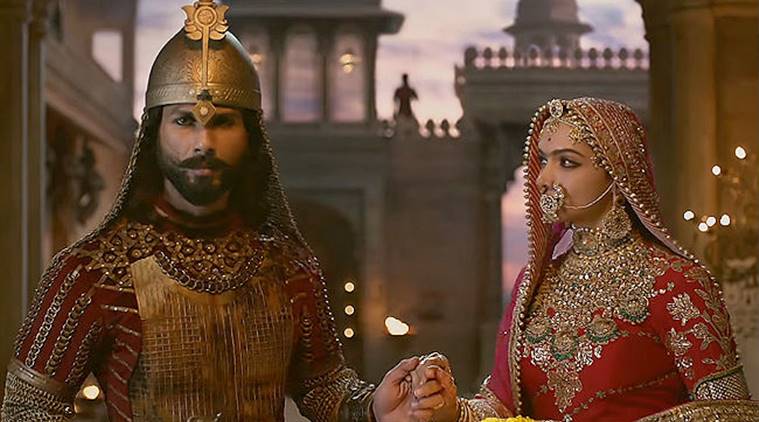
Famed Bollywood producer Sajay Leela Bhansali's Padmaavat is a fictionalized portrayal of a Rajput queen Padmavati, played by Deepika Pudokone, whose earliest mention is found in a 16th century epic poem by a Muslim poet Malik Muhammad Jayasi. With the movie Padmaavat's (Padmavati's) musical score and the song and dance sequences and the opulence and the splendor of the costumes, the jewelry and the sets, it's safe to say that the fans of Bhansali's earlier Bollywood blockbusters like Bajirao Mastani and Devdas will not be disappointed. It looks particularly spectacular when watched in 3D-IMAX version-- something my wife and I experienced in a local Silicon Valley multiplex.

Released amidst death threats by right wing Hindu groups,  one would have expected that the movie in some way challenges the revisionist history being promoted by the ruling BJP's ideologues.

Surprisingly, the movie Padmaavat  reinforces the current Hindutva narrative about the Muslim rulers of India. It portrays Muslim ruler Alauddin Khilji of the Delhi Sulatanate, played by Ranveer Singh, as a violent and lustful man lacking any scruples, fitting in with the current wave of Islamophobia in India. On the other hand, his Hindu Rajput counterpart Maharawal Ratan Singh, played by Shahid Kapoor, is shown as an honorable and principled person.

The story appears to glorify the act of mass suicide by Rajput Hindu women by self-immolation in the name of honor....an idea that the Karni Sena opposing it picked up by threatening mass self-immolation by 1700 women in protest if the film is released. It begs the question: Why should only women commit this mass suicide in protest? Why not the men of the Karni Sena?

Meanwhile, it remains a mystery as to how a fictional Hindu queen first mentioned in a poem by a 16th century Muslim poet has become the symbol of honor for Rajputs in the 21st century.  For this, one must understand the larger underlying trend in Indian polity today with the rise of Hindutva under right-wing Hindu Prime Minister Narendra Modi's leadership.

American historian Audrey Truschke, in her recently published book "Aurangzeb: The Life and Legacy of India's Most Controversial King", attributes today's Hindutva revisionist history to the colonial-era British historians. She says they deliberately distorted the history of Indian Muslim rule to vilify Muslim rulers as part of the British policy to divide and conquer India. These misrepresentations of Muslim rule made during the British Raj appear to have been accepted as fact not just by Islamophobic Hindu Nationalists but also by at least some of the secular Hindus in India and Muslim intellectuals in present day Pakistan, says the author.  Aurangzeb was neither a saint nor a villain; he was a man of his time who should be judged by the norms of his times and compared with his contemporaries, the author adds.

Alauddin Khilji, portrayed in Padmaavat as a villain, was in fact neither an angel nor a devil; he was a man of his time who should be judged by the norms of his times and compared with his contemporaries.  Colonial-era British historians deliberately distorted the history of Indian Muslim rule to vilify Muslim rulers as part of their policy to divide and conquer India, according to American history professor Audrey Truschke. Professor Truschke has systematically dismantled all the myths about India's Muslim rulers as hateful and bigoted tyrants who engaged in rape and pillage of Hindus and carried out widespread destruction of Hindu temples across India. Hindu Nationalists led by Indian Prime Minister Narendra Modi are using false history to justify their hatred and violence against Indian Muslims today.

Related Links:

Haq's Musings

Hindu Nationalists Admire Nazis

Lynchistan: India is the Lynching Capital of the World

Hindu Supremacist Yogi Adiyanath's Rise in UP

Hinduization of India

Globalization of Hindu Nationalism

Hindutva Distortion of Indian History Textbooks

2017: The Year Islamophobia Went Mainstream

Saturday, December 15, 2012

Pakistan's "One Pound Fish" Man Gets Record Deal

Street vendors in Pakistan have used their signature songs to entice customers from as far back as I can remember. Recently, a Pakistani fishmonger has brought this old street singing tradition to East London's Queens Market in Upton Park, and his "One Pound Fish" song has become a YouTube sensation with nearly 5 million hits.


The singer is Muhammad Shahid Nazir who left his home town of Pattoki in Pakistan to study business in London. He took a part-time job selling fish to support himself. Bored with the usual prose to sell fish, he resorted to poetry,  made up a song and started singing "Come on ladies, come on ladies, one pound fish. Very, very good one pound fish, very very cheap one pound fish."

Shoppers liked the song and it was recorded and uploaded by someone on YouTube. The song soon went viral and Warner Music offered Nazir a record deal. Now the record is vying for the top of charts this Christmas season.

International media have begun to focus their attention on "One Pound Fish" in the same way as they have on "Gangnam Style" dance video by a Korean man. Here are some excerpts of the media coverage "One Pound Fish" is getting:

Washington Post Style Blog:

It’s true that there are some common threads between the oddball pop songs. Both have brought forth unlikely stars: Psy, a portly rapper older than your typical Korean pop star, and now Nazir, a fishmonger in London’s Queens Market. They’ve quickly garnered millions of YouTube views —1.5 million since Monday for “One Pound Fish,” and more than 900 million for “Gangnam Style.” They’ve brought international music genres — K-pop and Bollywood-tinged Hindi-pop — to American listeners. And they both have a catchy and similar refrain: Psy’s “Heeeeey Sexy Ladies!” and Nazir’s “Come on ladies, come on ladies! One pound fish!” (it’s slightly reminiscent of another novelty hit, a snippet of Aqua’s “Barbie Girl”). 

Agence France Press (AFP):

A slicker version with Nazir shimmying and strutting Bollywood-style in a natty suit went up on December 10, launching the race to top the Christmas charts in Britain. The original video has had a staggering 4.6 million hits, while the professionally produced one already has more than two million. Nazir has also gained nearly 28,000 followers on Twitter. Back at the family home in Pattoki, a small town 146 miles (234 kilometres) south of Pakistan's capital Islamabad, his delighted 67-year-old mother Kalsoom says she is praying and fasting for Nazir's success.

Global BC TV:

“Come on ladies, come on—one pound fish!”

That’s just a taste of the lyrics sung by a London market trader who first gained local fame with his song “One Pound Fish.” Since then, he’s filmed a major-label music video, reaffirming the power of the Internet to catapult regular citizens to stardom.

Muhammad Shahid Nazir, who moved to London from Pakistan with his wife and four children, used the song to hook customers in his job at a market stall.

Nazir first appeared on YouTube, singing and gesturing, in spring 2012, in a video that went on to earn more than 4 million views. He embraced the attention, and soon after auditioned for the UK music competition show, The X-Factor.

His song was covered by music producer Timbaland as well as English star Alesha Dixon, and the UK’s Evening Standard called him a rival to South Korean rapper Psy (of “Gangnam Style” fame).


Huffington Post: 

 Thanks to the powers of YouTube, he's breaking into America with his music and finding audiences around the globe, with a Timbaland collaboration set to be released stateside in the near future!
Explaining how the phenomenon first sparked to life, Shahid tells us that while working as a fishmonger, he was required to find a way to attract customers to his store. Like everyone else, he tried the shouting method ("Have a look at the one pound fish!"), but that just turned people away.
The very next day, he decided to make up his own song. Thus, the unavoidably catchy, "Come on ladies, come on ladies, one pound fish," melody was born and ended up being completely successful in drawing positive attention to his store. Shahid says that shoppers would tell him, "You should go to 'X Factor.' You should go to 'Britain's Got Talent' and should be a pop star."

Summary:

A range of videos from the extremely hateful to highly entertaining  are a confirmation of  the immense new power of the burgeoning social media-- the kind of power that can be used to bring people together or to pull them apart. With such power in the hands of individuals comes a great deal of responsibility to exercise it with extreme care.

Here's a video clip of "One Pound Fish" song:


Related Links:


Saturday, September 13, 2008

Fighting Agents of Intolerance


Sadly, the news of intolerance, abuse and hate crimes, continue to pour out of various parts of South Asia and the Muslim world. Unfortunately, the threats are issued and crimes committed in the name of religion or tradition or ethnicity. What gets reported is probably only the tip of the iceberg, but here's a sampling of what has caught my attention recently:

Top Saudi Judge on Satellite TV operators:

According to media reports, Saudi Arabia’s top judiciary official has issued a religious decree saying it is permissible to kill the owners of satellite TV networks that broadcast "immoral" content.

The 79-year-old Sheik Saleh al-Lihedan said Thursday that satellite channels cause the “deviance of thousands of people.” ...

Al-Lihedan was answering listeners’ questions during the daily “Light in the Path” radio program in which he and others make rulings on what is permissible under Islamic law. One caller asked about Islam’s view of the owners of satellite TV channels that show “bad programs” during Ramadan.

“I want to advise the owners of these channels, who broadcast calls for such indecency and impudence ... and I warn them of the consequences,” he said.

“What does the owner of these networks think, when he provides seduction, obscenity and vulgarity?” he said.

“Those calling for corrupt beliefs, certainly it’s permissible to kill them,” he said. “Those calling for sedition, those who are able to prevent it but don’t, it is permissible to kill them.”


Pakistani TV Host Calls for Ahmadis' Murder:

According to Asia Human Rights Commission, the host of the religious talk show 'Alim Online', Dr. Amir Liaquat Hussain--also former federal minister for religious affairs--declared the murder of Ahmadis, members of a minority sect excommunicated by fundamentalist Islam, to be obligatory (Wajib ul Qatal) according to Islamic teachings, because its followers don't believe in the last prophet, Mohammad. Dr. Hussain repeated his instruction several times, urging Muslim listeners to "kill without fear".

While on air the host also pressed two other Islamic "scholars" (from two different sects) on the program to support the statement. This resulted in a unanimous agreement among the "scholars", on air during the popular television show, to urge lynching of Ahamdis. This was not the first time Mr. Hussain has done this. On September 9, Mr. Hussain answered a query with the comment that blasphemers are liable to be put to death.

According to media reports, at 1:15pm on September 8, 18 hours after the broadcast, six people entered the Fazle Umer Clinic, a two-story hospital at Mirpur Khas city and two of them went to the second floor and asked 45 year-old Dr. Abdul Manan Siddiqui to come downstairs to attend to a patient in crisis. Dr. Manan left his office and descended into an ambush. He was shot 11 times and died on the spot. His private guard was also shot and is in a serious condition. A woman was also injured by firing. The killers remained at the hospital until the doctor was declared dead, then they walked out of the building's front entrance. Police registered the killers as unknown.

On September 9, 48 hours after the broadcast, Mr. Yousuf, a 75 year-old rice trader and district chief of the Ahmadi sect was killed on his way to prayer in Nawab Shah, Sindh province. Yousuf was fired on from people on motor bikes, and sustained three bullet wounds. He died on the way to the hospital. The assailants had taken a route past a police station. No one was arrested.

Thackeray Threatens Bollywood's Bachchan Family:

A star-studded premiere for Bollywood superstar Amitabh Bachchan's new film, The Last Lear, has been scrapped in Mumbai, India, because of security concerns for guests, after the Shiv Sena chief made threats against the Bachchan family. Mr. Bal Thackeray has vowed not to allow any film starring any member of the Bachchan family from being released in the state of Maharashtra of which Mumbai is the capital, according to media reports. Mr. Thackeray has rejected repeated apologies from Mr. and Mrs. Bachan over their reported remarks denigrating Marathi language.

So who is Bal Thackeray and why is he so feared? According to a Wikipedia entry, Bal Keshav Thackeray (born January 23, 1926), popularly known as Balasaheb Thackeray, is the founder and chief of the Shiv Sena, a Hindu nationalist, Marathi ethnocentric and populist party active mainly in the western Indian state of Maharashtra. He is also referred to as Hindu Hridaysamrat (lit. "Ruler of Hindu hearts") and Sher (Tiger) by members of the Shiv Sena.

Thackeray is very vocal in his opposition to people who migrate to Mumbai, to non-Hindus (especially Muslims), and to Bengali Muslims he believes are Bangladeshis. In the late 1970s, as part of his "Maharashtra is for Maharashtrians" campaign, Thackeray threatened migrants from South India with harm unless they left Mumbai.

Women Buried Alive in Baluchistan:

Baba Kot, a village 50 miles from Usta Mohammad town of Jafferabad district in Baluchistan, is where this recent tale of tribal terror began.
The media reports and the Asian Human Rights Commission (AHRC) indicate that it was here that Mr. Abdul Sattar Umrani, a brother of Mr. Sadiq Umrani, a Baluchi tribal leader and a serving PPP provincial minister, came with more than six men and abducted five women at gun point. They were transported in a government vehicle to another remote area, Nau Abadi, near Baba Kot. Upon reaching Nau Abadi, Abdul Sattar Umrani and his men took the three younger women out of the jeep and beat them before opening fire with their guns. The girls were seriously injured but were still alive after the shooting. Sattar Umrani and his men pushed them into a wide ditch and covered them up with dirt and stones. When the two older women protested and tried to stop the burial, the attackers also pushed them into the ditch and buried them alive. After completing the burial, they fired several shots into to the air so that no one would come close and left the scene.

According to media reports, the five female victims were Fatima, wife of Umeed Ali Umrani, Jannat Bibi, wife of Qaiser Khan, Fauzia, daughter of Ata Mohammad Umrani, and two other girls, aged between 16 to 18 years, whose names have not been published. At the moment they were abducted, the women were preparing to leave for a civil court at Usta Mohammad, district Jafarabad, so that three of the girls could marry the men of their choice. Their decision to go to to court for a civil marriage was contrary to the wishes of the elders of the tribe.

The live female burials took place a month ago but the police have neither registered a crime report nor taken any action. There have been no arrests yet. Minister and tribal chief Sadiq Umrani confirmed the incident took place but insisted that only three women had been killed by unknown people.


India's Guantanamos and AbuGhraibs:

An essay on TwoCircles.net by Yoginder Sikand describes the deteriorating human rights situation of Indian Muslims. America's 'global war on terror' has provided a convenient cover to the Hindutva lobby and to fiercely anti-Muslim elements within the Indian state machinery to launch a concerted campaign of terror against Muslims. Large numbers of Muslims in various parts of India continue to languish in jails on trumped-up terror charges, suffering brutal torture as well as routine insults to their religion by police officials. Meanwhile, Hindu terrorists, often in league with the police and the state machinery, are allowed to run riot, unleashing violence and bloodshed on a frightening scale, while the state, the police and the courts take no firm action against them. Bomb blasts that are now occurring with frightening frequency, whose perpetrators remain unknown, are automatically blamed on Muslims, while some of these might possibly be engineered by Hindutva outfits or by elements within the state apparatus, or even by foreign intelligence agencies like the CIA or the Israeli Mossad who have a vested interest in demonizing Muslims and thereby driving India closer into the deadly American-Israeli embrace. That, in brief, was what numerous social activists as well as dozens of Muslim victims of police and state terror testified to at a public hearing on brutalities against Muslims in the name of countering 'terrorism' recently organized in Hyderabad by a group of noted human rights' activists. Going by their depositions and the verdict of the jury of eminent social activists, journalists and retired judges, it appears that powerful elements within the state apparatus are deeply implicated, along with Hindu terrorist groups, in a witch-hunt of India's Muslim citizens.

Aafia Siddiqui 11-year old son in detention:

According to media reports and Human Rights Watch, Ahmed Siddiqui, Dr. Aafia Siddiqui's 11-year-old son, is being held under inhumane conditions by the Afghan authorities. While considerable doubts remain about the US and Afghan accounts of Dr. Siddiqui's arrest in Ghazni, most human rights activists see no justification for holding her son in custody.

Call For Action:

How can we, as individuals, fight this scourge of rising intolerance, abuse and hate crimes? In addition to supporting organizations that fight for human rights such as Human Rights Watch, Human Rights Commission, etc, each of us should raise our voice against it through whatever platform is available to us. We can blog about it, write to newspaper editors, join the call-in shows and sign petitions to officials. Whatever it takes, it is important that we speak up for the basic rights of our fellow human beings everywhere in the world.