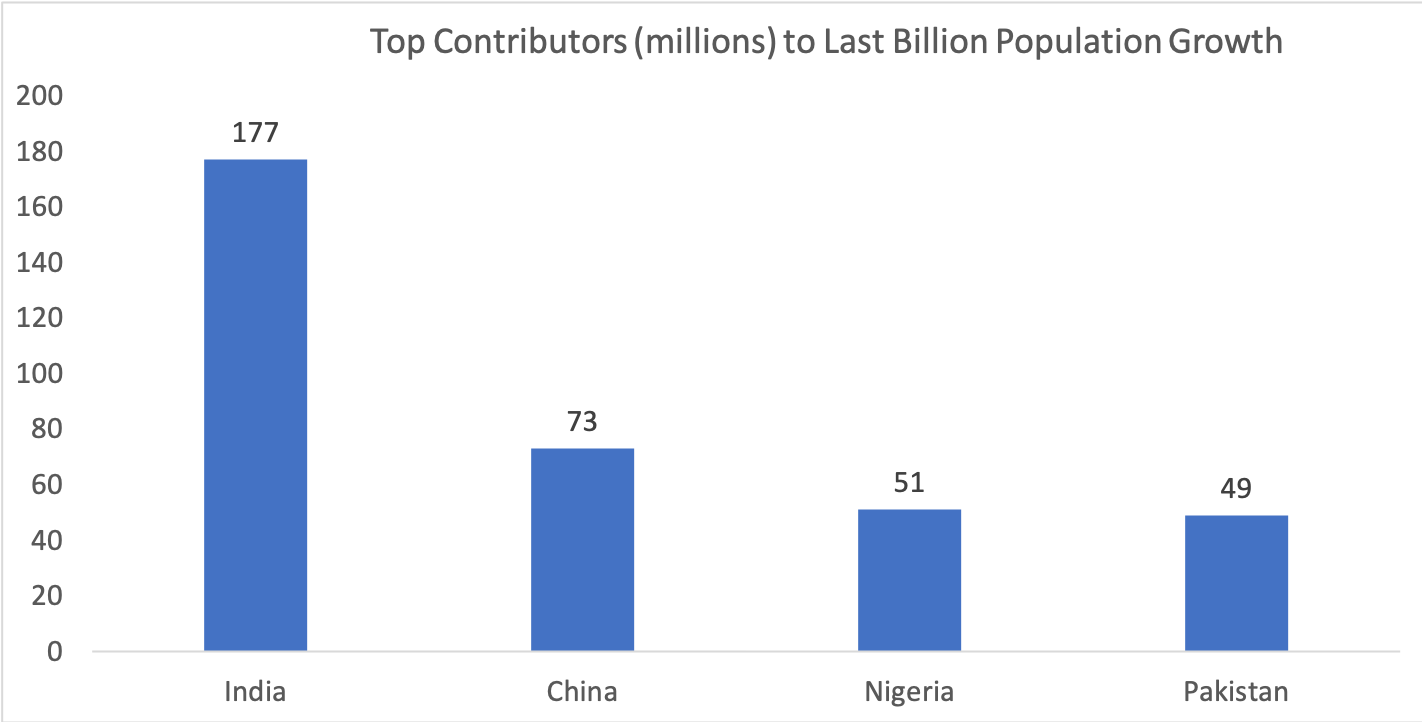
The global population increased by one billion over the last 12 years to reach 8 billion this year, according to the United Nations. Pakistan contributed 49 million people to the last billion, making it the fourth largest contributor after India (177 million), China (73 million) and Nigeria (51 million). Nigeria is expected to soon overtake Indonesia and Pakistan to become the world's 4th most populous nation. More than half of the projected increase in the global population up to 2050 will be concentrated in eight countries: the Democratic Republic of the Congo, Egypt, Ethiopia, India, Nigeria, Pakistan, the Philippines and the United Republic of Tanzania. Rising working age population is turning Pakistan into a major global consumer market. It is also fueling Pakistan's growing surplus labor exports and record overseas worker remittances.
 | |
|
 |
| World Population Visualization in 2022. Source: Visual Capitalist |
World's 7th Largest Consumer Market:
Pakistan's share of the working age population (15-64 years) is growing as the country's birth rate declines, a phenomenon called demographic dividend. With its rising population of this working age group, Pakistan is projected by the World Economic Forum to become the world's 7th largest consumer market by 2030. Nearly 60 million Pakistanis will join the consumer class (consumers spending more than $11 per day) to raise the country's consumer market rank from 15 to 7 by 2030. WEF forecasts the world's top 10 consumer markets of 2030 to be as follows: China, India, the United States, Indonesia, Russia, Brazil, Pakistan, Japan, Egypt and Mexico. Global investors chasing bigger returns will almost certainly shift more of their attention and money to the biggest movers among the top 10 consumer markets, including Pakistan. Already, the year 2021 has been a banner year for investments in Pakistani technology startups.
 |
| Consumer Markets in 2030. Source: WEF |
 |
| World Population in 2050. Source: Visual Capitalist |
Labor Exports:
With rapidly aging populations and declining number of working age people in North America, Europe and East Asia, the demand for workers will increasingly be met by major labor exporting nations like Bangladesh, China, India, Mexico, Pakistan, Russia and Vietnam. Among these nations, Pakistan is the only major labor exporting country where the working age population is still rising.
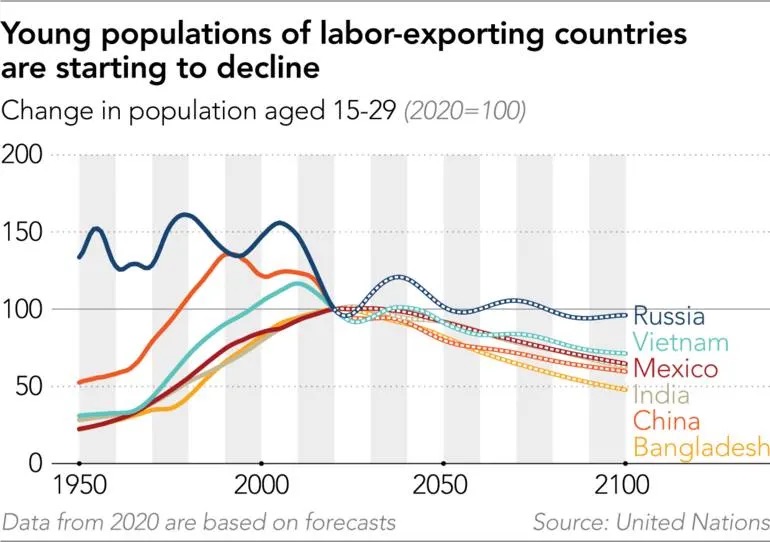 |
| Working Age Population Declining Among Major Labor Exporters. Source: Nikkei Asia |
Over 10 million Pakistanis are currently working/living overseas, according to the Bureau of Emigration. Before the COVID19 pandemic hit in 2020, more than 600,000 Pakistanis left the country to work overseas in 2019. Nearly 700,000 Pakistanis have already migrated in this calendar year as of October, 2022. The average yearly outflow of Pakistani workers to OECD countries (mainly UK and US) and the Middle East was over half a million in the last decade.
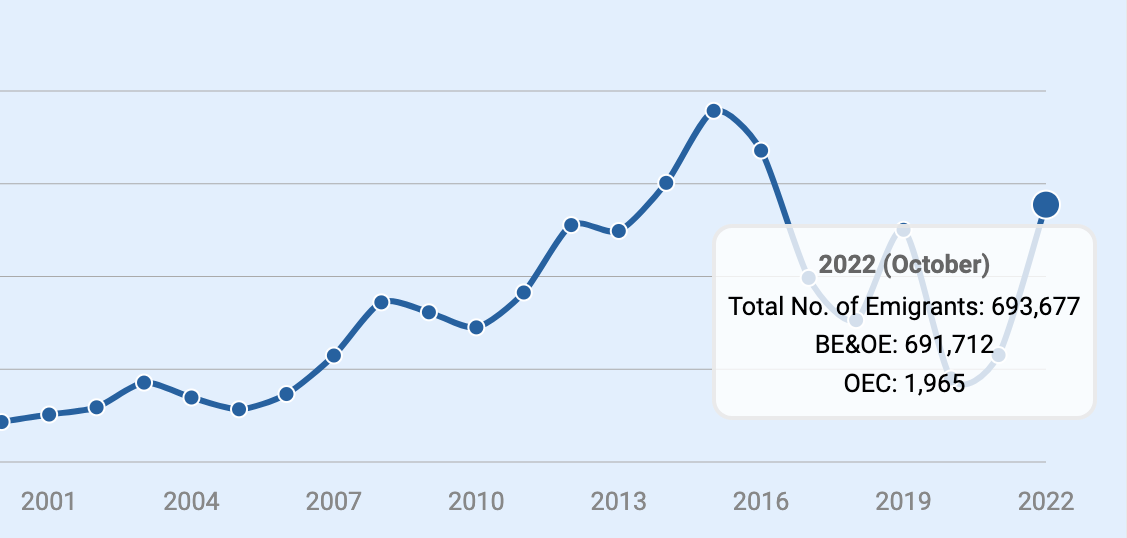 |
| Pakistani Workers Going Overseas. Source: Bureau of Emigration |

 |
| Pakistan Demographics |
Haq's Musings
South Asia Investor Review
Pakistan is the 7th Largest Source of Migrants in OECD Nations
Pakistani-Americans: Young, Well-educated and Prosperous
Last Decade Saw 16.5 Million Pakistanis Migrate Overseas
Pakistan Remittance Soar 30X Since Year 2000
Pakistan's Growing Human Capital
Two Million Pakistanis Entering Job Market Every Year
Pakistan Projected to Be 7th Largest Consumer Market By 2030
Hindu Population Growth Rate in Pakistan
Do South Asian Slums Offer Hope?

