Pakistan does not produce tea but it is the most popular beverage among Pakistanis. The country is ranked as its largest importer in the world. In 2020, Pakistan imported $646 million (9% of global tea imports) worth of tea and exported $15.2 million in branded blends of tea such as Tapal Tea. Pakistan tea imports grew 19.8% from 2019 to 2020.
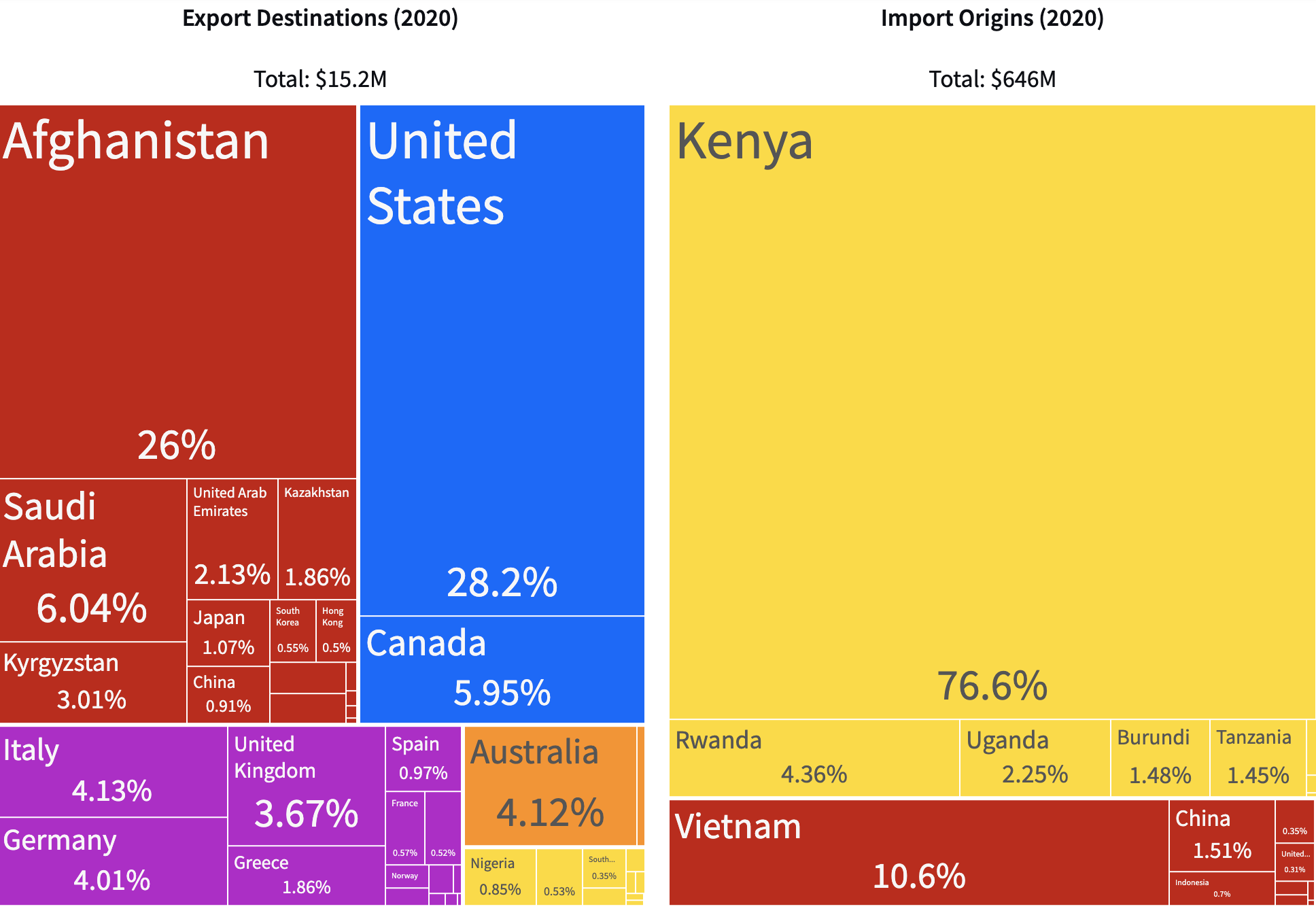 |
| Pakistan Tea Trade. Source: The Observatory of Economic Complexity |
Other major tea importers in 2020 were as follows: United States: $473.8 million (7.1%) Russia: $412.2 million (6.2%) United Kingdom: $348.7 million (5.2%) Saudi Arabia: $243.6 million (3.7%) Iran: $236.3 million (3.5%) Hong Kong: $221.8 million (3.3%) Morocco: $202.3 million (3%) Egypt: $197.2 million (3%) Germany: $195 million (2.9%) China: $180 million (2.7%) France: $168.1 million (2.5%) United Arab Emirates: $164.9 million (2.5%) Japan: $156.6 million (2.4%) Iraq: $134.7 million (2%). Global purchases of imported tea totaled US$6.7 billion in 2020. Of these countries, 4 markets for tea imports grew since 2019 namely: Hong Kong (up 19%), Pakistan (up 18.7%), Saudi Arabia (up 2.9%) and France (up 0.7%).
Tea is popular in Pakistan and many other parts of the world for many reasons. A British study found that tea provides as much day-time stimulation as coffee, despite having half the caffeine. But tea was less likely to disrupt sleep. A Japanese study reported that plant compounds found in regular black tea – called theaflavins – were found to kill off oral bacteria linked with tooth and gum disease in a clinical trial with adults. A team of American scientists in Baltimore reviewed the evidence on tea and heart health, reporting that tea polyphenols have a direct impact on heart muscle contractions by controlling the flow of calcium ions into the muscle cells. The TAP (Tea Advisory Panel) data review reveals that more than half of Brits agree that tea is good for the heart.
 |
| World's Top Tea Importing Countries. Source: Statista |
Last year, the PTI government headed by former Prime Minister Imran Khan decided to push domestic cultivation of tea in Pakistan with the help of Chinese experts. Already, trials have been conducted for growing tea in Mansehra, Battagram, Swat and Azad Kashmir regions which are considered to have the right climate for it. About 25,000 acres of government land has been allocated for tea cultivation along the China-Pakistan Economic Corridor (CPEC).
“This year we are going to approve a project where we are growing tea on an area of 25,000 acres; we are creating history; we plan to complete the proposed tea plantations over the next five years,” said Special Assistant to Prime Minister on Food Security Jamshed Iqbal Cheema during his 2021 visit to the National Tea and High-Value Crops Research Institute (NTHRI) at Shinkiari, Mansehra in Khyber-Pakhtunkhwa province. Cheema said Pakistan has great potential for growing tea. The country has 178,000 acres of tea cultivable land. “Pakistan can grow its own tea,” he said, adding that the country imported 30 million tonnes of tea each year from 15 different tea-producing countries.
Haq's Musings
South Asia Investor Review
Chicken Cheaper Than Daal
Meat Industry in Pakistan
Pakistan Among World's Largest Food Producers
Meat and Dairy Revolution in Pakistan
Pakistanis Are Among the Most Carnivorous
Olive Revolution: Pakistan Joins International Olive Council
Pakistan Per Capita Milk Consumption Rose to 231 liters/person in 2020
Pakistan Leads South Asia in Agriculture Value Addition


