Showing posts with label Nawaz Sharif. Show all posts

Thursday, February 24, 2022

Ukraine's Lesson For Pakistan: Never Give Up Nuclear Weapons

Commenting on Ukraine, Russian analyst  Alexey Kupriyanov told Indian journalist Nirupama Subramanian: "For us, Ukraine is the same as Pakistan for India". What he failed to mention is that Pakistan has developed and retains its nuclear arsenal while Ukraine gave up its nukes in the 1990s after the fall of the Soviet Union. Many Ukrainians now regret this decision. Ukrainians know that no country with nuclear weapons has ever been physically invaded by a foreign military. They now understand the proven effectiveness of nuclear deterrence.  They realize that all the talk about "rules-based order" is just empty rhetoric. The reality is the Law of the Jungle where the strong prey on the weak. The US military invasions of Afghanistan and Iraq have shown that Washington is just as guilty of violating the "rules-based order" as Moscow. 
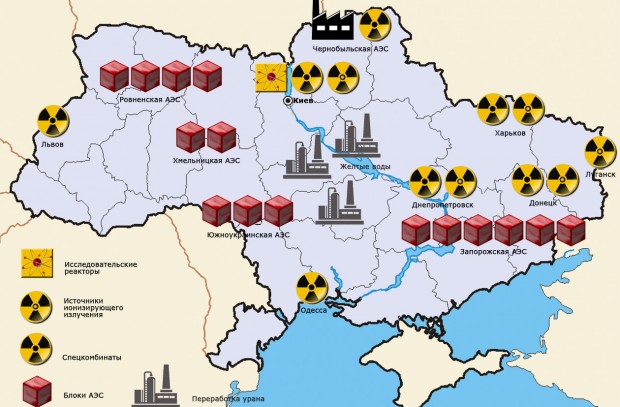
Ukraine Gave Up Nukes in 1990s. Source: Utica Phoenix


Denuclearization of Ukraine:

When Ukraine became independent in the early 1990s,  it was the third-largest nuclear power in the world with thousands of nuclear arms. In the years that followed, Ukraine made the decision to denuclearize completely based on security guarantee from the U.S., the U.K. and Russia, known as the Budapest Memorandum.  Ukrainian analyst Mariana Budjeryn explained in an interview with NPR's Mary Louise Kelly as follows: 

"It is clear that Ukrainians knew they weren't getting the exactly - sort of these legally binding, really robust security guarantees they sought. But they were told at the time that the United States and Western powers - so certainly, at least, the United States and Great Britain, they take their political commitments really seriously. This is a document signed at the highest level by the heads of state".

US Efforts to Stop Pakistan's Nukes:

The order to conduct Pakistan's nuclear tests came from Mr. Nawaz Sharif who was Pakistan's prime minister in 1998. It came on May 28, just over two weeks after India's nuclear tests conducted May 11 to May 13, 1998. Pakistan went ahead with the tests in spite of the US pressure to abstain from testing.  US President Bill Clinton called Prime Minister Nawaz Sharif immediately after the Indian tests to urge restraint.  It was followed up by Deputy Secretary of State Strobe Talbott's visit to Islamabad on May 16, 1998.

In his 2010 book titled "Engaging India: Diplomacy, Democracy, and the Bomb", Secretary Talbott has described US diplomatic efforts to dissuade Pakistan in the two weeks period between the Indian and Pakistani nuclear tests. Here are a few excerpts of the book divided into four sections covering Clinton's call to Sharif, Talbott's visits to the Foreign Office (FO), general headquarters (GHQ) and Prime Minister's House:


Clinton's Call to Sharif: 

Clinton telephoned Sharif, the Pakistani PM, to whet his appetite for the planes, huge amounts of financial aid, and a prize certain to appeal to Sharif—an invitation for him to make an official visit to Washington.

“You can almost hear the guy wringing his hands and sweating,” Clinton said after hanging up.

Still, we had to keep trying. Our best chance was an emergency dose of face-to-face diplomacy. It was decided that I would fly to Pakistan and make the case to Nawaz Sharif.

Meeting at Foreign Office in Islamabad:

On arrival in Islamabad, we had about an hour to freshen up at a hotel before our first official meeting, which was with the foreign minister, Gohar Ayub Khan, and the foreign secretary (the senior civil servant in the ministry), Shamshad Ahmad.

When we got to the foreign ministry, we found that the Pakistani civilian leaders had finally figured out how to handle our visit, and the result was a bracing experience. My two hosts rolled their eyes, mumbled imprecations under their breath, and constantly interrupted.

They accused the United States of having turned a blind eye to the BJP’s preparations for the test.

As for the carrots I had brought, the Pakistanis gave me a version of the reaction I had gotten from General Wahid five years earlier. Offers of Pressler relief and delivery of “those rotting and virtually obsolete air- planes,” said Gohar Ayub, were “shoddy rugs you’ve tried to sell us before.” The Pakistani people, he added, “would mock us if we accepted your offer. They will take to the streets in protest.”

I replied that Pakistanis were more likely to protest if they didn’t have jobs. Gohar Ayub and Shamshad Ahmad waved the point aside. The two Pakistani officials were dismissive. The current burst of international outrage against India would dissipate rapidly, they predicted.

Visit to General Headquarter (GHQ) in Rawalpindi:

We set off with police escort, sirens blaring, to (Chief of Army Staff) General Karamat’s headquarters in Rawalpindi.

Karamat, who was soft-spoken and self-confident, did not waste time on polemics. He heard us out and acknowledged the validity of at least some of our arguments, especially those concerning the danger that, by testing, Pakistan would land itself, as he put it, “in the doghouse alongside India.”

His government was still “wrestling” with the question of what to do he said, which sounded like a euphemism for civilian dithering. There was more in the way Karamat talked about his political leadership, a subtle but discernible undertone of long-suffering patience bordering on scorn.   For example, he noted pointedly “speculation” that Pakistan was looking for some sort of American security guarantee, presumably a promise that the US would come to Pakistan’s defense if it was attacked by India, in exchange for not testing. “You may hear such a suggestion later,” Karamat added, perhaps referring to our upcoming meeting with Nawaz Sharif. I should not take such hints seri- ously, he said, since they reflected the panic of the politicians. Pakistan would look out for its own defense.

What Pakistan needed from the United States was a new, more solid relationship in which there was no “arm- twisting” or “forcing us into corners.” By stressing this point, Karamat made clear that our arguments against testing did not impress him.

Meeting at Prime Minister's House:

I shared a car back to Islamabad with Bruce Riedel and Tom Simons to meet Nawaz Sharif.

What we got from the Prime Minister was a Hamlet act, convincing in its own way—that is, I think he was genuinely feeling torn—but rather pathetic.

On this occasion Nawaz Sharif seemed nearly paralyzed with exhaustion, anguish, and fear. He was—literally, just as Clinton had sensed during their phone call—wringing his hands. He had yet to make up his mind, he kept telling us. Left to his own judgment, he would not test.

His position was “awkward.” His government didn’t want to engage in “tit-for-tat exchanges” or “act irresponsibly.” The Indian leaders who had set off the explosion were “madmen” and he didn’t want “madly to follow suit.”

But pressure was “mounting by the hour” from all sides, including from the opposition led by his predecessor and would-be successor, Benazir Bhutto. “I am an elected official, and I cannot ignore popular sentiment.” Sharif was worried that India would not only get away with what it had done but profit from it as well. When international anger receded, the sanctions would melt away, and the BJP would parlay India’s new status as a declared nuclear weapons state into a permanent seat on UN SC. I laid out all that we could do for Pakistan, although this time I tried to personalize the list a bit more.

Clinton told me two days before that he would use Sharif’s visit to Washington and Clinton’s own to Pakistan to “dramatize” the world’s gratitude if Sharif refrains from testing. This point aroused the first flicker of interest I’d seen. Nawaz Sharif asked if Clinton would promise to skip India on his trip and come only to Pakistan. There was no way I could promise that. All I could tell Nawaz Sharif was that Clinton would “recalibrate the length and character” of the stops he made in New Delhi and Islamabad to reflect that Pakistan was in favor with the United States while India was not. Sharif looked more miserable than ever.

Toward the end of the meeting, Sharif asked everyone but me to wait outside. (Foreign Secretary) Shamshad (Ahmad) seemed miffed. He glanced nervously over his shoulder as he left. When we were alone I gave the prime minister a written note from Secretary Albright urging him to hold firm against those clamoring to test.  The note warned about the economic damage, to say nothing of the military danger, Pakistan faced from an escalating competition with India. Sharif read the note intently, folded the paper, put his head in his hands for a moment, then looked at me with desperation in his eyes.

At issue, he said, was his own survival. “How can I take your advice if I’m out of office?” If he did as we wanted, the next time I came to Islamabad, I'd find myself dealing not with a clean-shaven moderate like himself but with an Islamic fundamentalist “who has a long beard.” He concluded by reiterating he had not made up his mind about testing. “If a final decision had been reached I'd be in a much calmer state of mind. Believe me when I tell you that my heart is with you. I appreciate and would even privately agree with what you're advising us to do.”

Summary:

After the Russian invasion of Ukraine, many Ukrainians are now regretting the decision to give up their nuclear weapons in 1990s based on western security assurances. In 1998, Pakistan flatly refused to do what the Ukrainians did. It is clear from Secretary Talbot's description that Prime Minister Nawaz Sharif did not want to go forward with the nuclear tests but he had no choice. Fearing that he would be removed from office if he decided not to conduct atomic test, he told Talbott, “How can I take your advice if I’m out of office?”  Summing up the failure of the US efforts to stop Pakistan's nuclear tests, US Ambassador to Pakistan Ann Patterson said the following in a cable to Washington in 2009 :  "The Pakistani establishment, as we saw in 1998 with the nuclear test, does not view assistance -- even sizable assistance to their own entities -- as a trade-off for national security vis-a-vis India".

Related Links:

Haq's Musings

South Asia Investor Review

US-Pakistan Civilian Nuclear Deal?

India's Hostility Toward Pakistan 

Modi's India: A Paper Elephant?

Debunking Haqqani's Op Ed: "Pakistan's Elusive Quest For Parity

Eating Grass: The Making of the Pakistani Bomb

Cyberwars Across India, Pakistan and China

Pakistan's Defense Industry Going High-Tech

Pakistan's Space Capabilities

India-Pakistan Military Balance

Scientist Reveals Indian Nuke Test Fizzled

The Wisconsin Project

The Non-Proliferation Review Fall 1997

India, Pakistan Comparison 2010

Can India "Do a Lebanon" in Pakistan?

Global Firepower Comparison

Evaluation of Military Strengths--India vs. Pakistan

Only the Paranoid Survive

India Races Ahead in Space

21st Century High-Tech Warfare'


Thursday, May 28, 2020

Yom-e-Takbeer: US Efforts to Stop Pakistan Nuclear Tests in May, 1998

"Believe me when I tell you that my heart is with you. I appreciate and would even privately agree with what you're advising us to do (abandon nuclear tests)", said Pakistan's Ex Prime Minister Nawaz Sharif to US Deputy Secretary of State Strobe Talbott on May 16, 1998

The order to conduct Pakistan's nuclear tests came from Mr. Nawaz Sharif who was Pakistan's prime minister in 1998. It came on May 28, just over two weeks after India's nuclear tests conducted May 11 to May 13, 1998. Pakistan went ahead with the tests in spite of the US pressure to abstain from testing.  US President Bill Clinton called Prime Minister Nawaz Sharif immediately after the Indian tests to urge restraint.  It was followed up by Deputy Secretary of State Strobe Talbott's visit to Islamabad on May 16, 1998.

In his 2010 book titled "Engaging India: Diplomacy, Democracy, and the Bomb", Secretary Talbott has described US diplomatic efforts to dissuade Pakistan in the two weeks period between the Indian and Pakistani nuclear tests. Here are a few excerpts of the book divided into four sections covering Clinton's call to Sharif, Talbott's visits to the Foreign Office (FO), general headquarters (GHQ) and Prime Minister's House:

Clinton's Call to Sharif: 

Clinton telephoned Sharif, the Pakistani PM, to whet his appetite for the planes, huge amounts of financial aid, and a prize certain to appeal to Sharif—an invitation for him to make an official visit to Washington.

“You can almost hear the guy wringing his hands and sweating,” Clinton said after hanging up.

Still, we had to keep trying. Our best chance was an emergency dose of face-to-face diplomacy. It was decided that I would fly to Pakistan and make the case to Nawaz Sharif.

Meeting at Foreign Office in Islamabad:

On arrival in Islamabad, we had about an hour to freshen up at a hotel before our first official meeting, which was with the foreign minister, Gohar Ayub Khan, and the foreign secretary (the senior civil servant in the ministry), Shamshad Ahmad.

When we got to the foreign ministry, we found that the Pakistani civilian leaders had finally figured out how to handle our visit, and the result was a bracing experience. My two hosts rolled their eyes, mumbled imprecations under their breath, and constantly interrupted.

They accused the United States of having turned a blind eye to the BJP’s preparations for the test.

As for the carrots I had brought, the Pakistanis gave me a version of the reaction I had gotten from General Wahid five years earlier. Offers of Pressler relief and delivery of “those rotting and virtually obsolete air- planes,” said Gohar Ayub, were “shoddy rugs you’ve tried to sell us before.” The Pakistani people, he added, “would mock us if we accepted your offer. They will take to the streets in protest.”

I replied that Pakistanis were more likely to protest if they didn’t have jobs. Gohar Ayub and Shamshad Ahmad waved the point aside. The two Pakistani officials were dismissive. The current burst of international outrage against India would dissipate rapidly, they predicted.

Visit to General Headquarter (GHQ) in Rawalpindi:

We set off with police escort, sirens blaring, to (Chief of Army Staff) General Karamat’s headquarters in Rawalpindi.

Karamat, who was soft-spoken and self-confident, did not waste time on polemics. He heard us out and acknowledged the validity of at least some of our arguments, especially those concerning the danger that, by testing, Pakistan would land itself, as he put it, “in the doghouse alongside India.”

His government was still “wrestling” with the question of what to do he said, which sounded like a euphemism for civilian dithering. There was more in the way Karamat talked about his political leadership, a subtle but discernible undertone of long-suffering patience bordering on scorn.   For example, he noted pointedly “speculation” that Pakistan was looking for some sort of American security guarantee, presumably a promise that the US would come to Pakistan’s defense if it was attacked by India, in exchange for not testing. “You may hear such a suggestion later,” Karamat added, perhaps referring to our upcoming meeting with Nawaz Sharif. I should not take such hints seri- ously, he said, since they reflected the panic of the politicians. Pakistan would look out for its own defense.

What Pakistan needed from the United States was a new, more solid relationship in which there was no “arm- twisting” or “forcing us into corners.” By stressing this point, Karamat made clear that our arguments against testing did not impress him.

Meeting at Prime Minister's House:

I shared a car back to Islamabad with Bruce Riedel and Tom Simons to meet Nawaz Sharif.

What we got from the Prime Minister was a Hamlet act, convincing in its own way—that is, I think he was genuinely feeling torn—but rather pathetic.

On this occasion Nawaz Sharif seemed nearly paralyzed with exhaustion, anguish, and fear. He was—literally, just as Clinton had sensed during their phone call—wringing his hands. He had yet to make up his mind, he kept telling us. Left to his own judgment, he would not test.

His position was “awkward.” His government didn’t want to engage in “tit-for-tat exchanges” or “act irresponsibly.” The Indian leaders who had set off the explosion were “madmen” and he didn’t want “madly to follow suit.”

But pressure was “mounting by the hour” from all sides, including from the opposition led by his predecessor and would-be successor, Benazir Bhutto. “I am an elected official, and I cannot ignore popular sentiment.” Sharif was worried that India would not only get away with what it had done but profit from it as well. When international anger receded, the sanctions would melt away, and the BJP would parlay India’s new status as a declared nuclear weapons state into a permanent seat on UN SC. I laid out all that we could do for Pakistan, although this time I tried to personalize the list a bit more.

Clinton told me two days before that he would use Sharif’s visit to Washington and Clinton’s own to Pakistan to “dramatize” the world’s gratitude if Sharif refrains from testing. This point aroused the first flicker of interest I’d seen. Nawaz Sharif asked if Clinton would promise to skip India on his trip and come only to Pakistan. There was no way I could promise that. All I could tell Nawaz Sharif was that Clinton would “recalibrate the length and character” of the stops he made in New Delhi and Islamabad to reflect that Pakistan was in favor with the United States while India was not. Sharif looked more miserable than ever.

Toward the end of the meeting, Sharif asked everyone but me to wait outside. (Foreign Secretary) Shamshad (Ahmad) seemed miffed. He glanced nervously over his shoulder as he left. When we were alone I gave the prime minister a written note from Secretary Albright urging him to hold firm against those clamoring to test.  The note warned about the economic damage, to say nothing of the military danger, Pakistan faced from an escalating competition with India. Sharif read the note intently, folded the paper, put his head in his hands for a moment, then looked at me with desperation in his eyes.

At issue, he said, was his own survival. “How can I take your advice if I’m out of office?” If he did as we wanted, the next time I came to Islamabad, I'd find myself dealing not with a clean-shaven moderate like himself but with an Islamic fundamentalist “who has a long beard.” He concluded by reiterating he had not made up his mind about testing. “If a final decision had been reached I'd be in a much calmer state of mind. Believe me when I tell you that my heart is with you. I appreciate and would even privately agree with what you're advising us to do.”

Summary:

It is clear from Secretary Talbot's description that Prime Minister Nawaz Sharif did not want to go forward with the nuclear tests but he had no choice.  Fearing that he would be removed from office if he decided not to conduct atomic test, he told Talbott, “How can I take your advice if I’m out of office?”  Summing up the failure of the US efforts to stop Pakistan's nuclear tests, US Ambassador to Pakistan Ann Patterson said the following in a cable to Washington in 2009 :  "The Pakistani establishment, as we saw in 1998 with the nuclear test, does not view assistance -- even sizable assistance to their own entities -- as a trade-off for national security vis-a-vis India".

Related Links:

Haq's Musings

South Asia Investor Review

US-Pakistan Civilian Nuclear Deal?

India's Indigenous Copies of Nukes and Missiles 

Modi's India: A Paper Elephant?

Debunking Haqqani's Op Ed: "Pakistan's Elusive Quest For Parity

Eating Grass: The Making of the Pakistani Bomb

Cyberwars Across India, Pakistan and China

Pakistan's Defense Industry Going High-Tech

Pakistan's Space Capabilities

India-Pakistan Military Balance

Scientist Reveals Indian Nuke Test Fizzled

The Wisconsin Project

The Non-Proliferation Review Fall 1997

India, Pakistan Comparison 2010

Can India "Do a Lebanon" in Pakistan?

Global Firepower Comparison

Evaluation of Military Strengths--India vs. Pakistan

Only the Paranoid Survive

India Races Ahead in Space

21st Century High-Tech Warfare'

Saturday, September 15, 2018

US-China Competition in Pakistan; CPEC's Future; RIP Kulsoom Nawaz

Are the United States and China really vying for influence in Pakistan as the American business publication Wall Street Journal claims? What is the big prize at stake? Does Pakistan hold the key to who wins the competition to claim the top spot as a global superpower?

How will the US-China competition affect Pakistan? Will Pakistan get IMF bailout or Chinese bailout? Will CPEC development slow down or accelerate? Will China invest in export oriented industries in Pakistan and buy more Pakistani products? How will PTI government led by Prime Minister Imran Khan handling the situation? Will they play their cards well to get maximum benefits for Pakistan?

What is the impact of Begum Kulsoom Nawaz's passing on Nawaz Sharif family? Is it more than a family's tragedy? What does it mean for Pakistani politics and Nawaz Sharif's future?

Viewpoint From Overseas host Misbah Azam discusses these questions with panelists Sabahat Ashraf (iFaqeer) and Riaz Haq (www.riazhaq.com)

https://youtu.be/BQTixVzfmiE


Related Links:

Haq's Musings

South Asia Investor Review

Can Pakistan Avoid Recurring Balance of Payment Crisis?

Pakistan Economy Hobbled By Underinvestment

Pakistan's IT Exports Surging

China and US Battle For Influence in Pakistan

Pakistan-China-Russia Vs India-Japan-US

Chinese Yuan to Replace US $ as Reserve Currency?

Remittances From Overseas Pakistanis

Can Imran Khan Lead Pakistan to the Next Level?

China to Expand Manufacturing in Special Economic Zones

Sunday, July 15, 2018

Pakistan Elections 2018 Predictions; Nawaz Sharif's Future

What will be the impact of tragic terror attacks with mass casualties on Pakistan's July 25, 2018 general elections? How does the current situation compare with the situation in 2013 elections? Will the elections proceed as scheduled?

Pakistan Elections 2018 Forecast by  Intermarket and Exotix Investment Firms

Which party is likely to get the most votes and parliamentary seats in Pakistan's July 25, 2018 general elections? Will one party get a clear majority? Who will form the new government? Is PTI Chief Imran Khan likely to be the next prime minister of Pakistan? Will it be a coalition government? How can a weak coalition government implement a radical reform agenda proposed by Imran Khan?

Why did former prime minister of Pakistan Mr. Nawaz Sharif, convicted recently by a Pakistani court on charges of having assets beyond income, come back to Lahore to face certain arrest? What is his strategy? What is Nawaz Sharif's future in Pakistani politics after his conviction and arrest? How will PMLN fare in 2018 and future elections? Will the disgraced Sharif be able to rehabilitate himself and reclaim the mantle of national leadership? Will future judges of Pakistan Supreme Court set aide his conviction to clear the way for him to become Pakistan's prime minister for the fourth time?

Viewpoint From Overseas host Faraz Darvesh discusses these questions with panelists Misbah Azam and Riaz Haq (www.riazhaq.com)

https://youtu.be/4jcH3CMYc5w


Here's Urdu version streamed live on Facebook:

https://youtu.be/v9PQGN0Is50


Related Links:

Haq's Musings

South Asia Investor Review

Nawaz Sharif's Report Card 2013-18

CPEC Transforming Pakistan's Least Developed Regions

Pakistan: The Other 99% of the Pakistan Story

How Pakistan's Corrupt Elite Siphon Off Public Funds

Bumper Crops and Soaring Credit Drive Tractor Sales

Panama Leaks

How West Enables Corruption in Developing Countries

Declining Terror Toll in Pakistan

Riaz Haq's YouTube Channel

Friday, July 6, 2018

A Perspective on Deposed Pakistani Prime Minister Nawaz Sharif's Conviction

Guest Post by Rashid Ahmad.

My thoughts on Nawaz Sharif (NS) verdict:

1. This decision, like all major decisions that involve national level politicians, will remain controversial as the people will look at this decision from their own perspectives. To Anti-NS folks he was guilty before the trial began, and it does not matter on which charge he is convicted, as long as he is knocked out. For those who support Nawaz Sharif, he would never be guilty even if he is caught red handed.

2. The conviction was a foregone conclusion. It may be selective justice but the real reason was the accountability court, working under direct supervision of the Supreme Court of Pakistan, which, to many people, is not a neutral arbiter any more, but the “REAL PROSECUTOR”.  It is selective application of the law.

3. Although not comparing, this kind of motivated convictions are not uncommon. Pakistan’s illustrious judiciary has to its “credit” many infamous decisions: Doctrine of necessity by Justice Munir, and all those decisions that approved violations of the constitution by “The Aliens”. Zulfikar Ali Bhutto's wrongful conviction, later admitted by Justice Nasim Hasan Shah. Justice Qayyum’s decision to convict Benazir Bhutto (BB) for corruption in 1998, based on illegal collusion among politicians, judges, and bureaucrats. This collusion was recorded by phone taps ordered by NS, but a bureaucrat provided a copy of it to BB and to British media. (Ironically in a different case earlier, Pres. Farooq Leghari had claimed that BB had tapped the phones of judges.) More recently, under Musharraf regime, the court had convicted NS and sentenced him for several years of imprisonment! Thus, if people take the decisions of the judiciary with a pinch of salt, they have a reason to do so.

4. During General Pervez Musharraf's regime, Nawab Akbar Bugti was once told by a reporter, in an interview, that govt. is prosecuting you because police investigations have established that you killed such and such persons. His response was telling, “If that police officer was under my control and command, he would sing a different song. The same police officer would state that Musharraf killed that person”! That is why the common phrase in Punjab is: “Wakeel na karo, Judge hi kar lo” (Don’t retain a lawyer, retain the judge”).  Zero faith in politicians, police, institutions and the courts.

5. Surprisingly the judge has acquitted NS from corruption while-in-office charge. He convicted him on a different charge.

6. The key question here was: Who has the burden of proof? NS lawyer has argued that NAB (National Accountability Bureau) has not met the 4 requirements set in law to shift the burden of proof to NS. The judge concluded NAB has met them, hence it is NS who has to provide evidence (how his young children acquired the Avenfield properties) to establish his innocence.

7. And finally, this judge needs to take supplemental English to write better opinions/decisions. The quality of his writing is awful. The decision is full of typos, grammatical, spelling mistakes, and incorrect names etc. which makes it hard to read. There is even a sentence, which, if taken literally, is contradictory to his decision. I wonder if this is common in his writings or did he not have time to proof read his decision, or was it written by his staff on which he signed off.

Author Rashid Ahmad is a Pakistani-American civil engineer with a Master's degree from UC Davis. He was recently recognized for his community service by Sacramento Mayor Darrell Steinberg  with a key to the city. Ahmad came to the United States in 1970 and has since been living in Sacramento-Davis area in California. 

Related Links:

Haq's Musings

South Asia Investor Review

British Government Report Says Pakistan Among Top 3 Sources of Money Laundering

Did Musharraf Steal Pakistani People's Money?

Pakistan Economy Hobbled By Underinvestment

Raymond Baker on Corruption in Pakistan

Striking Similarity Between Sharif and Trump Narratives

Culture of Corruption in Pakistan

US Investigating Microsoft Bribery in Pakistan

Zardari's Corruption Probe in Switzerland

Politics of Patronage in Pakistan

Why is PIA Losing Money Amid Pakistan Aviation Boom?

Saturday, May 19, 2018

British Government Lists Pakistan Among Top 3 Money Laundering Sources

British National Crime Agency (NCA) has identified Pakistan, Nigeria and Russia as the top source countries for money laundering in the United Kingdom, according to British media reports. The NCA report says the UK is a prime destination for foreign corrupt and politically exposed people (politicians and their families) to launder money.

NCA Report Highlights:

In its annual assessment of serious and organized crime, the NCA says: “Investment in UK property, particularly in London, continues to be an attractive mechanism to launder funds....As the UK moves towards exiting the EU in March 2019, UK-based businesses may look to increase the amount of trade they have with non-EU countries....We judge this will increase the likelihood that UK businesses will come into contact with corrupt markets, particularly in the developing world, raising the risk they will be drawn into corrupt practices.”

Here are some of the key excerpts of the UK NCA report titled "National Strategic Assessment of Serious and Organized Crime 2018":

1. "The UK is a prime destination for foreign corrupt PEPs (politically exposed persons, a euphemism for politicians and their family member) to launder the proceeds of corruption. Investment in UK property, particularly in London, continues to be an attractive mechanism to launder funds. The true scale of PEPs investment in the UK is not known, however the source countries that are most commonly seen are Russia, Nigeria and Pakistan".

2. "The overseas jurisdictions that have the most enduring impact on the UK across the majority of the different money laundering threats are: Russia, China, Hong Kong, Pakistan, and the United Arab Emirates (UAE). Some of these jurisdictions have large financial sectors which also make them attractive as destinations or transit points for the proceeds of crime."

Politicians Dominate Panama Papers


Panama Papers Leak:

The NCA report says there are "professional enablers from the banking, accounting and legal world" who  facilitate the legitimization of criminal finances and are perpetuate the problem by refinancing further criminality.

In fact, there is an entire industry made up of lawyers and accountants that offers its services to help hide illicit wealth. Mossack Fonseca, the law firm that made headlines with "Panama Leaks", is just one example of companies in this industry.

Mossack Fonseca's 11.5 million leaked internal files contained information on more than 214,000 offshore entities tied to 12 current or former heads of state, 140 politicians, including Pakistan's now ex Prime Minister Nawaz Sharif's family.  Icelandic Prime Minister resigned voluntarily and Pakistani Prime Minister was forced out by the country's Supreme Court.

The Panama list included showbiz and sports celebrities, lawyers, entrepreneurs,  businessmen, journalists and other occupations but it was heavily dominated by politicians.

Trade Based Money Laundering (TBML):

The report singles out trade as one of the key mechanisms used in money laundering.  It says: "Trade based money laundering (TBML) is a complex global issue and a key method of money laundering impacting on the UK".

It is not just greedy politicians, unscrupulous businessmen and corrupt officials in developing countries who rely on fraudulent manipulation of trade invoices; all kinds of drug traders, terrorists and criminals also use TBML (trade-based money laundering).

John A. Cassara, former US intelligence official with expertise in money laundering, submitted written testimony for a US Congressional hearing on “Trading with the Enemy: Trade-Based Money Laundering is the Growth Industry in Terror Finance” to the Task Force to Investigate Terrorism Financing Of the House Financial Services Committee February 3, 2016. Here's an except from it:

"Not long after the September 11 attacks, I had a conversation with a Pakistani entrepreneur. This businessman could charitably be described as being involved in international grey markets and illicit finance. We discussed many of the subjects addressed in this hearing including trade-based money laundering, terror finance, value transfer, hawala, fictitious invoicing, and counter-valuation. At the end of the discussion, he looked at me and said, “Mr. John, don’t you know that your adversaries are transferring money and value right under your noses? But the West doesn’t see it. Your enemies are laughing at you.”"

Trade Misinvoicing:

Washington-based Global Financial Integrity (GFI) defines trade misinvoicing as "fraudulently manipulating the price, quantity, or quality of a good or service on an invoice submitted to customs" to quickly move substantial sums of money across international borders.


How does trade miscinvoicing work? Here's an example:

Let's say an exporter in Pakistan exports goods worth $1 million to a foreign country and invoices it at $500,000 through an offshore middleman.  The middleman invoices and collects $1 million from the end customer, sends $500,000 to Pakistan and deposits $500,000 in an offshore account. The result: Pakistan is deprived of the $500,000 in foreign exchange.

Similarly, imports of goods worth $1 million to Pakistan are overinvoiced at $1.5 million through an offshore middleman and the difference is kept in an overseas account. The result: Pakistan loses another $500,000 in foreign exchange. Meanwhile, the Pakistani traders and the officials facilitating misinvoicing together pocket $1 million or 50% on the two trades.  Pakistan's trade and current account deficits grow and the foreign exchange reserves are depleted, forcing Pakistan to go back to the International Monetary Fund (IMF) for yet another bailout with tough conditions.

Foreign Residency (Iqama):

Assets held by people in offshore tax havens are tracked by their country of residence, not by their citizenship, under OECD sponsored Agreement On Exchange of Information on Tax Matters. Pakistan is a signatory of this international agreement.  When Pakistan seeks information from another country under this agreement,  the nation's FBR gets only the information on asset holders who have declared Pakistan as their country of residence. Information on those Pakistanis who claim residency (iqama) in another country is not shared with Pakistani government. This loophole allows many Pakistani asset holders with iqamas in other countries to hide their assets. Many of Pakistan's top politicians, bureaucrats and businessmen hold residency visas in the Middle East, Europe and North America.

Loss of Tax Revenue:

Customs duties in developing countries often make up a huge part of the tax revenue collected by the governments. Trade Misinvoicing not only increases current account deficits but also worsen budget deficits by cutting tax receipts. Raymond Baker, author of Capitalism's Achilles Heel, has written about it as follows:

"The Pakistan government's largest source of revenues is customs duties, and therefore evasion of duties is a national pastime. Isn't there a way to tap into this major income stream, pretending to fight customs corruption and getting rich at he same time? Of course; we can hire a reputable (or disreputable, as the case maybe) inspection company, have the government pay the company about one percent fee to do price checking on imports, and get multi-million dollar bribes paid to us upon award of the contracts. Societe de Generale de Surveillance (SGS), headquartered in Switzerland, and its then subsidiary Cotecna, the biggest group in the inspection business, readily agree to this subterfuge. Letters in 1994 promised "consultancy fees", meaning kickbacks, of 6 percent and 3 percent to British Virgin Island (BVI) companies, Bomer Finance Inc. and Nassam Overseas Inc., controlled by (Benazir) Bhutto and (Asif) Zardari. Payments of $12 million were made to Swiss bank accounts of the BVI companies."

Aid in Reverse:

Some have called London the "Money Laundering Capital of the World" where corrupt leaders from developing nations use wealth looted from their people to buy expensive real estate and other assets. Private individuals and businesses from poor nations also park money in the west and other off-shore tax havens to hide their incomes and assets from the tax authorities in their countries of residence.

The multi-trillion dollar massive net outflow of money from the poor to the rich countries has been documented by the US-based Global Financial Integrity (GFI). This flow of capital has been described as "aid in reverse". It has made big headlines in Pakistan and elsewhere since the release of the Panama Papers and the Paradise Leaks which revealed true owners of offshore assets held by anonymous shell companies. Bloomberg has reported that Pakistanis alone own as much as $150 billion worth of undeclared assets offshore.

Impact on Economic Growth:

There's a direct relationship between investment and GDP. Flight of capital reduces domestic investment and depresses economic growth in poor countries. Lower tax revenues also impact spending on education, health care and infrastructure, resulting in poor socioeconomic indicators.

In Pakistan, for example, it takes investment of about 4% of GDP to grow the economy by 1%. Lower levels of investments in the country has kept its GDP growth below par relative to the rest of South Asia.  Any reduction in the outflow of capital to offshore tax havens will help boost economic growth in Pakistan to close the gap with its neighbors, particularly Bangladesh and India whose economies are both growing 1-2% faster than Pakistan's.

Summary:

UK's National Crime Agency (NCA) has listed Pakistan among the top three sources of money laundering in the United Kingdom. The report has identified trade misinvoicing as a key mechanism for money laundering. It singles out politicians as the main culprits. Pakistan's exports have declined significantly since former Prime Minister Nawaz Sharif's PMLN party assumed power in 2013. They are down from about $25 billion in 2013-14 to about $20 billion in 2016-17. Overvaluation of the Pakistani currency is often cited as a reason for it. The other, probably more important reason, may be increasing underinvoicing of exports facilitated by the people in power. Trade misinvoicing is the largest component of illicit financial outflows from developing countries as measured by New York- based Global Financial Integrity (GFI) which tracks such flows.

Related Links:

Haq's Musings

South Asia Investor Review

Did Musharraf Steal Pakistani People's Money?

Pakistan Economy Hobbled By Underinvestment

Raymond Baker on Corruption in Pakistan

Nawaz Sharif Disqualified

Culture of Corruption in Pakistan

US Investigating Microsoft Bribery in Pakistan

Zardari's Corruption Probe in Switzerland

Politics of Patronage in Pakistan

Why is PIA Losing Money Amid Pakistan Aviation Boom?

Friday, May 11, 2018

Nawaz Sharif's Report Card 2013-18

The last five years of Pakistan's outgoing government of the Pakistan Muslim League (Nawaz) have seen the revival of Pakistan's economy and completion of many long delayed infrastructure and energy projects. Mr. Nawaz Sharif deserves full credit for it.  At the same time, the PML government is responsible for slow progress on human development indicators, major decline in exports, growing twin deficits of budget and external accounts, mounting public debt and lack of transparency in financial matters.  It is the lack of transparency that has been brought in sharp focus with the removal of Prime Minister Nawaz Sharif by the nation's Supreme Court in the aftermath of Panama Papers. The leak of these papers revealed his family's ownership of undeclared and unexplained substantial assets abroad.

Terrorism Toll in Pakistan. Source: SATP.org

Highlights:

Pakistan achieved 5.8% growth in gross domestic product (GDP) in fiscal 2017-18, the highest in the last 13 years.  Many long delayed projects ranging from roads, ports, dams and irrigation projects to power plants were finally completed.  Examples of such long delayed projects include M8 and M9 motorways, Lyari Expressway, New Islamabad Airport, Neelum-Jhelum Hydroelectric Project and Kachhi Canal. The PMLN government's performance was boosted by a number of factors including the following:

1. Pakistan Army's anti-terror operations Zarb e Azb and Radd ul Fasad dramatically reduced the level of violence and significantly improved security in the country. It resulted in increased confidence of businesses, investors and consumers in the economy. 

2.  Growth of Chinese investment in China Pakistan Economic Corridor (CPEC) related infrastructure and energy projects. Ongoing execution of CPEC projects is transforming some of the least developed areas of Pakistan and creating hundreds of thousands of new jobs.

3. Major decline in energy prices, particularly prices of liquified natural gas (LNG), helped boost the energy and the power sector which in turn helped increase industrial production and transport sectors.  Pakistan is now among the world's fastest growing LNG markets. 

Lowlights:

Structural problems in Pakistan's economy remained unaddressed. Current account deficits widened as exports declined and imports jumped, putting pressure on the nation's foreign exchange reserves. Increased deficit spending resulted in bigger budget deficit and heavy borrowing. Public debt and debt service costs climbed. School enrollment and literacy rates remained essentially flat in the last 5 years and Pakistan continued to rank low on human development indices. Here are some of the details:

1.  Pakistan's exports have plummeted from about $25 billion in 2013-14 to about $20 billion in 2016-17 under PMLN government.  Exports in first 9 months of current fiscal year 2017-18 have been recorded at $17 billion.  The trade deficit for the first nine months of fiscal 2017-18 reached $27.3 billion.  This situation has forced the government to borrow more in international debt markets at commercial rates. The country now faces the prospect of going back to the International Monetary Fund (IMF) for yet another bailout.

Pakistan's External Debt. Source: Wall Street Journal
2.  Pakistan's net primary enrollment is stuck at about 57% while the literacy rate is flat at about 60%. This is in spite of fact that the country now spends almost as much on education as on defense.  Pakistan's public spending on education has more than doubled since 2010 to reach $8.6 billion a year in 2017, rivaling defense spending of $8.7 billion. Private spending on education by parents is even higher than the public spending with the total adding up to nearly 6% of GDP. Pakistan has 1.7 million teachers, nearly three times the number of soldiers currently serving in the country's armed forces. Unfortunately, the education outcomes do not yet reflect the big increases in spending. Why is it? Let's examine this in some detail.

Source: Economic Survey of Pakistan 2015-16
Mujhe Kyun Nikala (Why was I ousted?): 

When former Prime Minister Nawaz Sharif repeatedly asks "Mujhe Kyun Nikala" (Why was I ousted),  he appears to be arguing that, because of his government's unquestionably better performance than his predecessor PPP government's,  he deserves to be forgiven without explicitly asking for forgiveness.  What are his sins? His biggest sin is that he and his family have accumulated large amount of unexplained wealth in offshore shell companies during his three terms as Pakistan's prime minister. He and his family did not disclose this wealth until they were forced to acknowledge it after Panama Papers leaks.  They were given ample opportunity by the Pakistan Supreme Court to prove that it was acquired by legitimate means. But they failed to do so.

Mr. Sharif and his family are not unique as owners of unexplained offshore wealth. Washington-based Global Financial Integrity (GFI) estimates that developing countries have lost as much as $13.4 trillion through unrecorded capital flight since 1980. Bloomberg reports that Pakistanis own $150 billion worth of undeclared offshore assets, attributing this estimate to Syed Muhammad Shabbar Zaidi, a partner at Karachi-based A.F. Ferguson and Co. -- an affiliate of PricewaterhouseCoopers LLP.

Iqama (Foreign Residency) vs Panama:

Mr. Sharif says that he was removed for "iqama", not "Panama". What he doesn't acknowledge is that having "iqama" (foreign residency) facilitates "Panama", the hiding of assets in offshore locations.

Assets held by people in offshore tax havens are tracked by their country of residence, not by their citizenship, under OECD sponsored Agreement On Exchange of Information on Tax Matters. Pakistan is a signatory of this international agreement.  When Pakistan seeks information from another country under this agreement,  the nation's FBR gets only the information on asset holders who have declared Pakistan as their country of residence. Information on those Pakistanis who claim residency (iqama) in another country is not shared with Pakistani government. This loophole allows many Pakistani asset holders with iqamas in other countries to hide their assets. Many of Pakistan's top politicians, bureaucrats and businessmen hold residency visas in the Middle East, Europe and North America.

Summary:

The last five years of Pakistan's outgoing government of the Pakistan Muslim League (Nawaz) have seen the revival of Pakistan's economy and completion of many long delayed infrastructure and energy projects. Mr. Nawaz Sharif deserves full credit for it.  At the same time, the PML government is responsible for slow progress on human development indicators, major decline in exports, growing twin deficits of budget and external accounts, mounting public debt and lack of transparency in financial matters.  It is the lack of transparency that has been brought in sharp focus with the removal of Prime Minister Nawaz Sharif by the nation's Supreme Court in the aftermath of Panama Papers. The leak of these papers revealed his family's ownership of undeclared and unexplained substantial assets abroad.

Related Links:

Haq's Musings

South Asia Investor Review

CPEC Transforming Pakistan's Least Developed Regions

Pakistan: The Other 99% of the Pakistan Story

How Pakistan's Corrupt Elite Siphon Off Public Funds

Bumper Crops and Soaring Credit Drive Tractor Sales

Panama Leaks

How West Enables Corruption in Developing Countries

Declining Terror Toll in Pakistan

Riaz Haq's YouTube Channel


Sunday, May 6, 2018

Rising Afghan Violence; Hazara Killings; Safdar's Anti-Ahmedi Move

Why is the violence in Afghanistan intensifying? Why has US-NATO coalition dropped more bombs in Afghanistan in Jan-March 2018 quarter than in any other 3 month period in the last 15 years? Is it in response to the Taliban annual spring offensive? Or the Daish (ISIS) contributing to more killings? Is the Trump administration too busy with the military option and paying too little attention to any diplomatic initiatives to end the war in Afghanistan? Will the appointment of Michael Pompeo as US secretary of state make a difference?

Terrorism Toll in Pakistan. Source: SATP.org
Why are the Hazara killings continuing in Quetta? What can the Pakistani state and the military do to provide relief to the Hazara community? Beyond the the focus on security, what else can and should be done to reduce ethnic and sectarian hatred in Pakistani society in general? What kind of social and educational initiatives are needed to quell such violence? What role must the politicians play to appeal to the better angels of human nature?

 What does Captain Safdar, son-in-law of former Prime Minister Nawaz Sharif, hope to achieve by pushing a bill in the Pakistan National Assembly to drop the name of renowned Pakistani Nobel Laureate Dr. Abdus Salam from the National Center of Physics at Quaid-e-Azam University (QAU)) in Islamabad? Is this cynical move timed to coincide with the upcoming election to win votes for his father-in-law's PMLN party? Why do politicians pander to the worst instincts of the people to win votes? Why is this happening in this day and age in many countries including India, European Union and the United States? Is this the ugly underbelly of modern democracy?

Viewpoint From Overseas host Misbah Azam discusses these questions with analysts Ali Hasan Cemendtaur and Riaz Haq (www.riazhaq.com)

https://youtu.be/rhS9QC8UCmU


Related Links:

Haq'sMusings

South Asia Investor Review

Trump's Afghanistan Policy

Security Situation in Pakistan

Mariam Nawaz and Capt Safdar's Support of TLYR  Dharna

Viewpoint From Overseas Youtube Channel

Riaz Haq's Youtube Channel

PakAlumni Worldwide

Friday, April 13, 2018

How Industrialized West Enables Corruption in Developing World

Some have called London the "Money Laundering Capital of the World" where corrupt leaders from developing nations use wealth looted from their people to buy expensive real estate and other assets. Private individuals and businesses from poor nations also park money in the west and other off-shore tax havens to hide their incomes and assets from the tax authorities in their countries of residence.

The multi-trillion dollar massive net outflow of money from the poor to the rich countries has been documented by the US-based Global Financial Integrity (GFI). This flow of capital has been described as "aid in reverse". It has made big headlines in Pakistan and elsewhere since the release of the Panama Papers and the Paradise Leaks which revealed true owners of offshore assets held by anonymous shell companies. Bloomberg has reported that Pakistanis alone own as much as $150 billion worth of undeclared assets offshore.

Politicians Dominate Off-shore Company Owners in Panama Leaks
Aid in Reverse:

In 2012, the latest year for which data is available, developing countries received $1.3 trillion, including all aid, investments, worker remittances, and other income from abroad. In that same year some $3.3 trillion flowed out of them. In other words, developing countries sent $2 trillion more to the rest of the world than they received, according to the data compiled by the US-based Global Financial Integrity (GFI) and the Centre for Applied Research at the Norwegian School of Economics and reported by the UK's Guardian newspaper.

Laws in America and Europe allow the creation of anonymous shell companies. An anonymous shell company is a corporate entity that has disguised its ownership in order to operate without scrutiny from law enforcement or the public. These “phantom firms” can open bank accounts and wire money like any other company, making them a favorite tool for money launderers to hide their business and assets from authorities, according to the US-based Global Financial Integrity (GFI).

GFI estimates that developing countries have lost as much as $13.4 trillion through unrecorded capital flight since 1980. Bloomberg reports that Pakistanis own $150 billion worth of undeclared offshore assets, attributing this estimate to Syed Muhammad Shabbar Zaidi, a partner at Karachi-based A.F. Ferguson and Co. -- an affiliate of PricewaterhouseCoopers LLP.

Impact on Economic Growth:

There's a direct relationship between investment and GDP. Flight of capital reduces domestic investment and depresses economic growth in poor countries. Lower tax revenues also impact spending on education, health care and infrastructure, resulting in poor socioeconomic indicators.

In Pakistan, for example, it takes investment of about 4% of GDP to grow the economy by 1%. Lower levels of investments in the country has kept its GDP growth below par relative to the rest of South Asia.  Any reduction in the outflow of capital to offshore tax havens will help boost economic growth in Pakistan to close the gap with its neighbors, particularly Bangladesh and India whose economies are both growing 1-2% faster than Pakistan's.

Panama Papers Leak:

There is an entire industry made up of lawyers and accountants that offers its services to help hide illicit wealth. Mossack Fonseca, the law firm that made headlines with "Panama Leaks", is just one example of companies in this industry.

Mossack Fonseca's 11.5 million leaked internal files contained information on more than 214,000 offshore entities tied to 12 current or former heads of state, 140 politicians, including Pakistan's now ex Prime Minister Nawaz Sharif's family.  Icelandic Prime Minister resigned voluntarily and Pakistani Prime Minister was forced out by the country's Supreme Court.

The Panama list included showbiz and sports celebrities, lawyers, entrepreneurs,  businessmen, journalists and other occupations but it was heavily dominated by politicians.

War on Tax Evasion and Money Laundering: 

Organization of Economic Cooperation and Development (OECD), the club of world's rich industrialized nations, and some of its member states appear to be taking some steps to stem the global rising tide of tax evasion and money laundering.

OECD is promoting  enhanced co-operation between tax authorities through AEOI (Automatic Exchange Of Information) to bring national tax administrations in participating countries in line with the globalized economy.

Several countries, including the United Kingdom, are working on legislation forcing the disclosure of the ultimate beneficial owners of the properties held by anonymous shell companies. The new laws will establish publicly accessible registry of beneficial owners of real estate.

Tax Amnesty Schemes:

Developing countries are offering tax amnesty schemes to bring back the off-shore wealth to help their economies. Argentina and Indonesia did this recently.  Indonesia's tax amnesty in 2017 saw $330 billion worth of assets declared.   Pakistan is in trying to the do the same to help build its dollar reserves and expand its tax base.

Under Pakistan's announced tax amnesty, Pakistani citizens can declare previously undeclared foreign assets and still keep them abroad by paying 5% penalty for liquid assets and 3% penalty for real estate. Alternatively, they can declare and repatriate liquid assets to Pakistan by paying just 2% penalty.

The assets covered by the amnesty include "real estate, mortgaged assets, stock and shares, bank accounts, bullion, cash, jewels, paintings, accounts and loan receivables, beneficial ownership or beneficial interests or contribution in offshore entities and trusts."

Summary:

Laws and practices in the West and other offshore tax havens encourage corruption in developing nations that results in net outflow of trillions from poor countries to the rich industrialized world, according to the US-based Global Financial Integrity (GFI). There are some efforts underway to stem this outflow. Pakistanis hold as much as $150 billion in undeclared assets overseas. The latest tax amnesty in Pakistan is an attempt to bring some of it back to the country, or at least collect 3-5% of it in the form of penalties.

Related Links:

Haq's Musings

South Asia Investor Review

Did Musharraf Steal Pakistani People's Money?

Pakistan Economy Hobbled By Underinvestment

Raymond Baker on Corruption in Pakistan

Nawaz Sharif Disqualified

Culture of Corruption in Pakistan

US Investigating Microsoft Bribery in Pakistan

Zardari's Corruption Probe in Switzerland

Politics of Patronage in Pakistan

Why is PIA Losing Money Amid Pakistan Aviation Boom?

Monday, November 27, 2017

Did Maryam and Nawaz Sharif Orchestrate the TLY Dharna at Faizabad?

The 22-day long Faizabad Dharna anti-Ahmedi protest disrupted all aspects of life in the twin cities of Rawalpindi and Islamabad. It was too well planned and organized to be called "spontaneous". Protesters were provided with food and all other supplies they needed to sustain it for over three weeks. The question is: Who was behind this protest? Was it just the Tehrik Labbaik Ya Rasoollullah (TLY) activist mullahs seen on TV screens yelling out abuses at others? Was it the military or its intelligence agencies? Or was it politicians? Let's try and answer these questions.

Faizabad Interchange Near Islamabad
The Context:

It's important to understand the recent context to see who might have been behind these protests. Former Prime Minister Nawaz Sharif has been up in arms against the military and the judiciary since he was removed from office by the Pakistan Supreme Court in August this year. The point person leading this campaign on his behalf is his daughter Maryam Nawaz. The purpose of this effort is to bring about open confrontation with the military. In the end, Nawaz and Maryam hope to prove that they are victims of a conspiracy by the military and the judiciary against democracy.

Sequence of Events:

A few weeks ago, people linked to the PMLN social media wing, managed by Maryam Nawaz, tweeted a picture of General Javed Qamar Bajwa’s father’s grave allegedly located in an Ahmadi cemetery.

The ruling PMLN propaganda against General Bajwa's faith was followed by Maryam Nawaz's husband Captain Safdar's hateful anti-Ahmadi speech in parliament in which he demanded a “ban on recruitment of Qadianis [Ahmadis] in the armed forces." This drew a sharp response from Pakistan Army spokesman Major General Asif Ghafoor who said the following in a tweet:“When we put on the uniform we are a Pakistani soldier only, irrespective of our religion, irrespective of our province and irrespective of our clan,”

Controversial Amendment:

Law Minister Zahid Hamid introduced  Election Act, 2017 in which the words in Form-A “I solemnly swear” had been replaced with “I believe”. Sections 7B and 7C of the Conduct of General Elections Order, 2002, which relate to the status of Ahmadis, had also been omitted in the Election Act, 2017.

This caused a firestorm among the rightwing religious groups which, contrary to the advice of Punjab Chief Minister Shahbaz Sharif, was exploited by Maryam and Nawaz Sharif to ignite protests leading up to the Faizabad Dharna.

Maryam's Intransigence:

Faizabad dharna participants demanded the resignation of Law Minister Zahid Hamid as a condition for ending their protest. Maryam Nawaz, through her close confidant and minister Maryam Auranzeb, strongly opposed the resignation demand. At the same time, there are reports that traders and merchants close to Maryam and Nawaz Sharif continued to feed and sustain the protest at Faizabad.

Instead of reaching a deal with the dharna participants, the federal government resorted to the use of force that failed to disperse the protest.  In fact, the government action resulted in nationwide expansion of the protests.  Then the federal government called the Army to bring about a confrontation between the military and the protesters.

Pakistan Army's Role: 

To its credit, the Pakistan Army understood the game being plated by Nawaz Sharif and his daughter. Instead of using force against the protesters, the Army chief General Bajwa brokered a deal that forced the government to fire its Law Minister Zahid Hamid that brought an end to the protests.

Summary:

The Faizabad dharna was orchestrated by Maryam and Nawaz Sharif to create chaos and force military intervention. It started a few weeks ago when people linked to the PMLN social media wing tweeted a picture of General Bajwa’s father’s grave allegedly located in an Ahmadi cemetery. Then Nawaz Sharif's son-in-law Captain Safdar Awan made a hateful anti-Ahmadi speech in parliament to whip up anti-Army hysteria. Then came the 22-day long Faizabad dharna. Maryam and Nawaz Sharif were seeking to use the Army against this dharna and force a military takeover of the government to justify their claims of victimhood to gain public sympathy. Fortunately, the Army thwarted this conspiracy and brought the protest to a peaceful end.

Here's a discussion on this subject:

https://youtu.be/XJxDlalyfK0


 Related Links:

Haq's Musings

Nawaz Sharif Disqualification

Rising Tide of Intolerance Threatens Pakistan

Pakistan Opposition Indicts But Still Supports Nawaz Sharif

US Reported Alleges Nawaz Sharif Harassed Her

Civil-Military Ties in Pakistan

Pak Media Cheers as Right-Wing Judges Pursue Musharraf

Pakistan Army: Chief Backer and Guarantor of CPEC

Tuesday, October 10, 2017

Khawaja Asif in US; China in Doklam; LV Mass Shooting; Pak Civil-Military Ties

What was the objective of Pakistan foreign minister Khawaja Mohammad Asif's visit to Washington? How was he received there? How did his meetings with Secretary of State Rex Tillerson and National Security Advisor General H.R. McMaster go? What is the crux of the case he presented to the United States Institute of Peace?

Is Nawaz Sharif's corruption prosecution in National Accountability Bureau (NAB) court inspired by the Pakistani military? Is it really civil-military tensions or just a distraction tactic used by PMLN to discredit serious corruption charges against their leaders? Is PMLN using street power and legislation to try to intimidate the judges and the generals to rehabilitate Nawaz Sharif after his disqualification by the Supreme Court? Why does Punjab Chief Minister Shahbaz Sharif oppose PMLN's confrontational stance against the judiciary and the military?

Is there a way to prevent recurrence of frequent mass shootings after recent history's worst ever mass shooting incident in Las Vegas, Nevada? Will the United States Congress and state legislatures act to put limits on the kind of guns available for sale? Will there be any new gun control measures like the ones Australia implemented after its last mass shooting in 1996?

Has China resumed road building with deployment of more troops in Doklam? Is it not embarrassing for India's Modi government after they claimed China had blinked in the Doklam standoff in Bhutan? What will happen next?

Viewpoint From Overseas host Faraz Darvesh discusses these questions with Misbah Azam and Riaz Haq (www.riazhaq.com)

https://youtu.be/gbpTHHK93uY


Related Links:

Haq's Musings

Khwaja Asif Defends Pakistan's Policy at the US Institute of Peace

Nawaz Sharif's Rallies Against Judiciary and Military

US Gun Violence, Islamophobia and Terrorism

China-India Standoff at Doklam, Bhutan

Riaz Haq's Youtube Channel

Talk4Pak Think Tank