Showing posts with label Culture. Show all posts

Tuesday, December 27, 2022

Today's Pakistan: Conservative or Progressive?

Pakistan is often portrayed in the international media, particularly the western media, as a highly tradition-bound conservative society dominated by Taliban sympathizers.  Fatima Bhutto, a granddaughter of former Pakistani Prime Minister Zulfikar Ali Bhutto, offers evidence to suggest otherwise. 
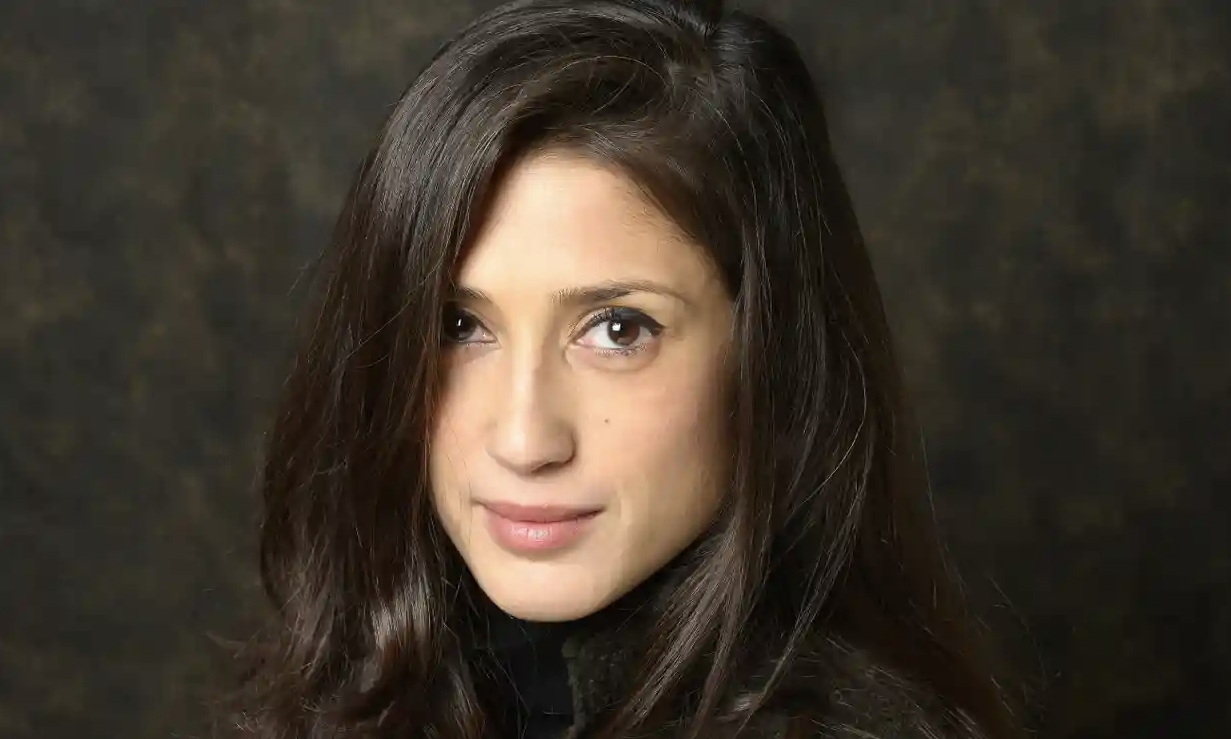
Fatima Bhutto


In  a recent Op Ed published in The Guardian titled "Superheroes, jazz, queer art: how Pakistan’s transgressive pop culture went global", Fatima Bhutto offers recent examples of the Pakistani pop culture going global. In particular, she cites television series Ms. Marvel, feature film Joyland, Grammy winning Urdu singer Arooj Aftab, world-famous qawwali singers Nusrat Fateh Ali Khan and Abida Parveen, celebrated artists Shazia Sikandar and Salman Toor,  and novelists like Mohammad Hanif, the author of "A Case of Exploding Mangoes". 

Fatima talks about the history of the ongoing struggle between the conservatives and the progressives that dates back to the nation's independence in 1947. She also contrasts Pakistan with India: "Though Bollywood films from earlier decades addressed injustice, feudalism and political oppression, today the industry is little more than a mouthpiece for India’s quasi-fascist rightwing government, obsessed with spit-shining the image of its prime minister, Narendra Modi". Below are a some excepts of Fatima Bhutto's Op Ed:

1. "Even though the film (Joyland) was...subject to various bans in Pakistan, after being accused of pushing an LGBTQ+ agenda and misrepresenting Pakistani culture, it finally appeared in Pakistani cinemas in November, with Malala Yousafzai signing on as executive producer".  Note: Joyland was the first Pakistani film to be screened at the prestigious Cannes Film Festival where "it won the Un Certain Regard prize, receiving a standing ovation nearly 10 minutes long".   

2. "Ms Marvel follows Kamala Khan, whose parents, formerly of Karachi and now of New Jersey, are not caricatures of immigrant parents, but droll and charming, embarrassing in the way all parents are while their young daughter suffers the indignities of teenagers everywhere. The writing team knows only too well the codes and ciphers of Pakistani life and have seamlessly blended them into this Disney tale. Kamala has a brother who prays constantly (every Pakistani family has one resident fundamentalist), her father quotes poetry at the dinner table and Nakia, her hijab-wearing best friend, has her shoes stolen at the mosque – a timeless rite of passage for all mosque-going Muslims". 

3. "In the past few months, the contemporary Pakistani artists Shahzia Sikander and Salman Toor have been glowingly profiled in the New Yorker; Toor’s Four Friends recently sold at a Sotheby’s auction for $1.2m (£0.99m). His paintings are celebrated for their depictions of queer intimacy, and reimaginings of classical masterpieces from Caravaggio to Édouard Manet. “My immediate reaction was that this artist could paint anything and make me believe in it,” wrote the New Yorker’s Calvin Tomkins".

4. "Pakistanis have always understood their heritage to be culturally rich and transgressive: from the romance of the Urdu language, spoken by poets and in royal courts, to qawwali singers as diverse as Nusrat Fateh Ali Khan and Abida Parveen, to television dramas and literature. Artists such as Iqbal Bano sang songs against dictators and shows on state television satirized military juntas with jokes so sophisticated that even army censors couldn’t catch them. In 1969, Pakistan state television aired Khuda Ki Basti, or God’s Own Land, a series set in a Karachi slum in the tumultuous days after independence, from a classic Urdu novel. To ensure that the drama was faithful to the novel, Pakistan state television convened a board of intellectuals to oversee the scripts, including Faiz Ahmed Faiz, one of the country’s most beloved poets". 

5. “We’ve been having a really hard time in a post-9/11 world,” says the Brooklyn-based Arooj Aftab, the first Pakistani musician to win a Grammy, taking home the 2022 award for best global music performance. Aftab’s album Vulture Prince reimagines traditional ghazals, melancholic love poems born out of Arabic and Persian literary traditions. “There’s been a significant amount of Islamophobia and a lot of bad marketing towards Pakistan in general – associations with terrorism and pain and Afghanistan-adjacent confusion – while the narrative around a lot of other south Asian countries is like ‘Oh my God! Beauty! Exotic landscapes! Yoga!’ And the west loves that shit.”

Related Links:

Haq's Musings

South Asia Investor Review

Pakistani-American Gay Physicist Nergis Mavalvala

Emmy Winning British Pakistani Riz Ahmed

History of South Asians in America

HBO Comedy "Silicon Valley" Stars Pakistani-American

Pakistanis Make Up Largest Foreign-Born Muslim Group in Silicon Valley

Karachi to Hollywood: Triple Oscar Winning Pakistani-American

Burka Avenger: Pakistani Female Superhero 

Pakistani-American Grammy Winning Urdu Singer Arooj Aftab

Pakistani-American Leads NYC Gay Parade

Pakistani-American Shahid Khan Richest South Asian in America

Ms. Marvel: Pakistani-American Girl Superhero

Pakistani-American Author-Journalist Raza Rumi in Silicon Valley

Minorities Are Majority in Silicon Valley 

Pakistani-American Population Growth Second Fastest Among Asian-Americans

The Big Sick

Pakistani-American Diaspora Thriving in America

British Pakistani Singer Zayn Malik


Monday, February 19, 2018

Rapid Growth in China-Pakistan Scientific, Educational and Cultural Ties

Pakistan-China ties are rapidly growing well beyond the economy and the military with tens of thousands of Chinese and Pakistani citizens regularly traveling between the two countries.

More Pakistanis than ever are learning the Chinese language. China with its world class educational institutions is emerging as one of the top destinations for Pakistanis studying abroad. China-Pakistan relationship is becoming a truly multi-dimensional strategic relationship.   This new phenomenon is the subject of a Pakistani spice company television commercial featuring a young Chinese woman in Lahore making the popular biryani dish using Shan masala.

China-Pakistan Institute:

Headed by Pakistani Senator Mushahid Hussain, Pakistan-China Institute (PCI) is a non-governmental, non-partisan and non-political think-tank. Its goal is to promote people to people ties between the two nations in defense and diplomacy, education and energy, economy and environment, and with a particular focus on youth and women. PCI is working to promote discussions and in depth analyses with multi-faceted initiatives including conferences, lectures, exchange of visits, journals, e-magazines and documentaries.

Chinese Language:

The Chinese language department at Islamabad's National University of Modern Languages (NUML) has been around for nearly half a century, according to Pakistan's Dawn newspaper. When it was first established in September 1970, there were only about 13 students who took the course.

In April 2005, Islamabad's Confucius Institute was established by The Office of Chinese Language Council International (Hanban), Beijing Language and Culture University, and NUML.

The interest and attendance of Chinese language courses at NUML has soared since the launch of China-Pakistan Economic Corridor (CPEC). The year 2017 saw 460 Pakistani students attending the courses.

China's Research Spending. Source: Nature 

Pakistani Students in China:

There are 22,000 Pakistani students attending universities in China, making it the fastest growing destination for Pakistanis studying abroad.

The United Kingdom still remains the top source of international education for Pakistanis.  46,640 students, the largest number of Pakistani students receiving international education anywhere, are doing so at Pakistani universities in joint degree programs established with British universities, according to UK Council for International Student Affairs.

Globally, China has become a more attractive destination for foreign students. It now ranks third after the US and the UK. This year, it is likely to move up to the second spot.

Foreign Students in China. Source: China Power

China's Strides in Science and Technology:

Why is China becoming a fast growing destination for foreign students, including Pakistanis studying abroad? A story in India's "The Wire" online magazine has explained it in terms of the rapid rate of China's progress in Science, Technology, Engineering and Math (STEM) fields as follows:

America's National Science Foundation and National Science Board have recently released their biennial science and engineering indicators which provide detailed figures on research and development (R&D), innovation and engineers. But its true message is in a different direction, “China has become,” concludes Robert J. Samuelson in a column, “or is in the verge of becoming – a scientific and technical superpower. This is not entirely unexpected given the size of the Chinese economy and its massive investments in R&D, even so, he says, “the actual numbers are breathtaking”.

1. China is the 2nd largest spender in R&D after the US, accounting for 21% of the world total which is $2 trillion. It has been going up 18% a year, as compared to 4% in the US. An OECD report says that China could overtake the US in R&D spending by 2020.

2. China has overtaken the US in terms of total number of science publications. Technical papers have increased dramatically, even if their impact, as judged by citation indices, may not be that high.

3. The US continues to produce more PhDs and attract more foreign students. But new international enrollment at US colleges was down for the first time in the decade in 2017. The Trump administration’s anti-immigration rhetoric and actions are scaring away students.

4. China has begun shifting from being an assembler of high-tech components, to a maker of super computers and aircraft and given the pattern of its investments in R&D and technology development, it is focusing on becoming the world leader in artificial intelligence (AI), quantum communications, quantum computing, biotechnology and electric vehicles.

China-Pakistan Scientific Collaboration 2nd Strongest Among BRI Nations. Source: Nature

Summary:

Pakistan-China ties are rapidly growing well beyond the economy and the military with tens of thousands of Chinese and Pakistani citizens regularly traveling between the two countries. More Pakistanis than ever are learning the Chinese language.  China with its world class educational institutions is emerging as one of the top destinations for Pakistanis studying abroad. It is becoming a truly multi-dimensional relationship which will help Pakistan rise with China on the world stage.

Related Links:

Haq's Musings

China-Pakistan Strategic Ties

China-Pakistan Defense Tech Cooperation Irks West

Pakistan-Russia-China vs India-Japan-US

Pakistan Rising or Falling? Myth Vs Reality

Facts and Myths About China-Pakistan Economic Corridor

China Emerges as Top Destination for Pakistanis Studying Abroad

Sec Hagel: India Using Afghanistan to Launch Attacks in Pakistan

Ex Indian Spy Documents RAW's Successes Against Pakistan

Riaz Haq's Youtube Channel

Thursday, March 21, 2013

Can Turkish Soaps and Schools Counter Saudi Influence in Pakistan?

Cultural invasion of Pakistan is in full swing with Turkish schools and soap operas finding broad acceptance across the country. Local TV channels are airing soap operas dubbed in Urdu and Gülen movement is operating over a dozen schools in different parts of the country.


Turkish Entertainment: 

Since last summer,  channel Urdu1 has enjoyed top TV ratings with its multiple daily airings of the Turkish soap opera Ishq-e-Mamnu, or “Forbidden Love", according to the New York Times. Afraid of being left behind, Geo Entertainment, part of Pakistan's biggest media empire spawned by recent media revolution in the country, has joined the bandwagon with its prime-time airing of  Noor. It's a rags to riches story of a woman, and her adoring husband, played by the blue-eyed former model Kivanc Tatlitug.

Ishq-e-Mamnoon Cast Members
While the soaps depict a western lifestyle and deal with subjects that are considered taboo in Pakistan, they include characters with Muslim names which many Pakistanis can identify with. 

This latest trend contrasts sharply with what has been happening in the country for several decades.  Since 1980s, Pakistan's cultural transformation has been led, in part, by Pakistani workers traveling to and returning from Arab countries. These workers have brought with them Arab notions of Islamic piety and hard-line Wahabi beliefs to Pakistan. This phenomenon has contributed to the proliferation of radical madrassas funded by Saudi money in many parts of the country.

Arabs, seen as model Muslims by many Pakistanis, are themselves soaking up Turkish culture. Back in 2008, Saudi-owned Middle East Broadcasting Centre (MBC) bought Noor and broadcast it across the Arab world to win its hearts and minds. Now Turkish shows are dominating the Arab airwaves. Even Greece, traditional rival of Turkey, has become so hospitable to Turkish soaps that they "are gaining a worshipful following in Greece", according to Mary Andreou who writes for the Greek newspaper Adesmeftos Typos.

Magnificent Century – Turkey’s most popular and most talked-about but controversial soap is about the lavish lifestyle of Suleiman The Magnificent who ruled the Ottoman Empire from 1520 to 1566 at the height of its glory and is still revered as Kanuni, or Lawgiver. His empire included large parts of Eastern and Central Europe and the entire Middle East. It is watched in 43 countries by 200 million people, according to David Rohde in The Atlantic. The Hurriyet reports that Turkish soap opera exports have grown from US$1 million in 2007 to nearly US$100 million today. Around a hundred different Turkish serials are exported in dubbed or subtitled form to North Africa, the Balkans, the Middle East, Asia, and Latin America.

Turkish Education:

In Pakistan, Turkish presence extends beyond television entertainment; there's a network of Turkish schools being operated by Gülen Movement, a transnational religious, social, and possibly political movement led by Turkish Islamic scholar Fethullah Gülen. It's been described by  New York Times as  coming "from a tradition of Sufism, an introspective, mystical strain of Islam". Currently, Gulen Pakistan is operating 14 Pak-Turk schools serving over 3000 students in Islamabad, Lahore, Karachi, Khairpur, Multan, Peshawar and Quetta.

Pak-Turk School, Jamshoro, Pakistan
 In a CBS 60 Minutes segment last year, here's how correspondent Leslie Stahl described Gulen schools in the United States: "Over the past decade scores of charter schools have popped up all over the U.S., all sharing some common features. Most of them are high-achieving academically, they stress math and science, and one more thing: they're founded and largely run by immigrants from Turkey who are carrying out the teachings of a Turkish Islamic cleric: Fethullah Gulen". CBS report said Gulen schools in the United States have 20,000 students enrolled with 30,000 more on waiting list. The growing popularity of Turkish charter schools has drawn suspicion and criticism of various groups in the United States.

Critics:

Growing Turkish influence in Pakistan has its critics. Local actors and producers decry the new competition of Turkish soaps for "destroying our society".  Others see as part of the American conspiracy. Mesut Kacmaz, a Muslim teacher from Turkey, was warned by a mosque near where he works never to return wearing a tie, according to a news report.

Future: 

Today's Turkey is a modern democratic and secular state run by moderate Islamists. It is seen by many Muslims, including Pakistani Muslims, as a model pluralist society that offers many lessons for the rest of the Islamic world.  But it has many detractors as well. For example, there is significant resistance to growing Turkish cultural and educational influence in Pakistan.  The Turkish influence is still small but rising rapidly, and the resistance from entrenched orthodoxy is increasing with it. It does offer hope as an anti-dote to the  radical Saudi influence that is at least partly responsible for growing violence in Pakistan. While I do see signs of hope with the emergence of Turkey as model for Pakistan and other Muslim countries, only time will tell as to how this culture war unfolds to shape Pakistan's future. 

Here's a video clip of Ishq-e-Mamnoon:

Ishq E Mamnoon OST Title Song Full 720p HQ from Prince Mughal on Vimeo.


Related Links:

Haq's Musings

Turkey, Pakistan and Secularism

Pakistan Media Revolution

Violent Social Revolution in Pakistan

Clash of Ideas in Islam

Upwardly Mobile Pakistan

 Silent Social Revolution in Pakistan

The Eclipse of Feudalism in Pakistan

Social and Structural Transformations in Pakistan

Malala Moment: Profiles in Courage-Not!

Urbanization in Pakistan Highest in South Asia

Rising Economic Mobility in Pakistan

Upwardly Mobile Pakistan

Saturday, November 7, 2009

Life Goes On in Pakistan

The world media are focusing on scores of deadly terrorist attacks in the last four weeks claiming over 300 innocent lives in Pakistani cities, and tracking the military's counterinsurgency campaign unfolding in South Waziristan. However, the Pakistani blogosphere is buzzing with the news and pictures of the Fashion Week in Karachi.

A series of fashion shows ended Saturday in which 30 Pakistani designers presented their creations. Karachi's Marriott hotel was the scene of the glamorous event.


And there is a lot more that is happening in Pakistan.

In October, a painstakingly detailed production of Chekov's "The Seagull" had a successful run in Karachi.

Karachi's local actors put on a female version of The Odd Couple and the Abba musical Mamma Mia drew large crowds.

An art exhibit opened recently in Islamabad to portray the effects of recent events on Pakistani psyche. Using the snake skin as a symbol of ongoing terror in the country, artist Haleem Khan has used the metaphor of a venomous snake to portray the violence that confronts people.

There were dozens of other events across the country, such as the 25th anniversary of a street theater group, a film festival for children, scores of music concerts, thousands of weddings and endless games of street cricket.

Clearly, many Pakistanis are defying the campaign of intimidation unleashed by the Tehrik-e-Taleban Pakistan. Despite the failed political leadership and extremely poor governance, the country’s saving grace is arguably its people. As the consequences sink in among Pakistan’s secular elite of the rising Taliban, there are signs that the country’s educated middle class – in Islamabad, Lahore and Karachi, cities rocked recently by continuing terrorist attacks – is losing its patience with radicalism. The urban middle class has more clout than many analysts think. It constitutes the backbone of the army, the business and professional classes and the opinion makers in the media. And the middle class is getting serious about its responsibility. They have now compelled the government into taking more decisive action. There appears to be visible light at the end of the tunnel. Let's hope it's not an oncoming train.

Here are two video clips of Karachi Fashion Week 2009:


Related Links:

Karachi Fashion Week

Is Pakistan Too Big to Fail?

Karachi Fashion Week Goes Bolder

More Pictures From Karachi Fashion Week 2009

Pakistan's Foreign Visitors Pleasantly Surprised

Start-ups Drive a Boom in Pakistan

Pakistan Conducting Research in Antarctica

Pakistan's Multi-billion Dollar IT Industry

Pakistan's Telecom Boom

ITU Internet Data

Eleven Days in Karachi

Pakistani Entrepreneurs in Silicon Valley

Musharraf's Economic Legacy

Infrastructure and Real Estate Development in Pakistan

Pakistan's International Rankings

Assessing Pakistan Army Capabilities

Pakistan is not Falling

Jinnah's Pakistan Booms Amidst Doom and Gloom

Sunday, March 8, 2009

An Indian's View of Iqbal, Jinnah and Pakistan

By Aakar Patel
Allama Iqbal imagined Pakistan as a utopia in northwest India where Punjabis would do ijtihad and read Nietzsche. The Quaid-e-Azam ordered a Pakistan where religion would cease to be a matter for the state. But both men saw something magnificently dormant in the character of India’s Muslims, which would flower in isolation.

Iqbal returned from Europe in 1908 ashamed by the fall of Islam. He thought its return to glory could come through expelling the polluting influence of Indian culture. Iqbal understood our culture. In 1904, he wrote the song that still defines our culture best (Tarana-e-Hindi), and he translated Gayatri Mantra, the talismanic chant of the Upanishad, from Sanskrit. But Europe taught him that our culture was unable to compete. Muslims needed to break out. In 1910, he wrote Tarana-e-Milli.

Jinnah didn’t understand our culture much, but he thought that Muslims were a separate nation from Hindus, and could become modern once they were separated from India’s archaic culture. Both the poet and the lawyer thought that the solution to progress was to stop being Indian.

Iqbal died in 1938, Jinnah died in 1948. It would be illuminating to see their reaction as they flipped through a current issue of Nawa-i-Waqt (would have to be translated for Jinnah), the guardian of the ideology of Pakistan.

The Pakistan of Iqbal won against the Pakistan of Jinnah. Jinnah’s imaginary Pakistan was sent into the night with a pat on the head by Liaquat and the peerless Shabbir Usmani chanting their Qarardad-e-Maqasid, 60 years ago this month.

Now full-dress Sharia is upon Swat and the Punjabi’s head is cocked towards the frontier in curiosity. The world holds its breath.

The danger of Talibanization to Punjab does not come from the Pakhtun and his gun. Pakistan is 60 per cent Punjabi. Pakhtuns are only 15 per cent of its population and 20 per cent of its army. The danger to Pakistan comes from its inability to resist the pure ideas of the Pakhtun, of whom the Punjabi especially is enamored. Talibanization is happening in the mind. There is no resistance to it for two reasons: one is the lyrical call of Sharia which Muslims are drawn to in their quest for utopia. This will not change.

The second is the deliberate amputation of its own culture by the Pakistani state. This can change. Those who think Pakistan can resist the Taliban intellectually should look at the sequence on culture that unfolded after 1947.

Jinnah, one could say, stifled the voice of culture by giving Urdu a monopoly in 1948. Those who followed him beheaded it by banning freedom of religion (Liaquat in 1949), Indian cinema (Ayub in 1965), alcohol (Bhutto in 1977) and immorality (Zia in 1979). Under Nawaz Sharif in 1992, Pakistan banned the economy citing Riba, but the deranged state saved itself by lying, acting on the instinct of self-preservation, which by now was in short supply. The jihad in Kashmir under Benazir and then Musharraf completed the project of India as foreign and enemy and Indian culture as ‘kufr’, in the Pakistani mind.

But what is the culture of Pakistan? Do Pakistanis own a tradition of music and dance that is separate from India’s?

Mehdi Hasan and Ghulam Ali (who told me this on a flight to Bombay from Ahmedabad) enjoy performing in India because Pakistan’s middle-class is mostly illiterate about raag and taal. But this is our inheritance from the Sam Ved and from Amir Khusro. Why should it be disowned by Pakistanis?

High culture is rooted in tradition, and that is the first thing the religious state attacks. There is no culture of north Indian classical dance, Kathak, in Pakistan. Dance in general is absent (though apparently it is quite popular with Mehsud men, presumably grooving to the rhythm of pop-popping Kalashnikovs) because physical expression tends to be sensual and therefore deemed un-Islamic.

Culture is expression: the expending, the release of emotion that is drawn out through the desire for expression. Through words, through movement, through emotion, through music. Its expression is unique to cultures and in north India and Pakistan we have our unique culture: Indo-Persian (with stress on Indo).

Culture does not directly resist extremism; it only makes extremism difficult to penetrate by diverting the mind. The only way to fight extremism is through reason, but South Asians are not particularly good at reason because we don’t understand its vocabulary. Culture softens us, not in a bad way, and makes us less suicidal, which is a state where pristine religion leads us through its demand of purity.

We have no capacity to soften religion through reason because of our dependence on the great jurists of the 8th and 9th centuries. Iqbal spoke of the possibility of ijtihad, but how much ijtihad can happen in Pakistan, and for that matter in India, in defiance of Imam Azam?

The BBC carried a report last month titled ‘Can Pakistan’s Sufi tradition resist the Taliban?’ No, it can’t. Sufism can no more fight the Taliban than Mickey Mouse. Sufism is flight. It is escape. Those of us who have watched the ecstasy unfold at Nizamuddin Awliya and Baba Shah Jamal and a million heretical shrines in India, Hindu and Muslim, know that most of us can only be weekend Sufis. Sufism’s message of wahdat ul-wajood leads us away from doctrine, and that is an intellectual journey.

Sufism cannot fight because it makes no demands, and it has no daily ritual. It also respects Sharia, and can live besides it quite comfortably. The great Chishti Sufis of Delhi were namazis.

But the Talib cannot live beside Sufism. He will bomb the shrine of Rahman Baba. And now he has brought his war to Lahore’s Liberty Chowk. The message will come through to Punjab as it did in Swat: peace through Sharia.

How will Pakistanis resist the Talib’s hypnotic call? The problem in Pakistan is not that the Sri Lankan team got attacked; terrorism is truly global and affects us all. The problem is that Pakistanis are the only people in the world still unconvinced about who did it. Even intellectuals who are published in its newspapers convinced themselves through a convoluted or paranoid logic that ‘Muslims cannot do this’.

What should be said instead is: this is not us. And it really isn’t.

We have one of the world’s richest cultures of literature, music and dance. Pakistanis need to embrace it; it lies across the border. Bollywood is not just a film industry; it is the dispenser of Indo-Persian culture, and its voice; it is not in Bombay by accident. Shahrukh Khan and Kareena Kapoor would spend more time in Lahore’s courts defending themselves against fahashi, as did Manto, than on sets shooting. This difference in environment is not limited to cinema.

Pakistan can legitimately claim to have produced better classical poetry than India. But why? Independent Pakistan’s great poets, Faiz and Faraz, sang of protest, because they had much to protest about. Independent India’s great poets, Gulzar and Javed Akhtar, Shailendra and Anand Bakshi sing of love, because they operate in the natural cultural environment of South Asia. Pakistan’s poets do not. But its being across the border doesn’t mean that what’s produced in Bollywood is not Pakistani culture. It was before 1965.

Musharraf opened up Pakistan’s media, Zardari should open up India’s media to Pakistan. Not the news channels, the entertainment ones. He should leave in place the ban on India’s news channels (for that matter, being deprived of their news channels for a while would benefit Indians also). And he should open the borders more generally.

Pakistan should not wait for this to be reciprocal. After the savage attacks in Bombay, India will not immediately let Pakistanis freely onto its soil. But Pakistan should open itself up to India’s people, culture, tourists (they will come in droves) and trade. This does not mean surrender. Pakistan should remain a strong, sovereign Muslim nation.

But it must let loose its secret weapon on the Taliban. And that is our culture, our Indo-Persian heritage. We built it. We own it; we should own up to it.

Forget Tarana-e-Milli. Let’s sing Tarana-e-Hind-o-Pak. Allama Iqbal would approve, and so, I suspect, would Jinnah.

Source: The News

Related Links:

Jinnah's Vision of Pakistan

Pakistan's War is Cultural, Not Military

Musharraf's Legacy

Learning Facts versus Reasoning

Pessimist Pundits Gaining Strength in Pakistan

FATA Raid Charades Endanger Pakistan, World