One of the Middle East's largest private equity firms has been quietly buying up farmland in Pakistan as part of plans by the United Arab Emirates to increase food security and to control inflation, according to a gulf website arabbuild.net. Please read prior blog posts on this subject.
Dubai-based Abraaj Capital says it is working with the UAE government on the strategic agribusiness investments in Pakistan. The government in Abu Dhabi has been holding talks with Islamabad about a framework for investment in its agricultural sector as it seeks to secure cheaper long-term supplies of staples such as wheat and rice.
The UAE investments appear to be part of a pattern of international investments in agriculture. Record prices of wheat and various grains have been attracting hundreds of billions of dollars from hedge funds and other speculators to the commodity futures markets (particularly wheat and rice futures) in recent months. A NY Times report now says that the investors are starting to make longer term commitments in food and agriculture sector including farmland, fertilizer, grain elevators and shipping equipment.
"Our aim is not to do away with precious farmland but in fact to raise the productivity of our farms and turn barren land in to fertile farmland," said a senior Pakistani official familiar with negotiations between Pakistan and UAE, according to a report in Financial Times.
Abraaj Capital, with $5bn of assets spread across the Middle East, North Africa and the South Asia, has been buying farmland in Pakistan during the past year, a company official said. UAE state and private entities planning to build agribusinesses in Pakistan have acquired as much as 800,000 acres of land, he said. Other companies participating in farming investments in Pakistan include Emirates Investment Group and the Abu Dhabi Group.
Similar farmland purchase or lease deals are being reported in Brazil, Canada, the United States, and the former Soviet Republics. Farmland prices have spiked up as a result of new money and growing interest in farmland.
At a recent Middle East-Pakistan Agriculture and Dairy Investment Forum in Dubai, Huma Fakhar, an adviser to the Government of Bahrain on Bahrain-US free trade agreement, said Arab nations are suffering from declining farm exports and rapid growth in population, leading to an increase in their imports of food products. Regarding investment commitments from the GCC investors in Pakistan's agriculture, livestock and dairy sectors, she termed the forum a success. "Major groups from GCC in general and the UAE in particular are willing to avail the opportunity and commit significant investment in Pakistan’s agriculture sector for the first time" she said.
Belal Pasha, Commercial Attache at Pakistan Embassy in the UAE, said five to 10 major UAE groups will explore Pakistan’s agriculture sector by making significant investment in corporate farming, livestock and dairy sectors. However, he didn’t name any group. In reply to a question, he said Pakistan could get significant share of GCC farm imports worth $200 billion if sizable investment is made in its agriculture sector.
The NY Times report raises concerns about the commodity speculators jumping into the fray. By owning land and other parts of the agricultural business, the investors, including sovereign funds, are freed from rules aimed at curbing the number of speculative bets that they and other financial investors can make in commodity markets. “I just wonder if they need some sheep’s clothing to put on,” said Jeffrey Hainline, president of Advance Trading, a 28-year-old commodity brokerage firm and consulting service in Bloomington, Illinois in the United States.
Concerns such as Mr. Hainline's make it necessary for countries such as Pakistan to be deliberative in crafting land sales/lease agreements. Any lease or sales of farmland must be carefully regulated to ensure that the country's food security is not jeopardized by the investors interest in making the biggest possible returns on their investments. The interests of the consumers and the investors must be carefully balanced.
The new agriculture investments and modernization of farming in Pakistan can potentially raise farm productivity and help stabilize prices to adequately feed the growing population as well as increase agricultural exports to earn foreign exchange.
At the same time, Pakistan can follow the Brazilian model of growing and using sugarcane for producing ethanol to reduce its dependence on imported oil. However, this must be done with a sound plan to ensure Pakistan's food security and sovereignty remain intact.
Sources: NY Times
Arab Build
Financial Times
Fresh Plaza
Showing posts sorted by relevance for query farmland. Sort by date Show all posts
Showing posts sorted by relevance for query farmland. Sort by date Show all posts
Friday, June 6, 2008


Friday, May 9, 2008
Can Pakistan Enhance World's Food Security?
While the term "energy security" has been in vogue for many years, the term "food security" seems to be competing with it for an equal or higher ranking on the world agenda. Food Security is particularly high on the list for countries such as China with the world's largest population to feed and the Middle East nations such as Saudi Arabia and Libya who depend on imported food.
So what are these countries doing? They are acquiring farmland in the nations considered world's breadbaskets. Countries in Africa, Latin America, and Eastern Europe who have plenty of farmland but not a lot of money. While these efforts will help increase food production, a downside of an aggressive policy for more farmland is that it will accelerate deforestation and hurt the environment.
The Chinese agriculture ministry has drafted a proposal to support the acquisition of farmland, especially in Africa and South America, to help guarantee China's food security, the Financial Times reports. Beijing already promotes aggressive foreign acquisition by Chinese oil, banking and manufacturing firms -- to mixed receptions abroad at a time of heightened suspicion surrounding sovereign-wealth investments. A Chinese official tells the FT that there shouldn't be any problem getting the policy approved, but that Beijing worries that foreign governments may be "unwilling to give up large areas of land."
And at a time of relative food shortages and soaring prices for cereals and other nutritive commodities, China will already have some competition, says the Wall Street Journal. In the Middle East, the region most dependent on imported food, Saudi Arabia has said it plans to invest in farm and livestock projects overseas to get a handle on its commodity prices and ensure supply, while Libya has been talking to Ukraine about the possibility of growing its own wheat there. Any shift of economic power from the Middle East to the likes of poorer Ukraine, one of the world's biggest wheat producers, could revive the Heartland Theory of 19th-century and 20th-century geographer Sir Halford John Mackinder, who argued control of the natural resources of the East European breadbasket region was key to controlling the "World Island" of Europe and Asia, and thus the world.
This developing new dynamic creates an opportunity for Pakistan to form partnerships with the Chinese and the Saudis aimed at dramatic improvement in the productivity of its farmland in Sind and Punjab without actually selling the land to foreigners. Farm modernization to realize the full potential of its farmland is a goal Pakistan must set for itself for this decade. If pursued with a clear plan and strategy, Pakistan can not only feed its own population well but it could also become the breadbasket for the world and improve the living standards of Pakistan's rural population.
Prior efforts beginning in 2000 toward corporate farming have met significant opposition. For example, an official of Pakistan's Ministry of Food and Agriculture said in July 2000, "We are working to finalize a policy for introducing corporate agriculture in the country where large farm holdings will be allowed to companies which would seek listing in the stock exchange."
Under the proposal, foreign companies were to be granted a 30-year lease on government-owned land that could be extended for another 20 years. However, food rights campaigners expressed the fear that profit-driven agribusiness transnational companies (TNCs) would use Pakistan as a base for exporting cash crops which would replace staple cereals on the country's farms.
Since the failure of the effort in 2000, Pakistan has again initiated efforts in 2007 to build serious agribusiness using modern techniques as part of a mega project sponsored by the Ministry of Food, Agriculture and Livestock, with the technical and financial assistance of Asian Development Bank. The executing agencies include Ministry of Food, Agriculture and Livestock (MINFAL), Department of Agricultural & Livestock Products Marketing & Grading, State Bank of Pakistan, Provincial Agriculture, Livestock and marketing Departments, and the Agriculture and Livestock Departments of FATA, FANA and AJK. The Project has its headquarters in Islamabad and implementation offices in Punjab, Sindh, NWFP, Balochistan, Federally Administered Tribal & Northern Areas and Azad Jammu and Kashmir.
To the dismay of biodiversity advocates and environmentalists, Brazil has become a dramatic success in food production by making use of the Cerrado (literally meaning Closed), a region of grassland near the equator that was considered not cultivable. The large scale American agribusiness investments have transformed the region into a major producer of soybean and made Brazil a food exporter rivaling the United States. Soybean is a major source of protein for livestock. Livestock farming is in big demand as the world consumes more meat and dairy products. Brazil is also the largest producer and consumer of biofuels and self-sufficient in energy.
The world food and energy crises clearly present opportunities for investors to invest in countries such as Pakistan with plenty of fertile farmland but very low farm productivity. By bringing the farm expertise and enhancing crop yields, agribusiness companies such as Archer-Daniel, Cargill, Bunge, Dow and Monsanto and their international competitors have tremendous opportunities in South Asia. So do companies like Caterpillar, John Deere, Kubota, Hyundai, Mahindra and others in the farm machinery and construction business. While many South Asians may be concerned about the negative impact of big agribusiness on the society and the environment, the over-riding need for efficiency to feed the growing population and international export opportunities will likely trump these concerns.
Friday, June 27, 2008
Why are the Food and Fuel Prices Soaring?
As South Asians, Americans and the rest of the world suffer the impact of doubling of the food and fuel prices in about a year, there is a strong desire around the world to understand and address the underlying causes driving this phenomenon. While conspiracy theories abound, the more serious reasons being explored include imbalances between supply and demand and market speculation by large financial players. Meanwhile, the people continue to suffer in countries such as Pakistan and India where the poor spend as much as 66% of their income on food and fuel.
Increasing demand from the fast growing economies of the BRIC countries is usually acknowledged as a factor. Simultaneously, supply jitters have been caused by "peak" oil theories bandied about Saudi Arabia and crop failures in traditional breadbaskets of the world. In addition, the US and Japan have become the largest hoarders of oil. The Strategic US Petroleum Reserve (SPR) is an emergency petroleum store maintained by the United States Department of Energy. The US SPR is the largest emergency supply in the world with the current capacity to hold up to 727 million barrels (115,600,000 m³) of crude oil. The second largest emergency supply of petroleum is Japan's with a 2003 reported capacity of 579 million barrels (92,100,000 m³). The current US inventory is displayed on the SPR's website. As of June 11, 2008, the current inventory was 704.9 million barrels (112,070,000 m³). At current market prices ($138 a barrel) the SPR holds over $38.7 billion in sweet crude and approximately $50.9 billion in sour crude (assuming a $15/barrel discount for sulfur content). The total value of the crude in the SPR is approximately $89.6 billion USD.
However, it appears that the increased demand, greater national hoarding and limited supply do not completely explain such a steep price rise over less than a year.
It seems the line between financial assets such as stocks and bonds, and essential commodities such as food and oil, is rapidly fading with huge institutional investors including pension and hedge funds looking to increase their returns substantially. Some of them may be buying oil, food and other physical commodities as well as futures contracts to hedge against inflation and the falling US dollar.
Recently, George Soros, the legendary investor and speculator, told a US senate committee that speculation, while not the only contributor to the recent runup in crude oil prices, "reinforces the upward pressure on prices." He said speculation is "distinctly harmful" to the economy.
"We're paying, some believe, as high as a 50% premium to the pockets of speculators that are operating in markets that are completely unpoliced," said Michael Greenburger, a University of Maryland professor and former CFTC official. "At least 70% of the US crude oil market is driven by speculators and not people with commercial interests."
"Americans may be surprised to learn that the oil futures markets were substantially deregulated by the CFTC staff decisions that were made behind closed doors," said Sen. Maria Cantwell, D-Wash. "Now this London and Dubai loophole is keeping important U.S. energy trading in the dark and without proper light ... it can give manipulators free rein in energy markets."
Investigating food prices in India, a government appointed commission concluded that futures trading has nothing to do with the increase in the prices of food products such as wheat and rice. That was the unanimous finding of the four-member committee headed by Abhijit Sen asked to look into the connection between the two.
While the futures trading may not have caused the price rises, there is a strong belief that investors are playing their part in the food chain and may contribute to further price volatility.
Soaring agricultural prices, growing demand for biofuels and the growth of the Chinese and Indian economies are leading top global investment banks to buy farmland in a bid to embrace the physical commodities market, according to Reuters.
Investment banks and hedge funds are buying up vast tracts of agricultural land around the world, hoping to ride the so-called "commodities supercycle" that has lifted prices of everyday agricultural commodities such as wheat, rice, soybeans and corn to record highs, says a Reuters report.
One of the Middle East's largest private equity firms has been quietly buying up farmland in Pakistan as part of plans by the United Arab Emirates to increase food security and to control inflation, according to a gulf website arabbuild.net. Please read prior blog posts on this subject.
US investment bank Morgan Stanley has bought several thousand hectares of land in Ukraine, Europe's grain basin. Reuters says Morgan Stanley declined to comment, but industry executives say many other big banks are looking at land.
A recent NY Times report raises concerns about the commodity speculators jumping into the fray. By owning land and other parts of the agricultural business, the investors, including sovereign funds, are freed from rules aimed at curbing the number of speculative bets that they and other financial investors can make in commodity markets. “I just wonder if they need some sheep’s clothing to put on,” said Jeffrey Hainline, president of Advance Trading, a 28-year-old commodity brokerage firm and consulting service in Bloomington, Illinois in the United States.
If the governments do decide that the futures trading is driving significant price increases rather the fundamental supply-demand equation, then the possible fixes include a range of options. The regulators can just ban futures trading outright (as they have in India) in one or more commodities or, at a minimum, significantly increase margin requirements (from 5-10% to 50%)for futures contracts to dampen speculation. The latter option is better because it does preserve the ability of genuine producers and consumers to hedge against future price volatility. Given the potential for artificially high food and fuel prices causing major disruptions in the global economy, it would be wise for major governments to act now, rather than wait for conclusive evidence.
On the oil speculation front, the US Congress appears ready to act to restrict oil futures trading, under mounting pressure from the airline industry, American consumer groups, the International Monetary Fund and Billionaire investor George Soros. A similar effort will probably be needed to curb food price increases based on speculation.
Here's a video clip of world leaders, including Shaukat Aziz, at the World Economic Forum in Kuala Lumpur talking about Global Food and Energy Crises:
Monday, March 9, 2009
Feudal Punjab Fertile Ground for Pakistani Jihadists?

The conventional wisdom holds that Pakistani jihadists come mainly from the radical Wahabi madrassas that proliferated in Pakistan's tribal belt near the Afghan border during the US-Saudi-Pakistani supported campaign against the former Soviet Union. Most of the world attention has, therefore, been focused on the efforts by US and Pakistan to try and contain the influence of NWFP's Deobandi Islam. Some of the madrassas have been forced to shut down while others have been attacked by US and Pakistan. As part of the effort to improve economic opportunities, Pakistan has set up FATA Development Authority and the US and international financial institutions are planning to fund reconstruction opportunity zones (ROZ) to deny recruits to the Jehadist outfits.
In addition to Shia Islam, which accounts for 15-20% of the population, there are primarily two schools of thought among Sunni Muslims in South Asia. Barelvi and Deobandi. Barelvi, or Ahle-Sunna, is a movement of Sunni Sufism that was founded by Ahmed Raza Khan of Bareilly, Rohilkhand India (hence the term Barelvi). Barelvis are a sizable portion of the Hanafi Muslim communities in India, Pakistan, Bangladesh, South Africa and the United Kingdom, besides having a presence in other places around the world. Deobandi is a Sunni Islamic revivalist movement which started in India and Pakistan and has more recently spread to other countries, such as Afghanistan, South Africa and the United Kingdom. The name derives from the town of Deoband, (Uttar Pradesh) India, where the school Darul Uloom Deoband is situated. Deobandis follow the fiqh of Abu Hanifa and the Aqidah of Abu Mansur Maturidi. Deobandi Islam is quite similar to the Wahabi Saudi Islam.
Punjab, the largest province in Pakistan, is considered the home of the followers of the sufi saints who taught a tolerant, loving version of Barelvi Islam. Deobandi Islam (patterned after Saudi Wahabism) is not common in Punjab's rural landscape. But Mumbai attacker Ajmal Qasab's story, published in March 16 issue of Time magazine, suggests that the rising expectations of young Pakistanis and the deprivations they suffer in feudal Punjab are helping the mainly NWFP-Deobandi-inspired Jihadi outfits in their recruiting efforts. Here's an excerpt from Time that implies feudalism drives young men like Qasab to join the terror outfits:
"Faridkot is not the hardscrabble village conjured up by common perceptions of extremist origins. It straddles a paved road about 2 1⁄2 hours' drive from Lahore, and two new gas stations mark the village boundaries. Beyond those are factories and fertile farmland. There is even BlackBerry service. But it is, undeniably, the sort of place that fosters frustration. Feudal landlords own the farmland, and villagers feel trapped by the status they are born into. The good life is tantalizingly close, yet for most residents still unattainable. For men like Qasab, one of the best ways out is jihad. "In a developing country, youngsters who are sensitive, concerned, they talk about 'How do we change what is going on here? How do we get rid of corruption?'" says (Pakistani psychologist Sohail) Abbas. "And if in some sense you find that jihad can help you in those aims, then why not?" It's a convolution of the adolescent craving to stand out. And Pakistani society, steeped in nihilistic passions fostered by the state sponsorship of jihad, condones it."
Like Ajmal Qasab, other unskilled and barely literate workers from rural Punjab are trying to find ways to escape the hard life under their feudal rulers. Some, like Qasab, go to major Pakistani cities in search of a better life and come in contact with Jihadi outfits like LeT. Others try and find employment in the Arab world, particularly Saudi Arabia. Dr. Pervez Hoodbhoy describes the impact of exposure to the Arab world as follows:
"Villages (in Punjab) have changed drastically; this transformation has been driven, in part, by Pakistani workers returning from Arab countries. Many village mosques are now giant madrassas that propagate hard-line Salafi and Deobandi beliefs through oversized loudspeakers. They are bitterly opposed to Barelvis, Shias and other sects, who they do not regard as Muslims. The Punjabis, who were far more liberal towards women than the Pukhtuns, are now beginning to take a line resembling that of the Taliban. Hanafi law has begun to prevail over tradition and civil law, as is evident from the recent decisions of the Lahore High Court."
It appears that the radical Islam is now spreading beyond its traditional home in NWFP and FATA to Pakistan's heartland of Punjab. It is also clear that the new generation of Pakistanis do not want to accept life under a feudal or tribal system that denies them basic human dignity.
While the efforts to create and fund reconstruction opportunity zones (ROZ) in FATA are desirable and welcome, what is really needed is an international Marshall Plan style effort toward transforming Pakistan from a feudal/tribal to an industrial society. Such an effort will face major hurdles from the feudal leadership of the major political parties in Pakistan. However, if it is successfully implemented, new opportunities will open up for the nation's young population to offer them better alternatives to joining Jihadi outfits or seeking work in countries like Saudi Arabia.
Related Links:
Qasab's Journey in Time Magazine
Feudal Shadow in Pakistan Elections
UN Millennium Goals in Pakistani Village
Saudi-ization of Pakistan
Pakistan's FATA Face-off Fears
FATA Reconstruction Opportunity Zones
Pakistan Power Centers: Feudals, Clergy and Military
Tuesday, January 5, 2010
Challenges of the Decade 2010-2020 in South Asia and Beyond
Making predictions is hazardous business. After all, who would have forecast with any accuracy the Soviet defeat in Afghanistan and the fall of the Berlin wall in late 1980s, or the terrorists attacks of September 11, 2001, or the near-collapse of the US financial markets in 2008, the kind of events that fundamentally changed the world. This new decade of 2010-2020 could also bring long-lasting but hard to predict events that are described by Nassim Taleb as rare but high-impact Black Swan Events. However, I do think this new decade is likely to be defined by the fundamental issues of access to food and water, in addition to the continuing concerns about terrorism and security. Each of these challenges has the potential to precipitate major events that could bring about fundamental yet unpredictable changes in the world order.
Food:
A combination of population explosion, water scarcity, and climate change are causing serious concerns about access to affordable and reliable food supply in many nations. Climate change in parts of India has resulted in multiple crop failures after seven or eight bad years in a row, putting local people deeper and deeper in debt. An estimated 200,000 Indian farmers have ended their lives since 1997.
There has been a rush by some of the rich but food-poor nations to buy up farmland to grow food in poor nations, raising concerns about the potential for food riots. New ideas and technologies are required to bring about a new "Green Revolution" to feed the growing population of the world.
In June, news agency Reuters reported that the government of Pakistan had offered 404,700 hectares (ha) of farmland for sale or lease to foreign investors. It is the usual suspects of the Gulf states and South Korea who are the likely targets of the government's drive for investment. Oil rich, food poor states from the Middle East and food deficit prone South Korea have been spurred by the high food prices of 2007 and 2008 to increase their food security by investing in agricultural land abroad.
Also in June 2009, Swedish multi-national food company Tetra Pak announced the signing of an memorandum of understanding with local company Engro Foods to create a dairy hub in the Sahiwal district of the Punjab. The hub will serve 15 villages in the district and aims to promote more efficient production and bring smallholders into the formal dairy market chain.
In July, the Pakistani minister for investment said that the country would be happy to provide land for Korean companies to build food and dairy processing facilities, according to Pakistan Agribusiness Report. Also in July, the chief minister of the Punjab said that there was a large amount of interest in investing in the province's agriculture from Qatar.
Water:
The year began with an ominous warning by Sardar Aseff Ali, Deputy Chairman of the Planning Commission, about the potential for a water war between India and Pakistan. Such warnings clearly reinforce the gravity of the water situation, requiring creative solutions.
Water is becoming more scarce, and water wars are likely to erupt in several regions of the world. Among the 25 most populous countries in 2009, South Africa, Egypt and Pakistan are the most water-limited nations. India and China, however, are not far behind with per capita renewable water resources of only 1600 and 2100 cubic meters per person per year. Major European countries have up to twice as much renewable water resources per capita, ranging from 2300 (Germany) to 3000 (France) cubic meters per person per year. The United States of America, on the other hand, has far greater renewable water resources than China, India or major European countries: 9800 cubic meters per person per year. By far the largest renewable water resources are reported from Brazil and the Russian Federation - with 31900 and 42500 cubic meters per person per year.
According to the United Nations' World Water Development Report, the total actual renewable water resources in Pakistan decreased from 2,961 cubic meters per capita in 2000 to 1,420 cubic meters in 2005. A more recent study indicates an available supply of water of little more than 1,000 cubic meters per person, which puts Pakistan in the category of a high stress country. Using data from the Pakistan's federal government's Planning and Development Division, the overall water availability has decreased from 1,299 cubic meters per capita in 1996-97 to 1,101 cubic meters in 2004-05. In view of growing population, urbanization and increased industrialization, the situation is likely to get worse. If the current trends continue, it could go as lows as 550-cubic meters by 2025. Nevertheless, excessive mining of groundwater goes on. Despite a lowering water table, the annual growth rate of electric tubewells has been indicated to 6.7% and for diesel tubewells to about 7.4%. In addition, increasing pollution and saltwater intrusion threaten the country's water resources. About 36% of the groundwater is classified as highly saline.
The solution to the water crisis lies in better management of water resources to conserve water and new technologies to economically recycle or produce fresh water from sea water. For example, about 98% of the water in Pakistan is used in farming through a very inefficient flood irrigation method, leaving only two percent for other consumers and commercial-industrial users. A California study recently found that water use efficiency ranged from 60%-85% for surface irrigation to 70%-90% for sprinkler irrigation and 88%-90% for drip irrigation. Potential savings would be even higher if the technology switch were combined with more precise irrigation scheduling and a partial shift from lower-value, water-intensive crops to higher-value, more water-efficient crops. Rather than flood irrigation used in Pakistani agriculture, there is a need to explore the use of drip or spray irrigation to make better use of nation's scarce water resources before it is too late. As a first step toward improving efficiency, Pakistan government has launched a 1.3 billion U.S. dollar drip irrigation program that could help reduce water waste over the next five years. Early results are encouraging. "We installed a model drip irrigation system here that was used to irrigate cotton and the experiment was highly successful. The cotton yield with drip irrigation ranged 1,520 kg to 1,680 kg per acre compared to 960 kg from the traditional flood irrigation method," according to Wajid Ishaq, a junior scientist at the Nuclear Institute for Agriculture and Biology (NIAB).
Low-Cost Housing:
Housing construction by traditional methods has failed to keep pace with the rising demand, particularly in the developing countries like India and Pakistan experiencing rapid urbanization. New, cheaper and faster construction methods are needed to address the basic shelter needs of the people. There are a number of modular, pre-fabrication and rapid on-site assembly methods are being explored in developing nations.
Mass Literacy:
Literacy has become as fundamental a need as food and water in this day and age. And yet, UNESCO data indicates that 770 million adults around the world remain illiterate, over 35% of them in India. New focus and methods are needed to reach out to the illiterate masses of the world as part of a worldwide mass literacy campaigns.
Low levels of literacy continue to hobble many developing nations, limiting the productivity and economic opportunities for the growing young populations, and causing concerns about social and political instability and growth of international terrorism.
Health Care:
Access to healhcare in South Asia, particularly due to the wide gender gap, presents a huge challenge, and it requires greater focus to ensure improvement in human resources. Though the life expectancy has increased to 66 years in Pakistan and 63 years in India, it is still very low relative to the rest of the world. The infant rate remains stubbornly high, particular in Pakistan, though it has come down down from 76 per 1000 live births in 2003 to 65 in 2009. With 320 mothers dying per 100,000 live births in Pakistan and 450 in India, the maternal mortality rate in South Asia is very high, according to UNICEF.
International Terrorism:
The threat of global terrorism is likely to gain strength and spread with new bases in new geographies. A new and more creative and comprehensive strategy will be necessary to counter this growing threat in the realm of ideas and policies. Any new strategy must take into account the following facts to be effective:
1. Al Qaeda was an organization with central leadership, command and control located in Afghanistan prior to 911. But that is no longer true. According to former State Department official Mathew Hoh who served in Afghanistan, al Qaeda is an elastic, amorphous entity, one based not on geography but ideology. “Al Qaeda is a collection of ideas, of independent, autonomous cells,” Hoh says. “They don’t need a lot of funding. They need an apartment with an Internet connection.”
2. Even the 911 hijackers were not all recruited and trained in any one country. They came from different nations and were educated and trained mostly in the United States and Western Europe. What they shared in common was an ideology rather than a geography.
3. Hundreds of al Qaeda members, including many top leaders, have been captured or killed by Pakistani and US military in the region since 911. And yet, the violence is worse than ever before.
4. There have been multiple reports of al Qaeda popping up in several countries around the world such as Yemen and Somalia, confirming Mathew Hoh's arguments that al Qaeda is not confined to a particular geography in central or south Asia.
Security:
With increasing carnage in several countries, including Pakistan, and growing fears of terrorism, there is an urgent need to develop and use new tools, technologies and methodologies to anticipate and prevent acts of terror resulting in mass casualties.
Counter-insurgency:
There are many insurgencies growing around the world, including South Asia, in response to real or perceived injustices. In addition to the Afghan Taliban insurgency against foreign forces, other examples include Taliban and Baloch insurgencies in Pakistan, and Maoists and Kashmir insurgencies in India.
In addition to the political dialog to understand and address genuine grievances of the insurgents, there is a great need to develop techniques and training for counterinsurgency.
Green Energy:
Clearly, conservation alone will not suffice when it comes to the world's growing energy needs. There will continue to be significant research and development into exploiting energy from water, wind and sun, as well as innovation in safer and greener nuclear technology such as thorium nuclear reactors.
Extreme Affordability:
The incredible success of relatively inexpensive mobile telephones in poor nations, such as Bangladesh, India and Pakistan, has created the awareness among the big corporations and the entrepreneurs that the poor can be a very lucrative market.
Understanding the need to design for extreme affordability with scarce resources is giving birth to a new generation of entrepreneurs. These are entrepreneurs with a social conscience who are motivated by the desire to do good and do well at the same time. They are finding new ways to empower the poor by satisfying their basic needs, such as water, electricity and telephones.
Conclusion:
Regardless of any forecasts of the future, it is extremely important for all nations of the world, particularly the United States, China, the United Kingdom, Israel, Iran, India, North Korea and Pakistan to learn from the mistakes of the last decade to try and make the new decade a better stretch of ten years for the entire humanity. This will require sincere efforts and creative energies of the people from the aforementioned countries and the help of the rest of the world.
Related Links:
Water Crisis
Pakistan's Farmland Controversy
United Nations Literacy Decade
UNICF Country Data
Facts and Myths of Obama's Afghan Surge
Can Energy from Thorium Save Planet Earth?
Social Entrepreneurs Target India and Pakistan
Housing Construction and Economic Growth
Climate Change Worsens Poverty in India
Pakistan's Decade of 1999-2009
Godfather's Vito Corleone: Metaphor for Uncle Sam Today?
Marching Toward Hell by Michael Scheuer
Pakistan's Choice: Globalization or Talibanization
Soviet Defeat in Afghanistan
Karachi Stock Exchange Presentation
Friday, October 29, 2010
Agriculture and Textiles Employ Most Indians and Pakistanis
About 60% of India's workforce is in agriculture. Textile industry is the second biggest employer, accounting for a fifth of India’s exports, and employs almost 10 percent of India’s workforce, or some 35 million people, and has the potential to add another 12 million new jobs --dwarfing the 1-2 million jobs created by the much-heralded IT and BPO sector, according to a World Bank report.
The largest number of people in other South Asian nations are also employed in the agriculture sector, followed by textile manufacturing as the second largest employer.
About 60% of India's workforce is engaged in agriculture, contributing about 16% of GDP, according to published data. Textile manufacturing claims the second largest employment and comprises 26% of manufacturing output. It accounts for a fifth of India’s exports, and employs almost 10 percent of India’s workforce, or some 35 million people, and has the potential to add another 12 million new jobs --dwarfing the 1-2 million jobs created by the much-heralded IT and BPO sector, according to a World Bank report. Even the most optimistic estimates by NASSCOM put the total direct and indirect employment in IT and ITES sectors at 10 million jobs.
The textile sector is crucial to India's economy. The textile industry contributed 4% of India's gross domestic product in the year that ended March 31, and accounted for 13.5% of Indian exports, bringing in $17.6 billion, according to the Wall Street Journal.
With the Indian rupee soaring — up 9 percent against the dollar in the last 16 months, textile exports are down 6.4 percent from a year earlier in the $10 billion Indian clothing industry, according to a recent report in the New York Times.
About 23% of the India's workforce is part of the services sector which accounted for 55% of the GDP in 2007. Within the service sector, the fastest growing segment is business services, contributing about 7% of GDP. It includes information technology enabled services (ITES), information technology (IT), business process outsourcing (BPO) etc. In 2000, it was one third of the total output of services.
Agriculture in Pakistan accounts for 19.4% of GDP and 42% of labor force, followed by services providing 53.4% of GDP and 38% employment, with the remainder 27.2% of GDP and 20% workers in manufacturing sector. Over half of Pakistan's manufacturing jobs are in the textile sector, making it the second biggest employer after agriculture.
The dire situation in India's agriculture sector has been epitomized by over 200,000 farmers' suicides in the last decade. And the rising Indian rupee is now hurting India's textile sector by making its exports more expensive in the world market.
Pakistan's agriculture and textile sectors have also suffered in the last two years. Reduced water flows from India followed by recent floods have adversely affected large swathes of Pakistan's farmland. And the current energy crisis combined with the economic slowdown have hit the textile industry particularly hard. The European Commission, the EU's executive, has recently approved tariff waivers on 75 categories of imports from Pakistan for up to three years, according to a report in the Wall Street Journal. The gesture followed an order by EU leaders wanting to demonstrate they're helping some 10 million Pakistanis left without shelter in the wake of floods.
Pakistan shipped about $4.2 billion of exports to EU last year. About 75% of Pakistani exports to EU are textiles, clothing, leather or related products, and those goods will make up a majority of the roughly $140 million in total extra trade the EU says the deal will generate from eliminating the EU tariffs.
Here is a quick comparison of different sectors of the economy in India and Pakistan in terms of employment and GDP contribution:
Country....Agri(emp/GDP)..Textiles..Other Mfg..Service(incl IT)
India........60%/16% ...........10%/4%.....7%/25%...........23%/55%
Pakistan......42%/20%...........12%/8%......8%/18%...........38%/54%
Assuming India's PPP GDP of $3.75 trillion (population 1.2 billion, nominal gdp $1.3 trillion) and Pakistan's $450 billion (population 175 million, nominal gdp $167 billion)), here is what I calculated in terms of per capita GDP in different sectors of the economy:
India vs. Pakistan: Per Capita GDP $3,125 PPP ($1,083 nom) vs. $2,570 ($955 nom)
Agriculture: $833 PPP ($288 nom) vs. $1,225 PPP ($454 nom)
Textiles: $1,242 ($433) vs. $1,714 ($636)
Non-Textile Mfg: $11,155 ($3,870) vs $5,785 ($2,142)
Services $7,246 ($2,590) vs $3,654 ($1356)
Data shows that the majority of Indians who work in agriculture and textiles are on average 50% poorer than their Pakistani counterparts, as also reflected in the under-$2 a day per capita income figures for 60% of Pakistanis and 76% of Indians.
It also shows that Indians in manufacturing and services sectors add almost twice as much value as Pakistanis, and produce significantly higher value goods and services than their Pakistani counterparts.
The income range in India is much wider from $883 to $11,155 accounting for the much bigger rich-poor gap relative to Pakistan's relatively narrower range from $1225 to $5,785.
The challenge for India is to improve its farmers' productivity and move some of them into higher value added sectors of the economy.
The challenge for Pakistan is to have its manufacturing and services sectors produce more goods and services of higher value, and continue to migrate more of its farmers into other sectors of the economy.
It's clear that farming and textiles continue to be the most important economic sectors with the biggest impact on the lives of the majority of ordinary citizens of India and Pakistan. And just as the US and EU look after their farmers, it is very important for South Asian governments to protect their farming and textile sectors even as they promote diversification of their economies.
Related Links:
Haq's Musings
Pakistan Textile Industry Report
Pakistan's Farmland Controversy
Peepli Live and India's Farmers' Suicides
Floods in Pakistan
Pakistan's Textile Woes
Agricultural Growth in India, Pakistan and Bangladesh
KPMG Report on Pakistan Economy 2010
India and Pakistan Contrasted
Pakistan's Major Business Sectors
Labor Laws: To Create Good Jobs, Reform Labor Regulations
Foreign Investors Buying Pakistani Farm Land
Is Leasing Agricultural Land to Foreigners a Good Idea?
Pakistan's Sugar Crisis and Dietary Habits
Wheat Research and Development in Pakistan
Pakistan's Water Crisis
Wheat Productivity, Efficiency and Sustainability
Agrarian Reform in Pakistan
Urbanization in Pakistan
Water Scarcity in Pakistan
Pakistan Agribusiness Report 2009
Pakistan to Lease 700,000 Acres to Arab States
Pakistan's Total Arable Land
The largest number of people in other South Asian nations are also employed in the agriculture sector, followed by textile manufacturing as the second largest employer.
About 60% of India's workforce is engaged in agriculture, contributing about 16% of GDP, according to published data. Textile manufacturing claims the second largest employment and comprises 26% of manufacturing output. It accounts for a fifth of India’s exports, and employs almost 10 percent of India’s workforce, or some 35 million people, and has the potential to add another 12 million new jobs --dwarfing the 1-2 million jobs created by the much-heralded IT and BPO sector, according to a World Bank report. Even the most optimistic estimates by NASSCOM put the total direct and indirect employment in IT and ITES sectors at 10 million jobs.
The textile sector is crucial to India's economy. The textile industry contributed 4% of India's gross domestic product in the year that ended March 31, and accounted for 13.5% of Indian exports, bringing in $17.6 billion, according to the Wall Street Journal.
With the Indian rupee soaring — up 9 percent against the dollar in the last 16 months, textile exports are down 6.4 percent from a year earlier in the $10 billion Indian clothing industry, according to a recent report in the New York Times.
About 23% of the India's workforce is part of the services sector which accounted for 55% of the GDP in 2007. Within the service sector, the fastest growing segment is business services, contributing about 7% of GDP. It includes information technology enabled services (ITES), information technology (IT), business process outsourcing (BPO) etc. In 2000, it was one third of the total output of services.
Agriculture in Pakistan accounts for 19.4% of GDP and 42% of labor force, followed by services providing 53.4% of GDP and 38% employment, with the remainder 27.2% of GDP and 20% workers in manufacturing sector. Over half of Pakistan's manufacturing jobs are in the textile sector, making it the second biggest employer after agriculture.
The dire situation in India's agriculture sector has been epitomized by over 200,000 farmers' suicides in the last decade. And the rising Indian rupee is now hurting India's textile sector by making its exports more expensive in the world market.
Pakistan's agriculture and textile sectors have also suffered in the last two years. Reduced water flows from India followed by recent floods have adversely affected large swathes of Pakistan's farmland. And the current energy crisis combined with the economic slowdown have hit the textile industry particularly hard. The European Commission, the EU's executive, has recently approved tariff waivers on 75 categories of imports from Pakistan for up to three years, according to a report in the Wall Street Journal. The gesture followed an order by EU leaders wanting to demonstrate they're helping some 10 million Pakistanis left without shelter in the wake of floods.
Pakistan shipped about $4.2 billion of exports to EU last year. About 75% of Pakistani exports to EU are textiles, clothing, leather or related products, and those goods will make up a majority of the roughly $140 million in total extra trade the EU says the deal will generate from eliminating the EU tariffs.
Here is a quick comparison of different sectors of the economy in India and Pakistan in terms of employment and GDP contribution:
Country....Agri(emp/GDP)..Textiles..Other Mfg..Service(incl IT)
India........60%/16% ...........10%/4%.....7%/25%...........23%/55%
Pakistan......42%/20%...........12%/8%......8%/18%...........38%/54%
Assuming India's PPP GDP of $3.75 trillion (population 1.2 billion, nominal gdp $1.3 trillion) and Pakistan's $450 billion (population 175 million, nominal gdp $167 billion)), here is what I calculated in terms of per capita GDP in different sectors of the economy:
India vs. Pakistan: Per Capita GDP $3,125 PPP ($1,083 nom) vs. $2,570 ($955 nom)
Agriculture: $833 PPP ($288 nom) vs. $1,225 PPP ($454 nom)
Textiles: $1,242 ($433) vs. $1,714 ($636)
Non-Textile Mfg: $11,155 ($3,870) vs $5,785 ($2,142)
Services $7,246 ($2,590) vs $3,654 ($1356)
Data shows that the majority of Indians who work in agriculture and textiles are on average 50% poorer than their Pakistani counterparts, as also reflected in the under-$2 a day per capita income figures for 60% of Pakistanis and 76% of Indians.
 |
| Agriculture Value Added Per Worker in Constant 2000 US$ (Source: World Bank) |
It also shows that Indians in manufacturing and services sectors add almost twice as much value as Pakistanis, and produce significantly higher value goods and services than their Pakistani counterparts.
The income range in India is much wider from $883 to $11,155 accounting for the much bigger rich-poor gap relative to Pakistan's relatively narrower range from $1225 to $5,785.
The challenge for India is to improve its farmers' productivity and move some of them into higher value added sectors of the economy.
The challenge for Pakistan is to have its manufacturing and services sectors produce more goods and services of higher value, and continue to migrate more of its farmers into other sectors of the economy.
It's clear that farming and textiles continue to be the most important economic sectors with the biggest impact on the lives of the majority of ordinary citizens of India and Pakistan. And just as the US and EU look after their farmers, it is very important for South Asian governments to protect their farming and textile sectors even as they promote diversification of their economies.
Related Links:
Haq's Musings
Pakistan Textile Industry Report
Pakistan's Farmland Controversy
Peepli Live and India's Farmers' Suicides
Floods in Pakistan
Pakistan's Textile Woes
Agricultural Growth in India, Pakistan and Bangladesh
KPMG Report on Pakistan Economy 2010
India and Pakistan Contrasted
Pakistan's Major Business Sectors
Labor Laws: To Create Good Jobs, Reform Labor Regulations
Foreign Investors Buying Pakistani Farm Land
Is Leasing Agricultural Land to Foreigners a Good Idea?
Pakistan's Sugar Crisis and Dietary Habits
Wheat Research and Development in Pakistan
Pakistan's Water Crisis
Wheat Productivity, Efficiency and Sustainability
Agrarian Reform in Pakistan
Urbanization in Pakistan
Water Scarcity in Pakistan
Pakistan Agribusiness Report 2009
Pakistan to Lease 700,000 Acres to Arab States
Pakistan's Total Arable Land
Thursday, September 17, 2009
Pakistan's Farmland Controversey
Pakistan is seriously pushing ahead with a plan to sell or lease over 700,000 acres of agricultural land to foreign investors in the face of growing opposition at home. A Saudi delegation is due in the country this month for further talks on a plan to lease an area of land more than twice the size of Hong Kong, a Pakistani official told Reuters this month. Similar reports have surfaced earlier, indicating UAE investors have been quietly buying Pakistani farm land.
In June, news agency Reuters reported that the government of Pakistan had offered 404,700 hectares (ha) of farmland for sale or lease to foreign investors. It is the usual suspects of the Gulf states and South Korea who are the likely targets of the government's drive for investment. Oil rich, food poor states from the Middle East and food deficit prone South Korea have been spurred by the high food prices of 2007 and 2008 to increase their food security by investing in agricultural land abroad.
Also in June 2009, Swedish multi-national food company Tetra Pak announced the signing of an memorandum of understanding with local company Engro Foods to create a dairy hub in the Sahiwal district of the Punjab. The hub will serve 15 villages in the district and aims to promote more efficient production and bring smallholders into the formal dairy market chain.
In July, the Pakistani minister for investment said that the country would be happy to provide land for Korean companies to build food and dairy processing facilities, according to Pakistan Agribusiness Report. Also in July, the chief minister of the Punjab said that there was a large amount of interest in investing in the province's agriculture from Qatar.

It is not just Arab states that are buying up farm land in other nations. China secured the right to grow palm oil for biofuel on 2.8m hectares of Congo, which would be the world’s largest palm-oil plantation. It is negotiating to grow biofuels on 2m hectares in Zambia, a country where Chinese farms are said to produce a quarter of the eggs sold in the capital, Lusaka. According to one estimate, 1m Chinese farm workers will be working in Africa this year, reports the Economist.
In order to assess the situation and develop serious policy recommendations, it is important to have a basic understanding of how Pakistan's agriculture sector operates. Here are some of the important facts about it:
1. Feudal Land Ownership and Farm Productivity: The size of Pakistan's total arable land is about 22 million hectares (1 hectare=2.47 acres), the 15th largest in the world. Most of the best farm land is held by feudal landowners who use poor sharecroppers or illiterate tenant farmers to cultivate their land. As a result of the nation's landowning system, not only are the landholdings in Pakistan much larger than almost all of Pakistan's neighbors (average farm is Pakistan is about 10 acres vs only 4.5 acres in India), but the productivity and crop yields have been neglected by the absentee landlords. In spite of the massive public investments in building the irrigation and support infrastructure for Pakistan's farm sector and expensive incentives such as no taxation of farm income, Pakistan's farm productivity has been lagging, turning Pakistan from a food-surplus nation to a food-deficit nation in the last sixty years.
2. Water Scarcity: With only about 1000 cubic meters per person per year water resources, Pakistan is a water-scarce country. Out of the 169,384 billion cubic meters of water withdrawn since 2000, 96% were has been for agricultural purposes, leaving 2% for domestic and another 2% for industrial use. By far the most water is used for irrigated agriculture. With the world's largest contiguous irrigation system, Pakistan has harnessed the Indus River to transform 35.7 million acres for cultivation in otherwise arid conditions. Yet,the sector contributes less than 20% of the Pakistan's GDP and Pakistan remains a food-deficit nation. Rather than flood irrigation used in Pakistani agriculture, there is a need to explore the use of drip or spray irrigation to make better use of nation's scarce water resources before it is too late. As a first step toward improving efficiency, Pakistan government has launched a 1.3 billion U.S. dollar drip irrigation program that could help reduce water waste over the next five years. Early results are encouraging. "We installed a model drip irrigation system here that was used to irrigate cotton and the experiment was highly successful. The cotton yield with drip irrigation ranged 1,520 kg to 1,680 kg per acre compared to 960 kg from the traditional flood irrigation method," according to Wajid Ishaq, a junior scientist at the Nuclear Institute for Agriculture and Biology (NIAB).
3. Growing Urbanization Trend: Pakistan is already the most urbanized nation in South Asia where the farm sector contributes about 20% of the GDP, less than the 27% contribution by the industrial sector and the rest by service sector. And as the urbanization process accelerates, the farming techniques, emphasis on water-saving irrigation methods and productivity need to increase significantly to feed the growing population with fewer farmers.
If the foreign investors bring modernization to Pakistani farms, then the interest by foreign investors is worth considering. But the leases must be written up to ensure significant investment in the land and water management techniques, as well as much higher farm productivity benchmarks with the first right of refusal to the harvest given to Pakistanis.
A carefully crafted lease arrangement with foreign investors can accomplish the following:
1. Industrialization: Transform Pakistan from the traditional feudal society to an industrial society with modern agribusiness capable of not only feeding its growing population, but exporting surplus to add to the much-needed foreign exchange stream of earnings.
2.Productivity Enhancement: Increase productivity and improve Pakistan’s food security. There is significant room for increasing farm productivity in Pakistan. For example, Ahmed, Chaudhry and Iqbal of Pakistan Institute of Development Economics argue that per hectare wheat yield in Pakistan can be raised from about 2000-2500 kg to about 3500 kg with improved farming inputs and techniques. Since Mexico and Pakistan are located in analogous ecological zones, the introduction of Mexican varieties of high-yielding wheat by American agronomist Norman Borlaug in the country in sixties ushered an era of green revolution. But unfortunately the pace of development has not been maintained and Pakistan now lags significantly behind the Mexican yields, who are producing 3900 kg of wheat grain per hectare as compared to 2491 kg for Pakistan in the year 1999, the best season in recent memory. According to FAO data reported by Pakissan.com, among spring wheat growing countries Egypt has the highest yield, producing 5422 kg of grain per hectare and Indian Punjab produces 4090 kg versus 2500 kg per hectare in Pakistan.
3. Public Revenue Enhancement: Grow Pakistan’s tax base from the annual leases and the farm income tax received from foreign investors. This additional revenue can help boost spending on the critical education and health care programs to develop Pakistan's lagging human resources.
The terms for any land lease agreements must protect the best interest of all Pakistani stakeholder, including the farm workers, farmers, the domestic consumers, local communities, and ensure improved food security for Pakistanis and the protection of the land, water resources and the environment, while helping the foreign investors meet their basic objectives of food security in their nations.
In my view, it is not a good idea to summarily dismiss foreign investor interest in leasing farm land and investing in Pakistan's agriculture sector. What is important is to carefully assess the opportunity and come up with the best possible terms for such an arrangement to be mutually beneficial to both parties. Joachim von Braun, the head of IFPRI, argues that the best way to resolve the conflicts and create “a win-win” is for foreign investors to sign a code of conduct to improve the terms of the deals for locals. Various international bodies have been working on their versions of such a code, including the African Union, which is due to ratify one at a summit this year.
While I do think some skepticism is justified here, doing nothing is not an option. Pakistan faces potentially severe food and water shortages in satisfying the needs of its growing population. Significant investments are urgently required to avert potential famines and droughts. The best course of action now is to try and pressurize Pakistan's leadership and negotiating team to proceed cautiously and craft the best possible terms for a few pilot deals they can to ensure Pakistanis' food security and looking after Pakistan's best long term interests, while offering reasonably attractive returns to investors.
Related Links:
Foreign Investors Buying Pakistani Farm Land
Is Leasing Agricultural Land to Foreigners a Good Idea?
Pakistan's Sugar Crisis and Dietary Habits
Wheat Research and Development in Pakistan
Pakistan's Water Crisis
Wheat Productivity, Efficiency and Sustainability
Agrarian Reform in Pakistan
Urbanization in Pakistan
Pakistan Agribusiness Report 2009
Pakistan to Lease 700,000 Acres to Arab States
Pakistan's Total Arable Land
In June, news agency Reuters reported that the government of Pakistan had offered 404,700 hectares (ha) of farmland for sale or lease to foreign investors. It is the usual suspects of the Gulf states and South Korea who are the likely targets of the government's drive for investment. Oil rich, food poor states from the Middle East and food deficit prone South Korea have been spurred by the high food prices of 2007 and 2008 to increase their food security by investing in agricultural land abroad.
Also in June 2009, Swedish multi-national food company Tetra Pak announced the signing of an memorandum of understanding with local company Engro Foods to create a dairy hub in the Sahiwal district of the Punjab. The hub will serve 15 villages in the district and aims to promote more efficient production and bring smallholders into the formal dairy market chain.
In July, the Pakistani minister for investment said that the country would be happy to provide land for Korean companies to build food and dairy processing facilities, according to Pakistan Agribusiness Report. Also in July, the chief minister of the Punjab said that there was a large amount of interest in investing in the province's agriculture from Qatar.

It is not just Arab states that are buying up farm land in other nations. China secured the right to grow palm oil for biofuel on 2.8m hectares of Congo, which would be the world’s largest palm-oil plantation. It is negotiating to grow biofuels on 2m hectares in Zambia, a country where Chinese farms are said to produce a quarter of the eggs sold in the capital, Lusaka. According to one estimate, 1m Chinese farm workers will be working in Africa this year, reports the Economist.
In order to assess the situation and develop serious policy recommendations, it is important to have a basic understanding of how Pakistan's agriculture sector operates. Here are some of the important facts about it:
1. Feudal Land Ownership and Farm Productivity: The size of Pakistan's total arable land is about 22 million hectares (1 hectare=2.47 acres), the 15th largest in the world. Most of the best farm land is held by feudal landowners who use poor sharecroppers or illiterate tenant farmers to cultivate their land. As a result of the nation's landowning system, not only are the landholdings in Pakistan much larger than almost all of Pakistan's neighbors (average farm is Pakistan is about 10 acres vs only 4.5 acres in India), but the productivity and crop yields have been neglected by the absentee landlords. In spite of the massive public investments in building the irrigation and support infrastructure for Pakistan's farm sector and expensive incentives such as no taxation of farm income, Pakistan's farm productivity has been lagging, turning Pakistan from a food-surplus nation to a food-deficit nation in the last sixty years.

2. Water Scarcity: With only about 1000 cubic meters per person per year water resources, Pakistan is a water-scarce country. Out of the 169,384 billion cubic meters of water withdrawn since 2000, 96% were has been for agricultural purposes, leaving 2% for domestic and another 2% for industrial use. By far the most water is used for irrigated agriculture. With the world's largest contiguous irrigation system, Pakistan has harnessed the Indus River to transform 35.7 million acres for cultivation in otherwise arid conditions. Yet,the sector contributes less than 20% of the Pakistan's GDP and Pakistan remains a food-deficit nation. Rather than flood irrigation used in Pakistani agriculture, there is a need to explore the use of drip or spray irrigation to make better use of nation's scarce water resources before it is too late. As a first step toward improving efficiency, Pakistan government has launched a 1.3 billion U.S. dollar drip irrigation program that could help reduce water waste over the next five years. Early results are encouraging. "We installed a model drip irrigation system here that was used to irrigate cotton and the experiment was highly successful. The cotton yield with drip irrigation ranged 1,520 kg to 1,680 kg per acre compared to 960 kg from the traditional flood irrigation method," according to Wajid Ishaq, a junior scientist at the Nuclear Institute for Agriculture and Biology (NIAB).
3. Growing Urbanization Trend: Pakistan is already the most urbanized nation in South Asia where the farm sector contributes about 20% of the GDP, less than the 27% contribution by the industrial sector and the rest by service sector. And as the urbanization process accelerates, the farming techniques, emphasis on water-saving irrigation methods and productivity need to increase significantly to feed the growing population with fewer farmers.
If the foreign investors bring modernization to Pakistani farms, then the interest by foreign investors is worth considering. But the leases must be written up to ensure significant investment in the land and water management techniques, as well as much higher farm productivity benchmarks with the first right of refusal to the harvest given to Pakistanis.
A carefully crafted lease arrangement with foreign investors can accomplish the following:
1. Industrialization: Transform Pakistan from the traditional feudal society to an industrial society with modern agribusiness capable of not only feeding its growing population, but exporting surplus to add to the much-needed foreign exchange stream of earnings.
2.Productivity Enhancement: Increase productivity and improve Pakistan’s food security. There is significant room for increasing farm productivity in Pakistan. For example, Ahmed, Chaudhry and Iqbal of Pakistan Institute of Development Economics argue that per hectare wheat yield in Pakistan can be raised from about 2000-2500 kg to about 3500 kg with improved farming inputs and techniques. Since Mexico and Pakistan are located in analogous ecological zones, the introduction of Mexican varieties of high-yielding wheat by American agronomist Norman Borlaug in the country in sixties ushered an era of green revolution. But unfortunately the pace of development has not been maintained and Pakistan now lags significantly behind the Mexican yields, who are producing 3900 kg of wheat grain per hectare as compared to 2491 kg for Pakistan in the year 1999, the best season in recent memory. According to FAO data reported by Pakissan.com, among spring wheat growing countries Egypt has the highest yield, producing 5422 kg of grain per hectare and Indian Punjab produces 4090 kg versus 2500 kg per hectare in Pakistan.
3. Public Revenue Enhancement: Grow Pakistan’s tax base from the annual leases and the farm income tax received from foreign investors. This additional revenue can help boost spending on the critical education and health care programs to develop Pakistan's lagging human resources.
The terms for any land lease agreements must protect the best interest of all Pakistani stakeholder, including the farm workers, farmers, the domestic consumers, local communities, and ensure improved food security for Pakistanis and the protection of the land, water resources and the environment, while helping the foreign investors meet their basic objectives of food security in their nations.
In my view, it is not a good idea to summarily dismiss foreign investor interest in leasing farm land and investing in Pakistan's agriculture sector. What is important is to carefully assess the opportunity and come up with the best possible terms for such an arrangement to be mutually beneficial to both parties. Joachim von Braun, the head of IFPRI, argues that the best way to resolve the conflicts and create “a win-win” is for foreign investors to sign a code of conduct to improve the terms of the deals for locals. Various international bodies have been working on their versions of such a code, including the African Union, which is due to ratify one at a summit this year.
While I do think some skepticism is justified here, doing nothing is not an option. Pakistan faces potentially severe food and water shortages in satisfying the needs of its growing population. Significant investments are urgently required to avert potential famines and droughts. The best course of action now is to try and pressurize Pakistan's leadership and negotiating team to proceed cautiously and craft the best possible terms for a few pilot deals they can to ensure Pakistanis' food security and looking after Pakistan's best long term interests, while offering reasonably attractive returns to investors.
Related Links:
Foreign Investors Buying Pakistani Farm Land
Is Leasing Agricultural Land to Foreigners a Good Idea?
Pakistan's Sugar Crisis and Dietary Habits
Wheat Research and Development in Pakistan
Pakistan's Water Crisis
Wheat Productivity, Efficiency and Sustainability
Agrarian Reform in Pakistan
Urbanization in Pakistan
Pakistan Agribusiness Report 2009
Pakistan to Lease 700,000 Acres to Arab States
Pakistan's Total Arable Land
Sunday, June 20, 2010
Smartphones For India and Pakistan
“The times they are a-changin’,” said Steve Jobs in a recent e-mail exchange on Apple's iPhone, “and some traditional PC folks feel like their world is slipping away. It is.”
Google CEO Eric Schmidt has started talking up his company's new motto "Mobile First", urging its developers to start creating versions of new services for smartphones before converting to run on PCs.
"There is a huge thirst for smartphones in emerging markets," Microsoft said in a statement. "For many people, the phone rather than the PC is the main entry point to the Internet, resulting in a high demand for rich communication devices. In order to meet this demand, we have teamed up with MediaTek to facilitate the provision of affordable smartphones," the company added.

As the smart phones prepare to take center stage among computing and Internet access devices, there seems to be a rare consensus emerging among the American technology titans at Apple, Google and Microsoft that the smart phone will be the primary device used to access the Internet...particularly as it relates to demand in the developing world where mobile phones have much higher levels of affordability and market penetration than the personal computers. A logical outcome of such a consensus is the increasingly fierce competition which will significantly drive down the cost and dramatically increase availability of smart phones globally, particularly the developing nations like India and Pakistan where the telecom companies are already building mobile broadband networks. PTCL currently offers 3G service in Pakistan, and a 3G license auction is planned for this year to add more service providers. In addition, the growth of Wi-Fi in South Asia will be an added low-cost data option for smartphones.
BlackBerry service is offered by a number of telecom service providers and widely available in Pakistan's cities, towns and villages. Last year, Time magazine reported from Faridkot, a Pakistani village, that "straddles a paved road about 2 1⁄2 hours' drive from Lahore, and two new gas stations mark the village boundaries. Beyond those are factories and fertile farmland. There is even BlackBerry service". However, the high cost of Blackberry device and mobile Internet service limits it to only about 60,000 elite subscribers in a nation of over 100 million subscribers, about 64% of the population. India, with about 50% cell phone penetration, has nearly 400,000 Blackberry user. The number of Internet users can be expected to rise exponentially as affordability significantly increases to satisfy what Microsoft calls "a huge thirst for smartphones in emerging markets".
The key cost reduction drivers are likely to be similar to the ones seen in the earlier PC battle in 1990s between Wintel (Windows on Intel) and Apple Mac platforms which I personally observed and enabled as a CPU pioneer at Intel. While Macintosh represented a major advance in ease of use with Apple controlling it, the Wintel platform opened up hardware competition with multiple vendors leading to lower prices and tremendous growth in terms of applications and hardware availability. In this new era, the two biggest entries are expected to be Apple iPhone and Google Android, with each trying to outdo the other in terms of ease of use, number of applications and prices.
While Apple currently enjoys dramatic iPhone growth, it's future market share is likely to suffer from the cost barriers it is building into its pricing model which designed to maximize its profits with ongoing revenue stream from third-party content. According to Newsweek, there’s only one place where anyone can buy iPhone apps: Apple’s online App Store. And Jobs keeps a 30 percent cut of the revenue. As for ads, Jobs will sell those, too, and he’ll keep 40 percent. Of course, Jobs also sells music, movies, and books via his iTunes Store, keeping 30 percent. So instead of a one-time sale of a Mac, each iPhone and iPad becomes an ongoing revenue stream.

Currently, Q1/2010 market data shows that Apple iPhone and Google Android are running neck and neck, each selling at an yearly rate of 36 million phones each, while RIM's Blackberry is slightly ahead with about 40 million phones a year. Nokia (Symbian OS) still leads the pack with sales of 86 million smartphones a year. The overall smartphone shipments of about 230 million units still lag the 275 million PCs sold annually. However, a number of forecasters expect smartphones annual sales to equal or exceed PC unit sales by 2011.

Currently, only 7% of Indians and 11% of Pakistanis have the Internet access, according to ITU. Growth in the Internet access anticipated via smartphones can open up a vast new world to a larger number of South Asians. Smartphones have the potential to spur mass literacy, significantly improve health, enable wider access to financial services, help enhance human productivity and afford new opportunities for e-learning for human development to reduce poverty. Growth of Mobile Internet with availability of a new wave of smartphone applications in India and Pakistan has the potential to revolutionize South Asia.
Related Links:
Haq's Musings
Wireless Broadband in Pakistan
ITU Internet Access Data by Countries
Phone Fight
Mobile Internet in Pakistan
Media and Telecom Growth in Pakistan
Poverty Reduction Through Telecom Access
Pakistan's Telecom Boom
Pakistan Tops Text Message Growth
WiMax Rollout in Pakistan
Mobile Internet in Pakistan
Low Literacy Threatens Pakistan's Future
Gender Gap in South Asia
Mobile Financial Services in Pakistan
Financial Services in Pakistan
Distance Learning in Pakistan
Top 5 ICT4D Trends in 2010
ICT4D in Pakistani Hospital
ITCN Asia 2010 Conference in Karachi
State of Telecom Industry in Pakistan
Saturday, September 3, 2022
Climate Change: Pakistan Requires Massive Assistance to Recover From Catastrophic Floods
Pakistan is dealing with the aftermath of the worst floods in the country's history. Over a thousand Pakistanis are dead. About 33 million people in two southern provinces are homeless. Sindh is inundated with 784% of normal rainfall so far this year. Balochistan has seen 522% of average rainfall. Both provinces suffered their worst ever heatwave prior to this unprecedented deluge. Nearly a million livestock have been lost, over two million acres of farmland is underwater and 90% of the crops in Sindh and Balochistan have been damaged. This is a massive humanitarian crisis. Pakistan can not deal with it alone.
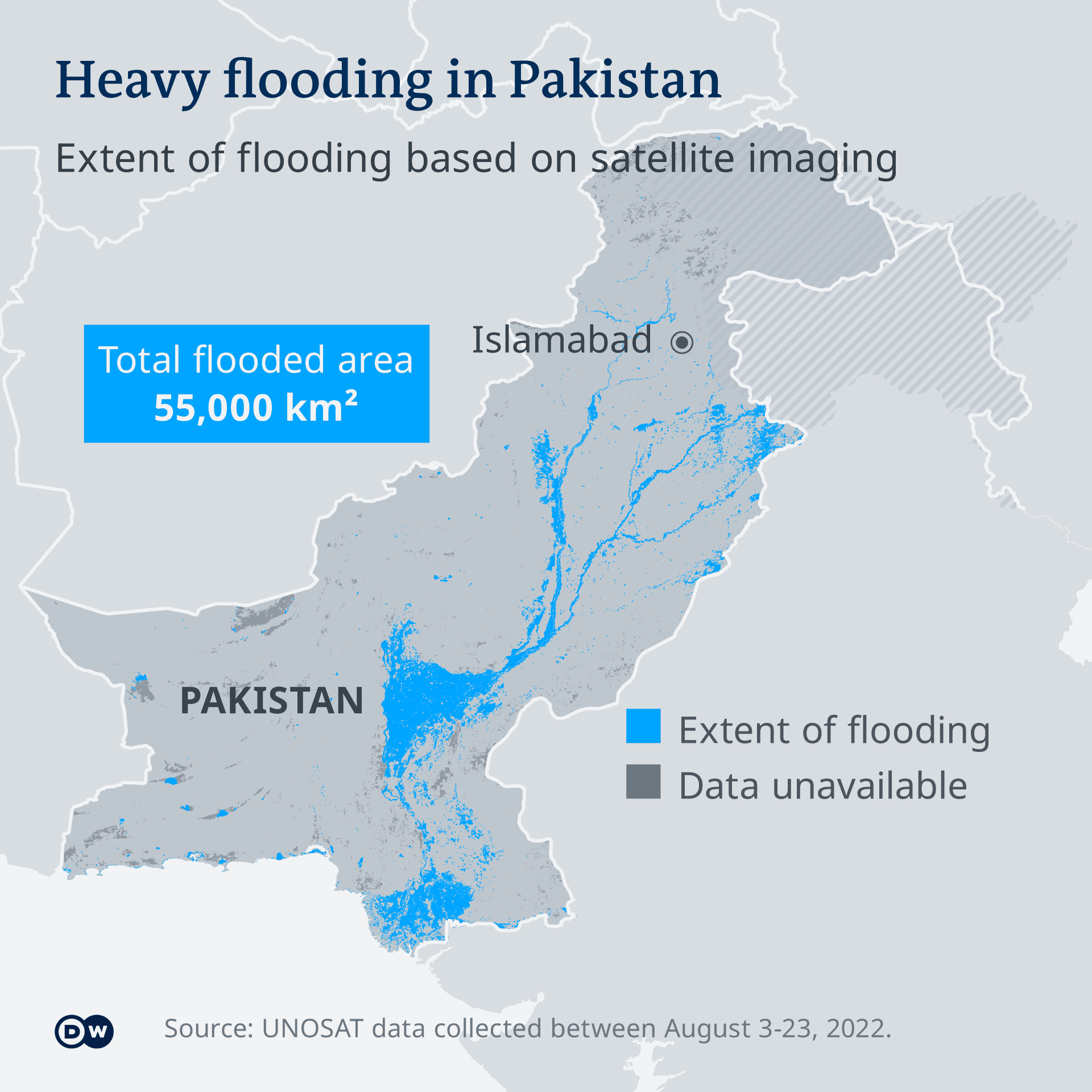 |
| Pakistan Flood 2022 Map. Source: DW |
 |
| Satellite Image of Qambar, Sindh Before/After Floods 2022. Source: NASA |
 |
| Satellite Image of Shikarpur, Sindh Before/After Floods 2022. Source: NASA |
 |
| Balochistan and Sindh Worst Affected by Monsoon22. Source: The Economist |
Pakistan's population is about 2.6% of the world population. The nation contributes less than 1% of the global carbon emissions. It lacks the resources needed to deal with the consequences of this man-made disaster. The Industrial Revolution in Europe and the United States was fueled mainly by fossil fuels such as coal and oil believed to be responsible for climate change. The following map from Professor Jason Hickel shows that the countries in the global north are the biggest polluters while those in the global south are the most vulnerable to the effects of climate change.
 |
| Climate Injustice: Low Emitters Global South vs Big Polluters in Industrial North. Source: Prof J. Hickel |
 |
| Average Annual Cost of Floods in Vulnerable Countries. Source: Bloomberg |
 |
| Comparison of 2022 and 2010 Floods in Pakistan. Source: WWF |
It will take hundreds of millions of dollars to provide immediate relief to 33 million people, followed by tens of billions of dollars in assistance to rebuild the lives and livelihoods and the infrastructure destroyed by this catastrophe. Pakistan's gross capital formation is only 15% of its GDP. Among the world’s top 20 economies by population, only Egypt has a lower rate of gross capital formation than Pakistan, according to Bloomberg. It is time for the rich industrialized world to help developing nations such as Pakistan to deal with the massive impact of climate change.
 |
| Low Gross Capital Formation in Pakistan. Source: Bloomberg |
All Pakistanis and non-Pakistanis need to pitch in with donations to help finance immediate disaster relief activities. Beyond that, Pakistan will have to be helped by international experts to build disaster preparedness capacity. The new housing and infrastructure will have to be funded and built to ensure its resilience in future climate disasters which are likely to occur more often with greater intensity. There is an urgent need to prepare western and multilateral financial institutions to deal with such climate catastrophes in developing nations. Mechanisms also need to be put in place to provide and manage funding of these projects in a transparent manner.
Related Links:
Pakistan Water Crisis: Facts and Myths
Pakistan Ramps Up Low-Carbon Sources of Electricity
Cycles of Drought and Floods in Pakistan
Pakistan at 75: Economic and Demographic Progress
Dust Bowl in Thar Desert Region
Dasht River in Balochistan
Bridge Collapse After Sudden Glacier Melt in Pakistan
Pakistan Ramps Up Low-Carbon Sources of Electricity
Cycles of Drought and Floods in Pakistan
Pakistan at 75: Economic and Demographic Progress
Dust Bowl in Thar Desert Region
Dasht River in Balochistan
Bridge Collapse After Sudden Glacier Melt in Pakistan
Wednesday, December 6, 2023
COP28: Pakistan Planting World's Largest Mangrove Forest
Pakistan, which contributes less than 1% of global carbon emissions, is among the countries considered most vulnerable to climate change. About a third of the country was devastated by massive floods in 2022. The nation committed continued pursuit of nature-based solutions to the problem at COP26 in Glasgow in 2021. As part of this commitment, the country is planting one of the world's largest mangrove forests in the Indus River Delta, a key component of its Ten Billion Tree Tsunami campaign launched by former Prime Minister Imran Khan.
 |
| Pakistan Mangroves Plantation Project. Source: Delta Blue Carbon |
Mangrove Forest:
Also known as Delta Blue Carbon Project, the mangroves plantation will eventually cover 350,000 hectares of Tidal Wetlands on the south-east coast of Sindh. Currently, Pakistan is estimated to have 600,000 hectares of mangrove forest. Mangroves absorb hundreds of millions of tons of atmospheric carbon, reduce the impact of storms on human lives and economic assets, and provide a habitat for fish, birds and other plants supporting biodiversity. It is funded by sales of carbon credits to global polluting industries such as those involved in fossil fuels trade.
 | |
|
Massive Floods of 2022:
More than a year after the unprecedented floods of 2022, Pakistan is still dealing with the havoc they wreaked. Over a thousand Pakistanis died. About 33 million people in two southern provinces became homeless. Sindh was inundated with 784% of normal rainfall in the year. Balochistan saw 522% of average rainfall. Both provinces suffered their worst ever heatwave prior to this unprecedented deluge. Nearly a million livestock were lost, over two million acres of farmland came underwater and 90% of the crops in Sindh and Balochistan were damaged. This was a massive humanitarian crisis.
Nature Based Solutions:
How are nature based solutions different from man made solutions? Here's how the World Bank explains the difference:
"Nature-based solutions are actions to protect, sustainably manage, or restore natural ecosystems, that address societal challenges such as climate change, human health, food and water security, and disaster risk reduction effectively and adaptively, simultaneously providing human well-being and biodiversity benefits. For example, a common problem is the flooding in coastal areas that occurs as a result of storm surges and coastal erosion. This challenge, traditionally tackled with manmade (grey) infrastructure such as sea walls or dikes, coastal flooding, can also be addressed by actions that take advantage of ecosystem services such as tree planting. Planting trees that thrive in coastal areas – known as mangroves -- reduces the impact of storms on human lives and economic assets, and provides a habitat for fish, birds and other plants supporting biodiversity"
 |
| Karachi Mangroves Exhibit. Source: Magnifiscience Center |
Saving Karachi:
One of the objectives of restoring mangroves is to prevent a climate disaster in Karachi, Pakistan's largest city and the country's economic hub. Mangroves in Karachi are a unique marine ecosystem fringing the coast, and they provide both a vital spawning area for ocean fish and protection from periodic tsunamis and storm surges.
Karachi's Magnifiscience Center has a special exhibit to help teach citizens the importance of restoring this marine ecosystem. Here's an excerpt of a recent Time Magazine report on the subject:
"On a recent Tuesday morning, several dozen Pakistani schoolchildren barreled down a wooden walkway into a thicket of mangroves. They jostled for space at a small viewing platform and eagerly pointed out fish darting between the exposed tree roots. As the rising tide inched ever closer to the crabs and mudskippers resting on shore, the children’s guide launched into a detailed explanation of the unique marine ecosystem fringing the coast, and how it provided both a vital nursery for ocean fish and protection from tsunamis and storm surges. If mangroves are so important, wondered one child out loud, “Why are they in here, and not out there?” By in here, she meant the soaring glass atrium of Karachi’s newly opened MagnifiScience Centre, where the high-tech centerpiece is the living mangrove exhibit—complete with real trees, live fish, plastic crabs, and an accelerated tidal ebb and flow maintained by underground water pumps. Out there is the crowded coastal megacity of Karachi, where all but a few of the mangrove forests that once defined this Indus Delta port town have been chopped down, paved over, and developed into ocean-view high-rises, golf courses, and container ports".
Related Links:
Pakistan Water Crisis: Facts and Myths
Pakistan Ramps Up Low-Carbon Sources of Electricity
Cycles of Drought and Floods in Pakistan
Pakistan at 75: Economic and Demographic Progress
Dust Bowl in Thar Desert Region
Dasht River in Balochistan
Bridge Collapse After Sudden Glacier Melt in Pakistan
Pakistan Ramps Up Low-Carbon Sources of Electricity
Cycles of Drought and Floods in Pakistan
Pakistan at 75: Economic and Demographic Progress
Dust Bowl in Thar Desert Region
Dasht River in Balochistan
Bridge Collapse After Sudden Glacier Melt in Pakistan
Subscribe to:
Posts (Atom)