Tuesday, April 10, 2018

Alibaba and Amazon Entry to Accelerate E-Commerce in Pakistan?

Media reports suggest global e-commerce behemoth Amazon.com could purchase substantial stake in Pakistan's e-commerce site  Clicky.pk.  This comes on the heels of a Bloomberg story that quoted anonymous sources indicating Chinese e-commerce giant Alibaba is in serious negotiations to acquire Daraz.pk.  Online sales in Pakistan's $152 billion retail market are doubling every year,  according to Adam Dawood of Yayvo online portal. He expects them to pass $1 billion in the current fiscal year (2017-18), two years earlier than the previous forecast.

Amazon's Presence in Pakistan:

Amazon already owns about 33% stake in Clicky.pk through its acquisition in 2017 of Dubai-based online retailer Souq.  Souq acquired this stake in the Pakistani company in late 2016.

In March this year, Bloomberg cited sources saying that Alibaba and Daraz.pk are negotiating a a price for the acquisition. It said that the "deliberations are an early state and no decisions have been made".

E-Commerce Market Growth: 

Online sales in Pakistan's $152 billion retail market are growing much faster than the brick-and-mortar retail sales. Adam Dawood of Yayvo online portal estimates that e-tail sales are doubling every year. He expects them to pass $1 billion in the current fiscal year (2017-18), two years earlier than the previous forecast.

E-commerce in Pakistan is being enabled by increasing broadband penetration and new online payment options. Ant Financial, an Alibaba subsidiary, has just announced the purchase of 45% stake in Pakistan-based Telenor Microfinance Bank.

Payment Options: 

Mobile wallets, also called m-wallets, are smartphone applications linked to bank accounts that allow users to make payments for transactions such as retail purchases. According to recent State Bank statistics on branchless banking (BB) sector, mobile wallets reached a high of 33 million as of September 2017, up 21% over the prior quarter. About 22 percent of these accounts – 7.4 million – are owned by women, up 29% seen in Jul-Sep 2017 over previous quarter. Share of active m-wallets has also seen significant growth from a low of 35% in June 2015 to 45% in September 2017.

Summary: 

Online sales in Pakistan's $152 billion retail market are doubling every year,  according to Adam Dawood of Yayvo online portal.  The country's retail market is the fastest growing in the world, according to Euromonitor.  Expanding middle class, particularly millennials with rising disposable incomes, is demanding branded and packaged consumer goods ranging from personal and baby care items to food and beverage products. Strong demand for fast moving consumer goods is drawing large new investments of hundreds of millions of dollars.  Rapid growth in sales of consumer products and services is driving other sectors, including retail, e-commerce, paper and packaging, advertising, media, sports and entertainment. Potential downsides of soaring consumption include increased amount of  solid waste and decline in domestic savings and investment rates.

Related Links:

Haq's Musings

Pakistan Retail Sales Growth

Advertising Revenue in Pakistan

Pakistan FMCG Market

The Other 99% of Pakistan Story

PSL Cricket League Revenue

E-Commerce in Pakistan

Fintech Revolution in Pakistan

Mobile Broadband Speed in Pakistan

Sunday, April 8, 2018

The Story of Pakistan's M8 Motorway Construction Amid Baloch Insurgency

Construction on the recently completed 893 kilometer long Gwadar-Ratodero motorway, also known as M8, was started by a Chinese contractor back in early 2004 on former President Pervez Musharraf's watch. The work was soon abandoned when three Chinese engineers were killed by a car bomb during the first week of May, 2004.  In 2003, a year before this incident, Indian intelligence agency RAW had recruited Kulbhushan Jadhav as an undercover agent. He was issued a passport under an assumed name of Hussein Mubarak Patel and sent to Chabahar in Iran to orchestrate insurgent attacks next door in Balochistan.

After the Chinese left the project, another contractor who was awarded the project could not continue M8 construction. Eventually, Pakistan Army's Frontier Works Organization (FWO) completed the project 13 years later in 2017. This success has come at great cost in terms of time, money and human lives. FWO has lost dozens of military and civilian employees and many more have been injured in insurgent attacks. Meanwhile, a combination of military and intelligence operations by Pakistan Army and serious infighting among militants have significantly weakened the Baloch insurgency.

Pakistan Motorways. Source: Pakistaniat.com

M8 Motorway:


The M8 motorway connects Ratodero in Sindh to Gwadar in Balochistan. It is 893 long and runs through Baloch cities of Khuzdar, Awaran, Hoshab and Turbat along its east-west route.  Its recently completed first phase has two lanes and an additional two lanes are planned to handle future traffic growth. The motorway passes over Dasht River and also provides access to Mirani Dam completed in 2006. It is the world's largest dam in terms of floodstock capacity of 588,690 cubic hectometer

Local Baloch residents now use M8 motorway on a daily basis. They say it has significantly reduced the time needed to travel from Gwadar to Turbat, and indeed, reduced the time for produce and supplies to be transported between cities, according a report in local Pakistani media.

Detailed M8 Map. Source: Scroll.in

Indian Support of Baloch Insurgency:


The current Baloch Nationalist revolt in Pakistan started in 2003, the same year that Indian intelligence agency RAW recruited Kulbhushan Jadhav and gave him a new identity as Hussein Mubarak Patel, according to Indian media reports. This was three years before the killing of Baloch leader Akbar Bugti on August 26, 2006. Jadhav was sent to Chabahar in Iran to orchestrate insurgent attacks next door in Balochistan.

Kulbhushan Jadhav was arrested in Balochistan in 2016. He has confessed to orchestrating insurgent attacks on targets in Balochistan that resulted in deaths, injuries and destruction of property.

India's former RAW officers, including one ex chief, have blamed Indian spy Kulbhushan Jadhav, arrested by Pakistan in 2016, for getting caught in Pakistan as a "result of unprofessionalism", according to a report in India's "The Quint" owned and operated by a joint venture of Bloomberg News and Quintillion Media. The report that appeared briefly on The Quint website has since been removed, apparently under pressure from the Indian government.

It is believed to be the strongest and longest of the insurgencies seen in Pakistani Balochistan which has had earlier bouts of it in 1948, 1958-59, 1962-63 and 1973-77.

State of Baloch Insurgency:

Baloch insurgency has been significantly weakened recently by the continuing military and intelligence operations of the Pakistan Army.  The other probably more significant reason for it is serious infighting among insurgent groups from various tribes,  according to pro-insurgent US-based Baloch analyst Malik Siraj Akbar and a former US military intelligence officer retired US Lt. Col. Ralph Peters who supports Baloch insurgency.

In a US Congressional hearing on Balochistan, Peters said the most serious issues with the Baloch independence movement is “deeply troubling” infighting, according to a report in HuffPost. He condemned such bickering; going so far as to assert: “they are quickly becoming their own worst enemies.”

Peters has also pointed out gross human rights violations committed by Baloch insurgents against civilians. He said, “I am very concerned with Baloch extremists. Killing teachers and doctors is just dumb. It might feel good as revenge but it is not going to win you friends in Washington. Assassinating these folks is just hurting their movement.”

Frontier Works Organization (FWO):

The Frontier Works Organization (FWO) is a branch of the Pakistan Army that employs both active duty military officers and civilians. It was commissioned in 1966 and its first major project was the construction of the Karkoram Highway, the world's highest road that connects Pakistan with China.  Since then, the FWO has  built motorways, bridges, roads, tunnels, airfields and dams in Pakistan.

FWO has successfully completed several large construction projects in some of the most hostile conditions ranging from rough hilly terrains to insurgency-hit parts in Balochistan and federally administered tribal areas (FATA).  This success has come at great cost in terms of human lives. Dozens of FWO's military and civilian employees have lost their lives and many more have been injured in insurgent attacks.

China Pakistan Economic Corridor:

Currently, FWO is engaged in several large infrastructure projects related to China-Pakistan Economic Corridor. In addition to major road construction, FWO is building housing, water projects, power plants and oil refineries in different parts of the country.

Various militant groups, including Indian government proxies, are engaged in sabotaging CPEC. While some attacks have been successful, it is believed that the Pakistani military has been able to prevent many more. Thousands of soldiers and hundreds of intelligence officers are believed to be working to manage the security situation all along the western route and in Gwadar.

Summary:

The construction of the recently completed 893 kilometer long Gwadar-Ratodero motorway, also known as M8, was started by a Chinese contractor back in early 2004 on former President Pervez Musharraf's watch. The work was soon abandoned when three Chinese engineers were killed by a car bomb during the first week of May, 2004.  In 2003, a year before this incident, Indian intelligence agency RAW had recruited Kulbhushan Jadhav as an undercover agent. He was issued a passport under an assumed name of Hussein Mubarak Patel and sent to Chabahar in Iran to orchestrate insurgent attacks next door in Balochistan.

After the Chinese left the project, another contractor who was awarded the project could not continue M8 construction. Eventually, Pakistan Army's Frontier Works Organization (FWO) completed the project 13 years later in 2017. This success has come at great cost in terms of time, money and human lives. FWO has lost dozens of military and civilian employees and many more have been injured in insurgent attacks. Meanwhile, a combination of military and intelligence operations by Pakistan Army and serious infighting among militants have significantly weakened the Baloch insurgency.

Related Links:


Saturday, April 7, 2018

Why is PIA Losing Money Amid Air Travel Boom in Pakistan?

What is behind the domestic and international aviation boom in India and Pakistan? Why is Pakistan doing better than India in terms of international passenger growth while badly lagging in domestic air travel?

Passenger Aircraft at Karachi International Airport
What has happened to the global airline industry since the passage of the US Deregulation Act of 1978? Why did many big airlines of yesteryears die in spite of huge growth of air travel? How did so many upstart low-cost carriers succeed while state-owned airlines failed?

Why are the domestic air fares in Pakistan three times higher than those in India for similar distances? Why does state-owned PIA control two-thirds of Pakistan's domestic market? Why isn't there more competition on domestic routes in Pakistan?

Why are state-owned airlines, including PIA and Air India, losing a lot of money, requiring massive taxpayer subsidies and still performing poorly? Why aren't these airlines run more efficiently? Are PIA jobs used for political patronage? Why does PIA fly so many empty seats rather than cut fares to expand market?

Viewpoint From Overseas host Faraz Darvesh discusses these questions with Misbah Azam and Riaz Haq (www.riazhaq.com)

https://youtu.be/hh99nMnueBA


Related Links:

Haq's Musings

South Asia Investor Review

Pakistan Air Travel Market

Pakistan $20 Billion Tourism Industry Booming

Saving PIA, Railways and Education in Pakistan

Pakistan: Political Patronage Trumps Public Policy

Riaz Haq's Youtube Channel

Friday, April 6, 2018

Aviation Boom in India and Pakistan

Aviation market in South Asia is among the fastest growing in the world. It is soaring in terms of both domestic and international travel. Last year, the Indian commercial aviation market grew to 176 million passengers and Pakistan's reached 22 million. A total of 22 million passengers (7.2 million domestic, 14.6 million international) flew commercial airlines in Pakistan in 2016-17, up 5.11% from 20.7 million (6.95 million domestic, 13.76 million international) in 2015-16, according to Civil Aviation Authority (CAA). While Pakistan's international aviation market as a percentage of its population is bigger than India's, the Indian domestic market is far outpacing Pakistan's mainly due to greater competition and significantly lower airfares.

Pakistan International Aviation Market in 2016-17. Data Source: CAAP
International Travel:  

Nearly 15 million international passengers flew in and out of Pakistan in fiscal year 2016-17. This number is about a quarter of the 59 million international passengers who flew to and from India in roughly the same period, according to data available from the aviation authorities of the two South Asian countries. India's population is about six and a half times larger than Pakistan's.

Pakistan's state-owned PIA carries 3.2 million international passengers giving it only 22% market in the country's international aviation market. Other major international carriers flying in and out of Pakistan are Emirates (2.2 million),  Shaheen (1.57 million), Air Blue (1.4 million), Saudi Arabian and Qatar (1.1 million each).

Pakistan Air Passenger Traffic By Airports


Domestic Aviation:

The difference in domestic air traffic between the two countries is far bigger compared to the ratio for international traffic. India has seen its domestic air travel market soar to 117 million passengers versus Pakistan's 7.2 million in 2017.  India's combined aviation market for both domestic and international travel is 176 million versus Pakistan's 22 million passengers. 
Pakistan Domestic Aviation Market in 2016-17. Data Source: CAAP

The other difference in terms of domestic markets of the two nations is that the state-owned Pakistan International Airlines (PIA) enjoys massive 67.2% market share while the state-owned Air India has only 14.2% India's domestic market share and the rest of the market is divided among IndiGo (38.2%), Jet Airways(15.4%), Spice Jet(13.8%) and other smaller domestic airlines.

In Pakistan,  Shaheen (1.17 million), Air Blue (797,628) and Serene (386,970) have the remainder of the domestic market.

Fares and Competition:

As to the reason for India's domestic market being 16 times larger than Pakistan's, let me quote the UK's Financial Times as an explanation:  "A highly competitive domestic aviation market (in India) means that a passenger looking to fly from Delhi to Mumbai on July 1 this year, for example, can pay as little as $35. In Pakistan, someone wanting to do the roughly equivalent trip from Islamabad to Karachi will probably have to fly with the government-controlled Pakistan International Airlines and pay at least $100 to do so".

 Given the basic price-demand elasticity, it makes sense that Pakistan's domestic airfares being three times higher than India's reduce air travel demand to a mere 3.5% of Pakistan's population versus India's 8% of its population.

Level of Service:

Higher airfares in Pakistan do get you better service, according to Kiran Stacey of Financial Times. Here's how he sees it:

"Flying in Pakistan is unlike anywhere else I have been — and the polar opposite to flying in India, where I live. Departing from any of the three major Pakistani cities is the closest a modern traveller is likely to get to experiencing what flying was like in the 1950s. Checking in is effortless and there are no queues at security. At Islamabad airport, you do not even have to go to your gate: you can sit in the cafĂ© until your flight is called and then leave via a downstairs door that takes you straight on to the tarmac and a waiting minibus. Just hours earlier, I had suffered the regular indignity of catching a flight from Delhi airport. It took 20 minutes of disorganised queueing to check in, and another 30 to get through security. Getting on the aeroplane, as usual, reminded me of warfare at the Sino-Indian border, where troops are unarmed and so fight by jostling each other using only their torsos".

Highly Competitive Business:

Commercial aviation business has become much more cut-throat in recent years. It all began to fundamentally change with the passage of the 1978 US Airline Deregulation Act that made it easier for low-cost airlines to enter the market.  Regulations mandating minimum fares no long applied.

Since then, many other countries, including emerging economies, have adopted legislation similar to the US airline law.  Some of the big name airlines of yesteryears like Pan Am, TWA and Eastern Airlines have died. Number of airline passengers across the world has increased dramatically as air fares have plummeted.

State-Owned Airlines: 

Deregulation has forced state-owned airlines around the world  to either shut down or seek big government subsidies to stay in business. Running a successful airline business now requires different management skill sets and efficiencies in the current deregulated and highly competitive environment.

Part of it is technology driven transformation that enables minimizing staff and aircraft time on the ground, higher fuel efficiency and dynamic pricing based on demand. Unfortunately, state-owned airlines are finding it extremely difficult to operate in this environment.  Most of them, including PIA and Air India, incur huge losses year after year and require substantial tax-payer subsidies.

Empty Seats Flying on Karachi-Lahore PIA Flight. Credit: Monis Rahman 
I saw an example of poor management of Pakistan International Airline (PIA) a few days ago when a friend posted a picture of nearly empty cabin on a PIA flight from Karachi to Lahore. There were rows and rows of empty seats which is a rare occurrence in the airline business these days. Efficient airlines use yield management software to cut fares dynamically until their flights reach capacity.  Flying even one empty seat is seen as a problem by professional airline managers.

The other serious issue facing PIA and many other state-owned airlines is that their staffs are not recruited based on merit. It is reported that even the senior managers lacks professional experience of running a commercial airline. Instead, the PIA jobs are doled out as part of the political patronage system that gives favors to the supporters of the ruling politicians.

Summary:

Aviation markets in South Asia are growing rapidly in terms of both domestic and international travel. Last year, Indian air travel market grew to 176 million passengers while Pakistan's reached 22 million. While Pakistan's international aviation market as a percentage of its population is bigger than India's, the Indian domestic market is far outpacing Pakistan's mainly due to greater competition and significantly lower airfares.

Pakistan needs to take a page from the Indian playbook to increase competition and lower prices in the aviation market. This will expand the market, create jobs and make air travel more affordable in the country.


Here's Viewpoint From Overseas host Faraz Darvesh discussing the subject with Misbah Azam and Riaz Haq (www.riazhaq.com)

https://youtu.be/hh99nMnueBA


Tuesday, April 3, 2018

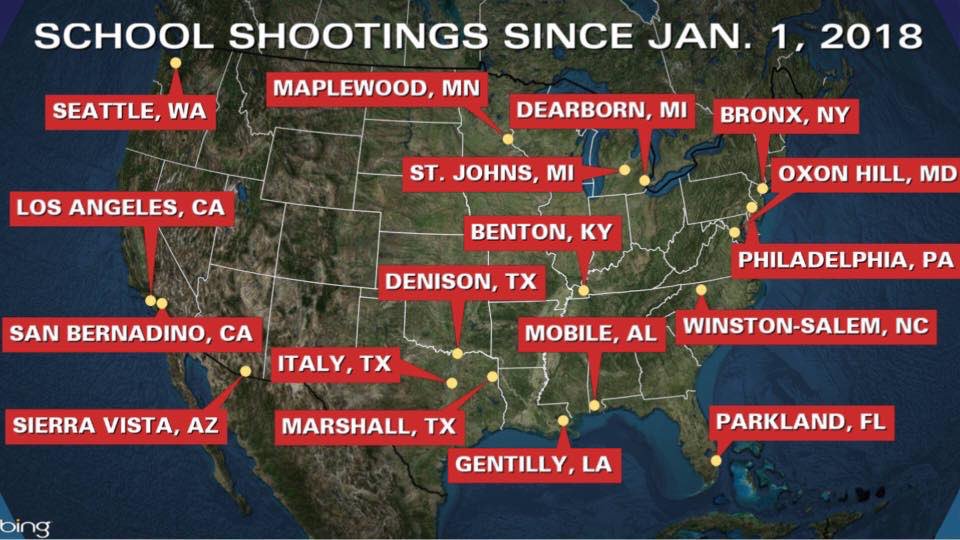
Young Shooting Victims: Malala, Parkland and Sandy Hook

What common experience have Malala Yousufzai and some of the young shooting victims of Parkland and Sandy Hook schools shared? After being at the receiving end of life-threatening shootings, they became targets of the slings and arrows of conspiracy theorists alleging the attacks were staged. Malala acknowledged this fact in her video message to American student marchers recently.

Malala Yousufzai:

Malala Yousufzai was shot in the head by Pakistani Taliban in Swat Valley in 2012. She luckily survived after being airlifted to a hospital in Pakistan where the doctors operated on her to save her life. Later, she went through additional surgery and rehab in England where she is now a student at Oxford University. 

As if her physical ordeal was not enough, some anti-West right-wing conspiracy theorists attacked her for being a willing participant in a "staged" shooting to defame Pakistan. The fact that Malala was given multiple awards, including the Nobel Peace Prize, only added to the anger of such groups. 

Parkland School Shooting Survivors:  

The students at Marjory Stoneman Douglas High School in Parkland, Florida, saw a mass shooting in February, 2018. Seventeen people were killed and seventeen more were wounded, making it one of the world's deadliest school massacres.

Michael Kugelman, an American analyst at Woodrow Wilson Center, sees some parallels between Malala and Parkland school shooting survivors.  Here's what he wrote in a op ed for Pakistan's Dawn newspaper about those attacking Parkland shooting survivors:

" A similar story is playing out now in the United States......These haters say the grieving victims (of Parkland mass shooting) attract attention they don’t deserve, come off as sanctimonious and self-righteous, are frauds, and are “being funded” and “given scripts.” The gun massacre survivors are branded as Nazis, targeted in doctored photo campaigns, and even mocked for college rejection letters..."

Sandy Hook Mass Shooting:

Adam Lanza shot and killed 20 children of ages 6-7 years and six adult staff at Sandy Hook Elementary School on December 14, 2012, in Newtown, Connecticut, United States.

As the parents grieved for their lost babies, they were subjected to conspiracy theories branding their tragedy an elaborate hoax. They were accused of being hired actors in a performance staged to bring down the National Rifle Association to kill the Second Amendment.

March For Our Lives:

Students across the United States organized a protest they called March for our lives to demand gun control laws.  At the marches, Malala Yousufzai spoke live via video link  to acknowledge similarities between her shooting and the Parkland shooting. Malala explained what she and the Parkland survivors share in common: They experienced violence and injustice, and they decided to speak out.

School Mass Shootings: 

The mass shooting at Marjory Stoneman Douglas High School in Florida has brought back the horrible memory of the tragic mass shooting at Army Public School in Peshawar, Pakistan on December 16, 2014.  The Peshawar school mass shooting claimed 149 lives, making it the world's second deadliest mass shooting at Beslan school in Russia where 334 people were killed.

Source: bkayy

The Parkland, Florida school shooting was the world's 10th worst with 17 dead. Five of the world's 10 worst mass shootings have occurred in the United States. The rest of them were one each in Russia, Pakistan, Kenya, Israel and the United Kingdom.

Peshawar School Shooting:

On the morning of December 16, 2014, six gunmen affiliated with the Tehrik-i-Taliban (TTP) entered the Army Public School in the northwestern Pakistani city of Peshawar and started shooting. All  six were foreign nationals, included one Chechen, three Arabs and two Afghans.

By the time the Pakistani Army commandos arrived and killed the attackers, 149 people including 132 students, ranging in age between eight and eighteen years, lay dead.

The Peshawar attack galvanized the Pakistani people to take on the Tehrik-e-Taliban Pakistan (TTP) and other terrorist groups. The Pakistani military launched a nation-wide operation Zarb e Azb to bring about a dramatic reduction in terrorist violence in the country.

Parkland School Shooting:

On the afternoon of February 14, 2018, a lone gunman entered and started shooting at Marjory Stoneman Douglas High School in Parkland, Florida.  Seventeen people were killed and fourteen more were taken to hospitals, making it the world's 10th deadliest school massacre. The suspected,  19-year-old Nikolas Jacob Cruz, was arrested shortly afterward and confessed, according to the Broward County Sheriff's Office.

The suspect was a student at Marjory Stoneman Douglas High School. He had been expelled and was angry. He used an AR-15 assault rifle to quickly kill over a dozen of his fellow students.

AR-15 is easily available in the United States, It has become a weapon of choice for mass shootings in America. 2017 Las Vegas mass shooter who killed 58 people also used a modified AR-15 rifle.

Summary:

Conspiracy theorists' attacks on survivors of Parkland school shootings in US state of Florida are no different than similar attacks on Malala Yousufzai in Swat Valley, Pakistan. They have all been accused of being part of staged attacks for political purposes.

While school shootings have occurred in many countries around the world, no other country has seen as many and as frequently as those in the United States. New York Times analysis of the Gun Violence Archive found that there have been 239 school shootings since 2014, including those on college campuses, resulting in 138 deaths. The biggest reason accounting for it is the ease of access to the deadliest of assault weapons in America. Will the US Congress act this time in defiance of the gun lobby? Given the track record of US legislators after worse massacres than Parkland, I wouldn't hold my breath. However, the response of the students has been much stronger and more sustained than in the past. I hope that they succeed where others have failed.

Related Links:

Haq's Musings

Yet Another Award for Malala

Gun Violence, Islamophobia and Terrorism

Gun Violence in America

Peshawar School Attack

Is US Gun Lobby Empowering Terrorists? 

Riaz Haq's Youtube Channel

Sunday, April 1, 2018

Fintech to Promote Financial Inclusion in Pakistan

About 100 million Pakistani adults lacked access to formal and regulated financial services as of 2016, according to a World Bank report on financial inclusion.  Only 2.9% of adults in Pakistan had a debit card, and only 1% of adults used them to make payments. Just 1.4% of adults used an account to receive wages and 1.8% of adults used it to receive government transfers in 2014. Since then, Pakistan has been leading the way in South Asia in digital finance and branchless banking.

According to the latest State Bank statistics on branchless banking (BB) sector, mobile wallets reached a high of 33 million as of September 2017, up 21% over the prior quarter. About 22 percent of these accounts – 7.4 million – are owned by women, up 29% in July-September 2017 over previous quarter. A McKinsey and Co analysis shows that adoption of financial technology (fintech) can help dramatically increase financial inclusion in Pakistan.

Karandaaz Pakistan , a non-profit organization, set up jointly by UK’s Department for International Development and Bill and Melinda Gates Foundation, is promoting financial technology in the country. Finja and Inov8 are among the better known fintech startups in the country. Chinese e-commerce giant Alibaba's Ant Financial's recent entry in Pakistan is creating a lot of excitement in Pakistan's fintech community.

Financial and Digital Inclusion in Pakistan. Source: Brookings Institution

Importance of Financial Inclusion:

Access to regulated financial services for all is essential in today's economy. It allows people and businesses to come out of the shadows and  fully participate in the formal economy by saving, borrowing and investing.

Those who lack access to regulated banking services are often forced to resort to work with unscrupulous lenders who trap them in debt at unaffordable rates. Such loans in extreme cases lead to debt bondage in developing countries.

Financial inclusion is good for individuals and small and medium size businesses as well as the national economy. It spurs economic growth and helps document more of the economy to increase transparency.

Status of Financial Inclusion in Pakistan:

About 100 million Pakistani adults lacked access to formal and regulated financial services as of 2016, according to a World Bank report on financial inclusion.  Only 2.9% of adults in Pakistan had a debit card, and only 1% of adults used them to make payments. Just 1.4% of adults used an account to receive wages and 1.8% of adults used it to receive government transfers in 2014. Since then, Pakistan has been leading the way in South Asia in digital finance and branchless banking.

M-wallets Growth in Pakistan in millions. Source: Business Recorder

Mobile wallets, also called m-wallets, are smartphone applications linked to bank accounts that allow users to make payments for transactions such as retail purchases. According to recent State Bank statistics on branchless banking (BB) sector, mobile wallets reached a high of 33 million as of September 2017, up 21% over the prior quarter. About 22 percent of these accounts – 7.4 million – are owned by women, up 29% seen in Jul-Sep 2017 over previous quarter. Share of active m-wallets has also seen significant growth from a low of 35% in June 2015 to 45% in September 2017.

“The benefits of digital payments go well beyond the convenience many people in developed economies associate with the technology,” says Dr. Leora Klapper, Lead Economist at the World Bank Development Research Group. “Digital financial services lower the cost and increase the security of sending, paying and receiving money. The resulting increase in financial inclusion is also vital to women’s empowerment.”

A McKinsey and Co analysis shows that adoption of financial technology (fintech) can help dramatically increase financial inclusion in Pakistan. Pakistan is ranked 16th among 26 nations ranked by Brookings Institution with an overall score of 69% in "The State of Financial and Digital Inclusion Project Report" for 2017. The Internet revolution is enabling rapid growth of financial technology (fintech) for increasing financial inclusion in Pakistan.

A McKinsey Global Institute report titled "Digital Finance For All: Powering Inclusive Growth In Emerging Economies" projects that adoption of financial technology (fintech) in Pakistan will add  93 million bank accounts and $36 billion a year to the country's GDP by 2025.   It will also create 4 million new jobs and add $7 billion to the government coffers in this period.

McKinsey report says that "Pakistan has solid digital infrastructure and financial regulation in place and has even had some success in digital domestic-remittance payments".

Fintech Players in Pakistan:

There are a number of companies, including some startups, offering fintech applications for smartphones that are linked to bank accounts. EasyPaisa operated by Telenor Microfinance is already well established. Among some of the better known startups working to disrupt the financial services sector in Pakistan are Finja and Inov8.

China's e-commerce giant Alibaba runs a major global e-payments platform Alipay. It also owns Ant Financial which has recently announced the purchase of 45% stake in Pakistan-based Telenor Microfinance Bank.

Telenor Pakistan runs its own e-payments platform EasyPay which will likely link up with Alipay global payments platform after the close of the Ant Financial deal.   Bloomberg is also reporting that Alibaba is in serious talks to buy Daraz.pk, an online retailer in Pakistan. These developments are creating a lot of excitement in Pakistan's fintech and e-commerce communities.

Alibaba and Alipay and other similar platforms are expected to stimulate both domestic and international trade by empowering small and medium size Pakistani entrepreneurial businesses and large established enterprises.

Karandaaz Fintech Promotion:

A key player promoting financial inclusion is Karandaaz Pakistan , a non-profit organization, set up jointly by UK’s Department for International Development and Bill and Melinda Gates Foundation.  It is providing grants for a number of local initiatives to develop and promote financial technology solutions in Pakistan.

Karandaaz Pakistan is promoting Fintech startups in  5 areas of focus:

1) Access to Financial services

Credit Scoring Models, Formalize savings through need based products, Digital lending services, and Insurance

2) Payments

Retail payments solutions through QR code,  Supply / Value Chain Digitization,  Ideas around digitization of online payments and merchant payments

3) E-Commerce

Smoothening of on-boarding process, Enabling Escrow Accounts for a retail merchant, Alternate payment modes other than COD

4) Interoperability

Innovative ideas to address the lack of interoperability among m-wallets

5) Early stage ideas related to:

 M-Wallet Use cases, Education of Financial Services through technology, Customer Engagement / Experience, Micro Credit, Digital Savings

Summary:

About 100 million Pakistani adults lacked access to formal and regulated financial services as of 2016, according to a World Bank report on financial inclusion.  Only 2.9% of adults in Pakistan have a debit card, and only 1% of adults use them to make payments. Just 1.4% of adults use an account to receive wages and 1.8% of adults use it to receive government transfers in 2014. At the same time, Pakistan is leading the way in South Asia in digital finance and branchless banking.

According to the latest State Bank statistics on branchless banking (BB) sector, m-wallets reached a high of 33 million as of September 2017, up 21% over the prior quarter. About 22 percent of these accounts – 7.4 million – are owned by women, up 29% seen in Jul-Sep 2017 over previous quarter. A McKinsey and Co analysis shows that adoption of financial technology (fintech) can help dramatically increase financial inclusion in Pakistan.

Karandaaz Pakistan , a non-profit organization, set up by UK’s Department for International Development and Bill and Melinda Gates Foundation, is promoting financial technology in the country.  Chinese e-commerce giant Alibaba's Ant Financial's recent entry in Pakistan is creating a lot of excitement in the country's fintech community.

Related Links:

Haq's Musings

South Asia Investor Review

Fintech Revolution in Pakistan

E-Commerce in Pakistan

The Other 99% of the Pakistan Story

FMCG Boom in Pakistan

Pakistan's Financial Services Sector

Bank Deposits Growth in Pakistan

Riaz Haq's Youtube Channel

Viewpoint From Overseas Channel 

Saturday, March 31, 2018

India-Pakistan Nuclear Arms Race

Why has Pakistan developed and successfully tested nuclear-capable MIRV (Multiple Independent Re-entry Vehicles) and SLCM (Submarine Launched Cruise Missile)? How do these additions to Pakistan's nuclear arsenal enhance its nuclear deterrence against India? Was Pakistan forced into these technologies by India's development of anti-ballistic missiles and nuclear triad? How will India respond to these developments? Does India have multiple warhead missiles under development?

Indian Children's Book Cover. Source: New York Times
Why has Pakistan developed tactical nuclear weapons like short-range Nasr missile? Can't Pakistan use its conventional armed forces to effectively deter India's plans under its Cold Start Doctrine (CSD)? What is Pakistan's New Concept of War Fighting (NCWF) Doctrine? Would Pakistan be able to mobilize its conventional forces rapidly? Would Pakistan army, air force and navy be able to coordinate their response under NCWF Doctrine?

Why is India waging a proxy terror war in Pakistan? Why does western government officials' and western media's public narrative completely ignore the reality that has been privately unofficially acknowledged by some American and Indian insiders?

What are the chances of India and Pakistan talking peace? Has Pakistan been an obstacle to peace with India? Can Kashmir issue be set aside for India and Pakistan to have better ties?  Are Pakistanis ready for a peace deal with India?

Why do analysts like Christine Fair see similarities between India's BJP party and America's Ku Klux Klan (KKK)? Why is Indian Prime Minister Narendra Modi described as being like a KKK Grand Wizard? Why is Nazi leader Adolf Hitler promoted as an "inspirational leader" in an Indian children's book? Why do Hindu Nationalists include Hitler among world leaders who have “devoted their lives for the betterment of their country and people.”

Does India under Nazi-loving Hindu Nationalist Modi pose a serious threat to peace in South Asia and the rest of the world? Could Hindutva fanaticism spark an India-Pakistan nuclear war?  Are India's ruling Hindu Nationalists overconfident and reckless enough to start a war against Pakistan? What do independent and Indian analysts think about the conventional strengths of the two militaries?

Viewpoint From Overseas host Faraz Darvesh discusses these questions with Misbah Azam and Riaz Haq (www.riazhaq.com)

https://youtu.be/3BT2rgFbkZA


Related Links:

Haq's Musings

South Asia Investor Review

India-Pakistan Ties: Who's at Fault?

700,000 Indian Soldiers vs 10 Million Kashmiris

Why is India Sponsoring Terror in Pakistan?

Ex RAW Agents Blame Kulbhushan Jadhav For Getting Caught

Pakistan's Conventional Deterrence Against India

Pakistan's Nuclear Triad

Islamophobia Going Mainstream

Christine Fair Compares India's BJP with America's KKK

Hindutva-Nazi Alliance

Hindutva Going Global

Riaz Haq's Youtube Channel

Viewpoint From Overseas Channel 

Tuesday, March 27, 2018

Fast Moving Consumer Goods (FMCG) Boom in Pakistan's $152 Billion Retail Market

Surging demand for fast moving consumer goods (FMCG) in Pakistan is attracting hundreds of millions of dollars of new investments. Expanding middle class, particularly millennials with rising disposable incomes, is demanding branded and packaged consumer goods ranging from personal and baby care items to food and beverage products.  Rapid growth in sales of consumer products and services is driving other sectors, including retail, e-commerce, paper and packaging, advertising, media, sports and entertainment. Planet Retail estimates Pakistan's current retail market size at $152 billion. It is forecast to expand 8.2% a year through 2016-2021 as average disposable income has doubled since 2010, according to research group Euromonitor International as reported by Bloomberg News.

New FMCG Investments:

Dutch consumer giant Unilever has announced plans to invest $120 million to expand its operations in Pakistan. Turkish multinational Hayat Kimya has said it will invest $150 million to manufacture consumer products in the country. Earlier in 2016, Dutch dairy giant FrieslandCampina acquired 51 % of Karachi-based Engro Foods Limited for $220 million.

Rapid growth in sales of consumer products and services is driving other sectors, including retail, e-commerce, paper and packaging, advertising, media, sports and entertainment.

Retail Sales:

Rising incomes of Pakistanis are reflected in the retail sales growth which is ranked the fastest in the world.  Planet Retail estimates Pakistan's current retail market size at $152 billion. It is forecast to expand 8.2% a year through 2016-2021 as disposable income has doubled since 2010, according to research group Euromonitor International as reported by Bloomberg News. The size of the middle class is expected to surpass that of the U.K. and Italy in the forecast period, it said.

Retail Sales Growth. Source: Bloomberg


E-Commerce:


Online sales are growing much faster than the brick-and-mortar retail sales. Adam Dawood of Yayvo online portal estimates that e-tail sales are doubling every year. He expects them to pass $1 billion in the current fiscal year (2017-18), two years earlier than the previous forecast. This is being enabled by increasing broadband penetration and new online payment options. Ant Financial, an Alibaba subsidiary, has just announced the purchase of 45% stake in Pakistan-based Telenor Microfinance Bank. Bloomberg is reporting that Alibaba is in serious talks to buy Daraz.pk, an online retailer in Pakistan.

Advertising Revenue:

Growing buying power of rapidly expanding middle class in Pakistan drove the nation's media advertising revenue up 14% to a record Rs. 76.2 billion ($727 million), making the country's media market among the world's fastest growing for FY 2015-16, according to Magna Research.  Half of this ad spending (Rs. 38 billion or $362 million) went to television channels while the rest was divided among print, outdoor, radio and digital media. `

Global Advertising Growth 2016. Source: Magna

Digital media spending rose 27% in 2015-16 over prior year, the fastest of all the media platforms. It was followed by 20% increase in radio, 13% in television, 12% in print and 6% in outdoor advertising, according to data published by Aurora media market research

Mass Media Growth:

Advertising revenue has fueled media boom in Pakistan since early 2000s when Pakistan had just one television channel, according to the UK's Prospect Magazine. Today it has over 100. This boom has transformed the nation. The birth of privately owned commercial media has been enabled by the Musharraf-era deregulation, and funded by the tremendous growth in revenue from advertising targeted at the burgeoning urban middle class consumers.

Sports and Entertainment:

Sports and entertainment sectors are major beneficiaries of increasing advertising budgets. Commercial television channels' shows and serials are supported by advertisers. A quick look at Pakistan Super League 2018 matches reveals that all major consumer brand names are either directly sponsoring or buying advertising from broadcasters.  These ads and sponsorship have turned PSL into a major business producing tens of millions of dollars in revenue to support cricket in Pakistan.  Last year, Pakistan Cricket Board's budget was over $40 million and a big chunk of it came from PSL. This year, the PSL chairman Najam Sethi estimates the PSL franchise valuation is approaching half a billion US dollars with potentially significant revenue upside.

Downsides of Consumer Boom:

There are a couple of downsides of the consumer boom. First,  a dramatic increase in solid waste. Second, rising consumption could further depress Pakistan's already low private savings rate.

FMCG products come with a significant amount of plastic and paper packaging that contribute to larger volume of trash. This will necessitate a more modern approach to solid waste disposal and recycling in Pakistani towns and cities. An absence of these systems will make the garbage situation much worse. It will pose increased environmental hazards.

Pakistan's savings rate is already in teens, making it among the lowest in the world. Further decline could hurt investments necessary for faster economic growth.

Summary: 

Pakistan's $152 billion retail market is the fastest growing in the world, according to Euromonitor.  Expanding middle class, particularly millennials with rising disposable incomes, is demanding branded and packaged consumer goods ranging from personal and baby care items to food and beverage products. Strong demand for fast moving consumer goods is drawing large new investments of hundreds of millions of dollars.  Rapid growth in sales of consumer products and services is driving other sectors, including retail, e-commerce, paper and packaging, advertising, media, sports and entertainment. Potential downsides of soaring consumption include increased amount of  solid waste and decline in domestic savings and investment rates.

Related Links:

Haq's Musings

Pakistan Retail Sales Growth

Advertising Revenue in Pakistan

Pakistan FMCG Market

The Other 99% of Pakistan Story

PSL Cricket League Revenue

E-Commerce in Pakistan

Fintech Revolution in Pakistan

Mobile Broadband Speed in Pakistan

Sunday, March 25, 2018

New US NSC Impact on South Asia; US-China Trade War; Afghan Talks Offer

Why were Secretary of State Rex Tillerson and National Security Advisor General HR McMaster fired? Why is there so much turnover is US National Security Council and White House staff? How will the selection of Mike Pompeo as Secretary of State and John Bolton as National Security Advisor impact policies vis-a-vis Afghanistan, India, Pakistan, Iran and North Korea? Will pressure on Pakistan ease? Is US military action against Iran more likely? Will the situation in Middle East further deteriorate?


Why has President Trump imposed heavy tariffs on Chinese imports? Will China retaliate with its own tariffs on US products? Will there be a trade war? Will it hurt global financial markets? How will it impact US, Chinese and other major economies? Could it spark a global recession?

Why has Afghan President Ashraf Ghani invited the Taliban for talks? Does Pakistan have any influence on the Taliban? Will the Taliban accept the invitation?

 Viewpoint From Overseas host Faraz Darvesh discusses these questions with Misbah Azam and Riaz Haq (www.riazhaq.com)

https://youtu.be/8KFHrS_EQqY


Related Links:

Haq's Musings

Policy Impact of Trump's Key Appointments

Will Pakistan Yield to Trump's Pressure?

China Pakistan Educational, Scientific, Cultural and Economic Ties

Afghan-Pakistan Ties

Iran-Pakistan Ties

Talk4Pak Youtube Channel

Saturday, March 24, 2018

Bumper Crops And Soaring Credit Drive Pakistan's Tractor Sales Boom

First seven months of the current fiscal year have seen tractor sales soar 45% to 38,173 units, according to data of the Pakistan Automotive Manufacturers Association. It is driven by a combination of soaring credit availability and bumper harvests of Pakistan's top three crops by area: wheat, cotton and rice.

Tractor Sales:

First seven months of the current fiscal year have seen tractor sales soar 45% to 38,173 units, according to data of the Pakistan Automotive Manufacturers Association. This is good news for Pakistan's tractor industry that has been in slump for several years as the agriculture output was stagnant.

Pakistani farmers use tractors for a variety of usual tasks ranging from tilling and planting to harvest and transport. Tractor owners recover their costs from more efficiently working their farms and renting out equipment when they are not in their own use.

Agriculture Credit Growth:

Pakistani banks provided Rs 500 billion (nearly $5 billion) worth of agricultural credit during the first seven months, July-January period, of current fiscal year.  It represents a 45% jump from the same period last year, according to media reports.

According to State Bank of Pakistan (SBP), commercial banks, specialized banks, Islamic banks, domestic private banks, microfinance banks and other microfinance institutions have together disbursed Rs 499.645 billion during the period under review, up Rs. 351.358 billion in the same period of last fiscal year.

Top Three Crops:

Wheat output is expected to be near all time high of 26 million tons. Cotton production is forecast to exceed 11.5 million bales, up from 10.6 million bales last year.

Source: FAO via Kleffmann Group

Pakistan rice exports have reached 2.59 million tons worth US$ 1.224 billion in the first 7 months, up from 2.27 million tons worth US$.961 Million last year,  recording growth of 27% in value and 14% quantity.

Pakistan ranks among the world's biggest producers of a variety of crops including wheat, cotton, rice, corn, sugarcane, onions, chickpeas and fruits, according to Food and Agriculture Organization Stats (FAOSTAT).

Crops vs Livestock:

Livestock farming contributes 53% while crops make up about 42% of Pakistan's agriculture output. The rest comes from fishing and forestry.


Pakistani livestock sector has growing much faster than the crop sector and more recent estimates show its contribution has increased to 56.3% of the value of agriculture and nearly 11% to the agricultural gross domestic product (AGDP). It's driven by growing domestic demand for meat and dairy products.

Crop Yields:

Pakistan's crop yields are comparable to India, among the lowest in the world, according to FAO (Food and Agriculture Organization) data.

Source: FAO via Kleffmann Group

World's highest crop yields are seen in Europe while the lowest are in Africa.

Maize, Potato, Rice and Wheat Yields in Hectograms/Hectare. Source: FAOSTAT

Value Added Agriculture: 

Livestock revolution enabled Pakistan to significantly raise agriculture productivity and rural incomes in 1980s. Economic activity in dairy, meat and poultry sectors now accounts for just over 50% of the nation's total agricultural output. The result is that per capita value added to agriculture in Pakistan is almost twice as much as that in Bangladesh and India.

Although Pakistan's value added to agriculture is high for its region, it has been essentially flat since mid-1990s. It also lags significantly behind developing countries in other parts of the world. For example, per capita worker productivity in North Africa and the Middle East is more than twice that of Pakistan while in Latin America it is more than three times higher.

CPEC Long Term Plan:

Beyond the current phase of China Pakistan Economic Corridor (CPEC) focus on energy and infrastructure projects, there is a long term plan that deals with modernizing Pakistan's agriculture. CPEC LTP outlines a more comprehensive effort involving the entire supply chain from agriculture inputs like  seeds, fertilizer, credit and pesticides to logistics such as storage and transportation systems.

Summary:

Pakistan ranks among the world's top producers of a number of major crops including wheat, cotton and rice. Soaring tractor sales are being driven by a combination of  rising credit availability and bumper harvests of major crops in the country this year. But the farm productivity and yields are still among the lowest in the world. CPEC LTP (long term plan) offers hope of significant improvements in agriculture sector to reach its full potential.

Related Links:

Haq's Musings

Value Added Agriculture in Pakistan

Agribusiness Drawing Investors to Pakistan

China Pakistan Economic Corridor

An Indian Farmer Commits Suicide Every 30 Minutes

Pakistan's Rural Economy

Pakistan World's 5th Largest Motorcycle Market

The Other 99% of the Pakistan Story