Showing posts with label Women. Show all posts

Sunday, January 9, 2022

Pakistan Gets First Woman Supreme Court Judge Despite Top Judges' Opposition

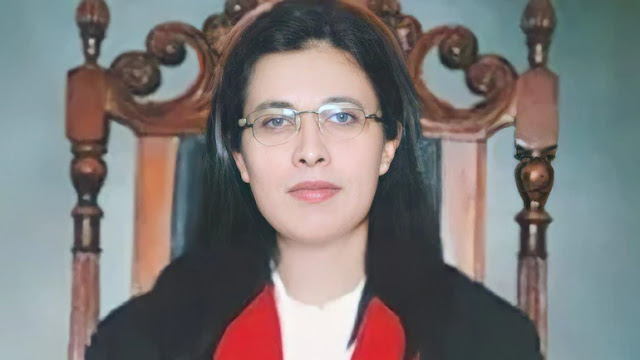
Judge Ayesha Malik has been confirmed as Pakistan's first woman Supreme Court judge in the face of strong opposition by the majority of sitting judges of the top court and Pakistan Bar Council. It was two  affirmative votes by the PTI government representatives that helped her win 5-4 confirmation in the Supreme Judicial Council (SJC). Only two of the five sitting Supreme Court judges who are members of the SJC supported her confirmation. 

Justice Ayesha Malik


The historic nomination of Justice Ayesha Malik was supported by Chief Justice Gulzar Ahmed,  Justice Umar Ata Bandial, ex-judge Sarmad Jalal Osmany, Law Minister Barrister Farogh Naseem and Attorney General (AG) Khalid Jawed Khan. It was opposed by Justice Qazi Faez Isa, Justice Maqbool Baqar, Justice Sardar Tariq Masood and Pakistan Bar Council (PBC) representative Akhtar Hussain opposed the selection.    

Justice Ayesha Malik is a Harvard Law School graduate. She started her legal career working with Mr. Fakhurddin G. Ebrahim at Fakhruddin G. Ebrahim & Co. in Karachi in 1997. Then in 2001 she joined the law practice of Rizvi, Isa, Afridi and Agnell as the head of the firm's Corporate & Litigation Department in Lahore. Justice Ayesha Malik was appointed to the Lahore High Court in 2012 where she made a historic ruling banning the "two-finger test" in rape cases.  Justice Malik said the test was "humiliating" and had "no forensic value".     

Justice Malik's appointment to the nation's highest court is part of a silent social revolution in Pakistan with a rising number of women joining the workforce and moving up in public and private institutions. However, the status of women in Pakistan continues to vary considerably across different classes, regions, and the rural/urban divide due to uneven socioeconomic development and the impact of tribal, feudal, and urban social customs on women's lives. While some women are soaring in the skies as pilots of passenger jets and supersonic fighter planes, others are being murdered for defying tribal traditions.  


Female Labor Participation Rates in South Asia


Pakistan's female labor force participation rate (22%) has recently surpassed the rate in India (21%) but still remains very low relative to the global average of 47%. Women's education and literacy levels remain low in Pakistan but the gender gap is declining in terms of literacy rates and mean years of schooling, according to Pakistan Labor Force Survey 2017-18.  There is about a one year gap between men and women in terms of education attained. On average, a Pakistani male born after 1995 will leave school in 8th grade. A female born at the same time will leave in 7th grade.

A 2020 global survey conducted by Payoneer, a global payments platform company based in Silicon Valley, showed that Pakistani women freelancers are earning $22 an hour, 10% more than the $20 an hour earned by men. While Pakistani male freelancers earnings are at par with global average, Pakistani female earnings are higher than the global average for freelancers. Digital gig economy is not only helping women earn more than men but it is also reducing barriers to women's labor force participation in the country. The survey also concludes that having a university degree does not help you earn more in the growing gig economy. The survey was conducted in 2015.

Freelancers Hourly Rate by Gender. Source: Payoneer

An average Pakistani freelancer working 34 hours a week at $20 an hour earns $34,000 a year, or Rs. 5.7 million a year, a small fortune for a young Pakistani. This is one of the upsides of the online global labor market for skilled young men and women in developing nations like Pakistan. Sometimes freelancing experience leads to tech startups in Pakistan.


Monday, March 7, 2016

Vrindavan: City of Widows Symbolizes Shameful Treatment of South Asian Women

Pakistani filmmaker Sharmeen Obaid Chinoy has earned two Oscars by bringing world's attention to women's abuse in Pakistan. She has shamed Pakistani politicians and society at large into a series of actions to put an end to violence against women. Alas, there appears to be little attention paid to women's abuse in Pakistan's neighbor India.
Widows of Vrindavan

Indian women's suffering begins at birth and continues through their entire lives. Girls are highly undervalued, there are 35 million fewer females than males, presumed dead, killed by midwife or parent or starved to death. Unltrasound technology is used mainly to find and destroy female fetuses. Ultrasound and abortion are available even in the smallest villages with no electricity or clean water.

The girls lucky enough not to be aborted face inequality and cruelty at every turn because of low social status of Indian women, according to SuperFreakonomics, a book by Steven D Levitt and Stephen J Dubner that documents status of women in India.

Vrindavan, also called the city of widows, is the most shameful symbol of women's suffering.  Satti, the immolation of surviving widows on a husband's funeral pyre,  may have been banned in India, but life for many widows in India is still tragic as they are shunned by their communities and abandoned by their families, even their own children, according to a recent Aljazeera  report.

The widows often live in severe poverty and are ostracized by society due to various superstitions - even the shadow of a widow can wreak havoc and bring bad luck, many Indians believe. Lack of education and any source of income forces them to beg on streets and many turn to prostitution for survival, according to the report.

The last time the issue of abandoned and ostracized widows got much attention in India was in 2005 when a Deepa Mehta film "Water" was released.  The film Water features Chuyia , a 7-year-old child bride, whose 40-year-old husband dies. Chuyia's head is shaved and she is dressed in a coarse white sari. She is then taken to a Hindu temple to spend the rest of her life there.  The film shows that several young widows are prostituted to clients to raise funds for the temple.

The irony is that the film Water's only acclaim came from audiences thousands of miles from India.  Deepa Mehta was forced to finish making the film abroad after receiving death threats for "insulting" Hindu culture. It was nominated for an Academy award but it did not win. It, however, did win several other prestigious international awards.

More recently, Naatak, a  Silicon Valley based theater company,  did "Vrindavan" as a musical production.  It takes a closer look at the politics and social ills behind the city of Vrindavan. It's directed by a Silicon Valley engineer Sujit Saraf who heads the theater company.

While all of South Asia needs to change the way women are treated, it's only Pakistan that appears to be willing to confront the issues of gender bias. Similar courage is needed in all of South Asia, particularly India, to do more to alleviate the suffering of women.

Related Links:

Haq's Musings

India Leads the World in Child Marriages

Pakistani Documentary Wins Academy Award

Working Women Seeding Social Revolution in Pakistan

Status of Women in India

Violent Social Change in Pakistan

Female Genocide in India

Honor Killings in India


Monday, November 17, 2014

Pakistani Village Girl Launches VC-Funded Tech Startup in America

Vida, a  San Francisco technology startup co-founded by Umaimah Mendhro from Akri village in Sindh, Pakistan, has received $1.3 million funding from Google Ventures, Universal Music Group and others, according to Tech Crunch.

The startup bills itself as "socially responsible" with the objective of using technology to provide a way for designers, artists and other creatives  anywhere in the world to make a viable living through their work.

Vida CEO Umaima Mendhro joins a growing list of successful Pakistani-American women that includes Shama Zehra in finance, Shaan Kandawalla in technology, Shazia Sikandar in the Arts and Fatima Ali in fine cuisine.

“I am from a very small town in Pakistan and was home-schooled much of my life because we didn’t have proper schools around. I taught myself how to cut, sketch, sew, stitch, block print, screen print, oil paint, and more,” she told Tech Crunch. “Yet I couldn’t get myself to pursue art as a profession because I feared I wouldn’t be able to make a living with it,” Mendhro said. “With a love for fashion and design, I was also acutely aware of the hundreds of millions of people employed in textile and garment production, who could never get out of a cycle of poverty.”

Vida brings together painters, photographers, graphic designers, sculptors, 3D artists, architects, and textile and print designers from around the world who participate in the platform at no cost, then receive a 10% revenue share on products sold. Additionally, VIDA often works with its textile mills, printers, and cut and sew factories, removing the middleman costs from the equation. Vida uses "Direct to Fabric Digital Printing Technology" for its offerings.

Currently, VIDA designers include: Elle Magazine's 'Up and Coming Fashion Designer from Sweden, Emma Lundgren,' Vogue.com's top 10 fashion graduates to watch, Cigdem Keskin from Turkey, and Tokyo based 'Top Hat Designer of the Year,' Honoyo Imai. Manufacturing partners include: Karachi based fashion label and manufacturing houses, Sania Maskatiya and FNKAsia.

Umaimah has a bachelor's degree from Cornell University and an MBA from Harvard Business School. Here's what she says about herself in her intro on HBS website: "I want to live a life that compels people who do not seem to share a common thread to see if, at a raw human level, we really are that different. A life that gives people reason to reason for themselves... to pause and question the comfortable assumptions. To form and inform beliefs. And never give up common sense for common opinion."

Here's a CNN story on Smartphone apps success in Pakistan:

http://dai.ly/x14vmjt


Pakistan Smartphone App Success by dm_51ea373e71f84


Haq's Musings

Karachi Slum Girl Goes to Harvard

Success Stories of Pakistani-American Women

Pakistani Woman Engineer Wins Grace Hopper Award

Working Women Bring About Silent Revolution in Pakistan

Status of Women in Pakistan

Microfinancing in Pakistan

Gender Gap Worst in South Asia

Status of Women in India

Female Literacy Lags in South Asia

Land For Landless Women

Are Women Better Off in Pakistan Today?

Growing Insurgency in Swat

Religious Leaders Respond to Domestic Violence

Fighting Agents of Intolerance

A Woman Speaker: Another Token or Real Change

A Tale of Tribal Terror

Mukhtaran Mai-The Movie

World Economic Forum Survey of Gender Gap

Monday, November 10, 2014

Pakistani-American Women Excel in Variety of Fields

Shama Zehra, Shaan Kandawalla, Shahzia Sikandar and Fatima Ali are among the many Pakistani-American women making their mark in America.

Shama Zehra is in finance, Shaan Kandawalla in technology, Shazia Sikandar in the Arts and Fatima Ali in fine cuisine.

Shama Zehra
Shama Zehra is the CEO of Wall Street firm Aligned Independent Advisors. She began her career as an entrepreneur in the apparel industry in Pakistan in 1991 with a women apparel firm co-founded with her mother and sister. Later, she moved in to financial services industry in 1995 where she has worked in Investment Banking, Consumer Credit Products and Private Wealth Management. Prior to forming Aligned, Shama worked with Goldman Sachs, Morgan Stanley, Standard Chartered Bank and MCB Bank, the largest private sector bank in Pakistan in early nineties.

Shaan Kandawalla
Shaan is the CEO of PlayDate Digital which makes educational applications for kids. She started it in 2012 after many years of experience working at Nickelodeon and Hasbro. Apps produced by PlayDate feature Hasbro brands like Play-Doh, My Little Pony and Transformers. She is a rare female in a male-dominated world. A study by the mobile-tech company Appcelerator reported that 96 percent of all mobile-app developers are male, most between the ages of 20 and 29. Yet market research indicates that women are the app stores’ biggest customers. Women install 40 percent more apps than men, have 17 percent more paid apps and pay 87 percent more for those paid apps, according to data from Apsalar, a mobile-analytics company.


Shahzia Sikandar
Shazia Sikandar is best known for her Indo-Persian miniatures. Trained as a miniaturist at the National College of Arts in Lahore, Pakistan, Sikander pursues this centuries-old tradition by challenging notions about the division of art and craft. Her work has been displayed at numerous solo and group exhibits at such national and international venues as the Museum of Modern Art, New York, the Hirshhorn Museum and Sculpture Garden, the National Gallery of Canada, the Venice Biennale 2005, and the Musée d'Art moderne de la Ville de Paris.


Fatima Ali, a graduate of the Culinary Institute of America (CIA), may be the only non-American female chef in any of 70 top New York City restaurants, according to a survey done by Voice of America. Her  unique blend of Pakistani spices and Western cuisines won her the top award of $10,000 on the popular Food Network TV show "Chopped".

Fatima Ali


Pakistani women in Pakistan are also increasingly joining the work force to contribute to nation's development. "More of them(women) than ever are finding employment, doing everything from pumping gasoline and serving burgers at McDonald’s to running major corporations", says a report in Businessweek magazine.


Beyond company or government employment, there are a number of NGOs focused on encouraging self-employment and entrepreneurship among Pakistani women by offering skills training and microfinancing. Kashf Foundation led by a woman CEO and BRAC are among such NGOs. They all report that the success and repayment rate among female borrowers is significantly higher than among male borrowers.


In rural Sindh, the PPP-led government is empowering women by granting over 212,864 acres of government-owned agriculture land to landless peasants in the province. Over half of the farm land being given is prime nehri (land irrigated by canals) farm land, and the rest being barani or rain-dependent. About 70 percent of the5,800 beneficiaries of this gift are women. Other provincial governments, especially the Punjab government have also announced land allotment for women, for which initial surveys are underway, according to ActionAid Pakistan.


Both the public and private sectors are recruiting women in Pakistan's workplaces ranging from Pakistani military, civil service, schools, hospitals, media, advertising, retail, fashion industry, publicly traded companies, banks, technology companies, multinational corporations and NGOs, etc.


Here are some statistics and data that confirm the growth and promotion of women in Pakistan's labor pool:

1. A number of women have moved up into the executive positions, among them Unilever Foods CEO Fariyha Subhani, Engro Fertilizer CFO Naz Khan, Maheen Rahman CEO of IGI Funds and Roshaneh Zafar Founder and CEO of Kashf Foundation.

2. Women now make up 4.6% of board members of Pakistani companies, a tad lower than the 4.7% average in emerging Asia, but higher than 1% in South Korea, 4.1% in India and Indonesia, and 4.2% in Malaysia, according to a February 2011 report on women in the boardrooms.

3. Female employment at KFC in Pakistan has risen 125 percent in the past five years, according to a report in the NY Times.

4. The number of women working at McDonald’s restaurants and the supermarket behemoth Makro has quadrupled since 2006.


5. There are now women taxi drivers in Pakistan. Best known among them is Zahida Kazmi described by the BBC as "clearly a respected presence on the streets of Islamabad".


6. Several women fly helicopters and fighter jets in the military and commercial airliners in the state-owned and private airlines in Pakistan.

Here are a few excerpts from the recent Businessweek story written by Naween Mangi:

About 22 percent of Pakistani females over the age of 10 now work, up from 14 percent a decade ago, government statistics show. Women now hold 78 of the 342 seats in the National Assembly, and in July, Hina Rabbani Khar, 34, became Pakistan’s first female Foreign Minister. “The cultural norms regarding women in the workplace have changed,” says Maheen Rahman, 34, chief executive officer at IGI Funds, which manages some $400 million in assets. Rahman says she plans to keep recruiting more women for her company.

Much of the progress has come because women stay in school longer. More than 42 percent of Pakistan’s 2.6 million high school students last year were girls, up from 30 percent 18 years ago. Women made up about 22 percent of the 68,000 students in Pakistani universities in 1993; today, 47 percent of Pakistan’s 1.1 million university students are women, according to the Higher Education Commission. Half of all MBA graduates hired by Habib Bank, Pakistan’s largest lender, are now women. “Parents are realizing how much better a lifestyle a family can have if girls work,” says Sima Kamil, 54, who oversees 1,400 branches as head of retail banking at Habib. “Every branch I visit has one or two girls from conservative backgrounds,” she says.

Some companies believe hiring women gives them a competitive advantage. Habib Bank says adding female tellers has helped improve customer service at the formerly state-owned lender because the men on staff don’t want to appear rude in front of women. And makers of household products say female staffers help them better understand the needs of their customers. “The buyers for almost all our product ranges are women,” says Fariyha Subhani, 46, CEO of Unilever Pakistan Foods, where 106 of the 872 employees are women. “Having women selling those products makes sense because they themselves are the consumers,” she says.

To attract more women, Unilever last year offered some employees the option to work from home, and the company has run an on-site day-care center since 2003. Engro, which has 100 women in management positions, last year introduced flexible working hours, a day-care center, and a support group where female employees can discuss challenges they encounter. “Today there is more of a focus at companies on diversity,” says Engro Fertilizer CFO Khan, 42. The next step, she says, is ensuring that “more women can reach senior management levels.”


The gender gap in South Asia remains wide, and women in Pakistan still face significant obstacles. But there is now a critical mass of working women at all levels showing the way to other Pakistani women.

I strongly believe that working women have a very positive and transformational impact on society by having fewer children, and by investing more time, money and energies for better nutrition, education and health care of their children. They spend 97 percent of their income and savings on their families, more than twice as much as men who spend only 40 percent on their families, according to Zainab Salbi, Founder, Women for Women International, who appeared on CNN's GPS with Fareed Zakaria.

Here's an interesting video titled "Redefining Identity" about Pakistan's young technologists, including women, posted by Lahore-based 5 Rivers Technologies:


Redefining Identity- How Young Technologists... by faizanmaqsood1010

Related Links:

Haq's Musings

Pakistani Woman Engineer Wins Grace Hopper Award

Working Women Bring About Silent Revolution in Pakistan

Status of Women in Pakistan

Microfinancing in Pakistan

Gender Gap Worst in South Asia

Status of Women in India

Female Literacy Lags in South Asia

Land For Landless Women

Are Women Better Off in Pakistan Today?

Growing Insurgency in Swat

Religious Leaders Respond to Domestic Violence

Fighting Agents of Intolerance

A Woman Speaker: Another Token or Real Change

A Tale of Tribal Terror

Mukhtaran Mai-The Movie

World Economic Forum Survey of Gender Gap
Monday, April 8, 2013

Pakistan Elections 2013: Impact of Youth & Women Vote; Taliban Violence

There are reports of Taliban targeting candidates of ANP, MQM, PPP and other political parties in the country, including in Karachi, the economic hub of the nation. There's also talk of millions of new young men and women voters who may tip the balance in PTI's favor if they do turn out to vote. Who will be the winners and losers in the coming elections? Watch the show to find out!

Election 2013 Symbols of Major Political Parties in Pakistan


Viewpoint from Overseas host Faraz Darvesh discusses with Riaz Haq, Sabahat Ashraf (iFaqeer) and Ali Hasan Cemendtaur upcoming Pakistani Elections 2013, Taliban in Karachi, and rejections by Election Commission of Pakistan.

This show was recorded at 12:30 pm PST on Thursday, April 4, 2013.

Pakistani Elections 2013, Taliban in Karachi, Faraz Darvesh, Riaz Haq, Sabahat Ashraf, iFaqeer, Ali Hasan Cemendtaur, WBT-TV, Viewpoint from Overseas, Pakistanis in the US, Silicon Valley Pakistanis, San Francisco Bay Area Pakistanis

پاکستانی انتخابات ۲۰۱۳، طالبان کراچی میں، اے این پی کو خطرات ، فراز درویش ، ریاض حق، صباحت اشرف، آءی فقیر، علی حسن سمندطور، ڈبلیو بی ٹی ٹی وی، ویو پواءنٹ فرام اوورسیز، امریکہ میں پاکستانی، سلیکن ویلی، سان فرانسسکو بے ایریا

पाकिस्तान, कराची, विएव्पोइन्त फ्रॉम ओवरसीज , फ़राज़ दरवेश, रिअज़ हक , सबाहत अशरफ , ई फ़क़ीर, अली हसन समंदतौर, दब्लेव बी टी टीवी, सिलिकॉन वेली, कैलिफोर्निया, फार्रुख शाह खान, फार्रुख खान


Pakistan Elections 2013: How Will Taliban Violence and Youth Vote Impact Results? from WBT TV on Vimeo.


Who Will Win Pakistan Elections 2013? Imran Khan's Fall and Ali Haider Gilani's abduction. from WBT TV on Vimeo.

Related Links:
 
Haq's Musings

Imran Khan Draws 500 Pakistani-Americans in Silicon Valley

Pakistan Elections 2013 Predictions

Who's Better For Pak Human Development?

Saving Pakistan's Education

Political Patronage Trumps Public Policy in Pakistan

Dr. Ata-ur-Rehman Defends Pakistan's Higher Education Reforms

Twelve Years Since Musharraf's Coup

Musharraf's Legacy

Pakistan's Economic Performance 2008-2010

Role of Politics in Pakistan Economy

India and Pakistan Compared in 2011

Musharraf's Coup Revived Pakistan's Economy

Thursday, December 20, 2012

Why Are the Taliban Attacking Women Polio Workers?

Why are the Taliban assassinating polio workers in Pakistan?  Why are they attacking schoolgirls like Malala and her friends and why are many young women being murdered in "honor killings" in rural Pakistan? What is it that the killers fear from unarmed females seeking education or working to provide basic health care to poor families or choosing their own mates? Why so much gratuitous violence against peaceful women?


Before answering these questions, let's look at the following facts on the ground:

1. As of 2006, about 72 percent of the University of Karachi student body is female. Among medical students, 87 percent are women, and the figure for architecture and planning is as high as 92 percent. In fact, KU vice chancellor was so concerned that he suggested a quota for men.

2. In addition to basic door-to-door health care and vaccinations, Pakistan's Lady Health Workers also offer family planning and birth control tips to women.  The vaccination effort has been made more difficult ever since the discovery of the US CIA-sponsored bogus vaccination campaign to identify bin Laden's  whereabouts.  The Ladies Health Workers program is staffed by 100,000 women and it's been described as "one of the best community-based health systems in the world” by Dr. Donald Thea, a Boston University researcher. Thea is one of the authors of a recent Lancet study on child pneumonia treatment in Pakistan. He talked with the New York Times about the study.

3. In the study of censuses, the most important age group in society is that between 15 and 24. In the 1981 census, 39 percent of women in this age bracket were married, as were 16 percent of the men. Today, the figure for married women in this bracket is less than 20 percent, and for married men 7 percent. For the first time in Karachi's history, there is an overwhelming majority of unmarried adolescents. For this same 15-24 age group in Karachi, 67 percent of the men were literate in 1981, as were 63 percent of the women. Today, we have 84 percent literacy among men and 85 percent literacy among women.

4.  Much of the progress has come because women stay in school longer. More than 42 percent of Pakistan’s 2.6 million high school students last year were girls, up from 30 percent 18 years ago. Women made up about 22 percent of the 68,000 students in Pakistani universities in 1993; today, 47 percent of Pakistan’s 1.1 million university students are women, according to the Higher Education Commission. Half of all MBA graduates hired by Habib Bank, Pakistan’s largest lender, are now women. “Parents are realizing how much better a lifestyle a family can have if girls work,” says Sima Kamil, 54, who oversees 1,400 branches as head of retail banking at Habib. “Every branch I visit has one or two girls from conservative backgrounds,” she told Businessweek.

5. About 31 percent of Pakistani females are in the workforce, up from 14 percent a decade ago, government statistics show. Women now hold 78 of the 342 seats in the National Assembly, and in July, Hina Rabbani Khar, 34, became Pakistan’s first woman Foreign Minister. “The cultural norms regarding women in the workplace have changed,” Maheen Rahman, 34, chief executive officer at IGI Funds, which manages some $400 million in assets. Rahman told Businessweek she plans to keep recruiting more women for her company.

6.  There was a recent news story about young Pakistanis engaging in Internet dating and marriages According to data compiled by Karachi-based sociologist Arif Hasan,  there were 10 to 15 applications for court marriages in Karachi in 1992, mainly applications from couples who were seeking the protection of the court for wedlock without familial consent. By 2006, it increased to more than 250 applications for court marriages per day in Karachi. Significantly, more than half of the couples seeking court recognition of their marriage came from rural areas of Sindh.

7.  As early as 1998 when the last census was held, researcher Reza Ali  found that Pakistan was almost half urban and half rural, using a  more useful definitions of ‘urban’, and not the outdated definition  of the Census Organization which excludes the huge informal settlements in the peri-urban areas of the cities which are very often not part of the metropolitan areas.

8. A 2012 study of 22 nations conducted by Prof Miles Corak for the Organization for Economic Cooperation and Development (OECD) has found that upward economic mobility to be greater in Pakistan than the United States, the United Kingdom, Italy, China and 5 other countries. The study's findings were presented by the author in testimony to the US Senate Finance Committee on July 6, 2012.

The above facts point to a powerful trend of increasing education and workforce participation of Pakistani women.  It's these trends that the Pakistani Taliban see as a threat to the goal of imposing their dark tribal vision on an increasingly urban and middle class Pakistan. In their desperation, Taliban are now attacking soft targets like schoolgirls and polio workers. They are also going after right-wing politicians and media who have been sympathetic to the Taliban but don't entirely agree with them.

In my view, the medieval-minded Taliban are no match for the powerful revolutionary social changes sweeping Pakistan today. They will be swept away as Pakistan becomes a prosperous and urban middle class nation with full participation of  empowered women in all walks of life.

Related Links:

Haq's Musings

Pakistan's Lady Health Workers Best in the World 

American CIA Sponsored Fake Vaccination Campaign

Violence Against Social  Change in Pakistan

Silent Social Revolution in Pakistan

The Eclipse of Feudalism in Pakistan

Social and Structural Transformations in Pakistan

Malala Moment: Profiles in Courage-Not!

Urbanization in Pakistan Highest in South Asia

Rising Economic Mobility in Pakistan

Upwardly Mobile Pakistan