Showing posts with label WEF. Show all posts

Sunday, January 29, 2023

India at WEF2023: UP CM Yogi Adityanath Feared Arrest, Canceled Davos Visit

Yogi Adityanath, the radical Hindu Chief Minister of the Indian state of Uttar Pradesh, canceled his plans to lead a delegation to the 2023 World Economic Forum at Davos, Switzerland. The cancellation came after a criminal complaint was filed against the Hindu Nationalist leader who is widely seen as Prime Minister Modi's successor. 
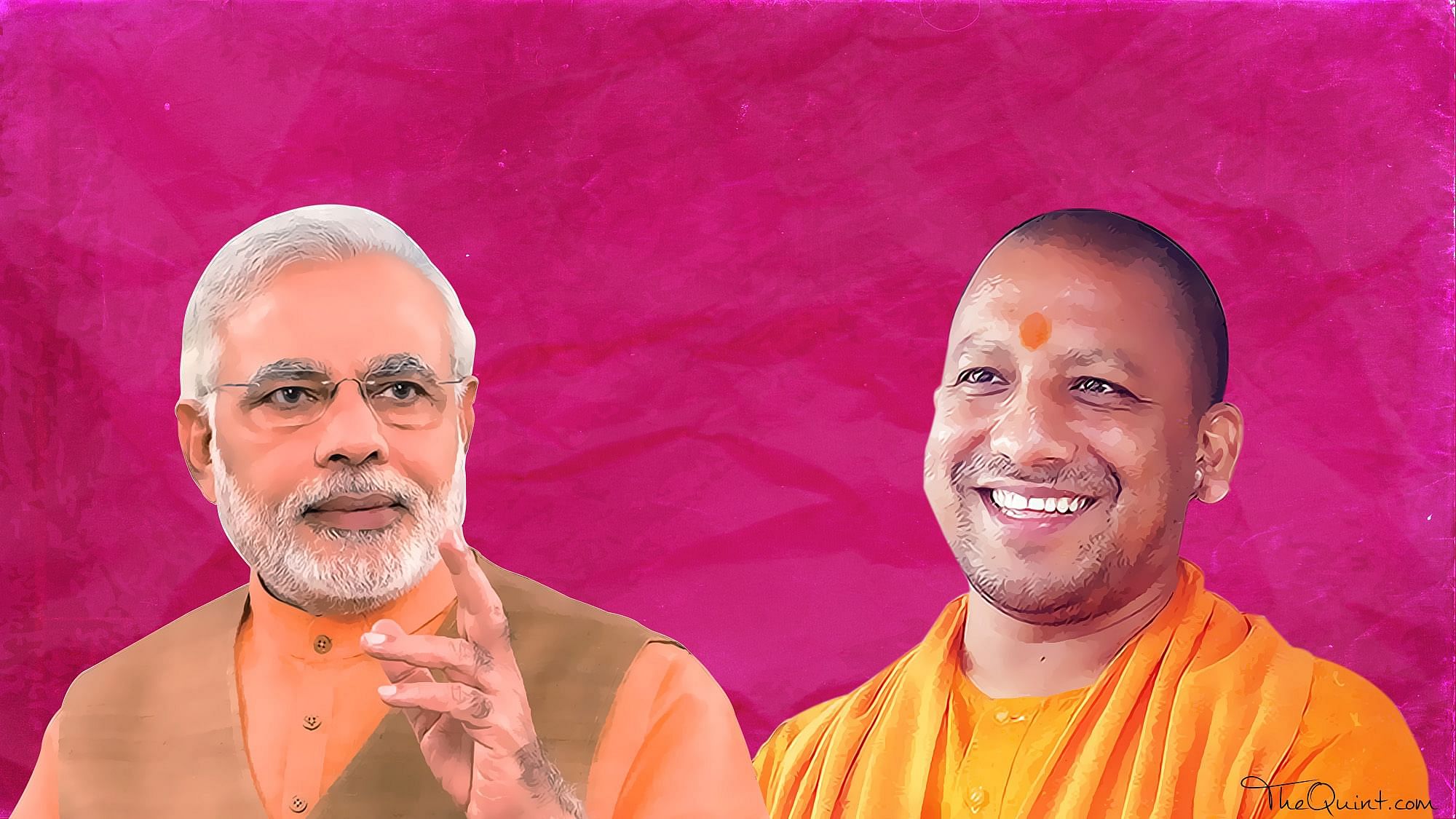
Indian Prime Minister Narendra Modi (L), UP Chief Minister Yogi Adityanath (R)


Adityanath was planning to lead a delegation to the World Economic Forum-2023 meeting at Davos, Switzerland, according to reports in the Indian news media. The state government put up a pavilion to showcase Uttar Pradesh as “the best investment destination”.

The complaint was filed under the principle of “universal jurisdiction” by law firm Guernica 37. It alleges that Adityanath ( real name Ajay Singh Bisht) “ordered the false imprisonment, torture and murder of civilians between December 2019 and 2020” and that “these acts may amount to crimes against humanity.”   

Guernica 37 (G37) describes itself as a "Specialist Group of International Criminal and Human Rights Lawyers with a Socially Committed and Multi-Disciplinary Outlook".  It claimed that the chief minister does not enjoy diplomatic immunity, and hopes the filing will have a cooling effect on WEF attendance in the future by any political or business figures alleged to have committed criminal acts.
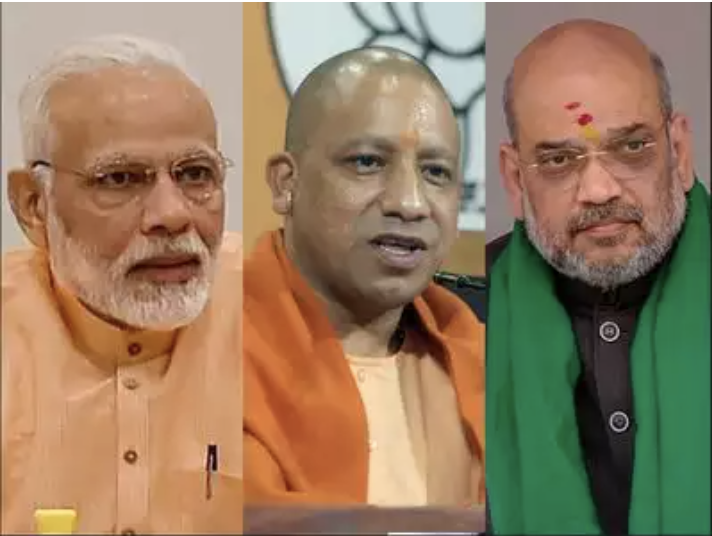
Top Radical Hindu Leaders: Modi (Left), Yogi (Middle) and Shah (Right)

Prior to being elected Prime Minister of India, Modi was barred from visiting the United States and the United Kingdom for his role in the anti-Muslim pogrom in Gujarat in 2002. Speaking about the US decision to grant immunity to Saudi Crown Prince Mohammad Bin Salman, State Department spokesperson Vedant Patel said that it was “not the first time” that the US government has designated immunity to foreign leaders and listed four cases. “Some examples: President Aristide in Haiti in 1993; President Mugabe in Zimbabwe in 2001; Prime Minister Modi in India in 2014; and President Kabila in the DRC in 2018. This is a consistent practice that we have afforded to heads of state, heads of government, and foreign ministers,” he said. 

Like his leader Modi, Yogi is a highly divisive Indian Hindu politician. His incendiary anti-Muslim rhetoric and bulldozing of Muslim homes have won him popular Hindu support in India. He is also very popular among the Hindu Indian diaspora.  

"We are all with you Modiji and Yogiji", shouted an Indian American man who tweeted a video clip of a a 2022 car rally in Silicon Valley, California. Rally participants can be seen carrying pictures of Prime Minister Narendra Modi and Uttar Pradesh Chief Minister Yogi Adityanath. Some also carried BJP's lotus flags. Hindu Americans enjoy the freedom to practice their faith and culture in the United States while at the same time they support Hindutva fascist rule in their country of origin. 

Related Links:


Tuesday, January 23, 2018

Modi's Hypocrisy on Full Display at Davos 2018

Indian Prime Minister Narendra Modi spoke today at the World Economic Forum in Davos, Switzerland in support of globalization and talked of his commitment to diversity in his country.


Modi's Rhetoric:

Prime Minister Modi warned that "forces of protectionism are raising their heads" against international trade and commerce. "Bilateral and multilateral trade negotiations have come to a kind of standstill," he said.

He also praised his country's commitment to democracy and diversity. "For a society with diverse religions, cultures, languages, attires and cuisines, democracy is not just a political system but a way of living," he said, adding that inclusion is the "main principle" of his government.

Is Modi living up to the ideals of globalization and diversity that he spoke of in his Davos speech? Let's compare these words to his government's actions.

Globalization:

In December 2017, Modi's government imposed stiff tariffs on imports of cellphones, video cameras and televisions, according to a report in New York Times.

The Indian government is also seriously considering a recommendation by Indian Directorate General of Safeguards, Customs and Central Excise that the country impose 70 percent tariffs on imported solar panels.

Diversity:

Mr. Modi has pursued Hindutva politics and policies in spite of warnings by leading economists, including Ragu Rajan, Arun Shourie and analysts at Moody's. These have created a lot of fear among religious minorities and Dalits.

But Mr. Modi has built his entire political career on the intense hatred of  Muslims. US President Donald Trump built his successful presidential campaign on Islamophobia and xenophobia. That's what the two men have in common.

 India's largest state of Uttar Pradesh elected rabidly anti-Muslim chief minister Yogi Adiyanath who was hand-picked by Muslim-hating Prime Minister Narendra Modi in 2017.

Just as white racists form the core of Trump's support base in America, the Modi phenomenon in India has been fueled by Hindu Nationalists whose leaders have praised Adolph Hitler for his hatred of Jews.

M.S. Golwalkar, a Hindu Nationalist who Mr. Modi has described as "worthy of worship" wrote the following about Muslims in his book "We":

 "Ever since that evil day, when Moslems first landed in Hindustan, right up to the present moment, the Hindu Nation has been gallantly fighting on to take on these despoilers. The Race Spirit has been awakening.”

"To keep up the purity of the Race and its culture, Germany shocked the world by her purging the country of the Semitic races -- the Jews. Race pride at its highest has been manifested here. Germany has also shown how well-nigh impossible it is for races and cultures, having differences going to the root, to be assimilated into one united whole, a good lesson for us in Hindusthan to learn and profit by."

Summary:

Indian Prime Minister Narendra Modi's actions do not match his rhetoric on globalization and commitment to diversity.  His government's protectionist trade policies and treatment of minorities speak far louder than his words at the World Economic Forum  Davos, Switzerland.

  Related Links:

Haq's Musings

Hindu Nationalists Love Nazis

A Conversation With White Nationalist Jared Taylor on Race in America

Lynchistan: India is the Lynching Capital of the World

Modi and Trump

Anders Breivik: Islamophobia in Europe and India

Hindu Nationalism Goes Global

Hindutva: The Legacy of the British Raj


Sunday, February 3, 2013

12 Year-old Pakistani Girl Shares Online Education Experience at Davos

Khadija Niazi, a 12-year old from Lahore, Pakistan, is taking online courses offered by a new wave of cyber-based educational platforms like Coursera and Udacity.  She was recently interviewed by New York Times columnist Tom Friedman at World Economic Forum 2013 at Davos, Switzerland.

 Khadija was the featured guest in a session on online education sponsored by Victor Pinchuk Foundation. She was joined on stage at WEF by Bill Gates, Larry Summer, Daphne Koller (Coursera co-founder), Rafael Reif (President of MIT), Jimmy Wales (Wikipedia founder), Peter Thiel and other dignitaries.

Coursera and Udacity offer massive open online courses (MOOCs) in a variety of subjects to large numbers of students from around the world. MOOC courses are often taught by professors who have been teaching for years at elite universities in the United States. Top academic institutions are in the forefront of online learning. For example, Harvard and M.I.T. have joined hands to introduce EdX, which offers free online courses from each university. About 753,000 students have enrolled, with India, Brazil, Pakistan and Russia among the top 10 countries from which people are participating, according to NY Times

Khadija attends a local school in Lahore. She was only 10 years old when she first took the Artificial Intelligence online course on Udacity. She managed to finish the course and, the following year, Khadijah completed Udacity’s Physics course with highest distinction. She now plans to take courses in Astrobiology.

Enabling virtual education is the high-speed broadband expansion led by PTCL which has propelled Pakistan to become the fourth fastest growing broadband market in the world and the second fastest in Asia, according to a recent industry report.

Source: OECD Global Education Digest 2009

The quickest and the most cost-effective way to broaden access to education at all levels is through online schools, colleges and universities. Sitting at home in Pakistan, self-motivated learners can watch classroom lectures at world's top universities including UC Berkeley, MIT and Stanford. More Pakistanis can pursue advanced degrees by enrolling and attending the country's Virtual University that offers instructions to thousands of enrolled students via its website, video streaming and Youtube and television channels.

The concept of virtual instruction is finding its way to K-12 education as well. Increasing number of Pakistanis are drawn to the Khan Academy channel on YouTube making Pakistanis among its top users. Virtual Education for All is a local Pakistani initiative extending the concept to primary level.

All of these technological developments and open courseware initiatives are good news for making education available and accessible to satisfy the growing needs in Pakistan and other emerging countries around the world seeking to develop knowledge-based economies of the 21st century.

Here's a video of Khadija's interview with Tom Friedman at Davos:


Related Links:

Haq's Musings

Pakistan's Youngest Computer Prodigy

Khan Academy Draws Pakistanis

Pakistan Virtual University Wins Top OCW Award 

Pakistan Rolls Out 50Mbps Broadband Service

More Pakistan Students Studying Abroad

Inquiry Based Learning in Pakistan

Mobile Internet in South Asia

Allama Iqbal Open University

Online Courses at Top International Universities

Pakistan Virtual University

Pasi Sahlberg on why Finland leads the world in education

Intellectual Wealth of Nations


Tuesday, February 1, 2011

India at Davos: Story of Corruption and Governance Deficit

Brand India has lost its luster at Davos in 2011!

Poor governance and corruption are endemic in India, and have been the talk of the town at Davos this year, tarnishing the meticulously crafted image of "Shining India" at the World Economic Forum since 2006. The immediate effect is that that India's foreign direct investment (FDI) is already down by a whopping 36% in 2010 from 2009, and there is no recovery in sight yet. Meanwhile India's current account deficit is exploding, accounting for about 3.5% of GDP.


In 2006, the "India Everywhere" campaign orchestrated by Indian planning commission officials and the Confederation of Indian Industry (CII) dominated the ambiance of the World Economic Forum at Davos, Switzerland. They spent two years and more than $4 million and put together an elaborate marketing and PR campaign to ensure that the "India story" got prominent play and did not get drowned in the noise at Davos. The success of the initiative was apparent by the dramatic increase in FDI inflow to India which doubled from less than 1% of GDP to nearly 2% of the expanded GDP in 2008.

Here is how Times of India reported the scene from Switzerland in 2006:

For once, India is really everywhere at Davos. With the 35th World Economic Forum (WEF) opening at the Swiss mountain resort, one cannot help but notice India Everywhere.

Right from the moment you step off the aircraft at Zurich airport, big hoardings proclaiming India greet you. Upon reaching Davos, located about 150 km from Zurich, the Indian colours are just about everywhere.

In fact, you see more of India than Switzerland in Davos this year.

The buses wear Indian colours, the bus shelters have Indian advertisements, and key bars, pubs and hotels in the city where the economic meet began Wednesday evening are serving up Indian snacks and Indian wines and beer.


Reports from the World Economic Forum at Davos in 2011 offer a very different narrative.

Coming after the massive multi-billion dollar telecom corruption scandal in 2010 and expression of deep concern by some prominient India businessmen about the nation's governance deficit in 2011, India's presence at the World Economic Forum 2011 was decidedly lower key when compared with the heady days of 2006.

Summing up the sentiment at Davos, an Indian journalist opined as follows: "..such a forthright disregard for the so-called "India story" may understandably offend nationalist sentiments and bring on the "west versus rest" polarization that keeps many public intellectuals in business. But the harsh truth is that India has been sold, resold and re-re-sold in so many samosa and Sula evenings that it has lost novelty."

Here's a video clip on India's massive corruption:


Related Link:

Haq's Musings

Indian Economy: Hard or Soft Landing in 2011?

Pakistani Economist Saadia Zahidi at World Economic Forum

Inaction Against Corruption in South Asia

2G Corruption Scandal in India

Musharraf at Davos 2008

Imran Khan at Davos 2011

Delhi in Davos: How India Built its Brand at the World Economic Forum

FDI India, Pakistan, China and Vietnam 2003-2010

China's Trade and Investment in South Asia

India and Pakistan at Davos 2009

India's Twin Deficits

Pakistan's Economy 2008-2010

Inflation Hits India

Goldman Sachs India Warning on Twin Deficits

India's Nov 2010 Imports, Exports

Monday, November 9, 2009

Gender Inequality Worst in South Asia

Gender gaps are among the widest in South Asia. Pakistan is ranked at 132, third from the bottom on a list of 134 nations compiled by the World Economic Forum for 2009. The 2009 ranking represents a slip of five places in the Global Gender Gap Index 2009 from 127th spot to 132nd from among 134 countries, showing an "absolute decline relative to its performance in 2008."

The Global Gender Gap Report measures the size of the gender inequality gap in four critical areas:

1. Economic participation and opportunity: Outcomes on salaries, participation levels and access to high-skilled employment

2. Educational attainment: Outcomes on access to basic and higher level education

3. Political empowerment: Outcomes on representation in decision-making structures

4. Health and survival: Outcomes on life expectancy and sex ratio

The country profile of Pakistan shows that it is ranked 132 in economic participation and opportunity, 128 in education attainment and health and survival and 55 in political empowerment. Pakistan’s position was 112 in the year 2006 that declined to 126 in 2007 and then 128 in 2008.

Only Chad and Yemen rank worse than Pakistan this year. This is not a surprise considering one of the lowest female literacy rates in Pakistan. Pakistan's gender gap of 27% in literacy is worse than India's 22%. At overall literacy rate of only 52%, and with more than 50 million people illiterate, Pakistan has one of the lowest overall literacy rates in Asia. The literacy rate for males over 15 years is 63% while that for females is 36% in Pakistan. Only Yemen's literacy gender gap is worse than South Asia's.

In spite of the grim picture painted by the WEF, the status of women in Pakistan, and the rest of South Asia, continues to vary considerably across different classes, regions, and the rural/urban divide due to uneven socioeconomic development and the impact of tribal, feudal, and urban social customs on women's lives. While some women are soaring in the skies as pilots of passenger jets and supersonic fighter planes, others are being buried or burned alive for defying traditions. Girls account for 53% of all college students in Pakistan, according to the 2005 Education Census.

Sri Lanka, ranked at 16 ahead of the United States at 31, is the shining exception to the rest of South Asia in terms of gender parity.

Ranked 114, India has fared better than Pakistan. But the WEF survey indicates that India is behind Bangladesh (94) and Nepal (110) - affirming that women in these countries share resources with men more equally than in India. Echoing concerns of Nobel laureate Amartya Sen over female infanticide and 25 million "missing women" in India, the WEF rankings bring out the gender gap on health and survival issues. India's gender gap of 22% in literacy is also among the worst in the world.

India ranks 24 for women's political participation. It stands at 121st position in education gap and 127th place on economic participation gap. On its health gender gap, India ranks dead last at 134th.

"While India, Iran and Pakistan perform very poorly on the economic, education and health subindexes, their overall scores are partially bolstered by relatively good performances on political empowerment," the WEF said.

WEF said close to 300 Indian women die every day during childbirth or of pregnancy-related causes, and the country has the worst sex ratios at birth in the world, ranking 131st on this variable. India holds last place among the BRIC countries on the the WEF gender Index, behind Russia (51), China (60) and Brazil (82).

Of the 25 Muslim nations included in the survey, fourteen rank above India and eleven rank below. Most of the Islamic countries ranking higher than India are located in Central and East Asia.

Overall, Nordic nations offer women the most equal treatment compared to men, with Iceland ranking number one, followed by Finland, Norway and Sweden. Ranked ninth, the Philippines is the only Asian country in the top 10. It has “closed the gender gap on both education and health”, according to the WEF. The UK ranks 15 and the United States at 31.

Clearly, South Asians in general, and Pakistanis in particular, have a long way to go toward achieving any semblance of gender parity. They can definitely look to Sri Lanka for inspiration to close the gender gap.

Here's a video about women literacy in South Asia:


Here's another video on Pakistan Air Force Female Pilots:


Related Link:

WEF Gender Gap Rankings 2009

Dalit Victims of Indian Apartheid

Global Gender Gap Rankings 2008

India at Bottom in Gender Equality

Sex Ratios at Birth

Female Literacy Lags Far Behind in India and Pakistan

Female Genocide Unfolding in India

Status of Women in Pakistan