Showing posts with label H1B. Show all posts

Wednesday, October 25, 2023

US Proposes H-1B Visa Changes to Stop Indian Body Shop Fraud

The Biden administration has proposed a number of significant changes to how the H-1B temporary work visas are issued to high-skilled foreign workers. These changes are the result of the government finding earlier this year that companies, particularly Indian body shops, had colluded to try to increase their chances of winning a coveted visa by gaming the visa lottery system. This has helped Indian workers win as many as three quarters of all H1B visas issued in recent years. 

H1B Visas Issued in India. Source: Visagrader.com


Every year, applicants sponsored by Indian body shops claim the lion's share of H1B visas. In 2022, Indian nationals received 166,384 new H1B visas, accounting for nearly three quarters of all such visas issued by the US government. The figures reported as India IT exports include the wages earned by millions of Indian H1B workers in the United States.  

Public interest groups have been complaining about the behavior of Indian body shops gaming the system to take away a big chunk of the H1B visas issued each year. Federation for American Immigration Reform (FAIR) is one such group. In a report last year, FAIR said, "In fact, the H-1B lottery as currently constituted is a corrupt program dominated by Indian “body shops” that prey on desperate foreign workers looking for a light at the end of the tunnel: a green card. A bustling industry of lawyers and lobbyists advertises ways to improve players’ “chances of success.”"

“Because [USCIS] made it easier, you’re seeing an over-exaggerated demand, mostly from Indian outsourcing companies that provide lower-cost labor,” Roger Ross, a policy adviser for U.S. Tech Workers, told FAIR in a phone interview. 

Top 10 Recipient Countries of H-1B Visas. Source: USCIS

H-1B rejection rates of around 7% for India and other nations are after the lottery selection, according to Visagrader. The problem is that Indian body shops are gaming the lottery system by multiple entries for each of their applicants to win the lottery in huge numbers, unfairly edging out applicants from other countries.

In 2022-23, thirteen of the top 30 H-1B employers were Indian outsourcing firms that underpay migrant workers and offshore U.S. jobs to countries where labor costs are much lower, according to a report by the Economic Policy Institute

Top 30 H1B Employers in 2022-23. Source: EPI

Last year, the United States Citizenship and Immigration Service (USCIS) issued a Notice of Intent to Deny (NOID) for petitions filed by companies they found related by common ownership such as family relationships or registrations done by the same agent. 

The most significant change to the H1B visa system involves the elimination of multiple entries by employers on behalf of the same employee. In 2023, over half of the approximately 800,000 H-1B registrations were multiple entries, artificially inflating the chances of some applicants, according to an Indian news outlet NDTV's report. Under the proposed new rules, an employee can only be registered once, and employers will now be required to submit passport information for each employee. This allows the USCIS to ensure a fair and equitable selection process. Violation of this rule will lead to denials or revocations of visas. 

Other changes involve elimination of "employer-employee" relationship for H1B visa (entrepreneurs can sponsor themselves) and eligibility of remote work for job offers, extension of the "cap-gap" provision for international students on F-1 visa to receive H1B visa, more on-site inspections for IT consulting work and stricter definition of "specialty occupation". 

Currently, India tops the list of foreign-born STEM workers with 721,000, followed by China (273,000), Mexico (119,000), Vietnam (100,000), Philippines (87,000), South Korea (64,000), Canada (56,000), Taiwan (53,000), Russia (45,000) and Pakistan (35,000).  Enormous number of Indian STEM workers in the United States can at least partly be attributed to the fact that India's "body shops" have mastered the art of gaming the US temporary work visa system. Last year, Indian nationals sponsored by "body shops" like Cognizant, Infosys and TCS received 166,384 H1B visas for work in the United States. By comparison, only 1,107 Pakistanis were granted H1B visas in Fiscal Year 2022.  In addition to H1B work visas, 9,300 Indian nationals and 7,200 Pakistani nationals received immigrant visas to settle in the United States as permanent residents in 2021. 

Related Links:


Monday, June 12, 2023

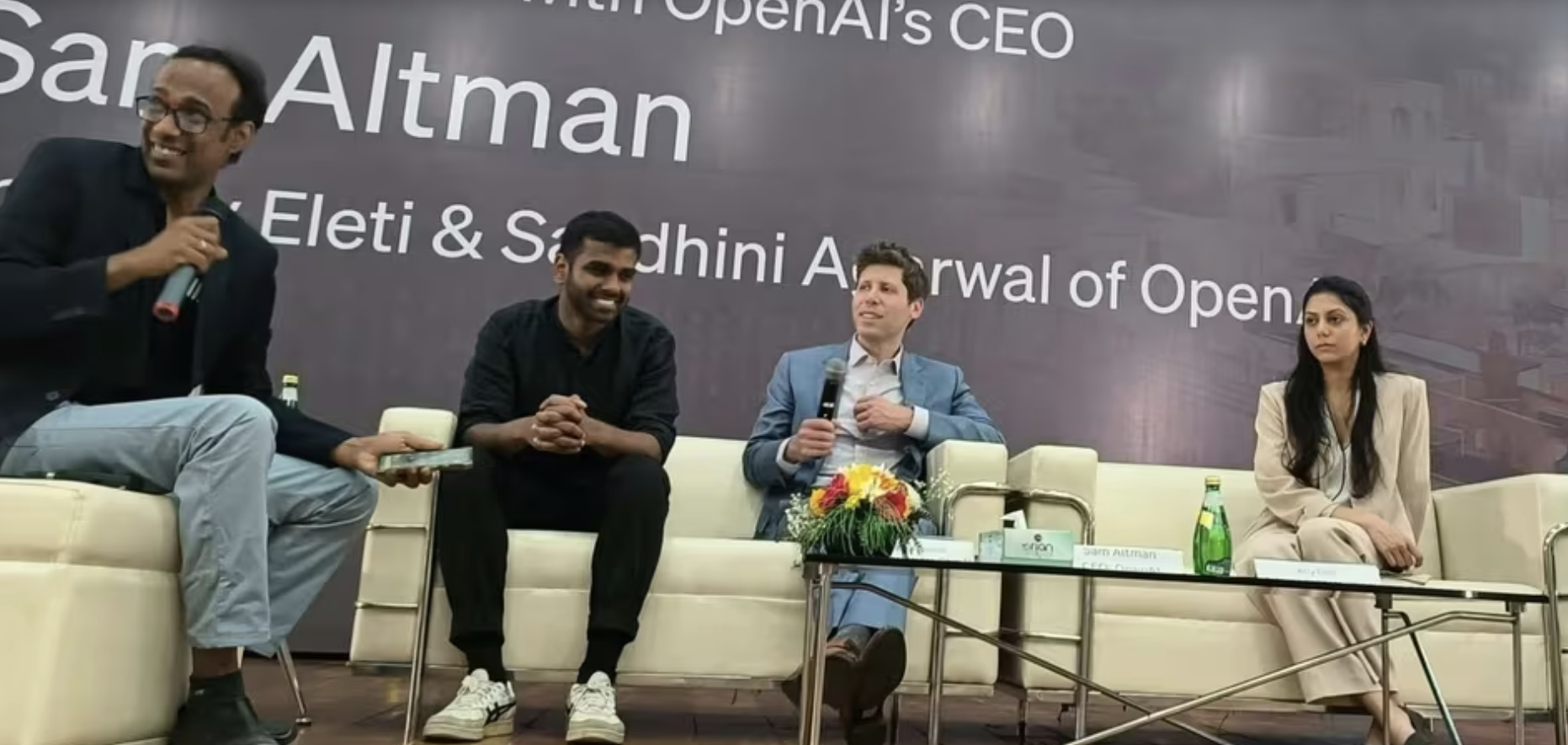
OpenAI CEO Sam Altman Says India's AI Startup Potential "Totally Hopeless"

Responding candidly to a question in the Indian capital New Delhi, OpenAI CEO Sam Altman said: "The way this works is we're going to tell you, it's totally hopeless to compete with us on training foundation models you shouldn't try, and it's your job to like try anyway. And I believe both of those things. I think it is pretty hopeless." This occurred at an event organized by The Economic Times where Altman answered a question by Rajan Anandan, a former Vice President of Google in India and South East Asia and current venture capitalist.  

OpenAI CEO Sam Altman in India

Altman in Delhi: 

Sam Altman, the young CEO of OpenAI, the company that recently launched its revolutionary Generative AI app ChatGPT, was in India as part of a six-nation tour to discuss AI regulation.  ChatGPT has been trained on massive amounts of data and text from the internet, textbooks, newspapers, magazines and academic journals. It can write computer code and carry on sophisticated conversations on a lot of different subjects. Altman is also visiting China. He was invited to speak at an event sponsored by Indian publication Economic Times.  Here's the full exchange between Anandan and Altman about the potential for an Indian AI startup:

Anandan: "Sam, we have got a very vibrant ecosystem in India but specifically focussing on AI, are there spaces where you see a startup from India building foundational (AI) models; how should we think about that. Where is it that a team from India, with three super-smart engineers having not 100, but USD 10 million each could actually build something truly substantial?"

Altman: "The way this works is, we're going to tell you. It's totally hopeless to compete with us on training foundation models. You shouldn't try, and it's your job to like trying anyway. And I believe both of those things. I think it is pretty hopeless."

Challenge Accepted:

Judging by social media responses, most Indians reacted angrily to Altman's negative remarks. They accused him of "arrogance". Others saw his statement as a challenge and responded by accepting the challenge. 

Tech Mahindra CEO CP Gurnani said he accepts the challenge.  “OpenAI founder Sam Altman said it's pretty hopeless for Indian companies to try and compete with them. Dear Sam Altman, from one CEO to another...CHALLENGE ACCEPTED,” tweeted Gurnani.

India's Tech Industry:

Americans like Sam Altman know that India's tech industry is made up mainly of companies that are essentially body shops. These companies like Infosys, TCS and others supply Indian H1B workers to perform routine tasks in IT operations departments of western companies. These companies' revenue, labeled India's "IT exports", comes from the substantial cuts they keep from the wages of millions of Indian H1B workers. These workers replace higher-paid American employees.  Rapid developments in AI technology are now threatening such jobs

In 2016, India filed a complaint with the World Trade Organization (WTO) when the US raised visa fees to $4000 for each H1B worker visa. Indian government argued that it is discriminatory to the country under its trade agreement with the US.

Indian startups are not based on any original ideas born in India. They are essentially copies of similar e-commerce or logistics or payments startups in the western world. 

Altman in China:

Altman is also visiting China this week. “China has some of the best AI talent in the world and fundamentally, given the difficulties in solving alignment for advanced AI systems, this requires the best minds from around the world,” Altman told participants at the event hosted by the Beijing Academy of Artificial Intelligence.

Western Media:

Indians were justifiably very proud of their great scientific achievement when the India Space Agency ISRO successfully launched the nation's Mars Mission back in 2013. The New York Times, America's leading newspaper, mocked India with a cartoon depicting the country as a dhoti-wearing farmer with his cow knocking on the door of the Elite Space Club. 

New York Times Cartoon
Der Spiegel's Cartoon Comparing India and China


In an article titled "Paper Elephant", the Economist magazine talked about how India has ramped up its military spending and emerged as the world's largest arms importer. "Its military doctrine envisages fighting simultaneous land wars against Pakistan and China while retaining dominance in the Indian Ocean", the article said. It summed up the situation as follows: "India spends a fortune on defense and gets poor value for money".

After the India-Pakistan aerial combat over Kashmir, New York Times published a story from its South Asia correspondent headlined: "After India Loses Dogfight to Pakistan, Questions Arise About Its Military".  Here are some excerpts of the report:

"Its (India's) loss of a plane last week to a country (Pakistan) whose military is about half the size and receives a quarter (a sixth according to SIPRI) of the funding is telling. ...India’s armed forces are in alarming shape....It was an inauspicious moment for a military the United States is banking on to help keep an expanding China in check".

Der Spiegel Cartoon:

In April this year, German publication Der Spiegel published a cartoon as India surpassed China as the world's most populous nation. The cartoon poked fun at India's lack of progress relative to its northern neighbor. It shows jubilant Indians on an old and overcrowded train – many on the roof – as it overtakes a sleek Chinese bullet train.

German Cartoon Comparing China and India. Source: Der Spiegel

Spanish Newspaper Cartoon:'

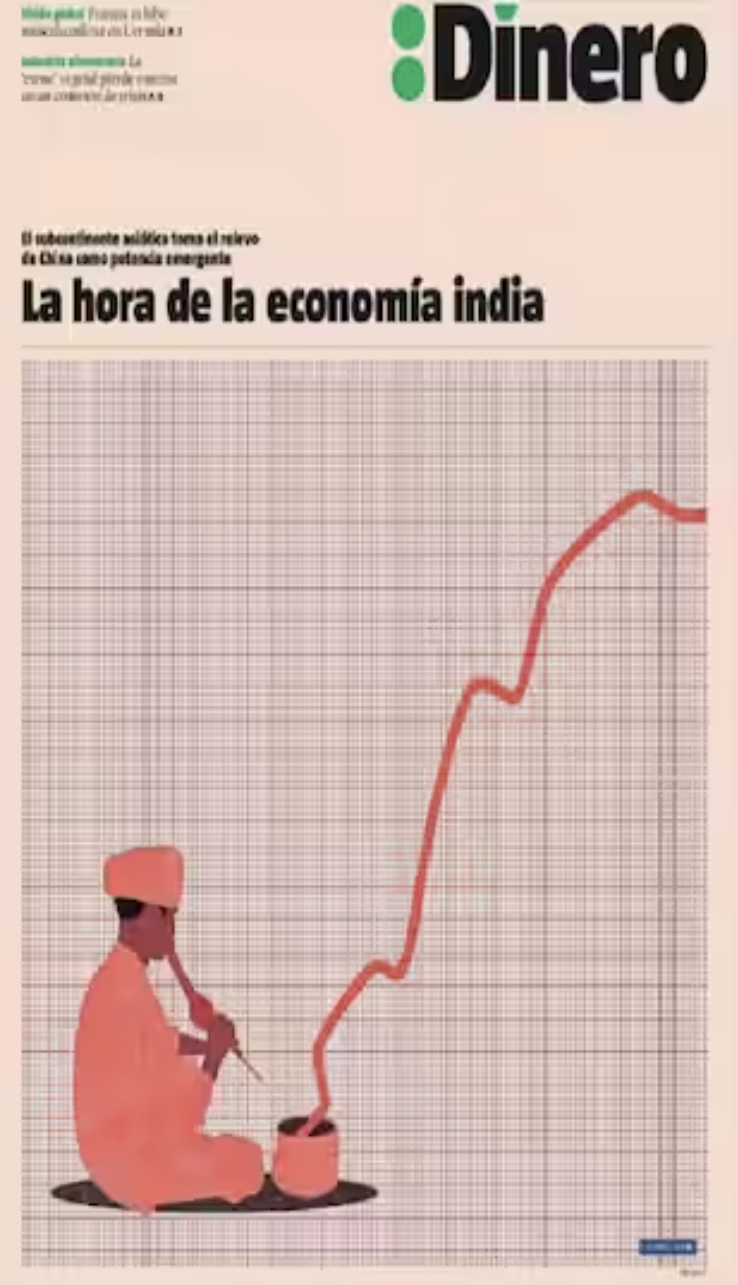
In May 2022, Spanish newspaper La Vanguardia published a story titled "La hora de la economia India" along with a cartoon showing an Indian snake charmer. Indian media reacted angrily to what they saw as a racist stereotype. 


Spanish Cartoon on Indian Economy. Source: La Vanguardia


US Disrespects India: 

Notwithstanding the geopolitically-motivated public rhetoric of US presidents and other western leaders, the fact is that they do  not respect India. "One hard truth that Indians have to contend with is that America has also had difficulty treating India with respect", writes former Singaporean diplomat Kishore Mahbubani in his latest book "Has China Won?". "If America wants to develop a close long-term relationship with India over the long run, it needs to confront the deep roots of its relative lack of respect for India", adds Ambassador Mahbubani. It's not just Mahbubani who suspects the United States leadership does not respect India. Others, including former President Bill Clinton, ex US President Donald Trump, former Secretary of State Hillary Clinton and CNN GPS host Fareed Zakaria have expressed similar sentiments. 


Source: @BeltandRoadDesk


Trump and Clinton:

There is some evidence to support Ambassador Mahbubani's assertion about America's lack of respect for India. For example,  ex US President Bill Clinton said in 1990s that India has a Rodney Dangerfield problem: It can’t get no respect, according to his deputy secretary of state Strobe Talbott. In a diplomatic cable released by WikiLeaks in 2010, Hillary Clinton referred to India as "a self-appointed frontrunner for a permanent UN security council seat."

More recently, US President Donald Trump mocked Indian Prime Minister Narendra Modi about Indian contribution to Afghanistan.  Trump said he got along very well with Prime Minister Narendra Modi, but the Indian leader was "constantly telling me he built a library in Afghanistan". "That's like five hours of what we spend... And we are supposed to say, 'oh, thank you for the library'. I don't know who is using it in Afghanistan," Trump said.


Sunday, May 28, 2017

Ramzan; Pakistan Economic Survey; Indian IT Job Losses; Trump's Foreign Tour

What is Ramadan all about? Is it only about abstaining from food and drink in the daylight hours? What is the key message for this Ramzan? Isn't respecting Huqooq-ul-Ibad (human rights of others) as important as observing Huqooq-ul-Allah (Duties to Allah such as prayer and fasting) for each Muslim? What must Muslims do this Ramzan to fulfill all of their obligations to Allah and His creation?

What does the Economic Survey of Pakistan say about Pakistan's GDP, per capita income, infrastructure development, education and other important indicators? What must Pakistani leaders do to ensure greater focus on and investment in education and not just in infrastructure? What is the size of and the key priorities in Pakistan's budget for 2017-18? Should some of the $20 billion (out of the $50 billion budget) for infrastructure be allocated to education to boost Pakistan's stagnant literacy and school enrollment rates?


Why is India losing IT jobs at a rate of 200,000 jobs a year, according to McKinsey? Is it all because of Trump's H1B visa tightening? Or does it have more to do with the need for new skills to deal with new technologies such as cloud computing and digital services?

What was the objective of Trump's tour of the Middle East and Europe? Has he achieved any of the objectives? Was Nawaz Sharif's low-key presence at the Riyadh summit appropriate? Are Nawaz Sharif's critics right? Should he have had a more prominent role at the US-Arab-Islamic summit? How would that impact Iran-Pakistan ties?


Viewpoint From Overseas host Misbah Azam discusses these questions with Riaz Haq (www.riazhaq.com)

https://youtu.be/ojEvEICkimA


Related Links:

Haq's Musings

Riaz Haq's Ramadan Sermon

Pakistan's Lagging Literacy and School Enrollment Rates

Impact of Trump's H1B Visa Crackdown

Impact of Trump's Appointments on US Policy

Iran-Saudi Conflict

Talk4Pak Youtube Channel


Sunday, April 23, 2017

Panama Verdict; US-India H1B Dispute; Trump NSA in South Asia

What are the implications of the split Pakistan Supreme Court verdict recently announced in Panama Case filed against Prime Minister Nawaz Sharif by PTI Chief Imran Khan, JI Chief Siraj ul Haq and AML chief Shaikh Rasheed? Why did 3 out of 5 judges not vote to disqualify Mr. Sharif from holding office under Articles 62 and 63 of the Pakistan constitution? Has the Prime Minister not committed perjury, a felony in Pakistani law, by offering multiple conflicting explanations for the source of funds used to buy London flats? Does the Joint Investigation Team (JIT) appointed by the Supreme Court have the independence and the skill set to find credible evidence of wrongdoing by Mr. Sharif? Will Nawaz Sharif survive the JIT and serve out his term scheduled to end in mid-2018?


Why has President Donald J. Trump tightened H1B temporary work visa requirements with an executive order calling for "Buy American, Hire American"? How will it impact India, the biggest beneficiary of the lion's share of the 85,000 US H1B visas issued each year? Are these visas being abused to bring in lower paid foreign workers to replace American workers? How will India respond? Will the Indian government retaliate against US products/services imported by India as suggested by the Indian trade minister Nirmala Sitharaman? How will India deal with similar other restrictions on temporary work visas recently announced by Australia, New Zealand and other industrialized nations?

What took President Trump's National Security Advisor General H.R. McMaster to Afghanistan, India and Pakistan? Why did Mr. Trump announce his request for increased US aid to Pakistan just prior to General McMaster's South Asia trip? Did General McMaster threaten Pakistan to "cooperate or else" as being reported by the Afghan and the Indian media?

Viewpoint From Overseas host Misbah Azam discusses these questions with panelists Ali H. Cemendtaur and Riaz Haq (www.riazhaq.com)

https://youtu.be/HR8JYfPgFOI


Related Links:

Haq's Musings

Panama Leaks: Did Musharraf Steal People's Money?

India Files H1B Visa Complaint Against US to WTO Amid Falling Exports

H1B Visa Abuse by Indian Body Shops

Gen H.R. McMaster's Appointment as NSA

Impact of Trump Appointment on US Domestic and Foreign Policy

Talk4Pak Youtube Channel

Friday, March 24, 2017

H1B Visa Abuse: What Do Software Engineers Earn in India and Pakistan?

A segment of CBS 60 Minutes, top rated American newsmagazine on television, has recently brought sharp focus on H1B visa abuse. It alleges that the H1B visas are being misused by Indian body shops to bring low-cost Indian software engineers to the United States to replace higher-paid American workers.

H1B Visa Abuse:

The visa category was originally intended to help fill gaps in the high-tech workforce with highly skilled employees from abroad in situations where there aren’t enough Americans. Instead, it has given rise to body shops that bring in workers from overseas, mainly from India, to replace higher-paid American workers.

Recent examples of the firing of American IT workers and their replacement by Indian workers at UC San Francisco and Walt Disney and Co have received a lot of media attention. What has particularly incensed the American public is the practice of forcing the American workers to train their replacements.

Labor Cost Savings:

A loophole in H-1B legislation that US companies are taking advantage of allows them to outsource jobs to Indian body shops without even looking for Americans, if those jobs pay approximately $60,000 or higher. Similar jobs in Silicon Valley pay an average of $110,000 a year.

The average salary of a software engineer ($110,000) in Silicon Valley is about 20X more than the average salaries in India ($6,875) and Pakistan ($4,770), according to Glassdoor.

Source: Glassdoor


Indians Gaming H1-B System:

Indian body shops are masters of gaming the H1-B system.  Most of India's IT exports to the United States are made up of wages of H1B workers brought to the United States by a handful of Indian body shops like Cognizant, Tata Consulting Services (TCS) and Infosys.  In 2014, 86% of the H1B visas for tech workers were granted to Indians, according to available data.

Excluding the Indian H1B workers' pay,  India's IT exports drop to about one-twentieth of the the amount reported by the Indian government as IT exports, according to a 2005 study by US General Accounting Office (GAO).

The Indian body shops like Cognizant, TCS and Infosys that rely on the H1B visa program in the US are "the shining star" of the Indian economy, and the country's largest export, according to an Indian-American professor Ron Hira who is a strong critic of the abuses of H1B program. By complaining, the Indian government and firms that rely on the program are trying to "build up a firewall so that no other reforms can come through and constrain the program in any way."

Average Salaries of Software Engineers in Major Cities Source: qz.com


Indian Code Coolies:

H1B workers brought in by Indian body shops are described variously as "code coolies" or "H1B slaves". Some call them "indentured servants", like the ones from India who replaced slave labor after the British empire abolished slavery.

“’Indentured servants’ is a pretty accurate term because in many cases that’s exactly what’s going on,” said Phillip Griego of San Jose’s Phillip J. Griego and Associates. Over the years, Griego and his law partner, Robert Nuddleman have represented several H-1B workers in lawsuits against body shops.

Trump's Pledge:

Along with cracking down on illegal immigration, a key campaign promise of President Trump has been to create lots of American jobs for American workers.  “You’ve heard me say the words, and I’ll repeat them, right now: Buy American and Hire American. It’s not just a motto, it’s a pledge. It’s a pledge to the working people of this country. The era of economic surrender for the United States is over -- it's over,” Trump said at Michigan earlier this week.

Right after the CBS 60 Minutes segment on H1-B visa, Senator Chuck Grassley tweeted: "If u just saw CBS 60minutes abt ripoff H1B visa program is replacing AmWorkers u shld know my/Durbin bill will correct this injustice."

There are reports that new legislation is being offered to change the H1-B program. Among the key provisions of this new proposed legislation are cutting the number of visa by 50% and doubling the minimum salary of H1B workers from $60,000 to $120,000.

Summary:

The abuse of H1B visas to replace American workers and depress wages is drawing both legislative and executive attention under the Trump administration. High profile cases like the firing of American workers at UC San Francisco and Disney and their replacement by Indian workers has energized the support for cracking down on abuse.


Pakistan's Software Prodigy

Biotech and Genomics in Pakistan

Saturday, April 2, 2016

India Files H1B Visa Complaint Against US to WTO Amid Falling Exports

India has recently complained to the World Trade Organization against the United States over changes to visas for skilled workers that Republican presidential candidates have targeted for elimination, according to a report in the UK's Financial Times.

The WTO revealed that India had requested consultations with the US over moves by Washington to raise fees for L1 and H1B working visas and also restrictions on the number of those visas awarded. The move is the first step in initiating a dispute at the WTO.

India's WTO complaint:

India's WTO complaint is over an increase in fees on H1B visas that the US imposed on companies with workforces comprised of more than 50 percent foreign workers. A provision included in last year's federal spending bill added a new $4,000 fee for each H1B, which India argues is discriminatory to the country under its trade agreement with the US.

Meanwhile, the annual gold rush in Silicon Valley to file applications for H1B visas has just begun, as the federal government began distributing some of the 85,000 H1B visas it is authorized to issue this fiscal  year, according to Vice News.

Indian Body Shops Infosys, TCS and Wipro Topped H1B Sponsor List in 2013


Why the Complaint?

Why is India complaining? There are two main reasons:

1. India's overall exports have suffered 18th consecutive monthly decline in February 2016, according to India's Economic Times. Exports from India amounted to US$264 billion in 2015,  down -12.4% since 2011 and down -16.9% from 2014 to 2015.

2. Most of India's IT exports to the United States are made up of wages of H1B workers brought to the United States by a handful of Indian body shops like Tata Consulting Services (TCS) and Infosys.  In 2014, 86% of the H1B visas for tech workers were granted to Indians, according to available data. Given India's heavy reliance on H1B workers for its IT exports earnings, it is natural that the Indian government gets very concerned whenever there's even a hint of the US possibly limiting H1B visas or making them more expensive.

Excluding the Indian H1B workers' pay,  such exports drop to about one-twentieth of the the amount reported by the Indian government as IT exports, according to a 2005 study by US General Accounting Office (GAO).

Cumulative Stock of H1B From 2007-2012: 775,957. Source: DICE


Indian Body Shops:

The Indian body shops like Cognizant, TCS and Infosys that rely on the H1B visa program in the US are "the shining star" of the Indian economy, and the country's largest export, according to an Indian-American professor Ron Hira who is a strong critic of the abuses of H1B program. By complaining, the Indian government and firms that rely on the program are trying to "build up a firewall so that no other reforms can come through and constrain the program in any way."

Indian Code Coolies:

H1B workers brought in by Indian body shops are described variously as "code coolies" or "H1B slaves". Some call them "indentured servants", like the ones from India who replaced slave labor after the British empire abolished slavery.

“’Indentured servants’ is a pretty accurate term because in many cases that’s exactly what’s going on,” said Phillip Griego of San Jose’s Phillip J. Griego and Associates. Over the years, Griego and his law partner, Robert Nuddleman have represented several H-1B workers in lawsuits against body shops.

Summary:

India has complained to the World Trade Organization about changes to the US H1B that mainly benefit India's body shops like Cognizant, Infosys and Tata at the expense of both US and Indian workers. US workers lose their jobs while Indian workers are exploited as wage slaves. India uses the wages of Indian H1B workers to inflate its IT export earning by as much as 20X. Proposed changes  to H1B visa program like higher fees and lower numbers threaten India's export earning which have declined for 18 months in a row.  The ongoing election debate over whether the H1B program is hurting American workers rose to public consciousness amid the Republican primary debates this year. The election outcome has the potential to negatively impact Indian H1B exports earnings.


Pakistan's Software Prodigy

Biotech and Genomics in Pakistan


Tuesday, March 17, 2009

Foreign Worker Expulsions Hit South Asia


As the global economic crisis continues to take its toll in US, Europe, Middle East and East Asia, South Asian workers overseas are being let go in large numbers

Faced with rising unemployment in Malaysia, the Kuala Lumpur government on Tuesday said it will reduce the number of foreign workers in the country to 1.8 million by 2010 from the present over two million. This decision has serious implications for tens of thousands of South Asians, mostly from Bangladesh, India and Nepal, who currently work in the island nation.

Malaysian minister Syed Hamid Albar said the authorities had managed to reduce the number of foreign workers by 60,000 since last March, according to media reports. Last week, the minister ordered the cancellation of 55,000 visas granted to Bangladeshis in 2007, eliciting protests from Bangladesh.

Though reliable unemployment figures are hard to find in the United Arab Emirates, there is evidence to suggest that joblessness is rapidly growing in the Gulf region. Dubai police have found at least 3,000 automobiles -- sedans, SUVs, regulars -- abandoned outside Dubai International Airport in the last four months. Police say most of the vehicles had keys in the ignition, a clear sign they were left behind by owners in a hurry to take flight. It is believed that the owners of these vehicles are mostly foreign workers from South Asia who have lost their jobs after Dubai's real estate crash, according to a DNA report.

As unemployment surges around the world due to the global economic crisis, the South Asian nations relying on large remittances from their nationals overseas will be particularly hit hard.

The United States government announced that employers cut another 651,000 jobs last month, driving unemployment up to 8.1 percent. Job losses in December and January were even higher than previously reported. There is anecdotal evidence that many of those losing jobs in IT and high-tech sector are H1-B visa holders. Laid-off foreign workers are scrambling for temporary visas and seeking advice from immigration attorneys about how long they can legally stay in the country while hunting for jobs.

In Asia, in China, the urban unemployment rate officially stands at 4.2 percent. However, the Chinese Academy of Social Scientists says it is closer to 9.4 percent. In China, rural unemployment is not measured because of the difficulty of doing so.

Also in Asia, in Japan, unemployment hit 4.4 percent by the end of 2008, rising at its fastest rate in 42 years. Growing lines at food banks have been one result.

In India, unemployment officially stands at 8.2 percent. However, that number is thought to largely reflect unemployment in the organized sector of the economy, which comprises just 10 percent of the country’s workforce.

In Africa, in South Africa, economists expressed “surprise” as the unemployment rate fell to 21.9 percent at the end of last year, down from 23.2 percent several months earlier.

In Europe, unemployment in Germany stands at 8.5 percent, and in Britain, it is 6.1 percent, the highest in ten years.

In Latin America, Mexico’s unemployment rate is 4.3 percent. However, anyone in Mexico who is 14 years or older and who has worked one hour a week is considered “employed.”

Until recently, the general deterioration in regional trade balances in South Asia has been offset by large remittance inflows, which represent a sizable, and generally increasing share of GDP: during 2007, 14 per cent in Nepal, 8 per cent in Bangladesh and Sri Lanka, 4 per cent in Pakistan, and 3 per cent in India. The rising unemployment among South Asian workers overseas threatens this all-important lifeline, particularly in Bangladesh, Sri Lanks and Nepal.

According to the latest estimates of the World Bank, almost 40 percent of 107 developing countries are highly exposed to the poverty effects of the current economic crisis, less than 10 percent face little risk and the remainder are moderately exposed. Bangladesh, India, Nepal and Pakistan are ranked among the 43 countries most exposed to poverty risks, raising the horrible specter of further political instability and dangerous social strife in a very important region of the world.


Related Links:

Malaysia Pulls Visas for 55,000 Bangladeshi Workers

Unemployment surges around the world

South Asian Exodus from Dubai

World Economy Worst in Sixty Years

Global Economic Crisis and Growing Poverty Risks

Monday, February 2, 2009

Silicon Valley Job Cuts Hit H1-B Visa Holders

Silicon Valley is hurting. Intel, Microsoft, and other high technology giants are announcing tens of thousands of layoffs. Unemployment in Silicon valley hit a new high of 7.8% in January, 2009. Many of the high-tech companies rely on foreign-born technologists, particular those from India, China, Israel, Pakistan, Philippines, and other nations. Thousands of these workers are facing the ax, with the H1-B workers particularly fearing the worst.

When times were good, the high-tech companies lobbied for and got over 100,000 yearly H1-B visas approved by U.S. Congress. The largest number of workers who were hired with the H1-B visas were of Indian origin. Some of them suffered abuse at the hands of their employers and the intermediaries who helped place them. "H1-B slavery" was the term used to describe their situation.


Things have changed dramatically in the last few months. And they are going to get much worse in 2009. In a letter addressed to Microsoft, U.S. Senator Charles Grassley has asked the company to layoff foreign workers before laying off skilled American workers.

Today's San Jose Mercury News has highlighted the plight of two Indian engineers on H1-B visas who recently lost their jobs. For them, it's a race against time. They need to quickly find other jobs at a time when companies everywhere are cutting back. Both Jay and Prasad (fictitious names) have advanced degrees earned from elite American universities. And both are facing the inflexible rules of their H-1B work visas.

Technically, as soon as they lost their jobs, they were required to leave the country. In reality, they can probably stick around for a week or two, but not much longer.

There are no statistics available yet on how many of the job cuts have already hit or soon expected to hit H1-B workers. But San Jose Mercury is reporting that this "stark dilemma is being repeated with increasing frequency across Silicon Valley, according to immigration specialists, as companies downsize to weather a punishing downturn. It's a small number compared with the layoffs of H-1B visa holders during the dot-com crash. But the downturn has sent a wave of concern through the community of immigrant workers who hold the visa, which companies use to hire skilled noncitizens."

Dot com bust in 2000-2001 followed by post-911 economic slow-down were hard on H1B visa holders. The running joke at the time was that B2B stood for Back-to-Bangalore, not business-to-business. But, somehow, the smart techies survived and then thrived. Short term, things are going to be particularly tough again. But, eventually, there will be a rebound and the highly-educated and smart people like Jay and Prasad are going to do very well. Their hard work and persistence will pay off. My message to Prasad and Jay is: Hang in there , Guys! Don't give up hope! Things will get better.