Showing posts with label Ladakh. Show all posts

Friday, August 26, 2022

Indian Diplomat Sharat Sabharwal on Pakistan's "Resilience", "Strategic" CPEC, China-Pakistan "Nexus"

Retired Indian diplomat Sharat Sabharwal in his recently published book "India's Pakistan Conundrum"  disabuses his fellow Indians of the notion that Pakistan is about to collapse. He faithfully parrots the familiar Indian tropes about Pakistani Army and accuses it of sponsoring "cross-border terrorism". He also writes that "Pakistan has shown remarkable resilience in the face of adversity".  "Pakistan is neither a failed state nor one about to fail", he adds. He sees "limitations on India’s ability to inflict a decisive blow on Pakistan through military means". The best option for New Delhi, he argues, is to engage with Pakistan diplomatically. In an obvious message to India's hawkish Hindu Nationalist Prime Minister Narendra Modi, he warns: "Absence of dialogue and diplomacy between the two countries carries the risk of an unintended flare-up". Ambassador Sabharwal served as Indian High Commissioner to Pakistan from 2009 to 2013. Prior to that, he was Deputy High Commissioner in Islamabad in the 1990s.
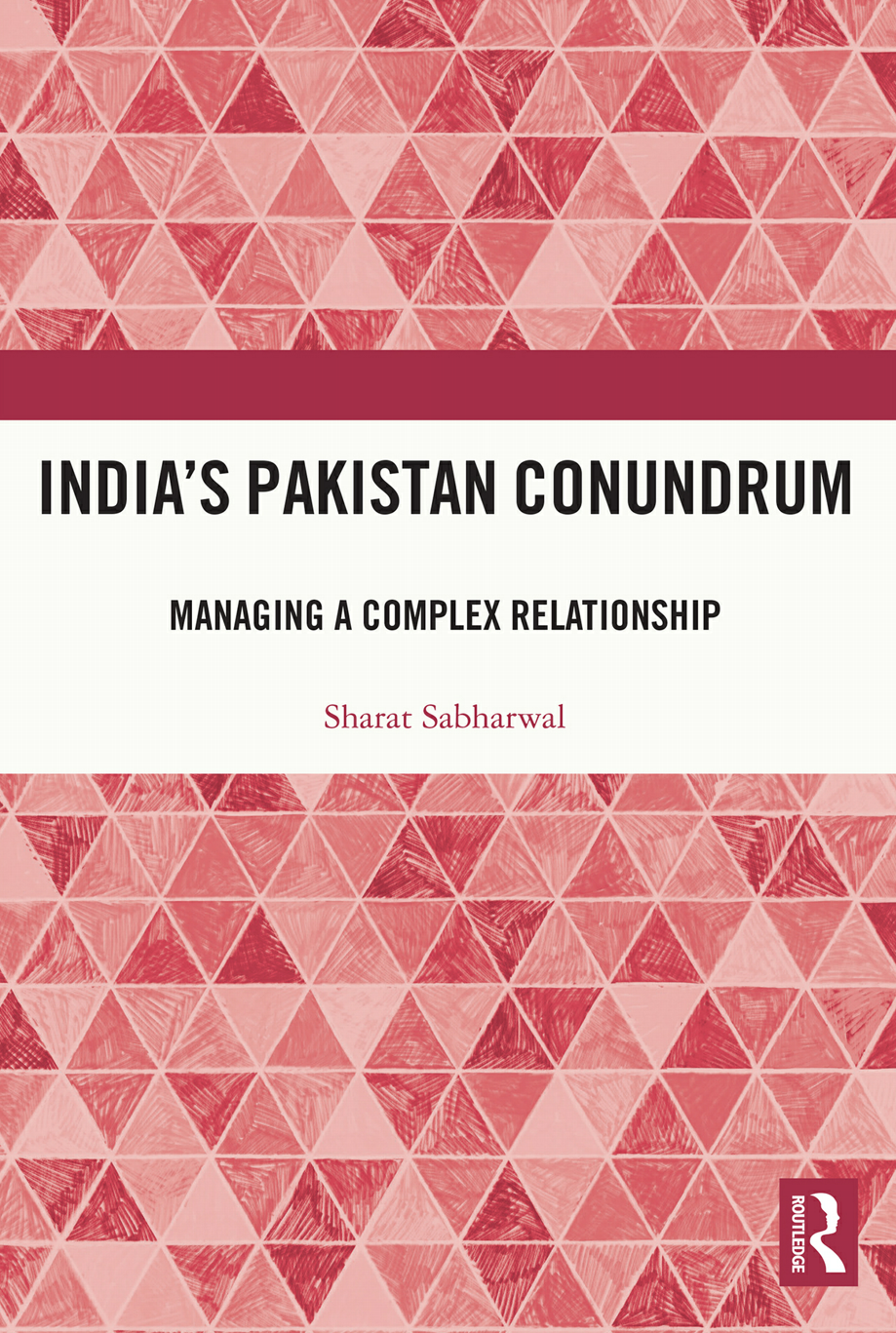
India's Pakistan Conundrum by Sharat Sabhrawal Book Cover


In a 30-minute interview with Karan Thapar for The Wire to discuss his book, Sabharwal said it is not in India’s interests to promote the disintegration of Pakistan. “The resulting chaos will not leave India untouched”. He further argued that Indians must disabuse themselves of the belief that India has the capacity to inflict a decisive military blow on Pakistan in conventional terms. “The nuclear dimension has made it extremely risky, if not impossible, for India to give a decisive military blow to Pakistan to coerce it into changing its behavior.”  He said Indians must disabuse themselves of the belief that they can use trade to punish Pakistan. “Use of trade as an instrument to punish Pakistan is both short-sighted and ineffective because of the relatively small volume of Pakistani exports to India.” 

Below are some key excerpts of "India's Pakistan Conundrum" by Ambassador Sharat Sabhrawal: 

Pakistan Not Failed State: 

"In conclusion, it can be said that Pakistan is neither a failed state nor one about to fail in the foreseeable future. Further, so long as the army remains a largely professional and disciplined force, having at its disposal Pakistan’s rapidly growing arsenal of nuclear weapons, the probability of a change in Pakistan’s external boundaries would remain very low. Therefore, a policy premised on the failure or disintegration of the Pakistani state would hinge on unsound expectations. However, because of the various factors examined in the previous chapters, Pakistan will continue to be a highly dysfunctional state with widespread lawlessness". 

Pakistan's Remarkable Resilience:

"Pakistan has shown remarkable resilience in the face of adversity – evidenced most tellingly by its recovery following the humiliating defeat in 1971. It has recovered significantly from the terror backlash, which followed Musharraf’s U-turn in the wake of 9/11. Fatalities in terror violence that mounted sharply from 2004 onwards, reaching the peak of 11,317 in 2009 (civilians, security forces personnel and terrorists), were down to 365 in 2019. Similarly, fatalities in suicide attacks, which reached the peak of 1,220 in 2010, were down to 76 in 2019".

China Pakistan "Nexus"

"China too reacted adversely to the above Indian move (article 370 abrogation), accusing India of continuing to undermine China’s territorial sovereignty by unilaterally amending its domestic laws and urging it to be cautious in its words and deeds on the border issue. Subsequently, it repeatedly called for peaceful resolution of “Kashmir dispute” left over from colonial history, based on the UN Charter, relevant UN Security Council resolutions and bilateral agreements, thus echoing Pakistan’s position on the subject.  Pakistan’s questioning of the accession of Jammu and Kashmir to India and its policy of cross-border terrorism did not stem from the special status of Jammu and Kashmir under the Indian constitution and have outlasted its abrogation. The Pakistani dimension of India’s Kashmir problem and the Pakistani threat to the security of this sensitive region are still very much alive".

Strategic China-Pakistan Economic Corridor (CPEC):

"China’s reaction to the Indian move and its subsequent aggressive actions in eastern Ladakh have added to that threat. Keen to ensure the safety and security of its strategic CPEC investment, China could in the normal course be expected to encourage a solution based on freezing the existing  territorial reality between India and Pakistan in J&K. However, with the downturn of its own relationship with India, it may be tempted to sustain and bolster Pakistan’s hostility. Equally, India’s strategic planners may be tempted not to give any comfort to China on the CPEC until a degree of stability is restored to the India-China equation, disturbed seriously by China’s aggressive behaviour in eastern Ladakh. Overall, the external environment for the security and stability of Jammu and Kashmir has worsened. This makes it all the more important for India to address the internal dimension of its Kashmir conundrum. India’s challenge is to ensure peace in J&K, not only in the immediate, but durable peace, for the failure to do so would continue to invite external meddling". 

Consequences of Pakistan's Disintegration: 

"Should India work to break up Pakistan? A body of opinion in India recommends that India should be proactive in causing the disintegration of Pakistan. For the reasons mentioned in Chapter 6, a policy premised on disintegration of the Pakistani state would hinge on unsound expectations. However, let us examine, for the sake of argument, the consequences of heightened turmoil in/break up of Pakistan for India. The unwise policies of Pakistan’s rulers have already resulted in considerable turbulence there. Though the Pakistani state uses terror against India, it is calibrated  by its instrumentalities. Heightened chaos in Pakistan leading to collapse of the state authority will not leave India untouched. Let us not forget that Pakistan has continued to pay a heavy price for having caused instability in its neighbour – Afghanistan – something I repeatedly recalled to my Pakistani audiences. Collapse of the state will also present India with a humanitarian crisis of a gigantic proportion, with the terrain between the two countries offering an easy passage to India for those fleeing unrest in Pakistan. At the height of terrorism in the Pakistani Punjab in 2009–10, some of my interlocutors in Lahore were candid enough to say that in the event of a Taliban takeover, they  would have no option but to run towards India. Break up of Pakistan could lead to a civil war amongst the successor states or worse still among various warring groups vying for influence, as was the case after collapse of the state authority in Afghanistan, entailing the undesirable consequences mentioned above and perilous uncertainty concerning the ownership of Pakistan’s nuclear arsenal. Alternatively, India may be faced with a hostile Pakistani Punjab in possession of nuclear weapons. In either case, it will be bad news for India".

Related Links:

Haq's Musings

South Asia Investor Review

India-Pakistan Ties: Who's at Fault For Failing to Resolve Disputes?

India: A Paper Elephant?

Jaswant Singh on Indian Foreign Policy's "Strategic Confinement"

Vast Majority of Indians Believe Nuclear War Against Pakistan is Winnable

Kautilya Doctrine Dominates India's Pakistan Policy

US and China Vying For Influence in Pakistan

Pakistan-China-Russia Vs India-Japan-US

Pakistan Rising or Failing: Reality vs Perception

US DoD 1999 Forecast: "Pakistan Disappears By 2015"

China Pakistan Economic Corridor

Riaz Haq Youtube Channel

VPOS Youtube Channe

Sunday, June 21, 2020

Impact of COVID19 Pandemic; Biden vs Trump; Modi's Blunders

What is the global impact of COVID19 pandemic? How has it affected the United States? How is Prime Minister Imran Khan handling the coronavirus crisis in Pakistan? Are complete lockdowns absolutely necessary to contain the spread of coronavirus?

Impact of COVID19 Global Pandemic

Has President Trump's handling of the COVID pandemic and its devastating economic impact hurt his re-election chances?  Who is better for Pakistan? Biden or Trump? Was President Obama's hostility toward Pakistan shared by Joe Biden who served as his vice president from 2009 to 2017? Why did Biden say "Pakistan is 50 times more important to US than Afghanistan"?

Have Prime Minister Modi's policies backfired? Why has Modi not succeeded in isolating Pakistan? Why do almost all of India's neighbors from China to Nepal to Pakistan have problems with India? Why is Modi under India so isolated? Why has President Trump not strongly backed India in Ladakh?

Despardes with Faraz Darvesh discusses these questions with Misbah Azam and Riaz Haq (www.riazhaq.com).


https://youtu.be/4REeQjTDHvw


Related Links:

Haq's Musings

South Asia Investor Review

Can India Afford to Boycott China?

Has Modi Succeeded in Isolating Pakistan?

Did GOP's Dogwhistle Politics Produce Trump?

Coronavirus, Lives and Livelihoods in Pakistan

Vast Majority of Pakistanis Support Imran Khan's Handling of Covid19 Crisis

Pakistani-American Woman Featured in Netflix Documentary "Pandemic"

Coronavirus Antibodies Testing in Pakistan

Can Pakistan Effectively Respond to Coronavirus Outbreak? 

How Grim is Pakistan's Social Sector Progress?

Pakistan Fares Marginally Better Than India On Disease Burdens

Modi's Kashmir Blunder

Democracy vs Dictatorship in Pakistan

Pakistan Child Health Indicators

Pakistan's Balance of Payments Crisis

Panama Leaks in Pakistan

Conspiracy Theories About Pakistan Elections"

PTI Triumphs Over Corrupt Dynastic Political Parties

Strikingly Similar Narratives of Donald Trump and Nawaz Sharif

Nawaz Sharif's Report Card

Riaz Haq's Youtube Channel

Saturday, June 20, 2020

Can India Afford Economic Boycott of China After Ladakh?

Indian consumers are hooked to a whole range of Chinese products. India's industry sources critical components from China. Indian startups rely on Chinese venture capital. Can Indians really afford to boycott China without seriously hurting themselves after the killing of Indian soldiers by the Chinese Army in Ladakh?  Let's look at the data.


China-India Lopsided Trade. Source: Times of India

Volume of China-India Trade:

India accounts for $70 billion of China's export,  less than 3% of the country's $2.5 trillion in exports. Chinese products make up about 18% of India's total imports.

India imports almost seven times more from China than it exports to it, according Indian media reports. India runs huge trade deficit with China – its largest with any country. In 2018-19, India’s exports to China were mere $16.7 billion, while imports were $70.3 billion, leaving a trade deficit of $53.6 billion.

Indian Industries Dependence on China:

Indian industry depends on China for a range of raw materials. About a fifth of  components used by Indian automobile industry come from China. 70 percent of all electronic components used by Indian companies are imported from China.

Over 45% of consumer durables, 70% of APIs (active pharmaceutical ingredients) come from China. Nearly 75% of the telecom equipment used by Indian carriers is from China, according to the Sunday Guardian.

Chinese Venture Capital in India. Source: Economic Times

Indian Startup Venture Capital:

China is the biggest source of venture capital in India.  Chinese VCs have poured about $4 billion in 90 startups in India. Two-thirds of Indian start-ups valued at more than $1 billion have at least one Chinese investor.  High-profile startups like Byju, Flipkart, Ola, PayTM and Zomato.

India's startup ecosystem continues to be dependent on large swathes of foreign funding given the ongoing absence of home-grown pools of capital. It will face significant near-to-medium term cash constraints if investors from the world’s second-largest economy walk away, according to Economic Times. 

India-China Comparison. Source: Gaurav Dalmia

Summary:

With growing Chinese trade and investment in India, the Indian economy has become significantly dependent on China.  Chinese VCs have poured about $4 billion in 90 startups in India. Two-thirds of Indian start-ups valued at more than $1 billion have at least one Chinese investor About a fifth of  components used by Indian automobile industry come from China. 70 percent of all electronic components used by Indian companies are imported from China. Similarly, 45 percent of consumer durables, 70% of APIs (active pharmaceutical ingredients) come from China. Nearly 75% of the telecom equipment used by Indian carriers is from China, according to the Sunday Guardian. Indians can not boycott China without seriously hurting themselves.

Related Links:

Haq's Musings

South Asia Investor Review

China in Ladakh

Pakistan's Startup Ecosystem

Consumer Durables in India and Pakistan

Digital BRI and 5G in Pakistan

Pakistan Tech Exports Exceed Billion Dollars

Pakistan's Demographic Dividend

Pakistan EdTech and FinTech Startups

State Bank Targets Fully Digital Economy in Pakistan

Campaign of Fear Against CPEC

Fintech Revolution in Pakistan

E-Commerce in Pakistan

The Other 99% of the Pakistan Story

FMCG Boom in Pakistan

Belt Road Forum 2019

Fiber Network Growth in Pakistan

Riaz Haq's Youtube Channel


Sunday, June 14, 2020

Racism in America; Coronavirus in Pakistan; China in Ladakh

Is the killing of George Floyd by a white Minneapolis Police Officer symptomatic of a deeper problem in American society? Is the Trump phenomenon the result of ingrained racism in America? Is racism rooted in America's original sin of slavery?  Is it time to openly acknowledge and address it? Is it time for greater social change beyond the emancipation proclamation of 1860s and the civil rights legislation of 1960s? Is wide participation of white American protesters in recent marches a clear call for action by top leadership in the White House and the US Congress?

George Floyd Memorialized By Pakistani Truck Artist Haider Ali

What is the status and the trajectory of coronavirus pandemic in Pakistan? How widespread are the infections? What does COVID19 and antibodies testing tell us? Is easing of lockdown justified? How long a lockdown can Pakistan's poor afford? What is the alternative? Can mandatory face mask slow down the spread? Is there a right balance between lives and livelihoods?

Why is India so isolated? Have Modi's actions contributed to Chinese aggressive response in Ladakh? Did revocation of article 370 provoke China? Where does America stand on the situation in Ladakh? Will Trump before his offer to mediate between India and China? Is the current China-India standoff an opportunity for Pakistan like the one in 1962 when the Indian military was on the run? Can Pakistan take advantage of it?

Despardes with Faraz Darvesh host discusses these questions with Raza Rumi, Misbah Azam and Riaz Haq.

https://youtu.be/sTUrkPh5zeU


Related Links:

Haq's Musings

South Asia Investor Review

Did GOP's Dogwhistle Politics Produce Trump?

Coronavirus, Lives and Livelihoods in Pakistan

Vast Majority of Pakistanis Support Imran Khan's Handling of Covid19 Crisis

Pakistani-American Woman Featured in Netflix Documentary "Pandemic"

Coronavirus Antibodies Testing in Pakistan

Can Pakistan Effectively Respond to Coronavirus Outbreak? 

How Grim is Pakistan's Social Sector Progress?

Pakistan Fares Marginally Better Than India On Disease Burdens

Modi's Kashmir Blunder

Democracy vs Dictatorship in Pakistan

Pakistan Child Health Indicators

Pakistan's Balance of Payments Crisis

Panama Leaks in Pakistan

Conspiracy Theories About Pakistan Elections"

PTI Triumphs Over Corrupt Dynastic Political Parties

Strikingly Similar Narratives of Donald Trump and Nawaz Sharif

Nawaz Sharif's Report Card

Riaz Haq's Youtube Channel

Saturday, August 10, 2019

Modi's Kashmir Blunder: Wider Implications For India, Pakistan and the World

Indian Prime Minister Narendra Modi's reckless decision to unilaterally abrogate Article 370 of the Indian constitution has sent shockwaves across South Asia and the rest of the world. The immediate effect of this action is on Indian Occupied Kashmir which has lost its status as a state and stands divided into union territories directly ruled from New Delhi. It has wider implications for India's federal, secular and democratic constitutional structure.  It has sent alarm bells ringing in Indian states of Punjab, Tamil Nadu, Nagaland and Mizoram. It also threatens to escalate tensions between nuclear armed rivals India and Pakistan when the Kashmiri resistance turns violent and Modi falsely blames it on "cross-border terrorism". Nuclear confrontation in South Asia could result in deaths of billions of people across Asia, Africa, Europe and America. It is time for all sane Indians and the rest of the world to wake up to the serious threats posed to peace in South Asia region and the wider world, including China, by Mr. Modi's fascist Hindutva project.

Indian Occupied Jammu and Kashmir:

Regardless of Article 370, the region of of Jammu and Kashmir remains a disputed territory whose status must be resolved according to the United Nations Security Council Resolutions 47 (1948) and 80 (1950). India can not unilaterally alter its status without agreement with Pakistan and the people of Jammu and Kashmir who are are parties to it.  Any unilateral action by either India or Pakistan on Kashmir also violates the Simla Agreement which requires bilateral resolution of the disputed region.

Mr. Modi's actions are not only an affront to the people of Jammu and Kashmir but also in clear violation of India's international and bilateral obligations under United Nations charter and the Simla Accord. Annexation of Ladakh is also challenge to Chinese claims to it. 

China, a permanent member of the United Nations Security Council, lays claim to Ladakh region. It has objected to India making it a union territory.

Indian Prime Minister Jawaharlal Nehru's Pledge

Domestic Opposition in India:

Mr. Karan Singh, a member of Indian Rajya Sabha (upper house) and the son of Kashmiri Maharaja Hari Singh who "acceded" Jammu and Kashmir to India in 1947, has said that Kashmir is "not an internal matter" of India. Mr. Singh has insisted on restoration of the dialogue process with Pakistan.

“J&K’s relationship with the rest of India is guided by Article 370 and the State Constitution that I signed into law. We must realize that from the very beginning, J&K, rightly or wrongly, has been given a special position. Now [after] that special position from the original three subjects, there have been a whole series of developments — some may call them positive developments of integration, others may say negative developments of reducing autonomy,” Mr. Singh was quoted as saying by The Hindu.

Strongest reactions to Mr. Modi's decision to annul article 370 have come from top leaders in Indian Punjab and Tamil Nadu. It has inspired fear that the central government in Delhi could take control of any state, strip it of its statehood and impose direct rule without the consent of its people.

Former union minister P. Chidambaram called Modi's action a "cardinal blunder" and a "fatal legal error"."What you are doing today sends a very wrong signal to every state of country", he added.

Tamil Nadu's DMK party leader MK Stalin took to Twitter to condemn Modi's decision. “This is a dark day in the history of Indian federalism. I urge the President of India to not precipitate the situation and not take any further steps in this regard until a democratically elected Government is formed there. The DMK stands with its Kashmiri brothers and sisters and will oppose any assault on federal structure,” he said in a series of tweets.

Chief Minister Captain Amarinder Singh of Indian Punjab has denounced the revocation of 370 as “totally unconstitutional”. He tweeted that “the Constitution of India had been rewritten without following any legal provisions. Such a historic decision should not have been taken and pushed through in this arbitrary manner...This will set a bad precedent as it would mean that the Centre could reorganize any state in the country by simply imposing President’s rule.”

India-Pakistan Escalation:

Most of Kashmir has been under an unprecedented and extended lock-down. People are imprisoned in their homes for several days in a row. There is no Internet, telephone or television.

Eventually when the restrictions are eased, there will be large street protests which the Indian security forces will try to quell by force. When such protests turn violent,  Mr. Modi will cry "terrorism" and falsely accuse Pakistan of being behind it. There will be a familiar replay of the events of the past with Mr. Modi escalating conflict with Pakistan across the Line of Control in Kashmir.

Such escalations pose the danger of spiraling out of control and leading to a nuclear confrontation.

The West, particularly the United States and Canada, are geographically far removed from South Asia. This distance makes many think that any nuclear exchange between India and Pakistan would not have a significant impact on life in America and Europe. Dr. Owen Brian Toon and Professor Alan Robock dispute this thinking. They believe the nuclear winter following an India-Pakistan nuclear exchange will kill crops as far as the United States and cause a global famine. Another study by Nobel Peace Prize- winning International Physicians for the Prevention of Nuclear War and Physicians for Social Responsibility reached the same conclusion.

Professors Robock and Toon have calculated that the smoke from just 100-200 Hiroshima sized atomic bombs exploding in South Asia would cover the entire globe within two weeks. This smoke would hang 30-50 miles above the surface of the earth where it never rains. This thick layer of smoke would block the sun causing farmers to lose their crops for years to come. The resulting famine would kill billions of people around the globe.

It seems that the American leadership recognizes the devastating global impact of possible India-Pakistan nuclear war.  In "Brokering Peace in Nuclear Environments U.S. Crisis Management in South Asia", Pakistani-American analyst Dr. Moeed Yusuf talks about the US efforts to prevent India-Pakistan war that could escalate into a full-scale nuclear exchange. He analyzes American diplomacy in three critical periods: Kargil conflict in 1999; the stand-off after the Indian Parliament attack in 2001 and the terrorist attack in Mumbai in 2008.

Yusuf argues that the US-Soviet Cold War deterrence model does not apply to the India-Pakistan conflict and offers his theory of "brokered bargaining". In chapters that detail the US role during three India-Pakistan crises, it is clear that the US rejected India's insistence on bilateralism in resolving India-Pakistan disputes.  The author says that "in each episode, the concern about the escalation forced the United States to engage, largely unsolicited, and use a mix of rewards (or promises of) and punishments (or threats of) with the regional rivals to achieve de-escalation--ahead of its broader regional or policy interests."

Summary:

Indian Hindu Nationalist government of Prime Minister Modi's abrogation of Article 370 is in clear violation of the Indian constitution and international rules governing resolution of disputes between countries. It has wider implications for India's federal, secular and democratic constitutional structure. It has sent alarm bells ringing in Indian states of Punjab, Tamil Nadu, Nagaland and Mizoram. It also threatens to escalate tensions between nuclear armed rivals India and Pakistan when the Kashmiri resistance turns violent and Modi falsely blames it on "cross-border terrorism". Nuclear confrontation in South Asia could result in deaths of billions of people across Asia, Africa, Europe and America. It is time for all sane Indians and the rest of the world to wake up to the serious threats posed to peace in South Asia region and the wider world by Mr. Modi's fascist Hindutva project.

Related Links:

Haq's Musings

South Asia Investor Review

Kashmiris Observe Black Day

India: A Paper Elephant?

India-Pakistan Nuclear Arms Race

Kashmir: 700,000 Indian Soldiers vs 7 Million Kashmiris

Funding of Hate Groups, NGOs, Think Tanks: Is Money Free Speech?

US and China Vying For Influence in Pakistan

Pakistan-China-Russia Vs India-Japan-US

Pakistan Rising or Failing: Reality vs Perception

Pakistan's Trillion Dollar Economy Among top 25

MQM-RAW Link

Riaz Haq Youtube Channel

VPOS Youtube Channel