Showing posts with label Delhi. Show all posts

Thursday, February 19, 2026

Modi's AI Spectacle: Chaos and Deception in New Delhi

The India AI Impact Summit 2026, held at Bharat Mandapam in New Delhi, has been marred by chaos, confusion and deception. The events on the ground have produced unintended media headlines for India's Prime Minister Narendra Modi who wants to be seen as the "vishwaguru" (teacher of the world) in the field of artificial intelligence as well. First, there was massive chaos on the opening day, with long lines and sudden unannounced evacuation of exhibitors and attendees from the show floor for several hours. This, the Indian government said, was done for "VIP" security, a euphemism for Mr. Modi's "photo op" as he walked the venue halls alone for the benefit of the cameras for self-promotion. Mr. Modi then declared that "India is not just a part of the AI revolution, but is leading and shaping it". To support such claims, an Indian University presented a "robodog" bought from China as its "innovation", a blatant lie that was immediately caught by people on the social media, leading to the expulsion of the institution from the show. 

5-Layer AI Stack


Let's examine Mr. Modi's claim to be "leading and shaping" the AI revolution. The artificial intelligence technology is a 5-layer stack, consisting of energy, AI chips, infrastructure, AI models and applications. Only two nations, the United States and China, have their own full 5-layer stacks. It's hard to see India as leading in any one of these layers. 

Currently, the AI space is dominated by China, the US and a handful of hyperscalers like Amazon, Google, Microsoft, etc. Any country wanting to jump on the AI bandwagon has to choose between the American and Chinese giants. Bloomberg put it best as follows:

"This, fundamentally, is a matter of sovereignty: Whether a nation’s AI systems can be independent of foreign authority. That danger was showcased in 2024, when members of Australia’s UniSuper pension fund had access to their accounts cut off due to a Google cloud misconfiguration. In October, Amazon.com Inc.’s cloud services — the world’s largest — also suffered a major shutdown, damaging its reputation". 

Strict security restrictions at the Indian AI summit caused significant limitations on carrying personal items, including laptops and other electronic devices.  In spite of such "strict security", some participants reported their exhibits and personal items stolen at the event. The fact that only cash was accepted for food and other services at the venue for the AI Summit makes a mockery of the Modi government's hype about India's digital public infrastructure (DPI). 

India's Galgotias University of Uttar Pradesh Showed Chinese Robodog as its Own


There is a significant presence of Americans at the AI Summit in New Delhi. Major "hyperscalers" like Anthropic, Google and OpenAI and Microsoft executives are all attending. The American agenda at the conference was put very succinctly by Sriram Krishnan, Senior White House Policy Advisor on Artificial Intelligence, who said, "...We want to make sure that the world uses the American AI stack...We also want the world to use our AI model...We want all our allies, including India, to leverage our AI infrastructure."

Major US technology firms have announced plans to build large multi-gigawatt AI data centers in India that make enormous demands on energy and water for powering and cooling the energy-hungry beasts. They are facing strong resistance in US cities and towns because of concerns that they will divert precious water and power, increase the rates they have to pay and cause pollution. India appears to be welcoming them for the investment they bring, in spite of significant health and safety concerns. But the Americans will not guarantee "data sovereignty" to the Indian government for Indian consumers' data stored in these data centers. 

President Donald Trump has recently scrapped greenhouse gas emission regulations to enable the use of fossil fuels to power AI data centers in the United States. But the local opposition by cities and towns continues to gather steam. 


Thursday, November 14, 2024

What Can Pakistan Do to Cut Toxic Smog in Lahore?

Citizens of Lahore have been choking from dangerous levels of toxic smog for weeks now. Schools have been closed and outdoor activities, including travel and transport, severely curtailed to reduce the burden on the healthcare system.  Although toxic levels of smog have been happening at this time of the year for more than a decade, this year appears to be particularly bad with hundreds of people hospitalized to treat breathing problems. Millions of Lahoris have seen their city's air quality index (AQI) cross the 1,000 mark several times this month - anything above 300 is considered dangerous.  What can Pakistan do to cut this level of air toxicity? Is there a silver bullet here? Let's try and understand the root causes of this problem to answer these questions. 

NASA Satellite Images of Fires and Smog Taken on Nov 6, 2024. Source: NASA


South Asia is particularly susceptible to pollutants that hang in the air for extended periods of time. The US National Aeronautics and Space Administration (NASA) satellite images show dull gray haze hovering over northern India and Pakistan, and parts of Bangladesh. It is believed that emissions from solid fuel burning, industrial pollutants and farm clearing fires get trapped along the southern edge of the Himalayas in winter time. NASA Earth Observatory explains this phenomenon as follows:

"The haze.... likely results from a combination of agricultural fires, urban and industrial pollution, and a regional temperature inversion. Most of the time, air higher in the atmosphere is cooler than air near the planet’s surface, and this configuration allows warm air to rise from the ground and disperse pollutants. In the wintertime, however, cold air frequently settles over northern India, trapping warmer air underneath. The temperature inversion traps pollutants along with warm air at the surface, contributing to the buildup of haze."

Trapped Smog in Lahore. Source: Aljazeera


The single biggest factor contributing to heavy smog in October-November period each year in Indian and Pakistani Punjab is the lighting of a huge number of fires to burn the agriculture waste to clear the land for planting winter crops. The Indian government estimates that 38% of the smog in the Indian capital New Delhi comes from stubble burning in Punjab. Government policies are needed to incentivize widespread use of machines to remove agriculture waste. This can be accomplished by subsidizing the purchase and/or rental of these machines in both India and Pakistan. There should also be heavy fines imposed on those farmers who insist on setting fires to clear the land. 

Other factors, such as emissions from vehicles and industrial units, also require better regulations and stricter enforcement. Coal-burning units such as brick kilns and cement factories should be moved further away from the population centers. Such measures can significantly cut toxic smog affecting people's health and productivity in the Punjab region straddling the India-Pakistan border. It will be helpful if Indian and Pakistan authorities can work together to solve this common problem. 

Related Links:

Haq's Musings

South Asia Investor Review

Pakistan's Response to Climate Change

Pakistan Electric Vehicle Policy

Cutting Methane Emissions From Cow Burps and Farts

Pakistan Planting World's Largest Mangroves Forest

Beating the Heat With Urban Forests in Pakistan

Pakistan EV Launches to Accelerate Clean Energy Transition

Diwali in Silicon Valley

India Leads the World in Open Defecation

Heavy Disease Burdens in South Asia


Saturday, March 11, 2023

Guess Why Pakistani Analyst Uzair Younus is Making Headlines in India!

Pakistani analyst Uzair Younus has recorded personal impressions of his recent India visit on his YouTube channel, as well as in an interview on another YouTube channel called "Pakistan Experience".  Indian media have gleefully jumped on it with headlines like "Visiting India Was Like Stepping Into The Future" and a "Pakistani analyst" talking of India's "communal harmony". It has helped Younus' channel draw its highest ever views, and inundated it with Indian trolls' comments praising Hindu Nationalist Prime Minister Narendra Modi and denouncing Pakistan.  This is yet another confirmation of what former US President Barack Obama wrote in his book "A Promised Land": “Expressing hostility toward Pakistan was still the quickest route to national unity (in India)”. 

Indians See Uzair Younus Endorsing Indian PM Modi's Policies


Digital Payments: 

Younus' "stepping into the future" comment refers primarily to the ubiquity of QR codes for retail digital payments that he observed in India. He said the currency in circulation accounts for 13% (actual: 13.7%) of India's GDP, versus 20% of GDP (actual: 18%) in Pakistan. He also saw the GST (Goods and Services Tax) numbers displayed at all retailers, and the GST taxes being paid everywhere. 

Pakistan's RAAST P2P System Taking Off. Source: State Bank of Pakistan


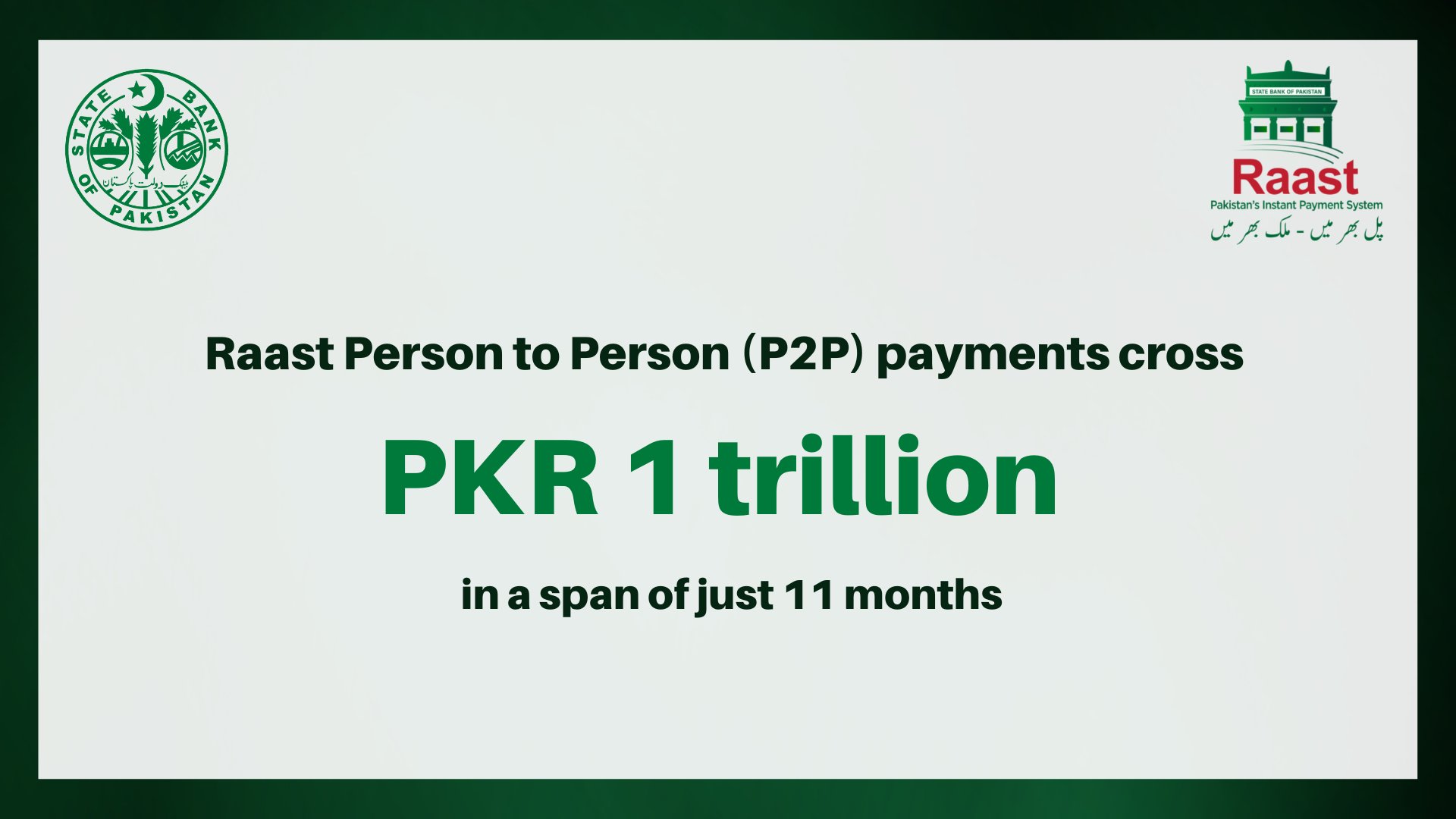
There's no question that India has made significant strides in digitizing payments in recent years. However, it should be noted here that Pakistan, too, is making progress in digital payments. Raast, Pakistan's P2P payments equivalent of India's UPI, has crossed Rs. one trillion mark in payments in 11 months, according to the State Bank of Pakistan.  Pakistan is also among the world's top 10 smartphone markets. 

Pakistan Among World's Top 10 Smartphone Markets. Source: NewZoo


Infrastructure: 

Younus also praised India's growing infrastructure and compared it with Pakistan's, claiming that the Pakistani infrastructure is better but it only serves the rich. He cited the example of driving time to Islamabad International Airport (serving 5 million population in the metro area) in Pakistan being much shorter than the driving time to Delhi Airport (serving 33 million+ population in the metro area) in India, claiming that it is because only the rich use the Islamabad Airport. This makes me wonder if the 5 million passengers who traveled in and out of Islamabad last year are all rich? 

Communal Harmony: 

Uzair cited the example of a Muslim peer's shrine in Rajkot being looked after by Hindus which the Indian media interpreted as "communal harmony" in its reporting. The fact is that India is ranked as the world's worst in terms of religious hostilities, particularly against Muslims, according to a Pew Survey.  Scoring a high 9.5 on a scale of 10, India’s score is found to be worse than all the South Asian countries, including Pakistan, which scores 7.7, followed by Bangladesh 7.2, Afghanistan 6.5, Burma (Myanmar). 5.9, Sri Lanka 5.6, Nepal 2.6, China 1.3 and Bhutan 0.4.


India Tops Social Hostilities. Source: Telegraph India

National Debt and Deficits: 

Uzair Younus argues that the Indian infrastructure is not built with loans while Pakistan takes on debt to build its infrastructure. It seems that the esteemed Pakistani analyst is unaware of the fact that India is the world's biggest borrower of infrastructure loans from various international financial institutions such as the World Bank, the Asian Development and the Asian Infrastructure Investment Bank. 

India's external debt to GDP ratio is about 20% while Pakistan's is 34%.  In addition, both India and Pakistan also run twin deficits: budget deficit and current account deficit (CAD). India's fiscal deficit is about 6.4% and its CAD is 3.3% of GDP. Corresponding figures for Pakistan are 7.9% and 4.6%. 

India has perennially run huge trade and budget deficits. But substantial western capital inflows since the end of the Cold War have helped India avoid a balance of payments crisis. So, India's economic success is in part due to the change in global geopolitics in this century. In short, the West, led by the United States, is boosting India to counter China. 

India is now emerging as the biggest beneficiary of the Ukraine War and the US efforts to check China's rise. Indian businesses are busting US sanctions to take advantage of the vacuum left in Russia by the exit of western businesses since the start of the Ukraine War.  At the same time, the US is rewarding India by promoting it as an alternative to China in the global supply chain.  Meanwhile, Beijing is warning New Delhi that India "will be the biggest victim" of America's "proxy war" against China. 

Women at Work:

Younus saw many women at work in Indian cities, some engaged in constructions, other riding scooters to work. He compares it to what he perceives as absence of women in the workplace in Pakistan. What he misses is the fact that the female labor participation rate in India is, in fact, lower than in Pakistan, according to the International Labor Organization data.  

Female labor force participation rate in India has recently fallen to just 19%, the second lowest after Afghanistan's 15% in the South Asia region. By contrast, Pakistan's women's labor force participation rate is 21%, Sri Lanka's 31% and Bangladesh's 35%. Prime Minister Narendra Modi's mishandling of the COVID19 pandemic has hit Indian women particularly hard, with 90% of those who lost their jobs now shut out of the workforce. 

Female Labor Force Participation Rate in South Asia. Source: World Bank


The precipitous loss of women workers is disastrous news for India's economy, which had started slowing before the COVID19 pandemic, according to a Bloomberg report. Rosa Abraham, an economics professor at Azim Premji University in Bengaluru, tracked more than 20,000 people as they navigated the labor market during the pandemic.. She found that after the first lockdown, women were several times more likely to lose their jobs than men and far less likely to recover work after restrictions were lifted. "When men are faced with this kind of a huge economic shock, then they have a fallback option," Abraham told Bloomberg. "They can navigate to different kinds of work. But for women, there is no such fallback option. They can't negotiate the labor market as effectively as men do." 

Optimism: 

Based on the small sample of people he met in India and Pakistan, Uzair concludes that people in India are very optimistic while those in Pakistan are despondent. Results of a recent Gallup International Poll of 64 nations differ from his conclusion. 

Doing Better Than Parents. Source: Gallup International

Pakistan is in the middle of multiple serious crises. But the vast majority of Pakistanis feel that they have better lives than their parents did, and they think their children will have even better lives than theirs, according to a Gallup International Poll of 64 countries conducted from August to October last year. The poll asked two questions: 1) Do you feel your life is better, worse or roughly similar to that  of your parents? and 2) Do you think your children will have a better, worse or roughly the same life as you? The answers to these questions reveal that Pakistanis are among the top 5 most positive nations among 64 countries polled by Gallup International. Anecdotal evidence in terms of packed shopping malls and restaurants in Pakistan's major cities confirms it. Such positivity augurs well for Pakistan's prospects of successfully dealing with the current crises. It will drive the nation's recovery. 

Nearly two-thirds (65%) of Pakistanis said they live better than their parents did. And 69% of Pakistani parents think their children will have better lives than they do. In neighboring India, 54% of respondents feel their lives are better than their parents' while only 43% say their children will have better lives than theirs'.  The global average for the former is 51% and it is 44% for the latter. The poll results put Pakistanis among the world's five most hopeful nations

Uzair Younus' Background:

Uzair talks about his family's humble beginnings in a small Gujarati village near Rajkot which he visited during his India tour. His grandparents fled to Pakistan in search of better lives. He grew up in Clifton, an upscale neighborhood of Karachi. 

In his effusive praise of the neighboring country that has twice elected Modi, Uzair completely missed the fact that Narendra Modi, now India's prime minister, is widely believed to be the perpetrator of a anti-Muslim pogrom in 2002 when he was the chief minister of Gujarat. The Muslim survivors of the 2002 massacre are still languishing near a mountain of trash on the outskirts of Ahmedabad, battling poverty and disease. Uzair Younus should have paid a visit to show solidarity with them. 

Related Links:


Friday, October 28, 2022

Law and Order Index 2022: Pakistan is Safer Than Bangladesh, India and Sri Lanka

Gallup Law and Order Survey 2021 shows that Pakistan (score 82) is safer than Bangladesh (79) and India (80) and Sri Lanka (80).  Gallup’s survey is based on responses to four questions to measure “people’s sense of personal security and their personal experiences with crime and law enforcement”. The questions are as follows: 1) In the city or area where you live, do you have confidence in the local police force?; 2) Do you feel safe walking alone at night in the city or area where you live?; 3) Within the last 12 months, have you had money or property stolen from you or another household member?; 4) Within the past 12 months, have you been assaulted or mugged?  Gallup interviewed 127,000 people in 120 countries to compile the report.

Gallup Law and Order Survey Results 2022. Source: Gallup


The survey, conducted by global analytics firm Gallup, ranks Singapore, Tajikistan, Norway, Switzerland and Indonesia as the safest countries in the world.  It ranks Sierra Leone, DR Congo, Venezuela, Gabon and Afghanistan as the least secure countries. 

Safety and quality of life global surveys at the city level regularly done by Numbeo support the findings of Gallup Law and Order Survey. Numbeo surveys are based on responses received from its website visitors.  Numbeo filters "surveys to eliminate potential spam, like people entering a large amount of data which are differentiating from the median value". Numbeo's Quality of Life Index captures purchasing power, cost of living, housing, health care, safety, traffic congestion and environmental pollution. The Pakistani capital of Islamabad ranks higher than New Delhi, Mumbai, London and New York in terms of safety and quality of life. 

Safety Score of Selected Cities. Source: Numbeo

In terms of safety in South Asia region, Islamabad (50) ranks the highest followed by Lahore (103), Colombo (110), Chennai (112), Hyderabad (130), Mumbai (140), Karachi (188), Bangalore (200), New Delhi (216) and Dhaka (232). 


Quality of Life Scores and Rankings of Selected Cities. Source: Numbeo

On quality of life in South Asia, Islamabad ranks 144 followed by  Bangalore 167, Hyderabad 195, Chennai 218, Lahore 219, Karachi 237, New Delhi 239, Mumbai 246, Colombo 251 and Dhaka 252. 

In 2019, India was ranked as the fifth most dangerous country in the world for expats, according to media reports. In a survey — Expat Insider 2019 — that covered and interviewed people who live and work abroad, India has been placed at 60 of 64 countries on safety and security. According to the survey which was conducted by InterNations, over four men in ten respondents reported negative feelings about the peacefulness in the country and 27% were displeased with their personal safety — three times the global average of 9%. “A US American expat, for example, does not like “always having to keep my guard up — as a female, I don’t feel safe. As a resident, I often feel taken advantage of at work and outside work,” the survey said. The expats also rated negatively to the question of political stability in India. “Almost double the global average (32% vs 17% worldwide) rate the political stability of the country negatively. An Australian expat shares that ‘politics has become hardline, and there are social tensions’,” the survey found.

Related Links:


Haq's Musings

South Asia Investor Review

Pakistan Among World's Largest Food Producers

India is Home 75% of World's Population Deprived of Basic Living Standards

Food in Pakistan 2nd Cheapest in the World

India in Crisis: Unemployment and Hunger Persist After COVID

Impact of Russia Sanctions on Food, Fuel Availability

Record Number of Indians Seeking Asylum in US

Pakistan Happiness Index Ranking

Incomes of Poorest Pakistanis Growing Faster Than Their Richest Counterparts

Pakistanis Consuming More Calories, Fruits & Vegetables Per Capita 

How Grim is Pakistan's Social Sector Progress?

Pakistan Fares Marginally Better Than India On Disease Burdens

COVID Lockdown Decimates India's Middle Class

Pakistan Child Health Indicators

Pakistan's Balance of Payments Crisis

How Has India Built Large Forex Reserves Despite Perennial Trade Deficits

Riaz Haq's Youtube Channel

Sunday, November 28, 2021

Farm Fires Make Pollution Worse in Delhi and Lahore

Why does the air quality in New Delhi and Lahore ranks among the world's worst at this time of the year? The answer to this oft-repeated question can be found in the satellite maps constantly updated by the US National Aeronautics and Space Administration (NASA).  Indian government recently estimated that 36% of  pollution was contributed by farm fires. Here's how NASA Earth Observatory explains it: "The haze visible in this image likely results from a combination of agricultural fires, urban and industrial pollution, and a regional temperature inversion. Most of the time, air higher in the atmosphere is cooler than air near the planet’s surface, and this configuration allows warm air to rise from the ground and disperse pollutants. In the wintertime, however, cold air frequently settles over northern India, trapping warmer air underneath. The temperature inversion traps pollutants along with warm air at the surface, contributing to the buildup of haze."

Farm Fires Seen By NASA Satellite. Source: FIRMS

Farm Fires:

The latest image downloaded from NASA's Fire Information for Resource Information System (FIRMS) show farm fires burning in both India and Pakistan. These fires are particularly intense in Indian and Pakistani provinces of the Punjab. These fires contribute significantly to the high level of particulates in Delhi and Lahore. Indian government recently estimated that 36% of the PM2.5 particulate matter was contributed by stubble burning by farmers.

South Asia's Vulnerability:

South Asia is particularly susceptible to pollutants that hang in the air for extended periods of time. The US National Aeronautics and Space Administration (NASA) satellite images show dull gray haze hovering over northern India and Pakistan, and parts of Bangladesh. It is believed that emissions from solid fuel burning, industrial pollutants and farm clearing fires get trapped along the southern edge of the Himalayas. NASA Earth Observatory explains this phenomenon as follows:

"The haze visible in this image likely results from a combination of agricultural fires, urban and industrial pollution, and a regional temperature inversion. Most of the time, air higher in the atmosphere is cooler than air near the planet’s surface, and this configuration allows warm air to rise from the ground and disperse pollutants. In the wintertime, however, cold air frequently settles over northern India, trapping warmer air underneath. The temperature inversion traps pollutants along with warm air at the surface, contributing to the buildup of haze."

Trapped Smog. Source: Al Jazeera 


Urgent Actions Needed: 

South Asian governments need to act to deal with rapidly rising particulate pollution jointly. Some of the steps they need to take are as follows:

1. Crack down on stubble burning to clear fields. Incentivize use of machine removal of stubble. 

2. Reduce the use of solid fuels such as cow dungwood and coal to limit particulate matter released into the atmosphere.

3. Impose higher emission standards on industries and vehicles through regulations.

4. Incentivize transition to electric vehicles.

5. Increase forest cover by planting more trees.

6. Encourage the use of more renewable energy sources such as solar, wind, hydro, nuclear etc.

The cost of acting now may seem high but it will turn out to be a lot more expensive to deal with extraordinary disease burdens resulting from rising air pollution.


Pakistan NDCs (Nationally Determined Contributions) For Climate Goals. Source: UN

Pakistan at COP26: 

Malik Amin Aslam, Pakistan Prime Minister Imran Khan's special assistant on climate change, said recently in an interview with CNN that his country is seeking to change its energy mix to favor green.  He said Pakistan's 60% renewable energy target would to be based on solar, wind and hydro power projects, and 40% would come from hydrocarbon and nuclear which is also low-carbon. “Nuclear power has to be part of the country’s energy mix for the future as a zero energy emission source for a clean and green future,” he concluded. Here are the key points Aslam made to Becky Anderson of CNN:

1. Pakistan wants to be a part of the solution even though it accounts for less than 1% of global carbon emissions. 

 2. Extreme weather events are costing Pakistan significant losses of lives and property. Pakistan is among the countries most vulnerable to the effects of climate change. 

3. Pakistan is moving towards renewable energy by converting 60% of its energy mix to renewable by 2030. Electric vehicle (EV) transition is also beginning in his country. 

4. Aslam said:  “We are one of the world leaders on nature based solutions. However, the World Bank (WB) in its Report yesterday came up with really good numbers in a comparison of countries who are shifting their mainstream development towards environment friendly policies and Pakistan came atop among them,” the SAPM explained. 

Summary:

Movement of pollutants does not recognize national borders. It has severe consequences for both India and Pakistan.  The only way to deal with it is for the two nations to cooperate to minimize this problem.

South Asia accounts for more than a third of all PM2.5 pollution related deaths in the world. The sources of particulate pollution range from solid fuel burning to crop clearing fires and use of dirty fuels in vehicles and industries. Recognition of the growing problem is urgent. Failure to act could be very costly in terms of impact on human health and economy. Pakistan needs to follow through on its commitments made at COP26 conference recently held in Glasgow, Scotland. 

Here's a video of Malik Amin Aslam's interview with CNN"s Becky Anderson:

https://youtu.be/Q_s4kQXChuM


Related Links:

Haq's Musings

South Asia Investor Review

Pakistan's Response to Climate Change

Pakistan Electric Vehicle Policy

Cutting Methane Emissions From Cow Burps and Farts

India's Air Most Toxic

State of Air 2017

Environmental Pollution in India

Diwali in Silicon Valley

India Leads the World in Open Defecation

Heavy Disease Burdens in South Asia


Saturday, November 11, 2017

India-Pakistan Smog; Saudi Purge; MQM-PSP Tie

Why is there such thick smog enveloping Delhi and Lahore? What is the source of such high levels of particulate matter hitting PM2.5 of 500-800 micrograms per cubic meter? Is it the crop burning by the farmers in Indian Punjab? Are there other round-the-year sources that keep the PM2.5 concentration at around 100 micrograms per cubic meter, about 10X the safe levels? What can be done to bring it down? Do India and Pakistan need to act together to protect their citizens' health and well-being?

Satellite Image of Fires in South Asia. Source: NASA


What prompted Saudi Crown Prince Mohammad Bin Salman to carry out a major purge of top princes in Saudi Arabia? And why did Lebanese Prime Minister Hariri announce his resignation from the Saudi soil? What are its domestic and international implications? Will it lead to a serious internal instability? Will the young Crown Prince intensify the regional proxy war against Iran?

Saudi Royal Purge. Source: Al Jazeera

What is going on with the on-again off-again alliance between MQM and PSP in Karachi? Is this a shot-gun marriage arranged by the GHQ in Rawalpindi? Is there an anti-PPP alliance with MQM, PSP and Functional League being cobbled together to oust Zardari and his cronies from power in Sindh? Is this an attempt to end crime, corruption and violence in Karachi?

Why did Pakistan Army Chief Gen Bajwa visit Iran to meet its top leadership? Is there an Iran-Pakistan alliance in the offing? How will it affect the situation in the region vis-a-vis Afghanistan and Saudi Arabia?

Viewpoint From Overseas host Faraz Darvesh discusses these questions with Misbah Azam and Riaz Haq (www.riazhaq.com)

https://youtu.be/0icxVnqKQ6E


Related Links:

Haq's Musings

Smog in India and Pakistan

Will Saudi Arabia Change Peacefully?

Iran-Saudi Proxy War

Gangs of Karachi

MQM-RAW Link

Iran and Pakistan: Friends or Foes?

Talk4Pak Youtube Channel

Thursday, November 9, 2017

Thick Smog in Delhi and Lahore: Is India Crop Burning to Blame?

Thick smog enveloping Pakistan's Punjab province has seriously disrupted road and air traffic and created significant health emergency for the people, according to Pakistani media reports. Indian cities, including the nation's capital New Delhi, are also suffering from it.

Is India Responsible?

Pakistani officials have blamed "the incursion of smoke and particle matter from the burning of crop stubble in the Indian Punjab." Particulate matter of 2.5 microns or larger as measured in micrograms per cubic meter is up to 80 times higher than the upper limit of 10 micrograms per cubic meter considered safe by the World Health Organization.

Is the Pakistani claim supported by data? Let's try and answer this question with satellite images of the area released by the United States' National Aeronautics and Space Administration (NASA).

Crop Burning Incidents Seen from space. Source: NASA Earth Observatory

NASA Satellite Images:

Here's how NASA's Earth Observatory described the situation last year:

"In early October 2016, Earth-observing satellites began to detect small fires in Punjab, and the number of fires increased rapidly in the following weeks. By November, thousands of fires burned across the state, and a thick pall of smoke hovered over India. The Visible Infrared Imaging Radiometer Suite (VIIRS) on the Suomi NPP satellite captured a natural color image on November 2, 2016. The map (second image) shows the locations of the fires VIIRS also detected."

This year, 2,620 incidents of crop fire were spotted via satellite in Indian Punjab. In Pakistan, the number was limited to just 27, according to Indian media reports.  Indian reports confirm that Pakistan has done a good job of cracking down on incidents of crop burning to dramatically reduce them.

Low wind speeds of less than 2 meters per second and reversal of wind direction from east to west are causing crop burning smoke to drift from Indian Punjab toward Pakistan, according to an Indian Meteorological Department official as quoted by the Wall Street Journal.

Satellite Images of Smoke Over India and Pakistan. Source: NASA

South Asia's Vulnerability:

South Asia is particularly susceptible to pollutants that hang in the air for extended periods of time. The US National Aeronautics and Space Administration (NASA) satellite images show dull gray haze hovering over northern India and Pakistan, and parts of Bangladesh. It is believed that emissions from solid fuel burning, industrial pollutants and farm clearing fires get trapped along the southern edge of the Himalayas. NASA Earth Observatory explains this phenomenon as follows:

"The haze visible in this image likely results from a combination of agricultural fires, urban and industrial pollution, and a regional temperature inversion. Most of the time, air higher in the atmosphere is cooler than air near the planet’s surface, and this configuration allows warm air to rise from the ground and disperse pollutants. In the wintertime, however, cold air frequently settles over northern India, trapping warmer air underneath. The temperature inversion traps pollutants along with warm air at the surface, contributing to the buildup of haze."

Trapped Smog. Source: Al Jazeera 

Urgent Actions Needed: 

South Asian governments need to act to deal with rapidly rising particulate pollution jointly. Some of the steps they need to take are as follows:

1. Crack down on crop burning to clear fields.

2. Reduce the use of solid fuels such as cow dungwood and coal to limit particulate matter released into the atmosphere.

3. Impose higher emission standards on industries and vehicles through regulations.

4. Increase forest cover by planting more trees.

5. Encourage the use of more renewable energy sources such as solar, wind, hydro, etc.

The cost of acting now may seem high but it will turn out out to be a lot more expensive to deal with extraordinary disease burdens resulting from rising air pollution.

Summary:

Movement of pollutants does not recognize national borders. It has severe consequences for both India and Pakistan.  The only way to deal with it is for the two nations to cooperate to minimize this problem.

South Asia accounts for more than a third of all PM2.5 pollution related deaths in the world. The sources of particulate pollution range from solid fuel burning to crop clearing fires and use of dirty fuels in vehicles and industries. Recognition of the growing problem is urgent. Failure to act could be very costly in terms of human health.

Related Links:

Haq's Musings

Pakistan's Response to Climate Change

Diwali Pollution Warnings in India

Cow Dung Sales in India

India's Air Most Toxic

State of Air 2017

Environmental Pollution in India

Diwali in Silicon Valley

India Leads the World in Open Defecation

Heavy Disease Burdens in South Asia

Thursday, October 14, 2010

Correlating Population and GDP With CWG 2010 Medals

Is there a correlation between a nation's economic performance and its success at international sports competitions? Has India's economic resurgence contributed to its achieving remarkable second place status on the medals table at the Commonwealth Games 2010 that just concluded in New Delhi?


Economics professor Daniel Johnson and his student Ms. Ayfer Ali have developed a model to predict a country's Olympic performance using per-capita income (the economic output per person), the nation's population, its political structure, its climate and the host nation advantage. The Johnson-Ali model was described in a paper, “A Tale of Two Seasons: Participation and Medal Counts at the Summer and Winter Olympics,” that was written in 1999 with Ayfer Ali, while Johnson was on sabbatical at Harvard University and Ali was a student. It was published in Social Science Quarterly in December 2004."It's just pure economics," Johnson insists. "I know nothing about the athletes. And even if I did, I didn't include it."

"The home-field advantage is not trivial. That's why we structure playoffs the way we do," says Johnson.

Over the past five Olympics since 2000, Johnson-Ali model has demonstrated 94% accuracy between predicted and actual national medal counts. For gold medal wins, the correlation is 87%. For the 2008 Beijing Games, Johnson predicted the U.S. team would win 103 medals in total, 33 of them gold. The Americans ended up winning 110 medals, 36 being gold. With its host nation advantage, China did better than Johnson's forecast. Johnson predicted Chinese athletes would win 89 medals; they took 100. He expected China to earn 44 gold medals by the time of the closing ceremonies at the Bird's Nest in Beijing. The Chinese collected a list-leading 51 golds, besting the model's expectations.

The Johnson-Ali model has not done well for nations other than the top 10. For example, Pakistan, which Johnson suggested would win seven medals, including three golds, won no medals at all at Athens Olympics. In fact, Pakistan has won three golds,three silvers and four bronze medals, a total of 10 medals in the entire history of its participation in Olympics movement since 1948. Eight out of the ten medals were won by Pakistan's field hockey team. The last Olympic medal Pakistan won was a bronze in 1992. India has won nine golds,four silvers and seven bronze medals, a total of 20 medals in its entire Olympics history which began in 1927 while Sri Lanka has won two medals in its history at the Olympics, one silver and one bronze. At Beijing in 2008, India won three medals, including one gold and two bronzes, and Afghanistan won its first-ever Olympic medal, a bronze. Bangladesh is the most populous country in the world never to have won an Olympic medal. Nepal won a bronze medal in Taekwondo at Seoul in 1988, but it was won in an exhibition match not counted among official medals.

Eighty of 205 Olympic committees, representing about 40 percent of the world's nations, have never won an Olympic medal.

Now let's see if Johnson-Ali model has any relevance to the results of Delhi CWG 2010. Representing the host nation, Indian athletes have performed very well, winning second spot on the medals table with 101 medals, including 38 golds, beating England to win the second place with just one more gold medal than England's 37 golds.

As expected, Australians top the medals table with 177 medals, including 74 golds, although down significantly from 221 medals they won in 2006, according to the BBC.

Indians double their medal count to 101 this year from 50 medals in 2006.

England also make gains, winning 142 medals this year, up from 110 in 2006.

Pakistan ranks 17th, on a list of 37 medal winning nations. Pakistan's medal count is flat at 5 from 2006, including 2 golds.

In terms of population per medal, Nauru (2 medals) tops the list with one medal per 5000 people.

India and Pakistan are both near the bottom with one medal per 11 million and 33 million citizens respectively.

Bangladesh is at the very bottom with its one bronze medal for its entire population of 162 million people.

In terms of GDP, Nauru tops with 1 medal per $119 million.

India (101 medals) and Pakistan (5 medals) are near the bottom with $12 billion and $33 billion respectively.

Bangladesh is last with just one bronze for its entire GDP of $94 billion.

Indians deserve to be congratulated for leveraging their rapid economic growth in recent years to achieve remarkable success at the 2010 Commonwealth Games in New Delhi. However, in terms of India's GDP and the size of its population, the Indians still have a long way to go to match the performance of China and OECD member nations at major international sports competitions like the Olympics.

Many of India's best athletes at CWG 2010 are women, including badminton star Saina Nehwal, who picked up the badminton singles gold, putting India in second place ahead of England on the medals table. Many of India's medal-winning women are from the northern state of Haryana, which has some of the worst rates of female foeticide in the country. Let us hope that these girls drive positive social change in this benighted region where the politicians have failed.

With rising enthusiasm for competitive sports and its world-class training facilities built for Delhi Commonwealth Games, I believe India has taken a giant step forward to become a sports powerhouse ready to compete and win in major international sporting events in future.

Related Links:

Haq's Musings

India, Pakistan and Johnson-Ali Model

BBC's Commonwealth Games 2010 Table

India Ranks Below China, Pakistan in Global Hunger Index

Low Status of Indian Women

India's Commonwealth Games Mess

Disaster Dampens Spirits on Pakistan's 63rd Independence Day

UNESCO Education For All Report 2010

India's Arms Build-up: Guns Versus Bread

South Asia Slipping in Human Development

World Hunger Index 2009

Challenges of 2010-2020 in South Asia

India and Pakistan Contrasted 2010

Food, Clothing and Shelter in India and Pakistan

Introduction to Defense Economics