Showing posts with label International Women's Day. Show all posts

Monday, March 6, 2023

International Women's Day: Growing Presence of Pakistani Women in Science and Technology

It is International Women's Day on March 8, and its theme is "DigitALL: Innovation and technology for gender equality". It's a day to highlight Pakistani women's participation in science and technology. Nearly half a million Pakistani women are currently enrolled in science, technology, engineering and mathematics courses at universities, accounting for nearly 46% of all STEM students in higher education institutions in the country. Several Pakistani women are leading the country's tech Startup ecosystem. Others occupy significant positions at world's top research labs, tech firms, universities and other science institutions. They are great role models who are inspiring young Pakistani women to pursue careers in science and technology. 
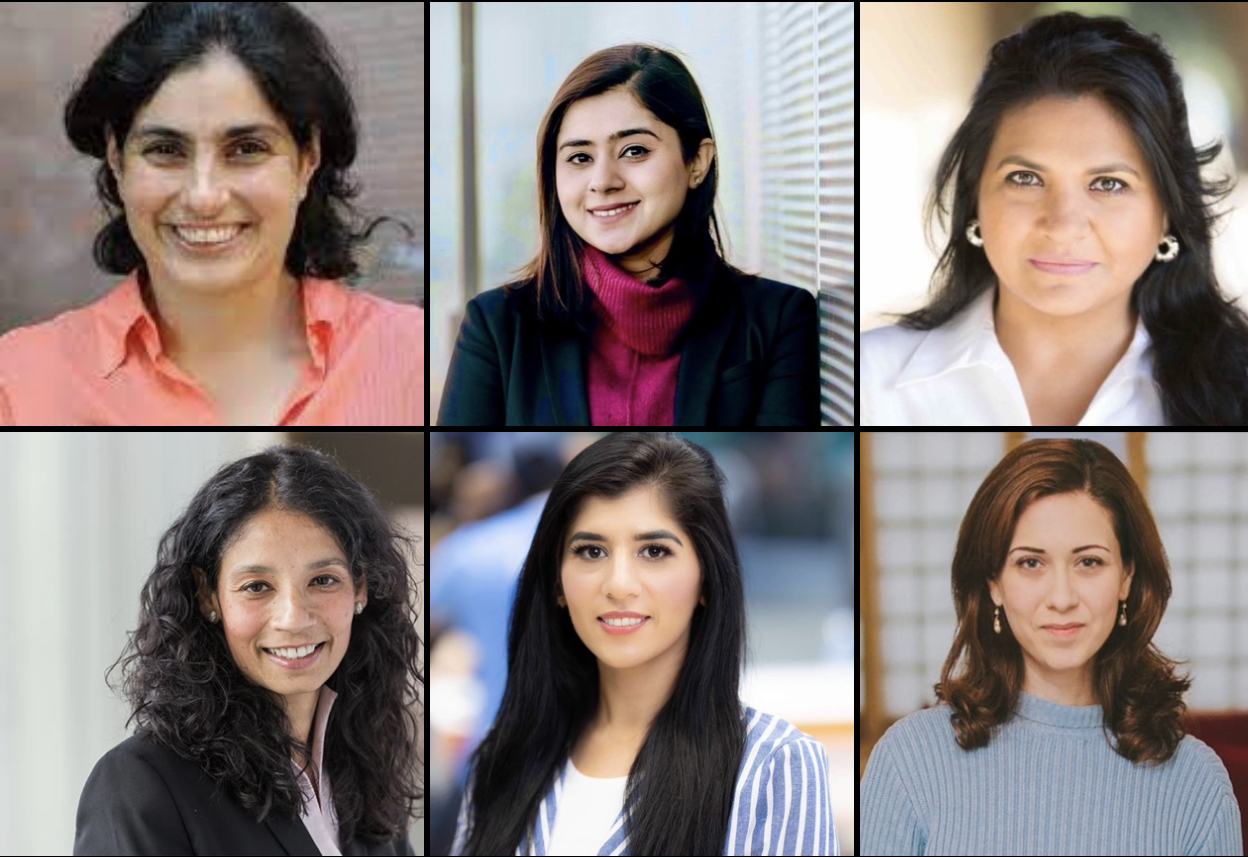
 
Clockwise From Top Left: Nergis Mavalvala, Maria Abrar, Maheen Adamson, Tasneem Zehra Husain, Sundas Khalid, Asifa Akhtar


Pakistani Women in Science: 

Growing numbers of Pakistani working women are making a contribution to science and technology. Some of the highest profile names include Dr. Nargis Mavalvala and Dr. Asifa Akhtar. Mavalvala is the dean of Harvard University's School of Science and Akhtar is a vice president of the prestigious Max Planck Society in Germany. Dr. Maheen Adamson is a senior research scientist at Stanford School of Medicine. Tasneem Zahra Husain is a theoretical physicist in Cambridge Massachusetts known for her work on string theory. Hibah Rahmani is a rocket engineer at NASA (US National Aeronautics and Space Administration).  Dr. Sania Nishtar is a former commissioner of the World Health Organization and she served as special assistant to the Prime Minister of Pakistan.  Dr. Syra Madad is an epidemiologist currently serving as the Senior Director of the System-wide Special Pathogens Program in New York City. 

Selected Women-Led Startups in Pakistan in 2022. Source: Katalyst Lab 

Pakistani Women in Technology: 

Maria Abrar is a data scientist at Reality Labs of Meta (Facebook), a research lab in Toronto, Canada. She has been ranked among Canada's top 25 women in artificial intelligence by ReWork, an Artificial Intelligence (Al) and deep learning content producer based in London, United Kingdom. 

Sundas Khalid is a data scientist at Alphabet (Google) in the United States. Forbes magazine has named her a "trailblazer" in its trailblazer series. 

Kalsoom Lakhani, a co-founder and general partner of i2i Ventures, is helping build Pakistani tech startups ecosystem. She and co-founder Misbah Naqvi are passionate advocates for women-led tech startups in the country.  So, too, is Jahan Ara, the head of Katalyst Lab accelerator. 

Several women-led startups have raised venture funds in Pakistan in 2022. These startups offer solutions in Fintech, Edtech, Healthtech, and Logistics, among others! These are led by Tania Aidrus of DBank, Maha Shahzad of Bus Caro, Vladimira Briestenska of Neem, Meenah Tariq of Metric, Saira Siddiqui of MedIQ, Aiman Bashir of Outclass, Anusha Shahid of OkayKer, and Fatimah Zafar of Remoty. 

Male-Female Ratio of University Students in Pakistan. Source: HEC


Pakistani Women Freelancers:

A 2020 global survey conducted by Payoneer, a global payments platform company based in Silicon Valley, showed that Pakistani women freelancers are earning $22 an hour, 10% more than the $20 an hour earned by men. While Pakistani male freelancers earnings are at par with global average, Pakistani female earnings are higher than the global average for freelancers. Digital gig economy is not only helping women earn more than men but it is also reducing barriers to women's labor force participation in the country. The survey also concludes that having a university degree does not help you earn more in the growing gig economy. The survey was conducted in 2015.

Freelancers Hourly Rate by Gender. Source: Payoneer


Male-Female Ratio of University Students in Pakistan: 

Nearly 46% of over 3 million students enrolled in Pakistani universities are female. The proportion of female enrollment has been rising over the last 5 years.  The ratio of female enrollees in STEM education is also about 46% of the student body. 

Over a million students, about a third of total 3 million students (1.4 million women, 1.6 million men) enrolled in Pakistani universities and degree colleges, are currently studying science, technology, engineering and mathematics (STEM Education), according to data released by the country's Higher Education Commission (HEC). Of these students, 415,008 are studying natural sciences and mathematics, 276,659 are in information and communication technologies (ICT), 178,260 are in health sciences and 166,457 are in engineering. Pakistan produced 157,102 STEM graduates last year, putting it among the world's top dozen or so countries. About 43,000 of these graduates are in information technology (IT). 
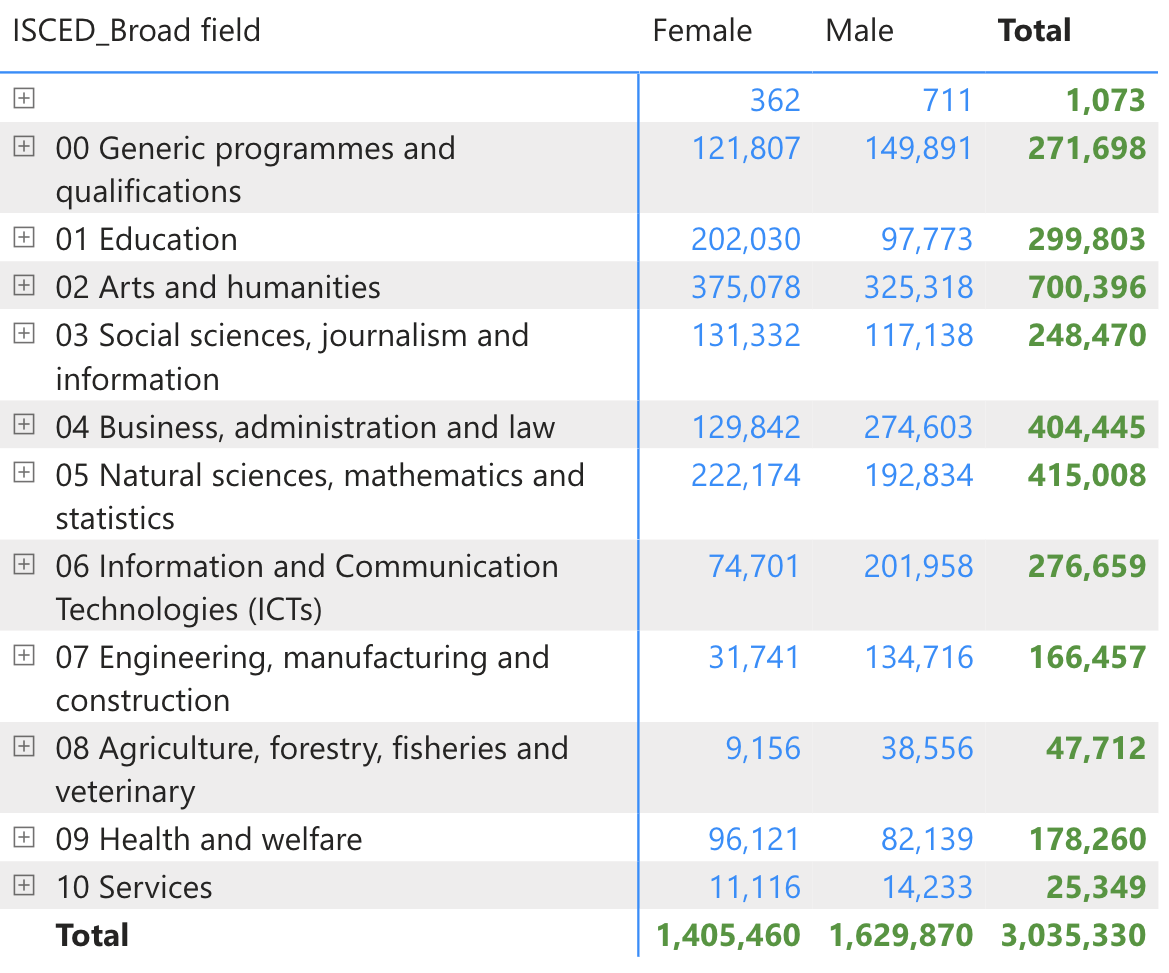
Student Enrollment By Field of Study at Pakistani Higher Education Institutions. Source: HEC


Acceptance Rates in University Admissions: 

Acceptance rate in Pakistani universities and degree colleges was just 13.5% last year. Only 541,043 students were accepted from 4,085,185 students who applied. The country produced 471,306 university graduates in 2020-21. Of these, 157,102 were in STEM fields, including 43,000 graduates in information technology (IT). 

Pakistan Higher Education Admission and Graduation Statistics. Source: HEC


In absolute terms, Pakistan probably ranks among the top dozen or so nations producing university graduates in STEM and IT fields. However, the country lags significantly behind its lower middle income peers in terms of percentage of students enrolled in universities. Only 12% of young people in the 18-25 age group are currently enrolled in higher education institutions. This is about half of the 25% average for South Asia. The data from the Word Bank shows that the higher education enrollment rate was extremely low in Pakistan until 2000 when late President Musharraf decided to significantly boost investment in building universities and hire faculty to rapidly increase access to higher education in the country. 


Tertiary Education Enrollment Rates. Source: World Bank


Summary: 

As Pakistan struggles with multiple serious crises,  there is a growing presence of women in science and technology. These young women and men now studying in the nation's universities and colleges offer hope for its bright future. In fact, the vast majority of Pakistanis, particularly women, feel that they have better lives than their parents did, and they think their children will have even better lives than theirs, according to a Gallup International Poll of 64 countries conducted from August to October last year. The poll asked two questions: 1) Do you feel your life is better, worse or roughly similar to that  of your parents? and 2) Do you think your children will have a better, worse or roughly the same life as you? The answers to these questions reveal that Pakistanis are among the top 5 most positive nations among 64 countries polled by Gallup International. Anecdotal evidence in terms of packed shopping malls and restaurants in Pakistan's major cities confirms it. Such positivity augurs well for Pakistan's prospects of successfully dealing with the current crises. It will drive the nation's recovery. 


Related Links:


Saturday, March 7, 2020

Women's Day: Gender Gap in Education Narrowing in Pakistan

Women's education, literacy and labor force participation levels remain low in Pakistan but the gender gap is declining in terms of literacy rates and mean years of schooling, according to Pakistan Labor Force Survey 2017-18.  There is about one year gap between men and women in terms of education attained. On average, a Pakistani male born after 1995 will leave school in 8th grade. A female born at the same time will leave in 7th grade.

At a recent Islamabad event organized as part of the World Bank's "Girls Learn, Women Earn" campaign,   Mr. Illango Patchamuthu, World Bank Country Director for Pakistan, said increasing years of schooling helps women become more productive members of society.


Pakistan Labor Force survey provides information on the country's labor force characteristics. It is based on a representative sample of 43,361 urban and rural households. For this purpose, total sample size is evenly distributed into four sub samples, each to be enumerated in a given quarter.

Mean Years of Schooling in Pakistan. Source: Labor Force Survey 2017-18


As of 2017-18, the overall literacy rate in Pakistan is 62.3%. Among males above age 10, 72.5% are literate. Females in the same age group are at 51.8%, trailing 20.7% behind their male counterparts. The percentage of women participating in the labor force is 24.9 as compared to 82.7 for men.

History of Literacy in Pakistan


Educational Attainment in Pakistan. Source: Labor Force Survey 2017-18

At a recent Islamabad event organized as part of the World Bank's   "Girls Learn, Women Earn" campaign,   Mr. Illango Patchamuthu, World Bank Country Director for Pakistan, said increasing years of schooling helps women become more productive members of society. He said: “Every additional year of schooling for a girl increases her future earnings by up to 10%. Pakistan can use the untapped economic potential of women in the workforce and estimates indicate this can boost the economy by up to 30%, by empowering women and girls to expand their skills, access to information, mobility, and access to finance and assets.”

Increasing Years of Schooling Leads to Women Having Fewer Babies

Prime Minister Imran Khan's government has launched two programs with the aim of particularly helping underprivileged women: Ehsaas and Kifaalat. These programs are headed by Dr. Sania Nishtar, a highly accomplished woman named special assistant to the prime minister. Speaking at  "Girls Learn, Women Earn", Dr. Nishtar said:

“Government of Pakistan’s Ehsaas program has a very serious intent to drive forward the agenda of women empowerment. Ehsaas stringently follows fifty percent rule across the board for women inclusion in all Ehsaas initiatives including interest free loans, scholarships and asset transfers".

 "Likewise, Kafaalat that has recently been launched by the Prime Minister will ensure financial and digital inclusion of 7 million disadvantaged women across Pakistan who will now benefit from the monthly stipend of Rs. 2,000 along with access to bank accounts and affordable smart phones,” she added.

https://youtu.be/G2qZuAub7rE


Related Links:

Haq's Musings

South Asia Investor Review

Pakistani Woman Designer Wins Global Industrial Design Award

Pakistan's Saadia Zahidi Leads WEF's Gender Parity Effort

Status of Women in Pakistan

Microfinancing in Pakistan

Gender Gap Worst in South Asia

Status of Women in India

Female Literacy Lags in South Asia

Land For Landless Women

Are Women Better Off in Pakistan Today?

Growing Insurgency in Swat

Religious Leaders Respond to Domestic Violence

Fighting Agents of Intolerance

A Woman Speaker: Another Token or Real Change

A Tale of Tribal Terror

Mukhtaran Mai-The Movie

World Economic Forum Survey of Gender Gap

Sunday, March 8, 2009

Status of Women in Pakistan


On March 8, 2009, the International Women's Day today, how are women faring in Pakistan? The status of women in Pakistan continues to vary considerably across different classes, regions, and the rural/urban divide due to uneven socioeconomic development and the impact of tribal, feudal, and urban social customs on women's lives. While some women are soaring in the skies as pilots of passenger jets and supersonic fighter planes, others are being buried alive for defying tribal traditions.

In terms of the women's political representation in the nation's parliament, there has clearly never been a better time. The discriminatory laws such as the Hudood ordnance have been repealed or diluted. In addition to dozens of women colleges and universities, some of the co-educational professional institutions of higher learning have 50% or higher enrollment of women. Girls account for 53% of all college students in Pakistan, according to the 2005 Education Census. There are other indicators such as women's growing numbers in the traditional male professions such as engineering, law, medicine, business, the police and the military. Women's ranks have also grown in the nation's entertainment, news and mass media and they are much freer than ever to express themselves in the choice of appearance, speech, clothing, arts, entertainment etc. There have even been performances of The Vagina Monologues in Pakistan. Localized with Urdu and Punjabi words, The Vagina Monologues was first staged in Islamabad in 2003 for an audience of 160, mostly women, followed by performances for mixed audiences in Karachi and Lahore. Organized with AMAL, an NGO working on gender rights in Pakistan, the actresses added information about local incidents of violence against women and honor killings.


Along with the signs of women's progress in Pakistan, there have also been high-profile incidents of violence against women, such as live burial of women in Baba Kot, a village 50 miles from Usta Mohammad town of Jafferabad district in Baluchistan, that rekindled an honest discussion and debate on the status of women in rural and tribal Pakistan. To add insult to injury, Pakistani Senator Mir Israrullah Zehri defended this crime by arguing on the Senate floor that "It is a Baluch tribal tradition and we have to respect it". The Senator was then rewarded by the PPP government with a promotion as a member of the federal cabinet.

While the speaker of Pakistan's parliament is a woman and the representation of women in the legislature has grown dramatically, most of the women representatives are from the same privileged, feudal/tribal class that is largely responsible for discrimination against women in Pakistan. These women in parliament have not been particularly vocal in raising the women's issues and they have not offered any serious legislation other than the Women's Protection Bill that was offered and passed because of President Musharraf's personal intervention in the last parliament. The word "feudal princess" often used to describe late Prime Minister Benazir Bhutto applies well to the majority the women members of parliament in Pakistan. There is a continuing large literacy gap of as much as 45 percent between men and women and the opportunities for rural women's education remain elusive.


Media reports indicate that Pakistani Taliban have been enforcing a complete ban on female education in the Swat district. Some 400 private schools enrolling 40,000 girls have been shut down. At least 10 girls' schools that tried to open after the January 15, 2009 deadline by the Taliban were blown up by the militants in the town of Mingora, the headquarters of the Swat district. More than 170 schools have been bombed or burned, along with other government-owned buildings.

According to Dawn newspaper, the 2008 report of violence against women in Pakistan makes horrific reading. In that year alone, 7,733 cases of violence against women were reported in the media. What is shocking is the large number of women who lost their lives in this period — 1,516 were murdered while 472 were killed for reasons of ‘honor’.

Overall, the World Economic Forum ranks South Asia and several Arab nations among the lowest in terms of economic participation, economic opportunity, political empowerment, educational attainment and health and well-being. The WEF 2005 survey shows that India ranks at 53 is just above Korea, Jordan, Pakistan, Turkey and Egypt which occupy the last five positions in that order but below Bangladesh which gets the 39th slot. Seven predominantly Muslim nations covered by the study, Bangladesh (39) and Malaysia (40) outperform Indonesia (46), while Jordan (55), Pakistan (56), Turkey (57) and Egypt (58) occupy the bottom four ranks.

In summary, the Musharraf era saw some measurable progress in improving the status for women, in spite of the high-profile incidents such as the rape of Mukhtaran Mai. But the progress seems to have been halted and even rolled back under the feudal/tribal dominated PPP government. The appointment of the notorious tribal chiefs like Zehri and Bijarani as federal minister has clearly sent terribly wrong signals to the oppressors of women in Pakistan. What is really needed is a fundamental change in social attitudes toward women, particularly in rural and tribal Pakistan. A massive effort is required to make both men and women aware of the need and the benefits of women's empowerment for a better future of Pakistan. Healthy, educated and empowered women can help raise better children to build Pakistan as a modern society that cares for its people.

A number of non-governmental organizations such as AMAL, Aurat, HDF ,Edhi and other similar organizations deserve our support if we care for the enhancement of women's status in Pakistan.

Here's a video showing Pakistan's female commercial pilots:


Related Links:

Are Women Better Off in Pakistan Today?

Growing Insurgency in Swat

Religious Leaders Respond to Domestic Violence

Fighting Agents of Intolerance

A Woman Speaker: Another Token or Real Change

A Tale of Tribal Terror

Mukhtaran Mai-The Movie

World Economic Forum Survey of Gender Gap

Saturday, March 8, 2008

Are Women In Pakistan Better Off Today?

As the world celebrates International Women's Day today, it is natural to ask if Pakistani women have made substantial real progress in the last 5 years under President Musharraf. The answer to this question depends on who you ask and how you judge women's progress. In terms of the women's political representation in the nation's parliament, there has clearly never been a better time. The discriminatory laws such as the Hudood ordnance have been repealed. There are other indicators such as women's presence in the traditional male professions such as law, medicine, business, the police and the military. We have seen women inducted and grow in numbers in each of these male-dominated areas. Women's ranks have also grown in the nation's mass media and they are much freer than ever to express themselves in the choice of appearance, speech, dress, arts, entertainment etc. There have even been performances of The Vagina Monologues in Pakistan. Localized with Urdu and Punjabi words, The Vagina Monologues was first staged in Islamabad in 2003 for an audience of 160, mostly women, followed by performances for mixed audiences in Karachi and Lahore. Organized with AMAL, an NGO working on gender rights in Pakistan, the actresses added information about local incidents of violence against women and honor killings.

Along with the signs of women's progress in Pakistan, there have also been high-profile incidents of violence against women, such as the rape of Mukhtaran Mai that forced an honest discussion and debate on the status of women in rural Pakistan. Most of the women represented in Pakistani parliament are from the same privileged, feudal class that is largely responsible for discrimination against women in Pakistan. The women in parliament have not been particularly vocal in raising the women's issues in parliament and they have not offered any serious legislation other than the Women's Protection Bill that was offered and passed because of President Musharraf's personal intervention. The word "feudal princess" often used to describe late Prime Minister Benazir Bhutto applies well to the majority the women members of parliament in Pakistan. There is a continuing large literacy gap of as much as 45 percent between men and women and the opportunities for rural women's education remain elusive.

In summary, the Musharraf era has seen measurable progress in improving the situation for women. However, a lot more needs to be done. What is really needed is a fundamental change in social attitudes toward women, particularly in rural Pakistan. A massive effort is required to make both men and women aware of the need and the benefits of women's empowerment for a better future of Pakistan. Healthy, educated and empowered women can help bring up better children to build Pakistan as a modern society that cares for its people.