Showing posts with label Food Security. Show all posts

Saturday, May 7, 2022

Olive Revolution: Pakistan Joins International Olive Council

Pakistan's Ten Billion Tree Tsunami project launched in 2014 by the PTI government has sparked a silent olive revolution in the country.  Pakistan, now the 19th member of the International Olive Council, is producing about 1,500 tons of olive oil per year and 830 tons of table olives,  according to Juan Vilar Strategic Consultants. It is also helping tackle some of the effects of climate change such as soil erosion and desertification and bringing new opportunities to farmers. Olive cultivation was started as a pilot project in Potohar region by Punjab Chief Minister Shahbaz Sharif's government in 2014. The PTI government promoted it nationwide as a part of Prime Minister Imran Khan's Ten Billion Tree Tsunami initiative to bring about the olive revolution in the country.  

Olive Valley, Pakistan

Pakistan is the world's third largest importer of cooking oil. In 2020, Pakistan imported $2.1 billion worth of palm oil, behind only India's $5.1 billion and China's $4.1 billion in palm oil imports. Increasing olive oil production will help the country reduce its dependence on palm oil imports. Substituting imported palm oil with domestic olive oil may also help improve the heath of Pakistani consumers. 

The International Olive Council (IOC) has 18 members, mostly European and Middle Eastern nations located in the Mediterranean region. Pakistan has joined as its 19th member. The IOC members account for more than 98% of global olive production. The IOC has been headquartered in the Spanish capital Madrid since it was founded in 1959.  The organization specifies acceptable quality control testing methods and assures consumer transparency information, for example: hygiene standards along the supply chain, suitable packing materials and filling tolerances product labelling standards, identification of any food additives or allowable contaminants, recommendations for environmental protection in the use and disposal of olive products.  
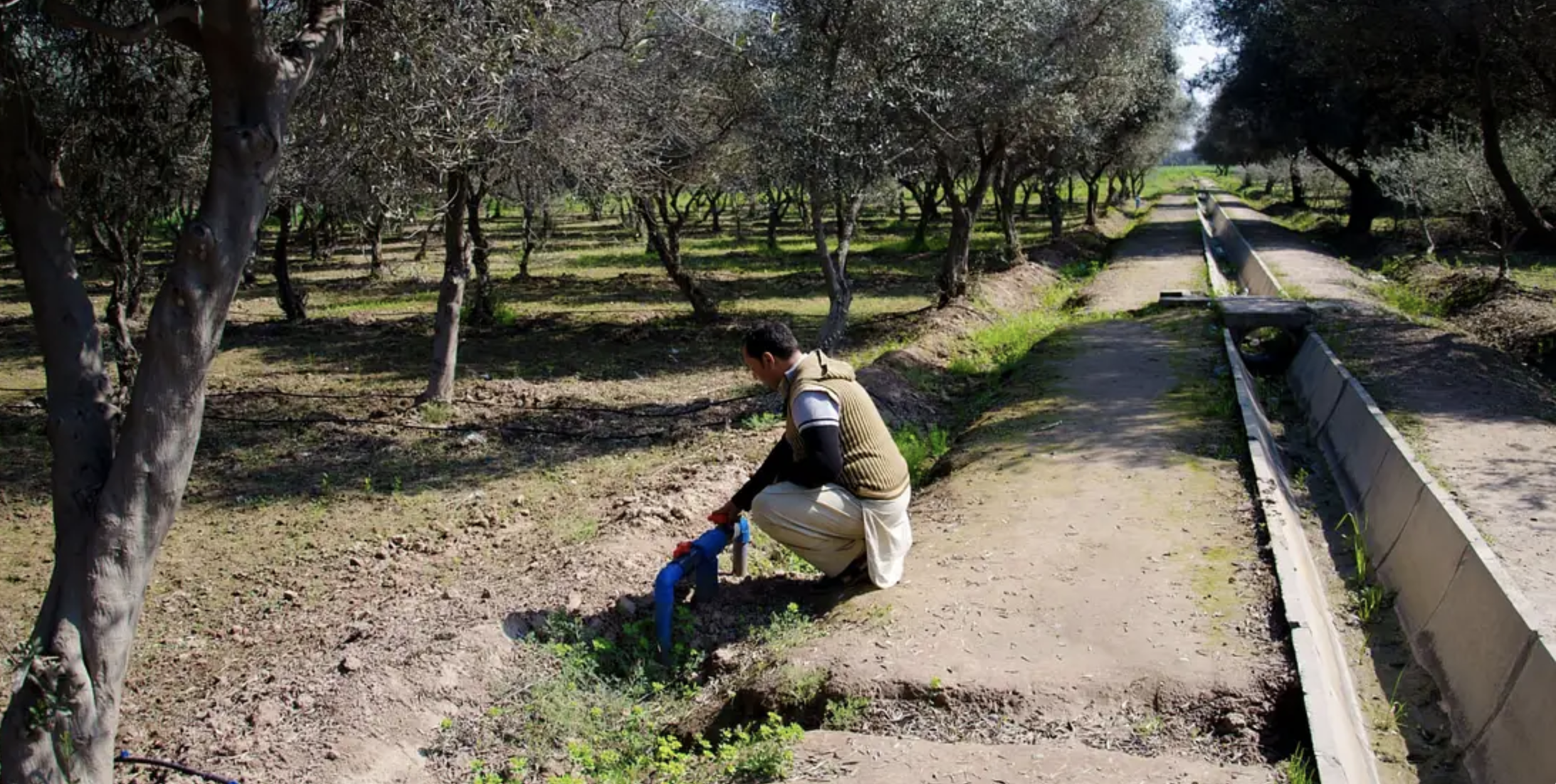

Olive Plantation in Peshawar, Pakistan. Source: Olive  Oil Times

Welcoming Pakistan into the organization, Mr. Abdellatif Ghedira, the IOC’s executive director, told Olive Oil Times: “In Pakistan, olive oil culture is making inroads, and so are the opportunities related to that .....The council is a decisive player in contributing to the sustainable and responsible development of olive growing, and it serves as a world forum for discussing policymaking issues and tackling present and future challenges".  

Olive trees thrive in dry arid regions with rocky soils that are more challenging for traditional crops. Pakistan government officials believe that olive farming is an efficient answer both to reforestation needs and economic development. “A special focus in this phase will be given to underprivileged areas of the country, such as Southern Balochistan, Southern Punjab, the tribal areas of Khyber Pakhtunkhwa (KPK) and some parts of Sindh province,” Muhammad Tariq, national project director at the Ministry of National Food Security and Research, told Olive Oil Times. 

It is expected that traditional farming and modern techniques would make large tracts of barren land productive, creating new jobs and growing the economy. Drip irrigation systems are being deployed over 16,000 hectares and 3.6 million olive trees. The Pakistani public and private sectors currently maintain 26 olive oil extraction plants of different capacities, from 80 kilograms per hour to 600, according to Olive Times.

Pakistan has the potential to be a world leader in olive production. In the last decade,  PTI's Ten Billion Tree Tsunami initiative has spurred rapid olive cultivation in Pakistan with the import of 100,000 olive seedlings from top olive producing countries like Spain, Italy and Turkey. Pakistan’s climate is conducive for olive production, as the olive trees grow fast in regions with moderate winters following long hot summers.

Related Links:


Haq's Musings

South Asia Investor Review

Chicken Cheaper Than Daal

Meat Industry in Pakistan

Bumper Crops and Soaring Tractor Sales in Pakistan

Meat and Dairy Revolution in Pakistan

Pakistanis Are Among the Most Carnivorous

Eid ul Azha: Multi-Billion Dollar Urban-to-Rural Transfer

Pakistan Among World's Largest Food Producing Countries

Drip Irrigation: Can Pakistan Make its Deserts Bloom?

Pakistan's Agenda at COP26 Climate Conference

Friday, May 9, 2008

Can Pakistan Enhance World's Food Security?

While the term "energy security" has been in vogue for many years, the term "food security" seems to be competing with it for an equal or higher ranking on the world agenda. Food Security is particularly high on the list for countries such as China with the world's largest population to feed and the Middle East nations such as Saudi Arabia and Libya who depend on imported food.

So what are these countries doing? They are acquiring farmland in the nations considered world's breadbaskets. Countries in Africa, Latin America, and Eastern Europe who have plenty of farmland but not a lot of money. While these efforts will help increase food production, a downside of an aggressive policy for more farmland is that it will accelerate deforestation and hurt the environment.

The Chinese agriculture ministry has drafted a proposal to support the acquisition of farmland, especially in Africa and South America, to help guarantee China's food security, the Financial Times reports. Beijing already promotes aggressive foreign acquisition by Chinese oil, banking and manufacturing firms -- to mixed receptions abroad at a time of heightened suspicion surrounding sovereign-wealth investments. A Chinese official tells the FT that there shouldn't be any problem getting the policy approved, but that Beijing worries that foreign governments may be "unwilling to give up large areas of land."

And at a time of relative food shortages and soaring prices for cereals and other nutritive commodities, China will already have some competition, says the Wall Street Journal. In the Middle East, the region most dependent on imported food, Saudi Arabia has said it plans to invest in farm and livestock projects overseas to get a handle on its commodity prices and ensure supply, while Libya has been talking to Ukraine about the possibility of growing its own wheat there. Any shift of economic power from the Middle East to the likes of poorer Ukraine, one of the world's biggest wheat producers, could revive the Heartland Theory of 19th-century and 20th-century geographer Sir Halford John Mackinder, who argued control of the natural resources of the East European breadbasket region was key to controlling the "World Island" of Europe and Asia, and thus the world.

This developing new dynamic creates an opportunity for Pakistan to form partnerships with the Chinese and the Saudis aimed at dramatic improvement in the productivity of its farmland in Sind and Punjab without actually selling the land to foreigners. Farm modernization to realize the full potential of its farmland is a goal Pakistan must set for itself for this decade. If pursued with a clear plan and strategy, Pakistan can not only feed its own population well but it could also become the breadbasket for the world and improve the living standards of Pakistan's rural population.

Prior efforts beginning in 2000 toward corporate farming have met significant opposition. For example, an official of Pakistan's Ministry of Food and Agriculture said in July 2000, "We are working to finalize a policy for introducing corporate agriculture in the country where large farm holdings will be allowed to companies which would seek listing in the stock exchange."

Under the proposal, foreign companies were to be granted a 30-year lease on government-owned land that could be extended for another 20 years. However, food rights campaigners expressed the fear that profit-driven agribusiness transnational companies (TNCs) would use Pakistan as a base for exporting cash crops which would replace staple cereals on the country's farms.

Since the failure of the effort in 2000, Pakistan has again initiated efforts in 2007 to build serious agribusiness using modern techniques as part of a mega project sponsored by the Ministry of Food, Agriculture and Livestock, with the technical and financial assistance of Asian Development Bank. The executing agencies include Ministry of Food, Agriculture and Livestock (MINFAL), Department of Agricultural & Livestock Products Marketing & Grading, State Bank of Pakistan, Provincial Agriculture, Livestock and marketing Departments, and the Agriculture and Livestock Departments of FATA, FANA and AJK. The Project has its headquarters in Islamabad and implementation offices in Punjab, Sindh, NWFP, Balochistan, Federally Administered Tribal & Northern Areas and Azad Jammu and Kashmir.

To the dismay of biodiversity advocates and environmentalists, Brazil has become a dramatic success in food production by making use of the Cerrado (literally meaning Closed), a region of grassland near the equator that was considered not cultivable. The large scale American agribusiness investments have transformed the region into a major producer of soybean and made Brazil a food exporter rivaling the United States. Soybean is a major source of protein for livestock. Livestock farming is in big demand as the world consumes more meat and dairy products. Brazil is also the largest producer and consumer of biofuels and self-sufficient in energy.


The world food and energy crises clearly present opportunities for investors to invest in countries such as Pakistan with plenty of fertile farmland but very low farm productivity. By bringing the farm expertise and enhancing crop yields, agribusiness companies such as Archer-Daniel, Cargill, Bunge, Dow and Monsanto and their international competitors have tremendous opportunities in South Asia. So do companies like Caterpillar, John Deere, Kubota, Hyundai, Mahindra and others in the farm machinery and construction business. While many South Asians may be concerned about the negative impact of big agribusiness on the society and the environment, the over-riding need for efficiency to feed the growing population and international export opportunities will likely trump these concerns.