Girls' Education:
 |
| Muskan Amjad |
Back in 2013, another TCF alumna Anum Fatima, a resident of Ibrahim Goth slum located near Karachi's Steel Town, made history; she went to Harvard Business School as part of a student exchange program. Anum's father is employed as a driver and her mother works as a maid. The slum school she attended is run by The Citizen's Foundation (TCF), a private foundation.
 |
| Karachi Rickshaw Driver Amjad Ali and Family |
The Citizens Foundation:
The Citizens Foundation (TCF) is a non-profit organization, and operates one of the largest privately owned networks of low-cost formal schools in Pakistan. The Foundation runs 1,567 school units, educating 252,000 students through 12,000 teachers and principals, with over 17,400 employees. It has very low overhead by Pakistani NGO's standards. Approximately 94% of the Foundation's expenditure is allocated to the Education program.
 |
| Pakistan Truck Art Message From A Girl: "Let me Study; Let me Advance" |
TCF plays a very important role in the lives of its students during school and after they graduate. It runs an Alumni Development Program (ADP) where successful alumni inspire and mentor students and fellow TCF alumni. Muskan Amjad volunteers for ADP.
If you read Pakistan media headlines and donation-seeking NGOs and activists' reports these days, you'd conclude that the social sector situation is entirely hopeless. However, if you look at children's education and health trend lines based on data from credible international sources, you would feel a sense of optimism. This exercise gives new meaning to what former US President Bill Clinton has said: Follow the trend lines, not the headlines. Unlike the alarming headlines, the trend lines in Pakistan show rising school enrollment rates and declining infant mortality rates.
Key Social Indicators:
The quickest way to assess Pakistan's social sector progress is to look at two key indicators: School enrollment rates and infant mortality. These basic social indicators capture the state of schooling, nutrition and health care. Pakistan is continuing to make slow but steady progress on both of these indicators. Anything that can be done to accelerate the pace will help Pakistan move up to higher levels as proposed by Dr. Hans Rosling and adopted by the United Nations.
Rising Primary Enrollment:
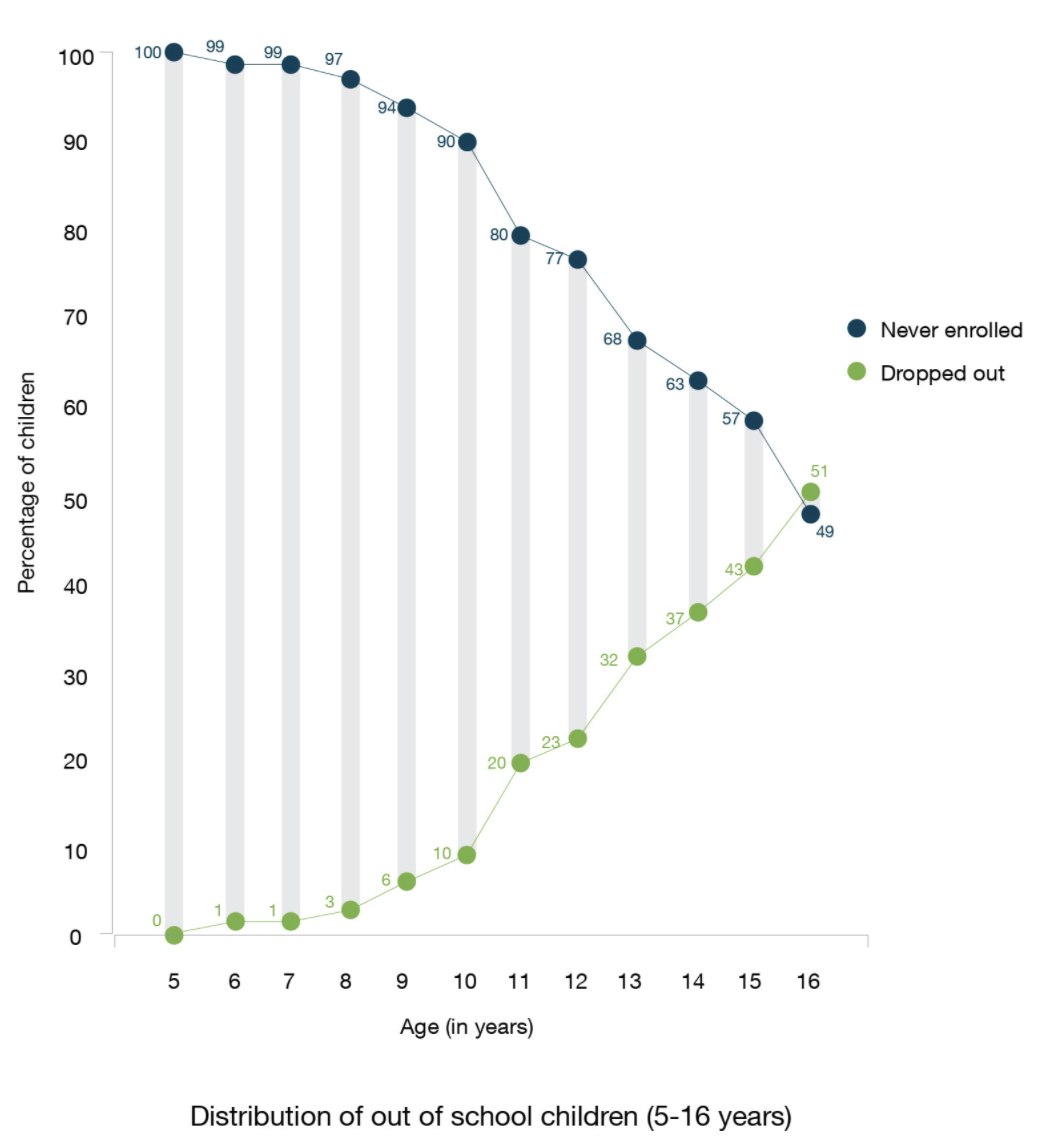
Gross enrollment in Pakistani primary schools exceeded 97% in 2016, up from 92% ten years ago. Gross enrollment rate (GER) is different from net enrollment rate (NER). The former refers to primary enrollment of all students of all ages while the latter counts enrolled students as percentage of students in the official primary age bracket. The primary NER in Pakistan is significantly lower but the higher GER indicates many of these kids eventually enroll in primary schools albeit at older ages.
 |
| Source: World Bank Education Statistics |
Declining Infant Mortality Rate:
The infant mortality rate (IMR), defined as the number of deaths in children under 1 year of age per 1000 live births in the same year, is universally regarded as a highly sensitive (proxy) measure of population health. A declining rate is an indication of improving health. IMR in Pakistan has declined from 86 in 1990-91 to 74 in 2012-13 and 62 in the latest survey in 2017-18.
During the 5 years immediately preceding the survey, the infant mortality rate (IMR) was 62 deaths per 1,000 live births. The child mortality rate was 13 deaths per 1,000 children surviving to age 12 months, while the overall under-5 mortality rate was 74 deaths per 1,000 live births. Eighty-four percent of all deaths among children under age 5 in Pakistan take place before a child’s first birthday, with 57% occurring during the first month of life (42 deaths per 1,000 live births).
Human Development Ranking:
It appears that improvements in education and health care indicators in Pakistan are slower than other countries in South Asia region. Pakistan's human development ranking plunged to 150 in 2018, down from 149 in 2017. It is worse than Bangladesh at 136, India at 130 and Nepal at 149. The decade of democracy under Pakistan People's Party and Pakistan Muslim League (Nawaz) has produced the slowest annual human development growth rate in the last 30 years. The fastest growth in Pakistan human development was seen in 2000-2010, a decade dominated by President Musharraf's rule, according to the latest Human Development Report 2018.
UNDP’s Human Development Index (HDI) represents human progress in one indicator that combines information on people’s health, education and income.
Pakistan saw average annual HDI (Human Development Index) growth rate of 1.08% in 1990-2000, 1.57% in 2000-2010 and 0.95% in 2010-2017, according to Human Development Indices and Indicators 2018 Statistical Update. The fastest growth in Pakistan human development was seen in 2000-2010, a decade dominated by President Musharraf's rule, according to the latest Human Development Report 2018.
Pakistan@100: Shaping the Future:
Pakistani leaders should heed the recommendations of a recent report by the World Bank titled "Pakistan@100: Shaping the Future" regarding investments in the people. Here's a key excerpt of the World Bank report:
"Pakistan’s greatest asset is its people – a young population of 208 million. This large population can transform into a demographic dividend that drives economic growth. To achieve that, Pakistan must act fast and strategically to: i) manage population growth and improve maternal health, ii) improve early childhood development, focusing on nutrition and health, and iii) boost spending on education and skills for all, according to the report".
Summary:
The story of Muskan Amjad shows that the state of Pakistan's social sector is not as dire as the headlines suggest. There's reason for optimism. Key indicators show that education and health care in Pakistan are improving but such improvements are slower than in other countries in South Asia region. Pakistan's human development ranking plunged to 150 in 2018, down from 149 in 2017. It is worse than Bangladesh at 136, India at 130 and Nepal at 149. The decade of democracy under Pakistan People's Party and Pakistan Muslim League (Nawaz) has produced the slowest annual human development growth rate in the last 30 years. The fastest growth in Pakistan human development was seen in 2000-2010, a decade dominated by President Musharraf's rule, according to the latest Human Development Report 2018. One of the biggest challenges facing the PTI government led by Prime Minister Imran Khan is to significantly accelerate human development rates in Pakistan.
Here's a video clip of Amjad Ali and his family's appearance on Samaa TV's Naya Din show:
https://youtu.be/7qXI93xdOn8
 |
| Pakistan Child Mortality Rates. Source: PDHS 2017-18 |
During the 5 years immediately preceding the survey, the infant mortality rate (IMR) was 62 deaths per 1,000 live births. The child mortality rate was 13 deaths per 1,000 children surviving to age 12 months, while the overall under-5 mortality rate was 74 deaths per 1,000 live births. Eighty-four percent of all deaths among children under age 5 in Pakistan take place before a child’s first birthday, with 57% occurring during the first month of life (42 deaths per 1,000 live births).
Human Development Ranking:
It appears that improvements in education and health care indicators in Pakistan are slower than other countries in South Asia region. Pakistan's human development ranking plunged to 150 in 2018, down from 149 in 2017. It is worse than Bangladesh at 136, India at 130 and Nepal at 149. The decade of democracy under Pakistan People's Party and Pakistan Muslim League (Nawaz) has produced the slowest annual human development growth rate in the last 30 years. The fastest growth in Pakistan human development was seen in 2000-2010, a decade dominated by President Musharraf's rule, according to the latest Human Development Report 2018.
UNDP’s Human Development Index (HDI) represents human progress in one indicator that combines information on people’s health, education and income.
 |
| Pakistan's Human Development Growth Rate By Decades. Source: HDR 2018 |
Pakistan saw average annual HDI (Human Development Index) growth rate of 1.08% in 1990-2000, 1.57% in 2000-2010 and 0.95% in 2010-2017, according to Human Development Indices and Indicators 2018 Statistical Update. The fastest growth in Pakistan human development was seen in 2000-2010, a decade dominated by President Musharraf's rule, according to the latest Human Development Report 2018.
Pakistan@100: Shaping the Future:
Pakistani leaders should heed the recommendations of a recent report by the World Bank titled "Pakistan@100: Shaping the Future" regarding investments in the people. Here's a key excerpt of the World Bank report:
"Pakistan’s greatest asset is its people – a young population of 208 million. This large population can transform into a demographic dividend that drives economic growth. To achieve that, Pakistan must act fast and strategically to: i) manage population growth and improve maternal health, ii) improve early childhood development, focusing on nutrition and health, and iii) boost spending on education and skills for all, according to the report".
Summary:
The story of Muskan Amjad shows that the state of Pakistan's social sector is not as dire as the headlines suggest. There's reason for optimism. Key indicators show that education and health care in Pakistan are improving but such improvements are slower than in other countries in South Asia region. Pakistan's human development ranking plunged to 150 in 2018, down from 149 in 2017. It is worse than Bangladesh at 136, India at 130 and Nepal at 149. The decade of democracy under Pakistan People's Party and Pakistan Muslim League (Nawaz) has produced the slowest annual human development growth rate in the last 30 years. The fastest growth in Pakistan human development was seen in 2000-2010, a decade dominated by President Musharraf's rule, according to the latest Human Development Report 2018. One of the biggest challenges facing the PTI government led by Prime Minister Imran Khan is to significantly accelerate human development rates in Pakistan.
Here's a video clip of Amjad Ali and his family's appearance on Samaa TV's Naya Din show:
https://youtu.be/7qXI93xdOn8
Related Links:
Haq's Musings
South Asia Investor Review
Pakistan's Expected Demographic Dividend
Rasoolpur: Model Village Has 100% Literacy in Pakistan
Pakistani Girls' Journey: From Karachi Slum to Harvard University
Can Imran Khan Lead Pakistan to the Next Level?
Democracy vs Dictatorship in Pakistan
Pakistan Child Health Indicators
Pakistan's Balance of Payments Crisis
Panama Leaks in Pakistan
Conspiracy Theories About Pakistan Elections"
PTI Triumphs Over Corrupt Dynastic Political Parties
Strikingly Similar Narratives of Donald Trump and Nawaz Sharif
Nawaz Sharif's Report Card
Riaz Haq's Youtube Channel
South Asia Investor Review
Pakistan's Expected Demographic Dividend
Rasoolpur: Model Village Has 100% Literacy in Pakistan
Pakistani Girls' Journey: From Karachi Slum to Harvard University
Can Imran Khan Lead Pakistan to the Next Level?
Democracy vs Dictatorship in Pakistan
Pakistan Child Health Indicators
Pakistan's Balance of Payments Crisis
Panama Leaks in Pakistan
Conspiracy Theories About Pakistan Elections"
PTI Triumphs Over Corrupt Dynastic Political Parties
Strikingly Similar Narratives of Donald Trump and Nawaz Sharif
Nawaz Sharif's Report Card
Riaz Haq's Youtube Channel